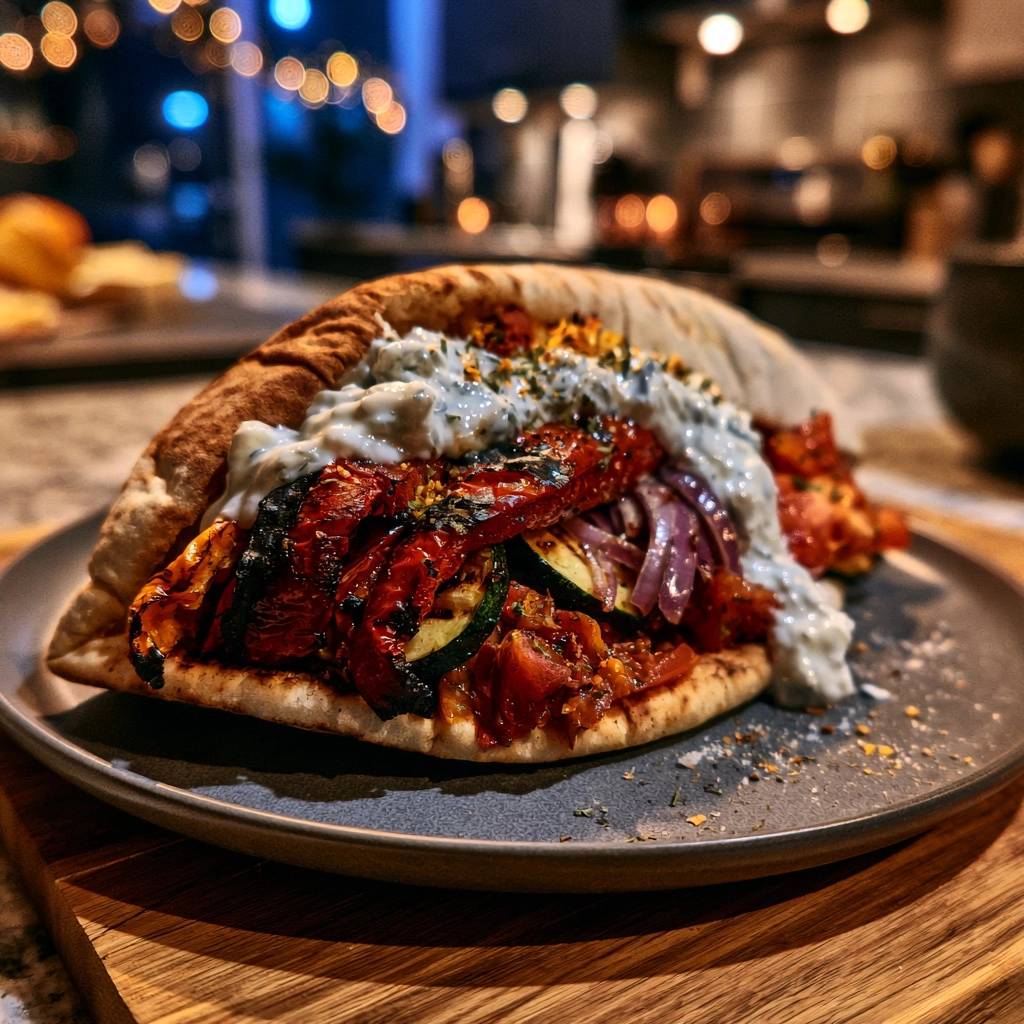
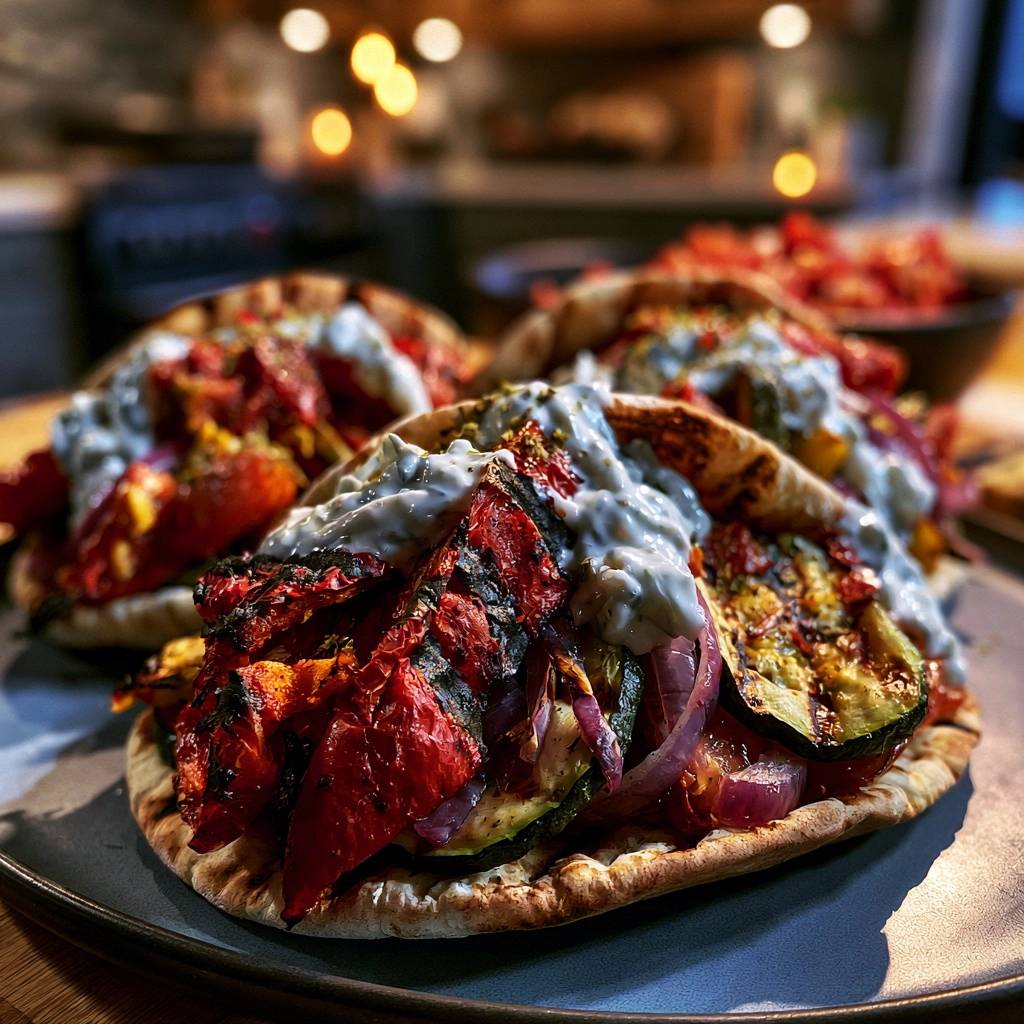
Imagine biting into a warm, flame-kissed pita that shatters slightly at the edges before giving way to a soft, pillowy center. Inside, you find a concentrated burst of sun-ripened tomato jam, smoky charred peppers, and tender zucchini, all cooled by a thick, garlicky yogurt sauce. It is a vibrant contrast of temperatures and textures that defines the very best Mediterranean street food.
However, most home cooks struggle with the dreaded “Soggy Pita Syndrome.” You spend twenty minutes roasting beautiful vegetables only to have their juices turn your bread into a limp, unappetizing mess within seconds. This recipe solves that structural integrity issue by focusing on moisture management and strategic layering, ensuring every bite stays crisp and satisfying.
The secret to this success lies in the moisture barrier technique. By using a strained yogurt base and a high-heat roasting method that transforms tomatoes into a thick jam, we create a protective layer that keeps the vegetable juices away from the bread fibers. I’ve found that resting the vegetables on the hot pan for exactly three minutes after roasting allows steam to escape into the air rather than into your sandwich.
The Science of Preventing Soggy Pita Bread
When you roast vegetables like zucchini and bell peppers, their cellular structure breaks down, releasing a significant amount of water. If you place these vegetables directly onto bread, that water migrates into the starch, causing the pita to lose its structural strength. This is basic physics: moisture always moves toward the driest point.
To combat this, we use the concept of a moisture barrier. Fats and proteins, like those found in thick Greek yogurt, are naturally hydrophobic. By spreading a dense, fat-rich layer onto the bread first, you create a shield that prevents liquid from soaking through. It acts as a culinary raincoat for your pita.
The Role of High-Heat Roasting
Roasting at 425°F is the magic threshold for the Maillard reaction. At this temperature, the natural sugars in the vegetables caramelize quickly, creating those beautiful charred edges you see in professional kitchens. More importantly, this high heat evaporates surface moisture almost instantly.
If you roast at a lower temperature, the vegetables sit in their own juices and steam rather than sear. This results in a mushy texture and a lack of flavor depth. The intense heat ensures the exterior is crisp and flavorful while the interior remains tender but not watery.
Creating a Physical Moisture Barrier
We use two specific barriers in this recipe: a concentrated tomato jam and a strained Greek yogurt. The tomato paste added to the cherry tomatoes helps bind the juices into a thick, spreadable paste. This “jam” fills the nooks and crannies of the pita, sealing it off.
The second barrier is the yogurt sauce. By using strained yogurt, we ensure the sauce has a high protein-to-water ratio. This thickness is essential because a runny sauce will immediately soak into the bread, whereas a thick dollop sits proudly on top of the vegetables.
Essential Components for the Mediterranean Roasted Vegetable Pita
Quality ingredients are the backbone of this dish. You want to look for “thick-style” Greek pitas, often sold as flatbreads without a pocket. These are sturdier and can handle the weight of roasted vegetables much better than the thin, dry pocket pitas found in standard grocery aisles.
Your choice of olive oil also matters. Use a high-quality extra virgin olive oil with a peppery finish. The oil isn’t just for flavor; it acts as a heat conductor on the baking sheet, ensuring the vegetables get that essential sear without sticking to the pan.
Selecting the Right Produce for Char
When shopping, choose small to medium zucchini. Larger zucchini have developed seeds and a much higher water content, which makes them prone to turning into mush. Smaller ones stay firm and take on a beautiful golden-brown color when roasted.
For the peppers, look for thick-walled bell peppers that feel heavy for their size. These hold their shape under high heat. Cherry tomatoes are non-negotiable here; their high pectin content allows them to reduce into a jam-like consistency that larger beefsteak tomatoes simply cannot replicate.
The Dry-Cucumber Technique for Thick Tzatziki
The biggest mistake people make with yogurt sauce is skipping the cucumber squeeze. Even a small amount of cucumber juice will turn your thick Greek yogurt into a watery soup in minutes. You must grate the cucumber and then wrap it in a clean kitchen towel.
Squeeze that towel with all your might until no more liquid drips out. You should be left with a dry, concentrated pulp. When you mix this dry pulp into the yogurt, the sauce stays incredibly thick and creamy, providing that perfect “cascading” look without making the bread soggy.
Step-by-Step: Achieving the Perfect Vegetable Char
Achieving a restaurant-quality char at home requires a bit of strategy. It isn’t just about the temperature; it’s about how you manage the space on your baking sheet. If you crowd the pan, the vegetables will release steam, and you’ll end up with boiled veggies instead of roasted ones.
Phase 1: The Preheated Sheet Pan Method
Before you even touch a vegetable, put your empty baking sheet in the oven while it preheats. When you eventually toss the vegetables onto that screaming-hot metal, you’ll hear a loud sizzle. This immediate contact heat starts the searing process instantly.
This method prevents the vegetables from sticking and ensures the bottom side gets just as much color as the top. It also cuts down on the total cooking time, keeping the vegetables vibrant rather than overcooked and gray.
Phase 2: Strategic Pan Placement
Organization on the pan is key. I recommend keeping the tomatoes in their own dedicated corner. Tomatoes are the “wettest” ingredient, and if their juices run into the peppers and zucchini, those vegetables won’t char properly.
Spread the zucchini and peppers in a single layer with plenty of breathing room between them. If you have to use two pans to avoid crowding, do it. Air circulation is the difference between a soggy vegetable and a perfectly roasted one.
Phase 3: The Tomato Jam Reduction
About 15 minutes into the roasting process, the cherry tomatoes will be blistered and soft. Take a fork and gently press down on each one right there on the baking sheet. This releases their juices, which then mix with the tomato paste and olive oil.
During the final five minutes of roasting, this mixture reduces into a thick, savory jam. This concentrated base provides a massive punch of umami that ties the whole pita together. You’ll know it’s ready when the liquid has mostly evaporated and the jam looks shiny and dark red.
Assembling the Mediterranean Roasted Vegetable Pita
Assembly is where the architecture of the sandwich comes into play. You want to build it in a way that maximizes flavor in every bite while maintaining the bread’s crunch. The order of operations is: Heat, Barrier, Bulk, and Topping.
Toasting for Structural Integrity
Don’t just warm your pita; toast it until it feels stiff. If you have a gas stove, use tongs to hold the pita directly over the flame for a few seconds per side. This adds a smoky flavor and creates a rigid structure.
If you don’t have gas, a dry cast-iron skillet on high heat works beautifully. You are looking for dark charred spots and a bread that doesn’t flop when you hold it from one end. This stiffness is what allows the pita to hold the heavy roasted fillings.
The Layering Logic
Start by spreading the thick tomato jam directly onto the toasted pita. This acts as your first moisture barrier and a “glue” for the other vegetables. Next, layer the zucchini and onions, followed by the long strips of bell pepper.
Finally, add a heavy dollop of the thick yogurt sauce. By placing the yogurt on top, it slowly melts into the warm vegetables as you eat, creating a creamy finish without compromising the bread underneath. Garnish with a few extra herbs for a fresh pop of color.
Flavor Variations and Ingredient Swaps
This recipe is incredibly versatile. If you don’t have zucchini, eggplant makes a fantastic substitute. Just be sure to salt the eggplant slices beforehand to draw out excess moisture, or they will absorb too much oil and become greasy.
Cauliflower florets are another great option. They take on a wonderful nutty flavor when charred at 425°F. Just keep in mind that cauliflower may need an extra five minutes of roasting time compared to the softer zucchini.
Adding Plant-Based Protein
To make this a more filling meal, you can toss a can of rinsed and dried chickpeas onto the baking sheet with the vegetables. They will get crispy and nutty in the oven. The extra protein makes the meal much more satiating.
If you want to stick with traditional Mediterranean flavors, thick slices of halloumi cheese can be roasted right alongside the peppers. The halloumi won’t melt; instead, it gets a beautiful golden crust and a salty, chewy texture that pairs perfectly with the roasted vegetables.
Troubleshooting Common Roasting Issues
If your vegetables are soft but haven’t developed any charred edges, your oven might be running cool. Try moving the baking sheet to the top rack for the last few minutes of cooking. The proximity to the upper heating element usually does the trick.
If you notice your garlic powder is smelling bitter or looking burnt, you might be roasting it too long. Next time, try tossing the vegetables in the oil and herbs halfway through the roasting process instead of at the beginning. This protects the delicate spices from the intense initial heat.
Why My Vegetables Are Mushy
Mushy vegetables usually happen for two reasons: crowding the pan or skipping the resting period. When you take the pan out of the oven, the vegetables are still releasing steam. If you bag them or put them in a pita immediately, that steam gets trapped.
Letting them rest on the hot pan for three minutes is crucial. This is called carry-over cooking. The residual heat finishes the interior of the vegetables while the surface moisture evaporates into the kitchen air, leaving you with a much better texture.
Expert Tips for Professional Results
For the best flavor, use lemon zest in your yogurt sauce rather than just lemon juice. The juice adds acidity but also thins out the sauce. The zest provides all the bright, citrusy aroma without changing the consistency of the yogurt.
Uniform slicing is your best friend. Try to cut your zucchini and peppers into similar thicknesses so they finish cooking at the same time. If your onions are sliced too thin, they will burn before the peppers are tender.
I actually prefer dried oregano over fresh for this specific roasting method. Fresh herbs tend to burn and turn bitter at 425°F, whereas dried oregano stands up well to the heat and infuses the oil with a classic Mediterranean aroma.
If you have leftovers, store the roasted vegetables and the yogurt sauce in separate airtight containers. Never store the assembled pita. When you’re ready to eat again, reheat the vegetables in a toaster oven to crisp them back up before assembling a fresh pita.
What to Serve with Your Mediterranean Pita
This pita is quite rich, so it pairs well with something bright and acidic. A simple side of pickled turnips or kalamata olives provides a nice salty contrast. The vinegar from the pickles cuts through the creaminess of the yogurt sauce perfectly.
If you want a heartier side, a warm lentil soup seasoned with cumin and lemon is a traditional pairing. Alternatively, a light slaw made with shredded cabbage, lemon juice, and tahini adds a refreshing crunch that complements the soft, roasted textures of the main dish.
How should I store leftovers?
Store the roasted vegetables and the yogurt sauce in separate airtight containers in the refrigerator for up to 3 days. Do not assemble the pitas ahead of time, as the bread will become soggy. When reheating, place the vegetables on a baking sheet in a 350°F oven for 5-7 minutes to restore their texture. The yogurt sauce should be served cold and may need a quick stir if any liquid has separated.
Why did my pita bread break when I folded it?
Pita bread often breaks if it is too dry or if it hasn’t been warmed properly. To make the pita pliable, toast it briefly over a gas flame or in a hot skillet. The heat softens the internal starches, making the bread flexible. If your pita is particularly thick, you can also lightly mist it with water before toasting to create a bit of steam that softens the crumb.
Can I use a different type of yogurt?
You can use dairy-free Greek-style yogurt as long as it is very thick and unsweetened. Avoid regular “thin” yogurt, as it lacks the structural integrity to act as a moisture barrier. If you only have regular yogurt, you can strain it yourself by placing it in a coffee filter or cheesecloth over a bowl in the fridge for 4 hours to remove the excess whey.
What is the best way to cut the vegetables for even roasting?
Aim for “bite-sized” consistency. Slice the zucchini into half-moons about 1/2 inch thick. Cut the bell peppers into strips of the same width. The red onion should be cut into wedges rather than thin rings so they don’t burn. Keeping the sizes uniform ensures that everything reaches that perfect charred state at the same time without some pieces turning to mush while others remain raw.
Can I make this recipe in an air fryer?
Yes, you can roast the vegetables in an air fryer at 400°F. You will likely need to cook in batches to avoid crowding the basket. The tomatoes should still be kept separate if possible, or added during the last 8 minutes of cooking. Because air fryers circulate air very efficiently, you may find the vegetables char faster, so start checking them at the 12-minute mark.

Mediterranean Roasted Vegetable Pita
Course: Main CourseCuisine: MediterraneanDifficulty: easy2
servings15
minutes20
minutes35
Minutes440
kcalMediterranean
Ingredients
2 large, thick-style Greek pitas (flatbread style)
1 medium zucchini, sliced into half-moons
1 large red bell pepper, sliced into long, thick strips
1/2 red onion, sliced into wedges
1 cup cherry tomatoes, halved
3 tablespoons extra virgin olive oil
1 teaspoon dried oregano
1/2 teaspoon garlic powder
1/2 teaspoon red pepper flakes
Salt and black pepper to taste
1/2 cup thick Greek yogurt (strained)
1/4 cup grated cucumber, squeezed bone-dry
1 tablespoon fresh dill, finely chopped
1/2 teaspoon lemon zest
1 tablespoon tomato paste (to deepen the “jam” base)
Directions
- Preheat your oven to 425°F (220°C). Place a large rimmed baking sheet inside the oven while it heats; a hot pan ensures immediate searing and prevents steaming.
- In a large bowl, toss the zucchini, bell peppers, and onions with 2 tablespoons of olive oil, oregano, garlic powder, salt, and pepper.
- In a separate small bowl, toss the halved cherry tomatoes with the remaining 1 tablespoon of oil and the tomato paste. This creates the thick, concentrated red base seen in the image.
- Carefully spread the vegetables onto the preheated sheet pan. Keep the tomatoes in their own section. Ensure nothing is overcrowded; space is essential for the char shown in the photo.
- Roast for 18-20 minutes. At the 15-minute mark, use a fork to lightly mash the cherry tomatoes on the pan to create a thick, chunky “jam.” Roast for the remaining 5 minutes until the pepper edges are blackened and the zucchini has dark sear marks.
- While the vegetables roast, prepare the thick tzatziki. Squeeze the grated cucumber in a clean kitchen towel until no more liquid escapes. Mix the dry pulp with the Greek yogurt, dill, and lemon zest.
- The Anti-Soggy Secret: Remove the vegetables from the oven and let them rest on the hot pan for 3 minutes. This allows excess steam to evaporate into the air rather than into your bread.
- Toast the pita bread directly over a gas flame or in a dry cast-iron skillet until charred spots appear and the bread feels stiff.
- To assemble: Spread a generous layer of the thickened tomato “jam” on the bottom half of the pita. Layer the charred zucchini, onions, and the long red pepper strips on top.
- Finish with a heavy dollop of the thick yogurt sauce cascading over the top, exactly as pictured. Garnish with extra dried herbs and a pinch of red pepper flakes. Serve immediately.
Notes
- To prevent sogginess, ensure the grated cucumber is squeezed bone-dry and allow the roasted vegetables to rest for 3 minutes on the hot pan to let excess steam escape before assembly.