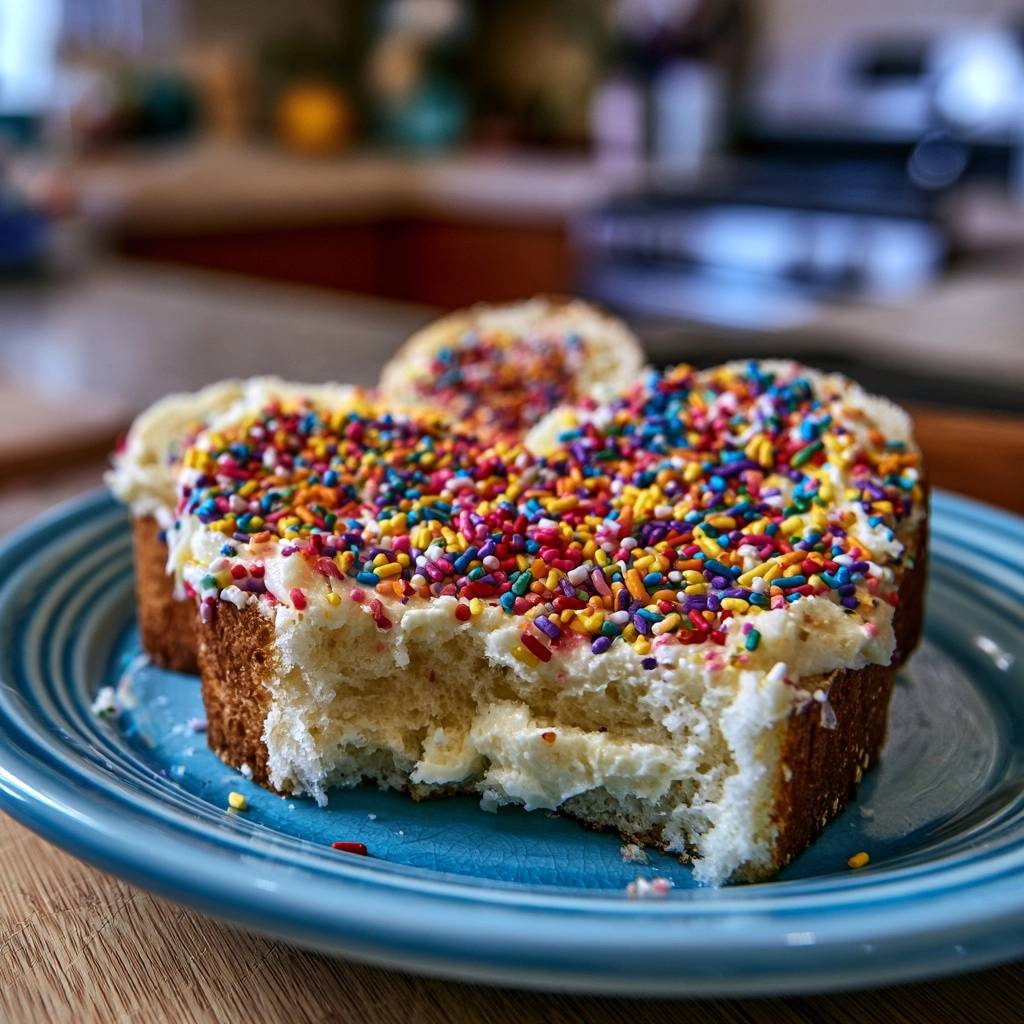
Imagine biting into a thick, golden slice of brioche that shatters with a satisfying crunch before giving way to a cloud-like, buttery center. This Heart-Shaped Birthday Cake Toast isn’t just a meal; it’s a sensory experience that pits the warmth of toasted bread against the cool, velvety sweetness of vanilla buttercream. It’s the ultimate “cake for breakfast” fantasy brought to life with a sophisticated twist.
However, most attempts at this festive treat end in disaster. You’ve likely seen the “Soggy Bread Syndrome” where heavy frosting turns a beautiful slice of toast into a limp, mushy mess within minutes. We’re moving past that today. By treating the bread like a structural element rather than just a base, you create a celebratory centerpiece that stays crisp until the very last bite.
The secret to success lies in the double-toast method. I’ve found that sealing the bread fibers with heat and butter before adding any toppings creates a moisture-proof shield. This ensures the frosting sits proudly on top rather than soaking into the crumb. If you skip the cooling rack, you’ll end up with a melted puddle, so patience is your best friend here.
The Structural Integrity of Brioche and Texas Toast
When you’re building a breakfast masterpiece, the bread choice makes or breaks the entire dish. Brioche is the gold standard here because it’s an enriched bread, meaning it’s packed with butter and eggs. This high fat content creates a tight yet tender crumb that can support the weight of dense buttercream without compressing into a flat pancake.
Texas toast is your best alternative if brioche isn’t available. You need that specific one-inch thickness to achieve the proper contrast between the seared exterior and the pillowy interior. Standard sandwich bread is simply too thin; the moisture from the frosting will migrate through the thin crumb almost instantly, leaving you with a sad, damp result.
Why Thickness Prevents Moisture Absorption
Physics plays a huge role in your breakfast enjoyment. A thick slice of bread acts as a natural insulator. When you toast a thick piece of brioche, you create a caramelized crust on the outside while the very center remains soft. This thick “buffer zone” prevents the oils in the buttercream from penetrating all the way through, maintaining the structural integrity of the heart shape.
Essential Components for Heart-Shaped Birthday Cake Toast
Quality ingredients are the foundation of this dish. You’ll want to use unsalted butter for the skillet to ensure you control the salt levels perfectly. If you use salted butter, the exterior can sometimes become overly savory, which clashes with the sweet sprinkles. The butter should be soft enough to spread easily without tearing the delicate brioche surface.
The buttercream is the most critical component. You must use a stiff consistency frosting. If you’re using a tub from the store, it’s often too whipped and airy. I recommend stiffening it up so it holds its shape. Runny frosting is the enemy of the “stuffed” look; you want that middle layer to act like a sturdy glue that keeps your two bread hearts perfectly aligned.
Selecting the Right Rainbow Sprinkles
Not all sprinkles are created equal for this recipe. I highly recommend using “jimmies”—the long, rod-shaped sprinkles—because they provide a soft crunch without being tooth-shattering. Nonpareils, those tiny round beads, tend to bleed their colors into the white frosting very quickly, which can make the toast look messy rather than festive. Sequins or confetti sprinkles also work well for a flat, clean aesthetic.
The Double-Toast Method for Maximum Crispness
This technical step is what separates a professional breakfast from a home experiment. When you place the buttered hearts into the skillet, you’re initiating the Maillard reaction. This isn’t just about color; it’s about chemistry. The sugars and proteins in the brioche brown to create a flavorful, waterproof barrier that seals the bread’s surface.
You aren’t just warming the bread; you’re searing it. This “sealing” process creates a crisp skin that acts as a shield. Without this step, the moisture in the frosting would immediately begin to soften the bread fibers. By toasting both sides of every slice, you ensure that even the internal “stuffed” layer has a protective crust to hold the buttercream in place.
Temperature Control: Medium Heat vs. High Heat
It’s tempting to crank up the heat to get breakfast on the table faster, but don’t do it. Brioche has a high sugar content, which means it burns in a heartbeat. Medium heat is the sweet spot. It allows the heat to travel into the center of the thick slice, firming up the crumb, while the outside develops a deep, even gold without turning black.
Step-by-Step: Constructing the Stuffed Birthday Toast
Start by pressing your heart-shaped cutter firmly into the center of the bread. You want a clean cut, so press down hard and give it a little wiggle. Once you have your four hearts, butter them generously on both sides. Get that skillet warm and toast them until they feel firm to the touch. They should sound slightly hollow when you tap them with a spatula.
After toasting, move the hearts to a wire rack. This is the most skipped step, but it’s vital. If you frost the bread while it’s hot, the buttercream will turn into an oily soup. Once cooled, spread a layer of frosting on one heart and top it with another. Now, frost the top and the sides of the top slice. This creates a “cake” look that hides the bread underneath.
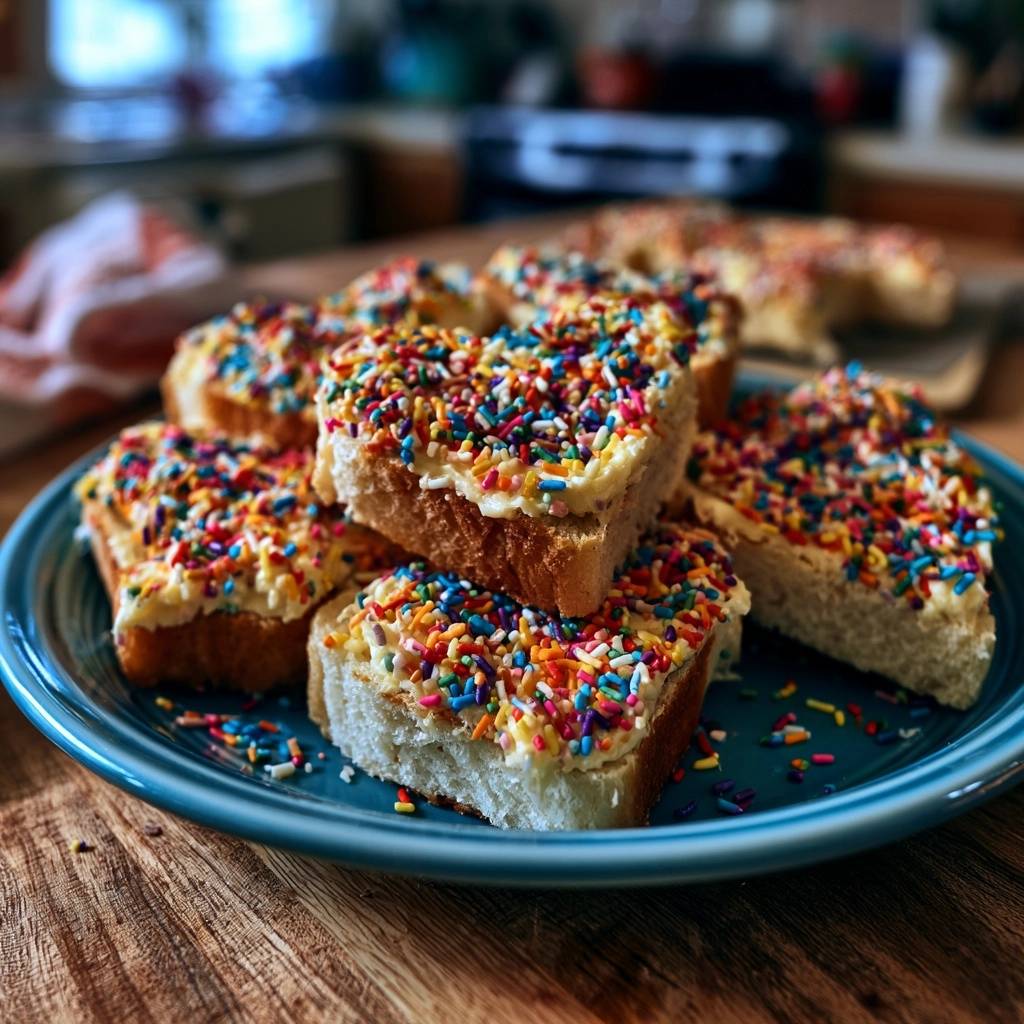
Finally, the sprinkle dip is the grand finale. Put your sprinkles in a shallow bowl. Pick up your double-stacked toast and gently press the frosted side into the sprinkles. Use a light touch so you don’t squish the bread, but ensure you get edge-to-edge coverage. The result should be a perfectly encrusted heart that looks like it came straight from a high-end bakery.
The Critical Cooling Phase on Wire Racks
Thermodynamics is at work here. If you put hot toast on a flat plate, steam gets trapped underneath, which turns your crispy bottom into a soggy mess. A wire rack allows air to circulate around the entire heart. This two-minute rest ensures the bread is cool enough to support the frosting while maintaining that essential crunch you worked so hard for in the skillet.
Troubleshooting Common Texture Issues
If your bread hearts tear while you’re cutting them, don’t panic. You can usually pinch the brioche back together before toasting; the heat and butter will act like a glue to mend the tear. If your buttercream feels too soft to handle, pop it in the fridge for ten minutes before spreading. It should feel like soft clay, not whipped cream.
If you notice the bread is getting too dark too fast, pull the pan off the heat immediately. You can finish the toasting process in a warm oven if the skillet is getting too aggressive. If the toast feels oily, you likely used too much butter or the heat was too low, causing the bread to soak up the fat rather than searing in it.
Creative Flavor Variations and Seasonal Swaps
You can easily adapt this recipe for different vibes. Try using a chocolate-chip brioche for an extra decadent version, or swap the vanilla buttercream for a tangy cream cheese frosting. For a more “grown-up” palate, you can mix a little lemon zest into the frosting to cut through the sweetness. The bright citrus notes pair beautifully with the rich, buttery bread.
Instead of synthetic sprinkles, you could use crushed freeze-dried strawberries or raspberries. This gives you a vibrant pink color and a punch of natural tartness that balances the sugar. If it’s autumn, a pumpkin spice brioche with a dusting of cinnamon sugar in the skillet adds a wonderful warmth to the dish.
Infusing the Butter for Extra Depth
To take the flavor to the next level, try browning your butter in a separate pan before brushing it onto the bread. Brown butter adds a nutty, toasted aroma that mimics the flavor of a sophisticated financier cake. You can also sprinkle a tiny bit of cinnamon and sugar directly into the skillet to create a churro-like crust on the outside of the heart.
Expert Tips for Clean Presentation
For that professional, smooth look, use a small offset spatula to apply the frosting. If you don’t have one, the back of a warm spoon works wonders. Dip the spoon in hot water and wipe it dry before smoothing the edges of the buttercream. This helps you get those sharp, clean lines that make the heart shape really pop on the plate.
When handling the finished toast, try to touch only the un-frosted bottom layer. This prevents you from leaving fingerprints in the sprinkles or smudging the buttercream. Serve it on a room-temperature plate; a cold plate can cause condensation, and a hot plate will melt your masterpiece. A simple white plate makes the rainbow colors of the sprinkles stand out beautifully.
Frequently Asked Questions
Can I use gluten-free bread for this recipe?
Yes, you can use gluten-free bread, but you must choose a sturdy, dense variety. Many gluten-free breads are quite fragile and may crumble when you use the cookie cutter. Look for a “white bread” style GF loaf that is unsliced or cut into thick slices. You may need to toast it slightly longer to ensure the center is firm enough to hold the weight of the buttercream.
How do I make the buttercream stiff enough?
If your frosting is too soft, the best fix is adding more sifted powdered sugar, one tablespoon at a time, until it reaches a spreadable but firm consistency. If you are using store-bought frosting, you can also stir in a teaspoon of cornstarch. This helps stabilize the frosting and prevents it from weeping or sliding off the bread in warmer kitchen temperatures.
Can I prepare the heart shapes in advance?
You can definitely cut the heart shapes out of the bread the night before and store them in a sealed bag so they don’t dry out. However, you should wait to toast and frost them until right before you plan to eat. The magic of this dish is the contrast between the freshly toasted bread and the cool frosting. If you frost them too early, even with the double-toast method, the bread will eventually lose its crunch.
What is the best way to clean the cookie cutter between slices?
Brioche is sticky because of the high butter and egg content. To get clean edges, dip your metal cookie cutter into a cup of very hot water and wipe it dry between every single cut. You can also lightly coat the inside of the cutter with a tiny bit of neutral cooking oil. This ensures the bread releases easily without tearing the delicate edges of the heart.
Is it possible to bake these instead of pan-frying?
You can bake them at 375°F for about 5-7 minutes per side, but the texture will be different. Skillet-searing provides a more direct, even “seal” on the surface of the bread because of the contact with the hot pan and butter. Oven-baking tends to dry out the entire slice of bread, making it more like a large crouton rather than a piece of toast with a soft, fluffy interior.
Heart-Shaped Birthday Cake Toast
Course: Breakfast and BrunchCuisine: AmericanDifficulty: easy2
servings10
minutes5
minutes15
Minutes420
kcalAmerican
Ingredients
4 thick slices of brioche or Texas toast
3 tablespoons unsalted butter, softened
1/2 cup vanilla buttercream frosting (stiff consistency)
1/2 cup rainbow sprinkles
Heart-shaped cookie cutter
Directions
- Use a large heart-shaped cookie cutter to press out shapes from the center of all 4 thick bread slices.
- Heat a non-stick skillet over medium heat. Lightly butter both sides of all 4 bread hearts.
- Place the hearts in the skillet and toast for 2 minutes per side until golden brown and firm to the touch. This “sealing” step is crucial to prevent the frosting moisture from seeping into the crumb.
- Remove the toast from the pan and let it cool on a wire rack for 2 minutes. Cooling is essential; if the bread is too hot, the buttercream will melt into an oily liquid.
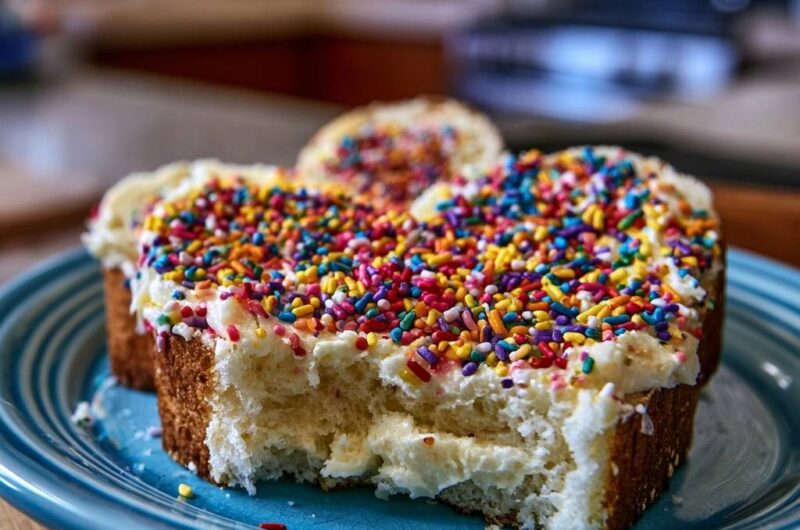
- To achieve the “stuffed” look shown in the image, spread a layer of buttercream on one heart, then stack a second heart on top to create a sandwich.
- Spread a generous, thick layer of vanilla buttercream across the top surface and down the slightly rounded edges of the top slice.
- Pour the rainbow sprinkles into a shallow bowl. Invert the frosted toast and press it firmly into the sprinkles to ensure edge-to-edge coverage.
- Serve immediately on a room-temperature plate. The double-layer of toasted brioche provides the structural integrity needed to support the heavy frosting without collapsing.
Notes
- The double-toast method and cooling on a wire rack are essential steps to create a moisture barrier and prevent the frosting from melting or making the bread soggy.