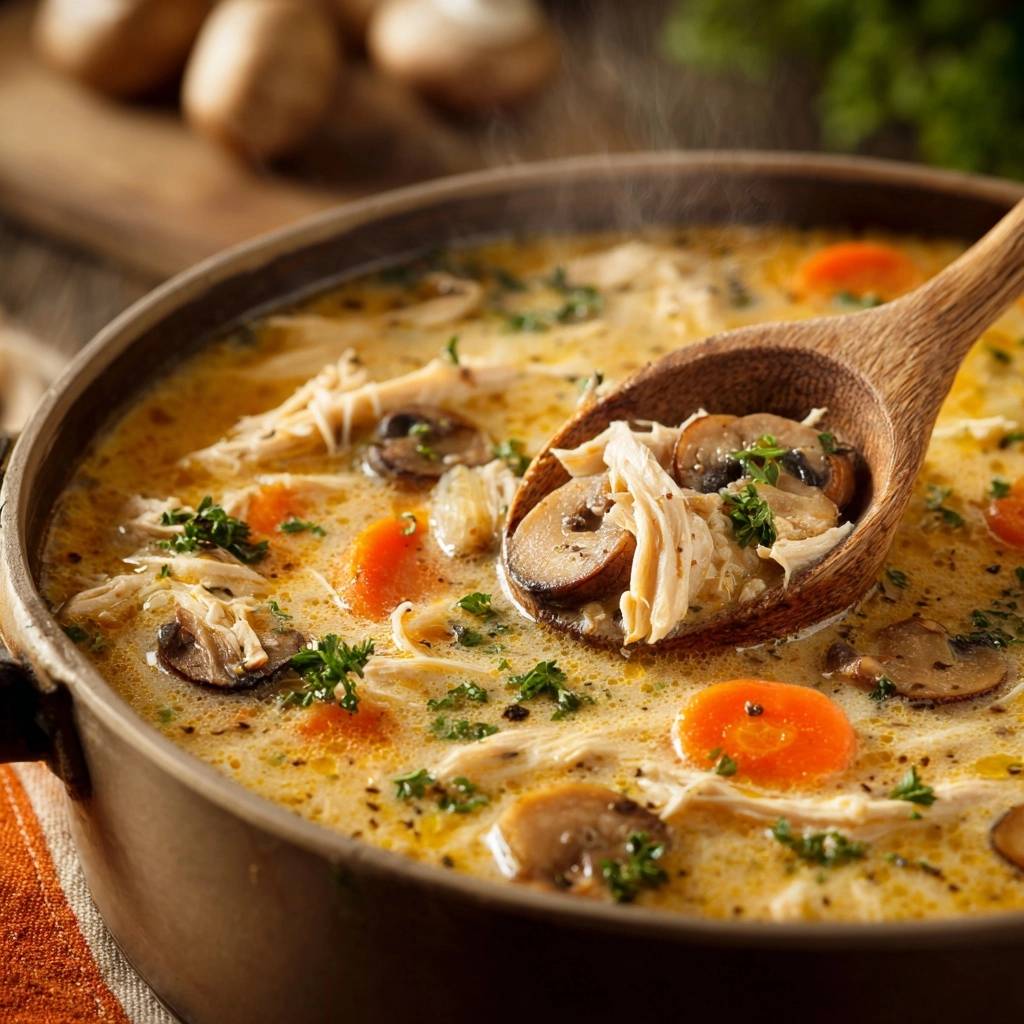
There is nothing quite like the comfort of a thick, velvety soup that actually sticks to your ribs. However, many home cooks struggle with chicken soups that turn out thin, watery, or lack that deep savory punch. This Creamy Shredded Chicken and Mushroom Soup is the antidote to those bland bowls, offering a rich, emulsified base that feels like a warm hug.
The secret lies in the balance of earthy fungi, tender poultry, and a properly built roux. Instead of just boiling everything in a pot, we focus on layering flavors through searing and sautéing. This ensures every spoonful is packed with a concentrated essence of herbs and umami that lingers on the palate.
I’ve found that the most common mistake is rushing the thickening process. To get that professional, glossy finish, you must master the art of tempering your cream. This simple technique prevents the dairy from breaking, resulting in a smooth, restaurant-quality texture every single time.
The Foundation: Selecting Quality Soup Ingredients
Great soup starts with the quality of your pantry staples. Since this recipe relies on a few core components, choosing the right versions of those ingredients makes a massive difference. You want ingredients that contribute both texture and a clean, distinct flavor profile.
For the chicken, boneless skinless breasts are the gold standard here. They poach quickly and shred into beautiful, long strands that catch the creamy broth. While some prefer thighs, breasts provide a leaner, cleaner bite that doesn’t compete with the richness of the heavy cream.
Don’t overlook your choice of broth. Using a low-sodium chicken broth is a strategic move. It allows you to control the salt levels yourself, ensuring the final dish isn’t an oversalted mess. You can always add salt, but you can’t take it away once it’s in the pot.
Why Cremini Mushrooms Provide Better Umami
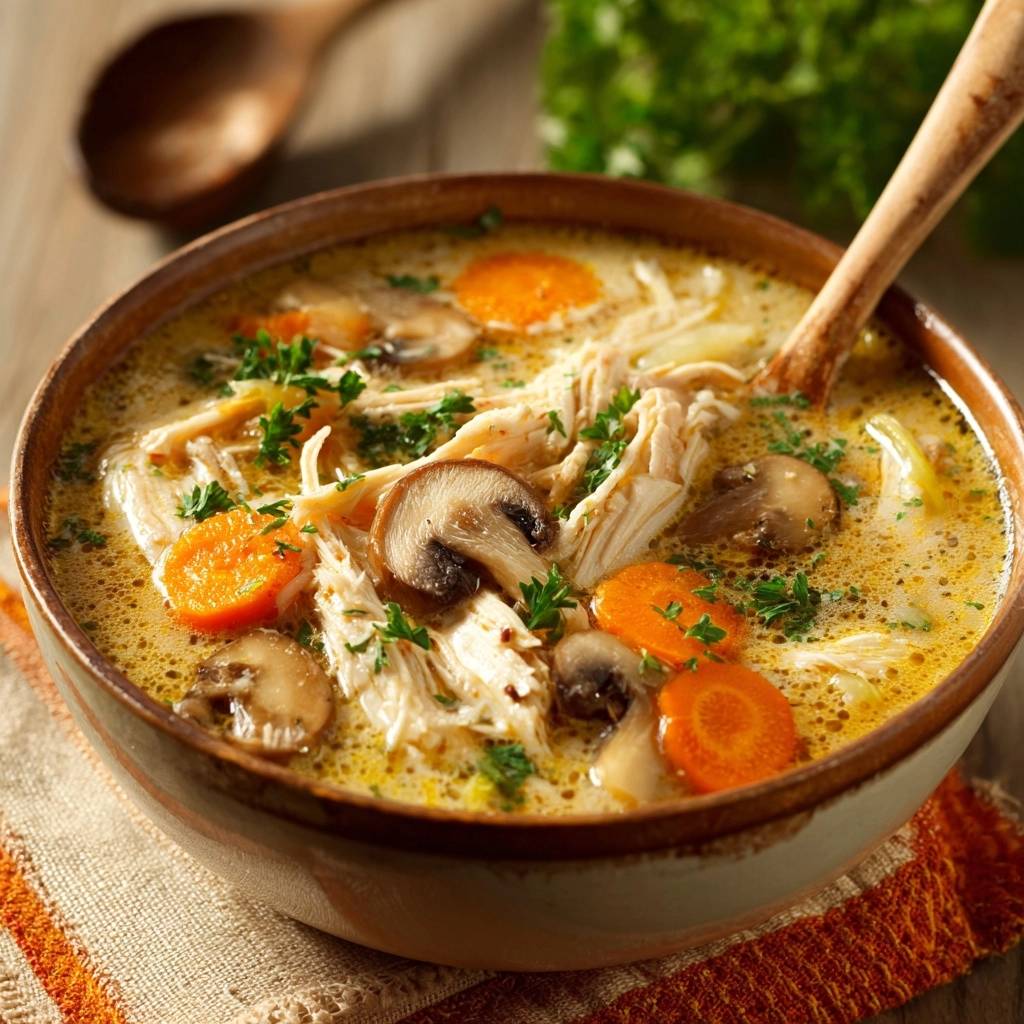
Cremini mushrooms, often labeled as “baby bellas,” are essentially more mature versions of white button mushrooms. Because they’ve aged longer, they contain less water and a much deeper, earthier flavor. This is crucial for soup because they won’t shrink into nothingness or dilute your broth.
When you sear these mushrooms, they develop a meaty texture that mimics the chicken. This adds a complex layer of umami that white mushrooms simply can’t provide. They hold their shape beautifully even after simmering, giving you a satisfying bite in every spoonful.
The Role of High-Fat Heavy Cream
Heavy cream is the backbone of this soup’s luxurious mouthfeel. The high fat content does more than just add calories; it acts as a vehicle for flavor. Fat molecules coat your tongue, allowing the subtle notes of thyme and rosemary to linger longer.
Using a lower-fat milk or half-and-half often results in a “thin” sensation. Heavy cream provides the necessary viscosity to create a stable emulsion with the roux. It transforms the broth from a simple liquid into a rich, opaque sauce that clings to the shredded chicken.
Essential Techniques for Maximum Flavor Extraction
Building flavor is a marathon, not a sprint. The most important concept to understand here is the Maillard reaction. This is the chemical reaction between amino acids and reducing sugars that gives browned food its distinctive, savory flavor.
Most people make the mistake of just tossing raw vegetables into boiling water. By sautéing the onions and carrots in butter first, you develop natural sugars and a mellow sweetness. This creates a flavor base that is much more complex than boiled vegetables could ever achieve.
The Secret to Searing Mushrooms Without Steaming
To get a perfect sear, you must give your mushrooms space. If you crowd the pan, the mushrooms release their moisture and end up boiling in their own juices. This leads to a rubbery texture and a grey, unappealing color.
Heat your olive oil until it’s shimmering, then add the mushrooms in a single layer. Leave them completely undisturbed for at least four minutes. You’ll hear a steady sizzle, and when you finally flip them, they should be a deep, mahogany brown. That color is where all the flavor lives.
Building a Stable Roux-Based Emulsion
A roux is a simple mixture of fat and flour, but it’s the most powerful tool in a soup maker’s arsenal. When you stir flour into the melted butter and sautéed vegetables, the starch granules become coated in fat. This prevents them from clumping when they hit the liquid.
It’s vital to cook the roux for about two minutes before adding broth. You’re looking for a slightly nutty aroma. This “cooks out” the raw flour taste that can ruin an otherwise perfect soup. Once the flour is toasted, it will trap the liquid in a stable web, keeping your soup thick and creamy.
Step-by-Step: Crafting the Perfect Velvety Broth
Crafting this soup is all about managing the transformation of your ingredients. You’ll start with raw proteins and firm vegetables, slowly coaxing them into a unified, harmonious dish. Follow these phases to ensure the textures are spot on.
Phase 1: Poaching and Shredding the Chicken
Gently poaching the chicken in the broth is the best way to keep it moist. Avoid a rolling boil, as high heat causes the protein fibers to contract and become tough. Instead, look for a very gentle simmer with just a few bubbles breaking the surface.
Once the chicken reaches an internal temperature of 165°F, remove it immediately. Shred the meat while it’s still warm using two forks. Warm chicken shreds much more easily than cold chicken, and the jagged edges of the shredded meat are perfect for soaking up the creamy broth later.
Phase 2: Sautéing Aromatics and Developing the Base
In a separate skillet, melt your butter and add the onions and carrots. You aren’t looking for a hard sear here; you want them to soften and become translucent. This process takes about 6 to 8 minutes over medium heat.
Add your garlic, thyme, rosemary, and paprika only in the last minute of sautéing. Garlic burns quickly and becomes bitter, so it only needs a short time to become fragrant. The heat will “bloom” the dried herbs, releasing their essential oils into the butter for maximum impact.
For more heartwarming soup ideas featuring tender chicken, explore this homestyle chicken noodle soup.
Phase 3: Integrating the Thickening Agent
After the flour has cooked with the vegetables, slowly whisk in one cup of the warm broth. Do this gradually to create a smooth, thick paste. If you dump all the liquid in at once, you’ll end up with stubborn flour lumps that are impossible to whisk out.
Once that paste is smooth, pour the entire skillet mixture into the main pot of broth. Whisk vigorously as you combine them. You’ll see the broth transform from a clear liquid into a cloudy, thickened base that’s ready for the final additions.
The Tempering Method: Preventing Dairy Curdling
Adding cold cream directly to a boiling pot of soup is a recipe for disaster. The sudden temperature change, known as thermal shock, can cause the proteins in the cream to clump together, or curdle. This won’t hurt you, but it looks unappetizing and ruins the texture.
To prevent this, use the tempering method. Pour your heavy cream into a small bowl and slowly whisk in a ladle of the hot soup broth. This gradually raises the temperature of the cream. Once the cream is warm to the touch, you can safely stir it into the main pot for a perfectly smooth finish.
Troubleshooting Common Soup Consistency Issues
If your soup feels too thick after the final simmer, don’t panic. This often happens if the roux was particularly strong or if the soup simmered a bit too long. Simply stir in a splash of extra chicken broth or even a little water until you reach your desired consistency.
On the flip side, if the soup feels too thin, let it simmer uncovered for an extra five minutes. This allows some of the water to evaporate, naturally concentrating the flavors and thickening the body. If it still lacks “punch,” add a pinch more salt or a tiny squeeze of lemon juice to brighten the flavors.
Flavor Variations and Dietary Swaps
This recipe is incredibly versatile. If you’re short on time, you can easily swap the poached chicken for a shredded rotisserie chicken from the grocery store. Just skip the poaching step and add the shredded meat directly into the pot at the end.
For those avoiding gluten, a high-quality 1-to-1 gluten-free flour blend works perfectly for the roux. You can also add extra texture by stirring in a cup of cooked wild rice or some chopped kale during the final ten minutes of simmering. Both additions make the soup even heartier.
Optimal Pairings for a Complete Meal
Because this soup is so rich and creamy, it pairs best with sides that offer a bit of crunch or acidity. A thick slice of toasted sourdough bread is mandatory for dipping into the velvety broth. The tang of the sourdough cuts through the richness of the cream beautifully.
A simple arugula salad with a sharp lemon vinaigrette is another excellent choice. The peppery greens and acidic dressing provide a refreshing contrast to the earthy mushrooms and savory chicken. It cleanses the palate between bites of the decadent soup.
Storage, Reheating, and Freezing Guidelines
This soup keeps wonderfully in the refrigerator for 3 to 4 days. In fact, the flavors often deepen overnight as the herbs continue to infuse the broth. Store it in an airtight container to keep it fresh and prevent it from absorbing other fridge odors.
When reheating, do so gently on the stovetop over medium-low heat. Avoid letting it come to a violent boil, which can cause the cream to separate. If you must freeze it, be aware that the texture may change slightly upon thawing. Whisk it well while reheating to re-emulsify the fats.
Expert Tips for Professional Presentation
Presentation is the final step in making a home-cooked meal feel special. Before serving, stir in a handful of freshly chopped parsley. The bright green color provides a beautiful contrast to the golden broth and adds a necessary hit of freshness.
For a truly professional look, reserve a few of those beautifully seared mushrooms and place them on top of each bowl. A final crack of fresh black pepper and a tiny drizzle of high-quality olive oil will make the dish pop. These small touches signal to your guests that this isn’t just any ordinary chicken soup.
Frequently Asked Questions
Can I use chicken thighs instead of breasts?
Yes, you certainly can. Chicken thighs are more forgiving and stay very juicy due to their higher fat content. If you use thighs, you may need to simmer them for an extra 2-3 minutes during the poaching phase. Just be sure to trim any excess fat before shredding to keep the soup from becoming overly greasy.
How do I make this soup even thicker?
If you prefer an ultra-thick consistency, you can increase the flour in the roux to 1/3 cup. Alternatively, you can take a cup of the soup (including some veggies) and blend it until smooth, then stir it back into the pot. This adds body without changing the flavor profile of the dish.
Why did my mushrooms turn out rubbery?
Rubbery mushrooms are usually the result of steaming rather than searing. This happens if the pan isn’t hot enough or if you move the mushrooms around too much. To fix this next time, ensure the oil is shimmering hot and let the mushrooms sit undisturbed until they develop a dark brown crust.
Can I use fresh herbs instead of dried?
Absolutely! Fresh herbs are wonderful in this soup. Since dried herbs are more concentrated, you’ll need to use about three times the amount of fresh herbs. Use one tablespoon of fresh chopped thyme and one tablespoon of fresh rosemary. Add them at the same time you would add the dried herbs.
Is there a dairy-free alternative for the heavy cream?
For a dairy-free version, you can substitute the butter with olive oil and the heavy cream with full-fat canned coconut milk. While it will add a slight coconut flavor, it provides the same creamy texture. Alternatively, a cashew cream made by blending soaked cashews with water works exceptionally well as a neutral thickener.
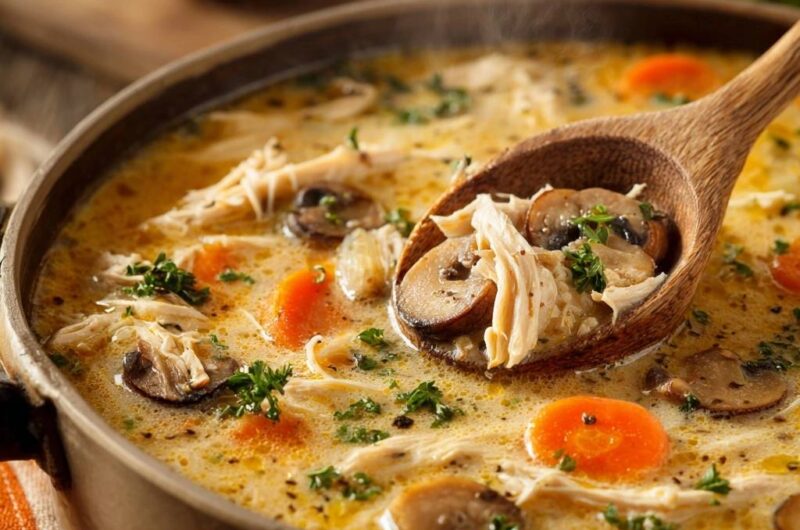
Shredded Chicken Mushroom Soup
Course: Main CourseCuisine: AmericanDifficulty: medium6
servings15
minutes35
minutes380
kcal50
MinutesThis recipe elevates classic chicken soup by searing mushrooms for umami and using a roux-based thickening method to ensure a creamy, emulsified broth that never turns out watery or bland.
Ingredients
2 lbs boneless skinless chicken breasts
1 lb cremini mushrooms, sliced
3 large carrots, peeled and sliced into rounds
1 large yellow onion, finely diced
4 cloves garlic, minced
5 cups low-sodium chicken broth
1 cup heavy cream
1/4 cup all-purpose flour
4 tablespoons unsalted butter
2 tablespoons olive oil
1 teaspoon dried thyme
1 teaspoon dried rosemary
1/2 teaspoon paprika (for golden color)
Salt and black pepper to taste
Fresh parsley, chopped for garnish
Directions
- Sear the Mushrooms: Heat olive oil in a large heavy-bottomed pot or Dutch oven over medium-high heat. Add the sliced mushrooms in a single layer. Let them sear undisturbed for 4 minutes until deeply browned and caramelized. Flip and cook for 2 more minutes. Remove mushrooms from the pot and set aside.
- Poach the Chicken: In the same pot, add the chicken breasts and the chicken broth. Bring to a gentle boil, then reduce heat to low, cover, and simmer for 15-18 minutes until the chicken is cooked through. Remove the chicken to a plate and shred with two forks. Keep the broth in the pot but turn off the heat.
- Build the Flavor Base: In a separate large skillet, melt the butter over medium heat. Add the diced onions and carrots. Sauté for 6-8 minutes until the onions are translucent and carrots begin to soften. Stir in the garlic, thyme, rosemary, and paprika, cooking for 1 minute until fragrant.
- The Thickening Roux: Sprinkle the flour over the sautéed vegetables in the skillet. Stir constantly for 2 minutes to cook out the raw flour taste. Slowly whisk in 1 cup of the warm chicken broth from the main pot into the skillet, stirring until a thick, smooth paste forms.
- Combine: Pour the thickened vegetable mixture from the skillet into the main pot of broth. Whisk well to combine. Add the shredded chicken and the seared mushrooms back into the pot.
- Temper the Cream: To ensure a perfectly smooth finish, pour the heavy cream into a small bowl. Whisk in one ladle of the hot soup broth to warm the cream (tempering). Slowly pour the tempered cream into the pot while stirring constantly.
- Final Simmer: Simmer the soup on medium-low for 10 minutes. This allows the carrots to reach perfect tenderness and the broth to thicken to a rich, velvety consistency. Season generously with salt and black pepper. Garnish with plenty of fresh parsley before serving.
Notes
- Tempering the cream prevents curdling and ensures a perfectly smooth finish. Searing the mushrooms undisturbed is key for deep caramelization.