Forget those blue boxes or the dry, grainy baked pasta dishes from potlucks past. There is something deeply restorative about a heavy cast-iron skillet filled to the brim with glowing, golden cheese sauce and smoky chunks of ham. This Creamy Skillet Mac and Cheese with Ham isn’t just a meal; it’s a masterclass in texture, balancing the saltiness of the meat with a velvet-smooth sauce and a shattering panko crunch.
You’ve likely experienced the heartbreak of a homemade sauce that “breaks,” leaving you with a puddle of oil and gritty clumps of protein. We’re moving past that today by focusing on a stovetop-to-broiler method that keeps the cheese luscious and the pasta perfectly tender. It’s the ultimate comfort food that feels sophisticated enough for a weekend dinner but comes together fast enough for a busy Tuesday.
The secret to that professional, glossy finish is all about temperature control and the “off-heat” melt. Most people make the mistake of boiling their cheese sauce, which practically guarantees a grainy result. By whisking your freshly shredded cheese into the base after you’ve pulled the pan off the burner, you ensure the emulsion stays intact. This one simple move changes everything about the final mouthfeel.
The Science of a Silky Cheese Sauce
Achieving a sauce that coats every noodle like liquid silk requires a little bit of kitchen chemistry. At the heart of this recipe is a roux, a cooked mixture of equal parts butter and flour. This roux serves as a stabilizer; the starch molecules swell and create a network that prevents the fat in the milk and cheese from separating. Without it, you’d just have oily pasta.
However, the real challenge lies in the cheese proteins, specifically casein. When cheese is exposed to high, direct heat, these proteins tighten up and squeeze out the fat, resulting in that dreaded clumping. This is why we use the residual heat of the thickened milk base to melt the cheese gently. It allows the fats and solids to stay suspended in a beautiful, creamy state.
In addition to heat management, the mineral content plays a role. Using whole milk provides enough fat to cushion the cheese proteins, while the calcium in the dairy helps maintain the structure of the sauce. When you combine a properly cooked roux with a slow, off-heat cheese integration, you create a velvet-like emulsion that stays stable even when it hits the broiler for that final golden crust.
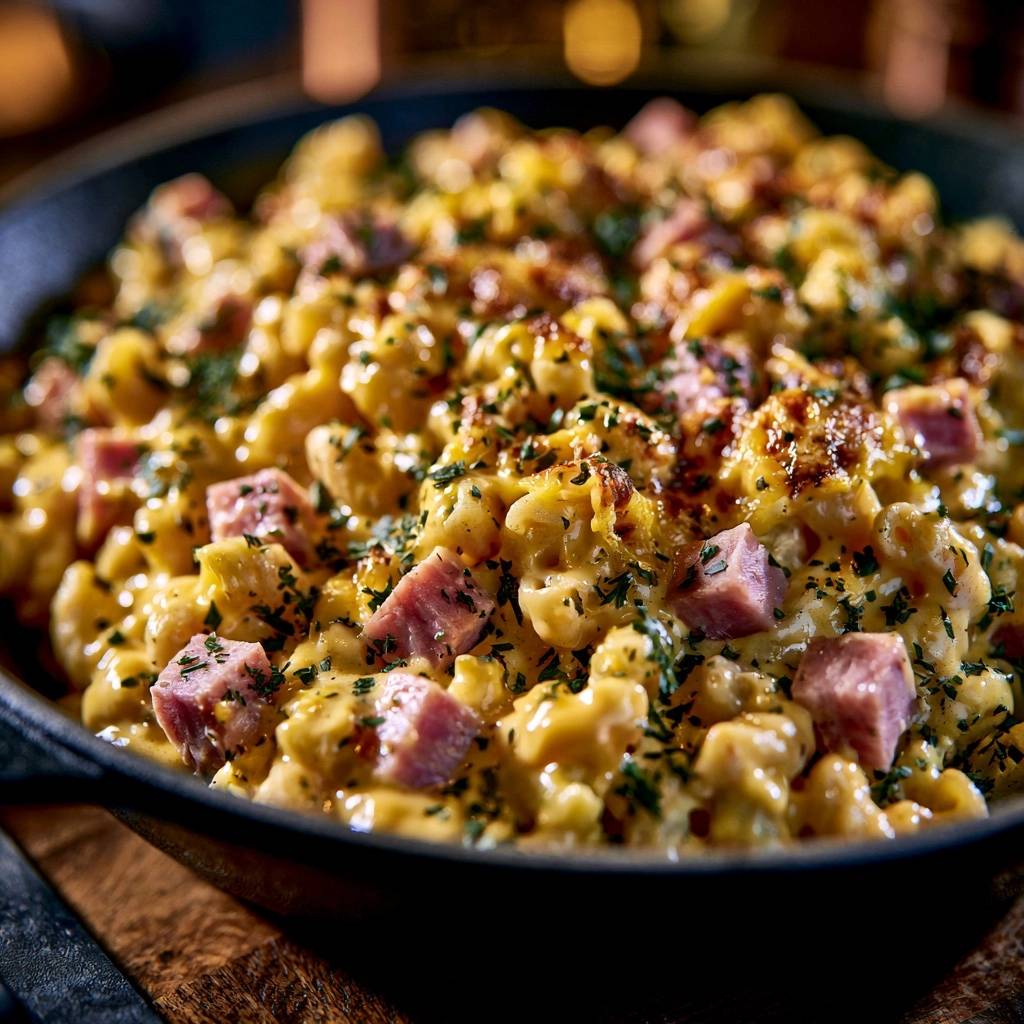
Essential Components for Skillet Mac and Cheese
Quality ingredients are the difference between a mediocre meal and a restaurant-quality dish. For the base, I always recommend a blend of Sharp Cheddar and Gruyère. The cheddar brings that classic, aggressive “bite” and iconic color, while the Gruyère offers a sophisticated nuttiness and superior melting capabilities. It’s the “stretch” factor that makes every forkful feel indulgent.
You must use whole milk for this recipe. Skim or 1% milk lacks the necessary fat to create a truly rich mouthfeel, and the sauce will often turn out watery or thin. The fat in whole milk acts as a bridge between the pasta starch and the cheese, ensuring the sauce clings to the macaroni rather than sliding off to the bottom of the skillet.
The most important rule in my kitchen is to grate your own cheese. Pre-shredded cheese in bags is coated in potato starch or cellulose to prevent it from clumping in the package. That same coating prevents the cheese from melting smoothly into your sauce, leading to a gritty, sandy texture. Spend the five minutes with a box grater; your taste buds will thank you.
Choosing the Right Ham and Pasta Shape
When it comes to the ham, skip the thin deli slices. You want thick-cut, cubed cooked ham that can stand up to the heavy sauce. These cubes provide a meaty, chewy contrast to the soft pasta. If you want to experiment, smoked turkey or even a beef-based ham substitute works beautifully here, provided they are cut into sturdy half-inch pieces.
While elbow macaroni is the traditional choice, don’t feel boxed in. The goal is “sauce-trapping.” Shapes like Cavatappi (corkscrews) or medium shells are fantastic because they have nooks and crannies that hold onto the cheese. Whatever you choose, make sure it’s a sturdy shape that won’t fall apart during the folding process.
Preparing the Perfect Al Dente Macaroni
One of the biggest mistakes in skillet pasta is overcooking the noodles in the initial boiling phase. You have to account for “carry-over cooking.” Since the macaroni will spend time submerged in a hot cheese sauce and then sit under a 500-degree broiler, it will continue to soften long after you drain the water.
I recommend boiling your pasta for exactly 3 minutes less than the package’s “al dente” instructions. The noodles should feel slightly too firm to eat comfortably at this stage. Don’t worry; they will soak up the flavorful sauce and reach the perfect texture in the oven. Also, salt your water heavily—it should taste like the sea—as this is your only chance to season the pasta itself.
Building the Roux and Milk Base
Building the base starts with melting your butter and whisking in the flour. You’re looking for a “blond roux.” Cook it for about two minutes until it smells slightly nutty and looks like wet sand. This step is vital because it cooks out the raw flour taste, which can ruin the flavor profile of your entire dish.
Next comes the tempering process. Do not dump all the milk in at once! Start by adding a small splash of room-temperature milk and whisking it into the roux until a thick paste forms. Repeat this slowly. This gradual addition prevents lumps from forming and ensures a smooth transition from a paste to a liquid.
Continue whisking over medium heat until the sauce reaches the “nappe” stage. This is a fancy chef term meaning the sauce is thick enough to coat the back of a spoon. If you run your finger through the sauce on the spoon, the line should stay clean and sharp. Once you hit this point, you’re ready for the cheese.
The Off-Heat Emulsion Technique
This is the “make or break” moment for your Skillet Mac and Cheese. Once your milk base is thick and bubbly, turn off the burner and move the skillet to a cool spot on the stove. The residual heat trapped in the pan and the sauce is more than enough to melt three cups of cheese without shocking the proteins.
Add your shredded cheddar and Gruyère one handful at a time. Stir gently in a circular motion until the first batch is fully incorporated and the sauce looks glossy before adding the next. This patience prevents the cheese from dropping to the bottom and scorching. By the time the last handful is in, you’ll have a thick, shimmering gold sauce that looks like it belongs in a commercial.
Assembling the Creamy Skillet Mac and Cheese with Ham
Now, gently fold in your undercooked macaroni and about three-quarters of your ham cubes. Use a large spatula to turn the pasta over in the sauce until every single tube is filled with cheesy goodness. If the mixture looks a little too tight, don’t be afraid to stir in an extra tablespoon or two of milk to loosen it up.
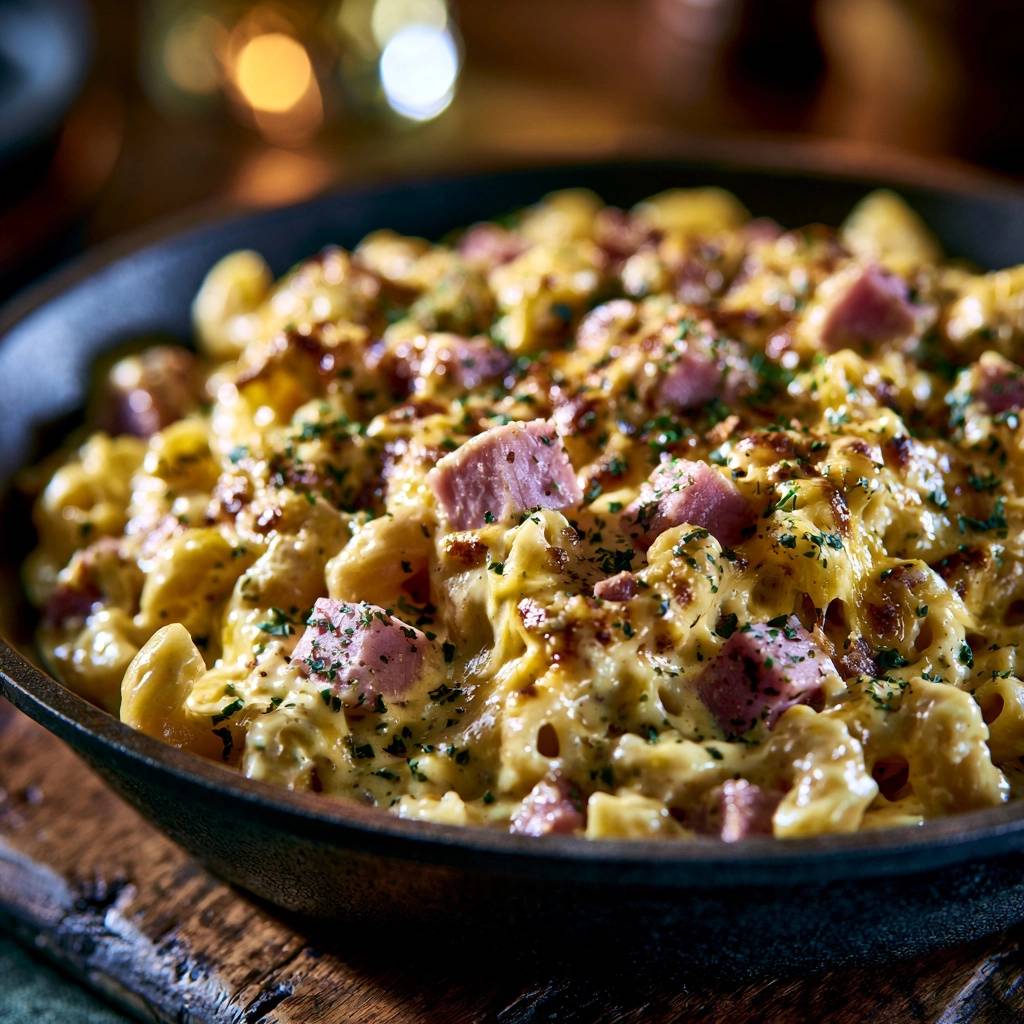
Smooth the top of the pasta and scatter the remaining ham and a generous layer of panko breadcrumbs over the surface. The panko provides a necessary textural break from the creamy interior. Slide the whole skillet under the broiler. Stay right there and watch it! It only takes 3 to 5 minutes for the crumbs to turn a deep mahogany and the ham edges to get those crispy, caramelized bits.
Troubleshooting Common Texture Issues
If you find your sauce is too thick after adding the pasta, it’s usually because the macaroni was too hot and absorbed the liquid too fast. Simply stir in a splash of warm milk until it reaches your desired consistency. If the sauce looks grainy, it’s almost always a result of using pre-shredded cheese or the heat being too high during the melting phase.
Another common issue is the pasta “drinking” all the sauce as it sits. This happens if the pasta wasn’t drained well or if it was overcooked initially. To prevent a dry skillet, ensure your sauce is slightly more liquid than you think it needs to be before it goes under the broiler. The panko topping will help trap moisture inside while it browns.
Flavor Variations and Ingredient Swaps
While this recipe is a classic, you can easily customize the flavor profile. A teaspoon of dry mustard powder added to the roux provides a sharp tang that cuts through the richness. For a more “grown-up” flavor, a tiny pinch of freshly grated nutmeg adds an incredible earthy depth that pairs perfectly with the Gruyère.
If you want some heat, diced jalapeños or a swirl of sriracha can be folded in with the ham. For the topping, if you don’t have panko, crushed buttery crackers or even plain potato chips create a fun, nostalgic crust. Just remember to keep the ratios the same so you don’t overwhelm the delicate cheese emulsion.
Optimal Side Dishes for Rich Pasta
Because this dish is incredibly rich and savory, you want side dishes that offer a bright, acidic contrast. A simple arugula salad tossed in a sharp lemon vinaigrette is my favorite pairing. The peppery greens and citrus juice act as a palate cleanser between bites of the heavy mac and cheese.
Roasted broccoli with a drizzle of balsamic glaze or quick-pickled red onions also work wonders. You want something with a bit of “crunch” or “zing” to balance the soft, creamy texture of the main event. Avoid starchy sides like bread or potatoes; you already have plenty of carbs in that skillet!
Storage and Reheating for Maximum Creaminess
Leftover mac and cheese often turns into a solid, unappealing brick in the fridge because the pasta continues to absorb moisture. Store it in an airtight container for up to three days. I don’t recommend freezing this dish, as the dairy-based sauce tends to separate and become watery once thawed and reheated.
To reheat, avoid the microwave if possible, as it can make the cheese oily. Instead, put the pasta in a small saucepan with a tablespoon of milk per cup of mac. Heat it over low power, stirring gently, until the milk re-emulsifies with the cheese. This brings back that original silkiness that makes the dish so special.
Expert Tips for Professional Results
First, use a cast-iron skillet if you have one. The heavy metal retains heat beautifully, which helps the sauce stay warm while you’re eating. Second, never rinse your pasta after draining. That light coating of starch on the outside of the macaroni is like “glue” that helps the cheese sauce stick to the noodles.
Third, make sure your milk is at room temperature before adding it to the roux. Cold milk can cause the butter to seize up, leading to a lumpy sauce that’s hard to smooth out. Finally, for an extra-decadent crust, toss your panko breadcrumbs with a teaspoon of melted butter before sprinkling them on top. It ensures every crumb turns perfectly golden-brown.
How do I keep my mac and cheese from getting dry in the oven?
The key is to undercook your pasta by 3 minutes during the boiling stage and to ensure your cheese sauce is slightly thinner than you want the final product to be. The pasta will absorb some liquid while broiling. By using the broiler instead of a long bake, you brown the top quickly without drying out the creamy interior.
Can I use a different type of cheese?
Absolutely! While Cheddar and Gruyère are the gold standard for flavor and melt, you can use Fontina, Monterey Jack, or even Gouda. Just ensure you are grating the cheese yourself from a block to avoid the anti-clumping agents found in pre-shredded bags which cause graininess.
What is the best way to store and reheat leftovers?
Store leftovers in an airtight container in the refrigerator for up to 3 days. To reheat, place the mac and cheese in a skillet or saucepan over low heat and add a splash of milk. Stir gently as it warms to help the sauce become creamy again. Avoid high heat, which will cause the cheese to separate and become oily.
Why did my cheese sauce turn out gritty or grainy?
Graininess usually happens for two reasons: using pre-shredded bagged cheese or adding the cheese while the sauce is still boiling. The high heat causes the proteins in the cheese to clump together. Always remove the pan from the heat source before stirring in your freshly grated cheese to ensure a smooth emulsion.
Can I make this recipe ahead of time?
You can prepare the sauce and boil the pasta ahead of time, but don’t combine them until you are ready to eat. If they sit together too long, the pasta will soak up all the sauce. Store the sauce and pasta separately, then gently reheat the sauce with a splash of milk before folding in the pasta and broiling.
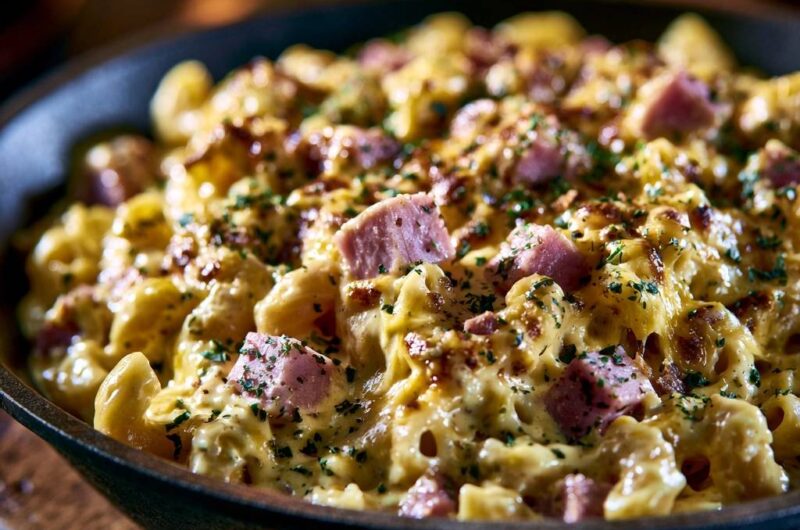
Creamy Skillet Mac and Cheese with Ham
Course: Main CourseCuisine: AmericanDifficulty: easy4
servings10
minutes25
minutes35
Minutes620
kcalAmerican
Ingredients
1 pound elbow macaroni
2 cups thick-cut cubed cooked ham
3 cups freshly shredded cheese (2 cups Sharp Cheddar, 1 cup Gruyère or Swiss)
1/4 cup unsalted butter
1/4 cup all-purpose flour
3 1/2 cups whole milk, room temperature
1/2 teaspoon garlic powder
1/2 teaspoon onion powder
1/2 teaspoon smoked paprika (for color and depth)
1/4 teaspoon black pepper
2 tablespoons fresh parsley, finely chopped
1/2 cup panko breadcrumbs
Directions
- Boil the macaroni in a large pot of heavily salted water for 3 minutes less than the package directions for al dente. The pasta should still have a firm bite, as it will finish cooking in the sauce. Drain and set aside.
- In a large cast-iron or oven-safe skillet, melt the butter over medium heat. Whisk in the flour and cook for 2 minutes, whisking constantly, until the roux is golden and smells slightly nutty.
- Slowly pour in the room temperature milk one splash at a time, whisking vigorously. This gradual addition is the critical step to avoid lumps. Continue cooking and whisking until the sauce thickens enough to coat the back of a spoon.
- Remove the skillet from the heat entirely. This is the secret to the hook: high heat breaks the cheese emulsion and causes graininess. Stir in the garlic powder, onion powder, smoked paprika, and pepper.
- Add the shredded cheese one handful at a time, stirring gently until completely melted and glossy. Only use freshly grated cheese; pre-shredded bags contain cellulose that creates a gritty texture.
- Fold in the cooked macaroni and 1.5 cups of the cubed ham until every piece is thoroughly coated in the silky sauce. If the sauce seems too thick, add a splash of extra milk.
- Top the mixture with the remaining 0.5 cup of ham cubes and the panko breadcrumbs.
- Place the skillet under the broiler for 3 to 5 minutes. Watch closely; you want the breadcrumbs to turn deep golden brown and the exposed ham edges to slightly caramelize, as seen in the image.
- Remove from the oven, garnish generously with fresh parsley, and serve immediately while the sauce is at its peak creaminess.
Notes
- To prevent a grainy texture, always remove the skillet from the heat before adding cheese and avoid pre-shredded bags which contain cellulose. Use room temperature milk to ensure a smooth roux integration.