
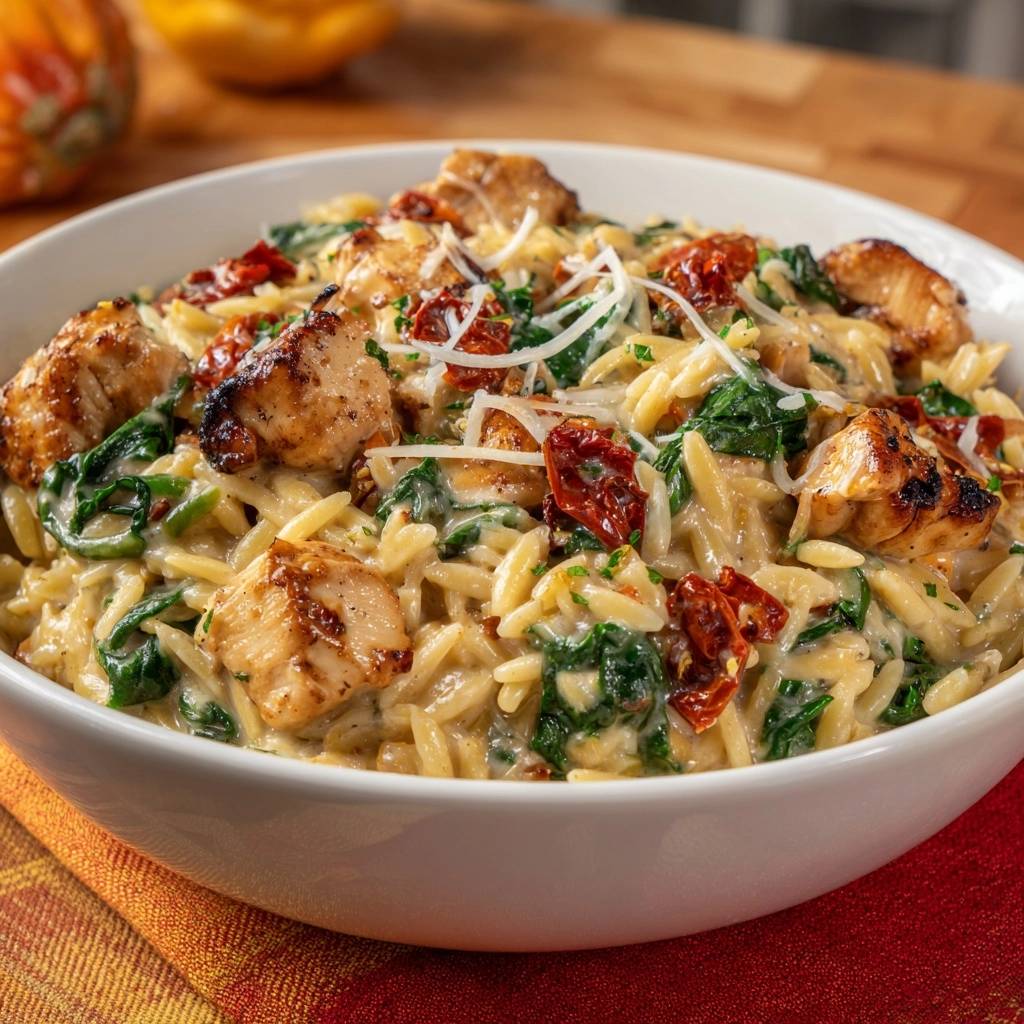
Imagine a forkful of velvety, gold-hued pasta that manages to be incredibly creamy without feeling heavy or cloying. The sun-dried tomatoes provide a concentrated burst of Mediterranean sunshine, cutting through the richness of the parmesan and cream. When you bite into the chicken, it’s perfectly seared on the outside and juicy on the inside, nestled in a sauce that clings to every single grain of orzo. It’s the kind of meal that feels like a high-end bistro specialty but comes together in a single skillet on a Tuesday night.
However, many home cooks find orzo frustrating because it often turns into a thick, gummy porridge. You want distinct grains of pasta, not a sticky clump that sticks to the roof of your mouth. The secret to achieving that elusive restaurant-quality texture lies in a simple but transformative technique: toasting the dry pasta. By treating the orzo like risotto in the early stages, you ensure a sophisticated mouthfeel that stays light and elegant from the first bite to the last.
The real trick to this Creamy Sun-Dried Tomato Chicken Orzo is creating a starch barrier. Before any liquid hits the pan, you’ll sear the dry orzo in butter until it smells nutty and looks golden. This step prevents the pasta from releasing too much starch at once, which is exactly what causes that dreaded “mushy” texture. Once you master this quick toasting phase, you’ll never go back to boiling orzo in plain water again.
The Science of Non-Gummy Orzo Texture
Orzo might look like rice, but it’s actually a small, dense pasta made from semolina flour. Because of its high surface-area-to-volume ratio, it releases a significant amount of amylose starch as it cooks. In a standard boiling method, this starch leaches into the water and creates a sticky film. When you’re making a one-pan creamy dish, that excess starch can quickly turn your sauce into a thick, gluey paste if it isn’t managed correctly.
Toasting the orzo triggers the Maillard reaction, which is the same chemical process that browns a steak or toasts bread. This heat application does more than just add a complex, nutty flavor; it physically alters the exterior of the pasta. By lightly “frying” the dry grains in fat, you create a protective coating that slows down the starch release. This allows the orzo to cook through while maintaining its structural integrity.
Think of it as building a dam for the starch. Instead of the amylose flooding the pan and clumping the grains together, it’s released slowly and evenly. This results in a sauce that is naturally thickened and silky rather than heavy and sticky. You get the best of both worlds: a rich, emulsified cream sauce and pasta grains that remain perfectly al dente and distinct.
Essential Components for the Creamy Tomato Base
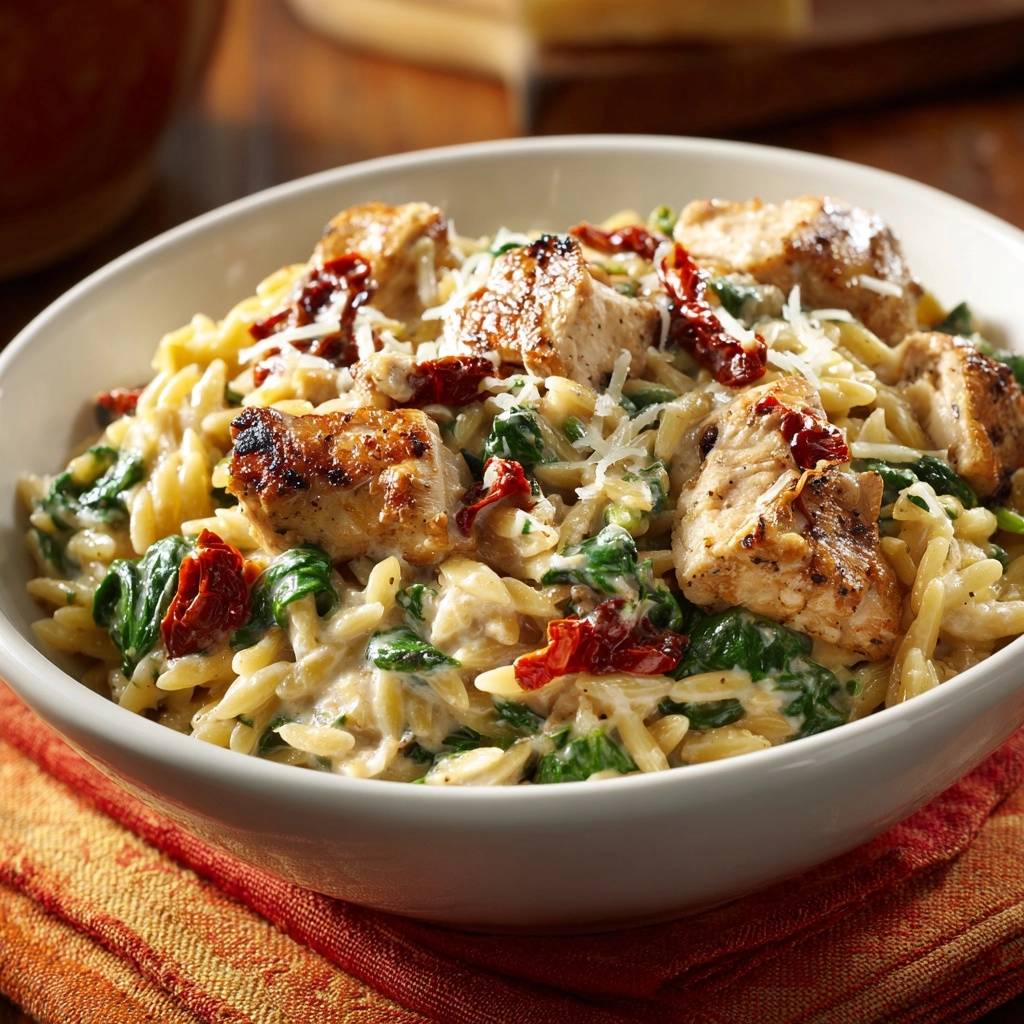
Choosing the right ingredients is the first step toward a successful skillet meal. For the protein, chicken breast is the ideal candidate here. Because we are cutting the meat into small, one-inch chunks, the quick searing time ensures the breast meat stays tender and moist. While thighs are great for long braises, the lean breast meat picks up the flavors of the oregano and smoked paprika beautifully without adding excess grease to the delicate cream sauce.
The sun-dried tomatoes are the heart of the flavor profile. Always reach for the oil-packed variety in a glass jar rather than the dry-packed pouches. The oil-packed tomatoes have a much softer, more pliable texture that melts into the sauce. Pro tip: don’t toss that oil! Use a teaspoon of the tomato-infused oil from the jar to sear your chicken for an extra layer of savory depth. It carries the concentrated essence of the tomatoes and adds a vibrant red hue to the dish.
Achieving the “golden ratio” of liquid is vital for one-pan pasta. We use 3 cups of chicken broth for 1.5 cups of orzo. This specific ratio allows the pasta to fully hydrate while leaving just enough liquid behind to emulsify with the cream and cheese. If you use too much liquid, you’ll have to boil it off, which overcooks the pasta. If you use too little, the orzo will stay crunchy. This balance ensures a “no-drain” finish where every drop of flavor stays in the pan.
Finally, the greens matter. Baby spinach is the superior choice because its stems are tender and it wilts in seconds. Mature spinach leaves can be tough and stringy, which disrupts the smooth texture of the orzo. The baby leaves provide a fresh, earthy contrast to the rich sauce and add a pop of color that makes the dish look as good as it tastes.
Selecting the Right Parmesan and Cream
When it comes to the dairy, quality is non-negotiable. You must use freshly grated Parmesan cheese from a wedge. Pre-shredded cheeses in bags are coated in potato starch or cellulose to prevent clumping in the package. Unfortunately, those anti-caking agents also prevent the cheese from melting smoothly, often resulting in a grainy or “broken” sauce. A fresh grate ensures the cheese dissolves instantly into the heavy cream.
Speaking of cream, stick with heavy cream for this recipe. The high fat content acts as a stabilizer. If you try to substitute with whole milk or half-and-half, the acidity from the sun-dried tomatoes and the heat of the pan can cause the sauce to curdle or break. Heavy cream creates a stable emulsion that coats the back of a spoon and stays silky even as the dish cools slightly on the plate.
Phase One: Searing Chicken for Maximum Fond
The foundation of this dish is built in the first five minutes. When you sear the seasoned chicken breast in the hot skillet, you aren’t just cooking the meat; you’re creating “fond.” Fond is the collection of caramelized brown bits that stick to the bottom of the pan. These bits are concentrated flavor bombs that will eventually dissolve into the broth, giving your orzo a deep, savory backbone that you can’t get from a carton of stock alone.
Keep the heat at a steady medium-high and avoid crowding the pan. If the chicken pieces are too close together, they will steam in their own moisture rather than sear. You want a dark, golden crust on the outside. Be mindful of the smoked paprika in the seasoning; it can burn if the heat is too aggressive. If you see the spices turning black rather than deep red, turn the heat down slightly. Once the chicken is cooked through, set it aside and let it rest so the juices stay inside the meat.
Phase Two: Toasting the Orzo and Building Aromatics
After removing the chicken, don’t wash that pan! Add your butter and let it foam, then toss in the dry orzo. Use a wooden spoon to scrape up those brown bits from the chicken as you stir the pasta. You’ll notice the orzo changing from a pale cream color to a toasted tan. Listen for a slight crackling sound and wait for that unmistakable nutty aroma to fill your kitchen. This usually takes about two to three minutes of constant stirring.
Once the orzo is toasted, it’s time for the aromatics. Add the minced garlic and sun-dried tomatoes now. We add them after the toasting phase because garlic burns very quickly. By giving the garlic just sixty seconds of heat, you mellow its raw bite and release its fragrance without any bitterness. The sun-dried tomatoes will also soften slightly in the butter, preparing them to release their oils into the broth in the next step.
Phase Three: The Absorption Method and Emulsification
Pouring in the chicken broth should be done slowly to avoid a massive cloud of steam. Once the liquid is in, give the pan one good stir to make sure no orzo is stuck to the corners, then turn the heat down to a low simmer. Covering the pan is essential here. The steam trapped under the lid ensures the orzo cooks evenly from top to bottom. Resist the urge to stir constantly; you only need to check it once or twice to ensure the bottom isn’t scorching.
If you enjoy creating a velvety sauce, check out this skillet creamy chicken rigatoni.
After about 8 to 10 minutes, the orzo should be tender and the liquid mostly gone. This is the “magic moment.” Turn the heat to low and pour in the heavy cream and parmesan. Stirring continuously for about a minute creates an emulsion. You’ll see the thin liquid transform into a glossy, thick glaze that perfectly coats every grain of pasta. This is the hallmark of a well-made orzo dish—the sauce and the pasta become one cohesive unit.
The final touch is folding the chicken and spinach back into the pan. The residual heat from the orzo is enough to wilt the spinach and warm the chicken through. By adding the chicken back at the very end, you ensure it doesn’t overcook or become rubbery. The juices that collected on the chicken plate are pure gold; pour them right back into the skillet for an extra boost of flavor.
Troubleshooting Common Orzo Mistakes
If you find that your liquid has absorbed too quickly but the orzo is still a bit crunchy in the center, don’t panic. Simply add a splash of warm chicken broth or water (about 1/4 cup) and put the lid back on for another two minutes. The “carry-over” cooking method—letting the dish sit off the heat with the lid on—is a great way to finish the pasta without turning the sauce into a dry paste.
On the flip side, if your sauce looks a bit too thin or watery, the solution is usually more cheese. Parmesan acts as a natural thickening agent. Stir in an extra tablespoon or two of freshly grated cheese and let the dish sit uncovered for a minute. The sauce will tighten up significantly as it cools. Remember, orzo is like a sponge; it will continue to soak up liquid even after you turn off the stove.
Flavor Variations and Ingredient Swaps
While the sun-dried tomato and spinach combo is a classic, this recipe is a fantastic canvas for other flavors. If you want more vegetables, try adding roasted red bell peppers or marinated artichoke hearts along with the tomatoes. They provide a similar Mediterranean vibe while adding different textures. For a bit of heat, a pinch of red pepper flakes added with the garlic works wonders.
If you want to swap the protein, seared salmon fillets or even large shrimp are excellent alternatives. Just cook them separately and flake them into the finished orzo at the end. For a vegetarian version, you can omit the chicken and add a can of rinsed chickpeas or some sautéed mushrooms. If you’re out of oregano, fresh basil or thyme are wonderful herbal substitutes that pair beautifully with the creamy tomato base.
Optimal Side Dish Pairings
Because this dish is rich and creamy, it pairs best with sides that offer a hit of acidity or a refreshing crunch. A simple arugula salad tossed with lemon juice and olive oil is the perfect palate cleanser. The peppery bite of the arugula cuts right through the heavy cream and parmesan, making every bite of the orzo feel fresh.
If you want something warm, charred broccolini with a squeeze of lemon and some garlic chips provides a great textural contrast. And of course, you can’t go wrong with a piece of crusty sourdough bread. It’s the best tool for mopping up any leftover sun-dried tomato cream at the bottom of your bowl. Keep the sides simple so the complex flavors of the orzo can really shine.
Storage and Reheating for Best Consistency
Orzo is notorious for absorbing liquid as it sits in the fridge. If you have leftovers, they will likely look like a solid block the next day. Don’t worry, the flavor is still there! To restore that silky texture, add a tablespoon or two of broth or water to your portion before reheating. This helps loosen the starches and recreates the sauce.
When reheating, the stovetop is always better than the microwave. Place the orzo in a small pan over low heat and stir gently as you add your liquid. If you must use a microwave, heat it in 30-second intervals, stirring in between to ensure even warming. This dish does not freeze well, as the cream sauce tends to separate and the pasta becomes very soft upon thawing, so it’s best enjoyed within three days.
Expert Tips for Restaurant-Quality Results
One of the best ways to ensure a smooth cook is to warm your chicken broth before adding it to the skillet. Adding ice-cold broth to a hot pan drops the temperature instantly, which can make the pasta cook unevenly. A quick minute in the microwave for the broth makes a huge difference in maintaining a steady simmer.
Always let the finished dish rest for about two minutes before you plate it. This short resting period allows the sauce to settle and fully adhere to the orzo. Finally, use a wide, deep skillet rather than a tall pot. The wider surface area allows for more even evaporation and gives you plenty of room to toss the spinach and chicken at the end without making a mess.
Frequently Asked Questions
Can I use whole wheat orzo for this recipe?
Yes, you can use whole wheat orzo, but keep in mind it has a heartier, grainier texture and a stronger nutty flavor. It may require an extra 2-3 minutes of simmering time and a splash more broth. The toasting step is even more important here to help soften the bran layer.
How do I prevent the heavy cream from curdling?
Curdling usually happens when cold cream hits a boiling acidic liquid or when using low-fat dairy. To prevent this, ensure you are using heavy cream and turn the heat down to low before stirring it in. The high fat content in heavy cream makes it much more resistant to curdling.
Is it possible to make this in a slow cooker?
It is not recommended to make this specific dish in a slow cooker. Orzo is very delicate and cooks quickly; the long, slow heat of a crockpot will almost certainly turn the pasta into a mushy, overcooked mass. This recipe is designed for the precision of stovetop cooking to maintain texture.
Can I substitute the sun-dried tomatoes with fresh cherry tomatoes?
You can, but the flavor profile will change significantly. Fresh cherry tomatoes are more acidic and watery, whereas sun-dried tomatoes are intensely sweet and savory. If using fresh, sauté them until they burst before adding the orzo to ensure their moisture doesn’t throw off the liquid ratio.
Chicken Orzo
Course: Main CourseCuisine: AmericanDifficulty: easy4
servings10
minutes20
minutes580
kcal30
MinutesA one-pan meal featuring seared chicken, sun-dried tomatoes, and fresh spinach tossed in a velvety parmesan cream sauce. The orzo is toasted before simmering to ensure a perfect al dente texture.
Ingredients
1.25 lbs chicken breast, cut into 1-inch chunks
1.5 cups dry orzo pasta
3 cups low-sodium chicken broth
1/2 cup sun-dried tomatoes (packed in oil), drained and chopped
3 cups fresh baby spinach
4 cloves garlic, minced
1/2 cup heavy cream
1/2 cup freshly grated parmesan cheese, plus extra for garnish
1 tablespoon olive oil
1 tablespoon butter
1 teaspoon dried oregano
1/2 teaspoon smoked paprika
Salt and black pepper to taste
Fresh parsley, chopped (optional garnish)
Directions
- Season the chicken pieces thoroughly with salt, pepper, oregano, and smoked paprika. Heat the olive oil in a large, deep skillet over medium-high heat. Add the chicken in a single layer and sear until deeply golden brown and cooked through (about 3-4 minutes per side). Remove the chicken from the pan and set aside on a plate.
- Lower the heat to medium and add the butter to the same skillet, scraping up any browned bits (fond) from the chicken. Add the dry orzo directly into the pan. Stir the dry orzo constantly for 2-3 minutes until it smells nutty and the grains are toasted to a golden brown. This step is critical to prevent gumminess.
- Add the minced garlic and chopped sun-dried tomatoes. Sauté for 1 minute until fragrant.
- Slowly pour in the chicken broth. Bring the mixture to a boil, then immediately reduce the heat to a low simmer. Cover the skillet with a tight-fitting lid.
- Simmer for 8-10 minutes, stirring once or twice during the process to ensure no grains stick to the bottom. The orzo should be tender and most of the liquid should be absorbed.
- Remove the lid and stir in the heavy cream and grated parmesan cheese. Stir continuously for 1 minute over low heat until the sauce thickens into a silky, creamy glaze.
- Add the fresh spinach and the cooked chicken (along with any juices from the plate) back into the skillet. Fold gently until the spinach is wilted and the chicken is reheated.
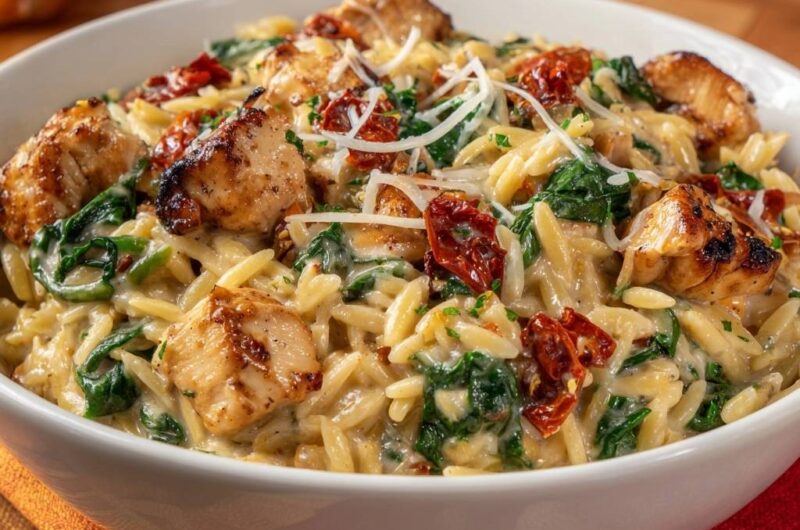
- Serve immediately in warm bowls. Garnish with a generous sprinkle of shredded parmesan and fresh parsley to match the visual presentation.
Notes
- The secret to preventing a gummy texture is toasting the dry orzo in butter for 2 to 3 minutes before adding any liquid. This creates a barrier that keeps the grains distinct.