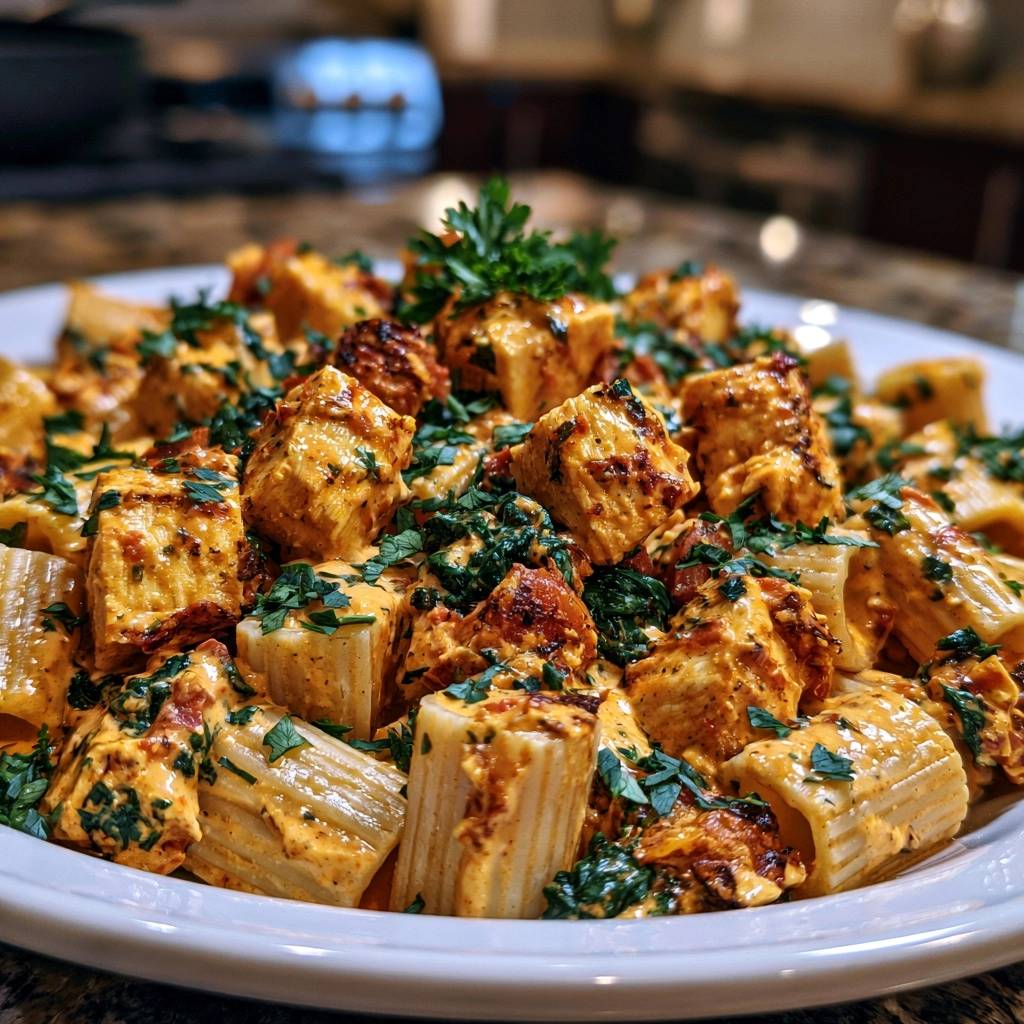
Stop settling for homemade pasta dishes where the sauce pools at the bottom of the bowl like a sad, watery soup. We’ve all been there, staring at a plate where the cream refuses to cling to the noodles, leaving the chicken dry and the flavor diluted. The secret to a restaurant-quality finish isn’t a fancy ingredient, but rather the deliberate emulsification of starchy pasta water and heavy cream.
This recipe focuses on a specific reduction technique and the concentrated umami of sun-dried tomatoes to create a velvety, orange glaze. By mashing tomato paste into the aromatics and simmering the cream until it naturally thickens, you develop a base that is incredibly rich and deeply savory. It’s a sensory powerhouse that balances the sweetness of the tomatoes with the sharp saltiness of aged parmesan.
The real expertise lies in the “finish.” You must pull your rigatoni out of the boiling water while it still has a firm bite. This allows the pasta to finish its cooking cycle directly in the skillet, where it drinks up the sauce instead of plain water. This creates a permanent bond between the noodle and the cream that won’t break or separate on your plate.
The Science of a Non-Watery Pasta Sauce
Achieving a thick, glossy sauce that coats every ridge of your rigatoni requires an understanding of starch and fat. When you boil pasta, it releases amylose starch into the water. This cloudy, salted liquid is liquid gold in the culinary world because it acts as a natural emulsifier. It bridges the gap between the fats in the heavy cream and the water-based elements of the sauce.
If you simply pour cream over cooked noodles, the fats will often slide right off the smooth surface of the pasta. However, when you whisk in that reserved starchy water, it creates a stable structure that holds the sauce together. This is why we never rinse our pasta; we want that exterior starch to remain so it can grab onto the sun-dried tomato reduction.
Furthermore, the “al dente” stage is a functional requirement here. Think of the pasta as a sponge. If the sponge is already full of water, it can’t soak up any more flavor. By undercooking the rigatoni by two or three minutes, you leave room for the noodles to absorb the seasoned cream, ensuring the flavor goes all the way through to the center of the tube.
Essential Components for the Sun-Dried Tomato Base
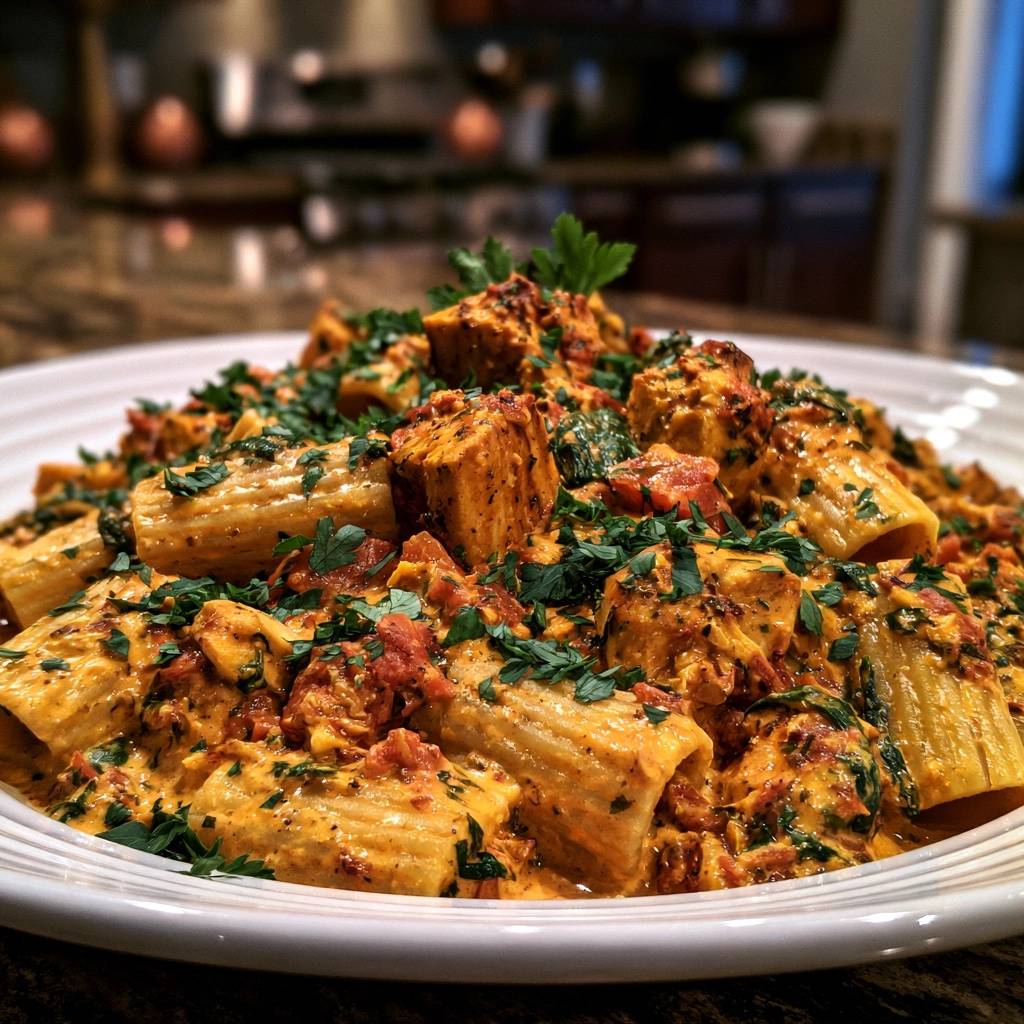
Quality ingredients are the backbone of this dish, starting with the sun-dried tomatoes. Always reach for the oil-packed variety found in glass jars rather than the dry-packed pouches. The oil-packed tomatoes are more tender and carry a concentrated sweetness that infuses the entire skillet. In fact, using a tablespoon of that flavored oil to sear your chicken is a pro move for extra depth.
Tomato paste plays a dual role as a thickening agent and a color booster. It provides a foundational “bass note” of flavor that fresh tomatoes simply can’t match in a short cook time. When you sauté the paste with garlic, it loses its raw, metallic edge and transforms into a savory concentrate that gives the sauce its signature sunset hue.
For the cheese, freshly grated parmesan is non-negotiable. Pre-shredded cheeses are coated in potato starch or cellulose to prevent clumping in the bag. These additives will prevent the cheese from melting smoothly, often resulting in a grainy or “broken” sauce. Grating your own cheese ensures it melts into a silky, homogenous cream the moment it hits the pan.
Selecting and Preparing the Chicken Breast
When prepping your chicken, aim for uniform 1-inch cubes. This size is the “sweet spot” for pasta dishes because it provides enough surface area for a deep, golden-brown sear while remaining small enough to fit on a fork with a piece of rigatoni. It ensures you get a bit of protein in every single bite.
Before the chicken ever touches the pan, you must pat it dry with paper towels. Moisture is the enemy of a good sear. If the meat is damp, it will steam in the pan and turn grey instead of developing that beautiful, caramelized crust. Seasoning generously with smoked paprika right before searing also helps build a smoky, charred profile that cuts through the rich cream.
The Rigatoni Advantage: Why Shape Matters
Rigatoni is the superior vessel for this specific sauce because of its structural design. The word “rigatoni” comes from the Italian “rigate,” meaning ridged. These exterior ridges act like tiny “sauce traps,” ensuring the cream doesn’t just slide off. It’s a much more efficient delivery system than smooth penne or thin spaghetti.
Additionally, the large hollow center and wide diameter of rigatoni allow the chopped sun-dried tomatoes and bits of garlic to get tucked inside the noodle. When you bite down, you get a burst of concentrated sauce from the middle. It’s a sturdy shape that can stand up to the vigorous tossing required to emulsify the sauce without breaking apart.
Step-by-Step: Searing Chicken for Maximum Fond
The secret flavor weapon in this skillet is the “fond.” Fond is the collection of browned bits and caramelized juices stuck to the bottom of the pan after searing the chicken. Do not wash this away! These bits are packed with concentrated savory flavor that will eventually dissolve into your cream sauce, giving it a professional complexity.
To get the best fond, heat your oil until it’s shimmering but not smoking. Add the chicken in a single layer, making sure not to overcrowd the pan. If you put too much meat in at once, the temperature of the skillet will drop, and the chicken will boil in its own juices. Let the cubes sit undisturbed for at least 3 minutes to develop a deep brown crust before flipping.
Once the chicken is deeply golden and charred on the edges, remove it from the pan. It doesn’t need to be 100% cooked through at this stage, as it will finish simmering in the sauce later. The goal here is strictly flavor development through the Maillard reaction, which creates those complex, roasted aromas that define a great pasta dish.
Building the Concentrated Tomato and Cream Reduction
After removing the chicken, lower the heat to medium and add your garlic and tomato paste. This is called “blooming.” You want to mash the paste into the residual oil and garlic, stirring constantly for about two minutes. You’ll notice the color shift from a bright, vibrant red to a darker, brick-red tone. This indicates the sugars are caramelizing and the raw flavor is gone.
Next, pour in the heavy cream. Use a wooden spoon to scrape the bottom of the skillet vigorously. This process, known as deglazing, lifts all that delicious chicken fond and incorporates it into the liquid. The cream will initially look pale, but as it picks up the tomato paste and fond, it will turn a rich, creamy orange.
Let the cream come to a gentle simmer. You are looking for the liquid to reduce by nearly half. As the water evaporates, the fats and proteins concentrate, creating a naturally thick texture. You’ll know it’s ready when the sauce coats the back of a spoon and you can draw a line through it with your finger that stays clean.
The Emulsification Phase: Binding Sauce to Noodle
This is the technical heart of the recipe. Once your sauce is reduced and the parmesan is melted in, it’s time to bring the pasta and sauce together. Add the undercooked rigatoni and the seared chicken back into the skillet. At this point, the sauce might look a bit too thick or “tight,” which is exactly where the reserved pasta water comes in.
Add about half a cup of that starchy water and start tossing the pasta vigorously. Use a large spoon or tongs to keep everything moving over medium heat. You are essentially forcing the fat in the cream to bond with the starch in the water. As the rigatoni finishes cooking, it will release even more starch, acting as a glue that binds the sauce to the noodle.
Watch the texture closely. You are looking for a “glossy” finish where the sauce looks like a shiny glaze rather than a liquid. If the pan looks dry, add another splash of pasta water. The result should be a cohesive dish where every tube of rigatoni is perfectly coated, with no liquid separating or pooling at the bottom of the skillet.
Troubleshooting Common Creamy Pasta Obstacles
If your sauce looks “broken” or oily, it usually means the heat was too high when the cheese was added, causing the fats to separate. You can often fix this by adding a tablespoon of pasta water and whisking vigorously off the heat. The starch helps pull the emulsion back together. Always add cheese at the very end over lower heat to prevent this.
If the sauce becomes too thick or “gummy,” it’s likely because the pasta absorbed the liquid faster than expected. This is common with rigatoni. Simply stir in a little more pasta water, one tablespoon at a time, until the sauce regains its silky flow. Never use plain tap water for this, as it will dilute the flavor and ruin the emulsion.
For overcooked chicken, the best prevention is the sear-and-remove method. By taking the chicken out of the pan while you build the sauce, you ensure the breast meat doesn’t spend ten minutes boiling in cream. Only add it back for the final two minutes of tossing to ensure it stays juicy and tender while reaching the safe internal temperature.
Flavor Variations and Ingredient Substitutions
While chicken breast is the classic choice, you can easily swap it for boneless, skinless chicken thighs. Thighs have a higher fat content and stay incredibly moist, making them very forgiving for beginner cooks. If you want to add a nutritional boost, stir in two cups of fresh baby spinach during the final tossing phase; the heat from the pasta will wilt it in seconds.
For those who enjoy a bit of heat, you can increase the red pepper flakes or even add a teaspoon of Calabrian chili paste for a smoky, spicy kick. If you find the sun-dried tomatoes too sweet, a squeeze of fresh lemon juice at the very end can brighten the entire dish and cut through the heaviness of the heavy cream.
If you are out of rigatoni, penne rigate or large shells are the best substitutes. Avoid smooth pastas like fettuccine for this specific sauce, as they don’t have the “pockets” needed to hold onto the chopped tomatoes and thick reduction. The goal is always to maintain that perfect ratio of sauce to pasta in every mouthful.
Optimal Side Dishes for Rich Creamy Pasta
Because this rigatoni is incredibly rich and savory, you want side dishes that provide a sharp, acidic contrast. A simple arugula salad tossed in a bright lemon vinaigrette is the perfect companion. The peppery bite of the arugula and the acid from the lemon help cleanse your palate between bites of the creamy pasta.
Charred broccolini or roasted asparagus with a sprinkle of garlic and sea salt also work beautifully. These green vegetables add a necessary crunch and a slight bitterness that balances the sweetness of the sun-dried tomatoes. Avoid serving heavy garlic bread or thick rolls, as the rigatoni is already a very filling, carb-heavy main course.
Storage and Reheating for Best Texture
Creamy pasta is notorious for “disappearing” in the fridge. As the dish sits, the pasta continues to absorb the moisture from the sauce, often leaving you with a dry, clumped mess the next day. To store, place leftovers in an airtight container for up to three days. I do not recommend freezing this dish, as the cream can take on a grainy texture once thawed.
When reheating, avoid the microwave if possible, as it tends to make the chicken rubbery and causes the sauce to break. Instead, place the pasta in a small skillet over medium-low heat. Add a splash of milk or a tablespoon of water to loosen things up. Stir gently as it warms; this helps re-emulsify the fats and restores that glossy, restaurant-quality finish.
Frequently Asked Questions
How do I keep the sauce from getting watery?
The most common cause of watery sauce is failing to reduce the heavy cream or skipping the pasta water. You must simmer the cream until it thickens enough to coat a spoon before adding the pasta. Additionally, the starch in the reserved pasta water acts as a binder. Without that starch, the fat and water in the recipe will never truly marry, leading to a thin, runny mess at the bottom of your bowl.
Can I use half-and-half instead of heavy cream?
You can, but it requires more care. Half-and-half has a lower fat content, which means it won’t thicken as naturally as heavy cream and is more prone to curdling if boiled too hard. If you use half-and-half, you may need to simmer it longer or add a tiny bit more parmesan to help with the thickening. For the best “velvety” results that mimic a high-end Italian bistro, heavy cream is definitely the way to go.
Why is my chicken dry even though it’s in a sauce?
Chicken breast dries out quickly when overcooked. If you leave the chicken in the pan the entire time you are simmering the cream, it will become tough and fibrous. The “sear and remove” technique is vital. By searing the outside for flavor and then removing it while the sauce reduces, you ensure the chicken only spends the last 2-3 minutes in the heat, keeping it juicy and tender.
What is the best way to store and reheat leftovers?
Store leftovers in an airtight container in the refrigerator for up to 3 days. To reheat, put the pasta in a skillet over medium-low heat with a splash of milk or water. Stir constantly until the sauce becomes creamy again. Avoid the microwave, as the high, uneven heat often causes the cream sauce to separate into a puddle of oil.
Can I make this recipe dairy-free?
While this specific recipe relies on the proteins in heavy cream and parmesan for its texture, you can substitute with a high-quality cashew cream or full-fat coconut milk. However, keep in mind that coconut milk will add a slight tropical flavor. You would also need to use a nutritional yeast or a dairy-free parmesan alternative to maintain that savory, salty “umami” profile that the cheese provides.
Do I have to use sun-dried tomatoes in oil?
It is highly recommended. Sun-dried tomatoes packed in oil are much softer and more flavorful than the dry-shriveled ones in pouches. If you only have the dry kind, you must soak them in hot water for 20 minutes before chopping, or they will be tough and leathery in your pasta. The oil from the jar also makes a fantastic base for sautéing your garlic and chicken.
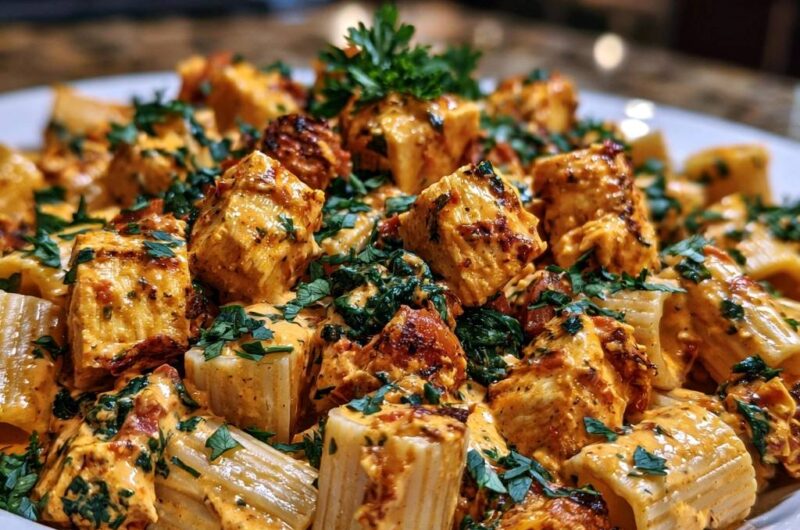
Creamy Sun-Dried Tomato Chicken Rigatoni
Course: Main CourseCuisine: Italian-AmericanDifficulty: easy4
servings15
minutes20
minutes35
Minutes620
kcalItalian-American
Ingredients
1 pound rigatoni pasta
1.5 pounds chicken breast, cut into 1-inch cubes
1/2 cup sun-dried tomatoes (packed in oil), drained and finely chopped
2 tablespoons tomato paste (for color and thickness)
4 cloves garlic, minced
1.5 cups heavy cream
3/4 cup freshly grated parmesan cheese
1 teaspoon smoked paprika
1/2 teaspoon red pepper flakes
2 tablespoons olive oil (or oil from the sun-dried tomato jar)
1 cup fresh parsley, finely chopped (divided)
Salt and black pepper to taste
Reserved starchy pasta water
Directions
- Bring a large pot of heavily salted water to a boil. Cook the rigatoni for 2-3 minutes less than the package directions. Before draining, reserve 1.5 cups of the starchy pasta water. This starch is the essential binder for a non-watery sauce.
- While the pasta cooks, season the chicken cubes generously with salt, pepper, and smoked paprika. Heat olive oil in a large skillet over medium-high heat.
- Sear the chicken until deeply golden brown and charred on the edges. Remove the chicken from the pan and set aside.
- In the same skillet, lower the heat to medium. Add the minced garlic, chopped sun-dried tomatoes, and tomato paste. Sauté for 2 minutes, mashing the tomato paste into the oil until it turns a deep brick red.
- Pour in the heavy cream and red pepper flakes. Bring to a gentle simmer, scraping the bottom of the pan to release the browned chicken bits (fond). Let the cream simmer and reduce by nearly half until it starts to thicken naturally. The chicken is done when it reaches 165°F (74°C) in the thickest part.
- Stir in the parmesan cheese and 1/2 cup of the chopped parsley. Once the cheese is melted, whisk in 1/2 cup of the reserved pasta water. The sauce should look glossy and thick.
- Add the undercooked rigatoni and the seared chicken back into the skillet. Toss vigorously over medium heat for 2-3 minutes. The pasta will finish cooking by absorbing the liquid from the sauce, creating a permanent bond that won’t break.
- If the sauce becomes too tight, add a splash more pasta water until the desired “glaze” consistency is reached.
- Garnish heavily with the remaining fresh parsley to match the visual profile and serve immediately.
Notes
- The secret to the non-watery sauce is reserving the starchy pasta water and undercooking the pasta by 2 to 3 minutes so it finishes cooking directly in the sauce.