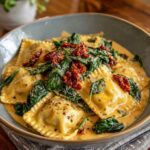
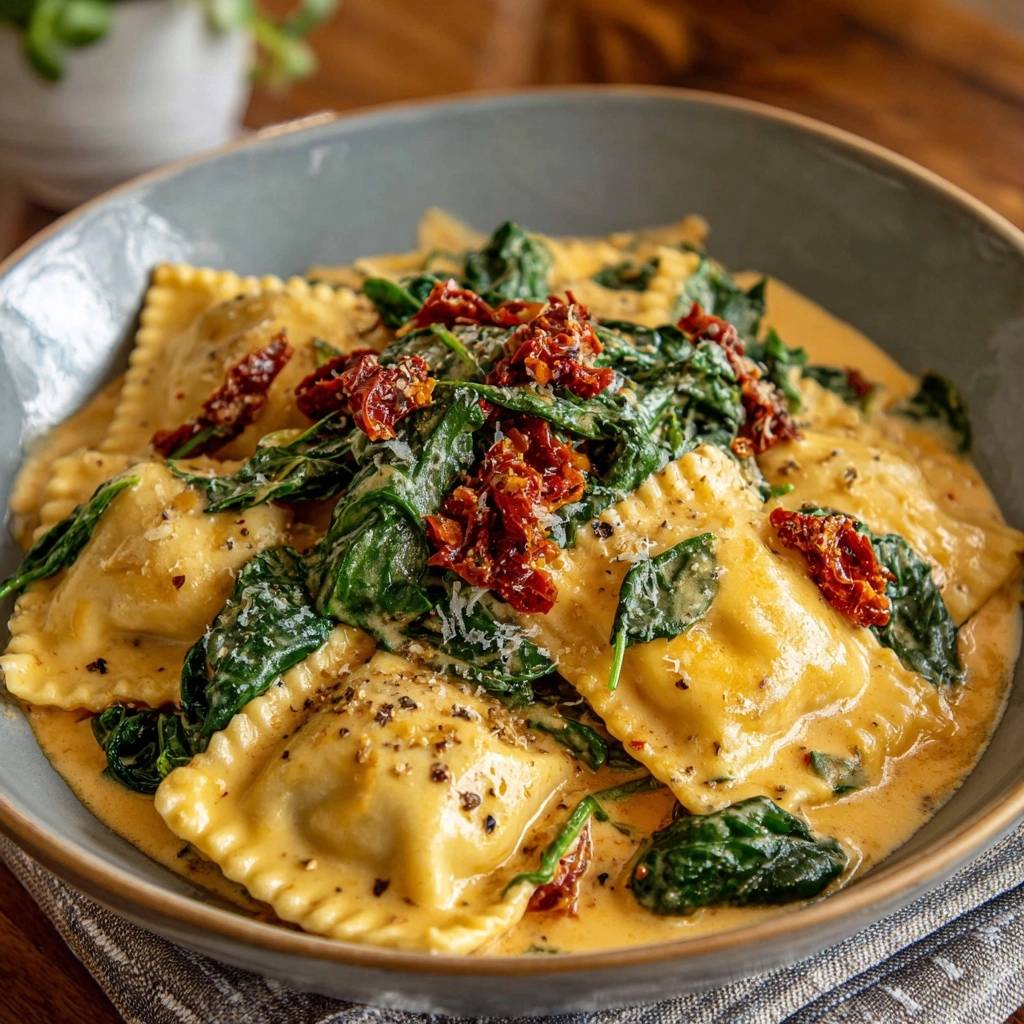
Few things are more disappointing than a pasta dish where the sauce pools at the bottom of the bowl like a thin soup. You want a sauce that behaves like a velvet blanket, hugging every curve of the ravioli and carrying the concentrated sweetness of sun-dried tomatoes in every bite. This recipe solves the age-old problem of the “sliding sauce” by focusing on the chemistry of the pan.
The combination of chewy, cheese-filled pasta, tangy tomatoes, and earthy spinach creates a profile that is both sophisticated and deeply comforting. However, the real star isn’t just the flavor; it’s the texture. By mastering the “liquid gold” technique, you’ll transform simple heavy cream into a stable, glossy coating that stays put from the first forkful to the last.
If you’re enjoying the rich flavors of this pasta, you might also love the comforting warmth of Italian Wedding Soup with Turkey Meatballs.
The secret lies in the starchy pasta water you usually pour down the drain. That cloudy liquid contains the exact binders needed to bridge the gap between the fats in the cream and the moisture in the vegetables. When you combine this starch with a controlled reduction, you create a restaurant-quality emulsion that won’t break or turn greasy on your plate.
The Science of a Non-Watery Cream Sauce
To understand why cream sauces often fail, you have to look at the battle between fat and water. Heavy cream is an emulsion of milk fat and water, but when you add heat and acidic ingredients like sun-dried tomatoes, that bond becomes fragile. Without a stabilizer, the fat molecules tend to clump together, leaving behind a watery residue that refuses to stick to your pasta.
This is where the amylose starch from your pasta water saves the day. As the ravioli boils, it releases starch into the water. When you whisk this “liquid gold” into your simmering cream, the starch molecules act as physical barriers that prevent fat droplets from coalescing. This creates a permanent emulsion that is significantly more stable than cream alone.
The reduction process is equally vital for a thick, luxurious mouthfeel. By simmering the cream for several minutes before adding the pasta, you’re evaporating excess water and concentrating the milk solids. This naturally thickens the sauce without the need for flour or cornstarch, which can often make a delicate pasta dish feel heavy or pasty. Patience during this simmering stage ensures the sauce has the structural integrity to support the weight of the ravioli.
Essential Components for Sun-Dried Tomato Ravioli
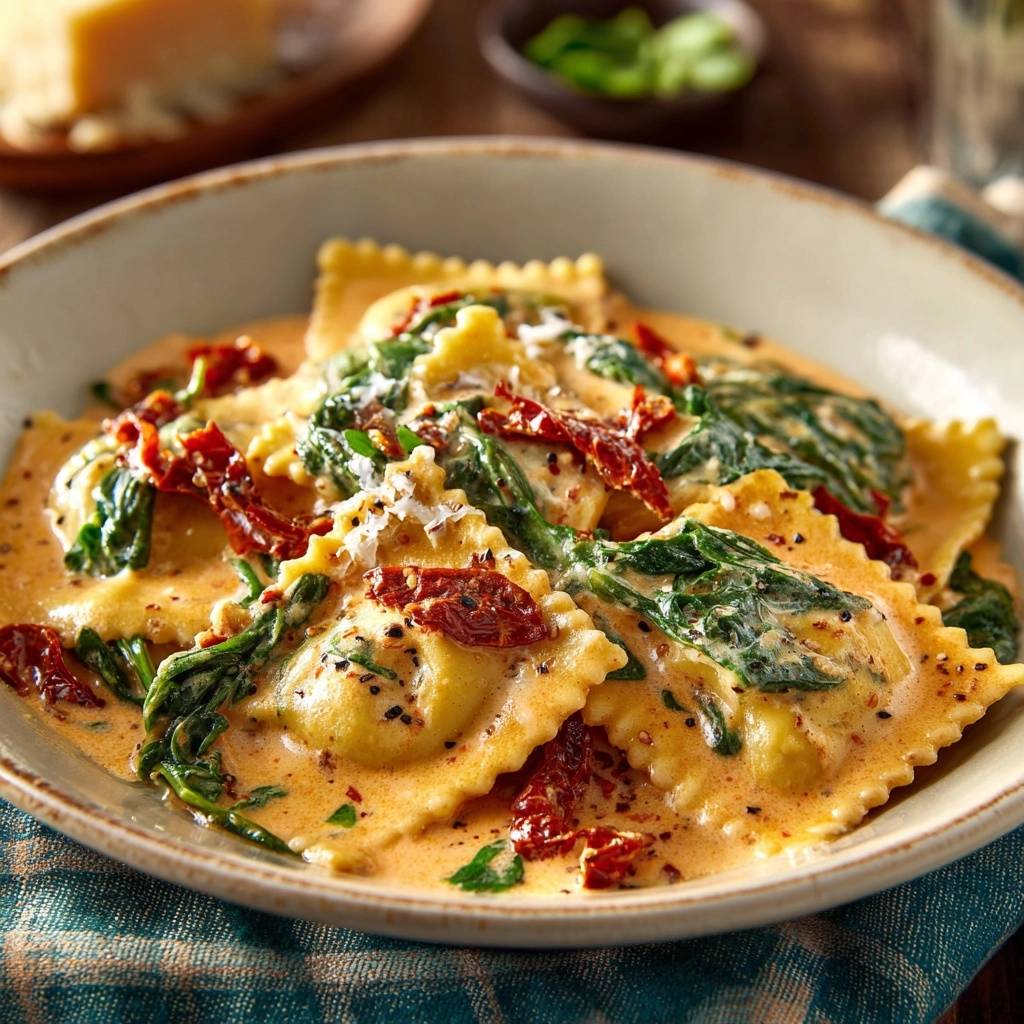
Quality ingredients are the foundation of this dish, and how you select them determines the final texture. I always recommend refrigerated ravioli over the frozen variety. Refrigerated pasta typically has a slightly rougher, more porous surface, which provides better “grip” for the sauce. Frozen ravioli often releases too much internal moisture as it thaws in the pan, which can dilute your carefully reduced emulsion.
Don’t toss the jar of sun-dried tomatoes once you’ve fished out the fruit. That oil is a concentrated flavor bomb infused with the essence of the tomatoes and often herbs like oregano or rosemary. Using it as your sautéing base builds a foundation of flavor that plain olive oil simply can’t match. It also gives the final dish a beautiful, consistent aromatic profile from the very first step.
When it comes to the cheese, freshly grated Parmesan is non-negotiable. Pre-shredded cheeses are coated in cellulose or potato starch to prevent clumping in the bag. While that’s great for storage, it’s a disaster for sauces. Those anti-caking agents prevent the cheese from melting smoothly, often resulting in a grainy or “sandy” texture. Grating your own cheese ensures it melts into the cream instantly, contributing to the glossy finish.
Finally, a touch of smoked paprika is my favorite “chef’s secret” for this recipe. While the sun-dried tomatoes provide some color, the paprika adds a deep, golden hue that makes the dish look incredibly appetizing. It provides a subtle, earthy undertone that cuts through the richness of the heavy cream without making the dish taste “smoky” in a traditional sense.
Selecting the Right Ravioli Filling
The filling of your ravioli acts as the heart of the dish, so choose one that complements the acidity of the tomatoes. A classic four-cheese or a creamy ricotta and spinach filling works best because the mild dairy notes balance the tangy sauce. Mushroom-filled ravioli is another excellent choice, as the umami from the mushrooms pairs beautifully with the concentrated tomato flavor.
For a different take on pasta perfection, explore spinach and cheese ravioli marinara.
I generally suggest avoiding meat-heavy fillings like sausage or beef for this specific preparation. The fats from the meat can sometimes compete with the cream sauce, making the overall meal feel overly heavy. Stick to vegetable or cheese-based fillings to keep the focus on the delicate, velvety emulsion you’ve worked so hard to create.
Step-by-Step: Achieving the Perfect Sauce Cling
The first phase of success is the “Par-Boil.” You must cook your ravioli for about two minutes less than the package suggests. This is crucial because the pasta will finish cooking directly in the sauce. If the ravioli is fully cooked when it hits the skillet, it will become mushy and likely tear open, spilling its filling and ruining the texture of your sauce.
Next, you’ll focus on blooming the aromatics. Heat the sun-dried tomato oil and add your minced garlic and red pepper flakes. You aren’t looking to brown the garlic here; you just want it to become fragrant and soft. This “blooming” process dissolves the flavor compounds of the garlic and pepper into the fat, ensuring that every drop of the sauce is seasoned from within.
The final phase is the construction of the emulsion. After reducing the cream, you’ll whisk in the pasta water and the Parmesan. Watch closely as the sauce transforms. It should go from a thin liquid to a thick, pale-orange coating that coats the back of a spoon. When you fold the ravioli in, do it gently. The pasta will absorb a bit of the sauce, locking in the flavor and creating that perfect “cling” that defines a professional pasta dish.
The Wilt Factor: Handling Fresh Spinach
Fresh baby spinach should be the very last thing you add before the pasta. Spinach is nearly 90% water, and if you cook it too long, it will release all that moisture directly into your sauce, breaking your emulsion. You only want to toss it for about 30 seconds until it just begins to collapse. This keeps the greens vibrant and prevents them from thinning out the cream.
Troubleshooting Common Creamy Pasta Pitfalls
If you find your sauce has become too thick or “gloopy” while simmering, don’t panic. This usually happens if the cream reduces too quickly. Simply whisk in a tablespoon of your reserved pasta water at a time. The starch will help maintain the thickness while the liquid loosens the proteins, restoring that silky, pourable consistency.
A grainy sauce is usually the result of excess heat. If you add the Parmesan while the sauce is at a rolling boil, the proteins in the cheese can seize and clump. Always turn the heat down to a low simmer before stirring in your cheese. If it’s already grainy, you can sometimes fix it by adding a tiny splash of cold cream and whisking vigorously off the heat.
If the dish tastes “flat” despite all the ingredients, it’s likely a salt issue. Remember that the pasta water should be “salty like the sea.” This seasons the ravioli from the inside out. If the final sauce feels bland, add a tiny pinch of salt or an extra sprinkle of Parmesan, which provides a natural, salty punch that wakes up the sun-dried tomatoes.
Flavor Variations and Ingredient Swaps
While this recipe is fantastic as written, you can easily customize it. Adding a handful of toasted pine nuts at the end provides a wonderful buttery crunch that contrasts with the soft ravioli. If you want more acidity, chopped artichoke hearts are a natural companion to sun-dried tomatoes and help cut through the richness of the heavy cream.
If you want a slightly lighter version, you can use half-and-half instead of heavy cream. However, be warned that half-and-half has a much higher water content and is prone to curdling. To mitigate this, you must use extra pasta water and keep the heat very low. The sauce won’t be quite as thick, but the extra starch will help it stay together.
Optimal Pairings for Rich Pasta Dishes
Because this ravioli is so rich and creamy, you want side dishes that offer a sharp contrast. A bitter greens salad featuring arugula or radicchio is the perfect partner. Dress it with a simple lemon vinaigrette; the acidity will cleanse your palate between bites of the heavy pasta, making the whole meal feel more balanced.
Complementary Dishes to Try
Round out your creamy sun-dried tomato ravioli meal with these dishes.
- For a warm, savory addition, consider making cheesy garlic breadsticks, perfect for soaking up any extra sauce.
- If you’re in the mood for something refreshing, a creamy Southwest pasta salad offers a different texture and a zesty counterpoint.
You’ll also want something to catch every last drop of that sauce. A crusty loaf of ciabatta or some homemade focaccia is ideal for mopping up the emulsion. For a vegetable side, try roasted balsamic Brussels sprouts or asparagus. The charred, acidic edges of the roasted vegetables provide a great textural and flavor counterpoint to the smooth sauce.
Expert Tips for Storage and Reheating
Cream sauces are notoriously tricky to reheat because the fats tend to separate when they hit high heat again. If you have leftovers, store them in an airtight container for no more than two days. The pasta will continue to absorb the sauce as it sits, so it will likely look quite dry the next day.
To reheat, avoid the microwave if possible. Instead, place the ravioli in a small skillet over low heat. Add a splash of milk or a tiny bit of water to the pan. Cover it with a lid for a minute to let the steam loosen the sauce, then gently stir. This indirect heat helps the emulsion come back together without the oil separating into a greasy puddle.
Expert Tips for Success
Can I use sun-dried tomatoes not packed in oil?
Yes, you can use dry-packed sun-dried tomatoes, but they require an extra step. You’ll need to rehydrate them in boiling water for about 10 minutes until they are pliable before slicing. Since you won’t have the flavored oil from the jar, use a high-quality extra virgin olive oil to sauté your garlic and add a pinch of dried oregano to mimic that jarred flavor.
Why did my cream sauce curdle?
Curdling usually happens due to high heat or extreme acidity. If the sauce boils too violently after the cheese is added, the proteins will tighten and separate from the fats. Additionally, if your sun-dried tomatoes are particularly acidic, they can react with the cream. To prevent this, always keep the sauce at a gentle simmer and ensure you’re using heavy cream, which has a higher fat content and is more resistant to curdling than milk.
Can I make this gluten-free?
You can certainly use gluten-free ravioli for this dish. However, keep in mind that gluten-free pasta water often contains different types of starches (like rice or corn starch) which can be more “gummy” than wheat starch. Start by adding only half the recommended pasta water and see how the emulsion forms. You may need slightly less to achieve the desired thickness.
How do I scale this for a dinner party without losing the emulsion?
When doubling or tripling this recipe, the biggest challenge is pan surface area. If the pan is too crowded, the cream won’t reduce evenly, and the spinach will steam rather than wilt. Use your largest wide-bottomed skillet or even a braising pan. This ensures maximum evaporation for the reduction and gives you enough room to fold the ravioli gently without breaking them.
Ravioli
Course: Main CourseCuisine: Italian-AmericanDifficulty: easy4
servings10
minutes15
minutes510
kcal25
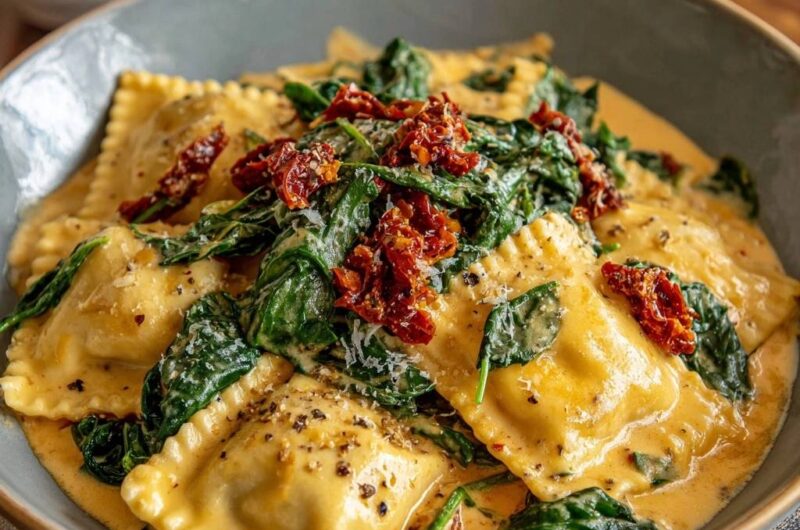
MinutesA rich and flavorful pasta dish featuring cheese ravioli, sun-dried tomatoes, and fresh spinach tossed in a thick, garlic-infused cream sauce that perfectly clings to the pasta.
Ingredients
18 ounces refrigerated cheese ravioli
1 cup heavy cream
1/2 cup sun-dried tomatoes (packed in oil), drained and julienned
1 tablespoon sun-dried tomato oil (from the jar)
3 cups fresh baby spinach
3 cloves garlic, minced
1/2 cup freshly grated Parmesan cheese
1/2 teaspoon red pepper flakes
1/2 cup reserved starchy pasta water
1/2 teaspoon smoked paprika (for the golden hue shown in the image)
Salt and coarse black pepper to taste
Directions
- Bring a large pot of heavily salted water to a boil. Cook the ravioli for 2 minutes less than the package directions specify. They must remain firm (al dente) to finish cooking in the sauce without breaking.
- Before draining, scoop out 1 cup of the starchy pasta water. This is the secret weapon to prevent a watery sauce. Drain the ravioli and set aside.
- In a large skillet, heat 1 tablespoon of the oil from the sun-dried tomato jar over medium heat. Add the minced garlic and red pepper flakes, sautéing for 1 minute until fragrant.
- Stir in the sun-dried tomatoes and smoked paprika. Pour in the heavy cream and bring to a gentle simmer. Let it bubble for 3 to 4 minutes, stirring occasionally, until the cream reduces and begins to naturally thicken.
- To solve the watery sauce problem, whisk in 1/4 cup of the reserved pasta water and the grated Parmesan cheese. The starch in the water acts as a bridge between the fats and liquids, creating a permanent emulsion that won’t break or turn runny.
- Add the fresh spinach to the skillet. Toss for 30 seconds until it just begins to wilt.
- Gently fold the ravioli into the skillet. Simmer for 1 to 2 minutes, allowing the pasta to absorb the sauce. If the sauce becomes too thick, add a splash more pasta water. The sauce should transform into a glossy, orange-tinted coating that sticks perfectly to the pasta.
- Plate the ravioli and top with an extra crack of coarse black pepper and a sprinkle of Parmesan. Serve immediately while the emulsion is at its peak.
Notes
- The starch in the pasta water is essential for preventing a watery sauce. Always cook the pasta al dente so it can finish cooking in the sauce without breaking.