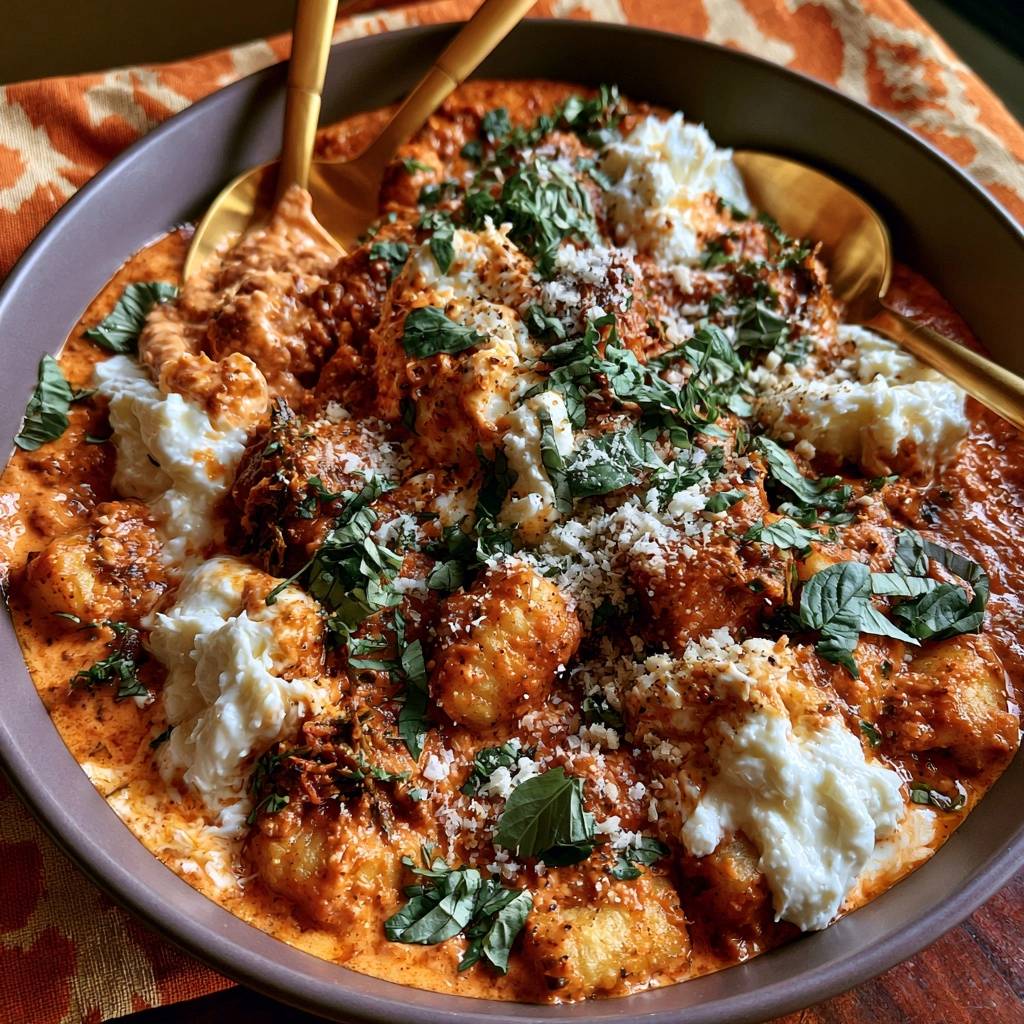
Imagine biting into a golden, toasted nugget that shatters slightly before revealing a soft, pillowy center. Most people expect gnocchi to be heavy or gluey, but when you skip the boiling water, everything changes. This Creamy Tomato Basil Gnocchi relies on a pan-sear that creates a gorgeous crust, ensuring every bite holds its shape against the velvety sauce.
The frustration of “gummy” pasta usually stems from the traditional boiling method, which saturates the potato dough with excess moisture. By tossing the gnocchi directly into a hot skillet with olive oil, you lock in the texture and develop a nutty, toasted flavor. It is a total game-changer for anyone who has ever been disappointed by a bowl of mushy store-bought pasta.
The secret to this restaurant-quality finish is the structural barrier created by the Maillard reaction. When the starch hits the hot oil, it crisps up, creating a protective shell. This shell allows the gnocchi to simmer in a rich tomato and burrata sauce without losing its integrity, giving you that perfect contrast of textures.
The Science of Texture: Why Gnocchi Turns Gummy
Gnocchi is essentially a delicate dumpling made of potato and flour. When you drop these into boiling water, the starch granules swell and hydrate rapidly. If they stay in the water even thirty seconds too long, the exterior becomes over-hydrated and slimy, leading to that dreaded gummy mouthfeel.
Shelf-stable and refrigerated varieties are particularly prone to this because they are vacuum-sealed and dense. Boiling them often results in a product that is cooked on the outside but still dense and chewy in the middle. However, using dry heat—like sautéing in a skillet—changes the physics of the dish entirely.
Searing the gnocchi triggers starch retrogradation on the surface. This process creates a firm, crispy skin that acts as a shield. When you eventually add your tomato sauce and heavy cream, the liquid coats the gnocchi rather than soaking into the core. You end up with a dish that feels light and sophisticated rather than heavy and sodden.
Essential Components for Creamy Tomato Basil Gnocchi
Quality ingredients make a massive difference when the recipe is this simple. While you might think fresh is always better, shelf-stable gnocchi is actually the hero here. Its lower moisture content allows it to crisp up beautifully in the pan without falling apart or sticking to the bottom.
The sauce relies on the high fat content of heavy cream to create a stable emulsion. Using lower-fat options like milk or half-and-half can often lead to a watery sauce that breaks when it hits the acidic tomatoes. Therefore, stick to the heavy cream to ensure that vibrant, orange, velvety coating that clings to every piece of pasta.
Selecting the Right Potato Gnocchi
For the no-boil method, look for the vacuum-sealed packs found in the pasta aisle or the refrigerated bags. Frozen gnocchi can also work, but you should let them thaw slightly so the excess frost doesn’t cause the oil to splatter. These varieties have the structural strength to handle being tossed and flipped in a hot skillet.
The Role of Fresh Burrata and Parmesan
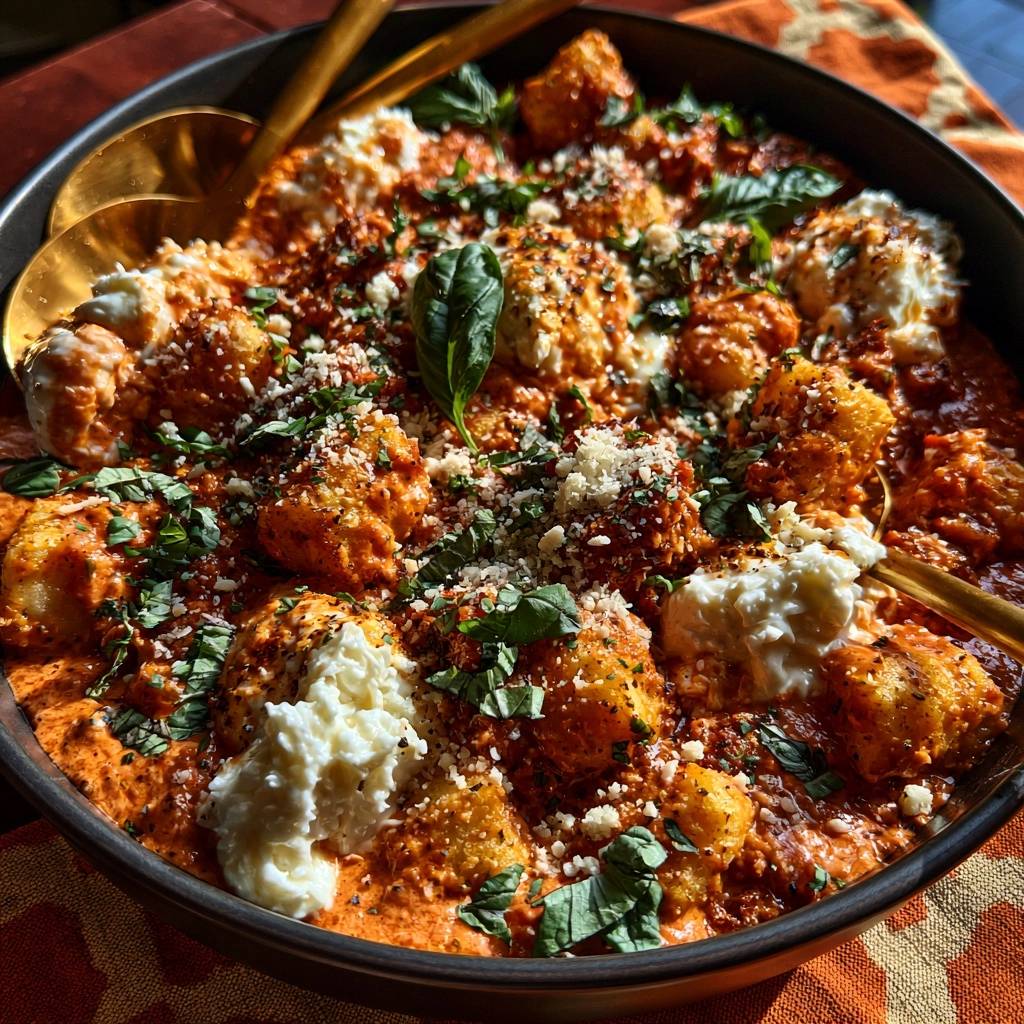
Burrata is the crown jewel of this dish. Unlike standard mozzarella, burrata has a center filled with stracciatella and cream. When you tear it over the hot gnocchi, that creamy center melts into the tomato base, creating beautiful white swirls. The parmesan adds a necessary salty punch and helps thicken the sauce as it melts.
Step-by-Step: Searing the Perfect Golden Gnocchi
Start by heating your olive oil over medium-high heat in a large non-stick skillet. You want the oil to shimmer before the gnocchi ever touches the pan. If the oil is too cold, the pasta will just soak it up and become greasy instead of crispy.
Add the gnocchi in a single layer if possible. Don’t be tempted to move them around immediately; let them sit for a minute or two to develop that initial golden crust. You are looking for a deep honey-brown color on at least two sides of each piece. This process usually takes about 5 to 7 minutes of occasional tossing.
Listen for the sizzle. If the pan goes quiet, your heat is too low. If you see smoke, turn it down slightly. Once they look like toasted marshmallows, remove them from the pan. This prevents them from overcooking while you build the aromatic tomato base in the same skillet.
Building the Velvety Tomato and Cream Base
After removing the gnocchi, use the residual oil to bloom your garlic, oregano, and red pepper flakes. This only takes about 30 seconds. You want the garlic to smell fragrant and sweet, not bitter or burnt. If the garlic turns dark brown, it’s best to wipe the pan and start the sauce over.
Pour in your tomato sauce and let it simmer. This step is vital because it reduces the water content in the tomatoes, concentrating the sugars and flavors. You’ll notice the sauce darkening slightly and thickening. This ensures that when you add the cream, the result is a thick, luxurious coating rather than a thin soup.
The Emulsion: Marrying the Sauce and Pasta
Turn the heat down to low before adding the heavy cream. High heat can cause the dairy to curdle or “break,” separating the fat from the liquid. Pour the cream into the center and use a gentle swirling motion with your spoon. You’ll see the deep red sauce transform into a bright, silky orange emulsion.
Now, bring the toasted gnocchi back into the fold. Toss them gently for about a minute. This short window allows the gnocchi to absorb just a hint of the sauce, softening the very center while the seared exterior remains firm. The sauce should cling to the pasta, not pool at the bottom of the bowl.
Flavor Variations and Ingredient Swaps
This recipe is a fantastic canvas for customization. If you want to add more greens, toss in a handful of baby spinach right at the end; the residual heat will wilt it perfectly. For a bit of extra protein, sautéed chicken breast or chickpeas work beautifully alongside the tomato base.
If you need a dairy-free alternative, a thick cashew cream can replace the heavy cream. While you’ll lose the specific burrata experience, a dollop of almond-based ricotta provides a similar creamy contrast. You can also swap the dried oregano for Italian seasoning or even a pinch of smoked paprika for a deeper, earthier flavor profile.
What to Serve with Creamy Tomato Basil Gnocchi
Since this dish is rich and decadent, you want side dishes that offer acidity and crunch. A simple arugula salad tossed in a sharp lemon vinaigrette is the perfect palate cleanser. The peppery bite of the greens cuts right through the creaminess of the burrata and tomato sauce.
Charred broccolini or roasted asparagus with a squeeze of fresh lemon also make excellent companions. These vegetables provide a structural contrast to the soft gnocchi. Avoid serving this with heavy garlic bread; instead, opt for a light, crusty baguette if you want something to mop up the extra sauce.
Troubleshooting Your Gnocchi Texture
If your gnocchi feels too tough or “rubbery,” it usually means the heat was too high and they cooked too fast on the outside without softening the middle. Next time, lower the heat slightly and cover the pan for one minute during the searing phase to trap a little steam. This helps soften the interior while the exterior crisps.
If your sauce looks broken or oily, it likely got too hot after the cream was added. You can often fix this by adding a tablespoon of warm water or broth and whisking vigorously off the heat. This helps re-emulsify the fats and liquids into a smooth consistency.
Why is my gnocchi still chewy?
Chewiness usually indicates the gnocchi didn’t cook through to the center. This happens if they were added to the sauce while still cold or if the sear was too brief. Ensure they spend at least 5 minutes in the pan and another minute simmering in the sauce to reach that pillowy state.
Can I use fresh tomatoes instead of sauce?
Yes, you can use fresh cherry tomatoes. Sauté them in olive oil until they burst and release their juices. You will need to simmer them longer than canned sauce to evaporate the extra water, otherwise, your final dish might turn out a bit thin and runny.
How do I reheat leftovers without losing the texture?
Avoid the microwave, as it will make the gnocchi rubbery and the sauce oily. Instead, place leftovers in a small skillet over medium heat. Add a splash of water or milk to loosen the sauce and toss gently until heated through. This helps revive the creamy consistency.
Is there a substitute for Burrata?
If you can’t find burrata, fresh buffalo mozzarella is the next best thing. It won’t have the same “oozing” center, but it melts beautifully. Alternatively, a few dollops of high-quality whole-milk ricotta can provide that same creamy, mild contrast to the acidic tomato sauce.
Storage and Make-Ahead Preparation
This dish is truly at its peak the moment it is assembled. The contrast between the seared gnocchi and the cold burrata is a fleeting experience. However, if you have leftovers, store them in an airtight container in the refrigerator for up to two days.
Be aware that the gnocchi will continue to absorb the sauce as they sit, so they will be much softer the next day. I do not recommend freezing the finished dish, as the cream sauce and burrata will change texture significantly upon thawing, often becoming grainy or separated.
Creamy Tomato Basil Gnocchi
Course: Main CourseCuisine: Italian-AmericanDifficulty: easy4
servings10
minutes15
minutes25
Minutes520
kcalItalian-American
Ingredients
1 pound potato gnocchi (shelf-stable or refrigerated)
3 tablespoons extra virgin olive oil
2 cloves garlic, minced
1.5 cups thick tomato marinara or crushed tomatoes
1/2 cup heavy cream
8 oz fresh burrata cheese (2 balls)
1/4 cup finely grated parmesan cheese
1/2 cup fresh basil leaves, roughly chopped
1 teaspoon dried oregano
1/2 teaspoon cracked black pepper
1/4 teaspoon red pepper flakes
Directions
- The Anti-Gummy Secret: Heat 2 tablespoons of olive oil in a large non-stick skillet over medium-high heat. Add the gnocchi directly to the pan without boiling them in water first. Sauté for 5 to 7 minutes, tossing frequently, until every piece is golden brown and slightly crisp. This creates a structural barrier that prevents the pasta from absorbing too much liquid and becoming mushy. Remove gnocchi from the pan and set aside.
- Build the Base: In the same pan, add the remaining tablespoon of oil and the minced garlic. Sauté for 30 seconds until fragrant. Pour in the tomato sauce, dried oregano, and red pepper flakes. Simmer for 3-4 minutes until the sauce reduces slightly and thickens.
- Create the Creamy Emulsion: Reduce heat to low. Pour the heavy cream into the center of the pan. Use a spoon to swirl the cream into the tomato sauce until a vibrant orange, velvety consistency forms.
- The Marriage: Return the toasted gnocchi to the pan. Toss gently for 1 minute to coat every piece in the sauce. The gnocchi will absorb just enough sauce to soften the interior while maintaining the exterior “bite.” Turn off the heat immediately.
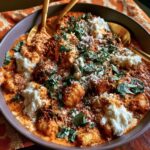
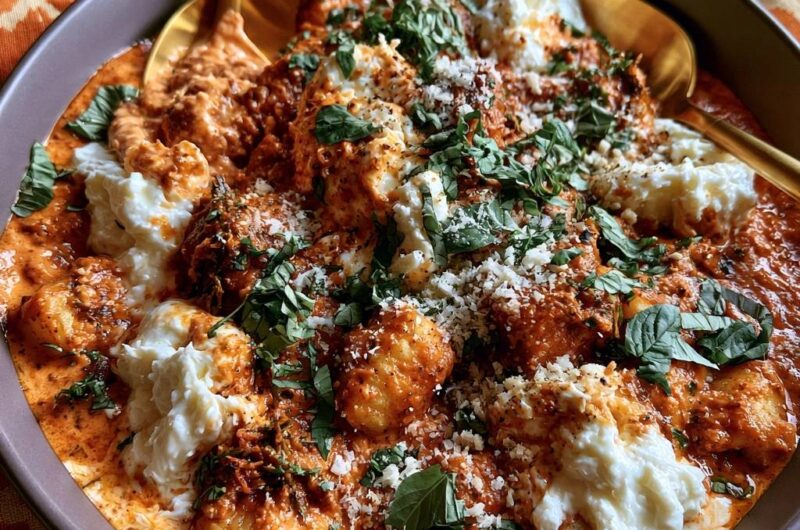
- The Topping: Transfer the gnocchi to a serving bowl. Tear the fresh burrata into large, creamy chunks and nestle them into the hot pasta. The residual heat will cause the creamy center (stracciatella) to bleed into the sauce, creating the marbled white-and-orange look seen in the image.
- Finish: Dust generously with the grated parmesan, cracked black pepper, and the fresh chopped basil. Serve immediately while the gnocchi still have their signature toasted texture.
Notes
- The secret to avoiding gummy gnocchi is skipping the boiling water and pan-searing them directly to create a structural barrier.