
Few things are more disappointing than spending an hour in the kitchen only to have your soup “break” the moment you add the dairy. You know the look: a grainy, thin broth with oily yellow droplets floating on top instead of that lush, velvety texture you see in restaurant bowls. Most home cooks struggle with this because dairy is temperamental, but achieving a professional, silk-like consistency is actually a matter of simple kitchen science rather than luck.
The secret to this Creamy White Chicken Chili lies in a specialized bean-cream slurry that acts as a natural stabilizer. By blending a portion of the white beans directly into the heavy cream, you create a starch-bound base that physically prevents the proteins from clumping together. This results in a rich, cohesive mouthfeel that coats the back of a spoon perfectly and stays unified even after a trip to the refrigerator.
I’ve found that mastering this technique changes your entire approach to stovetop soups. You aren’t just tossing ingredients into a pot; you’re building an emulsion that stands up to heat. One pro tip to keep in mind is that temperature shocks are the enemy of cream. If you take the time to temper your dairy, you’ll be rewarded with a chili that looks as incredible as it tastes, every single time.
For a truly unforgettable taste, explore the secrets to unlocking incredible flavor in white chicken chili.
Essential Components for a Velvety Chili Base
The foundation of a great white chili starts with the beans, and for this recipe, Great Northern beans are the undisputed champions. While Cannellini beans are creamy, they tend to be a bit too soft and can turn to mush during a long simmer. Great Northern beans have a slightly firmer skin and a nutty flavor that holds its shape, providing a necessary structural contrast to the tender shredded chicken.
Quality chicken broth is your next priority because it carries the weight of the entire flavor profile. If you can, use a low-sodium version so you have total control over the seasoning. Since we are building a “white” chili, we want to keep the liquid looking bright and clean. However, I always add a touch of smoked paprika. It doesn’t make the soup spicy, but it lends a gorgeous golden hue and a hint of wood-fired depth that mimics hours of slow cooking.
Finally, let’s talk about the heavy cream. It is vital that your cream is at room temperature before it even gets near the stove. Cold cream hitting a hot broth is a recipe for curdling. The high fat content in heavy cream is what gives us that luxurious finish, so don’t try to swap it for skim milk here. The fat molecules are what carry the flavors of the cumin and garlic across your palate.

Selecting and Preparing the Chicken
For the best texture, I highly recommend using shredded chicken breast rather than cubed meat. Shredded chicken has a much larger surface area, which allows it to soak up the broth like a sponge. This ensures every bite is juicy and infused with the spices. If you’re in a rush, a rotisserie chicken is a fantastic shortcut; just discard the skin and shred the breast meat while it’s still warm.
If you prefer to poach your own chicken, simmer the breasts in a bit of broth with a slice of onion and a bay leaf until they reach 165°F. Once they’ve cooled slightly, use two forks to pull the meat apart into long, thin strands. This extra step makes the chili feel much more hearty and rustic than uniform cubes ever could.
The Role of Sharp Cheddar and Spices
Sharp cheddar is the “secret” flavor booster in this recipe. While mild cheddar melts easily, it often disappears into the background. Sharp cheddar provides a tangy bite that cuts through the richness of the heavy cream. It adds a layer of complexity that makes the chili taste “finished” without needing to add excessive salt.
The spice blend of cumin, oregano, and chili powder provides a warm, earthy glow. Cumin is the backbone of white chili, offering that signature smoky aroma. Since we aren’t using any beef-based fats like bacon or shortening, these spices do the heavy lifting to ensure the dish feels savory and satisfying. The oregano adds a floral, herbal note that keeps the heavy dairy from feeling too “weighted” on the tongue.
The Science of Emulsification in Creamy Soups
Understanding why soups curdle is the best way to prevent it. When dairy hits a boiling liquid, the proteins (specifically casein) begin to denature and clump together. This is what creates that unappetizing grainy texture. High heat and high acidity are the two main culprits that cause these proteins to tighten up and separate from the liquid.
When dairy hits a boiling liquid, the proteins can shock; for a similar richness, try our creamy chicken and potato chowder.
This is where our bean-cream slurry comes to the rescue. The starch released from the blended Great Northern beans acts as a physical barrier. These starch molecules get in the way of the dairy proteins, preventing them from bonding too tightly. It essentially “cushions” the cream, making the entire mixture much more stable and resistant to breaking, even if the temperature fluctuates slightly.
Furthermore, the fat in the heavy cream needs to be emulsified into the water-based chicken broth. By whisking the two together slowly, you’re creating a suspension. If you boil the soup after adding the cheese and cream, you’ll break that suspension, and the fats will rise to the top. Keeping the heat at a bare simmer is the most important rule for a smooth finish.
Step-by-Step: Building the Flavor Foundation
Everything starts with the aromatics. When you heat the olive oil and add your diced onions, you’re looking for them to become translucent and soft, not brown. Browning the onions would add a caramelized sweetness that clashes with the clean profile of a white chili. Once the onions are soft, add the garlic and spices.
This process is called “blooming.” Many of the flavor compounds in cumin and chili powder are fat-soluble, meaning they release their full potential when toasted in oil. You’ll know it’s ready when the kitchen starts to smell incredible—usually after about 60 seconds. Be careful not to burn the garlic, as bitter garlic will ruin the delicate cream base.
Creating the Stabilizing Bean-Cream Slurry
To make the slurry, take half a can of your rinsed beans and place them in a blender or food processor with your room-temperature heavy cream. Pulse the mixture until it is completely smooth. You shouldn’t see any skins or lumps; it should look like a thick, ivory-colored liquid. This is your “secret weapon” for a thick, restaurant-quality base.
This mixture is much more than a thickener. While flour or cornstarch can sometimes leave a pasty aftertaste, the bean slurry adds a deep, savory creaminess that complements the other ingredients. It integrates perfectly into the broth, providing body without making the soup feel heavy or “gloppy.”
The Tempering Technique for a Smooth Finish
Tempering is the most critical step in this entire process. Instead of pouring your cold bean-cream mixture directly into the hot pot, you need to bridge the temperature gap. Ladle about a cup of the hot chicken broth into a separate bowl containing your slurry. Whisk it vigorously until the mixture is warm to the touch.
Once tempered, turn the stove heat down to low. Slowly pour the warmed slurry into the pot while stirring constantly. You’ll see the broth transform from a clear liquid into a rich, opaque soup. By introducing the heat gradually, you ensure the dairy proteins stay relaxed and smooth. Never let the soup reach a rolling boil after this point.
When adding the shredded cheddar, do it in small handfuls. Stir each batch until it is completely melted before adding the next. If you dump all the cheese in at once, it will likely clump into a single rubbery ball. Patience here is the difference between a grainy soup and a velvety masterpiece.
Troubleshooting Common Texture Issues
If you find your chili is a bit thinner than you’d like, the best time to fix it is before you add the dairy. Let the broth and beans simmer uncovered for an extra 10 minutes to reduce the liquid. If you’ve already added the cream and it still feels thin, you can mash a few more whole beans against the side of the pot with a wooden spoon to release more natural starches.
If the worst happens and the soup looks a bit grainy because it got too hot, don’t panic. You can often rescue the texture by taking a small portion of the soup and running it through a blender, then stirring it back in. The mechanical action of the blades can sometimes re-emulsify the fats and proteins, though it’s always better to avoid the break in the first place by keeping the heat low.
Flavor Variations and Dietary Adjustments
This recipe is a fantastic canvas for customization. If you want a bit more heat, you can sauté a diced jalapeño or a small can of mild green chiles along with the onions. This adds a bright, acidic “pop” that balances the richness of the cream. For a lighter version, you can use half-and-half instead of heavy cream, though the soup will be slightly less stable.
Complementary Dishes
Round out your meal with these chicken dishes.
- For a lighter option, consider this easy juicy grilled chicken salad, perfect for a fresh contrast.
- If you prefer a different chicken preparation, try this classic chicken salad for a creamy, satisfying addition.
For those who want an even thicker chili, you can add a second blended can of beans. This increases the protein content and creates an almost chowder-like consistency. Just remember to keep all additions alcohol-free and pork-free to maintain the clean, bright flavors that make this specific white chili so popular.
Optimal Pairings and Presentation
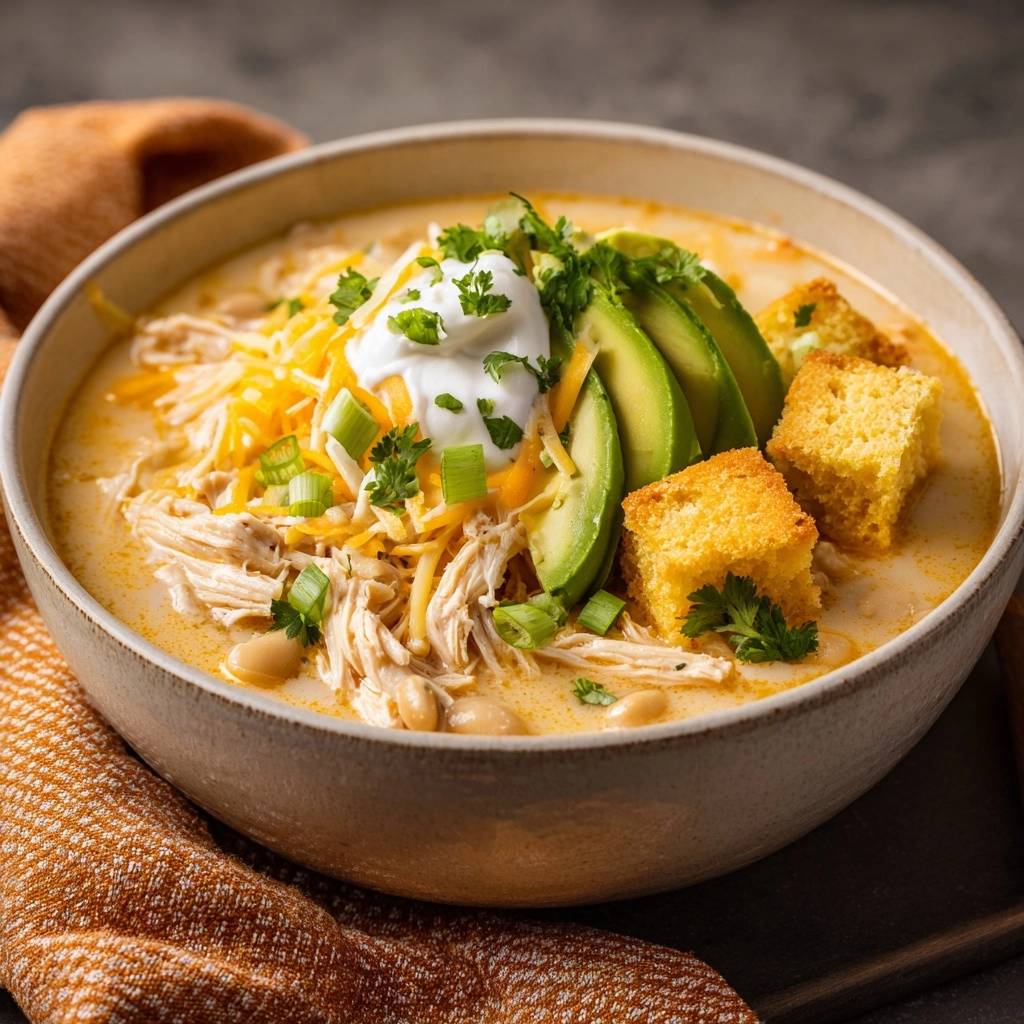
Presentation is where this dish really shines. I love to serve this in deep, wide bowls. Start by ladling a generous amount of the thick chili into the center, making sure you get plenty of chicken and whole beans. The contrast between the steaming hot soup and fresh, cold toppings is what makes every spoonful exciting.
Fan out some fresh avocado slices on one side for a buttery texture, and add a dollop of cool sour cream in the center. For the ultimate crunch, toast large cubes of cornbread in the oven until they are golden and crisp, then nestle them right on top. The cornbread will soak up just enough of the creamy broth to become tender while staying crunchy on the outside. A final sprinkle of green onions and cilantro adds the perfect hit of freshness.
Storage, Reheating, and Freezing Guidelines
This chili actually tastes even better the next day as the spices have more time to meld. Store leftovers in an airtight container in the refrigerator for up to 3 to 4 days. When you’re ready to eat, reheat it on the stovetop over low heat. Avoid the microwave if possible, as it creates “hot spots” that can cause the cheese and cream to separate.
If you plan on freezing this dish, it is best to freeze the base before you add the heavy cream and cheese. Dairy doesn’t always freeze and thaw gracefully; it can become grainy or watery. If you have already added the dairy, you can still freeze it, but be prepared to whisk it vigorously while reheating on the stove to help the emulsion come back together.
Expert Tips for Professional Results
Can I use frozen chicken?
You can use frozen chicken, but it must be fully thawed and cooked before adding it to the chili. Adding raw frozen breasts directly to the pot will release too much water and lower the temperature of the broth, which can interfere with the thickening process. For the best results, stick to pre-cooked shredded chicken.
Why did my cheese clump into a ball?
This usually happens for two reasons: the heat was too high or you used pre-shredded cheese from a bag. Pre-shredded cheese is coated in potato starch or cellulose to prevent it from sticking in the bag, which also prevents it from melting smoothly into soups. Always grate your sharp cheddar fresh from the block for a silky melt.
How do I make this in a slow cooker?
To adapt this for a slow cooker, add the broth, chicken, beans, and spices to the crockpot and cook on low for 6 hours. However, do not add the cream, bean slurry, or cheese until the very end. Stir those in during the last 30 minutes of cooking to ensure the dairy doesn’t break during the long heating process.
Can I substitute the beans?
If you can’t find Great Northern beans, Cannellini beans are the next best choice. Navy beans also work well, though they are much smaller and will disappear into the broth more easily. Avoid using dark beans like black beans or kidney beans, as they will turn the broth a muddy color and change the flavor profile significantly.
How long does this stay fresh in the fridge?
This chili stays fresh and delicious for about 3 to 4 days when stored in a sealed container. Because of the dairy content, you should smell it before reheating to ensure it’s still fresh. If the broth has thickened too much in the fridge, simply add a splash of chicken broth when reheating to bring it back to your desired consistency.

Chicken Chili
Course: Main CourseCuisine: AmericanDifficulty: easy6
servings15
minutes30
minutes440
kcal45
MinutesThis rich and hearty white chicken chili features shredded chicken, Great Northern beans, and a blend of warm spices. By blending a portion of the beans with heavy cream, this recipe creates a stabilized base that remains perfectly emulsified even when reheated.
Ingredients
1.5 lbs shredded cooked chicken breast
2 cans (15 oz) Great Northern beans, drained and rinsed
1 quart chicken broth
1 cup heavy cream, room temperature
1.5 cups shredded sharp cheddar cheese (divided: 1 cup for the base, 1/2 cup for topping)
1 tablespoon olive oil
1 yellow onion, diced
2 cloves garlic, minced
1 tablespoon ground cumin
1 teaspoon chili powder
1/2 teaspoon smoked paprika (for the golden hue shown in the image)
1/2 teaspoon dried oregano
Salt and pepper to taste
Toppings (As pictured):
1 large avocado, sliced
2 cups cornbread, cut into large cubes and toasted
Sour cream
Sliced green onions
Fresh cilantro
Directions
- Heat olive oil in a large pot over medium heat. Saute the onion until translucent, about 5 minutes. Add garlic, cumin, chili powder, smoked paprika, and oregano, stirring for 1 minute until fragrant.
- Pour in the chicken broth and 1.5 cans of the beans. Take the remaining half can of beans and pulse in a blender with the 1 cup of room-temperature heavy cream until completely smooth. This bean-cream slurry is the secret to a thick, stable base that won’t separate.
- Bring the broth and whole beans to a gentle simmer. Add the shredded chicken and let it cook for 10 minutes to allow the flavors to meld.
- To prevent curdling, do not pour the cream mixture directly into boiling soup. Reduce the heat to low. Ladle one cup of the hot broth into a bowl with the bean-cream slurry. Whisk to temper, then slowly pour the warmed mixture back into the main pot while stirring constantly.
- Keep the heat on low. Stir in 1 cup of the shredded cheddar cheese a handful at a time, allowing it to melt completely before adding more. Do not let the soup boil once the dairy and cheese are added, as high heat causes the proteins to clump and the oils to separate.
- Season with salt and pepper. Serve in deep bowls. To match the visual presentation: pile a generous portion of shredded chicken and beans in the center, top with a dollop of sour cream, fan out avocado slices on one side, and nestle two large cornbread croutons on the other. Garnish with the remaining shredded cheese, green onions, and fresh cilantro.
Notes
- To prevent curdling, ensure the heavy cream is at room temperature and temper it with hot broth before adding it to the pot. Avoid boiling the soup once the dairy and cheese have been incorporated.