Most home cooks struggle with tofu because it ends up rubbery or spongy, failing to soak up the sauce. You’ve likely experienced that disappointing moment where the tofu looks great in the pan but tastes like a wet sponge once it hits your plate. The secret to restaurant-quality tofu isn’t a special brand; it’s all in the moisture extraction and the two-stage sear.
This recipe uses a specific pressing technique and a cornstarch dusting to ensure a shatter-crisp exterior that locks in flavor while maintaining a silky interior. We finish the dish in a pool of savory, herb-flecked broth that provides a rich contrast to the crunch. This guide is the definitive resource for achieving that elusive, professional texture in your own kitchen.
The real trick to success lies in the “Texture Fix” step. By removing the internal water, you create space for the savory garlic-ginger broth to actually penetrate the protein. If you skip the press, the steam from the inside will destroy your crust from the bottom up. Let’s dive into how to master this technique once and for all.
The Science of Moisture: Why Your Tofu Stays Spongy
Extra-firm tofu is essentially a protein sponge filled with water. When you try to sear it without pressing, that water turns into steam as soon as it hits the hot oil. This steam prevents the Maillard reaction—the chemical process that creates that beautiful brown crust and deep flavor.
Therefore, pressing isn’t just a suggestion; it’s a chemical necessity for crispiness. If water remains inside the curds, the tofu steams from the inside out, which ruins the crunch within minutes of cooking. By applying pressure, you collapse those water pockets, creating a denser, meatier texture that stands up to braising.
Furthermore, a dry surface allows the cornstarch to bond tightly to the protein. If the surface is damp, the starch turns into a gummy paste rather than a crisp shell. Taking ten minutes to press your tofu will completely change the structural integrity of your final dish.
Choosing the Right Block: Extra-Firm vs. Firm
For this specific braising application, you must use extra-firm tofu. Silken or soft varieties contain too much moisture and lack the protein density to survive the pressing and searing process. They will simply crumble in the pan.
Extra-firm blocks have the highest protein-to-water ratio, making them sturdy enough to handle. When shopping, look for blocks that feel heavy for their size and have a visible, tight grain. High-quality brands often have less “whey” or liquid in the package, which gives you a head start on the drying process.
Essential Components for the Garlic-Ginger Braise
The ingredients in this dish work together to create a balance of salt, sweet, and aromatics. We use vegetable broth as the base for the “pool” effect because it provides a savory depth without overpowering the delicate tofu. Honey is the secret weapon here, as it balances the high salinity of the soy sauce and helps the sauce glaze the crispy edges.
Freshness is non-negotiable when it comes to the aromatics. While jarred ginger or garlic paste is convenient, they often have an acidic, metallic aftertaste that ruins a clean braise. Freshly sliced garlic and minced ginger provide a punchy, vibrant aroma that defines the entire flavor profile.
In addition, the sesame oil is added at the very end of the sauce-making process. This preserves its volatile oils and nutty scent, which can turn bitter if boiled for too long. Every ingredient has a specific timing to ensure the flavors stay bright and distinct.
The Role of Cornstarch in Texture Retention
Cornstarch is vastly superior to all-purpose flour for achieving a long-lasting crunch. It is a pure starch that, when fried, creates a thin, glass-like “shell” around the tofu. This shell is naturally gluten-free and stays crispy even when sitting in a pool of savory broth.
However, the key is the “dusting” technique. You want a light, even coating rather than a thick batter. If you apply too much, it will create gummy clumps in the pan. Shake off any excess starch until the tofu looks like it has a fine layer of velvet on the outside.
Aromatic Foundations: Sliced Garlic and Minced Ginger
Knife skills play a huge role in the final taste of the braise. We thinly slice the garlic into “chips” rather than mincing it. Sliced garlic provides a mellow, toasted flavor and a nice textural element, whereas minced garlic burns almost instantly in a hot pan.
The ginger should be finely minced so it distributes evenly throughout the sauce. You are looking for the “fragrance window”—that 60-second period where the aromatics hit the hot oil and release their scent. As soon as you smell that sweet, spicy aroma, it’s time to add your liquids to prevent the garlic from turning bitter.
Step-by-Step: Preparing the Tofu for the Sear
Start the “Texture Fix” by slicing your drained tofu into 1-inch thick rectangles. Place these slices between two layers of heavy-duty paper towels or a clean kitchen towel. Set them on a flat plate and place a heavy object, like a cast-iron skillet or a large cutting board with a few cans on top, on the tofu.
Let the tofu press for at least 10 minutes. You’ll see the towels become saturated as the excess water is forced out. Once the time is up, pat each piece completely dry with a fresh towel. If the surface feels tacky or wet, the cornstarch won’t adhere properly, so don’t rush this stage.
After drying, toss the pieces in a bowl with your cornstarch and salt. Ensure every single side, including the thin edges, is coated. This creates the protective barrier needed for a crunch that lasts even after the tofu is plated in the liquid broth.
Achieving the Perfect 1-Inch Rectangle Slice
Uniform thickness is vital because it ensures all pieces finish cooking at the exact same time. If some slices are thinner, they will become tough and chewy before the thicker pieces have a chance to crisp up. A 1-inch thickness is the “goldilocks” zone for tofu.
This specific size provides the best surface-area-to-volume ratio. It gives you enough flat surface to create a massive amount of crust, while the center remains thick enough to stay silky and tender. Use a sharp chef’s knife and steady pressure to get clean, straight edges.
The Two-Stage Sear: Engineering the Shatter-Crisp Crust
Heat your vegetable oil over medium-high heat until it shimmers. You can test the heat by dropping a tiny pinch of starch into the oil; if it sizzles immediately, you’re ready. Add the tofu slices in a single layer, making sure they aren’t touching each other.
Crowding the pan is the most common mistake home cooks make. If the pieces are too close, the temperature of the oil drops and the moisture escaping the tofu creates steam. This results in a soggy, pale coating rather than a golden crust. Sear for 4 to 5 minutes per side without moving them until they are deep golden brown.
You are looking for a “shatter-crisp” texture. When you tap the tofu with your tongs, it should sound hard and hollow. Once both sides are perfectly seared, remove them from the pan immediately. This two-stage process—searing then braising—is what separates professional dishes from amateur ones.
The Importance of the Wire Rack Cooling Station
Instead of placing the fried tofu on paper towels, move them to a wire cooling rack set over a baking sheet. Paper towels trap steam underneath the tofu, which quickly softens the bottom crust you just worked so hard to create. A wire rack allows air to circulate around the entire piece.
This air circulation prevents the residual steam from turning the starch coating back into a paste. It’s a simple pro-tip that makes a massive difference in how long the tofu stays crunchy. Keep the tofu on the rack while you prepare the garlic-ginger sauce in the skillet.
Building the Herb-Flecked Garlic Braising Liquid
After removing the tofu, reduce the heat to medium. The pan will still have a bit of oil and plenty of flavor. Add your sliced garlic and ginger, sautéing them just until they turn fragrant. This deglazing process picks up any toasted bits of starch left behind, adding extra body to the sauce.
Whisk together the soy sauce, honey, vegetable broth, and sesame oil before pouring them into the pan. This ensures the honey is fully dissolved and the flavors are cohesive. Let the mixture simmer for 3-5 minutes. You want the liquid to reduce slightly to concentrate the umami, but keep enough volume to create that signature “pool” in the bowl.
The sauce should look glossy and rich. If it becomes too thick, simply splash in a tablespoon of water or broth to loosen it back up. The goal is a pourable consistency that coats the back of a spoon but still flows easily around the tofu.
Infusing the Green Oil Effect with Fresh Parsley
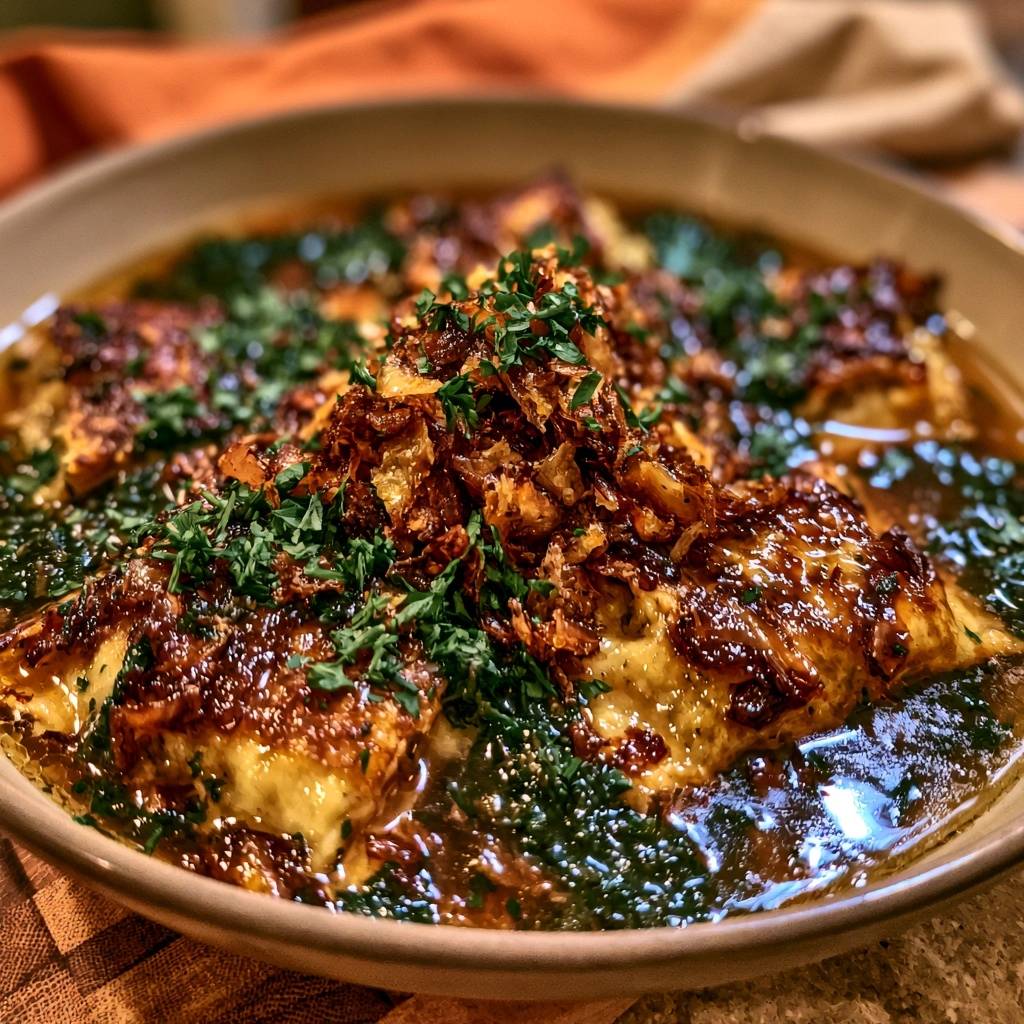
Stir half of your finely chopped parsley directly into the simmering sauce right before you turn off the heat. The heat of the liquid will flash-cook the parsley, releasing its essential oils into the broth. This creates a beautiful “green oil” effect where the sauce takes on an earthy, herbal depth.
There is a distinct difference between the parsley cooked into the sauce and the raw parsley used for garnish. The cooked parsley provides a foundational savory note, while the fresh garnish at the end adds a bright, peppery pop of color and flavor. Using both techniques adds layers of complexity to the dish.
Plating for Maximum Crunch and Visual Impact
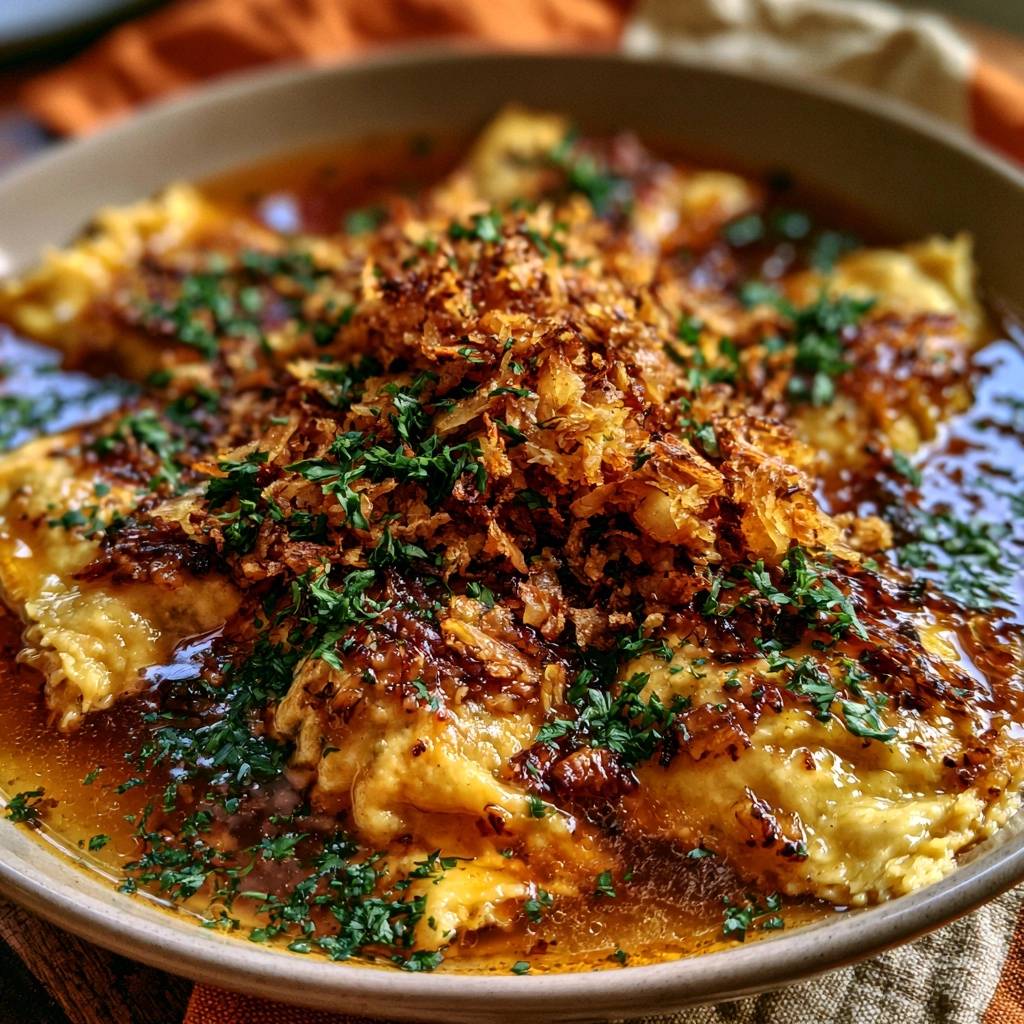
To serve, use a shallow bowl rather than a flat plate. This allows the broth to form a deep pool that keeps the bottom of the tofu seasoned while the top remains dry and crispy. Place the tofu slices into the bowl first, then carefully pour the hot garlic-ginger broth around them.
Avoid pouring the sauce directly over the very top of the tofu if you want to preserve the maximum “shatter” effect. Instead, let the broth come up about halfway. Immediately shower the dish with the remaining fresh parsley and a generous mound of crispy fried onions.
The fried onions should sit high on the tofu, acting as a secondary layer of crunch. This creates a beautiful textural contrast: the silky interior of the tofu, the crisp seared crust, the savory liquid, and the brittle snap of the onions. Serve it immediately while the temperatures and textures are at their peak.
Troubleshooting Common Tofu Obstacles
If your tofu sticks to the pan, it usually means one of two things: the oil wasn’t hot enough, or you tried to flip it too early. Tofu will naturally “release” from the pan once the crust has fully formed. If you feel resistance, give it another minute before trying again.
If your sauce tastes too salty, it has likely reduced too much. You can easily fix this by whisking in a little more vegetable broth or a teaspoon of honey to balance the sodium. Conversely, if the sauce is too thin, let it simmer for another two minutes to cook off the excess water.
Burnt garlic is another common issue. If the garlic turns dark brown or black, it will taste bitter and ruin the sauce. If this happens, it’s best to wipe out the pan and start the sauce over. It only takes a minute, and it saves the entire dish from a burnt aftertaste.
Flavor Variations: Adapting the Braise
Once you master the crispy technique, you can adapt the flavors to suit your mood. For a spicy version, add a tablespoon of chili crisp or sriracha to the braising liquid. The oil in the chili crisp will mingle with the parsley to create a vibrant, spicy red-and-green sauce.
You can also try a citrus-forward version by replacing the parsley with cilantro and adding a squeeze of fresh lime juice at the very end. This cuts through the richness of the fried tofu and provides a bright, Thai-inspired flavor profile.
For an extra umami boost, mix a teaspoon of dried mushroom powder into the cornstarch before coating the tofu. This adds an earthy, savory depth that mimics the flavor of meat. The possibilities are endless once you have the foundational “Texture Fix” under control.
Optimal Pairings for Crispy Garlic Braised Tofu
This dish is quite rich and savory, so it pairs best with sides that offer a clean, fresh contrast. Steamed bok choy or garlicky sautéed spinach are excellent choices. The greens soak up the extra garlic broth beautifully without competing with the tofu’s texture.
A bowl of fluffy jasmine rice is almost mandatory to catch every drop of the ginger-soy pool. The starch in the rice balances the saltiness of the soy sauce. If you want something lighter, a chilled cucumber salad with rice vinegar and sesame seeds provides a refreshing acidity that cleanses the palate between bites.
The acidity of a side dish is key here. Because the tofu is fried and the sauce contains honey, a hit of vinegar or citrus in your side dish will keep the meal from feeling too heavy. It balances the richness and makes the flavors of the garlic and ginger pop even more.
Storage and Reheating: Maintaining the Integrity
Crispy tofu is best enjoyed immediately, as the starch coating will eventually soften as it sits in the sauce. However, if you have leftovers, store the tofu and the sauce in separate airtight containers if possible. This prevents the tofu from becoming a total sponge overnight.
When you’re ready to eat, avoid the microwave at all costs. The microwave will turn the crispy crust into a rubbery, chewy mess. Instead, reheat the tofu in an air fryer at 375°F for 3-5 minutes or in a toaster oven until the exterior crisps back up. Warm the sauce separately in a small saucepan.
Stored properly, the tofu will stay good in the refrigerator for up to three days. While it won’t be quite as “shatter-crisp” as it was fresh from the pan, the air fryer method does a remarkable job of reviving the texture. It’s a great option for a quick, high-protein lunch the next day.
Can You Freeze Braised Tofu?
Freezing tofu actually changes its cellular structure. The water inside turns to ice crystals, which create larger pores in the protein. While many people love “frozen tofu” for its ability to soak up soup, it is not ideal for this specific crispy recipe.
If you freeze the finished dish, the cornstarch crust will lose its integrity and become mushy upon thawing. However, you can freeze the braising liquid on its own for up to three months. For the best results, always fry the tofu fresh and use the thawed sauce to finish the dish.
Expert Tips for Professional Results
For the best heat retention, use a cast-iron skillet. Cast iron stays hot even when you add the cold tofu, which prevents the oil temperature from crashing and ensures a more consistent crust. If you don’t have cast iron, a heavy-bottomed stainless steel pan is the next best thing.
Another pro-tip is to “temper” your tofu. Take it out of the fridge 20 minutes before you plan to cook. If the tofu is ice-cold when it hits the oil, it will lower the temperature of the pan instantly, leading to a greasier, less-crispy result. Room-temperature tofu sears much faster and more evenly.
If you want an extra-thick, “extra-crunchy” crust, you can use the double-dredge method. Coat the tofu in starch, let it sit for a minute until the starch looks damp, and then toss it in the cornstarch a second time. This creates a more substantial “shell” that is nearly indestructible.
The Importance of High-Smoke Point Oils
When searing at medium-high heat, you must use an oil with a high smoke point. Vegetable oil, grapeseed oil, or canola oil are all excellent choices. These oils can handle the heat without breaking down or smoking, which would give the tofu a burnt, acrid flavor.
Avoid using butter or extra-virgin olive oil for the searing stage. Butter contains milk solids that will burn long before the tofu is crispy, and olive oil has a low smoke point that isn’t suited for high-heat frying. Save the flavorful oils, like sesame oil, for the very end of the sauce-making process.
Frequently Asked Questions
Can I use an air fryer instead of pan-frying?
Yes, you can air fry the cornstarch-coated tofu at 400°F for 15-20 minutes, flipping halfway through. While it won’t be quite as rich as the pan-fried version, it still gets very crispy. Just be sure to spray the tofu generously with oil before air frying to help the starch brown properly.
Is there a soy-free alternative for the braise?
If you need to avoid soy, you can substitute the soy sauce with liquid aminos or coconut aminos. Coconut aminos are slightly sweeter than soy sauce, so you may want to reduce the amount of honey in the recipe to maintain the proper flavor balance.
Why did my cornstarch coating peel off?
This usually happens if the tofu wasn’t dried thoroughly before coating, or if the pan wasn’t hot enough. If the tofu is wet, the starch turns into a film that slides off the protein. Ensure the tofu is bone-dry and the oil is shimmering before you start searing.
How do I make this dish spicier?
The easiest way to add heat is to sauté a few dried red chilies or a teaspoon of red pepper flakes along with the garlic and ginger. You can also finish the dish with a drizzle of spicy chili oil or fresh sliced jalapeños for a bright, sharp kick.
Can I use firm tofu if I can’t find extra-firm?
You can use firm tofu, but you will need to press it for at least 20-30 minutes to remove the extra moisture. Because firm tofu is more delicate, be very careful when flipping it in the pan so it doesn’t break apart. Extra-firm is highly recommended for the best results.
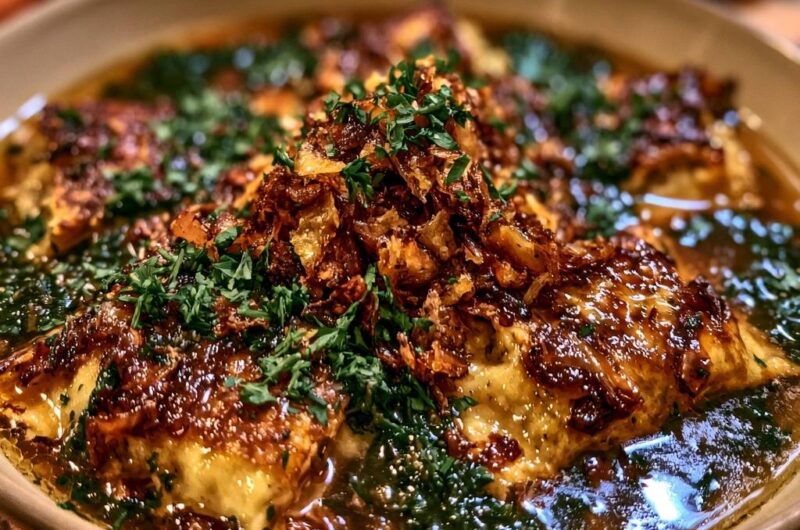
Crispy Garlic Braised Tofu
Course: Main CourseCuisine: Asian FusionDifficulty: easy4
servings15
minutes25
minutes40
Minutes285
kcalAsian Fusion
Ingredients
1 block extra-firm tofu, drained
3 tablespoons cornstarch
1/2 teaspoon salt
1/4 cup vegetable oil
4 cloves garlic, thinly sliced
1 tablespoon ginger, minced
1/4 cup soy sauce
1 tablespoon honey
1 cup vegetable broth (increased for the deep-pool visual)
1 teaspoon sesame oil
1/2 cup fresh parsley, finely chopped
1/4 cup crispy fried onions or shallots for garnish
Directions
- The Texture Fix: Slice the tofu into 1-inch thick rectangles. Place them between two layers of paper towels on a flat plate. Place a heavy skillet or cutting board on top for 10 minutes. This removes the excess water that causes sponginess and prevents the tofu from getting crispy.
- Once pressed, pat the tofu completely dry. Toss the pieces in a bowl with cornstarch and salt until every side is evenly coated. This creates the protective barrier needed for a crunch that lasts even after saucing.
- Heat the vegetable oil in a large skillet over medium-high heat. Add the tofu slices in a single layer. Do not crowd the pan. Sear for 4 to 5 minutes per side until deep golden brown and shatter-crisp. Remove tofu and set aside on a wire rack.
- In the same pan, reduce heat to medium. Add the sliced garlic and ginger. Sauté for 1 minute until fragrant but not burnt.
- Whisk together the soy sauce, honey, vegetable broth, and sesame oil. Pour the mixture into the skillet. Let it simmer for 3-5 minutes. To match the visual of the rich, dark sauce, allow it to reduce slightly, but keep enough volume to create a “pool” in the serving dish.
- Stir half of the finely chopped parsley directly into the sauce in the pan to create the herb-infused green oil effect seen in the image.
- Assembly: Place the crispy tofu into a shallow serving bowl. Pour the hot garlic-ginger broth around and over the tofu.
- Immediately shower the dish with the remaining fresh parsley and a generous mound of crispy fried onions. The onions should sit high on the tofu to maintain their crunch against the braising liquid. Serve hot.
Notes
- To maintain the best texture, ensure the tofu is placed on a wire rack after frying and serve immediately after adding the broth and fried onions.