We’ve all been there. You sit down for a cozy dinner, scoop a mountain of mashed potatoes onto your plate, and realize they have the consistency of wallpaper paste. It’s a heartbreaking kitchen fail that turns a beloved comfort food into a sticky, gummy mess. Most people think the secret to great potatoes is just adding more butter, but the real victory happens before the dairy even touches the pot.
The soul of this recipe lies in the “Steam Release” philosophy. By focusing on moisture control, you create a texture that is light, airy, and capable of holding onto every drop of savory bacon fat. These aren’t just side dishes; they are a masterclass in balancing rich, creamy interiors with the sharp, salty crunch of perfectly rendered thick-cut bacon.
I’ve found that the biggest mistake home cooks make is trapping water inside the potato cells. If you want that cloud-like mouthfeel, you have to let the potatoes “dry-cook” for a few minutes after draining. This simple step ensures the starch stays fluffy rather than turning into a heavy, translucent glue. Once you master this technique, you’ll never look at a potato the same way again.
The Science of Starch: Avoiding Gummy Textures
To understand why potatoes turn gummy, you have to look at them on a molecular level. Potatoes are packed with starch granules. When these granules are agitated too much or combined with excess water, they burst and release amylose. This is the same stuff used to make actual glue, which explains why over-mixed potatoes feel so heavy and sticky on the tongue.
The “dry-cook” method is your primary defense against this culinary disaster. After you drain your potatoes, you might think they are ready for mashing, but they are actually still holding onto a significant amount of surface moisture. By returning them to the hot pot over low heat, you allow that residual water to evaporate as steam. You’ll actually see the transformation happen right before your eyes.
As the moisture leaves, the exterior of the potato chunks will take on a matte, floury appearance. This creates a thirsty starch that is ready to soak up butter and cream rather than being diluted by plain water. If you skip this, the water stays trapped, the starch becomes unstable, and you end up with a “broken” mash that feels wet and heavy. Taking those extra two minutes to shake the pot over the flame is the difference between a mediocre side and a professional-grade dish.
Why Yukon Golds Outperform Russets
While Russet potatoes are great for baking, Yukon Golds are the undisputed champions of the mash. They sit perfectly in the middle of the starch spectrum, offering a creamy, dense flesh that holds its shape better than the mealy Russet. Their natural yellow hue also provides a beautiful, golden aesthetic that looks like you’ve added twice the butter you actually did.
Yukon Golds have a naturally buttery flavor and a thin skin that makes them easier to work with. Because they have less starch than a Russet but more than a waxy red potato, they provide a velvety mouthfeel that doesn’t collapse into mush. They are sturdy enough to handle the heavy “loaded” additions like bacon and cracked pepper without losing their structural integrity.
Essential Components for Loaded Bacon Mashed Potatoes
Quality ingredients are the backbone of this dish. Since we are only using a handful of items, each one needs to pull its weight. Thick-cut bacon is non-negotiable here. Standard thin bacon tends to disappear into the potatoes, losing its crunch almost instantly. Thick-cut pieces provide a meaty, smoky contrast that stands up to the richness of the mash.
The seasoning also requires an upgrade. Table salt is fine for the boiling water, but for the final fold, sea salt provides a cleaner, more distinct brine. Similarly, pre-ground black pepper often tastes like dust. Freshly cracked black pepper offers a floral, spicy heat that cuts through the heavy cream and butter, brightening the entire flavor profile and preventing the dish from feeling one-dimensional.
Temperature Matters: Butter and Heavy Cream
Adding cold butter or chilled cream to hot potatoes is a recipe for a grainy texture. When cold dairy hits the hot starch, it causes the temperature of the potatoes to drop rapidly, which can make the fats seize up rather than emulsifying. This results in a mash that feels greasy on the roof of your mouth instead of smooth.
Always bring your butter to room temperature so it’s soft enough to be easily incorporated. Likewise, warm your heavy cream in a small saucepan or the microwave until it’s steaming. When the temperatures of the potatoes and the dairy are aligned, they bond together into a seamless, silky emulsion that stays stable even as the dish begins to cool on the table.
The Pre-Mash Phase: Rendering the Perfect Bacon
The secret to incredible bacon isn’t high heat; it’s a cold start. By placing your chopped bacon in a cold skillet and then turning on the heat, you allow the fat to render out slowly. This ensures the meat gets crispy without burning the edges, and it provides you with a clear, flavorful liquid gold that we’ll use later.
Don’t toss all that rendered fat! Reserving just one tablespoon of the bacon drippings to mix into the potatoes is a pro move. This fat acts as a flavor bridge, tying the smoky notes of the bacon bits directly into the creamy base of the potatoes. It adds a depth of flavor that butter alone simply cannot achieve, making every bite taste like it was infused with smoke.
Step-by-Step: Achieving the Ultimate Fluffy Mash
The journey to the perfect mash begins in the pot. Always start your potatoes in cold, salted water. If you drop them into boiling water, the outside will cook and soften while the center remains hard and raw. Starting cold ensures the entire potato chunk heats up at the same rate, leading to a uniform texture that mashes easily without leaving behind stubborn, hard lumps.
Once the water reaches a boil, keep it at a gentle simmer. A violent boil can cause the potatoes to bang against each other, knocking off the starchy exterior and making the water cloudy. You want them tender enough that a fork slides in with zero resistance. If there’s any “snap” left in the potato, your mash will be grainy. Patience during the simmer is your best friend here.
The Critical Two-Minute Steam Dry
After draining the potatoes in a colander, don’t let them sit there. Get them back into that hot pot immediately. Set the heat to low and keep the potatoes moving. You’ll notice steam billowing out of the pot—this is exactly what you want. You are essentially dehydrating the surface of the potato chunks to make room for the fats we are about to add.
Watch the bottom of the pot closely. After about two minutes, a thin, white, chalky film will start to form on the metal. This is the signal that the excess moisture is gone. The potatoes will look slightly “fuzzy” on the edges. This is the peak moment to start mashing. If you wait too long, they’ll start to brown; if you don’t wait long enough, you’ll miss out on that signature fluffiness.
Mashing vs. Ricing: Choosing Your Texture
If you prefer a rustic, chunky mash, a standard wire or perforated masher is the way to go. It leaves small bits of potato intact, which provides a nice contrast to the crispy bacon. However, if you want a restaurant-quality, silky smooth finish, a potato ricer is your best tool. It pushes the potato through tiny holes, aerating them and ensuring there are absolutely no lumps.
For a different kind of comfort food, consider trying these creamy cheese pierogi.
Regardless of the tool you choose, work quickly while the potatoes are piping hot. As potatoes cool, the starches begin to set and lock into place. If you try to mash cold potatoes, you’ll end up with a gummy texture because you’re forcing the starch to break after it has already stabilized. Mash first, then add your fats to keep everything moving smoothly.
Folding Techniques to Prevent Over-Processing
Once your potatoes are mashed and the butter is in, it’s time for the cream. This is where many people go wrong by stirring vigorously. Instead, use a large spatula and use a “folding” motion. Cut through the center, scrape the bottom, and lift the potatoes over the top. This incorporates the liquid without beating the starch into submission.
Stop the moment the cream is absorbed. You aren’t making cake batter; you’re gently combining ingredients. Over-working the potatoes at this stage is the fastest way to turn a fluffy masterpiece into a sticky mess. The goal is a light, pillowy texture that holds its shape on a spoon but melts the moment it hits your tongue.
Troubleshooting Common Mashed Potato Failures
If you find your potatoes are too salty, don’t panic. You can fold in a little extra unsalted butter or a splash more cream to dilute the saltiness. If they are too thin or runny, it usually means you added too much liquid too fast. You can fix this by stirring them over very low heat for a minute to cook off some moisture, though be careful not to overwork them.
If the potatoes have cooled down too much and become stiff, the best fix is a splash of very hot cream. The heat from the liquid will help loosen the starches without making them gummy. If you’ve already made them gummy, unfortunately, there is no way to “un-glue” them, but you can spread them in a baking dish, top with cheese, and bake them into a casserole to hide the texture.
Flavor Variations and Texture Add-ins
While bacon and black pepper are a classic duo, you can easily customize this base. Folding in a half-cup of sharp white cheddar adds a tangy richness that complements the smoky bacon perfectly. If you want a fresher note, finely chopped chives or scallions provide a bright, oniony bite that cuts through the heavy dairy.
Roasted garlic is another fantastic addition. Squeeze the softened cloves out of their skins and mash them directly into the potatoes along with the butter. The sweetness of the roasted garlic pairs beautifully with the cracked black pepper. Just remember to keep your fat-to-starch ratio consistent; if you add a lot of cheese, you might want to slightly reduce the butter.
Pairing Guide: What to Serve with Loaded Potatoes
These potatoes are incredibly rich, so they pair best with proteins that have a bit of acidity or a strong savory crust. A roasted chicken with lemon and herbs is a perfect match, as the citrus helps balance the heavy cream. Braised beef short ribs are another excellent choice, as the deep, umami-rich gravy seeps into the fluffy potato crevices.
Grilled lamb chops or a thick ribeye steak also stand up well to the bold flavors of bacon and black pepper. The cracked pepper in the mash echoes the charred exterior of grilled meat, creating a cohesive dining experience. Because these potatoes are so filling, you’ll want to round out the plate with something light and crisp, like a simple green salad or steamed asparagus.
Advanced Prep and Heat Retention Strategies
If you’re hosting a dinner party, you can make these up to an hour in advance. The best way to keep them warm without drying them out is to place them in a slow cooker on the “warm” setting. To prevent a skin from forming, press a piece of plastic wrap or parchment paper directly onto the surface of the potatoes before closing the lid.
If they’ve been sitting for a while and seem a bit stiff, just fold in a tablespoon of warm cream right before serving. This will revive the glossy sheen and loosen the texture. Avoid reheating them on high heat in the microwave, as this can cause the butter to separate from the starch, leaving you with a greasy pool at the bottom of the bowl.
Expert Tips for Professional Presentation
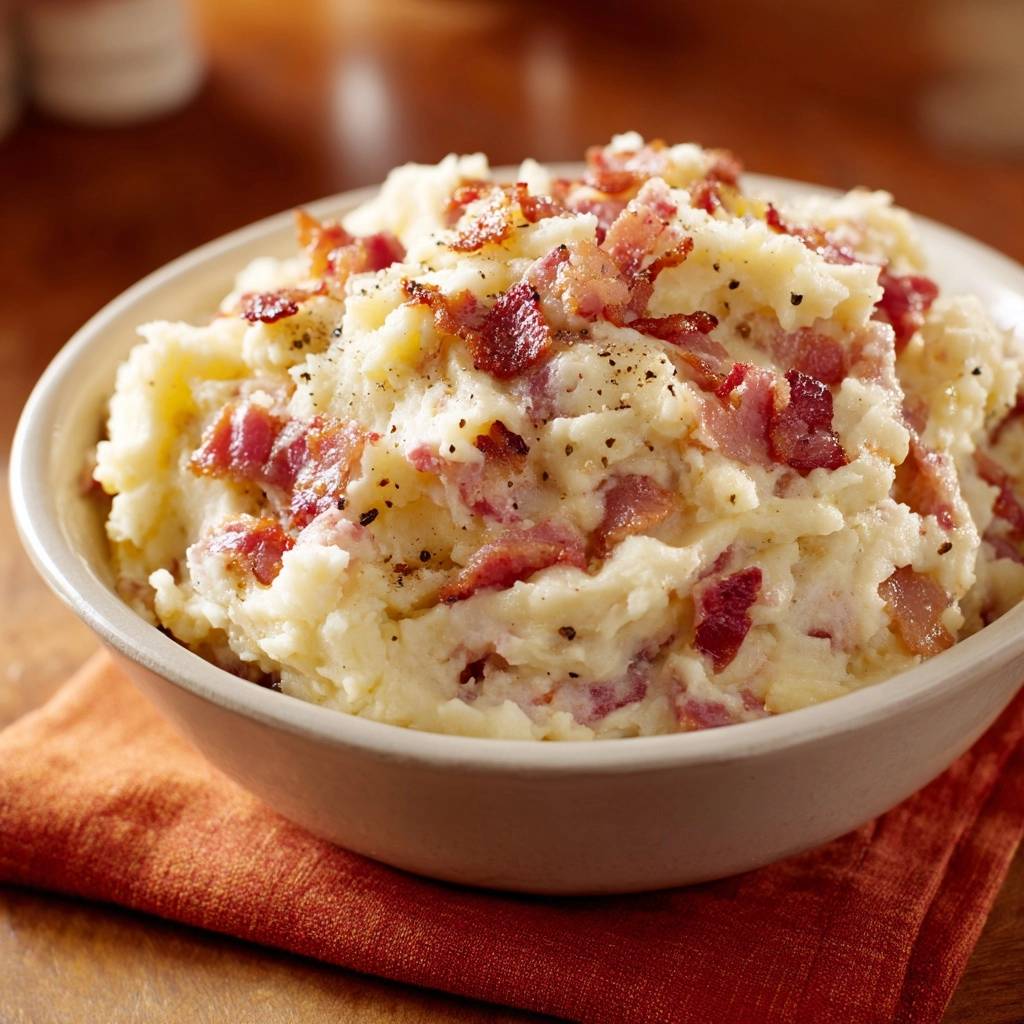
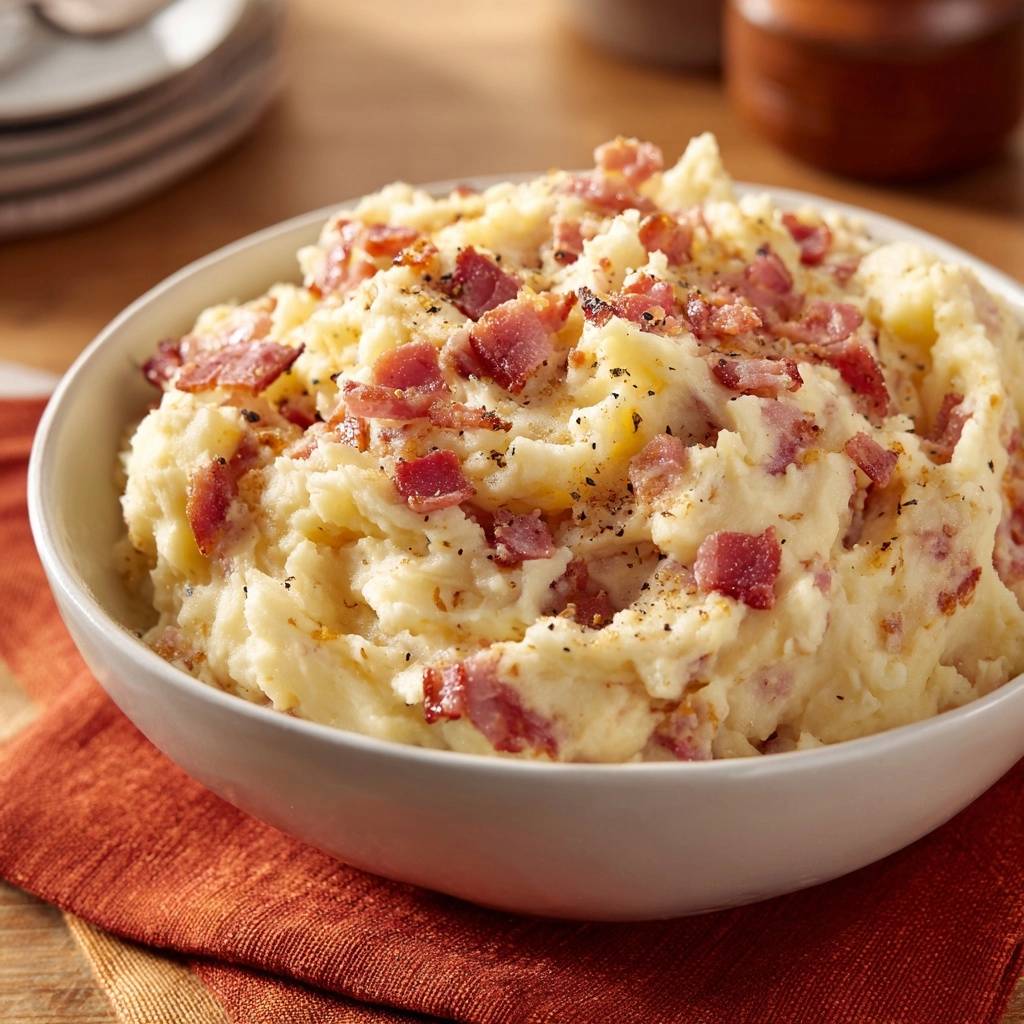
Presentation is all about the “Visual Finish.” Don’t mix all of your bacon into the potatoes. Reserve about a quarter of those crispy bits to sprinkle on top right before the bowl hits the table. This tells the person eating exactly what’s inside and provides an immediate hit of texture that hasn’t been softened by the moisture of the mash.
Use a shallow, wide serving bowl rather than a deep, narrow one. This increases the surface area, allowing you to spread the toppings evenly so every guest gets a bit of bacon and pepper in their first scoop. A final dusting of freshly cracked black pepper over the top adds a professional, gourmet touch that makes the dish look as good as it tastes.
Frequently Asked Questions
Can I use turkey bacon instead of pork bacon?
You can certainly use turkey bacon, but keep in mind that it has significantly less fat than traditional bacon. You won’t get that tablespoon of rendered fat to mix into the potatoes, so you may want to add an extra tablespoon of butter to compensate for the lost flavor and moisture. Also, turkey bacon can dry out quickly, so watch it closely while frying.
How do I fix potatoes that have already become gummy?
Once the starch has turned gummy, you cannot reverse the process. However, you can repurpose them! Transform the gummy mash into potato pancakes by mixing in an egg and some flour, then frying them until crispy. Alternatively, turn them into a “Loaded Potato Bake” by topping them with plenty of shredded cheese and breadcrumbs and baking until the top is golden and crunchy.
Can these mashed potatoes be frozen for later?
Mashed potatoes with high fat content, like this recipe with butter and heavy cream, actually freeze quite well. The fat helps protect the potato texture. Store them in an airtight container or a heavy-duty freezer bag for up to two months. To reheat, thaw them in the fridge overnight and warm them slowly on the stove, adding a splash of cream to bring back the fluffy consistency.
Why do you start the potatoes in cold water instead of boiling water?
Starting in cold water is the only way to ensure the potatoes cook evenly. If you drop them into boiling water, the outside cooks instantly and starts to break down before the heat can reach the center. By the time the middle is soft, the outside is overcooked and waterlogged. Starting cold allows the temperature to rise gradually, so the entire chunk reaches the perfect texture at the same time.
What is the best way to reheat leftovers without them getting dry?
The best method is to use a double boiler or a bowl set over a pot of simmering water. This gentle, indirect heat warms the potatoes without scorching the bottom or evaporating too much moisture. If you must use a microwave, do it in short 30-second bursts, stirring in a tiny splash of milk or cream between each interval to keep them creamy.
Bacon Mashed Potatoes
Course: Side DishCuisine: AmericanDifficulty: easy6
servings15
minutes25
minutes340
kcal40
MinutesA foolproof recipe for creamy, airy mashed potatoes featuring Yukon Golds, thick-cut bacon, and heavy cream. The secret technique involves steaming off excess moisture to ensure a light and fluffy result every time.
Ingredients
3 pounds Yukon Gold potatoes, peeled and cut into uniform 1-inch chunks
1/2 pound thick-cut bacon, chopped
1/2 cup unsalted butter, room temperature
3/4 cup heavy cream, warmed
1 1/2 teaspoons sea salt (plus more for boiling water)
1 teaspoon freshly cracked black pepper
Directions
- Place the chopped bacon in a cold skillet. Turn the heat to medium and fry until the fat has rendered and the bacon is deeply browned and crispy. Drain on paper towels, reserving 1 tablespoon of the bacon fat.
- Place the cubed potatoes in a large pot and cover with cold water by at least two inches. Add a generous tablespoon of salt to the water.
- Bring to a boil, then reduce heat to a simmer. Cook for 15 to 20 minutes until the potatoes are very tender and easily pierced with a fork.
- Drain the potatoes thoroughly in a colander. Return the drained potatoes to the hot, empty pot over low heat for 2 minutes. Shake the pot constantly to let the excess moisture steam off until a slight white film forms on the bottom of the pot. This “dry-cook” step prevents the gummy texture caused by trapped moisture.
- While the potatoes are hot, use a potato masher or ricer to break them down into a fluffy consistency.
- Add the room temperature butter and the reserved tablespoon of bacon fat. Mash until the butter is fully incorporated.
- Slowly pour in the warmed heavy cream while folding gently with a spatula. Do not over-work the potatoes; stop as soon as the liquid is absorbed to maintain a light texture.
- Fold in the sea salt, the cracked black pepper, and three-quarters of the crispy bacon bits.
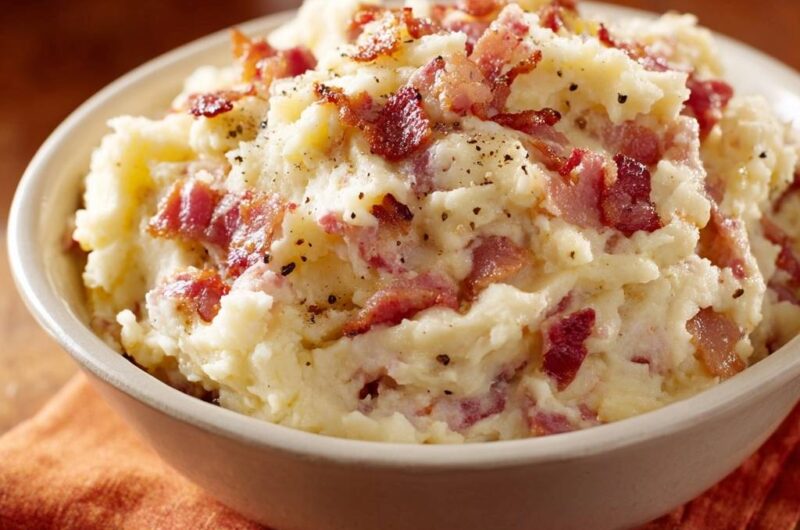
- Transfer to a serving bowl and top with the remaining bacon and an extra dusting of cracked black pepper to match the visual finish.
Notes
- The secret to avoiding a gummy texture is the steam release step. Drying the potatoes in the hot pot for 2 minutes before adding liquids ensures the starch stays light and airy.