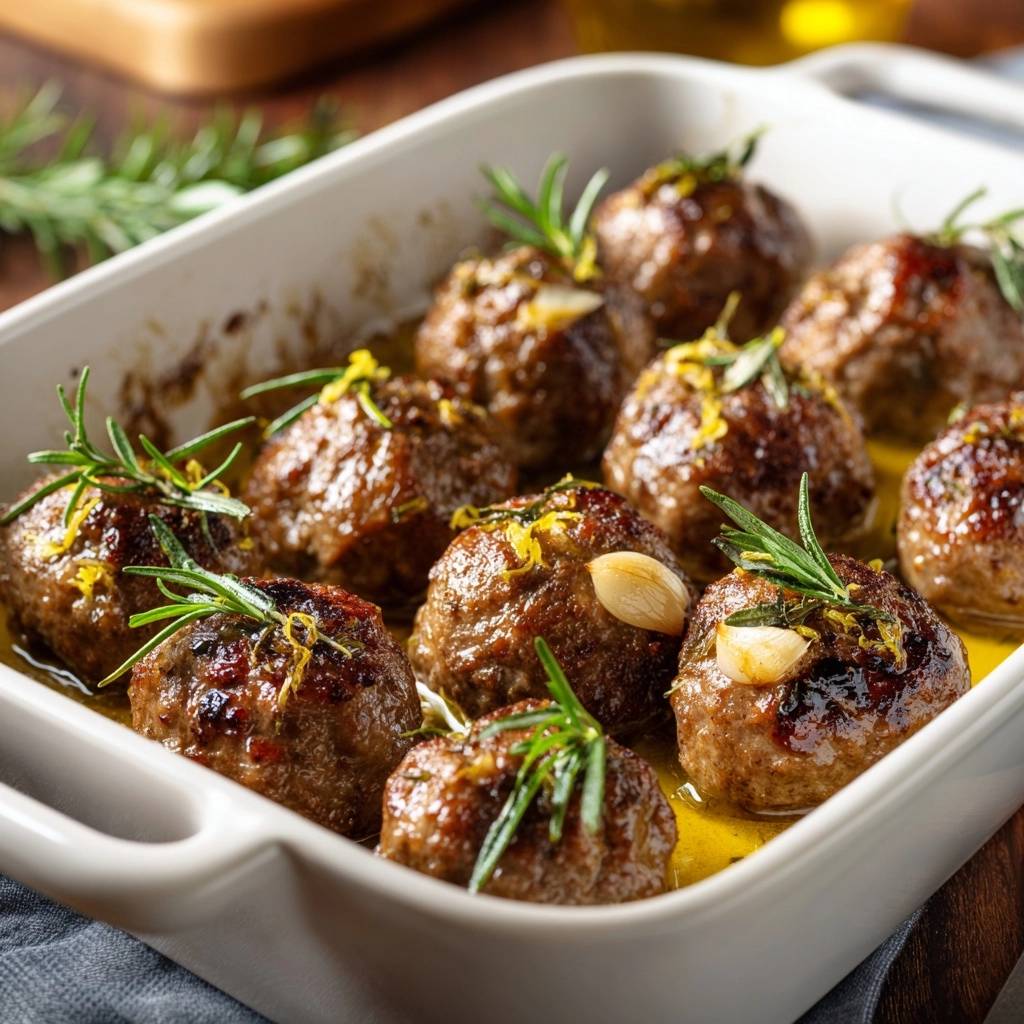
Forget everything you know about dry, rubbery meatballs that require a lake of marinara just to be edible. Most home cooks struggle with meatballs that turn into tough little bouncy balls because the high heat of the oven evaporates every drop of moisture. This recipe changes the game by using a “Confit-Roast” technique that ensures a succulent, melt-in-your-mouth texture every single time.
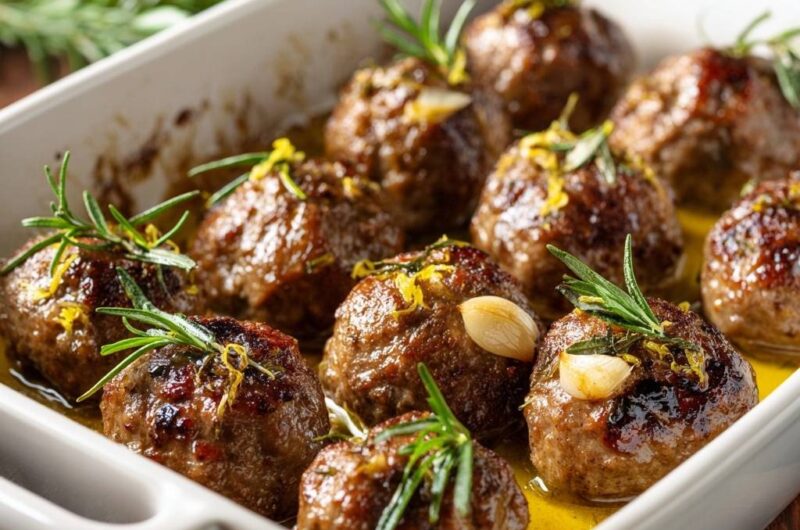
The secret lies in the shallow bath of extra virgin olive oil and aromatic garlic cloves. While the tops of the meatballs roast to a gorgeous golden brown, the bottoms gently poach in fragrant oil, creating a moisture-lock environment. You get the best of both worlds: a savory, caramelized crust and a center that is incredibly tender and juicy.
The flavor profile here is sophisticated yet deeply comforting. Earthy, piney rosemary pairs perfectly with the mellow sweetness of roasted garlic, while a hit of fresh lemon zest cuts through the richness. One bite and you’ll realize that the secret isn’t just in the ingredients, but in how you protect the meat from the harsh dry heat of the oven.
If you’re enjoying the savory filling here, you might also enjoy these cheesy beef empanadas.
The Science of the Panade and Moisture Retention
To achieve the “Anti-Dry” promise, we rely on a culinary secret weapon called a panade. This is a simple mixture of starch and liquid—in this case, panko breadcrumbs and whole milk. When you soak the crumbs, they turn into a paste that physically wedges itself between the meat proteins.
When meat cooks, the proteins want to bond together and squeeze out moisture, which is why overcooked burgers or meatballs feel tight and rubbery. The panade acts as a barrier, preventing those proteins from cross-linking too tightly. This keeps the internal structure soft and allows the meatball to hold onto its natural juices even at high temperatures.
Fat content is the other half of the moisture equation. I always recommend an 80/20 ground beef blend for this recipe. Leaner meats like 90/10 or 95/5 simply don’t have enough intramuscular fat to withstand a 400°F oven. That 20% fat renders down during the roasting process, basting the meat from the inside out while the olive oil protects it from the outside.
Essential Components for Garlic and Rosemary Roasted Meatballs
Quality matters when you are working with a handful of ingredients. Fresh rosemary is absolutely non-negotiable here. Dried rosemary has a woody, needle-like texture that never quite softens, whereas fresh rosemary releases essential oils that perfume the entire dish without adding grit.
For the cheese, skip the green shaker bottle and go for freshly grated Parmigiano-Reggiano. It provides a deep, nutty umami flavor and acts as a natural seasoning. Because the cheese is salty, we can be more conservative with the kosher salt, ensuring the meatballs are seasoned perfectly throughout.
The extra virgin olive oil isn’t just a cooking fat; it’s a primary flavor component. As the meatballs roast, the oil becomes infused with beef juices, garlic, and rosemary. By the time the timer goes off, you’ve essentially created a liquid gold sauce right in the baking dish.
Selecting the Right Ground Beef Blend
When you’re at the butcher counter, look for ground chuck. It naturally sits at that 80/20 ratio and has a robust beefy flavor. Avoid ground round or sirloin for this specific roasting method, as they tend to dry out and become crumbly when exposed to the “confit” oil bath.
Aromatic Infusions: Garlic, Rosemary, and Lemon
The garlic cloves in this recipe are left in large halves for a reason. They mellow out in the hot oil, losing their sharp bite and becoming buttery and sweet. The lemon zest is the final “pop” of flavor, added at the end to provide a bright acidity that balances the savory beef and rich oil.
Step-by-Step: Executing the Confit-Roast Technique
Success starts with how you handle the meat. When you combine your ingredients, use your hands and keep your touch light. If you squeeze or mash the meat too hard, you’ll end up with a dense, heavy meatball. Think of it as “tossing” the ingredients together until they just barely hold their shape.
Rolling the meatballs should be a quick process. Aim for about 1.5 inches in diameter—roughly the size of a golf ball. This size is the “sweet spot” for the confit method, as it allows the center to reach the safe internal temperature of 165°F at the exact moment the exterior achieves a perfect brown crust.
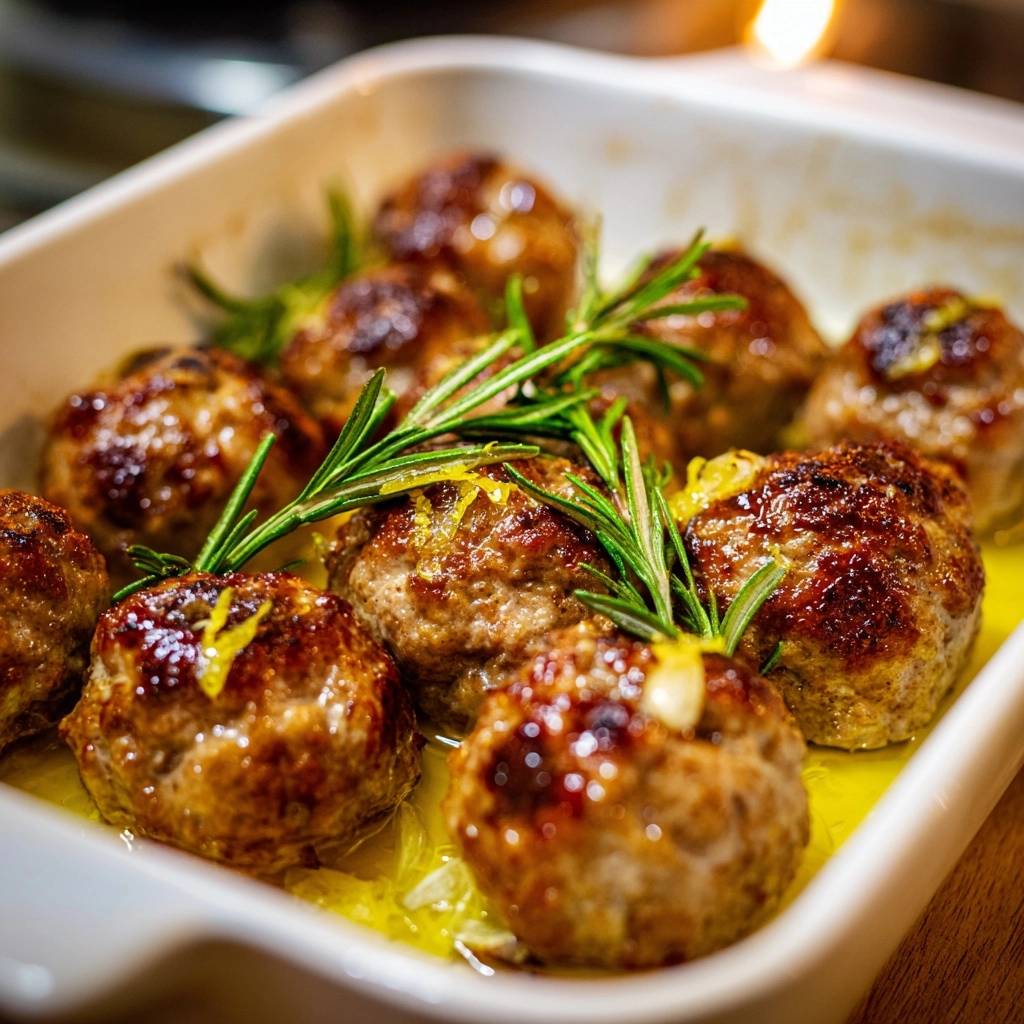
Once they are rolled, you’ll nestle them into the oil. You want to see the oil coming up about a quarter of the way on the meatballs. This creates that moisture-lock. As they bake, the kitchen will fill with the scent of roasting garlic and herbs—it’s a sensory experience that tells you dinner is going to be amazing.
Hydrating the Breadcrumbs and Mixing
Give the panko and milk at least 5 full minutes to sit. You’ll know it’s ready when the breadcrumbs have absorbed all the milk and formed a thick, slightly translucent paste. If you see any dry crumbs left, add a tiny splash more milk. This paste must be fully hydrated before it touches the meat.
The Oil Bath: Setting Up the Baking Dish
Choose a ceramic baking dish that fits the meatballs snugly but without them touching. If the dish is too large, the oil will spread too thin and won’t submerge the base of the meatballs. The “nesting” ensures the garlic cloves stay tucked between the meatballs, where they can infuse the oil without burning.
Precision Roasting and the Basting Phase
We roast at 400°F because we want immediate caramelization. However, the real magic happens at the 12-minute mark. Open the oven and use a spoon to drizzle that hot, garlic-scented oil over the top of each meatball. This is the basting phase.
This step triggers the Maillard reaction on the top surface. The hot oil fries the exterior slightly, creating a glistening, savory crust that contrasts beautifully with the tender interior. You’ll see the meat transform from a dull pink to a rich, mahogany brown right before your eyes.
Troubleshooting Common Meatball Texture Issues
If your meatballs are falling apart, it’s usually a sign of too much moisture or a weak binder. Ensure you use a large egg and that your panade isn’t “soupy.” On the flip side, if they are tough, you likely overworked the meat during the mixing stage. Next time, stop mixing the second you don’t see any more streaks of white breadcrumb paste.
For a similar juicy texture, check out these cheesy baked meatballs.
For a similar crispy exterior, try crispy toasted ravioli techniques.
Always use a meat thermometer to check for doneness. Pull them out at 160°F; the carryover heat will bring them to the safe 165°F while they rest. Overcooking by even five minutes can negate the benefits of the oil bath, so stay vigilant toward the end of the timer.
Flavor Variations and Ingredient Substitutions
While beef is classic, ground lamb is a phenomenal substitute that pairs beautifully with rosemary and garlic. If you prefer ground turkey, choose “ground turkey” (which includes dark meat) rather than “turkey breast.” You may also want to add an extra tablespoon of olive oil to the meat mixture itself to compensate for the lower fat content.
If rosemary isn’t your favorite, you can swap it for fresh thyme or oregano. The technique remains exactly the same. The garlic-oil base is incredibly versatile and acts as a canvas for whatever fresh herbs you have growing in your garden or sitting in your crisper drawer.
Make-Ahead Strategies and Freezing Instructions
You can roll these meatballs a day in advance and store them in the fridge, but don’t add them to the oil until you’re ready to bake. For freezing, I recommend freezing them raw on a parchment-lined tray. Once solid, transfer them to a freezer bag for up to three months.
To cook from frozen, let them thaw in the refrigerator overnight before proceeding with the oil bath. If you have leftover cooked meatballs, store them in a container with the roasting oil. Reheat them gently in a pan over low heat so the oil can re-moisturize the meat without making it rubbery in the microwave.
Pairing Suggestions for Roasted Meatballs
These aren’t your typical “spaghetti and meatballs” meatballs. Because they come with their own built-in sauce (the garlic oil), they are best served with something that can soak up every drop. A thick slice of toasted sourdough or a crusty baguette is the perfect vessel for the infused oil and softened garlic cloves.
What to Try Next
To round out your meal featuring these garlic and rosemary meatballs, consider these complementary dishes.
- For a fresh, green addition that cooks quickly alongside your main, try these bacon-wrapped asparagus bundles, offering a savory crunch.
- If you’re craving something warm and doughy to soak up any extra sauce, these cheesy garlic pull-apart rolls would be a great choice.
For a fuller meal, serve them over a bed of creamy polenta or buttery mashed potatoes. The richness of the meatballs also benefits from a bright, acidic side dish. A simple arugula salad with a lemon vinaigrette provides a peppery crunch that cleanses the palate between savory bites.
Expert Tips for Professional Results
Use a ceramic or stoneware baking dish if you have one. These materials distribute heat more evenly than thin metal pans, which prevents the bottom of the meatballs from scorching before the tops are browned. It also keeps the oil at a steady, gentle simmer.
Don’t skip the 5-minute rest after taking the dish out of the oven. Just like a steak, meatballs need time for the juices to redistribute. If you cut into them immediately, all that moisture you worked so hard to preserve will run out onto the plate.
Finally, save any leftover roasting oil! It is packed with flavor from the beef, rosemary, and garlic. You can use it the next day to sauté vegetables, toss with pasta, or even as a base for a savory salad dressing. It’s essentially a concentrated flavor bomb that shouldn’t go to waste.
Frequently Asked Questions
Can I use dried rosemary instead of fresh?
You can, but you should reduce the amount to one teaspoon and crush it thoroughly with a mortar and pestle first. Dried rosemary is much more potent and has a very hard, needle-like texture. Fresh rosemary is highly recommended here because it softens beautifully in the oil bath and provides a much cleaner, more aromatic flavor profile.
How do I prevent the garlic from burning?
The key is to make sure the garlic cloves are mostly submerged in the olive oil. The oil acts as a heat regulator, keeping the garlic at a temperature where it “confits” (slow-cooks) rather than fries or chars. If you notice the garlic browning too quickly, simply tuck the pieces further under the meatballs or deeper into the oil bath halfway through cooking.
Is 1/2 cup of olive oil too much fat?
It might seem like a lot, but the meatballs do not actually absorb all that oil. The oil serves as a cooking medium that conducts heat and seals in moisture. Most of the oil stays in the pan, and you can choose how much you want to drizzle over your serving. It creates a luxurious sauce that is far more flavorful than a standard jarred marinara.
What is the best way to zest the lemon?
Use a microplane or a fine grater and only take off the bright yellow outer layer. Avoid the white part underneath, known as the pith, as it is incredibly bitter and will clash with the sweet roasted garlic. Adding the zest at the very end, right before serving, ensures the citrus oils stay bright and fragrant rather than cooking away in the oven.
Why did my meatballs turn out tough?
Toughness is almost always caused by over-mixing the meat. When you mix ground beef vigorously, the proteins begin to bind together too tightly, resulting in a dense texture. Use a light hand and stop as soon as the ingredients are combined. Additionally, ensure you didn’t skip the milk-soaked breadcrumbs, as that panade is vital for keeping the meat fibers separated and tender.
Roasted Meatballs
Course: Main CourseCuisine: AmericanDifficulty: easy4
servings15
minutes25
minutes410
kcal40
MinutesThese meatballs are prepared using a unique moisture-lock technique where they are partially poached in aromatic olive oil and roasted to a golden brown, ensuring a tender and juicy result every time.
Ingredients
1 pound ground beef (80/20 blend)
1/2 cup panko breadcrumbs
1/4 cup whole milk (to hydrate breadcrumbs)
1 large egg, beaten
1/4 cup grated parmesan cheese
1 tablespoon fresh rosemary, finely minced
1 teaspoon kosher salt
1/2 teaspoon black pepper
1/2 cup extra virgin olive oil
6-8 cloves garlic, peeled and halved
1 tablespoon lemon zest
12 small fresh rosemary sprigs (for garnish/infusion)
Directions
- Preheat your oven to 400°F (200°C).
- In a small bowl, soak the breadcrumbs in the milk for 5 minutes to create a panade. This is essential for the “Anti-Dry” promise.
- In a large bowl, combine the ground beef, hydrated breadcrumbs, egg, parmesan, minced rosemary, salt, and pepper. Mix gently with your hands just until combined. Do not overwork the meat.
- Roll the mixture into 12 even-sized balls (about 1.5 inches in diameter).
- Pour the 1/2 cup of olive oil into a ceramic baking dish. Scatter the halved garlic cloves into the oil.
- Place the meatballs into the dish. The oil should submerge the base of the meatballs.
- Press one small rosemary sprig and a few slivers of garlic (from the pan) or lemon zest onto the top of each meatball.
- Bake for 20 to 25 minutes. Halfway through the cooking time, use a spoon to baste the tops of the meatballs with the hot garlic oil from the pan. This creates the glistening, browned crust seen in the image.
- Remove from the oven when the meatballs are browned and reach an internal temperature of 165°F.
- Let the meatballs rest in the oil for 5 minutes before serving. Serve them directly from the dish, drizzled with the remaining lemon zest and the aromatic roasting oil.
Notes
- The secret to the Anti-Dry promise is the panade made from soaking breadcrumbs in milk and the Confit-Roast method which uses a shallow bath of olive oil to prevent the meat from drying out.