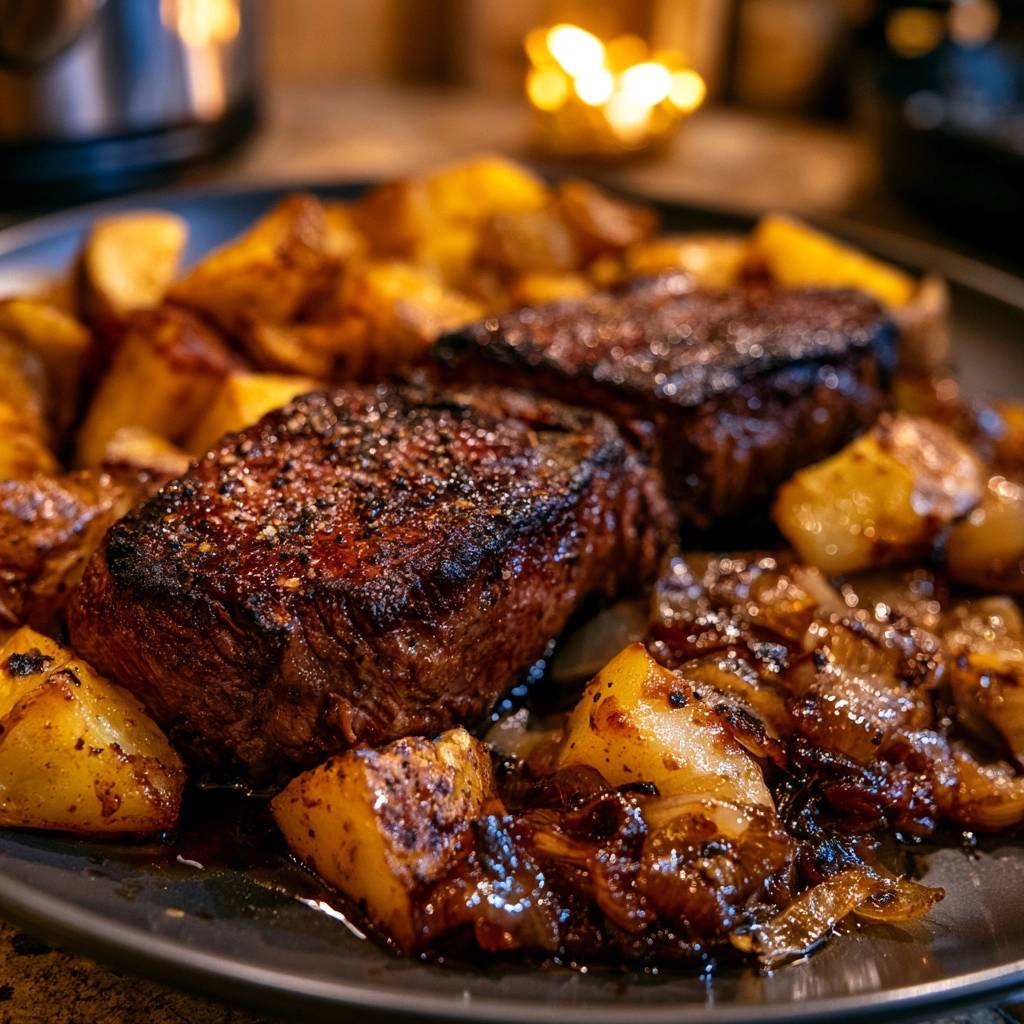
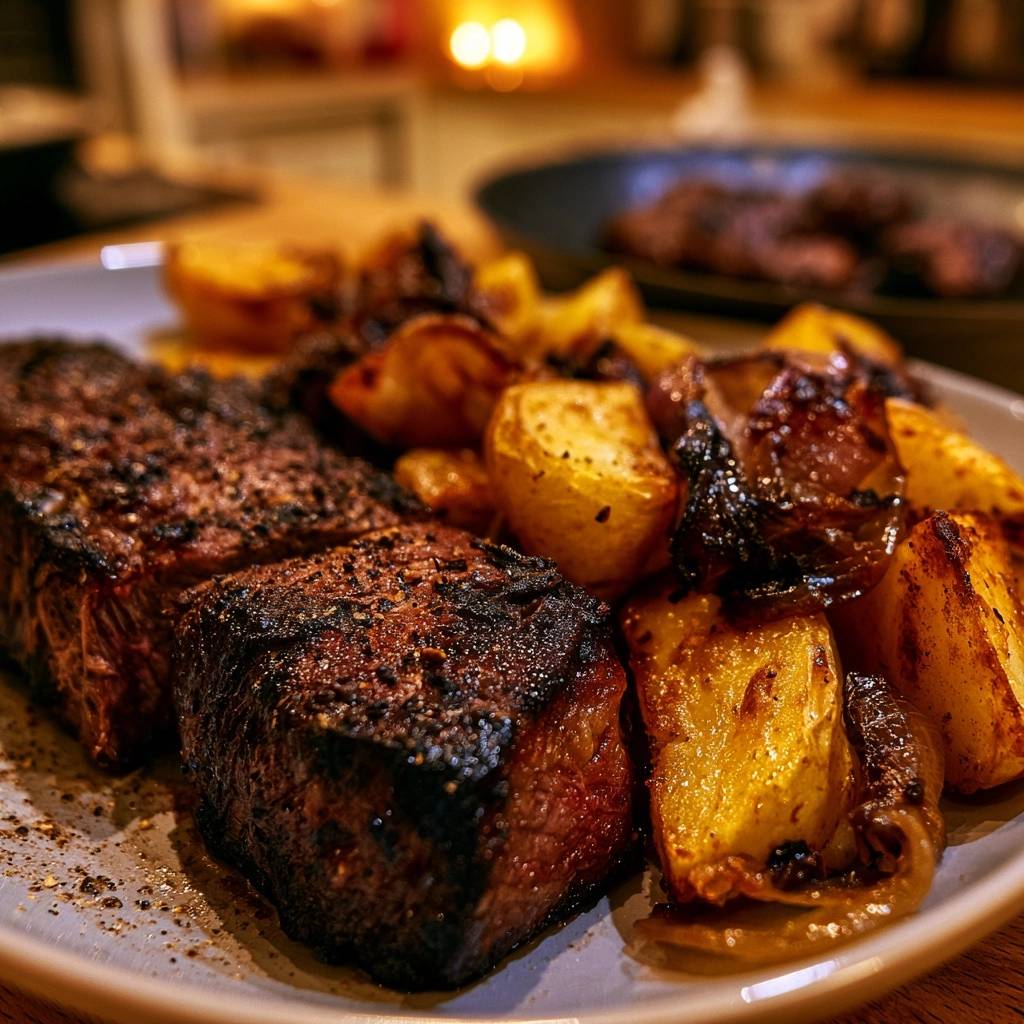
Most home cooks struggle with the dreaded “gray meat” syndrome, where a beautiful cut of beef turns out looking boiled rather than grilled. You want that deep, mahogany crust that shatters slightly under the knife, revealing a tender, ruby-red center. Achieving this isn’t about luck; it’s about mastering the balance between high-heat searing and moisture control.
The secret to this Garlic Butter Pan-Seared Steak and Potatoes lies in a two-stage cooking process that ensures your starch and protein finish at the exact same moment. By par-boiling the potatoes and using a high-heat sear for the steak, you create a restaurant-quality meal in a single heavy skillet. It’s about the contrast between the velvety, butter-basted beef and the jagged, crispy edges of the Yukon Golds.
Expertise in the kitchen often comes down to one simple rule: dry your meat. If you take nothing else away, remember that surface moisture is the enemy of a good sear. I always pat my steaks with paper towels until the paper comes away bone-dry, ensuring the heat goes directly into browning the proteins rather than evaporating water. This small step is what separates a rubbery steak from a masterpiece.
The Science of the Maillard Reaction
The Maillard reaction is the chemical magic that happens when amino acids and sugars react under high heat, creating hundreds of flavor compounds. This is why a seared steak tastes infinitely better than a steamed one. To trigger this reaction effectively, you need a dry surface and a very hot pan, typically above 300 degrees Fahrenheit.
However, you must choose your fats wisely to reach these temperatures without creating a bitter, burnt mess. High-smoke point oils like avocado or grapeseed oil are essential because they can handle the intense heat required for the initial sear. Therefore, we save the butter for the very end of the process.
Butter contains milk solids that burn quickly at high temperatures, which would ruin the flavor of your steak if added too early. By introducing the butter during the final minutes, you get all the rich, nutty flavor and creamy mouthfeel without any of the acrid bitterness of burnt fat. It’s a strategic layering of flavors that builds a complex profile.
Why Surface Moisture Destroys Your Crust
Physics dictates that energy will always prioritize evaporating water before it starts browning the meat. If your steak is even slightly damp, the heat from the pan turns that moisture into a layer of steam. This steam acts as a barrier, preventing the beef from making direct contact with the hot metal and resulting in that unappetizing gray color.
Using the “paper towel method” is non-negotiable for a professional result. I recommend pressing down firmly on all sides of the steak, including the edges, to soak up every drop of liquid. Once the meat is dry, the oil in the pan can immediately begin frying the surface, creating a crisp, savory seal that locks in the juices.
The Role of Cast Iron in Heat Retention
A heavy-bottomed pan, specifically a cast-iron skillet, is the best tool for this job because of its incredible heat capacity. When you drop a cold piece of meat into a thin stainless steel pan, the temperature of the cooking surface plummets instantly. This causes the meat to release juices and begin simmering in its own liquid.
In contrast, cast iron holds onto its heat like a battery. It stays screaming hot even when the steak hits the surface, which maintains the momentum of the sear. This consistent heat is what allows you to develop that thick, even crust across the entire surface of the filet or sirloin.
Essential Components for Steak and Potatoes
Quality ingredients are the foundation of this dish, and choosing the right potato is just as important as the beef. I always reach for Yukon Gold potatoes because they strike the perfect balance between starchy and waxy. They hold their shape during the par-boiling phase but have enough starch to create a fluffy interior and a glass-like crunch when fried.
While Russet potatoes are great for baking, they often fall apart in a skillet, and red potatoes can stay too firm. Yukon Golds have a naturally buttery flavor that complements the garlic and beef drippings perfectly. In addition, using unsalted butter allows you to control the seasoning precisely, preventing the final glaze from becoming overly salty.
Freshness matters when it comes to your aromatics. While dried herbs have their place, the volatile oils in fresh rosemary or thyme provide a bright, piney contrast to the heavy fats of the steak. Similarly, using whole smashed garlic cloves instead of minced garlic prevents the bits from burning and sticking to your meat.
Selecting the Right Cut of Beef
For this specific pan-searing technique, a 1.5-inch thick cut is the “sweet spot.” If the steak is too thin, the inside will overcook before you can develop a proper crust. A thicker cut, like a Filet Mignon or a thick Top Sirloin, gives you the time needed to baste the meat in butter while keeping the center a perfect medium-rare.
Top Sirloin is a fantastic, budget-friendly option that offers a robust beefy flavor, while Filet Mignon provides a more buttery, tender texture. Whichever you choose, ensure it has some visible marbling. Those small streaks of intramuscular fat will melt during the sear, basting the meat from the inside out.
Aromatics: Garlic, Thyme, and Rosemary
Smashed garlic cloves are a secret weapon in steak cookery. By gently crushing the cloves with the side of your knife, you release the juices without exposing small pieces that would char in the hot oil. These whole cloves infuse the butter with a mellow, roasted garlic flavor that coats the steak beautifully.
Adding fresh herbs like thyme or rosemary during the basting stage creates a fragrant steam that penetrates the meat. The heat of the butter fries the herbs, making them crispy and releasing their essence into the fat. This creates a sophisticated flavor profile that tastes like it came from a high-end steakhouse.
Preparing the Potatoes for Maximum Crispness
The most common mistake people make with skillet potatoes is throwing them in raw. This usually results in potatoes that are burnt on the outside and crunchy on the inside. Par-boiling them in salted water first is the professional solution because it seasons the potato all the way to the core.
As the potatoes simmer, the outside of the chunks becomes slightly soft and starchy. This creates a “starchy slurry” on the surface of each cube. When these pre-cooked potatoes hit the hot fat in the skillet later, that slurry dehydrates and fries into an incredibly thick, craggy crust that stays crispy even after being tossed in butter.
The Steam-Drying Technique
After draining your potatoes, don’t rush them into the pan. Let them sit in the colander or the hot pot for about two minutes to steam-dry. You will see the surface of the potatoes turn from shiny and wet to matte and white. This is a crucial visual cue that the excess moisture has evaporated.
If you skip this step, the residual water will hit the hot oil and cause it to splatter, and the potatoes will steam rather than fry. By ensuring they are dry, you guarantee that the very first thing they do in the skillet is start to crisp up. This patience results in a much better texture in the final dish.
Step-by-Step: Searing the Perfect Steak
Once your pan is shimmering and just starting to smoke, it’s time for the steak. Lay the meat away from you to avoid oil splatters and then—this is the hard part—don’t touch it. You need at least three to four minutes of undisturbed contact to build that mahogany crust you’re looking for.
If you try to flip the steak too early and it feels stuck, it’s not ready. The meat will naturally release from the pan once the crust has formed. Use your tongs to check the underside; you are looking for a dark, even brown color across the entire surface. Once you see that, flip it and prepare for the best part: the butter.
The Art of the Butter Baste
Basting, or “Arrosé” as the French call it, is a technique that adds incredible flavor and ensures even cooking. After flipping the steak, turn the heat down to medium and add your butter, garlic, and herbs. Tilt the skillet so the melting butter pools at the bottom, then use a large spoon to shower the steak with the foaming fat.
This foaming butter acts like a mini deep-fryer, reaching into all the nooks and crannies of the crust. It carries the flavor of the garlic and herbs over every inch of the meat. Do this continuously for the last few minutes of cooking, and you’ll notice the steak taking on a glossy, professional finish.
Why Resting the Meat is Mandatory
Cutting into a steak the second it leaves the pan is a recipe for a dry dinner. Think of the steak like a balloon under pressure; the heat has pushed all the juices toward the center. If you poke a hole in it now, those juices will come rushing out onto your plate, leaving the meat fibers tough and parched.
By resting the steak for 8 to 10 minutes, you allow the muscle fibers to relax and the juices to redistribute evenly. This ensures that every bite is succulent and moist. I like to tent the meat loosely with foil to keep it warm, but don’t wrap it tightly or you’ll steam off that beautiful crust you worked so hard to create.
Caramelizing Onions and Finishing the Potatoes
After the steak is removed, the pan is filled with “fond”—those delicious brown bits and rendered beef fat left behind. This is liquid gold. We use this flavorful base to fry the potatoes and onions, ensuring that every component of the meal tastes cohesive and rich.
The onions should be cooked until they are deeply browned and jammy. This takes a bit of time, but the sweetness they provide is the perfect foil to the salty, savory steak. As they soften, they pick up the garlic and herb notes from the butter, creating a side dish that is just as impressive as the main event.
Deglazing with Balsamic Vinegar
In the final minute of cooking the potatoes and onions, add a splash of balsamic vinegar. This serves two purposes: it deglazes the pan, lifting up any remaining flavorful bits, and it adds a necessary hit of acidity. The vinegar cuts through the richness of the butter and beef fat, brightening the entire dish.
The sugars in the balsamic vinegar also help the onions reach that dark, jammy consistency very quickly. It creates a savory glaze that coats the potatoes, giving them a beautiful dark color and a tangy finish. It’s the “secret ingredient” that makes people ask what you did differently.
Troubleshooting Common Steak Mistakes
Even experienced cooks can run into trouble, and the most common issue is a pan that isn’t hot enough. If you see liquid pooling around your steak instead of hearing a loud, aggressive sizzle, your pan temperature has dropped. This usually happens if the meat was too cold or the pan wasn’t preheated long enough.
Another frequent mistake is over-seasoning with fine table salt. Table salt is very easy to overdo because the grains are so small. I always recommend coarse sea salt or Kosher salt. The larger grains provide a better crunch and allow you to see exactly how much seasoning is on the meat, leading to a more balanced flavor.
How to Fix an Overcrowded Pan
If you try to cook too many things at once, the temperature of the skillet will drop, and your food will start “boiling” in its own steam. If you notice this happening, immediately remove some of the items. It is better to cook in batches than to end up with soggy potatoes and gray meat.
If the meat has already started to release juices, pull it out, wipe the pan dry, and start the searing process again once the pan is back up to temperature. You might lose a little bit of tenderness, but you’ll save the flavor and texture of the crust, which is often the most important part of the experience.
Managing Smoke in a Home Kitchen
High-heat searing inevitably creates some smoke, but you can manage it. Firstly, ensure your kitchen is well-ventilated by turning on the exhaust fan or opening a window before you start. Secondly, the choice of oil is your best defense against a smoky house.
Using extra virgin olive oil for this recipe is a mistake because it has a low smoke point and will burn, creating a bitter taste and lots of smoke. Stick to avocado oil or grapeseed oil for the initial sear. These oils can handle the heat gracefully, allowing you to get that perfect crust without setting off the smoke detector.
Optimal Pairings and Serving Suggestions
Because this dish is incredibly rich and savory, it benefits from pairings that offer a bit of contrast. A crisp, sparkling botanical water with hints of cucumber or lime can be very refreshing. The bubbles help cleanse the palate between bites of the buttery steak and starchy potatoes.
For a vegetable side, think about something with a bit of bitterness or snap. Charred asparagus with a squeeze of lemon or a simple salad of bitter greens like arugula or radicchio works beautifully. These lighter elements balance the heavy fats and make the entire meal feel more complete and sophisticated.
Expert Tips for Steak and Potatoes
Use a Meat Thermometer
Don’t rely on the “finger poke” test to check for doneness. A digital meat thermometer is the only way to guarantee your steak is exactly how you like it. Pull the steak at 130°F for a perfect medium-rare, as the temperature will rise about 5 degrees while it rests.
Temper Your Meat
Take your steaks out of the fridge at least 30 to 45 minutes before cooking. If the center of the meat is ice-cold, the outside will overcook before the inside reaches the right temperature. Bringing it to room temperature ensures even cooking throughout the entire cut.
Season Right Before Searing
Salt draws out moisture. If you salt your steak and let it sit for 10 minutes, the surface will be wet when it hits the pan. Either salt it 45 minutes in advance (so the moisture has time to reabsorb) or right before you put it in the skillet for the best crust.
Slice Against the Grain
When you’re ready to serve, look for the direction the muscle fibers are running. Slice perpendicular to those lines. This breaks up the tough fibers, making every bite feel much more tender and easier to chew.
Reheat with Care
If you have leftovers, avoid the microwave, which will turn the steak into rubber. Instead, warm the steak and potatoes in a low oven (250°F) or in a skillet over medium heat with a tiny bit of butter to refresh the crispy edges without overcooking the center.
Frequently Asked Questions
How should I store and reheat leftovers?
Store any leftovers in an airtight container in the refrigerator for up to three days. To reheat, I recommend using a skillet over medium-low heat with a teaspoon of butter. This helps the potatoes regain their crispness and warms the steak gently. Avoid freezing this dish, as the potatoes will become grainy and lose their pleasant texture once thawed.
Why did my steak turn out tough and dry?
The most common reason for tough steak is skipping the resting period. When you cut into meat immediately, the juices escape, leaving the fibers dry. Another culprit is overcooking; once a steak passes medium (145°F), the proteins tighten significantly. Always use a thermometer and let the meat rest for at least 8 minutes to ensure a juicy result.
Can I use a different type of potato?
While Yukon Golds are the best choice for their creamy texture and ability to crisp, you can use red potatoes in a pinch. However, avoid using large Russet potatoes for this skillet method, as they tend to crumble and turn into mashed potatoes when tossed with the onions and butter. If you use red potatoes, you may need to boil them for an extra 2 minutes since they are denser.
What if I don’t have a cast-iron skillet?
If you don’t have cast iron, use the heaviest stainless steel pan you own. Avoid non-stick pans for this recipe, as they cannot safely reach the high temperatures needed for a proper sear, and the coating can degrade under intense heat. A heavy tri-ply stainless steel pan will work well, though you may need to use slightly more oil to prevent sticking.
Can I substitute the balsamic vinegar?
If you don’t have balsamic vinegar, you can use red wine vinegar or even a splash of beef broth mixed with a teaspoon of sugar. The goal is to provide a bit of acidity and sugar to help with the caramelization of the onions. While the flavor profile will change slightly, the acidic element is still important for balancing the richness of the garlic butter.
Why are my potatoes sticking to the pan?
Potatoes usually stick if the pan isn’t hot enough or if you try to flip them before a crust has formed. After adding the par-boiled potatoes to the skillet, let them sit undisturbed for at least 3 to 4 minutes. Once they develop a golden-brown crust, they will naturally release from the surface of the pan. Also, ensure you are using enough oil to coat the bottom of the skillet.
Garlic Butter Pan-Seared Steak and Potatoes
Course: Main CourseCuisine: AmericanDifficulty: easy2
servings15
minutes25
minutes40
Minutes720
kcalAmerican
Ingredients
2 thick-cut (1.5-inch) Filet Mignon or Top Sirloin steaks (room temperature)
1 pound Yukon Gold potatoes, cut into 1-inch chunks
1 large yellow onion, diced into large pieces
4 tablespoons unsalted butter
2 tablespoons high-smoke point oil (avocado or grapeseed oil)
4 cloves garlic, smashed
1 tablespoon balsamic vinegar (for deglazing/color)
1 teaspoon coarse sea salt
1 teaspoon cracked black pepper
1/2 teaspoon dried thyme or 2 sprigs fresh rosemary
Directions
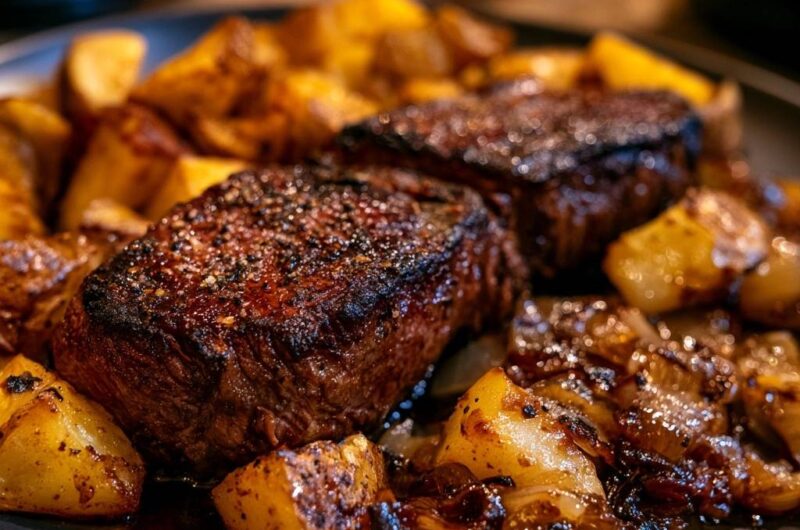
- Prep the Potatoes: Place cubed potatoes in a pot of salted cold water. Bring to a boil and simmer for 5-7 minutes until just barely fork-tender. Drain and let them steam dry for 2 minutes. This creates the rough surface area needed for the crispy edges seen in the image.
- Dry the Steak: While potatoes simmer, pat your steaks completely dry with paper towels on all sides. Season heavily with coarse salt and cracked black pepper only right before they hit the pan.
- Sear the Steak: Heat a heavy cast-iron skillet over high heat with 1 tablespoon of oil. Once the oil is shimmering and just starting to smoke, lay the steaks in the pan. Sear for 3-4 minutes per side without moving them to develop a dark, mahogany crust.
- Butter Baste: Reduce heat to medium. Add 2 tablespoons of butter, smashed garlic, and herbs to the pan. Tilt the skillet so the melting butter pools; use a large spoon to continuously baste the steaks with the foaming garlic butter for 2-3 minutes until desired doneness is reached. Remove steaks to a plate and let them rest for 8-10 minutes.
- Crisp the Potatoes and Onions: In the same skillet (do not wipe it out; the steak drippings are essential for color), add the remaining oil and the par-boiled potatoes. Fry over medium-high heat for 5 minutes until golden.
- Caramelize: Add the onions and the remaining 2 tablespoons of butter to the potatoes. Cook for another 5-7 minutes, stirring occasionally, until the onions are deeply browned and jammy and the potatoes have dark, crispy edges.
- The Finish: Splash the balsamic vinegar into the pan during the last minute of cooking to deglaze the brown bits (fond) and coat the potatoes and onions in a dark, savory glaze.
- Serve: Plate the rested steaks alongside the caramelized potato and onion mixture, pouring any remaining garlic butter from the resting plate over the meat.
Notes
- Ensure steaks are at room temperature and patted completely dry before searing to avoid gray meat. Resting the steak for 8 to 10 minutes is crucial for juice retention.