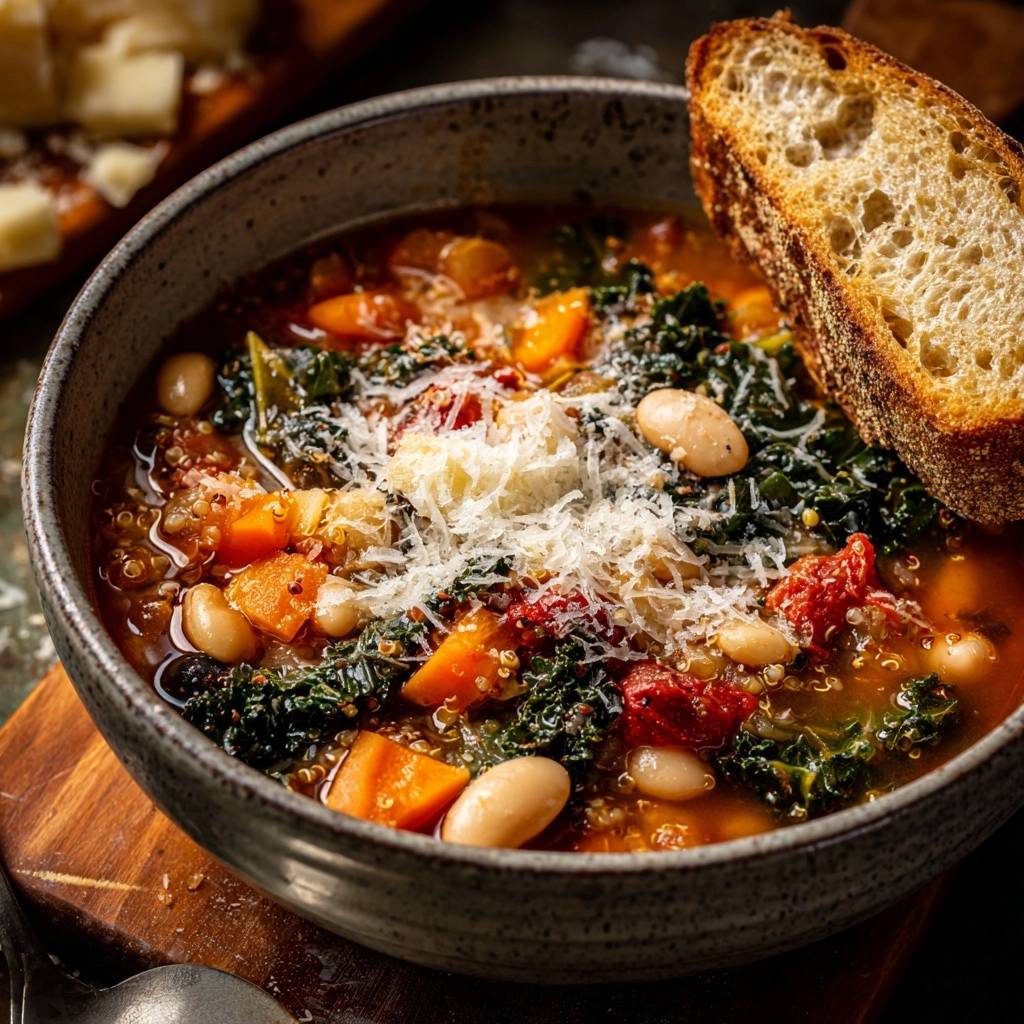
Most vegetable soups suffer from a common, disappointing flaw: they taste like hot, tinted water with a few limp greens floating around. You expect a comforting meal, but you end up with something thin and uninspiring that leaves you reaching for a snack an hour later. This Hearty Tuscan White Bean and Kale Soup solves that problem by leaning into the rustic traditions of “Cucina Povera,” where simple ingredients are transformed into something incredibly substantial.
The secret to this recipe’s success isn’t heavy cream or a flour-based roux, which can often mask the fresh flavors of the vegetables. Instead, we use a clever bean-thickening technique that creates a velvety, full-bodied broth that feels indulgent while remaining light. It’s the kind of meal that warms you from the inside out, offering a complex depth of flavor that usually takes hours to develop, yet it’s ready in just about 45 minutes.
For a similar satisfying experience, try this hearty beef and bean soup.
To ensure your soup has that professional, “simmered all day” consistency, you have to master the starch. By mashing a small portion of the cannellini beans into a paste before they hit the pot, you create a natural emulsifier. This paste binds the vegetable broth with the olive oil and tomato juices, ensuring every spoonful is rich and cohesive rather than watery and separated.
For a similar naturally thickened experience, check out this creamy chicken penne.
Essential Components for a Rich Tuscan Base
When you’re working with a short list of ingredients, quality becomes your best friend in the kitchen. For the greens, I always recommend Lacinato kale, also known as Dino or Tuscan kale. It has a flatter, darker leaf than the curly variety and holds its structure beautifully in a hot broth without becoming slimy.
The liquid base is just as important as the solids, so reach for a high-quality vegetable stock rather than just water. A good stock provides a foundation of savory umami that water simply can’t match. If you want to add a layer of smoky complexity, don’t swap out the fire-roasted tomatoes for regular ones; those charred bits in the can add a subtle “cooked over an open flame” vibe that defines the dish.
The Role of Cannellini Beans and Quinoa
Cannellini beans are the backbone of this soup, providing a creamy texture and a mild, nutty flavor that absorbs the surrounding aromatics. It’s vital to rinse and drain them thoroughly before adding them to the pot. This step allows you to control the sodium levels and removes the metallic taste often found in canning liquid.
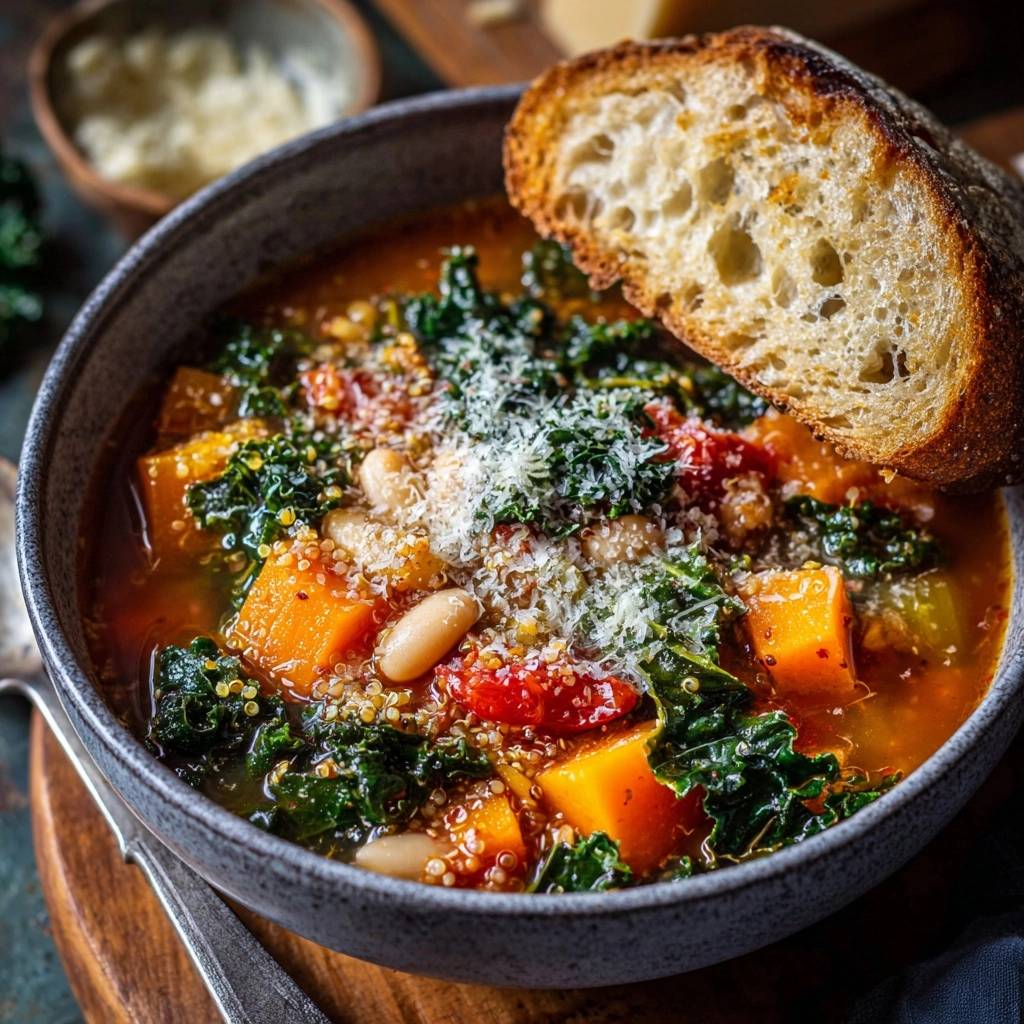
Quinoa might not be traditional in a classic Ribollita, but it’s a total game-changer here. As the quinoa simmers, it releases its own natural starches, further thickening the soup. It also adds a delightful little “pop” in every bite, making the dish feel much more substantial and protein-rich than a standard minestrone.
Aromatic Foundations: Garlic, Onions, and Carrots
Every great soup starts with a “Soffritto,” which is just a fancy way of saying we’re building a flavor base with sautéed aromatics. You’ll want to dice your carrots into uniform 1/2-inch cubes. This isn’t just for looks; it ensures that every piece of carrot reaches that perfect fork-tender consistency at the exact same time.
When it comes to the garlic, please skip the pre-minced jars. Fresh garlic has a pungent, spicy bite that mellows into a sweet richness when sautéed. Jarred garlic often has an acidic, chemical aftertaste that can ruin the delicate balance of the white beans and kale.
The Science of the Bean-Thickening Technique
If you’ve ever wondered why restaurant soups have a “silky” mouthfeel, it’s usually because of starch suspension. By taking a half-cup of your beans and mashing them into a smooth paste, you’re creating a natural thickener. This paste dissolves into the broth, filling the gaps between the liquid molecules and creating a heavier, more satisfying texture.
This method is far superior to using a flour roux because it keeps the dish naturally gluten-free and highlights the flavor of the beans themselves. It also helps the olive oil incorporate into the soup rather than just floating on top in greasy droplets. You’ll notice the broth turns from a clear red to a rich, opaque orange-gold as the paste works its magic.
Step-by-Step: Building Layers of Flavor
Start by heating your olive oil in a heavy-bottomed pot until it shimmers. Add your onions and carrots, letting them sweat for about 6 to 8 minutes. You aren’t looking for deep brown caramelization here; you want the onions to become translucent and the carrots to just start softening around the edges.
Next comes the “Aromatic Bloom.” Stir in your garlic, oregano, and red pepper flakes for just 60 seconds. You’ll know it’s ready when the kitchen suddenly smells like a dream. Be careful not to let the garlic turn dark brown, as it can become bitter and overpower the sweetness of the tomatoes.
Simmering the Quinoa and Bean Base
Once you’ve added your broth, tomatoes, whole beans, and that crucial bean paste, it’s time for the simmer. Keep the heat at a gentle bubble rather than a violent, rolling boil. A gentle simmer prevents the whole beans from breaking apart and turning the soup into mush.
After about 15 to 18 minutes, check the quinoa. You’ll know it’s perfectly cooked when the tiny, spiral-shaped “tails” have popped out from the grains. This indicates the quinoa has fully hydrated and is ready to eat. If the grains are still hard or opaque in the center, give it another two minutes.
Integrating the Kale and Finishing Touches
Kale should always be the final addition because it cooks incredibly fast. Stir the chopped leaves into the hot liquid and watch as they transform from a dusty, fibrous blue-green to a vibrant, emerald green. This only takes about 3 to 5 minutes.
Before serving, do a “Seasoning Correction.” Taste the broth carefully. The acidity from the fire-roasted tomatoes might need a bit more salt to really sing, or perhaps an extra crack of black pepper to balance the creaminess of the beans. Don’t be shy with the seasoning at this stage!
Troubleshooting Common Soup Textures
If you find your soup has become too thick—which can happen if the quinoa sits for a while—simply splash in a little extra vegetable broth or water to loosen it up. On the flip side, if you prefer an even heartier stew-like consistency, use your spoon to mash a few more beans against the side of the pot while it simmers.
Sometimes, older kale can have a slightly bitter edge. If your soup tastes a bit sharp, add a tiny pinch of salt or a very small squeeze of lemon juice. The salt suppresses the bitter receptors on your tongue, while the acid brightens the entire flavor profile without making it sour.
Flavor Variations and Dietary Swaps
This recipe is incredibly flexible. To make it completely vegan, simply omit the Parmesan cheese and stir in two tablespoons of nutritional yeast for that salty, cheesy hit. You could also top the bowl with a dollop of cashew cream for extra richness.
If you have meat-eaters at the table, shredded rotisserie chicken or browned plant-based sausage crumbles make excellent additions. If you can’t find Lacinato kale, Swiss chard is a fantastic substitute, though you should add the stems in with the carrots since they take longer to cook than the leaves.
Optimal Pairings for a Hearty Meal
You really can’t serve this soup without a thick slice of toasted sourdough bread. The natural tang of the sourdough cuts through the earthy, savory notes of the cannellini beans perfectly. Drizzle the toast with a little extra olive oil and rub a raw garlic clove over the surface for an extra punch.
Something to Serve Alongside
To complete your Tuscan bean and kale soup experience, consider these complementary dishes.
- For a warm, comforting addition, pair your soup with these cheesy garlic breadsticks, perfect for soaking up broth.
- If you’re in the mood for something cool and flavorful, this creamy Southwest pasta salad offers a different texture and taste contrast.
If you want a full spread, a crisp side salad with a bright lemon vinaigrette provides a refreshing contrast to the warm, dense soup. The acidity in the salad dressing acts as a palate cleanser between spoonfuls of the rich, tomato-tinted broth.
Storage, Reheating, and Freezing Protocols
This soup actually tastes better the next day as the flavors have more time to meld. However, keep in mind that the quinoa will continue to absorb liquid as it sits in the fridge. When you reheat it, you’ll likely need to add a half-cup of broth to bring it back to its original consistency.
You can store this in an airtight container in the refrigerator for up to 5 days. If you want to freeze it, leave about an inch of headspace at the top of your container, as the liquid will expand when it freezes. It stays fresh in the freezer for up to 3 months. Just thaw it overnight in the fridge before reheating on the stove.
Expert Tips for Professional Results
Can I use dried beans instead of canned?
Yes, but you’ll need to plan ahead. Soak 1 cup of dried cannellini beans overnight, then simmer them in water for about 60-90 minutes until tender before adding them to the soup. The flavor is often superior, but canned beans are a fantastic time-saver for weeknights.
How do I keep the kale from turning brown?
The key is timing. Only add the kale during the last 5 minutes of cooking. If you overcook kale or reheat it too many times, the chlorophyll breaks down and it loses its vibrant green color. If you’re making the soup ahead of time, consider adding the kale fresh when you reheat it.
Is there a substitute for fire-roasted tomatoes?
If you only have regular diced tomatoes, you can mimic the fire-roasted flavor by adding a half-teaspoon of smoked paprika to the soup. It won’t be exactly the same, but it provides that necessary depth and “charred” aroma.
How do I make this in a slow cooker or pressure cooker?
For a slow cooker, add everything except the kale and Parmesan and cook on low for 6-7 hours. Stir in the kale at the very end. For a pressure cooker, cook on high pressure for 8 minutes with a quick release, then stir in the kale. Note that you may need slightly less broth in a pressure cooker as there is no evaporation.
Why is my quinoa still crunchy?
Quinoa usually stays crunchy if there isn’t enough liquid or if the temperature wasn’t high enough. Ensure your soup is at a steady simmer and that the quinoa is fully submerged. If the soup gets too thick before the quinoa is done, add more broth to give the grains room to hydrate.
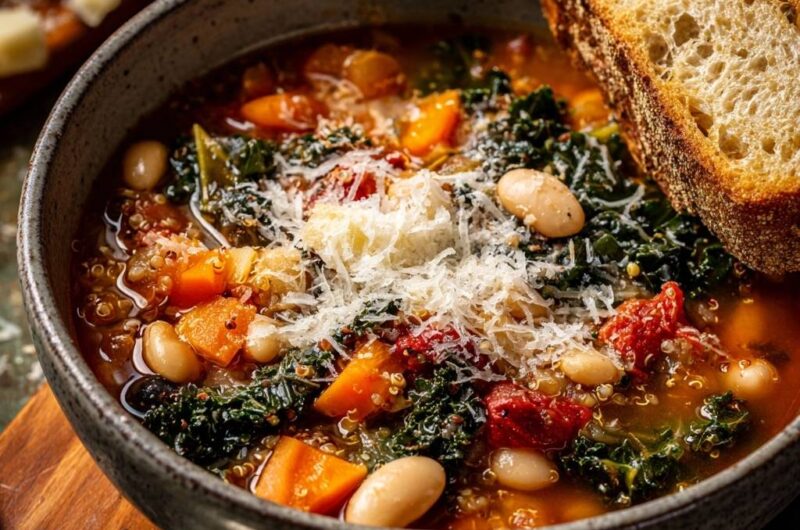
White Bean and Kale Soup
Course: Main CourseCuisine: Italian-AmericanDifficulty: easy4
servings15
minutes30
minutes340
kcal45
MinutesThis hearty soup elevates traditional vegetable broth by blending a portion of Cannellini beans into the base. Combined with fire-roasted tomatoes, Lacinato kale, and protein-rich quinoa, it delivers a deep umami flavor and silky texture without the need for heavy cream.
Ingredients
2 cans (15 oz each) Cannellini beans, rinsed and drained
1 large bunch Lacinato kale, stems removed and roughly chopped
2 large carrots, diced into 1/2-inch cubes
1 can (14.5 oz) fire-roasted diced tomatoes (with juices)
1/2 cup uncooked white quinoa, rinsed
5 cups high-quality vegetable broth
1 medium yellow onion, diced
3 cloves garlic, minced
1 teaspoon dried oregano
1/2 teaspoon red pepper flakes
2 tablespoons extra virgin olive oil
1/2 cup freshly grated Parmesan cheese (plus extra for garnish)
Salt and black pepper to taste
4 thick slices sourdough bread, toasted with olive oil
Directions
- Heat olive oil in a large heavy-bottomed pot or Dutch oven over medium heat. Add the diced onion and carrots. Sauté for 6-8 minutes until the onions are translucent and carrots begin to soften.
- Stir in the minced garlic, oregano, and red pepper flakes. Cook for 1 minute until highly fragrant, being careful not to burn the garlic.
- To solve the watery soup problem, take 1/2 cup of the drained white beans and mash them into a smooth paste using a fork or small blender with a splash of broth. Set this paste aside.
- Add the remaining whole beans, the fire-roasted tomatoes with their juices, the rinsed quinoa, and the vegetable broth to the pot. Stir in the bean paste thoroughly. This paste acts as a natural binder to create a rich, silky mouthfeel.
- Bring the soup to a gentle boil, then reduce heat to low. Cover and simmer for 15 to 18 minutes, or until the quinoa is tender and the “tails” have popped out.
- Stir in the chopped kale. Simmer uncovered for 3-5 minutes until the kale is tender and dark green. Season generously with salt and black pepper to taste.
- Ladle the soup into deep bowls. Top each with a generous mound of freshly grated Parmesan cheese. Serve immediately with a thick slice of toasted sourdough bread for dipping into the rich, tomato-tinted broth.
Notes
- To ensure a rich texture, mash 1/2 cup of beans into a paste before adding to the broth. Serve with toasted sourdough bread and extra Parmesan cheese for the best experience.