Most home cooks have faced the disappointment of a mushy meatball. You spend time rolling them out, only for them to emerge from the sauce with a soft, boiled texture that lacks any structural integrity. This happens because the meat essentially steams in the marinara, losing its character and becoming a sponge for liquid.
The secret to a restaurant-quality result lies in the “Sear-First” philosophy. By creating a hard, caramelized exterior before the sauce ever touches the pan, you build a flavor wall. This recipe balances the high-fat richness of 80/20 ground beef with a resilient crust that stays firm even under a blanket of molten mozzarella.
Expertise in the kitchen often comes down to moisture management. To ensure your meatballs don’t fall apart, always use a beaten egg to bind the proteins. This creates a stable matrix that holds the breadcrumbs and meat together during the high-heat searing process, preventing the dreaded “meatball crumble” in the skillet.
The Structural Integrity of a Perfect Meatball
The physics of a great meatball depends on the Maillard reaction. When you place raw meat into a hot skillet, the proteins and sugars undergo a chemical transformation that creates a browned, savory crust. Without this step, the meatball has no defense against the moisture in the marinara sauce.
Soggy bottoms occur when meatballs are dropped directly into simmering liquid. The liquid penetrates the meat immediately, washing away the fats and leaving a rubbery, gray texture. By searing first, you create a hydrophobic barrier. This barrier protects the tender, juicy interior while providing a satisfying resistance when you bite into it.
Your goal is a contrast in textures. You want a center that is soft and yielding, surrounded by an exterior that has enough “snap” to hold its shape. This structural integrity is what allows the meatball to support heavy toppings like thick marinara and melted cheese without collapsing into a pile of mush.
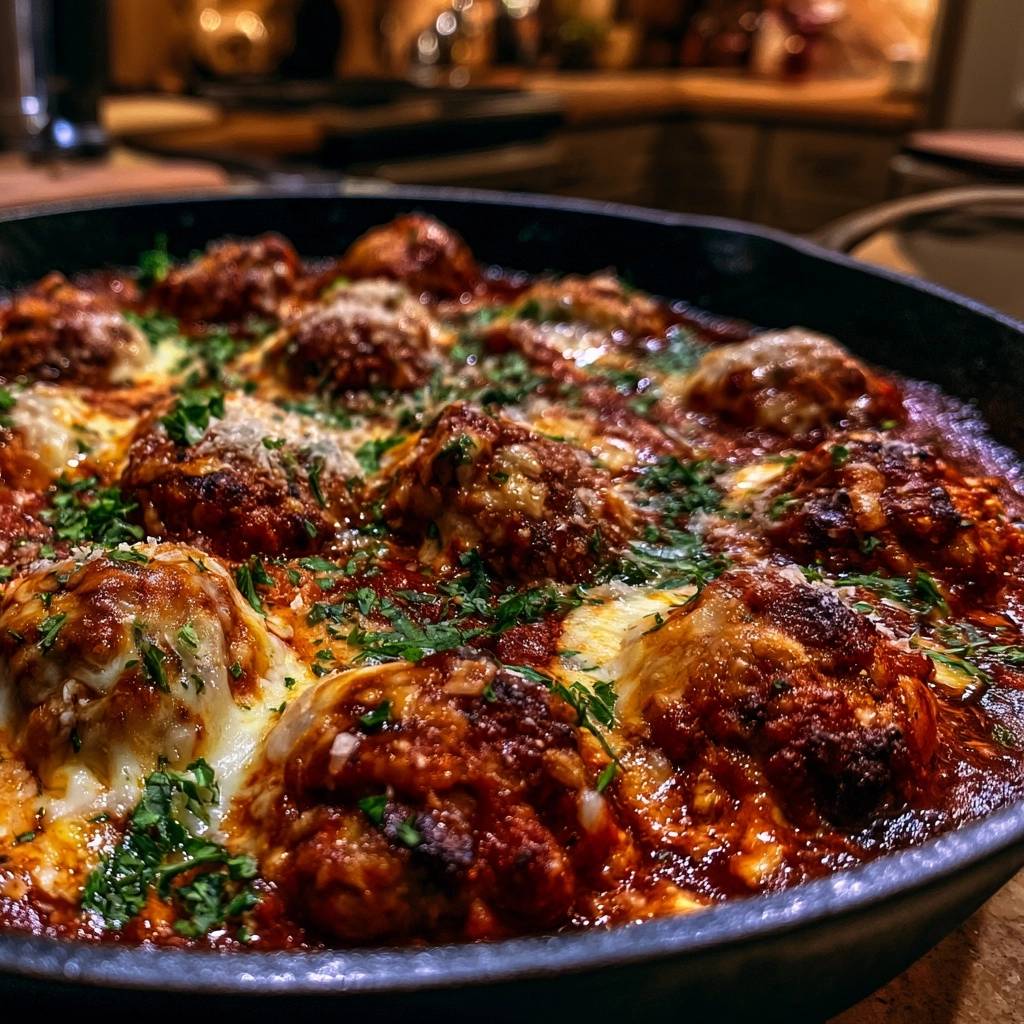
Essential Components for Skillet Cheesy Italian Meatballs
Choosing the right meat is the first step toward success. An 80/20 ground beef blend is the gold standard here. The 20% fat content provides the necessary lubrication to keep the meatballs moist during the sear and the subsequent simmer. Leaner meats, like 90/10, often result in a dry, grainy mouthfeel that no amount of sauce can fix.
Italian breadcrumbs play a vital role in providing structural support. Unlike fresh bread, which can become too heavy when wet, dried breadcrumbs act like tiny anchors within the meat mixture. They absorb the juices released during cooking, locking the flavor inside the meatball rather than letting it leak out into the pan.
Aromatics are just as important as the protein. Freshly minced garlic provides a sharp, pungent bite that cuts through the fat, while dried oregano adds an earthy, floral note. These classic Italian flavors bloom when they hit the hot oil during the searing phase, scenting the entire dish from the inside out.
Selecting the Right Marinara and Mozzarella
A thick, high-quality marinara is non-negotiable for this skillet method. If your sauce is too watery, it will create steam, which acts like a solvent against the crust you worked so hard to build. Look for a sauce where tomato puree is the first ingredient, ensuring a rich consistency that clings to the meat.
When it comes to cheese, low-moisture shredded mozzarella is the superior choice over fresh mozzarella. Fresh mozzarella contains a high water content that releases as it melts, which can puddle and make the dish greasy. Low-moisture mozzarella has a higher melting point and browns beautifully, creating those coveted golden-brown toasted spots under the broiler.
The Science of the Sear: Why Cast Iron Matters
Cast iron is the ultimate tool for this recipe because of its incredible heat retention. Once a cast iron skillet gets hot, it stays hot. When you add cold meatballs to the pan, a thinner stainless steel or non-stick pan will drop in temperature, causing the meat to release juices and boil rather than sear.
The heavy surface of the cast iron ensures an even distribution of heat across every meatball. This allows for a uniform Maillard reaction, transforming the surface of the beef into a complex layer of savory flavor. This crust isn’t just about taste; it acts as a physical shield that prevents the sauce from softening the meat too quickly during the simmer.
Using olive oil in a cast iron pan also helps create a “fried” exterior that adds a nutty depth to the dish. As the meatballs sear, the fat renders out and mixes with the oil, essentially basting the meat in its own flavors. This foundation of flavor is something you simply cannot achieve in a slow cooker or a standard baking sheet.
Step-by-Step: Preparing the Meatball Mixture
The most common mistake in meatball preparation is overworking the mixture. When you squeeze and mash the meat too much, you break down the protein fibers, resulting in a dense, tough sphere. Instead, use a light touch, tossing the ingredients together with your fingers until they are just combined.
Think of the mixing process as folding rather than kneading. You want to keep the mixture aerated. This ensures that the finished meatball is light and tender. If the meat looks like a smooth paste, you have gone too far; you should still be able to see individual strands of ground beef and flecks of herbs.
Uniformity is critical for even cooking. Aim for meatballs that are roughly 1.5 inches in diameter. If they are too large, the outside will burn before the inside is cooked; if they are too small, they will dry out. Using a consistent size ensures that every meatball in the skillet reaches the perfect internal temperature at the same time.
Executing the Perfect Skillet Sear
Before the meatballs touch the pan, the olive oil must be shimmering. If the oil isn’t hot enough, the meat will stick to the surface and tear when you try to flip it. You should hear a loud, aggressive sizzle the moment the meat makes contact with the cast iron.
Avoid crowding the pan at all costs. If you put too many meatballs in at once, the temperature of the skillet will plummet, and the meat will begin to steam in its own moisture. Leave at least half an inch of space between each ball. If necessary, sear them in two batches to maintain that high-heat environment.
Follow the “3-minute rule” per side. Resist the urge to move them too early. The meat needs time to develop a deep, dark brown crust. This crust is what provides the “crunch” that contrasts with the melted cheese later. Once you see a dark ring forming at the base of the meatball, it is ready to be flipped.
Simmering Without Sacrificing Texture
The “Sauce Line” technique is the secret to maintaining that crispy top. When you add the marinara, pour it carefully into the spaces between the meatballs. Do not pour the sauce directly over the top of them. You want the bottom half of the meatball to simmer in the sauce while the top half remains exposed to the air.
Simmer the skillet uncovered. This is a vital step for moisture control. Leaving the lid off allows excess water in the marinara to evaporate, which thickens the sauce and intensifies the tomato flavor. If you cover the pan, you trap steam, which will quickly turn your crispy seared crust into a soft, mushy mess.
During these 8 to 10 minutes, the meatballs finish cooking through while the sauce reduces into a thick glaze. The bottom of the meatball absorbs the acidity and sweetness of the tomatoes, while the top stays dry and primed for the cheese topping. This dual-texture approach is what sets this recipe apart.
The Broiler Finish: Achieving Toasted Cheese Perfection
The transition from the stovetop to the broiler is where the dish truly comes together. Move your oven rack to the top third position, about 4 to 5 inches away from the heat source. This proximity ensures the cheese melts and browns quickly without overcooking the meat underneath.
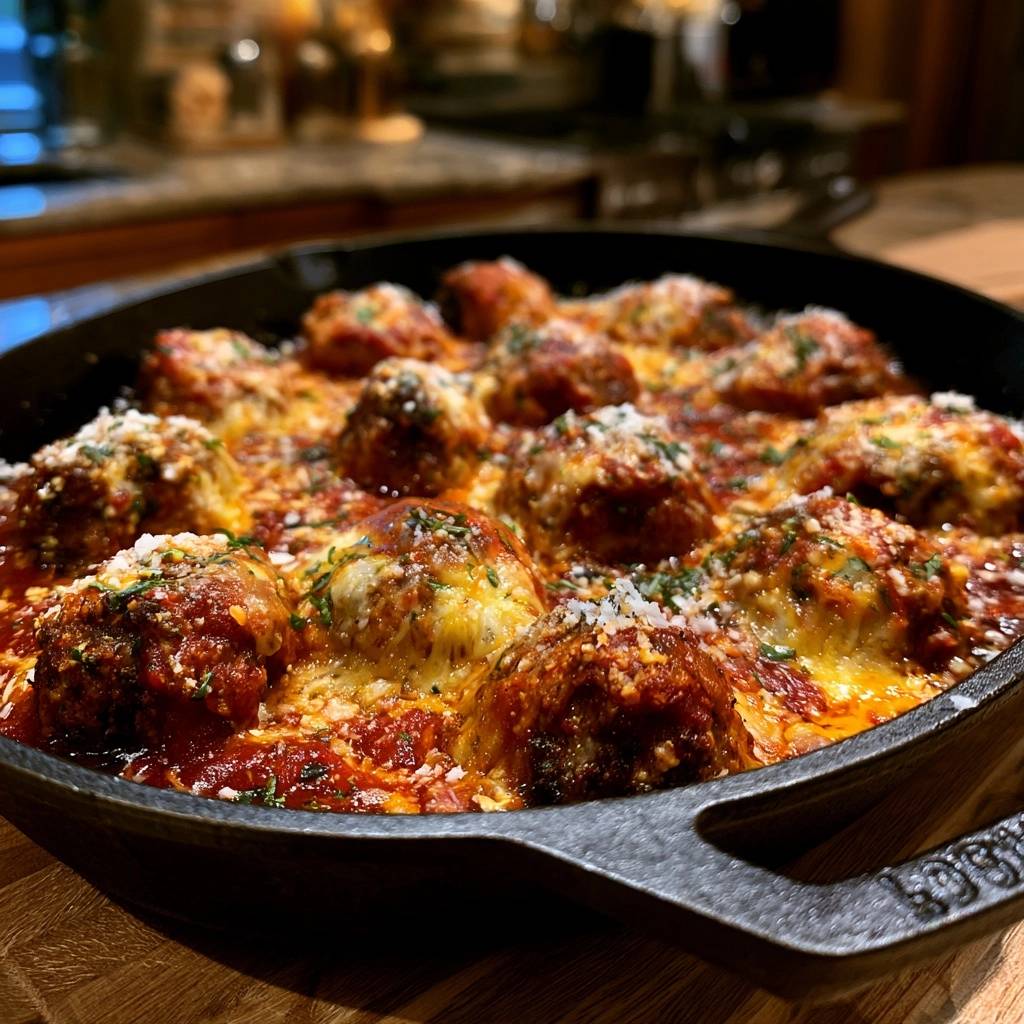
Watch the skillet closely during this phase. The difference between perfectly toasted cheese and burnt cheese is a matter of seconds. You are looking for the mozzarella to become bubbly and develop dark, leopard-like spots. These toasted bits of cheese provide a smoky, salty flavor that complements the sweet marinara.
As soon as the skillet comes out of the oven, hit it with a fresh garnish. The heat from the pan will wake up the oils in the fresh parsley and the aroma of the extra Parmesan. This final layer of freshness cuts through the heavy fats of the beef and cheese, balancing the entire palate.
Troubleshooting Common Meatball Failures
If your meatballs are falling apart, it usually means there wasn’t enough binder or the pan wasn’t hot enough. Ensure your egg is well-beaten before adding it, and never skip the pre-heating phase of your skillet. The initial sear “sets” the shape of the meatball, acting like an edible cage.
Tough meatballs are almost always the result of over-mixing. If you find the texture is too dense, try adding a tablespoon of cold water to the mixture next time. This creates a little extra steam inside the meatball as it cooks, which helps keep the interior light and airy even if you accidentally over-handle the meat.
If the sauce feels too greasy, it is likely because the 80/20 beef released more fat than expected. You can easily fix this by using a spoon to skim the excess orange oil from the surface of the sauce before adding the cheese. If the bottoms are burning during the simmer, your heat is too high; the sauce should only have small, lazy bubbles.
Flavor Variations and Protein Swaps
You can easily adapt this “Anti-Soggy” method for other proteins. Ground lamb works beautifully with this technique; just swap the oregano for fresh mint and rosemary. If you prefer ground turkey, be sure to add a teaspoon of olive oil directly into the meat mixture to compensate for the lower fat content.
For a fun twist, try incorporating a “hidden” cheese core. Take a small cube of provolone or a piece of string cheese and wrap the meat mixture around it. The sear-and-simmer method works perfectly here, as the crust prevents the cheese from leaking out before the meat is fully cooked.
Herb variations can also change the profile of the dish. While dried oregano is classic, adding fresh basil at the very end provides a sweet, peppery finish. If you like heat, a teaspoon of crushed red pepper flakes added to the meat mixture will provide a slow burn that pairs perfectly with the cooling mozzarella.
Optimal Pairings for Skillet Cheesy Italian Meatballs
While pasta is the traditional choice, these meatballs are hearty enough to stand on their own. A thick slice of toasted sourdough is the perfect vessel for mopping up the reduced marinara sauce. The crunch of the bread mimics the crust of the meatball, creating a cohesive eating experience.
To balance the richness of the beef and cheese, serve a side of bitter greens. An arugula salad with a simple lemon vinaigrette provides a sharp acidity that cleanses the palate between bites. This prevents the dish from feeling too heavy or one-dimensional.
For a more comforting meal, serve the meatballs over a bed of creamy polenta. The soft, buttery cornmeal soaks up the sauce while providing a smooth contrast to the seared exterior of the meat. High-acid sides, like pickled peppers or a crisp slaw, also work well to cut through the savory profile.
Make-Ahead Strategies and Storage Logistics
You can easily prep these meatballs 24 hours in advance. Roll them into spheres and store them on a parchment-lined plate in the fridge. This actually helps the meatballs hold their shape even better, as the breadcrumbs have more time to fully hydrate and bind with the meat.
For freezing, it is best to freeze the meatballs raw after the rolling stage. Place them on a tray in the freezer for an hour until firm, then transfer to a freezer bag. When you are ready to cook, let them thaw in the fridge overnight before searing. Freezing them cooked can sometimes result in a slightly rubbery texture upon reheating.
Leftovers should be stored in an airtight container in the refrigerator for up to three days. To reheat, place the meatballs and sauce back into a skillet with a splash of water. Cover the pan and heat over medium-low. This creates a gentle steam that softens the cheese without drying out the meat.
Expert Tips for Professional Results
Use a cookie scoop to portion out your meat mixture. This ensures every meatball is exactly the same size, which is the secret to professional-looking presentation and even cooking. It also keeps your hands cleaner during the process.
Wet your hands with cold water before rolling the meatballs. The moisture prevents the fat in the beef from sticking to your palms, allowing you to create a perfectly smooth surface. A smooth surface sears more evenly than a jagged one.
Let the meat mixture sit at room temperature for about 15 minutes before you start searing. If the meat is ice-cold when it hits the pan, it will cause the temperature of the cast iron to drop too quickly. Tempering the meat ensures a better, faster crust.
Always grate your own cheese from a block. Pre-shredded cheeses are coated in potato starch or cellulose to prevent clumping in the bag. These additives interfere with the melting process and prevent the cheese from achieving that perfect, stretchy pull and golden-brown color.
Frequently Asked Questions
Can I use a stainless steel pan instead of cast iron?
You can use stainless steel, but you must be much more careful with your heat management. Stainless steel does not hold heat as well as cast iron, so you may need to sear in smaller batches. Additionally, the meat is more likely to stick to stainless steel if the pan isn’t perfectly seasoned with oil and heated to the right temperature before adding the meat.
Why are my meatballs dry inside?
Dry meatballs are usually the result of using meat that is too lean or overcooking them during the simmer phase. Stick to an 80/20 beef blend for the best results. Also, remember that the meatballs will continue to cook slightly under the broiler, so don’t over-simmer them in the sauce. Once they reach an internal temperature of 160°F, they are done.
Can I bake these instead of searing them in a skillet?
You can bake them, but you will lose the specific texture that makes this recipe special. Baking tends to cook the meatball evenly from the outside in, which often results in a softer exterior. You won’t get the same “Anti-Soggy” hydrophobic barrier that a high-heat skillet sear provides. If you must bake, use a very high temperature (425°F) to try and mimic the sear.
How do I scale this recipe for a larger crowd?
To scale this up, sear the meatballs in multiple batches and set them aside on a plate. Once all the meatballs are seared, wipe out any excess burnt bits from the skillet, add all the meatballs back in, and then proceed with the sauce and cheese. If you have too many for one skillet, you may need to use two pans or a large braising dish to ensure you don’t crowd the meat during the simmer.
Can I use gluten-free breadcrumbs?
Yes, gluten-free breadcrumbs work as a 1:1 substitute in this recipe. Because gluten-free crumbs can sometimes be thirstier than standard wheat crumbs, you might need to add an extra teaspoon of beaten egg or a splash of milk if the mixture feels too crumbly while you are rolling the balls.
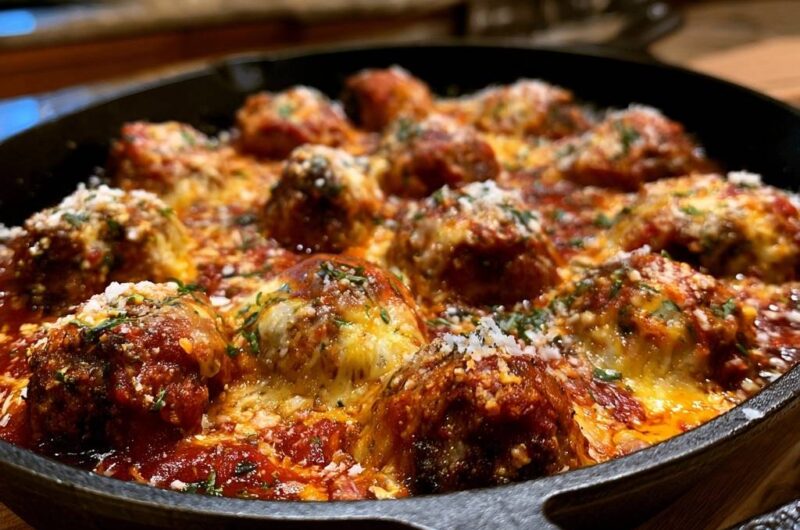
Skillet Cheesy Italian Meatballs
Course: Main CourseCuisine: Italian-AmericanDifficulty: easy4
servings15
minutes25
minutes40
Minutes410
kcalItalian-American
Ingredients
1 pound ground beef (80/20 blend for moisture)
1/2 cup Italian breadcrumbs
1/4 cup grated Parmesan cheese, plus extra for garnish
1 large egg, beaten
2 cloves garlic, minced
1 teaspoon dried oregano
1/2 teaspoon salt
1/2 teaspoon black pepper
2 tablespoons olive oil
2 cups thick marinara sauce
1.5 cups shredded mozzarella cheese
2 tablespoons fresh parsley, finely chopped
Directions
- In a large bowl, combine the ground beef, breadcrumbs, 1/4 cup Parmesan, egg, garlic, oregano, salt, and pepper. Mix by hand until just combined. Do not overwork the meat or it will become dense.
- Roll the mixture into 12 to 14 even meatballs (about 1.5 inches in diameter).
- Heat the olive oil in a large cast iron skillet over medium-high heat. Place the meatballs in the hot oil and sear for 3 minutes per side. You want a deep, dark brown crust on the top and bottom. This crust acts as a barrier that prevents the sauce from making the meat soggy.
- Once seared, reduce the heat to medium-low. Carefully pour the marinara sauce into the skillet around the meatballs, ensuring the tops of the meatballs remain slightly above the sauce line to preserve the crust.
- Simmer uncovered for 8-10 minutes. This allows the sauce to thicken and the meatballs to cook through without steaming the crust into mush. Cook until no pink remains and it reaches 160°F (71°C).
- Generously top each meatball with shredded mozzarella.
- Place the skillet under a broiler for 2 to 3 minutes until the cheese is bubbly, melted, and shows golden-brown toasted spots as seen in the image.
- Remove from the oven and immediately garnish with a final dusting of grated Parmesan and fresh chopped parsley. Serve straight from the skillet.
Notes
- The secret to the anti-soggy texture is the initial sear in the cast iron skillet and keeping the tops of the meatballs above the sauce line during the simmer.