
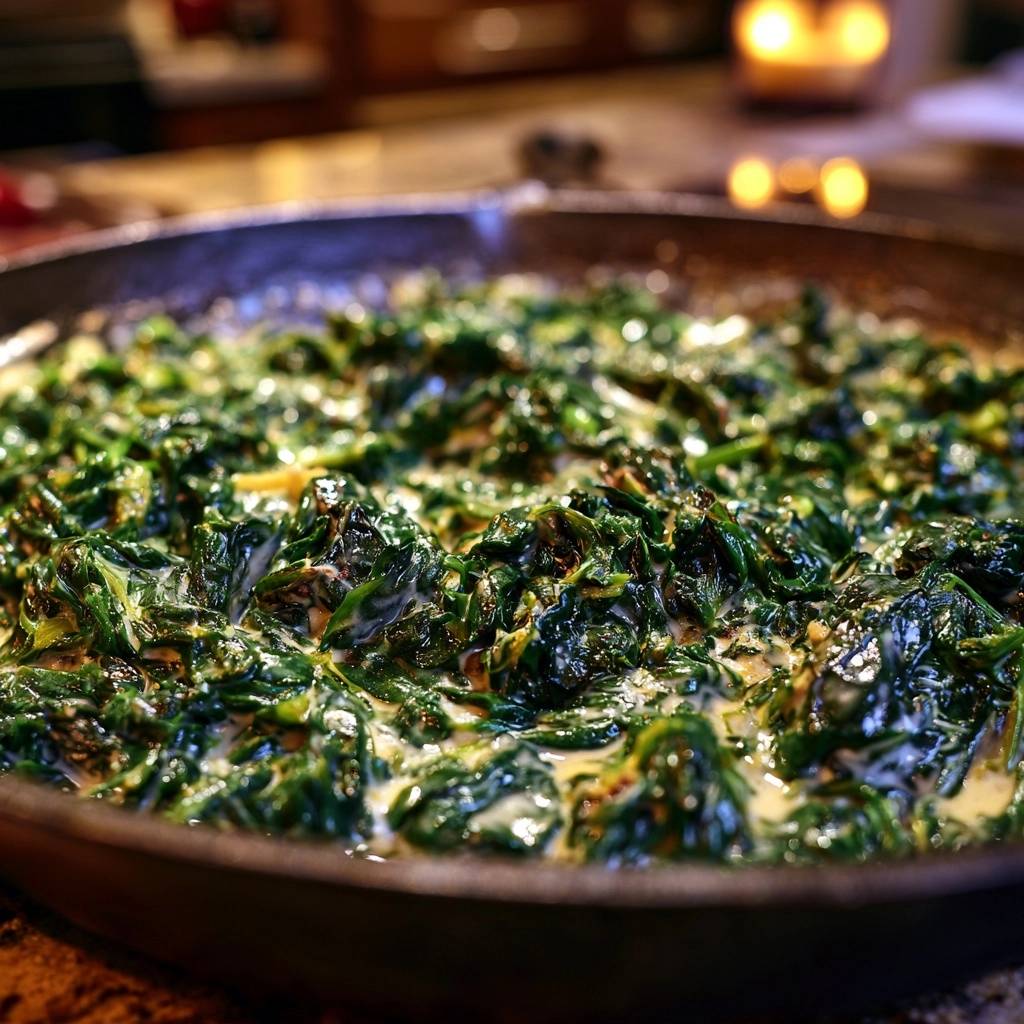
Most home cooks end up with a disappointing puddle of green water on their plate when they try to make creamed spinach. You want a side dish that feels like a warm hug, but instead, you get a soggy mess that dilutes everything else on your dinner menu. The goal is a vibrant green leaf enveloped in a thick, glossy emulsion that stays put on your fork.
The secret to achieving that restaurant-quality texture isn’t a fancy ingredient; it’s all about the moisture squeeze and the temperature of your dairy. By using a skillet instead of a baking dish, you maintain total control over the evaporation and the thickness of the sauce. This method ensures the greens stay tender rather than turning into a gray, overcooked mush.
I’ve found that the real trick lies in the “double-dry” method. You aren’t just draining the spinach; you’re physically forcing the water out of the cellular structure before it ever touches the cream. If you skip the aggressive squeeze, your sauce will break every single time. Let’s get into how you can master this steakhouse classic right in your own kitchen.
The Science of Moisture: Why Most Spinach Recipes Fail
Spinach is essentially a leafy sponge, made up of over 90% water. When those cell walls hit the heat, they collapse and dump all that liquid directly into your pan. If you add your cream while that water is still present, you’re essentially making a thin spinach soup rather than a rich sauce.
The “Squeeze Factor” is the most critical part of the physics here. When you remove the liquid, you create space within the leaves to actually absorb the fat from the butter and cream. This prevents the dreaded “green puddle” effect where the sauce separates on the plate. Without this step, the water dilutes the proteins in the cheese, causing the sauce to look curdled.
Furthermore, excess water ruins the emulsification process. An emulsion is a stable mixture of fats and liquids; if the liquid content is too high, the fat from the heavy cream will simply float to the top. By dehydrating the greens through mechanical squeezing, you ensure the heavy cream and cream cheese can bind together into a velvety coating that clings to every fiber.
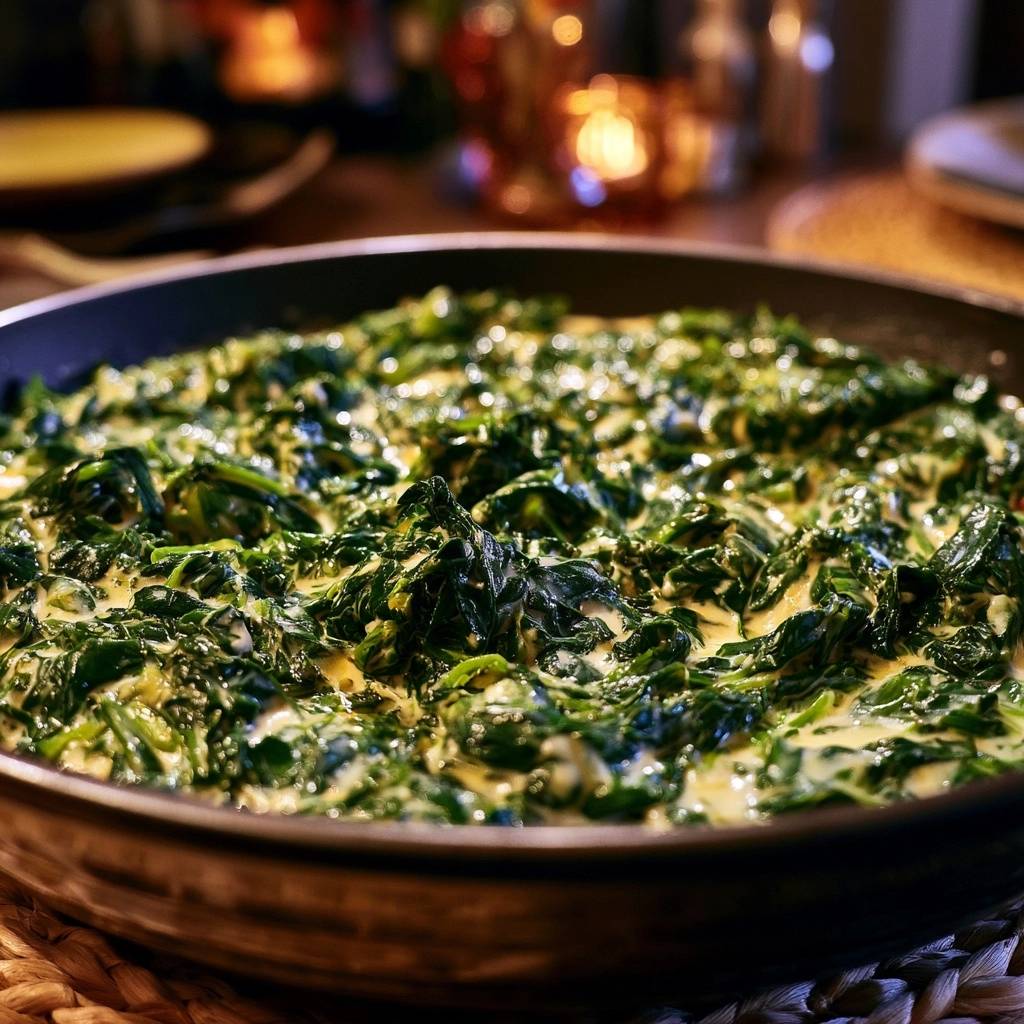
Essential Components for Skillet Creamed Spinach
Quality starts with the greens, and I always recommend fresh baby spinach over frozen or mature bunches. Baby spinach has thinner stems and a more delicate flavor that wilts quickly without becoming stringy. While frozen spinach is convenient, it often has a “tinny” aftertaste and a mushy texture that can’t compete with fresh leaves.
The fat profile is equally important for a professional result. Using a combination of unsalted butter and olive oil provides the best of both worlds: the rich, nutty flavor of dairy and the higher smoke point of oil. This prevents the garlic from burning while you’re building the base of your sauce.
For the dairy, don’t try to cut corners with low-fat milk or half-and-half. You need the structural integrity of heavy cream and the stabilizing power of cream cheese. The cream cheese acts as an anchor, providing a thick, tangy body that keeps the sauce from breaking even if it sits on the table for a few minutes.
The Role of Aromatics and Spices
Fresh garlic is a non-negotiable here. While garlic powder is fine for rubs, it lacks the sharp, aromatic punch needed to cut through heavy dairy. Mincing the cloves fresh ensures that the oils infuse directly into the butter, creating a fragrant foundation for the entire dish.
Then there’s the nutmeg. It might seem like a baking spice, but nutmeg is the “secret” ingredient in classic white sauces like Bechamel. It provides an earthy depth that highlights the natural sweetness of the cream. Just a tiny pinch transforms the dish from “cheesy greens” to a sophisticated, multi-layered side.
Phase One: Wilting and Dehydrating the Greens
Start by placing your fresh spinach in a large skillet with just a tiny splash of water. Cover it tightly. You only need about 2 to 3 minutes here. You’re looking for the leaves to be “just wilted”—they should be bright green and soft, but not yet dark or slimy.
Once wilted, move the spinach to a colander immediately to stop the cooking process. Let it cool for a minute so you don’t burn your hands. Now comes the work: grab a handful and squeeze. Then squeeze again. You’ll be shocked at how much green liquid comes out of what looked like “dry” leaves.
For the best results, wrap the spinach in a lint-free kitchen towel or a piece of cheesecloth. Twist the towel tightly until no more drops fall out. The resulting ball of spinach should feel almost like a dense sponge. This mechanical extraction is the only way to guarantee a thick, restaurant-style sauce.
Phase Two: Building the Emulsified Cream Base
After wiping out your skillet, melt the butter and oil over medium-high heat. When the butter starts foaming, toss in the garlic. You want to hear a gentle sizzle, but don’t let the garlic turn brown. Bitter garlic will ruin the delicate sweetness of the cream, so keep it moving for just 60 seconds.
Pour in the heavy cream and immediately whisk in the softened cream cheese. Using room temperature cream cheese is a pro move here; it will melt into the cream much faster than a cold block. Whisk constantly until the mixture is completely smooth and starts to bubble gently at the edges.
Continue simmering for about 3 minutes until you reach the “nappe” stage. This is a chef’s term meaning the sauce is thick enough to coat the back of a spoon. If you run your finger through the sauce on the spoon, the line should stay clean and sharp. Once you hit this point, stir in the parmesan and nutmeg.
Phase Three: The Final Skillet Integration
Roughly chop your squeezed spinach ball before adding it back to the pan. This prevents long, stringy pieces that are hard to eat. Toss the greens into the bubbling cream sauce and use a spatula to break up the clumps. You want every single leaf to be fully submerged in that glossy gold liquid.
Let the mixture sizzle in the skillet for another 2 minutes. This final cook time allows the spinach to actually absorb some of the cream, marrying the flavors together. You’ll notice the edges of the sauce might start to caramelize slightly against the hot metal, which adds a wonderful savory note.
Wait until this very last moment to add your salt and pepper. If you salt the spinach too early, it will draw out even more moisture and thin out your sauce. Taste a small bite first—the parmesan cheese is naturally salty, so you might need less than you think. Serve it immediately while it’s at its peak creaminess.
Troubleshooting Common Texture Issues
If your sauce looks like it’s “breaking” or looks oily, it usually means the heat was too high. You can often fix this by whisking in a teaspoon of heavy cream and removing the pan from the heat. The cold cream helps re-emulsify the fats and brings the sauce back together.
Is the sauce too thick? This happens if the cream reduces too much. Simply stir in a tablespoon of milk or water to loosen it up. If it tastes bland, it’s usually a salt issue. Spinach is a mineral-heavy vegetable that needs a good hit of salt to make the flavors pop. A tiny squeeze of lemon juice can also brighten a sauce that feels too heavy.
If you find the dish is still a bit watery despite your best efforts, it means the spinach wasn’t squeezed enough. Next time, try the towel method. For a quick fix in the pan, you can stir in an extra tablespoon of grated parmesan; the cheese acts as a natural thickener and will soak up some of that stray moisture.
Flavor Variations and Ingredient Swaps
While garlic is the classic choice, using finely minced shallots provides a softer, more sophisticated sweetness. You can also add a pinch of cayenne pepper or red pepper flakes if you like a little “back-of-the-throat” heat to balance out the richness of the dairy.
For those looking for dairy-heavy alternatives, you can swap the heavy cream for a thick cashew cream. To make it, blend soaked cashews with a bit of water until perfectly smooth. It mimics the mouthfeel of dairy surprisingly well, though it will add a slightly nutty undertone to the final dish.
If you want an even deeper flavor, try browning the butter first before adding the garlic. This “beurre noisette” adds a toasted, caramel-like aroma that pairs beautifully with the nutmeg. You could also swap the parmesan for Pecorino Romano if you prefer a saltier, tangier finish.
Optimal Pairings for Creamy Skillet Greens
This dish is the ultimate partner for high-quality proteins. The richness of the cream and the earthy spinach are the perfect foil for a seared beef tenderloin or a thick ribeye. The fat in the sauce complements the marbling of the meat, making every bite feel incredibly indulgent.
It also works beautifully with roasted chicken or pan-seared salmon. Because the spinach is so decadent, it can actually make a leaner protein feel much more satisfying. I love serving this alongside some simple roasted potatoes; the extra sauce in the skillet acts almost like a gravy for the spuds.
If you’re hosting a holiday dinner, this skillet version is a lifesaver because it doesn’t take up any oven space. It provides a pop of vibrant color on a plate that is often dominated by browns and tans. It’s a sophisticated side that feels much more “chef-prepared” than a standard salad or steamed veg.
Make-Ahead Strategies and Storage Tips
You can actually do the hardest part of this recipe up to 24 hours in advance. Wilt and squeeze the spinach, then store the dry “spinach ball” in an airtight container in the fridge. When you’re ready for dinner, the actual cooking process will only take about 5 to 7 minutes.
I don’t recommend freezing this dish. Dairy-based sauces tend to separate and become grainy when frozen and thawed. The spinach will also lose its structural integrity and turn quite mushy. This is definitely a dish that is best enjoyed fresh from the skillet.
If you have leftovers, store them in the fridge for up to 3 days. To reheat, do not use the microwave, as it will make the sauce oily. Instead, put it back in a small skillet over low heat. Add a splash of milk or cream and stir gently until it’s warmed through and the sauce is creamy again.
Expert Tips for Restaurant-Quality Results
First, never use the pre-shredded parmesan cheese that comes in a bag. Those products are coated in cellulose (wood pulp) to keep them from clumping, which prevents them from melting smoothly into your sauce. Grate your own from a block for a silky finish.
Second, don’t forget the rough chop. After you squeeze the spinach into a tight ball, it becomes very dense. Running a knife through it a few times ensures that the cream can penetrate every layer, and it makes the dish much easier for your guests to eat.
Third, aim for that “skillet sizzle.” In the final minute of cooking, let the spinach sit undisturbed for 30 seconds. This allows the dairy at the bottom to slightly caramelize, creating a deeper flavor profile that you just can’t get from a microwave or a slow cooker.
Fourth, use a cast-iron skillet if you have one. Cast iron retains heat beautifully, which helps keep the sauce at a consistent simmer while you’re incorporating the cheese. It also looks beautiful when brought directly from the stove to the trivet on your dining table.
How do I store leftover creamed spinach?
Store any leftovers in an airtight container in the refrigerator for up to 3 days. When you are ready to eat it again, reheat it slowly in a skillet over low heat. Add a tablespoon of milk or cream to help the sauce come back together, as it will thicken significantly while cold.
Why is my creamed spinach watery?
Watery sauce is almost always caused by not squeezing the spinach hard enough after wilting. Spinach releases a massive amount of liquid when cooked. If that liquid isn’t physically squeezed out using a kitchen towel or your hands, it will leak into your cream sauce and thin it out. Always squeeze until no more drops come out.
Can I use frozen spinach instead of fresh?
Yes, you can use frozen spinach, but the texture will be softer and less vibrant. If using frozen, make sure to thaw it completely and squeeze it even more aggressively than fresh spinach. Use about 10-12 ounces of frozen spinach to replace the 20 ounces of fresh baby spinach called for in this recipe.
What can I use instead of heavy cream?
If you don’t have heavy cream, you can use whole milk mixed with a little extra cream cheese to maintain the thickness. However, avoid using skim milk or non-dairy milks like almond milk, as they lack the fat content necessary to create a stable, thick emulsion. For a dairy-free version, full-fat coconut milk or cashew cream are the best substitutes.
How do I prevent the garlic from burning?
Garlic burns very quickly and becomes bitter. To prevent this, make sure your butter is foaming but not browning before you add the garlic. Keep the garlic moving constantly with a spatula and only cook it for about 60 seconds. As soon as you smell that strong “garlicky” aroma, pour in the cream to lower the temperature of the pan.
Can I make this recipe ahead of time?
You can wilt, squeeze, and chop the spinach up to a day in advance. Store the prepared spinach in the fridge. When you are ready to serve, simply make the cream sauce (which takes about 5 minutes) and stir in your pre-prepped spinach. This makes it an excellent choice for busy holiday meals.
Skillet Creamed Spinach
Course: Side DishCuisine: AmericanDifficulty: easy4
servings10
minutes15
minutes25
Minutes210
kcalAmerican
Ingredients
20 ounces fresh baby spinach
2 tablespoons unsalted butter
1 tablespoon olive oil
3 cloves garlic, minced
1/2 cup heavy cream
2 tablespoons cream cheese, softened
1/4 cup grated parmesan cheese
1/4 teaspoon ground nutmeg
Salt and black pepper to taste
Directions
- Place the fresh spinach in a large skillet over medium heat with a splash of water. Cover and steam for 2 to 3 minutes until just wilted.
- Transfer the wilted spinach to a colander and let it cool slightly. Use your hands or a clean kitchen towel to squeeze out every possible drop of liquid. This is the most important step to prevent a watery sauce.
- Roughly chop the squeezed spinach and set it aside.
- Wipe out the skillet and add the olive oil and butter over medium-high heat. Once the butter is foaming, add the minced garlic and cook for 1 minute until fragrant.
- Pour in the heavy cream and whisk in the cream cheese. Bring to a gentle simmer, whisking until the cream cheese is fully incorporated and the sauce begins to thicken (about 3 minutes).
- Stir in the parmesan cheese and nutmeg until the sauce is glossy and thick enough to coat the back of a spoon.
- Add the chopped spinach back into the skillet. Toss thoroughly to coat the leaves. Continue to cook for 1-2 minutes, allowing the spinach to absorb the cream and the edges to slightly sizzle in the skillet.
- Season with salt and pepper to taste and serve immediately while the texture is perfectly creamy and the spinach is vibrant.
Notes
- The secret to a restaurant-quality result is all about the moisture squeeze and the temperature of your cream to prevent a watery sauce.