There is a specific kind of disappointment that comes with a tough, bouncy meatball. You want a tender bite that yields to your fork, but instead, you get something that feels like a rubber ball. This usually happens because the proteins in the meat knit together too tightly during the cooking process.
The solution isn’t just about the quality of the beef; it’s about the chemistry of the binder. By using a traditional panade, you can guarantee a velvety texture every single time. This method transforms a humble weeknight dinner into a dish that rivals any high-end comfort food restaurant.
The secret lies in the milk-soaked breadcrumbs. This mixture acts as a physical barrier between the meat fibers, preventing them from toughening up when they hit the heat. If you’ve struggled with dry or dense meatballs in the past, this technique is going to be your new best friend in the kitchen.
The Science of the Panade: Ending Rubbery Meatballs
When you cook ground beef, the proteins naturally want to shrink and bond together. As they tighten, they squeeze out moisture, which is why overcooked meat feels dry and chewy. Salt accelerates this process by dissolving certain proteins, making them even stickier and more likely to form a dense mass.
A panade is a paste made from a starch and a liquid, usually breadcrumbs and milk. When you fold this paste into your meat, the starch molecules get in the way of those protein bonds. They literally stand between the meat fibers, ensuring the structure remains loose and tender even after the meatballs are fully cooked.
Furthermore, the breadcrumbs act like tiny sponges. They soak up the milk and the rendered fats from the beef, locking that moisture inside the meatball. This creates a “tender crumb” similar to what you’d find in a high-quality cake, but in a savory, beefy application.
Why 80/20 Ground Beef is Non-Negotiable
Fat is flavor, but in this recipe, fat is also the foundation of your sauce. Using an 80/20 blend provides enough rendered fat to create a rich roux for the gravy. If you use 90/10 or leaner beef, you’ll find the meatballs lack that signature “melt-in-your-mouth” quality.
Leaner blends also tend to crumble because they lack the fat needed to lubricate the meat fibers. Even with a perfect panade, lean beef will often result in a grainy texture. Stick with the 80/20 blend to ensure your skillet has enough drippings to build a deep, savory gravy base.
Essential Components for Skillet Salisbury Steak Meatballs
The ingredients in this dish are simple, but how you prepare them makes all the difference. For instance, don’t just chop your onion. Grating the onion directly into the bowl ensures the juices are incorporated into the meat. This adds incredible moisture and a subtle sweetness that chunks of onion simply can’t provide.
The flavor profile of a true Salisbury steak relies on umami. This is why Worcestershire sauce and Dijon mustard are vital. The Worcestershire provides a fermented, salty depth, while the Dijon adds a tiny bit of tang that cuts through the richness of the beef and butter.
Always use freshly cracked black pepper if you can. The pre-ground stuff often loses its floral heat, which is necessary to balance the heavy creaminess of the gravy. These small choices elevate the dish from a basic meal to a professional-grade dinner.
The Pantry Staples: Broth, Flour, and Aromatics
Your gravy is only as good as your broth. While a standard store-bought beef stock works, a high-quality beef bone broth adds a gelatinous body to the sauce that is hard to beat. It gives the gravy a glossy finish and a much deeper color.
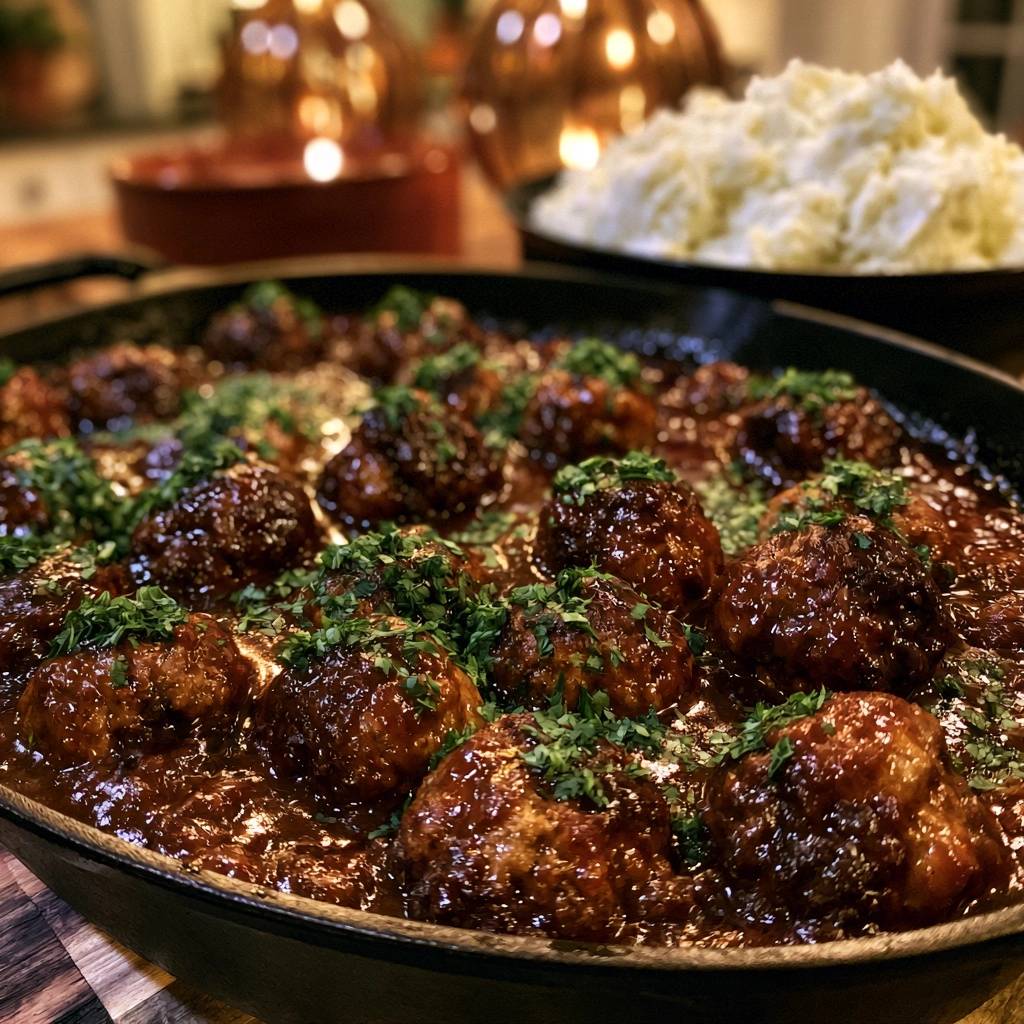
Tomato paste is another heavy hitter here. It isn’t there to make the sauce taste like tomato; it’s there for acidity and color. When you whisk it into the roux, it helps balance the heavy fats and provides a beautiful mahogany hue to the final product.
Step-by-Step: Achieving the Perfect Maillard Sear
The Maillard reaction is the chemical process that happens when meat browns. It creates hundreds of different flavor compounds that weren’t there before. To get this right, your skillet needs to be hot before the meatballs ever touch the surface.
Don’t crowd the pan. If you put too many meatballs in at once, the temperature of the skillet will drop, and the meat will steam in its own juices instead of searing. You want a deep, dark crust on the outside. This crust isn’t just for texture; it’s the primary flavor source for your gravy.
Once you remove the meatballs, you’ll see brown bits stuck to the bottom of the pan. This is called “fond.” Do not scrape this out or wash the pan! This is concentrated flavor that will dissolve into your sauce, giving it that authentic, slow-cooked taste.
Gentle Mixing: The “Light Touch” Technique
One of the biggest mistakes home cooks make is overworking the meat. If you squeeze and mash the beef too much, you’ll destroy the air pockets and create a dense, hockey-puck texture. Use your fingers like a rake to gently toss the ingredients together.
Stop mixing the second you no longer see streaks of egg or clumps of the panade. It’s okay if the mixture looks a little loose. When you roll them into balls, use a light touch. You want them to hold their shape, but you shouldn’t be packing them tightly like a snowball.
Building a Silky Brown Gravy from Scratch
Making a roux is a fundamental skill that separates good cooks from great ones. After melting your butter into the pan drippings, whisk in the flour. You need to cook this for at least two minutes. This removes the “raw flour” taste and allows the roux to take on a light toasted color.
When it’s time to add the broth, do it slowly. Start with just a splash and whisk until it forms a thick paste. Gradually add more liquid while whisking constantly. This “slow pour” method is the only way to ensure a perfectly smooth, lump-free gravy.
As the gravy simmers, it will transform from a thin liquid into a rich, coating sauce. You’re looking for “nappe” consistency, which is a fancy way of saying it should be thick enough to coat the back of a spoon without immediately running off.
Emulsifying the Sauce: Mustard and Tomato Paste
Dijon mustard is a natural emulsifier. It contains compounds that help fat and water stay bonded together. By whisking it into your gravy, you’re ensuring that the butter and beef fats don’t separate and create an oily film on top of your sauce.
The reduction process is where the magic happens. As the water evaporates, the flavors of the beef broth and aromatics concentrate. If the sauce gets too thick, don’t panic. You can always whisk in a tablespoon of water or extra broth to loosen it back up to your liking.
Avoiding Common Salisbury Steak Mistakes
If you find your gravy is too salty, it’s usually because the beef broth reduced more than expected. A quick fix is to add a splash of water or a tiny pinch of sugar to balance the salt. You can also serve it over unsalted mashed potatoes to help even out the seasoning.
If your meatballs are falling apart, it’s likely because they weren’t seared long enough. That initial crust acts like an exoskeleton, holding the tender interior together. Make sure the meat “releases” naturally from the pan before you try to flip it; if it’s sticking, it isn’t ready.
Lumpy gravy can be frustrating, but it’s easily fixed. If whisking doesn’t work, simply pour the sauce through a fine-mesh strainer before adding the meatballs back in. No one has to know, and your sauce will be perfectly silky.
Temperature Control: The Low-and-Slow Finish
We brown the meatballs on high heat for flavor, but we finish them on low heat for texture. If you boil the meatballs in the sauce, the meat will become tough. A gentle simmer is all you need to reach an internal temperature of 160°F.
Covering the pan during the final ten minutes is crucial. It creates a small steam chamber that keeps the meatballs moist while they finish cooking. This also allows the meatballs to absorb some of the gravy, making them even more flavorful from the inside out.
Optimal Pairings for Savory Meatball Skillets
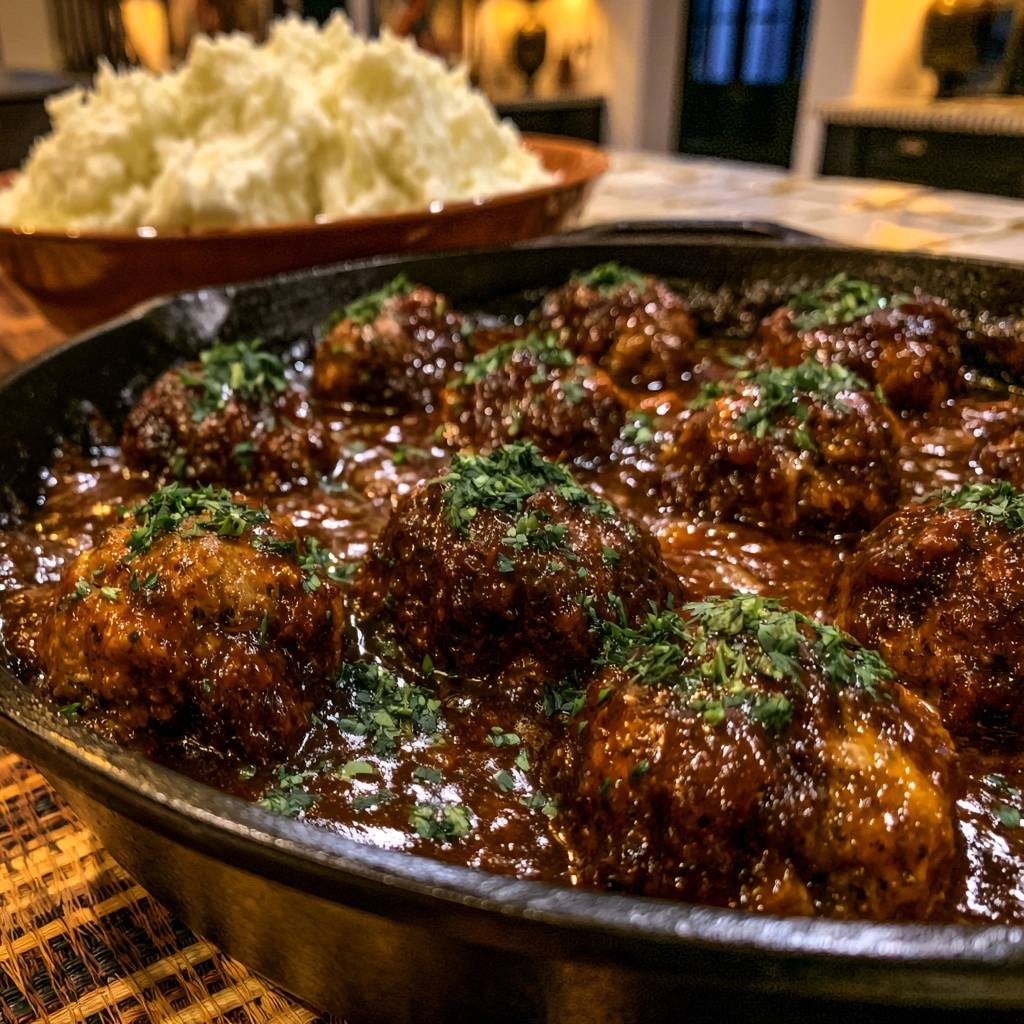
Mashed potatoes are the classic choice for a reason. They act as a fluffy cloud that soaks up every drop of that rich brown gravy. For the best results, use Yukon Gold potatoes and plenty of butter to match the richness of the Salisbury sauce.
If you want something different, buttered egg noodles are a fantastic alternative. The wide noodles provide a great surface area for the sauce to cling to. For a vegetable side, try something with a bit of a bite, like roasted Brussels sprouts or sautéed broccolini, to provide a fresh contrast to the savory beef.
Make-Ahead Strategies and Storage Logistics
You can easily prep this meal in advance. Roll the meatballs and store them in an airtight container in the fridge for up to 24 hours before cooking. This actually helps the flavors meld and makes the meatballs slightly easier to handle during the searing phase.
Leftovers are arguably even better the next day. Store them in the fridge for up to three days. When you reheat them, the gravy will likely have thickened into a jelly-like consistency. This is normal! Just add a splash of water when reheating on the stove to bring the sauce back to life.
Freezing Guide: Raw vs. Cooked
To freeze raw meatballs, place them on a baking sheet in a single layer and freeze until solid. Once frozen, transfer them to a freezer bag. This “flash freeze” prevents them from sticking together, so you can pull out exactly as many as you need.
You can also freeze the finished dish. Let it cool completely before transferring to a freezer-safe container. It will stay fresh for up to two months. Thaw it in the fridge overnight before reheating gently on the stovetop over low heat.
Expert Troubleshooting and Technical FAQ
Can I use panko instead of plain breadcrumbs?
Yes, you can use panko, but the texture will be slightly different. Panko flakes are larger and airier, which can make the meatballs feel a bit more “open.” If you use panko, let the panade sit for an extra few minutes to ensure the larger crumbs are fully hydrated and soft.
Why is my gravy pale instead of dark brown?
A pale gravy usually means one of two things: either the meatballs weren’t browned deeply enough, or the roux wasn’t cooked long enough. To fix this next time, make sure your meatballs have a dark mahogany crust and let your flour and butter mixture turn a light golden brown before adding the liquid.
How do I prevent the meatballs from sticking to the skillet?
The most important rule is to wait. Meat will naturally “release” from a hot pan once a proper crust has formed. If you try to flip a meatball and it feels stuck, give it another minute. Also, ensure your oil is shimmering hot before adding the meat to the pan.
Can I substitute the beef broth with vegetable stock?
You can, but you will lose a significant amount of the “beefy” depth that defines Salisbury steak. If you must use vegetable stock, add a teaspoon of soy sauce or a half-teaspoon of mushroom powder. these additions provide the umami punch that vegetable stock lacks on its own.
What is the best way to reheat leftovers without losing the sauce?
Avoid the microwave if possible, as it can make the meat rubbery. Instead, place the meatballs and gravy in a small skillet over low heat. Add a tablespoon or two of water or broth to loosen the sauce. Cover the pan and heat until the meatballs are warmed through to the center.
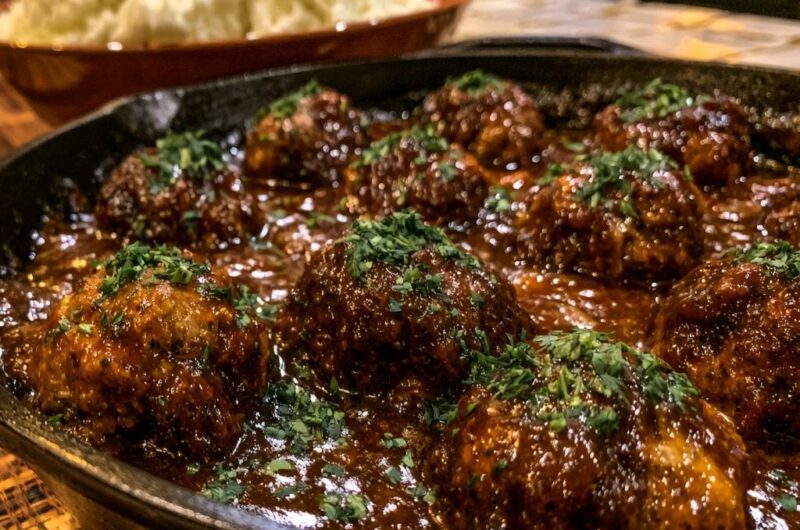
Skillet Salisbury Steak Meatballs
Course: Main CourseCuisine: AmericanDifficulty: easy4
servings15
minutes25
minutes40
Minutes440
kcalAmerican
Ingredients
1.5 lbs ground beef (80/20 blend for best texture)
1/2 cup plain breadcrumbs
1/4 cup whole milk
1 large egg, beaten
1 tablespoon yellow onion, grated (with juices)
1 teaspoon garlic powder
1/2 teaspoon salt
1/2 teaspoon black pepper
2 tablespoons olive oil
2 cups beef broth
1 tablespoon Worcestershire sauce
1 tablespoon tomato paste
1 teaspoon Dijon mustard
2 tablespoons unsalted butter
2 tablespoons all-purpose flour
1/4 cup fresh parsley, finely chopped for garnish
Directions
- In a small bowl, combine the breadcrumbs and milk. Let this sit for 5 minutes until it forms a thick paste. This panade is the essential step to prevent rubbery meat.
- In a large mixing bowl, combine the ground beef, the milk and breadcrumb paste, egg, grated onion, garlic powder, salt, and pepper. Mix gently with your hands just until combined. Do not overwork the meat or it will become dense.
- Shape the mixture into 12 large meatballs.
- Heat olive oil in a large cast iron skillet over medium-high heat. Brown the meatballs on all sides for about 8 to 10 minutes until a deep golden-brown crust forms. They do not need to be cooked through yet. Remove meatballs from the pan and set aside.
- Reduce heat to medium. Melt the butter in the same skillet, whisking it into the remaining oil and browned bits. Whisk in the flour and cook for 1-2 minutes until the roux is a light brown color.
- Slowly pour in the beef broth while whisking constantly to prevent lumps. Stir in the Worcestershire sauce, tomato paste, and Dijon mustard.
- Bring the gravy to a gentle simmer. Once thickened, add the meatballs back into the skillet.
- Reduce heat to low, cover, and simmer for 10 minutes. This slow finish in the sauce ensures the centers stay juicy and the exterior absorbs the savory glaze.
- Remove the lid and spoon the thickened gravy over the meatballs. Garnish heavily with fresh chopped parsley as shown in the image. Serve immediately over a large bowl of fluffy mashed potatoes.
Notes
- The panade is the essential step to prevent rubbery meat. Do not overwork the meat when mixing to keep the texture light and tender.