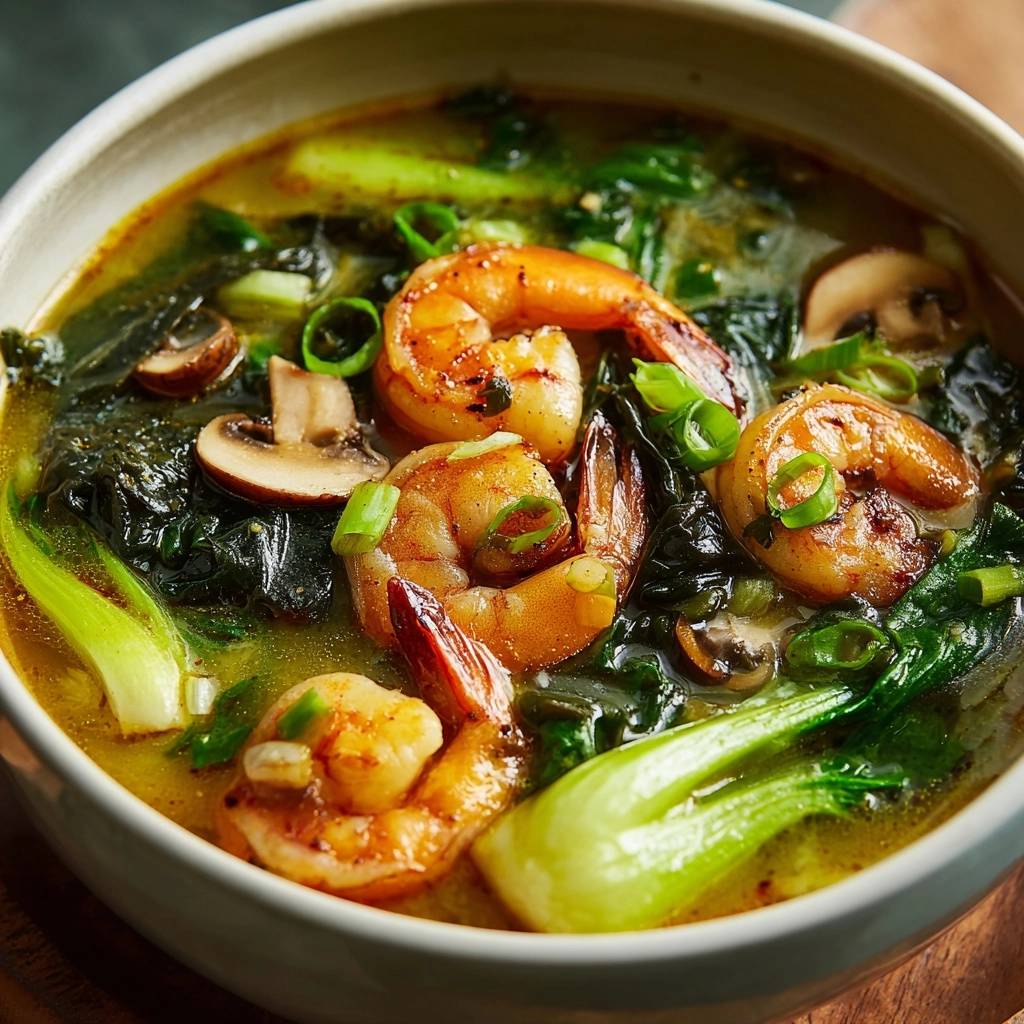
Imagine a bowl where the fiery, crimson glow of chili oil meets the cool, mineral crunch of vibrant green bok choy. It’s a beautiful contrast that most home cooks crave but rarely achieve because they fall into the trap of the “boil-all” method. When you toss raw shrimp into a bubbling pot of broth, you’re essentially steaming them into a rubbery, flavorless state that lacks any character.
The secret to a truly professional Spicy Garlic Shrimp and Bok Choy Soup lies in the “Sear and Steep” philosophy. By treating the shrimp as a star protein rather than a soup garnish, you unlock deep, caramelized flavors that a simple boil could never provide. This method ensures every bite is snappy and tender while the broth remains light and aromatic.
I’ve found that the biggest mistake people make is overcrowding the pan during that initial sear. If the shrimp are too close together, they’ll steam in their own juices instead of browning. Give them space, let that golden crust form, and you’ll transform a humble weeknight meal into something that feels like it came from a high-end bistro kitchen.
The Anatomy of a Perfect Seafood Broth
A great soup is only as good as its foundation, and here, the broth acts as a canvas for the spicy and savory elements. Using a high-quality seafood or vegetable stock is essential because it provides the body and depth needed to support the heat of the chili oil. If the stock is too thin or bland, the spices will feel disconnected from the liquid.
Layering flavor starts with the aromatics: garlic, ginger, and green onions. These aren’t just additions; they are the backbone of the dish. When they hit the hot oil, they release essential oils that permeate the entire pot. The soy sauce and mushrooms then step in to provide a massive hit of umami, creating a savory “roundness” that balances the sharp spice of the chili flakes.
For more ideas on how to build flavor, explore this creamy shredded chicken and mushroom soup.
Selecting Quality Shrimp and Baby Bok Choy
When you’re at the seafood counter, look for “Large” or “Jumbo” shrimp, typically labeled as 16/20 count. These are big enough to hold up to a high-heat sear without overcooking in the center instantly. Smaller shrimp tend to curl into tight, tough knots before you can even get a good color on them.
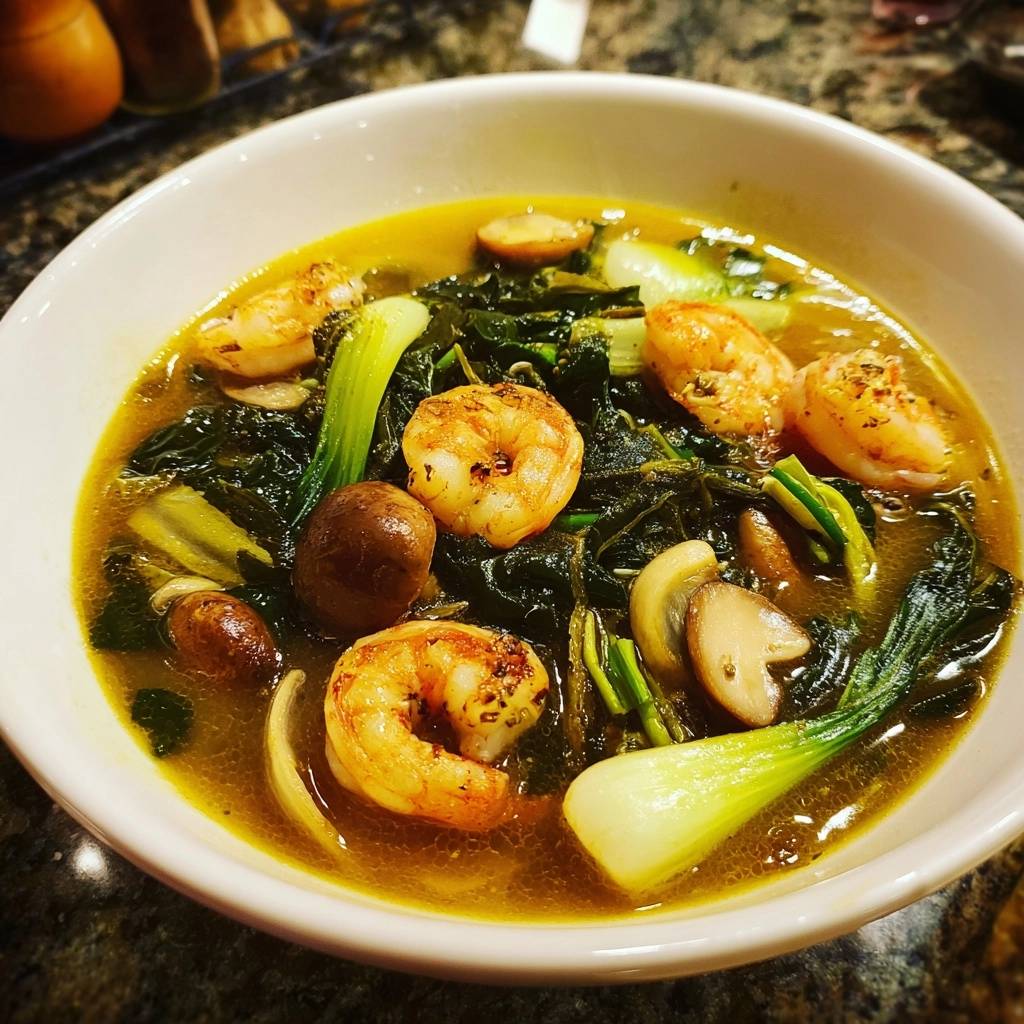
For the greens, baby bok choy is the way to go. Unlike the large, mature version which can be fibrous and bitter, baby bok choy is incredibly tender and sweet. Look for heads that feel heavy for their size with crisp, bright green leaves and firm white stems. If the mushrooms look slimy or have dark soft spots, skip them; you want firm cremini mushrooms that will hold their shape during the sauté.
Essential Aromatics: Ginger, Garlic, and Chili Oil
Fresh ginger is a non-negotiable requirement for this recipe. While powdered ginger is fine for cookies, it lacks the zesty, peppery bite that cuts through the richness of the sesame oil. When you grate it fresh, you’re getting the juice and the fiber, which adds a bright top note to the broth that lingers on the palate.
The chili oil you choose will define the heat level of your soup. I always recommend using an oil that has plenty of “sediment” or fried flakes at the bottom of the jar. Those little bits of toasted pepper provide a smoky texture and a slow-building heat that makes the soup feel complex rather than just “hot.”
The Science of the Sear and Steep Method
The Maillard reaction is your best friend in the kitchen. It’s the chemical reaction between amino acids and reducing sugars that gives browned food its distinctive flavor. By searing the shrimp first, you’re creating a savory crust that simply cannot form in a liquid environment. If you boil them from raw, you miss out on that entire dimension of taste.
The “steep” part of the method is just as vital. Once the broth is hot and the vegetables are cooked, you turn off the burner. Adding the seared shrimp back into the pot at this stage allows the residual heat to finish the cooking process gently. This prevents the protein fibers from tightening up and becoming tough, ensuring a “snappy” texture every time.
Preparing Your Spicy Garlic Shrimp and Bok Choy Soup
This is a fast-moving recipe that takes about 15 minutes once the heat is on. Because of that speed, “Mise en Place” is your golden rule. Have your ginger grated, your garlic minced, and your bok choy sliced before you even think about touching the stove. You don’t want to be chopping mushrooms while your garlic is burning in the pot.
Phase 1: Achieving the Golden Shrimp Crust
Before the shrimp hit the pan, you must pat them bone-dry with paper towels. Any moisture on the surface of the shrimp will turn to steam, preventing that beautiful golden-brown sear. It’s the difference between a dull pink shrimp and one that looks restaurant-quality.
Heat your vegetable oil until it is shimmering but not smoking. When you lay the shrimp down, you should hear a loud, aggressive sizzle. Leave them alone for at least 60 seconds to let the crust develop. You’re looking for opaque edges and a center that still looks a little bit translucent—don’t worry, they’ll finish cooking later in the broth.
Phase 2: Building the Umami Base with Mushrooms
After removing the shrimp, don’t wash the pot! Those little brown bits stuck to the bottom are flavor gold. Toss the mushrooms in immediately. They will act like little sponges, soaking up the leftover shrimp oil and releasing their own moisture to deglaze the pan.
As the mushrooms brown and soften, they develop a meaty texture that perfectly complements the seafood. When you finally pour in the broth, all those caramelized flavors from the shrimp and mushrooms will lift off the bottom of the pot and dissolve into the liquid, creating a rich, dark base.
Phase 3: Timing the Bok Choy Textures
Bok choy is a two-part vegetable, and you have to treat it that way. The thick white stems take longer to soften than the delicate leaves. By adding the stems first, you give them the head start they need to become tender-crisp without turning the leaves into a soggy mess.
Once the leaves go in, they only need about a minute. You are looking for a “vibrant green” color. The moment the leaves wilt and turn that brilliant emerald shade, the soup is ready. Any longer and you’ll lose that fresh, garden-bright flavor that makes this dish so refreshing.
Customizing Heat and Flavor Profiles
Everyone has a different tolerance for spice. If you want to take the heat to the next level, try adding a few sliced Thai bird’s eye chilies along with the garlic and ginger. They provide a sharp, immediate sting that pairs beautifully with the smoky chili oil. Just be careful—those little peppers pack a serious punch!
On the other hand, if you want a more mellow experience, you can reduce the chili oil and add a splash of rice vinegar or a squeeze of lime at the very end. The acidity brightens the broth and cuts through the sesame oil, making the whole dish feel lighter and more balanced on the tongue.
Vegetarian and Protein Substitutions
If you want to swap out the shrimp, firm tofu is an excellent alternative. You can still use the “Sear and Steep” method! Press the tofu to remove excess water, sear the cubes until they are crispy on all sides, and add them back to the broth at the end. It keeps the tofu from becoming mushy and adds a great textural contrast.
Scallops are another fantastic option for a more luxurious version of this soup. Just like the shrimp, they need a hard sear on both sides to develop flavor. Since scallops cook even faster than shrimp, make sure the broth is off the heat before you add them back in to prevent them from becoming rubbery.
Noodle Additions for a Heartier Meal
While this soup is delicious on its own, adding noodles can turn it into a very filling dinner. Glass noodles (cellophane noodles) are a personal favorite because they stay slippery and don’t soak up too much of the precious broth. Udon or rice vermicelli also work beautifully depending on the texture you prefer.
If you enjoy adding noodles to your soups, you might also like this spicy noodle soup.
The pro tip here is to cook your noodles in a separate pot of plain water. If you cook them directly in the soup, the starch from the noodles will leach out and make your clear, vibrant broth look cloudy and thick. Drain them, rinse them, and place them in the bottom of the bowl before ladling the soup over the top.
Troubleshooting Common Soup Mistakes
If your soup looks cloudy, it’s usually because the broth was boiling too vigorously. A gentle simmer is all you need. If you find the broth is too salty—which can happen if your stock was highly seasoned—try the “potato trick.” Drop a few slices of raw potato into the simmering broth for a few minutes to absorb the excess salt, then remove them before serving.
Sometimes a soup can taste “flat” even if you followed the recipe. This usually means it needs a hit of acid or a tiny bit more salt. A teaspoon of lime juice or a tiny pinch of sugar can often “wake up” the other flavors. It’s all about finding that perfect balance between salty, sour, and spicy.
Expert Tips for Restaurant-Style Presentation
We eat with our eyes first, so presentation matters. Instead of just dumping everything into a bowl, try the “stacking” method. Start by ladling the broth and mushrooms into the bowl first. Then, use tongs to nestle the bok choy in the center, creating a little green island.
Complementary Bites
Round out your meal with these dishes that bring out the best in your spicy garlic shrimp and bok choy soup.
- For a fresh, green addition, consider these bacon-wrapped asparagus bundles, offering a satisfying crunch that plays well with the soup’s textures.
- To soak up every last drop of that flavorful broth, serve your soup with some warm garlic naan, perfect for dipping.
Place your seared shrimp carefully on top of the greens so they stay partially above the liquid. This keeps that beautiful golden crust visible. Finish with a final drizzle of toasted sesame oil and a few extra chili flakes. The oil will create little shimmering beads on the surface, giving it that glossy, professional finish.
Storage and Reheating for Optimal Texture
Seafood soup is always at its absolute peak the moment it’s made. However, if you have leftovers, store them in an airtight container in the fridge for up to two days. I don’t recommend freezing this soup; the bok choy leaves are too delicate and will turn into a mushy, unappealing texture once thawed.
When you’re ready to reheat, do it “low and slow” on the stovetop. Avoid the microwave if possible, as it tends to overcook the shrimp in seconds. Pour the soup into a small pot and warm it over medium-low heat just until it’s steaming. This gentle approach ensures the shrimp stay tender and the bok choy keeps some of its structural integrity.
Frequently Asked Questions
Can I use frozen shrimp for this recipe?
Yes, you can absolutely use frozen shrimp, but you must thaw them completely first. The best way is to leave them in the fridge overnight or place them in a sealed bag under cold running water for about 15 minutes. Most importantly, you must dry them thoroughly with paper towels after thawing. If they are even slightly damp, they will steam in the pan rather than sear, and you’ll lose that essential golden crust.
How do I clean grit out of baby bok choy?
Bok choy grows in sandy soil, and grit often gets trapped at the very base where the stems meet. To clean them properly, slice the heads in half lengthwise. Submerge them in a large bowl of cold water and swish them around vigorously. Let them sit for a minute so the dirt sinks to the bottom, then lift them out and pat them dry. This ensures you won’t have any unpleasant crunch in your smooth soup.
Is there a low-sodium alternative for the broth?
If you are watching your salt intake, use a “no-salt-added” vegetable or seafood stock as your base. You can also substitute the soy sauce with a low-sodium Tamari. To make up for the lost flavor, double the amount of fresh ginger and add a generous squeeze of fresh lime juice at the end. The acidity and aromatics will provide plenty of “punch” so you won’t even miss the extra salt.
What is the best neutral oil for searing seafood?
For the initial sear, you want an oil with a high smoke point. Avocado oil, grapeseed oil, or canola oil are all excellent choices because they can handle the high heat without breaking down or smoking. Avoid using toasted sesame oil for the searing phase; it has a very low smoke point and will turn bitter if it gets too hot. Save the sesame oil for the very end to preserve its delicate, nutty aroma.
Can I make the broth base in advance?
You can definitely prep the mushroom and garlic broth base up to 2 days in advance. Simply follow the instructions through step 4, let the liquid cool, and store it in the refrigerator. When you’re ready to serve, bring the broth back to a simmer on the stove. Perform the shrimp searing and the bok choy wilting right before you eat to ensure the textures are perfectly fresh and snappy.
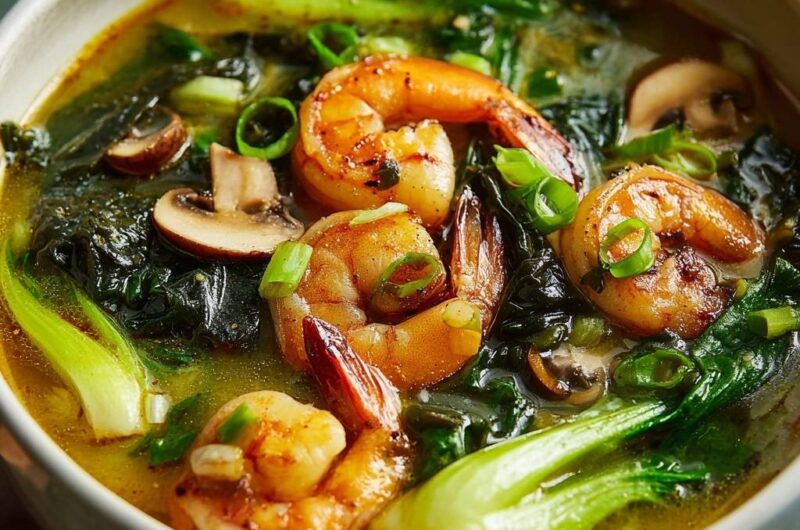
Spicy Garlic Shrimp Bok Choy Soup
Course: Main CourseCuisine: Asian FusionDifficulty: easy2
servings10
minutes15
minutes340
kcal25
MinutesThis vibrant soup combines seared large shrimp with baby bok choy and cremini mushrooms in a spicy ginger and garlic broth. The secret to its success is searing the shrimp separately to develop flavor and adding them back at the end to maintain a snappy texture.
Ingredients
1 pound large shrimp, peeled and deveined (tail-on for presentation)
2 heads baby bok choy, stems separated and leaves kept whole
1 cup sliced cremini mushrooms
4 cups seafood or vegetable broth
2 tablespoons soy sauce
1 tablespoon chili oil with flakes (plus extra for drizzling)
1 teaspoon toasted sesame oil
3 cloves garlic, minced
1 teaspoon grated fresh ginger
2 green onions, sliced
1 tablespoon neutral vegetable oil
Salt and black pepper to taste
Directions
- Pat the shrimp completely dry with paper towels. Season lightly with salt and black pepper. This is crucial for achieving the golden-brown sear shown in the image.
- Heat the vegetable oil in a large pot or Dutch oven over medium-high heat until shimmering. Add the shrimp in a single layer. Sear for 60-90 seconds per side until they have a visible golden crust but are slightly translucent in the center. Remove the shrimp immediately and set aside on a plate.
- In the same pot, add the sliced mushrooms. Sauté for 3 minutes until browned and softened. Stir in the garlic and ginger, cooking for 30 seconds until fragrant.
- Pour in the broth, soy sauce, and chili oil. Bring the liquid to a simmer.
- Add the bok choy stems to the broth first and simmer for 1 minute. Then, add the leafy greens and the sesame oil. Simmer for an additional 60 seconds until the leaves are wilted and the broth is vibrant.
- Turn off the heat completely. This is the fail-safe step to prevent overcooking. Add the seared shrimp and any accumulated juices from the plate back into the pot. Let them sit in the residual heat for 1 minute to finish cooking gently.
- Ladle the soup into deep bowls, ensuring the seared shrimp and bok choy are visible on top. Garnish with fresh green onions and an extra drizzle of chili oil to match the visual richness of the dish.
Notes
- The sear and steep method is the key to preventing rubbery shrimp. Ensure shrimp are patted completely dry before searing to achieve a golden crust.