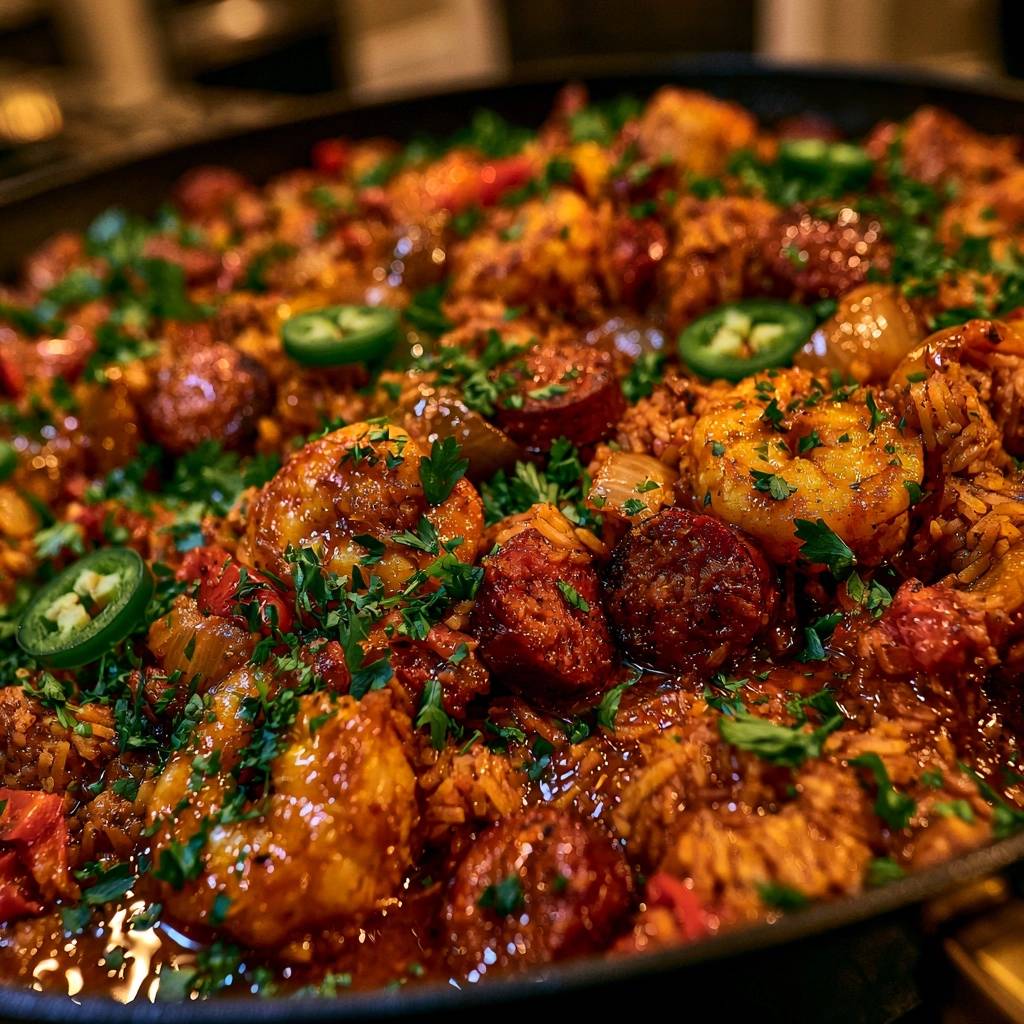
The aroma of a true Creole kitchen is unmistakable, defined by the scent of charred peppers, smoky spices, and the deep, savory base of the “Holy Trinity.” However, many home cooks struggle with the final texture, often ending up with a pot of gummy, overcooked rice or shrimp that feels like rubber. This Spicy Shrimp and Sausage Jambalaya solves those frustrations by treating every ingredient with the respect it deserves.
The secret to a professional-grade result lies in what I call the “Skyscraper” approach. Instead of tossing everything into a pot and hoping for the best, we build layers of flavor and structure. By toasting the dry rice grains in rendered fat and staggering the addition of proteins, we ensure the rice stays fluffy and separate while the seafood remains tender and succulent.
One specific tip that changes everything is the rice-to-fat ratio during the sauté phase. You must ensure every single grain of rice is coated in the oil and sausage drippings before any liquid hits the pan. This creates a hydrophobic barrier that prevents the grains from absorbing water too quickly and bursting, which is the primary cause of that dreaded mushy texture.
The Holy Trinity and Aromatics
In Louisiana cooking, the “Holy Trinity” consists of onions, celery, and green bell peppers. This combination provides the foundational flavor profile for almost every classic dish. In this recipe, we use a specific ratio to balance the sharp bite of the onion with the earthy, watery crunch of the celery and the vegetal note of the green pepper.
Therefore, we also introduce a red bell pepper into the mix. While not strictly traditional in every household, the red pepper adds a necessary sweetness that counteracts the heat of the spices. It also provides a beautiful visual contrast against the deep reds of the tomato base. When you add fresh garlic and sliced jalapenos, you aren’t just making the dish “hot.” You are building a layered heat profile where the garlic provides a pungent back-note and the jalapenos offer a bright, stinging spice.
Selecting the Right Smoked Sausage
Since we are avoiding pork, the choice of sausage becomes even more critical for the final flavor. A high-quality Beef Andouille is the gold standard here. It offers the same coarse grind and heavy smoke profile as the original, but with a richer, beefier finish. If you can’t find beef andouille, a well-seasoned Smoked Turkey sausage works beautifully, though it is leaner.
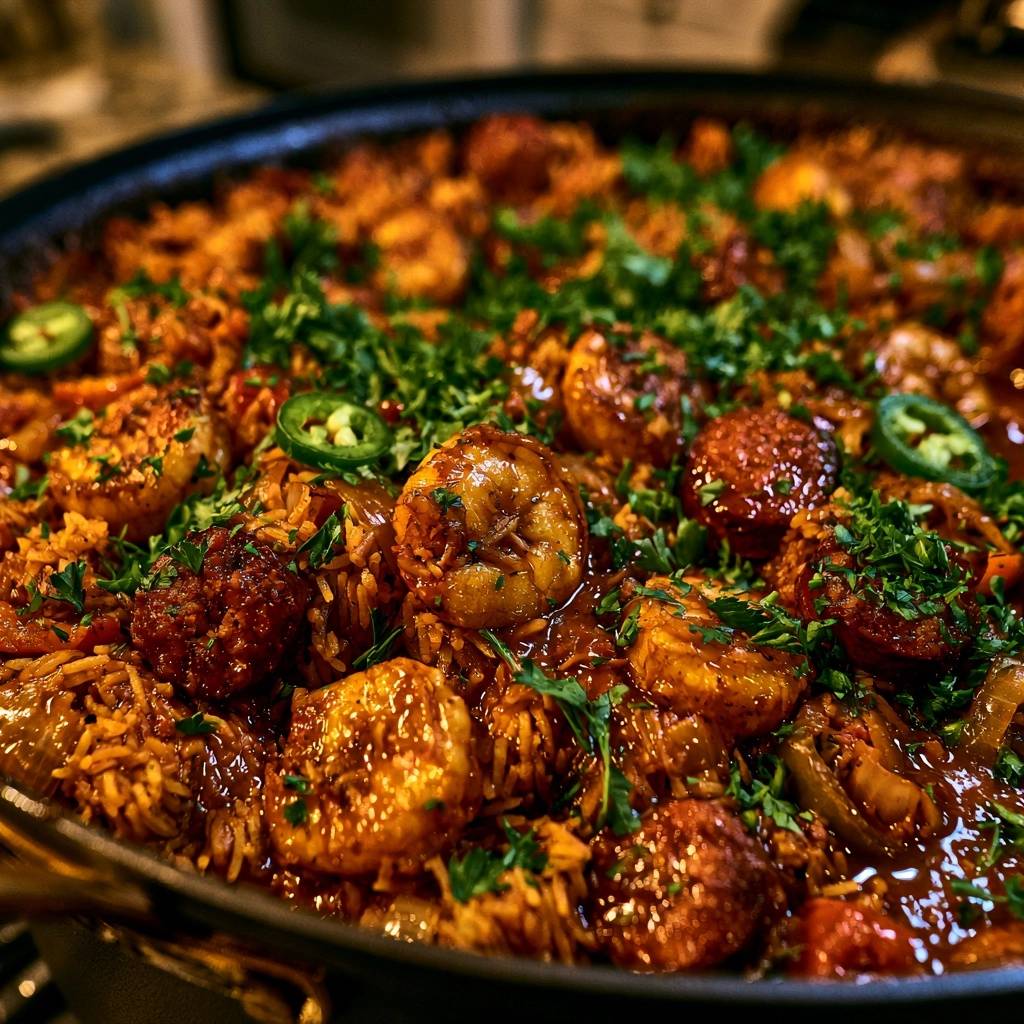
Because beef and turkey sausages can have different fat contents, pay close attention to the “fond” or the browned bits at the bottom of your pan. If you use a leaner turkey sausage, you might need to add an extra teaspoon of oil to ensure there is enough fat to properly sauté the vegetables. That caramelized residue left behind by the sausage is liquid gold; it provides the smoky depth that defines the entire pot.
Sourcing and Prepping Jumbo Shrimp
For the best results, look for 16/20 or 21/25 count shrimp. These numbers refer to how many shrimp make up a pound, and these larger sizes hold up much better to the residual heat of the rice. Smaller shrimp tend to disappear into the dish and overcook in seconds.
Peeling and deveining are non-negotiable steps for a pleasant eating experience. Furthermore, always pat your shrimp completely dry with paper towels after thawing. If the shrimp are wet when you add them to the pot, they will release excess water, which can throw off your liquid-to-rice ratio and lead to a soggy finish. Dry shrimp “snap” when you bite into them, which is exactly what we want.
The Science of Non-Mushy Jambalaya Rice
Long-grain white rice is the only choice for this dish because of its high amylose content. Amylose is a type of starch that keeps grains firm and separate after cooking. Short-grain or medium-grain rices are high in amylopectin, which makes them sticky and creamy—perfect for risotto, but a disaster for jambalaya.
The magic happens when the vegetable oil and rendered sausage fat coat the individual grains. This process creates a moisture barrier. Instead of the water rushing into the grain and exploding the starch molecules, the heat penetrates slowly. This ensures the rice cooks through while maintaining its structural integrity, resulting in a fluffy pot where every grain is distinct.
Why We Toast Dry Grains
When you stir the dry rice into the hot fat and aromatics, watch for the color change. The grains will transition from a translucent white to a solid, bright opaque color. You will also notice a distinct nutty aroma filling the kitchen. This is the sign that the exterior starches are being toasted.
This toasting phase is the most important step for flavor development. It adds a toasted, popcorn-like depth to the rice that plain boiled rice simply cannot match. Moreover, it prevents the grains from bursting and releasing excess starch into the broth, which is the primary reason most homemade jambalayas turn into a thick porridge.
Essential Spices for Creole Heat
Cajun seasoning is a complex blend of garlic powder, onion powder, cayenne, and black pepper. To elevate this, we add smoked paprika for a deep, woody color and dried thyme for an earthy, floral undertone. Fire-roasted tomatoes are also essential here because they provide a charred acidity that cuts through the richness of the meat.
Always “bloom” your spices in the hot oil for about 30 seconds before adding the chicken broth. Heat wakes up the volatile oils in the dried herbs and spices, intensifying their flavor. If you simply dump the spices into the liquid, they will taste flat and dusty. This quick sauté ensures the heat is distributed evenly throughout the entire dish.
Step-by-Step: Searing and Sautéing
Start by heating your oil until it shimmers. When you add the sausage, you are looking for the Maillard Reaction—that deep, dark brown crust that forms on the surface of the meat. This isn’t just for looks; that crust is where the concentrated savory flavor lives. Once the sausage is browned, remove it so it doesn’t become tough while you work on the vegetables.
Next, drop in your Holy Trinity. You want to soften these vegetables for about 5 to 7 minutes. They should be translucent and slightly browned at the edges, but not mushy. When you add the garlic, only cook it for about a minute. Garlic burns easily, and burnt garlic will turn your entire jambalaya bitter. Keep everything moving in the pan to ensure even cooking and to scrape up those delicious browned bits from the sausage.
The Precision Simmer and Liquid Ratios
This recipe uses a specific liquid-to-rice ratio to ensure the rice absorbs every drop without becoming waterlogged. Chicken broth is vastly superior to water because it adds another layer of seasoning and body to the sauce. Once you pour the liquid in, use your wooden spoon to scrape the bottom of the pan one last time to release the fond.
The “No Peeking” rule is the most difficult part of the process. When you cover the pot and turn the heat to low, you are creating a pressurized steam environment. Every time you lift the lid, that steam escapes, the temperature drops, and the rice cooks unevenly. Trust the timer and keep the lid tightly sealed for the full 18 minutes.
Technique: The Staggered Protein Addition
Shrimp should never be boiled for 20 minutes. If you cook them that long, they will shrink into tiny, tough knots. Instead, we use the residual steam from the nearly finished rice to poach them gently. By nesting the raw shrimp into the hot rice at the very end, you ensure they cook through in just 5 minutes.
This method preserves the “snap” of the shrimp. As they turn pink and opaque, they release a small amount of flavorful juice directly into the rice. The sausage goes back in at this stage as well, just to warm through. This staggered approach ensures every component of the dish is cooked to its absolute peak texture.
Troubleshooting Common Jambalaya Issues
If your rice is still crunchy after the timer goes off, don’t panic. Sprinkle two tablespoons of broth over the top, replace the lid, and let it sit on the lowest heat setting for another 5 minutes. The extra steam will usually finish the job. This often happens if your lid isn’t tight enough or if your heat was too low.
If you find the bottom is burning, it usually means your pan is too thin or your “low” heat is still too high. Always use a heavy-bottomed vessel to distribute heat evenly. If the dish lacks “punch” at the end, it usually needs a tiny splash of acid, like a squeeze of fresh lemon or a dash of hot sauce, to wake up the salt and spices.
Optimal Equipment: The Dutch Oven Advantage
A heavy-bottomed cast iron or enameled Dutch oven is the best tool for this job. These pots hold heat exceptionally well and distribute it across the entire base, preventing hot spots. Thin stainless steel or aluminum pans often cause the rice in the center to burn while the rice at the edges stays raw.
The thick walls of a Dutch oven also help maintain that steady simmer required for the rice to absorb the broth perfectly. If you don’t have one, use the heaviest pot you own and consider using a heat diffuser on your burner to keep the temperature consistent and gentle.
Flavor Variations and Heat Adjustments
For those who crave “Extra Spicy” results, you can double the amount of jalapenos or add a half-teaspoon of cayenne pepper during the spice-blooming phase. Conversely, if you prefer a milder meal, remove the seeds and white ribs from the jalapenos before dicing them, as that is where most of the capsaicin lives.
You can also customize the vegetable content. Some people love adding sliced okra during the last 10 minutes of simmering for a more traditional gumbo-style texture. Others might stir in a handful of kale or spinach at the very end for a boost of greens. The base of this recipe is sturdy enough to handle these small tweaks without falling apart.
Serving Suggestions and Side Pairings
Jambalaya is a heavy, rich dish, so it pairs best with high-contrast sides. A crisp, vinegar-based coleslaw or a simple green salad with a lemon vinaigrette provides a refreshing palate cleanser between spicy bites. The acidity in these sides helps cut through the smokiness of the beef sausage.
While many people serve jambalaya with cornbread or crusty French bread, it isn’t strictly necessary since the dish already contains a significant amount of starch from the rice. However, a piece of toasted bread is excellent for swiping up any leftover sauce at the bottom of the bowl. Keep the sides light to let the complex flavors of the jambalaya shine.
Storage and Reheating for Meal Prep
Seafood requires careful handling when it comes to leftovers. Store your jambalaya in an airtight container in the refrigerator for no more than two days. I do not recommend freezing this dish, as the shrimp will become very rubbery and the rice will lose its distinct texture upon thawing.
When reheating, avoid the microwave if possible, as it tends to overcook the shrimp while leaving the rice dry. Instead, place the leftovers in a skillet with a splash of chicken broth. Cover the pan and heat it over medium-low, stirring occasionally, until the rice is hot and the shrimp are just warmed through. This restores the moisture and keeps the textures intact.
Expert Tips for the Perfect Garnish
The final garnish of fresh parsley and raw jalapenos is not just for decoration. The fresh parsley provides a “high note” of herbal brightness that cuts through the heavy, cooked-down flavors of the tomatoes and spices. It adds a necessary element of freshness to the plate.
Adding a few slices of raw jalapeno at the end provides a different kind of heat than the peppers that were sautéed earlier. The raw peppers offer a crisp crunch and a sharp, immediate spice that contrasts beautifully with the soft, savory rice. Always garnish right before serving to maintain these distinct textures.
Frequently Asked Questions
Can I use brown rice for this recipe?
You can, but it requires significant adjustments. Brown rice takes much longer to cook (usually 40-45 minutes) and requires more liquid. If you use brown rice, you must wait to add the tomatoes until the last 15 minutes, as the acidity in tomatoes can prevent brown rice from softening properly. The texture will be much chewier and less traditional.
What if I can’t find Andouille sausage?
If beef andouille isn’t available, a high-quality beef kielbasa or even a spicy smoked turkey sausage is a great substitute. To mimic the specific flavor of andouille, you might want to add an extra pinch of cayenne pepper and a dash of liquid smoke or extra smoked paprika to the pot when you are sautéing your vegetables.
Is the fire-roasted tomato essential?
While standard diced tomatoes will work, fire-roasted tomatoes are highly recommended. They have been charred over an open flame before canning, which adds a subtle smokiness and a deeper sweetness to the sauce. This helps bridge the flavor gap between the smoky sausage and the bright vegetables.
Can I make this in a slow cooker?
I generally advise against it. Rice in a slow cooker often becomes very mushy because it sits in liquid for too long at a low temperature. Furthermore, you lose the ability to toast the rice and sear the meat, which are the two steps that provide the most flavor. This stovetop method is much faster and yields a far superior texture.
How do I scale this recipe for a large crowd?
When doubling the recipe, the most important factor is the size of your pot. You need a very wide pot (like a large braiser or a massive Dutch oven) rather than a tall, narrow one. If the rice is piled too deep, the weight of the top layers will crush the bottom layers, leading to uneven cooking and mushiness. Ensure the rice has plenty of surface area to expand.
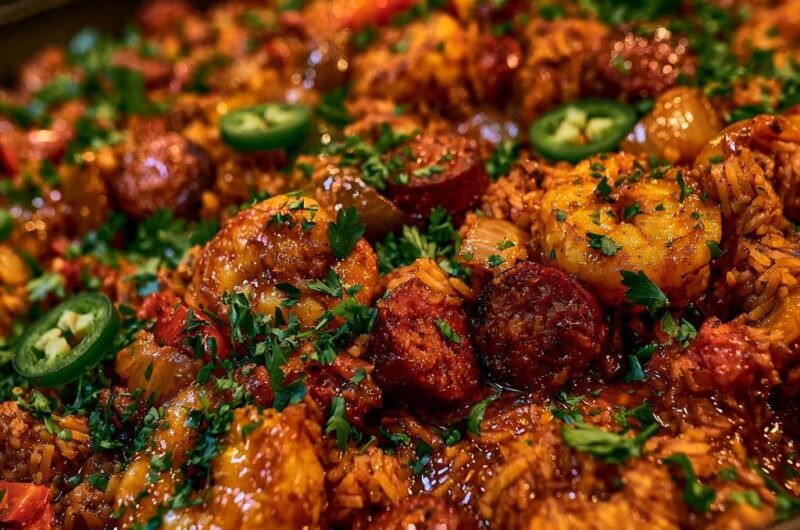
Spicy Shrimp and Sausage Jambalaya
Course: Main CourseCuisine: AmericanDifficulty: easy6
servings15
minutes35
minutes50
Minutes440
kcalAmerican
Ingredients
1 pound large shrimp, peeled and deveined
1 pound smoked andouille or beef sausage, sliced into thick rounds
2 cups long-grain white rice, uncooked
1 large onion, diced
1 red bell pepper, diced (for visual color match)
1 green bell pepper, diced
2 celery stalks, diced
3 cloves garlic, minced
1 can (14.5 oz) fire-roasted diced tomatoes (drained slightly)
1 tablespoon tomato paste
3 cups chicken broth
2 tablespoons Cajun seasoning
1 teaspoon smoked paprika
1 teaspoon dried thyme
2 tablespoons vegetable oil
2 jalapenos, sliced into rounds
1/2 cup fresh parsley, finely chopped for garnish
Directions
- Heat the vegetable oil in a large, heavy-bottomed skillet or wide Dutch oven over medium-high heat. Add the sliced sausage and sear until deeply browned and caramelized on both sides. Remove the sausage with a slotted spoon and set aside.
- In the same pan with the residual fat, add the onion, red and green bell peppers, and celery. Saute for 5-7 minutes until the vegetables are softened and starting to brown at the edges.
- Stir in the garlic, tomato paste, and the dry, uncooked rice. Stir constantly for 3-4 minutes. Toasting the rice in the fat until the grains are opaque and fragrant is the critical step to prevent mushiness.
- Add the Cajun seasoning, smoked paprika, and thyme, stirring for 30 seconds to wake up the spices. Pour in the diced tomatoes and chicken broth. Scrape the bottom of the pan to release any browned bits (fond).
- Bring the mixture to a rolling boil, then immediately reduce the heat to low. Cover tightly and simmer for 18 minutes. Do not lift the lid.
- Quickly uncover the pan. The rice should be nearly tender. Arrange the raw shrimp and the browned sausage over the top of the rice, pressing them down slightly into the surface. Scatter half of the sliced jalapenos on top.
- Replace the lid and cook for an additional 5 minutes. The steam from the rice will perfectly poach the shrimp without making them rubbery.
- Remove from heat. Let the pan sit, covered, for 5 minutes.
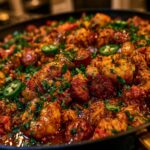
- Fluff the jambalaya gently with a fork to incorporate the proteins. Garnish heavily with the remaining fresh jalapeno slices and a generous amount of chopped parsley to match the vibrant, herb-loaded finish shown in the image. Serve immediately.
Notes
- Toasting the dry rice until opaque is the critical step to prevent mushiness. Do not lift the lid during the initial 18-minute simmer to ensure even cooking.