We’ve all been there. You boil a beautiful pot of ravioli, toss it with your favorite red sauce, and plate it up, only to find a thin, pink puddle forming at the bottom of your bowl thirty seconds later. It’s frustrating because it dilutes the vibrant herbs in the marinara and makes the pasta feel slippery rather than satisfying. That watery mess happens because ravioli acts like a little sponge, trapping water in its ridges and releasing it the moment it hits the sauce.
The secret to a restaurant-quality finish isn’t a fancy ingredient; it’s all about the physics of the pan. By treating your sauce and pasta as two parts of a single emulsion, you can create a thick, velvety coating that actually clings to the dough. You’re about to learn how to manage moisture levels like a pro so every bite is rich, concentrated, and perfectly balanced.
I’ve found that the absolute key to success is the “dry transfer” method. Instead of dumping wet pasta into a bowl, you need to let the ravioli briefly air-dry in a colander while your sauce reduces. This tiny window of evaporation ensures the sauce grips the pasta surface immediately, preventing that dreaded dilution from ever starting.
The Science of Sauce Adhesion and Emulsification
To understand why pasta sauce sometimes slides right off, we have to look at surface tension. Most jarred marinara sauces have a high water content. When you add wet ravioli to a watery sauce, there’s no “grip.” However, when we introduce starchy pasta water and a bit of fat from parmesan cheese, we create an emulsion. The starch acts as a bridge, binding the liquid in the sauce to the fats, resulting in a glossy sheen that coats the pasta evenly.
This is also why cooking your ravioli “al dente” is a functional requirement. If the pasta is fully cooked in the water, it loses its structural integrity and can’t absorb the flavors of the sauce during the final minute of simmering. By pulling the ravioli out one minute early, you allow the pasta to finish its cooking process inside the sauce. This allows the dough to pull the marinara into its outer layers, seasoning the dish from the inside out.
Furthermore, a wide skillet is your best friend here. A deep pot traps steam, but a wide skillet encourages evaporation. As the marinara simmers, the water evaporates, concentrating the tomato sugars and thickening the texture. When you finally add that splash of starchy water back in, you’re adding “liquid gold” that provides the perfect viscosity without thinning the flavor profile.
Essential Components for Spinach and Cheese Ravioli Marinara
Since this recipe relies on just a few ingredients, the quality of each one carries a lot of weight. For the ravioli, I always recommend the refrigerated “fresh” variety found in the deli section. They tend to have thinner, more delicate skins than the hard-frozen bags, which allows for a better filling-to-pasta ratio. If you do use frozen, just ensure they haven’t developed freezer burn, as those ice crystals will contribute to the watery sauce problem we’re trying to avoid.
The marinara sauce is the backbone of the flavor. Look for a brand where the first ingredient is whole peeled tomatoes rather than tomato purée or water. High-quality sauces usually have a natural sweetness from slow-cooked onions and carrots, meaning you won’t need to add extra sugar. Also, please skip the green shaker can of cheese. Freshly grated Parmesan contains natural oils that are essential for the emulsification process; pre-shredded or powdered versions are often coated in potato starch to prevent clumping, which can make your sauce grainy.
Selecting the Right Ravioli Variety
While square ravioli are classic, I find that round varieties often have a more consistent seal. This is crucial because a “blowout” in the boiling water means your cheese filling ends up in the drain and your pasta skins end up soggy. When shopping, look for ravioli that feel heavy for their size, indicating they are stuffed generously with ricotta and spinach.
The Role of Fresh Baby Spinach and Aromatics
Baby spinach is the way to go here because the stems are tender enough to eat without any tough fibers. Mature spinach often requires de-stemming, which is a chore you don’t need on a weeknight. For the garlic, use fresh cloves. Jarred minced garlic often has a metallic or acidic aftertaste from the preservatives that can clash with the delicate cheese in the ravioli.
Pre-Cook Preparation: Tools for Success
Before you turn on the stove, grab a large, wide skillet. You want as much surface area as possible so the spinach can wilt quickly and the sauce can reduce efficiently. A 12-inch stainless steel or non-stick skillet works perfectly. You’ll also need a spider strainer or a slotted spoon. Using a strainer to lift the ravioli out of the water is much gentler than dumping the whole pot into a colander, which can cause the delicate pasta to tear under the weight of the water.
Step-by-Step: Executing the Perfect Emulsified Marinara
Success in this dish comes down to timing and sensory cues. You aren’t just following a clock; you’re watching for changes in texture and smell. When you hit the kitchen, start by getting your water to a rolling boil. Salt it heavily—it should taste like the sea. This is your only chance to season the pasta dough itself.
Phase 1: The Par-Boil and Timing Secret
Drop your ravioli into the boiling water and set a timer for exactly one minute less than the package says. You’ll notice the ravioli start to float when they are nearly ready. Don’t let them sit in the water once they’re done. Lift them out gently. You’ll see they still have a bit of “bite” to them. Let them sit in a colander for about 30 seconds. You’ll actually see steam rising off them; that’s the excess moisture evaporating, which is exactly what we want.
Phase 2: Reducing the Base and Wilting Greens
While the pasta is draining, heat your olive oil and garlic. You only need about 30 seconds here. As soon as you smell that sweet, nutty garlic aroma, pour in the marinara. Let it bubble and hiss. You want to see the sauce darken slightly and thicken. Once it looks like it could coat the back of a spoon without running off, toss in the baby spinach. Stir it just until it turns a bright, vibrant green. If you overcook it, it will turn a dull olive color and release more water into your sauce.
Phase 3: The Marriage of Pasta and Sauce
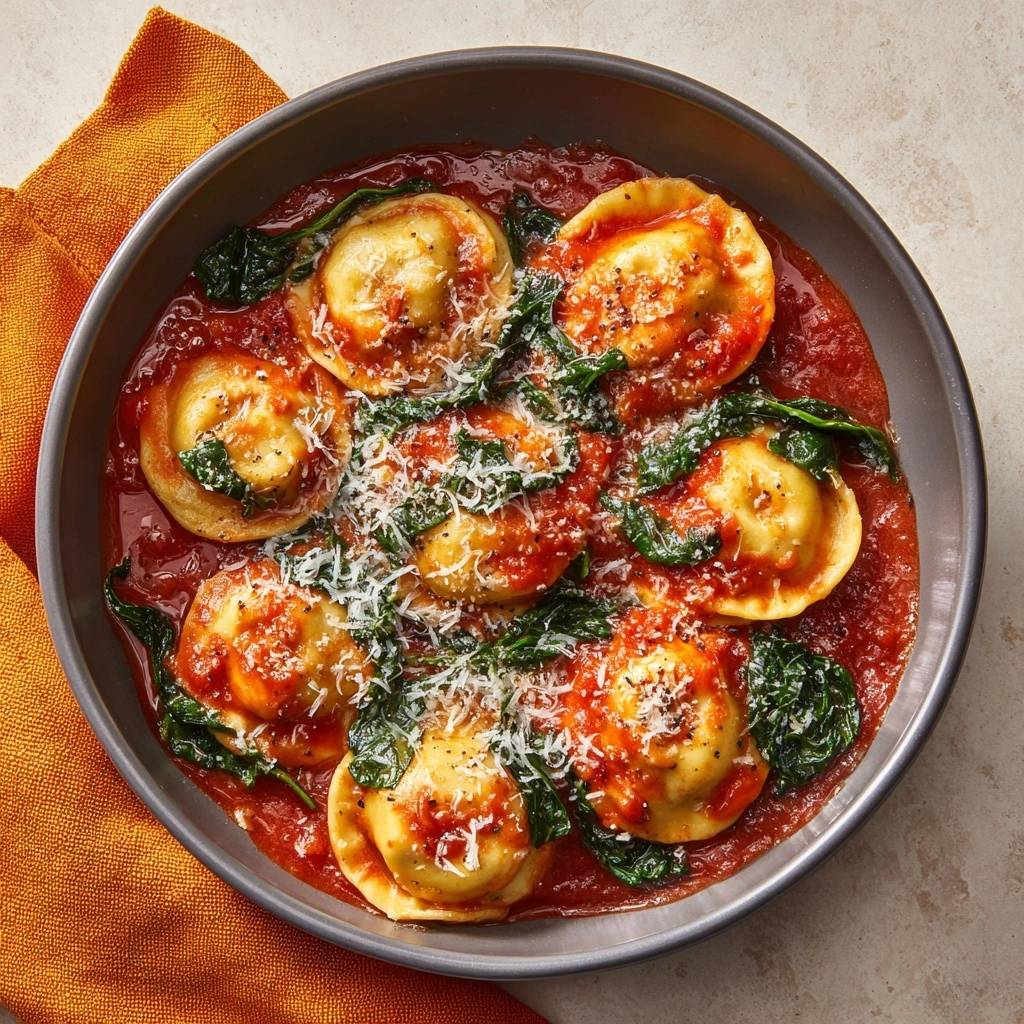
Now comes the “marriage.” Slide those dry ravioli into the skillet. Pour in your reserved 1/4 cup of starchy pasta water and half of your parmesan. Use a silicone spatula to gently fold the sauce over the pasta. Do not stir vigorously or you’ll break the ravioli. Within about 60 seconds, you’ll see the liquid transform from a watery red to a creamy, orange-tinted sauce that clings to every curve of the pasta. That’s the emulsion in action!
Troubleshooting Common Ravioli Mistakes
If your ravioli burst, your water was likely at too hard of a boil. Once the pasta goes in, turn the heat down to a gentle simmer. The bubbles should be small and soft, not violent. If your sauce still feels thin, you likely didn’t let the marinara reduce enough in Phase 2. You can fix this by simmering for an extra minute, but be careful not to overcook the pasta in the process.
Another common issue is clumping cheese. If you add the parmesan while the heat is on high, the proteins in the cheese can seize up into rubbery balls. Always turn the heat to low or even off before adding the cheese. The residual heat of the sauce is more than enough to melt the parmesan into a smooth coating.
Flavor Variations and Ingredient Swaps
If you want a bit of a kick, add a pinch of red pepper flakes to the olive oil at the same time as the garlic. This “blooms” the spice and spreads the heat evenly throughout the dish. For those who prefer heartier greens, you can swap the spinach for kale, but keep in mind that kale needs to simmer in the sauce for about 4-5 minutes to soften before you add the pasta.
What to Serve with Spinach and Cheese Ravioli Marinara
Because this dish is rich and cheesy, it pairs beautifully with something bright and acidic. A simple arugula salad with a lemon vinaigrette is my go-to. The peppery bite of the arugula cuts right through the creamy ricotta filling. Of course, a piece of crusty sourdough or garlic bread is essential for wiping up any leftover sauce—though if you’ve followed the emulsification steps, there won’t be much of a puddle left!
Make-Ahead Strategies and Storage Logistics
Ravioli is best eaten fresh, as the pasta continues to absorb moisture as it sits. However, if you have leftovers, store them in an airtight container in the fridge for up to three days. When reheating, don’t just microwave it on high, or the pasta will get rubbery. Instead, put it in a small pan with a tablespoon of water or broth. Cover it and heat on low; the steam will “reactivate” the sauce and keep the ravioli tender.
Expert Tips for Restaurant-Style Presentation
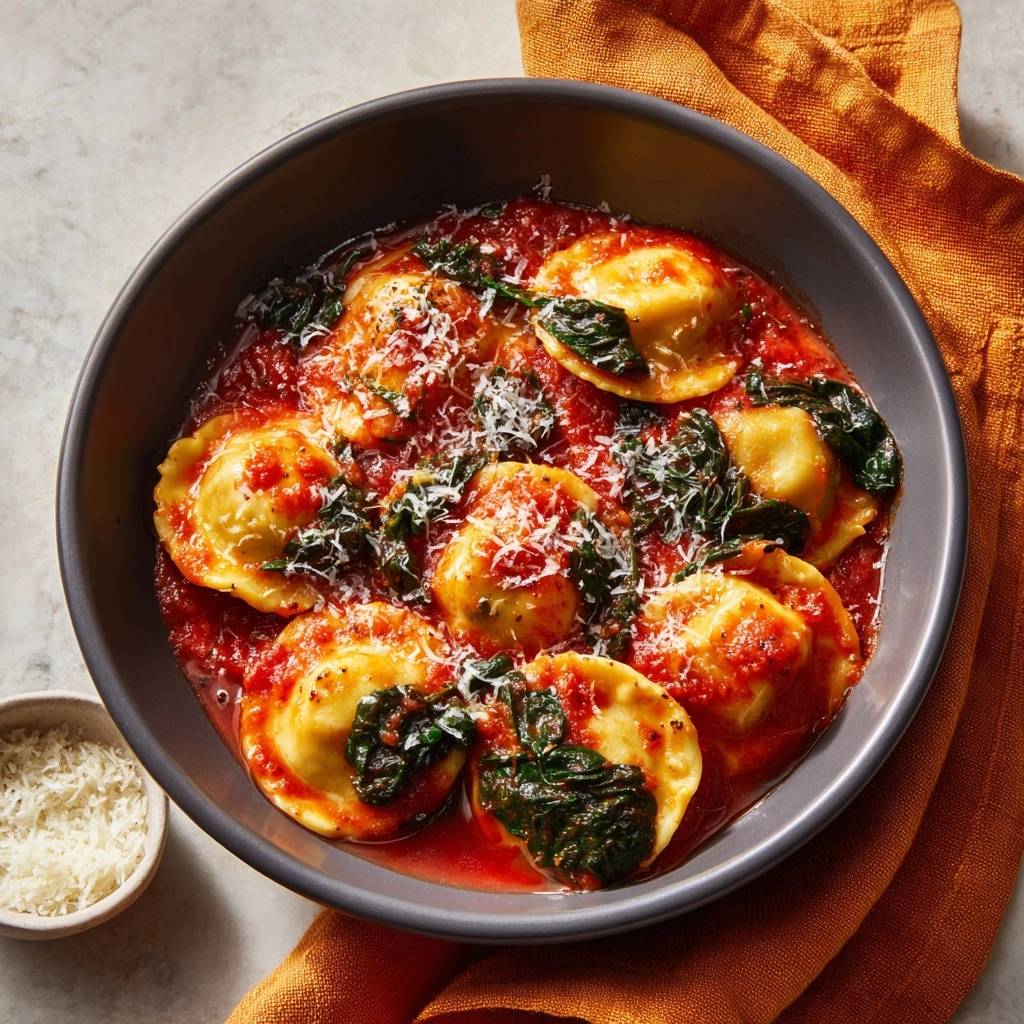
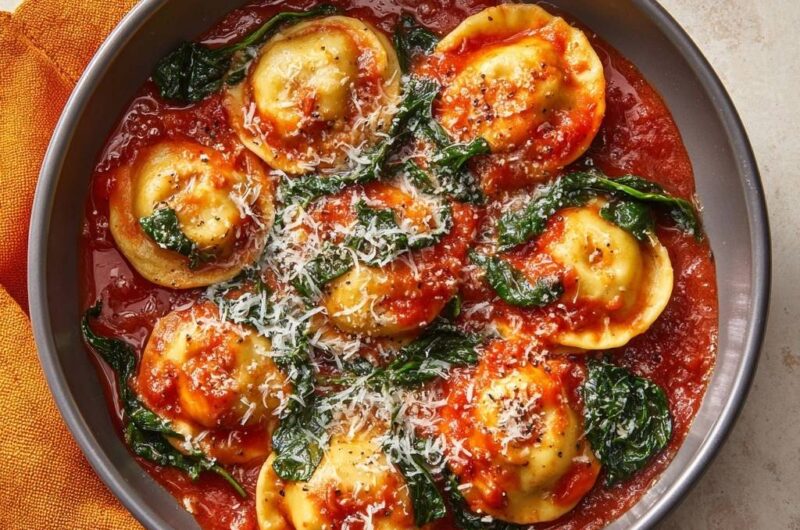
To make this look like it came from a bistro, use shallow bowls rather than deep ones. Arrange the ravioli in a single layer so you can see the beautiful shape of the pasta. Use your tongs to drape a few leaves of the wilted spinach over the top. Finish with a final sprinkle of parmesan and a very generous crack of black pepper. The black specks against the red sauce and white cheese make the colors pop.
The Importance of Residual Heat
One final pro tip: warm your bowls! If you put hot, emulsified pasta into a cold ceramic bowl, the sauce will thicken and seize up almost instantly. Run your bowls under hot water for a second and dry them off before plating. This keeps the sauce velvety and the cheese melty until the very last bite.
Frequently Asked Questions
Can I use frozen ravioli without thawing?
Yes, you absolutely can and should cook them from frozen. Thawing ravioli makes the dough sticky and prone to tearing. Just keep in mind that frozen ravioli will drop the temperature of your boiling water significantly. Wait for the water to return to a simmer before you start your timer, and you may need an extra minute of cook time compared to fresh pasta.
Why is my spinach releasing so much water?
Spinach is about 90% water. If you use too much spinach or don’t let the marinara reduce enough beforehand, the moisture from the greens will thin out your sauce. To prevent this, ensure your marinara has thickened significantly before adding the greens, and only cook the spinach until it has just wilted. This keeps the water locked inside the leaves rather than in your sauce.
What is the best substitute for Parmesan?
Pecorino Romano is the best alternative if you want a saltier, tangier kick. It melts similarly to Parmesan and works well for emulsification. Grana Padano is another excellent choice that is slightly milder and creamier. Avoid using mozzarella for the emulsion step, as it will become stringy and clump together rather than creating a smooth sauce.
For a similar cheesy bite, try these lacy parmesan crisps.
How do I prevent the garlic from burning?
Garlic burns very quickly because of its low moisture and high sugar content. The best way to prevent this is the “30-second rule.” Have your marinara sauce opened and ready to pour before the garlic even hits the oil. As soon as the garlic becomes fragrant and turns a pale golden color, pour in the sauce. The liquid will immediately drop the temperature of the oil and stop the garlic from browning further.
Can I add protein like chicken or shrimp?
You certainly can, but don’t cook them in the sauce with the pasta. Sear your chicken or shrimp in the skillet first, remove them, and then proceed with the garlic and sauce. Add the cooked protein back in at the very end when you are folding the ravioli into the sauce. This ensures the protein stays juicy and the pasta doesn’t get overcrowded and mushy.
Ravioli
Course: Main CourseCuisine: Italian-AmericanDifficulty: easy4
servings10
minutes15
minutes380
kcal25
MinutesA delicious pasta dish featuring cheese ravioli and fresh baby spinach tossed in a concentrated marinara sauce. The recipe focuses on proper drainage and emulsification to ensure the sauce clings perfectly to the pasta.
Ingredients
1 pound fresh or frozen cheese ravioli (round variety)
24 ounces high-quality marinara sauce
2 cups fresh baby spinach
1/2 cup freshly grated parmesan cheese
1 tablespoon olive oil
2 cloves garlic, minced
1/2 teaspoon cracked black pepper
1/4 cup reserved pasta water
Directions
- Bring a large pot of salted water to a boil. Cook the ravioli for 1 minute less than the package directions. This is the secret to preventing them from falling apart in the sauce.
- While the pasta cooks, heat olive oil in a large skillet over medium heat. Add the minced garlic and cook for 30 seconds until fragrant but not browned.
- Pour the marinara sauce into the skillet. Simmer for 5 minutes to reduce the moisture content. This step is vital to prevent a watery result.
- Before draining the pasta, scoop out 1/4 cup of the starchy pasta water and set it aside. Drain the ravioli thoroughly and let them sit in the colander for 30 seconds to ensure all excess water has evaporated.
- Add the fresh spinach to the simmering sauce and stir until just wilted.
- Gently fold the dry ravioli into the sauce. Add the reserved pasta water and half of the parmesan cheese. Stir gently over low heat for 1 minute. The starch in the water and the cheese will emulsify with the sauce, creating a thick, velvety coating that sticks to the pasta instead of pooling at the bottom of the bowl.
- Plate the ravioli by arranging them in a single layer in a shallow bowl, ensuring the spinach is draped over the pasta as shown in the image. Top immediately with the remaining parmesan cheese and a generous dusting of cracked black pepper.
Notes
- The secret to preventing a watery sauce is to simmer the marinara to reduce moisture and to let the cooked ravioli sit in the colander for 30 seconds to ensure all excess water has evaporated before mixing.