Nothing ruins a loaded potato faster than a soft, leathery skin and a gummy interior. Most people wrap their potatoes in foil, which actually steams the skin and traps moisture inside. This recipe uses a high-heat salt-rub method to pull moisture out of the skin for a shattering crunch, while keeping the inside light and fluffy.
Paired with tender, seared steak bites and a velvety, spiced cheese sauce, this is the ultimate comfort meal. You’ll find that the contrast between the salty, crisp exterior and the molten queso creates a sensory experience that standard baked potatoes simply can’t match.
For another take on loaded potato goodness, check out these loaded taco baked potatoes.
The secret to this dish lies in the internal temperature of the potato. While most home cooks guess based on time, the pros know that a potato is only truly fluffy when it hits 205°F. This guide dives deep into the mechanics of the perfect spud to ensure you never serve a soggy potato again.
The Science of the Perfect Russet Potato
When you’re making Steak and Queso Loaded Baked Potatoes, the Russet is your only real option. These potatoes are high in starch, specifically amylose, which allows the cells to separate easily when cooked. This separation is what creates that “fluffy” texture we crave.
Waxy potatoes like Red Bliss or Yukon Gold have more amylopectin, which makes them hold their shape and stay dense. While great for potato salad, they’ll turn gummy under the weight of steak and queso. The Russet’s thick skin also acts as a sturdy vessel for the heavy toppings.
As the potato heats up, the starch granules swell and eventually burst. In a dry-heat environment, the moisture evaporates through the skin, leaving behind a light, airy structure. If you trap that moisture, the starch granules turn into a paste, resulting in a heavy, wet interior.
Why Foil is the Enemy of Crispness
Wrapping a potato in foil is essentially steaming it in its own juices. This process softens the skin until it becomes chewy and tough rather than crisp. It also prevents the salt from drawing out surface moisture, which is the key to a “shattering” crust.
Baking them “naked” allows hot air to circulate 360 degrees around the potato. This constant airflow dries out the skin and creates a toasted, nutty flavor. You’re looking for a roasting effect, not a boiling effect, to get that restaurant-quality finish.
Furthermore, foil can lead to an overcooked, dark ring just under the skin. By letting the potato breathe in the oven, you ensure the heat penetrates evenly. The result is a uniform, snowy-white interior that’s ready to soak up all that delicious queso.
Essential Components for Steak and Queso Loaded Baked Potatoes
Quality ingredients make a massive difference when the recipe is this focused. For the crust, use coarse sea salt rather than fine table salt. The larger grains provide a better crunch and don’t dissolve instantly into the oil, creating a beautiful textured finish.
The choice of oil is equally important for the high-heat method. You need a high-smoke-point oil like vegetable or grapeseed oil. Avoid extra virgin olive oil here, as it can smoke and turn bitter at 425°F, ruining the delicate flavor of the potato skin.
Freshness matters for the garnish too. Flat-leaf parsley adds a bright, grassy note that cuts through the richness of the beef and cheese. Don’t skip the smoked paprika; it provides a subtle wood-fired aroma that ties the steak and queso together perfectly.
For a different flavor profile, swap the parsley for fresh cilantro. This gives the dish a more South American flair, and you might also enjoy taco loaded baked potatoes for a similar vibe.
Selecting the Right Cut of Beef
For the best steak bites, I recommend using Ribeye or Sirloin. Ribeye offers incredible fat marbling, which means every bite will be juicy and rich. However, a good Top Sirloin is a fantastic, leaner alternative that still stays tender if you don’t overcook it.
Avoid leaner, tougher cuts like Round or Chuck for this specific application. These cuts require slow braising to become tender. Since we are searing the meat quickly over high heat, you need a cut that is naturally tender and can handle a fast cook time.
When you cut your steak, aim for uniform 1/2 inch cubes. This size ensures the meat cooks through quickly while developing a deep, caramelized crust. If the pieces are too small, they’ll overcook before they brown; if they’re too large, they’ll be awkward to eat with the potato.
The Anatomy of a Velvety Queso Blanco
A thick queso blanco is the ideal partner for steak because it has “cling.” You want a sauce that coats the meat and stays on top of the potato rather than sinking straight to the bottom. A high-quality white American or Monterey Jack base works best for that smooth, melt-in-your-mouth feel.
Smoked paprika is the secret weapon in the sauce. It adds a beautiful golden hue and a hint of earthiness that mimics the flavor of a charcoal grill. It transforms a simple cheese sauce into something that feels much more complex and sophisticated.
Keep your queso on low heat while the potatoes finish. If the sauce gets too hot, it can break and become oily. If it gets too cold, it will thicken into a clump. A gentle, consistent warmth keeps it pourable and velvety for the final assembly.
Preparing the Potatoes for Maximum Crunch
Start by scrubbing your potatoes thoroughly to remove any dirt, then dry them like your life depends on it. Any water left on the skin will turn to steam in the oven, which is the ultimate enemy of a crispy crust. Use a clean kitchen towel or paper towels to get them bone-dry.
Once dry, poke each potato 5 to 6 times with a fork. This isn’t just a tradition; it’s a safety measure. These holes allow steam to escape from the center of the potato. Without them, the internal pressure can build up, leading to a “potato explosion” in your oven.
After piercing, rub the oil into the skin with your hands, ensuring every nook and cranny is coated. Roll the oiled potatoes in the coarse sea salt. The oil acts as a glue for the salt, and together they work to dehydrate the skin during the long bake.
Step-by-Step: The High-Heat Salt-Rub Method
Preheat your oven to 425°F. This high temperature is essential for the moisture-evaporation process. Place the potatoes directly on the center oven rack. This allows the hot air to hit the bottom of the potato just as much as the top, ensuring an even crunch.
To keep your oven clean, place a baking sheet on the rack below the potatoes to catch any oil drips. Bake for 50 to 60 minutes. You’ll know they’re getting close when the kitchen starts to smell like toasted starch and the skins look slightly puffed and dark.
The “squeeze test” is a great indicator, but an instant-read thermometer is better. Aim for an internal temperature between 205°F and 210°F. At this range, the starch has fully hydrated and the interior will be at its absolute fluffiest. If you pull them too early, they’ll be dense and waxy.
Technique: Searing Steak Bites Without Overcooking
The Maillard Reaction is what gives seared meat its incredible flavor. To achieve this, you must pat the steak cubes very dry with paper towels before seasoning. Moisture on the surface of the meat will cause it to steam rather than sear, resulting in grey, rubbery steak.
Heat a heavy cast-iron skillet over high heat with a tablespoon of neutral oil. Wait until the oil is shimmering and just starting to smoke. Add the steak bites in a single layer, making sure they aren’t touching. If you crowd the pan, the temperature will drop and the meat will release juices, ruining the sear.
Let the steak sit undisturbed for 2 minutes. Resist the urge to stir! This patience allows that dark brown crust to form. Finally, add a knob of butter and toss the steak for 30 seconds. The butter adds a rich finish and helps brown the meat further without burning the milk solids.
Assembling the Steak and Queso Loaded Baked Potatoes
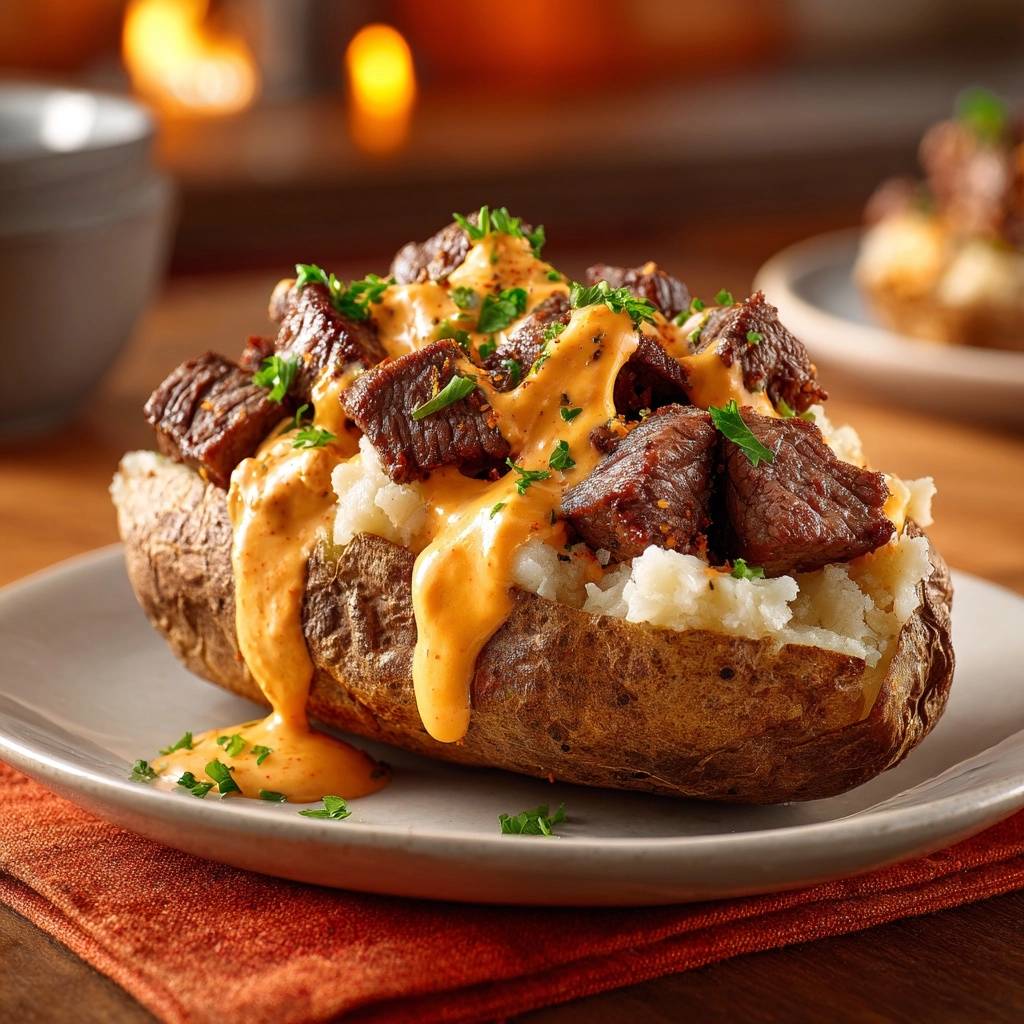
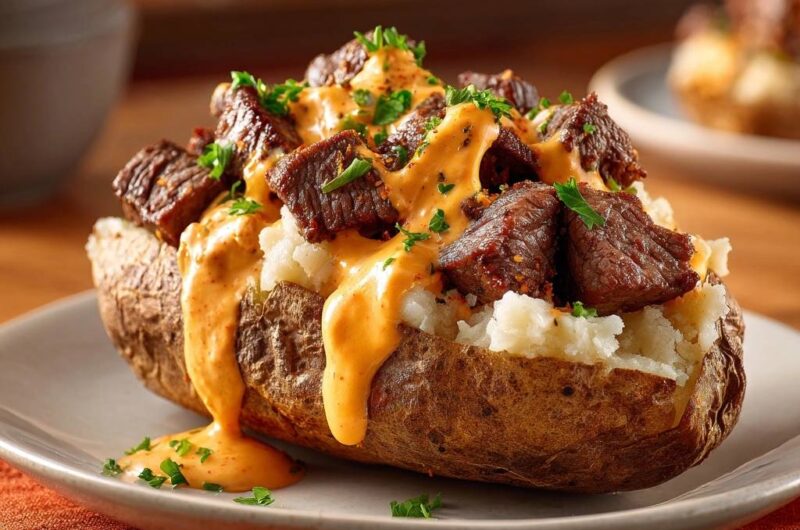
As soon as the potatoes come out of the oven, slice them lengthwise. Use a fork to fluff the interior flesh vigorously. You aren’t looking to mash it; you want to break up the structure to create “nooks and crannies.” This creates more surface area for the queso to settle into.
Pile the seared steak bites high onto the fluffed potato bed. Don’t be shy with the portions. The heat from the potato will keep the steak warm as you prepare to drizzle the cheese. The goal is a mountain of steak that looks as good as it tastes.
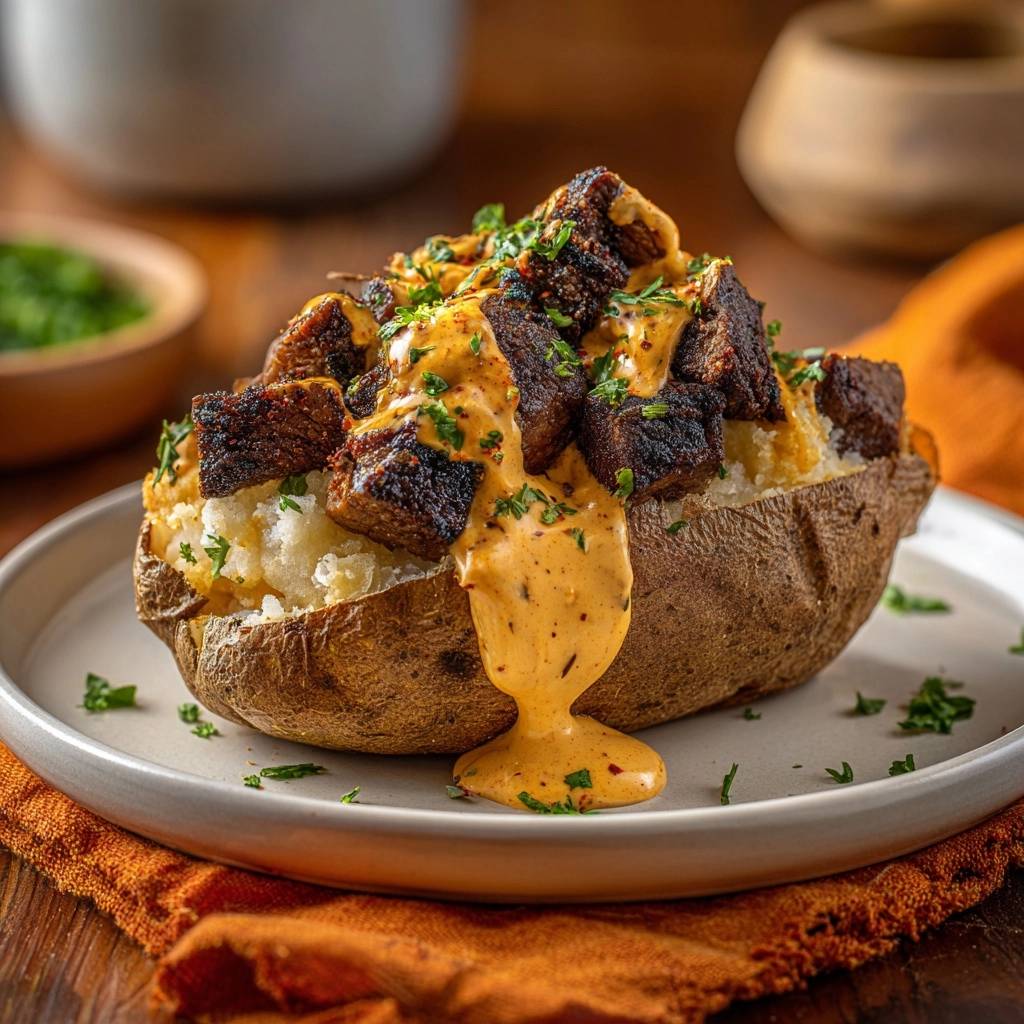
Drizzle the warm, spiced queso generously over the steak so it cascades down the sides of the potato. The orange-gold sauce against the dark steak and white potato is visually stunning. Finish with a heavy sprinkle of fresh parsley and a final dusting of smoked paprika for a professional look.
Avoiding Common Texture Mistakes
If your steak ends up chewy, you likely overcrowded the pan or didn’t get it hot enough. The goal is a fast, hard sear that leaves the center tender. If the meat is grey, it’s because it boiled in its own moisture. Always work in batches if your skillet isn’t large enough.
If the potato skin is still soft, check your oven temperature with a separate thermometer. Many ovens run cool. Also, ensure you didn’t use too much oil; a light coating is all you need. Too much oil can actually fry the skin in a way that makes it heavy rather than crisp.
If your queso sauce becomes grainy, it usually means the heat was too high or you used pre-shredded cheese with anti-caking agents. To fix a broken sauce, try whisking in a splash of warm milk very slowly over low heat. This can often help re-emulsify the fats and proteins.
Flavor Variations and Ingredient Swaps
While this recipe is perfect as is, you can easily customize the flavors. If you want more acidity to cut through the rich cheese, add a handful of pickled jalapeños or a squeeze of fresh lime juice. The tanginess balances the heavy fats of the steak and queso beautifully.
For a different flavor profile, swap the parsley for fresh cilantro. This gives the dish a more Southwestern vibe. You can also add a dollop of cool sour cream or some sliced green onions to add layers of temperature and texture to every bite.
If you prefer a sharper flavor, try a sharp cheddar sauce instead of queso blanco. This creates a “pub-style” potato that feels very traditional. Just ensure the sauce remains thick enough to coat the steak bites without running off the plate.
What to Serve with Loaded Potatoes
Since these potatoes are quite rich and calorie-dense, I recommend pairing them with something light and acidic. A simple arugula salad with a lemon vinaigrette is the perfect side. The peppery greens and tart dressing cleanse the palate between bites of cheesy steak.
Charred broccolini or roasted asparagus also make excellent companions. The slight bitterness of these green vegetables provides a nice contrast to the sweet, starchy potato. Keep the sides simple so the loaded potato remains the star of the show.
If you want to stay within the comfort food theme but keep it balanced, a cold cucumber and tomato salad works wonders. The crunch of the fresh vegetables and the zing of vinegar provide a refreshing break from the warm, velvety textures of the main dish.
More Potato Ideas
If you enjoyed the loaded baked potatoes, you might like these other potato dishes.
- For a different take on potatoes, explore these creamy mashed potatoes, perfect for a hearty meal.
- Consider making these crispy potatoes with umami dust for a satisfying crunch.
Make-Ahead Strategies and Reheating Tips
The microwave is the enemy of the crispy potato skin. If you have leftovers, the best way to reheat them is in an air fryer or a 400°F oven. This will help restore the crunch to the skin while warming the interior. About 10 minutes in the oven should do the trick.
You can prep the steak bites a few hours in advance by cutting and seasoning them, but don’t sear them until you’re ready to eat. Seared steak loses its tenderness quickly when reheated. For the best results, cook the steak fresh while the potatoes are in their final minutes of baking.
The queso can be made ahead and stored in the fridge for up to two days. Reheat it slowly on the stovetop over low heat, adding a teaspoon of milk if it has thickened too much. Constant stirring will ensure it stays smooth and doesn’t scorch on the bottom of the pan.
Expert Tips for Restaurant-Quality Presentation
Presentation is all about height and contrast. When you fluff the potato, try to keep the skin intact so it acts as a tall bowl. Piling the steak high in the center makes the dish look abundant and appetizing. It’s all about that “wow” factor when it hits the table.
When drizzling the queso, start from the center and let it naturally fall over the sides. This “cascade” effect is much more appealing than simply plopping a spoonful on top. It ensures every piece of steak gets a bit of cheese without drowning the crispy skin.
For the final garnish, use a fine-mesh sieve to dust the smoked paprika. This prevents large clumps of spice from landing in one spot and gives the dish a delicate, professional finish. The bright green parsley should be the very last thing added to keep it looking vibrant and fresh.
Troubleshooting Your Loaded Potatoes
Why is my steak grey instead of brown?
This usually happens because the pan wasn’t hot enough or the meat was too wet. Ensure your skillet is lightly smoking before adding the steak. Also, don’t crowd the pan; if the cubes are too close together, they will steam instead of sear. Work in two batches if necessary to maintain high heat.
Why is the potato skin salty but not crunchy?
If the skin is salty but soft, you likely didn’t use enough heat or the potato was still damp when you oiled it. Make sure your oven is fully preheated to 425°F. Also, ensure you aren’t using foil, as that traps moisture and prevents the skin from ever reaching peak crispness.
How do I fix a grainy cheese sauce?
Graininess in cheese sauce is often caused by overheating, which causes the proteins to clump. To fix it, remove the sauce from the heat immediately and whisk in a small amount of room-temperature milk or a squeeze of lemon juice. The acid or extra liquid can sometimes help smooth out the emulsion.
What if my potatoes are different sizes?
If your potatoes vary in size, they will finish at different times. Start checking the smaller ones at the 45-minute mark. Use an instant-read thermometer to ensure each one hits that 205°F sweet spot. You can pull the smaller ones out and keep them warm in a clean kitchen towel while the larger ones finish.
Can I use a different type of steak?
Yes, you can use Flank steak or Skirt steak, but you must be very careful with the cook time. These cuts are thinner and can become tough if overcooked. Slice them against the grain into small bites and sear them very quickly over maximum heat to keep them juicy.
How do I store leftovers?
Store the steak, queso, and potatoes in separate airtight containers in the refrigerator for up to three days. Do not freeze the potatoes, as the cellular structure will break down and they will become watery and grainy upon thawing. Reheat the components separately to maintain their individual textures.
Steak and Queso Loaded Baked Potatoes
Course: Main CourseCuisine: AmericanDifficulty: medium4
servings10
minutes1
hour680
kcal70
MinutesA high-heat salt-rub method ensures a shattering crunch on the potato skin while keeping the inside light. Topped with seared steak bites and a velvety spiced cheese sauce.
Ingredients
4 large Russet potatoes, scrubbed and dried thoroughly
2 tablespoons vegetable oil (high smoke point)
1 tablespoon coarse sea salt
1 pound sirloin or ribeye steak, cut into 1/2 inch cubes
1 tablespoon unsalted butter
1 tablespoon neutral oil (for searing)
1 teaspoon garlic powder
1/2 teaspoon cracked black pepper
1/2 teaspoon kosher salt (for steak)
1 cup thick queso blanco or cheddar cheese sauce
1/2 teaspoon smoked paprika (plus extra for dusting)
2 tablespoons fresh parsley, finely chopped
Directions
- Preheat your oven to 425°F (218°C). The high temperature is essential for the moisture-evaporation process that prevents sogginess.
- Poke each potato 5 to 6 times with a fork to allow steam to escape. Rub the skins generously with 2 tablespoons of oil and coat them thoroughly in the coarse sea salt.
- Place the potatoes directly on the center oven rack. Place a baking sheet on the rack below to catch any oil drips. Do not use foil. Baking them “naked” allows hot air to circulate 360 degrees, drying the skin into a crisp shell while keeping the interior light.
- Bake for 50 to 60 minutes. The potatoes are done when the skin is noticeably crisp and the internal temperature reaches 205°F-210°F, or when they yield easily to a squeeze.
- While potatoes bake, prepare the steak. Pat the steak cubes very dry with paper towels. Season with garlic powder, black pepper, and kosher salt.
- Heat a heavy cast-iron skillet over high heat with 1 tablespoon of neutral oil. Once the pan is smoking slightly, add the steak bites in a single layer. Do not crowd the pan; work in batches if necessary.
- Sear the steak for 2 minutes without moving them to develop a dark brown crust. Add the butter to the pan, toss the steak to coat for 30 seconds, and remove from heat immediately to keep the centers tender.
- Warm the queso sauce in a small saucepan over low heat. Stir in the smoked paprika until the sauce is a rich, vibrant orange-gold.
- Slice the hot potatoes lengthwise and use a fork to fluff the interior flesh vigorously, creating a bed for the toppings.
- Pile the seared steak bites high onto the fluffed potato. Drizzle the warm spiced queso generously over the steak so it cascades down the sides. Garnish with a heavy sprinkle of fresh parsley and a final pinch of smoked paprika. Serve immediately while the skin is at peak crunch.
Notes
- Baking potatoes naked without foil allows hot air to circulate and prevents soggy skin. Ensure the internal temperature reaches 205 to 210 degrees Fahrenheit for the fluffiest texture.