Nothing ruins a beautiful crescent ring faster than a greasy, doughy bottom that falls apart when you pick it up. You want that immediate, audible crunch when your teeth hit the flaky pastry, followed by the rich, gooey center of savory sausage and melted cheese. Most people struggle with a soggy base because they let moisture and grease win the battle against the dough.
The secret to a perfectly sturdy, golden base is all about temperature control and aggressive drainage. By pre-cooking the filling and using a high-heat initial blast, you ensure the pastry sets before the cheese can soak into the dough. This method guarantees a sturdy, flaky crust that holds up to every bite, making it the ultimate centerpiece for your next brunch or game day spread.
I’ve found that the real trick lies in the resting period. While it’s tempting to slice into that bubbling ring immediately, giving it five minutes on the hot pan allows the bottom crust to fully firm up. This short wait transforms the texture from soft and fragile to crisp and professional. It’s the difference between a messy plate and a perfect, hand-held slice.
Essential Components for the Perfect Cheesy Sausage Crescent Ring
Every ingredient in this ring serves a specific structural purpose. The refrigerated crescent dough provides those iconic buttery layers, but it’s sensitive to heat. You must keep the dough in the refrigerator until the exact moment you’re ready to unroll it. If the dough gets too warm on the counter, the fat melts prematurely, and you’ll lose that beautiful lamination.
Sharp cheddar cheese is the best choice here because it packs a punchy flavor that stands up to the heavy sausage. Mild cheddar often disappears into the dough, while sharp cheddar maintains its personality. However, cheese releases oil as it melts, which is why we use cream cheese as a structural binder. The softened cream cheese holds the sausage crumbles together, preventing them from tumbling out when you take a bite.
Don’t overlook the garlic and onion powders. While they seem like small additions, they season the dough from the inside out. Since the crescent dough is naturally sweet, these savory spices bridge the gap between the pastry and the meat. Using high-quality, fresh refrigerated dough ensures the triangles have enough elasticity to stretch over the filling without tearing.

Selecting the Right Sausage Blend
The flavor of your ring starts with the sausage. A classic breakfast sausage with notes of sage and black pepper provides that nostalgic, cozy flavor profile. If you prefer a bit of heat, a spicy variety with red pepper flakes adds a great contrast to the buttery dough. Look for a sausage with a balanced lean-to-fat ratio; too much fat will overwhelm the pastry, even with proper draining.
The Role of the Egg Wash Barrier
An egg wash is more than just a cosmetic touch for a shiny finish. It triggers the Maillard reaction, which is the chemical process that creates those deep, savory flavors on the crust. More importantly, the egg proteins create a hydrophobic barrier. This thin film prevents steam from the filling from softening the exterior, ensuring your ring stays crisp even as it cools.
The Science of Preventing a Soggy Pastry Base
Moisture is the absolute enemy of flaky pastry. When you bake crescent dough, the water in the butter layers turns to steam, pushing the layers apart to create flakes. If the sausage is greasy or the cheese is too watery, that liquid soaks into the raw dough before it can rise. This results in a dense, gummy layer that never fully cooks through.
To prevent this, you must use the “Drain and Pat” method. After browning your sausage, don’t just pour it into a bowl. Transfer it to a plate lined with three layers of paper towels. Use another towel to pat the top of the meat firmly. You’ll be surprised at how much hidden grease stays behind. Even a single teaspoon of residual oil can compromise the structural integrity of the ring’s floor.
Thermodynamics also play a role in your success. By preheating the oven to 375°F, you hit the dough with enough heat to set the outer structure quickly. This “seals” the bottom of the pastry before the fats in the filling have a chance to liquefy and migrate into the dough. Using parchment paper also helps by allowing heat to circulate under the ring without the dough sticking to the metal pan.
Step-by-Step: Assembling the Cheesy Sausage Crescent Ring
Assembling this dish is a bit like a craft project. You want to work efficiently so the dough stays cold and easy to handle. Start by clearing a large workspace so you can lay out the triangles in a wide, even circle. If your kitchen is particularly warm, you might even want to chill your baking sheet in the fridge for a few minutes before you begin.
Phase 1: Rendering and Degreasing the Protein
Cook the sausage over medium-high heat, breaking it into small, uniform crumbles. You’re looking for a deep brown color and a bit of “fond” (those tasty brown bits) on the bottom of the pan. Once it’s cooked, move it to the paper towels immediately. Let it sit for at least two minutes to ensure all the excess fat is absorbed before mixing it with the cheeses.
Phase 2: Creating the Radial Dough Pattern
Lay your parchment paper down first. Arrange the crescent triangles in a circle, overlapping the wide ends. You should have a clear 5-inch hole in the center. It will look like a sun with long rays pointing outward. Press down firmly on the overlapping wide ends to create a continuous, sturdy floor that can support the weight of the sausage mixture.
Phase 3: The Tuck and Fold Technique
Spoon the filling evenly onto the wide part of the ring. When you pull the points over the top, don’t pull too hard or the dough will thin out and break. Tuck the tips under the bottom layer in the center hole. You’ll notice gaps where the filling shows through. This is intentional! These gaps act as vents, allowing steam to escape so the inside doesn’t get mushy.
Critical Temperature Control and Timing
The 375°F temperature is the sweet spot for this recipe. If the oven is too cool, the dough will soak up the grease before it crisps. If it’s too hot, the thin points of the triangles will burn before the thick center is cooked. Watch for a deep, golden-brown color across the entire surface. If the tips are browning too fast, you can loosely tent them with foil for the last five minutes.
The five-minute rest after baking is non-negotiable. When the ring first comes out, the cheese is in a liquid state. As it sits on the hot pan, the cheese begins to set and the crust finishes drying out. This brief pause ensures that when you slice into it, the filling stays put instead of oozing out all over the serving platter.
Equipment Essentials for Even Heat Distribution
A heavy baking sheet or a pizza stone provides the best results. These materials hold heat well, which helps cook the bottom of the ring as effectively as the top. If you use a very thin, cheap cookie sheet, you might find the bottom stays pale while the top browns. Parchment paper is also essential because it prevents sticking and makes it easy to slide the finished ring onto a cutting board.
Flavor Variations and Savory Swaps
Once you master the base technique, you can experiment with different flavors. For a Mediterranean twist, try using cooked ground lamb or chicken sausage mixed with well-drained chopped spinach and feta cheese. Just make sure to squeeze every drop of water out of the spinach first. A Tex-Mex version is also fantastic; use beef chorizo, pepper jack cheese, and a few diced jalapeños for a spicy kick.
For a similar crisp crust, check out this garden veggie tart.
If you want a lighter version, ground turkey sausage works well, though you may need to add a touch more garlic powder to boost the flavor. Regardless of the swap, keep the ratio of meat to cheese the same. The cream cheese is the “glue” that makes this recipe work, so don’t skip it even if you change the other ingredients.
Make-Ahead Strategies and Storage Logistics
You can save time by browning and seasoning the sausage up to 24 hours in advance. Store the cooked, drained meat in an airtight container in the fridge. However, do not assemble the ring until you are ready to bake it. If the raw dough sits with the filling for too long, it will become soggy and won’t rise properly in the oven.
Leftovers store beautifully in the refrigerator for up to three days. To reheat, avoid the microwave, as it will make the pastry chewy and tough. Instead, pop a slice into the air fryer at 350°F for 3-4 minutes or in a toaster oven. This restores the crunch of the pastry and melts the cheese perfectly without drying out the meat.
Troubleshooting Common Crescent Ring Issues
If your dough tears during assembly, don’t panic. Just pinch the edges back together; the egg wash will help seal the “wound” as it bakes. If you find the filling is leaking out the sides, you likely didn’t overlap the wide ends of the triangles enough. Make sure those bases are firmly pressed together to create a solid foundation before adding the meat.
If the center of your ring feels doughy while the tips are dark, your oven might have hot spots. Try rotating the pan halfway through the baking time. For a ring that feels too greasy after baking, it usually means the sausage wasn’t drained well enough. You can gently blot the finished ring with a clean paper towel to remove surface oil, but the best fix is more aggressive draining next time.
Expert Tips for a Professional Presentation
For a bakery-style finish, use a pastry brush to apply the egg wash evenly into every nook and cranny. You can sprinkle a few sesame seeds or a pinch of dried parsley over the top for extra visual appeal. When it’s time to serve, use a sharp serrated bread knife. The “sawing” motion of a serrated blade cuts through the flaky layers without squashing the airy pastry.
Pairing Suggestions for a Complete Meal
Since this ring is quite rich and savory, it pairs best with something bright and acidic. A simple arugula salad tossed with lemon juice and olive oil cuts through the fat of the sausage and cheese perfectly. You could also serve it alongside roasted tomatoes or a bowl of fresh fruit to balance the plate. For a dipping sauce, a little honey mustard or a spicy maple syrup can add a surprising and delicious dimension.
How do I store leftovers and can I freeze this?
Store any leftover slices in an airtight container in the refrigerator for up to 3 days. While you can freeze the baked ring, the texture of the crescent dough may become slightly softer upon thawing. If you do freeze it, wrap individual slices tightly in foil and place them in a freezer bag for up to a month. Reheat directly from frozen in a 350°F oven until heated through to help maintain the crust’s integrity.
Why is the bottom of my crescent ring soggy?
A soggy bottom is almost always caused by excess moisture or grease. If the sausage isn’t drained thoroughly on paper towels, the fat will soak into the dough. Additionally, if the oven isn’t fully preheated, the dough won’t “set” fast enough to create a barrier against the melting cheese. Always use parchment paper and ensure your sausage is as dry as possible before mixing it with the cream cheese.
Can I use a different type of cheese or meat?
Yes, you can substitute the sharp cheddar for Monterey Jack, Swiss, or even Pepper Jack for a kick. For the meat, ground turkey sausage or even finely chopped cooked chicken works well. The most important rule is to keep the moisture content low. If you use a wetter ingredient like sautéed mushrooms or peppers, you must cook them until all their liquid has evaporated before adding them to the filling.
What if I don’t have cream cheese?
The cream cheese acts as a binder to keep the filling from falling out. If you don’t have it, you can use a small amount of thick Greek yogurt or even a bit of extra shredded cheese mixed with a tablespoon of flour. However, cream cheese provides the best creamy texture and structural support. Without a binder, the sausage crumbles will likely spill out when the ring is sliced.
How do I prevent the tips of the dough from burning?
The thin points of the crescent triangles cook much faster than the thick, filled center. If you notice them getting too dark before the 18-minute mark, loosely cover the ring with a piece of aluminum foil. This reflects some of the heat and allows the center to finish baking without carbonizing the tips. Also, ensure your oven rack is in the center position for the most even heat distribution.

Cheesy Sausage Ring
Course: Main CourseCuisine: AmericanDifficulty: easy8
servings15
minutes20
minutes340
kcal35
MinutesThis Cheesy Sausage Crescent Ring uses a specific drainage and high-heat method to ensure a sturdy, flaky crust. Filled with breakfast sausage, cream cheese, and sharp cheddar, it is a reliable crowd-pleaser for breakfast or dinner.
Ingredients
1 pound ground breakfast sausage
2 cans (8 ounces each) refrigerated crescent roll dough
2 cups shredded sharp cheddar cheese
4 ounces cream cheese, softened (to bind the filling)
1/2 teaspoon garlic powder
1/4 teaspoon onion powder
1 egg, beaten (for egg wash)
Directions
- Preheat your oven to 375 degrees F. Line a large round baking sheet or pizza stone with parchment paper.
- Brown the sausage in a large skillet over medium-high heat until fully cooked. This is the most important step: drain the cooked sausage thoroughly on a plate lined with paper towels. Removing every drop of excess grease is the only way to prevent a soggy bottom.
- In a bowl, mix the drained sausage with the softened cream cheese, garlic powder, and onion powder until well combined. Fold in 1.5 cups of the shredded cheddar cheese.
- Unroll the crescent dough and separate into triangles. Arrange the triangles in a circle on the parchment paper with the wide ends overlapping in the center and the points facing outward, resembling a sun.
- Spoon the sausage mixture onto the wide part of the triangles, forming a continuous ring. Sprinkle the remaining 1/2 cup of cheese over the top of the meat.
- Bring the points of the triangles up and over the filling, tucking the tips under the bottom layer of dough in the center. The filling will still be visible between the dough strips.
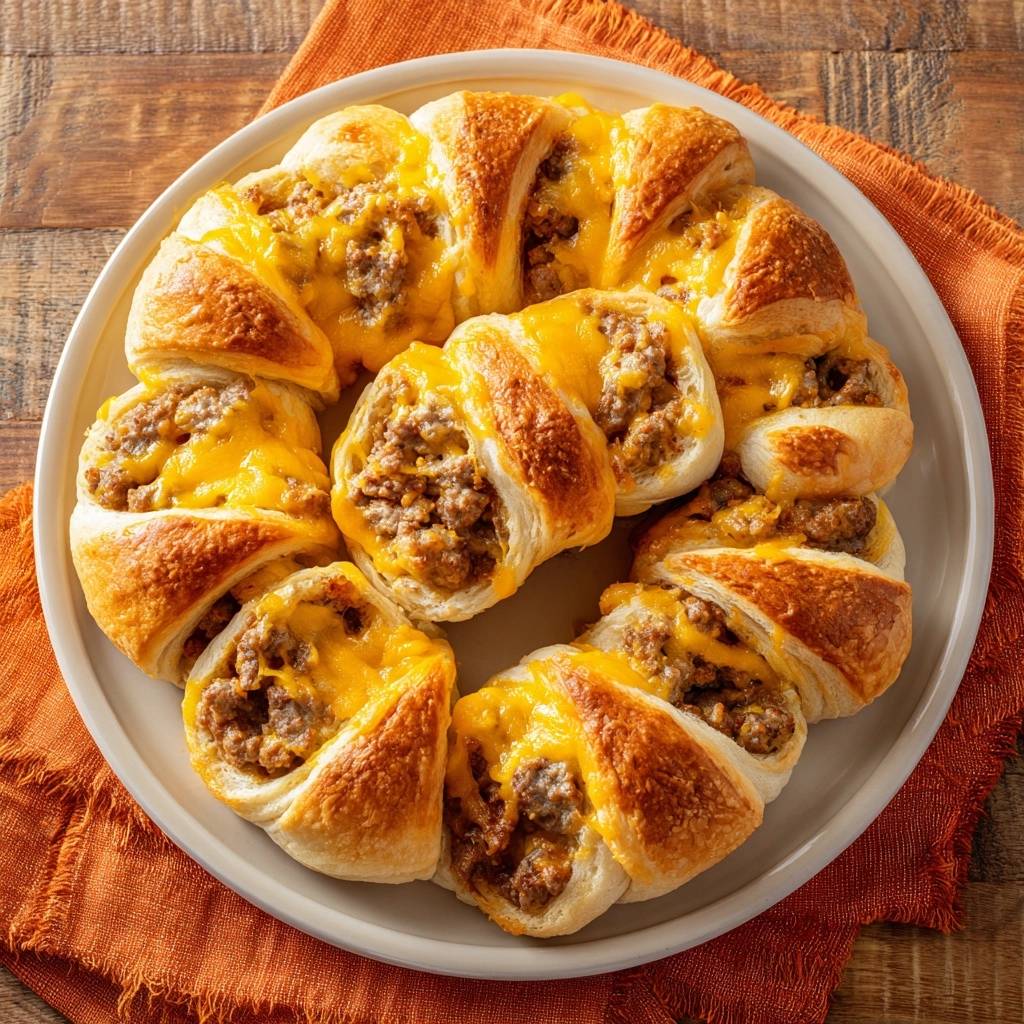
- Brush the dough lightly with the beaten egg wash. This creates a moisture barrier and helps the pastry achieve the deep golden-brown color seen in the image.
- Bake for 18 to 22 minutes or until the crust is a deep golden brown and the cheese is bubbling. Let it rest for 5 minutes on the hot pan before slicing to allow the bottom crust to fully firm up.
Notes
- To prevent a soggy bottom, ensure the sausage is drained thoroughly on paper towels and let the ring rest for 5 minutes after baking to allow the crust to firm up.