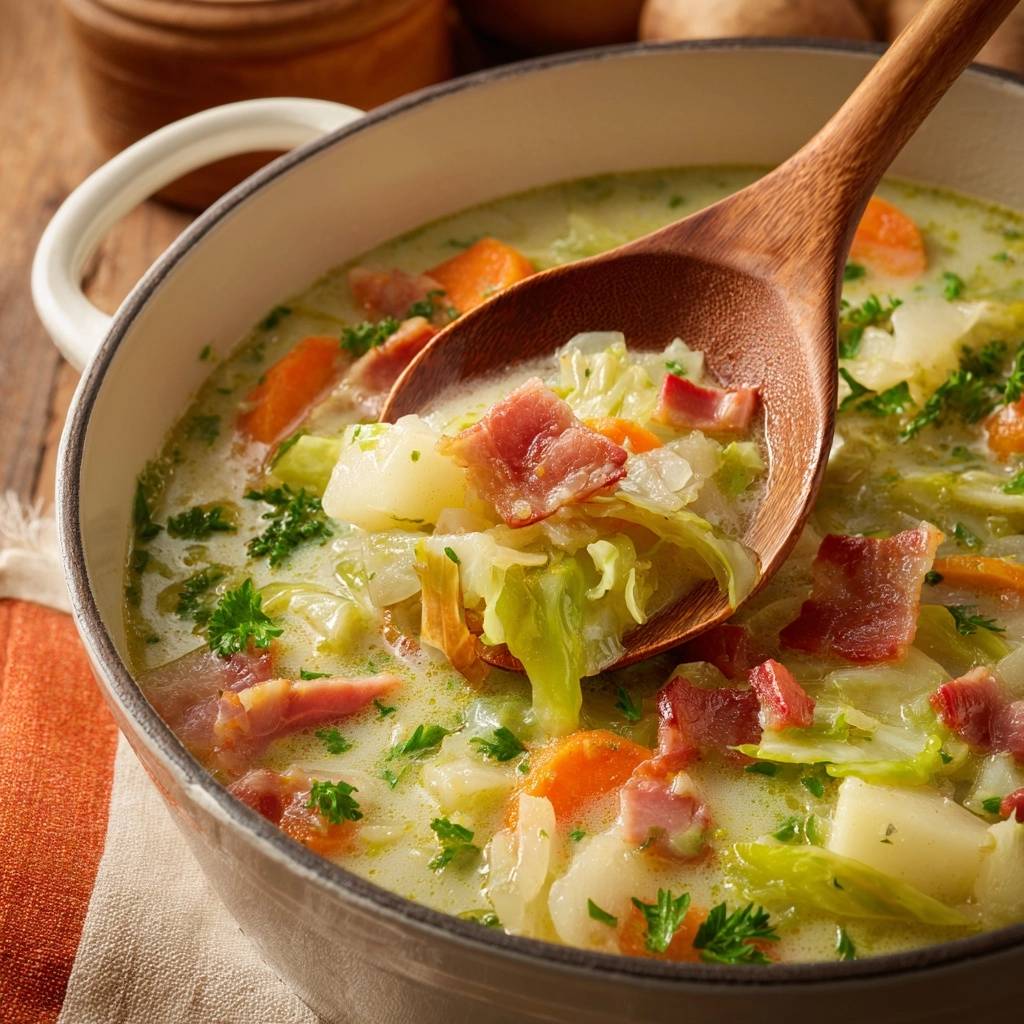
There is nothing quite like the rustic charm of a steaming bowl of soup to anchor a chilly evening. However, many home cooks struggle with the dreaded “mushy vegetable syndrome,” where the cabbage dissolves into a slimy mess and the potatoes turn into gritty sand. This Creamy Cabbage and Potato Soup solves that problem by focusing on structural integrity and a silky, luxurious mouthfeel.
Imagine a broth that is rich and velvety, coating your spoon without feeling heavy or greasy. You get the earthy sweetness of the cabbage and the buttery bite of the potato in every spoonful, rather than a homogenized mash. By treating each vegetable with respect, you create a dish that feels both sophisticated and deeply comforting.
For a similar velvety experience, discover the secret to restaurant-style potato soup.
The secret to this success lies in the staggered simmering technique. Most recipes tell you to throw everything in the pot at once, but that is a recipe for disaster. Instead, we give the dense potatoes a head start and add the delicate cabbage ribbons at the very end to ensure they stay vibrant and tender-crisp.
For an even richer, thicker result, consider this creamy potato chowder for your next meal.
The Secret to Perfect Vegetable Texture
Achieving the perfect bite requires an understanding of how different vegetables react to heat. Potatoes are dense and full of starch, requiring a longer cook time to soften their cellular walls. Cabbage, on the other hand, contains delicate fibers and sulfur compounds that release an unpleasant aroma if boiled for too long.
We use Yukon Gold potatoes specifically because they occupy the middle ground between starchy and waxy. They hold their shape beautifully while releasing just enough starch to naturally thicken the broth. If you were to add the cabbage at the same time as these potatoes, the cabbage would be gray and lifeless by the time the potatoes were edible.
By using a staggered approach, you control the pectin breakdown in the vegetables. You want the potatoes to reach a fork-tender state where they almost melt on the tongue, but you want the cabbage to retain a slight “snap.” This contrast in textures is what makes the soup feel professional rather than like a cafeteria side dish.
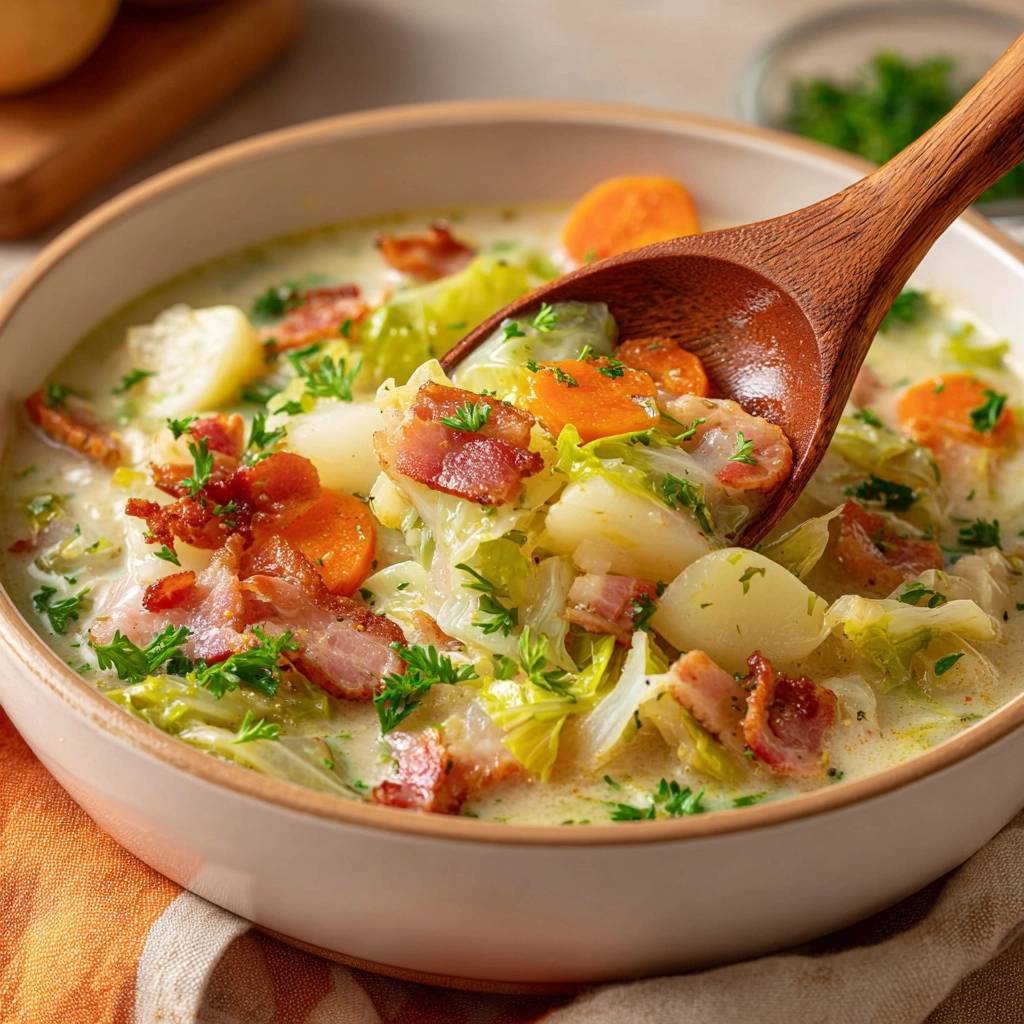
Furthermore, keeping the simmer gentle is vital. A rolling boil will agitate the vegetables too much, causing the edges of the potatoes to slough off and create a cloudy, gritty base. A soft bubble ensures the heat penetrates the center of the potato chunks without destroying the exterior.
Essential Components for a Richer Broth
The foundation of any great soup is the liquid, and for this recipe, chicken bone broth is the undisputed champion. Unlike standard stock, bone broth is simmered longer to extract collagen, which provides a natural body and a savory depth that water or thin stocks simply cannot match. It creates a “sticky” lip-smacking quality that elevates the entire experience.
Your choice of potato also dictates the final result. While Russets are great for baking, they tend to disintegrate in soups. Yukon Golds offer a buttery flavor and a creamy yellow hue that complements the heavy cream perfectly. They act as little nuggets of gold that stay intact from the pot to the bowl.
Finally, don’t underestimate the power of high-quality heavy cream. It isn’t just about fat; it’s about emulsification. The cream binds the savory notes of the garlic and onions with the saltiness of the broth, creating a unified flavor profile that lingers on the palate.
Selecting and Prepping the Cabbage
When you are at the grocery store, look for a head of green cabbage that feels heavy for its size. This density indicates moisture and freshness. Avoid any heads with wilted outer leaves or large cracks, as these can harbor bitterness.
For the best texture, cut the cabbage into 1.5-inch ribbons. This size is large enough to provide a substantial “bite” but small enough to fit comfortably on a soup spoon. Consistency is key here; if some pieces are tiny and others are huge, they won’t wilt at the same rate.
The Role of Aromatics and Herbs
Yellow onions are the workhorse of this soup because they have a high sugar content that caramelizes beautifully in the rendered fat. This provides a subtle sweetness that balances the earthy cabbage. Garlic and dried thyme add a woody, herbal backbone that cuts through the richness of the cream.
Fresh curly parsley is added at the very end for a reason. Heat destroys the volatile oils in fresh herbs, so stirring them in just before serving preserves their bright, peppery flavor and vivid green color. It acts as a visual and flavorful “wake-up call” for the dish.
Step-by-Step: Building the Flavor Base
Building flavor starts with the very first ingredient you put in the pot. You aren’t just cooking the food; you are layering tastes. Using a heavy-bottomed Dutch oven is helpful here because it distributes heat evenly, preventing the aromatics from burning while you render the fat.
Keep your heat at a steady medium. If the pot gets too hot, the fats will smoke and turn bitter. You want a gentle sizzle that coaxes the flavor out of the onions and carrots, turning them soft and sweet rather than charred and acrid.
Rendering the Fat and Searing Aromatics
Start by rendering the fat from your chopped protein. As the fat melts into the pan, it becomes the cooking medium for everything else. This fat is liquid gold, infused with smoky notes that will permeate every vegetable you add later.
As the onions and carrots hit the hot fat, they will begin to release moisture. This moisture helps lift the “fond”—those little brown bits stuck to the bottom of the pot. That fond is concentrated flavor, and incorporating it into the base creates a three-dimensional taste that sets this soup apart.
Deglazing and the First Simmer
Once the aromatics are soft, you’ll pour in the bone broth. This process, known as deglazing, ensures every bit of flavor from the bottom of the pot is swirled into the liquid. It’s the moment the kitchen starts to smell incredible.
Adding the carrots and onions before the liquid gives them a head start on softening. Carrots take longer than cabbage but less time than potatoes, so sautéing them first ensures they reach that perfect “toothsome” consistency by the time the soup is finished.
The Precision Timing Phase
This is where the magic happens. You will simmer the potatoes in the broth for exactly 8 to 10 minutes. At this stage, the potatoes should be easily pierced with a knife but shouldn’t be falling apart. This is the “sweet spot” for adding the next layer.
Once the potatoes are ready, drop in the cabbage. It will look like a lot of greens at first, but they will wilt down quickly. Simmering for just 5 to 7 minutes more allows the cabbage to soften while maintaining its structural integrity and bright flavor.
Integrating the Cream Without Curdling
Adding dairy to a hot soup can be tricky. If you dump cold cream into a boiling pot, the proteins can clump, resulting in a curdled appearance. To avoid this, turn the heat down to low before stirring in the heavy cream.
Use a gentle folding motion to incorporate the cream. You are looking for the broth to transform from a clear amber to a rich, opaque ivory. Once the cream is in, never let the soup return to a hard boil; a gentle heat-through is all you need to meld the flavors.
Troubleshooting Common Soup Mistakes
If you find your soup is a bit too thin for your liking, don’t reach for flour. Instead, take a potato masher and gently crush a few of the potato cubes against the side of the pot. The released starch will thicken the broth instantly without changing the flavor.
Is the soup too salty? This can happen if your broth was highly concentrated. You can fix this by adding a splash more cream or a tiny bit of water. Alternatively, adding a squeeze of lemon juice at the end can brighten the flavors and mask an over-salted base.
If your potatoes feel gritty, they are likely undercooked. Simply simmer the soup for a few more minutes before adding the cream. Remember, you can always cook things longer, but you can’t “un-cook” mushy vegetables, so always err on the side of caution with your timing.
Customizing Your Creamy Cabbage and Potato Soup
This recipe is a fantastic canvas for your own culinary preferences. While the base is classic, you can easily pivot the flavor profile to suit your mood. The key is to maintain the ratios of liquid to solids so the soup stays hearty.
More Ideas to Try
Round out your meal with these complementary potato and cabbage dishes.
- For a bright and refreshing counterpoint, consider this cranberry potato salad featuring crispy bits.
- Enjoy another way to prepare cabbage with this apple red cabbage slaw for a bit of crunch.
You can experiment with different types of cabbage, such as Savoy, which has crinklier leaves and a milder flavor. Just keep in mind that thinner leaves will cook even faster, so you may need to reduce the final simmering time by a minute or two.
Vegetarian and Dairy-Free Adjustments
For those avoiding dairy, coconut cream is a stellar substitute. It provides the same fat content and silkiness, though it will add a slight tropical note. Alternatively, a cashew cream made by blending soaked cashews with water creates a very neutral, rich thickener.
To replace the smokiness of the protein, try adding a teaspoon of smoked paprika or a drop of liquid smoke to the onions while they sauté. This provides that “charred” depth of flavor without the need for meat products.
Adding Extra Protein or Heat
If you want a one-pot meal that is even more filling, stir in some shredded rotisserie chicken at the very end. Since the chicken is already cooked, it only needs a minute to warm through in the creamy broth.
For those who like a bit of a kick, a pinch of red pepper flakes added with the garlic provides a slow, creeping heat. You could also finish the bowl with a drizzle of chili oil for a modern, spicy twist on this traditional comfort food.
Optimal Storage and Reheating Methods
This soup actually tastes better the next day. As it sits in the fridge, the cabbage mellows and the potatoes soak up the savory broth. Store it in an airtight container for up to three days for the best quality.
When reheating, avoid the microwave if possible. The uneven heating can cause the cream to separate. Instead, warm it in a small saucepan over medium-low heat, stirring frequently. If the soup has thickened too much in the fridge, add a tablespoon of broth to loosen it up.
Freezing is not recommended for this specific recipe. Dairy-based soups often separate when thawed, and potatoes can take on a mealy, grainy texture once frozen and reheated. It is best enjoyed fresh or within a few days of cooking.
Expert Tips for Professional Results
Can I use Red Cabbage instead?
While you can use red cabbage, be aware that it will turn your soup a vibrant shade of purple or pink. Red cabbage also has a slightly tougher texture and a more peppery bite, so it may require an extra two minutes of simmering compared to green cabbage.
Why are my potatoes falling apart?
This usually happens if the soup is kept at a rolling boil rather than a gentle simmer. High heat breaks down the starch granules too quickly. It can also happen if you use Russet potatoes, which are too starchy for long simmering. Stick to Yukon Golds and keep the bubbles small.
Can I make this in a slow cooker?
Yes, but you must still stagger the ingredients. Cook the broth, potatoes, carrots, and onions on low for 6 hours. Add the cabbage during the last 30 to 45 minutes of cooking. Stir in the cream and parsley just before serving to ensure the dairy doesn’t break down over the long cook time.
How do I prevent the garlic from burning?
Garlic has a very low burn point. Always add it after your onions and carrots have already started to soften. The moisture from the other vegetables will act as a buffer, allowing the garlic to become fragrant in about 60 seconds without turning brown and bitter.
Ideal Side Dish Pairings
To complement the richness of the cream, serve this soup with something that has a bit of acidity or crunch. A thick slice of toasted sourdough bread is perfect for mopping up the last bits of broth. The tanginess of the fermentation cuts through the heavy cream beautifully.
A simple side salad with a sharp lemon vinaigrette or a handful of bitter arugula also works wonders. The contrast between the hot, savory soup and the cold, crisp greens creates a balanced meal. If you want something heartier, roasted root vegetables with a drizzle of balsamic glaze provide a nice textural counterpoint.
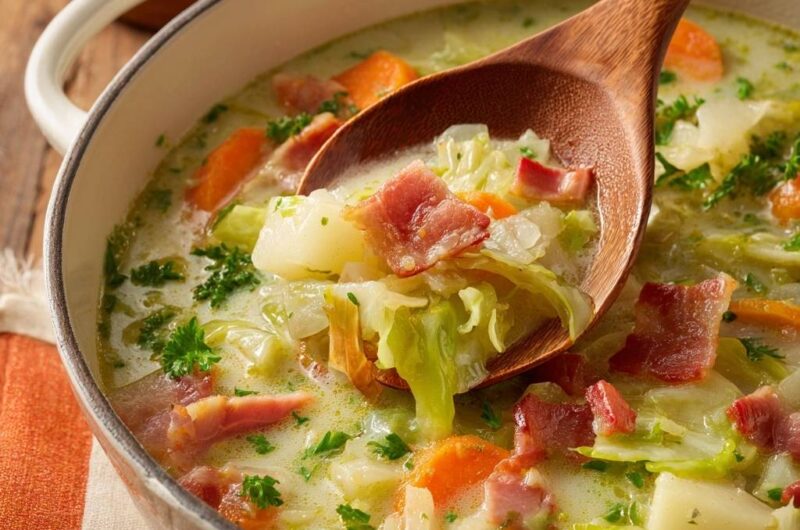
Cabbage and Potato Soup
Course: Main CourseCuisine: AmericanDifficulty: medium6
servings15
minutes25
minutes310
kcal40
MinutesThis recipe solves the common problem of soggy vegetables by using a specific timing method. By searing aromatics in bacon fat and adding cabbage only after potatoes are partially cooked, you achieve a hearty, creamy soup with vibrant vegetables and savory bacon bits.
Ingredients
6 slices thick-cut bacon, chopped into 1-inch pieces
1/2 large head green cabbage, cored and chopped into 1.5-inch ribbons
3 large Yukon Gold potatoes, peeled and cubed into 1-inch chunks
2 large carrots, sliced into thick half-moons
1 yellow onion, diced
4 cloves garlic, minced
6 cups chicken bone broth
1 cup heavy cream
1/4 cup fresh curly parsley, roughly chopped
1 teaspoon dried thyme
Salt and black pepper to taste
Directions
- Start by placing the chopped bacon in a large Dutch oven over medium heat. Cook until the fat is rendered and the bacon is cooked through but still slightly tender (not shattered). Remove the bacon with a slotted spoon and set aside on a paper towel, leaving the drippings in the pot.
- Add the onions and carrots to the bacon fat. Sauté for 5 minutes until the onions are translucent and the carrots begin to soften. Add the garlic and thyme, cooking for just 60 seconds until fragrant.
- Pour in the chicken broth and add the cubed potatoes. Bring the mixture to a boil, then reduce heat to a simmer. Cook for 8-10 minutes. This head start ensures the dense potatoes cook through without over-processing the delicate greens.
- To solve the mushy cabbage problem, add the chopped cabbage only after the potatoes are fork-tender but still firm. Stir the cabbage in and simmer for an additional 5 to 7 minutes. This timing keeps the cabbage vibrant and tender-crisp rather than gray and soggy.
- Stir in the heavy cream and the cooked bacon. Let the soup heat through for 2 minutes to allow the flavors to meld. Do not let it reach a rolling boil once the cream is added to prevent curdling.
- Season generously with salt and pepper. Stir in the fresh parsley last to maintain its bright green color. Serve immediately in deep bowls, ensuring each serving has a balance of broth, hearty vegetables, and bacon.
Notes
- To prevent curdling, ensure the soup does not reach a rolling boil after the heavy cream has been added. Use Yukon Gold potatoes for the best creamy texture as they hold their shape better than Russets.