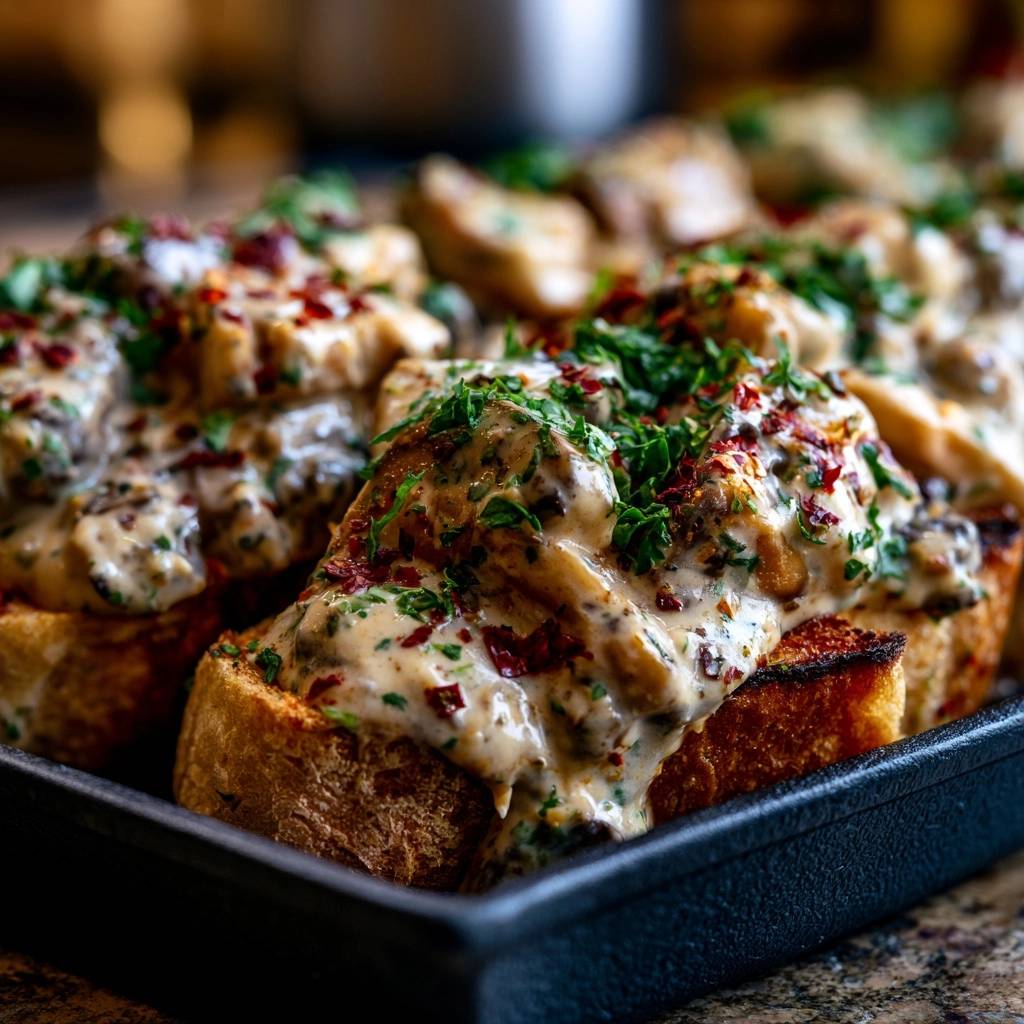
Nothing ruins a party faster than a soggy appetizer. You’ve seen it before: a beautiful topping sitting on a piece of bread that has turned into a mushy, limp sponge. It’s a texture nightmare that makes even the best flavors fall flat. This Creamy Garlic Mushroom Crostini is the definitive solution to that structural failure, offering a shatter-crisp base that stands up to a decadent, velvety topping.
The secret lies in the contrast between the high-heat seared baguette and the rich, earthy mushrooms. By creating a carbonized barrier on the bread, we ensure every bite delivers a loud crunch followed by a melt-in-your-mouth cream sauce. It’s a sophisticated balance of textures that feels like high-end bistro fare but comes together in your own kitchen in under thirty minutes.
To get that professional result, you have to respect the mushroom’s moisture. Most home cooks stir their mushrooms constantly, which actually causes them to steam in their own juices rather than brown. The trick is to let them sit undisturbed in a screaming hot pan. This develops a deep, caramelized crust that locks in flavor and provides the “meatiness” required to anchor the heavy cream and parmesan emulsion.
The Architecture of a Non-Soggy Crostini
Understanding the physics of bread saturation is the first step toward appetizer mastery. When you place a warm, moisture-heavy topping like creamy mushrooms onto standard toasted bread, the steam and fats immediately begin to migrate into the crumb. This softens the internal structure of the bread, leading to that dreaded “soggy bottom” within minutes of assembly.
However, we can fight this with the Maillard reaction. By searing the bread in a cast-iron skillet with olive oil, we aren’t just browning it; we are creating a dehydrated, hardened crust. This “structural sear” acts as a moisture-proof barrier. Because the surface is essentially cauterized by the high heat, the sauce sits on top of the bread rather than soaking into it, maintaining that vital crunch until the very last bite.
Furthermore, the cooling process is just as important as the cooking. If you stack hot toast on a flat plate, the residual steam gets trapped underneath, softening the crust you just worked so hard to build. Using a wire rack allows air to circulate around the entire slice, ensuring the bread stays rigid and ready for its heavy cargo.
Essential Components for Creamy Garlic Mushroom Crostini
Quality ingredients are the backbone of this dish, especially since the list is relatively short. I always reach for cremini mushrooms, often sold as “baby bellas,” instead of standard white button mushrooms. Creminis are simply more mature, meaning they have a lower water content and a much deeper, savory flavor that holds up against the richness of the heavy cream.
The sauce relies on a stable emulsion, which is why freshly grated Parmesan cheese is non-negotiable. Those green cans of pre-shredded cheese contain cellulose and anti-caking agents that prevent the cheese from melting smoothly. Real Parmesan dissolves into the heavy cream, acting as a natural thickener that binds the sauce to the mushrooms so it doesn’t run off the bread.
Fat choice also matters here. We use a combination of olive oil for the high-heat bread sear and butter for the mushroom sauté. Butter provides that classic French richness, while the olive oil allows for a higher smoking point when we are prepping the baguette rounds. This duo ensures maximum flavor without burning the fats.
Selecting the Right Bread Base
A standard French baguette is the traditional choice because its narrow diameter creates perfect two-bite portions. However, you want a loaf with a dense, tight crumb. If the bread is too airy with large holes, the mushroom mixture will simply fall through. Sourdough is a fantastic alternative if you want a bit of tang to cut through the cream.
Regardless of the bread type, aim for one-inch thick slices. Anything thinner will lack the structural integrity to support the mushrooms, and anything thicker becomes difficult to eat gracefully. That one-inch “sweet spot” provides enough interior softness to contrast with the seared exterior while remaining sturdy enough to hold by hand.
The Role of Balsamic Vinegar and Aromatics
Balsamic vinegar is the “secret weapon” in this recipe. While the cream and butter provide luxury, the vinegar provides the necessary acidity to brighten the entire palate. It also helps deglaze the pan, picking up the “fond”—those little browned bits of mushroom stuck to the bottom—and incorporating that concentrated umami back into the sauce.
Fresh garlic is also paramount. Jarred minced garlic often has a metallic or sour aftertaste that can ruin a delicate cream sauce. By using freshly minced cloves and adding them toward the end of the sauté, we capture the sweet, aromatic essence of the garlic without the bitterness that comes from overcooking it.
Phase One: Executing the Structural Sear
Forget the toaster or the oven for this step. To get a true structural sear, you need the direct, intense heat of a skillet. Heat your cast-iron pan over medium-high until it’s nearly smoking. Brush your bread slices generously with olive oil; this oil acts as a heat conductor, ensuring every nook and cranny of the bread surface hits the metal.
Press the slices down firmly and sear for about two minutes per side. You are looking for a dark, golden-brown color that looks almost like a grilled cheese sandwich. Once they are done, immediately move them to a wire cooling rack. This step is vital because it prevents “sweating,” keeping the bread shatter-crisp while you move on to the mushroom component.
Phase Two: Achieving Maximum Mushroom Caramelization
The biggest mistake people make with mushrooms is “crowding the pan.” If you dump a pound of mushrooms into a small skillet, they will release their water and boil in their own liquid. To get a proper sear, use a large pan and spread the quartered mushrooms in a single layer. If your pan isn’t big enough, work in two batches.
Once the mushrooms hit the hot butter, leave them alone. Don’t stir, don’t shake, and don’t season with salt yet. Salt draws out moisture, which interferes with browning. After about four minutes, flip one over. If it has a deep, mahogany crust, give the pan a toss. This caramelization is where the deep, earthy flavor lives.
Phase Three: Building the Parmesan Emulsion
After the mushrooms are browned and the aromatics are fragrant, it’s time to build the sauce. Lower the heat before adding the heavy cream to prevent it from breaking or curdling. As the cream begins to simmer, it will start to reduce and thicken naturally. This is when you whisk in the freshly grated Parmesan cheese.
The cheese doesn’t just add salt and flavor; it acts as a stabilizer. As it melts, it creates a glossy, thick coating that clings to the mushrooms. You’ll know it’s ready when the sauce looks velvety and leaves a clear trail when you run a spoon through the pan. This thick consistency is exactly what prevents the sauce from migrating into the bread later.
Troubleshooting Common Appetizer Mistakes
If your sauce looks too thin, don’t panic. Simply let it simmer for another minute or add an extra tablespoon of Parmesan. The cheese is a powerful thickener. Conversely, if the sauce becomes too thick or “gloopy,” a tiny splash of water or extra cream will loosen it back up to a pourable consistency.
If you accidentally burn your garlic, it’s best to start that step over. Burnt garlic is intensely bitter and will permeate the entire cream sauce. To avoid this, always add your garlic only after the mushrooms are fully browned, and keep it moving in the pan for no more than sixty seconds before adding your liquids.
Flavor Variations and Ingredient Swaps
While cremini mushrooms are the standard, you can elevate this dish by using a wild mushroom blend. Oyster mushrooms add a delicate, seafood-like sweetness, while shiitakes provide a firm texture and intense woodsy flavor. Just ensure you cut them into uniform, chunky pieces so they cook at the same rate.
If you want to swap the herbs, fresh thyme or tarragon are excellent partners for mushrooms. Tarragon offers a slight licorice note that feels very sophisticated, while thyme provides a classic earthy aroma. If you prefer a bit more heat, increase the red pepper flakes or add a dash of cayenne pepper to the cream sauce for a subtle back-of-the-throat warmth.
Optimal Serving and Presentation Techniques
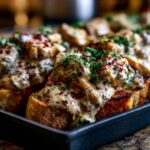
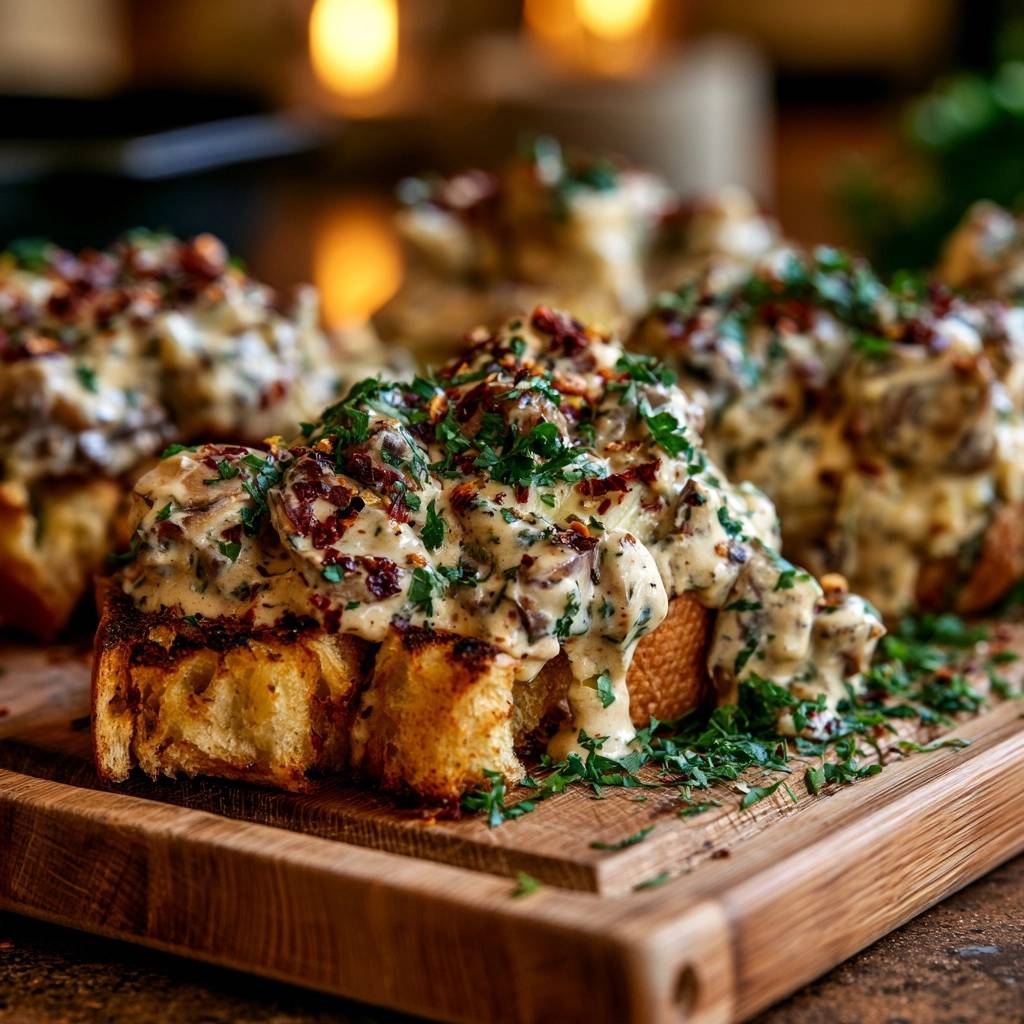
Timing is everything with crostini. For the best experience, assemble these just before serving. Use a small spoon to mound the mushrooms high on each seared bread round, making sure to get plenty of that thick sauce on every piece. The visual of the creamy sauce dripping slightly over the dark, toasted edges is incredibly appetizing.
Garnish with a final sprinkle of fresh parsley and extra red pepper flakes for a pop of color. Arrange them on a wooden board or a white ceramic platter to make the colors stand out. If you are hosting a large group, you can keep the seared bread and the mushroom mixture separate, then quickly assemble them in batches to ensure they stay hot and crunchy.
Expert Tips for Success
Using a wire rack is the most underrated tip in appetizer prep. It allows the bread to “breathe” from the bottom, which is essential for maintaining the crunch. If you place hot toasted bread on a flat surface, the heat creates condensation between the bread and the plate, which leads to instant sogginess. The wire rack is your best friend for any toasted bread dish.
You can definitely prepare the mushroom mixture in advance. Simply cook it as directed, let it cool, and store it in the fridge. When you’re ready to serve, reheat it gently in a pan over low heat. You might need to add a teaspoon of water to bring the emulsion back to its silky state. However, always sear the bread fresh for the best texture.
To prevent garlic from turning bitter, timing is key. Garlic has a very low burning point compared to mushrooms. By adding it only after the mushrooms have finished their hard sear, you ensure the garlic softens and releases its oils without scorching. This results in a sweet, mellow garlic flavor that complements the cream perfectly.
When cleaning mushrooms, never soak them in water. Mushrooms are like sponges and will absorb the liquid, making it impossible to get a good sear. Instead, use a damp paper towel to wipe away any dirt. If they are particularly gritty, a very quick rinse followed by immediate drying with a kitchen towel is the way to go.
If you want to try a different cheese, Pecorino Romano or Gruyère are excellent substitutes. Pecorino is saltier and sharper, while Gruyère adds a nutty, Swiss-style melt. Both have the fat content and protein structure necessary to create a stable, thick sauce that won’t soak through your seared baguette rounds.
Pairing Suggestions for a Complete Spread
To balance the richness of the cream and butter, serve these crostini alongside something bright and acidic. A simple arugula salad tossed in a sharp lemon vinaigrette works beautifully. The peppery bite of the greens cuts right through the heavy cream, refreshing your palate between bites of the savory mushroom toast.
For drinks, consider something with bubbles to scrub the palate. A sparkling botanical water with hints of cucumber or lime is a fantastic choice. The carbonation provides a crisp contrast to the velvety texture of the mushrooms, making the whole meal feel lighter and more balanced. This combination ensures your guests can enjoy several pieces without feeling weighed down.
How should I store leftovers?
Store the mushroom mixture and the seared bread separately in airtight containers. The mushrooms will stay fresh in the refrigerator for up to three days. When you are ready to eat, reheat the mushrooms in a skillet over low heat and re-toast the bread briefly to regain its crunch. Do not freeze the mushroom mixture, as the heavy cream and parmesan emulsion will likely separate and become grainy upon thawing.
Why did my mushrooms turn out rubbery?
Rubbery mushrooms are usually the result of undercooking or steaming. If the heat isn’t high enough, the mushrooms won’t develop that caramelized exterior and will instead just lose their structure. Ensure your pan is very hot before adding the mushrooms and avoid stirring them for the first few minutes. This allows the outside to crisp up while the inside stays tender and juicy.
Can I use a different type of oil for searing the bread?
Yes, you can use any neutral oil with a high smoke point, such as avocado oil or grapeseed oil. However, olive oil is preferred for the flavor it adds to the crostini. Avoid using only butter for the bread sear, as the milk solids in the butter will burn at the high temperatures required to create the moisture-proof barrier we need for this recipe.
What if I don’t have a cast-iron skillet?
While cast iron is king for heat retention, any heavy-bottomed stainless steel or non-stick skillet will work. The key is to ensure the pan is hot enough to brown the bread and mushrooms quickly. If using non-stick, be careful not to exceed the manufacturer’s recommended heat limit, as you still need a solid sear to prevent the bread from becoming soggy.
Can I make this recipe gluten-free?
Absolutely. Simply substitute the French baguette with your favorite gluten-free baguette or sturdy gluten-free bread. Since gluten-free bread can sometimes be more porous, pay extra attention to the “structural sear” step to ensure you’ve created a solid crust before adding the creamy mushroom topping.
Creamy Garlic Mushroom Crostini
Course: AppetizerCuisine: French and Italian FusionDifficulty: easy6
servings10
minutes15
minutes25
Minutes245
kcalFrench and Italian Fusion
Ingredients
1 large French baguette, sliced into 1-inch thick rounds
1 pound cremini mushrooms, quartered (to match the chunky visual texture)
3 cloves garlic, minced
1/2 cup heavy cream
1/4 cup freshly grated Parmesan cheese (essential for the thick, stable emulsion shown)
3 tablespoons butter, divided
2 tablespoons olive oil
1 tablespoon balsamic vinegar (for the deep color and acidity)
1 teaspoon red pepper flakes (plus extra for garnish)
1/4 cup fresh parsley, finely chopped
Salt and black pepper to taste
Directions
- The Structural Sear: To prevent the bread from getting soggy, heat a large cast-iron skillet or griddle over medium-high heat. Brush both sides of the baguette slices generously with olive oil. Sear the bread in the hot pan until a deep, dark golden-brown crust forms on both sides (about 2 minutes per side). This “hard toast” creates a carbonized barrier that prevents sauce migration. Set the bread aside on a wire rack so air can circulate underneath.
- The Mushroom Sear: In the same skillet, melt 2 tablespoons of butter over high heat. Add the quartered mushrooms in a single layer. Do not crowd the pan. Let them sit undisturbed for 3-4 minutes until they develop a dark, caramelized crust.
- Deglaze and Aromatics: Add the remaining tablespoon of butter, minced garlic, and red pepper flakes. Stir for 1 minute. Splash in the balsamic vinegar, scraping the bottom of the pan to release the flavorful browned bits (fond).
- The Emulsion: Reduce heat to medium-low. Pour in the heavy cream and stir in the Parmesan cheese. Simmer for 3 minutes, stirring constantly, until the sauce reduces into a thick, velvety coating that clings to the mushrooms. The cheese acts as a binder, ensuring the sauce stays on top of the bread rather than soaking through it.
- Season: Season with salt and black pepper to taste. Remove from heat and stir in half of the fresh parsley.
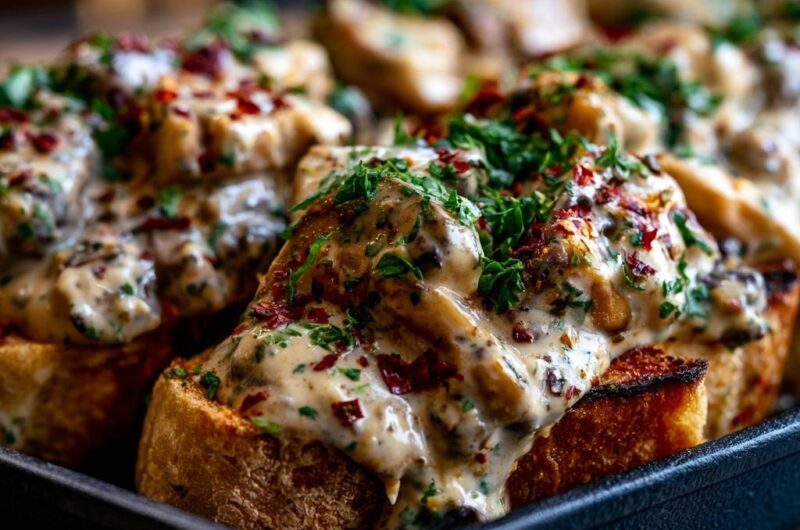
- Assembly: Spoon the thick mushroom mixture generously onto the seared bread rounds. Immediately garnish with the remaining fresh parsley and a heavy sprinkle of red pepper flakes to match the visual presentation. Serve immediately while the base is hot and crunchy.
Notes
- The key to the anti-soggy bottom is the structural sear on the bread and using Parmesan cheese as a binder in the cream sauce to create a stable emulsion.