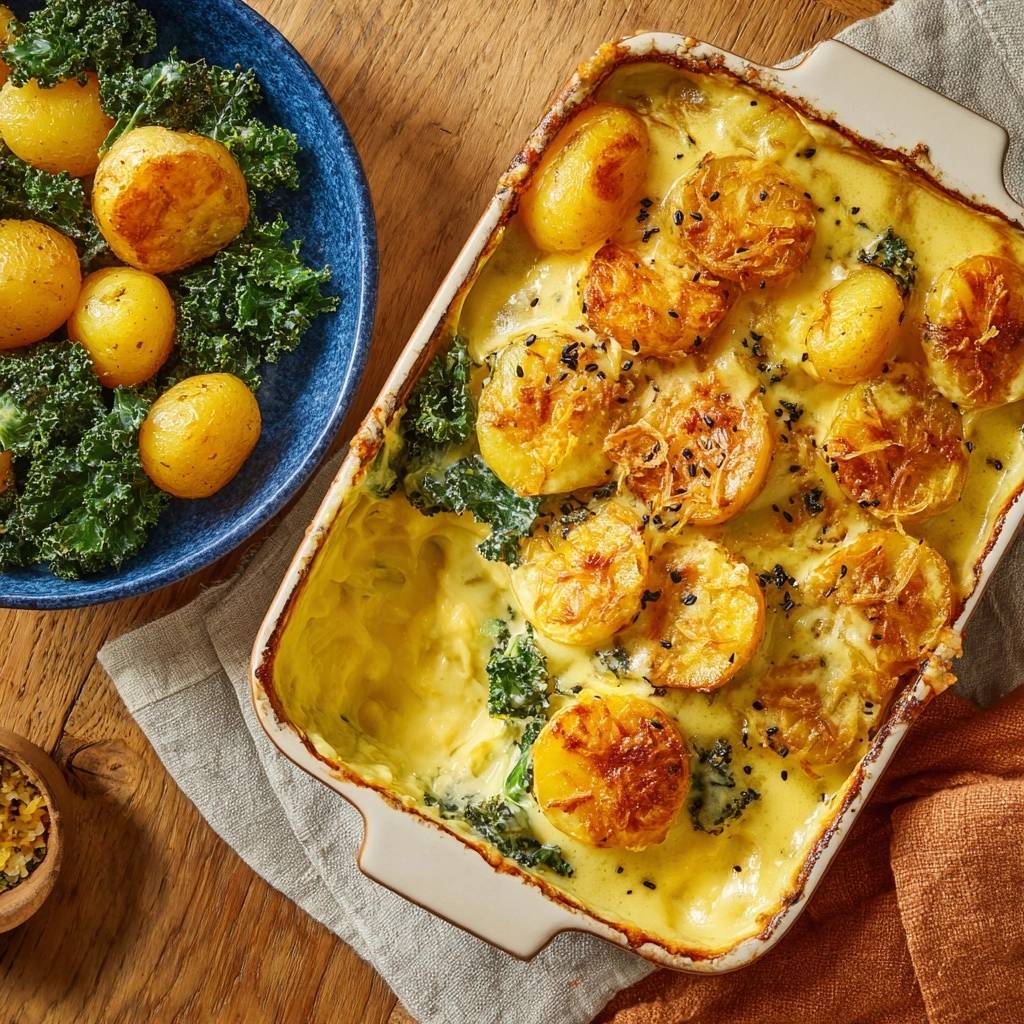
Most potato casseroles suffer from the same tragic flaw: they turn into a soupy, unappealing mess the moment you cut into them. This Creamy Golden Potato and Kale Bake solves that problem by focusing on moisture control and a specific searing technique. You get a rich, velvety sauce that clings to the vegetables rather than pooling at the bottom of the dish.
The visual appeal of this dish is just as impressive as the flavor, thanks to a pinch of turmeric that creates a vibrant golden hue. By searing the potatoes cut-side down before they ever touch the oven, you create a structural crust that stays crispy even while bathed in cream. It’s the perfect balance of a gooey, cheesy interior and a crunch that actually holds up.
For a similar satisfying side, explore this creamy cheesy potato bake.
The real secret to the success of this recipe lies in the “steam dry” method. After par-boiling your potatoes, you must let them sit for three minutes to allow surface moisture to evaporate. If you skip this, the potatoes will steam in the pan instead of searing, and you’ll lose that essential textural contrast that makes this bake so addictive.
The Science of Preventing a Watery Potato Bake
A watery bake usually happens because of two culprits: excess moisture in the greens and starch that hasn’t properly bonded. When you boil potatoes, they absorb water; if you move them straight from the pot to the baking dish, that water leaks out into your sauce. Letting them steam dry ensures the starch on the surface is ready to react with the hot oil during the searing phase.
Kale is another major source of hidden water. Even after sautéing, the cellular structure of the leaves holds onto liquid that can thin out your cream sauce. By squeezing the wilted kale with a kitchen towel, you remove that excess “green water,” leaving behind only the concentrated flavor and a texture that can properly absorb the golden cream infusion.
Finally, the reduction of the cream sauce on the stovetop is a non-negotiable step. Most recipes ask you to pour cold cream over raw potatoes, which results in a broken, thin sauce. By simmering the cream with garlic and turmeric beforehand, you’re creating a stable emulsion. This thickened base acts as a binder, ensuring every bite is luscious and tight rather than runny.
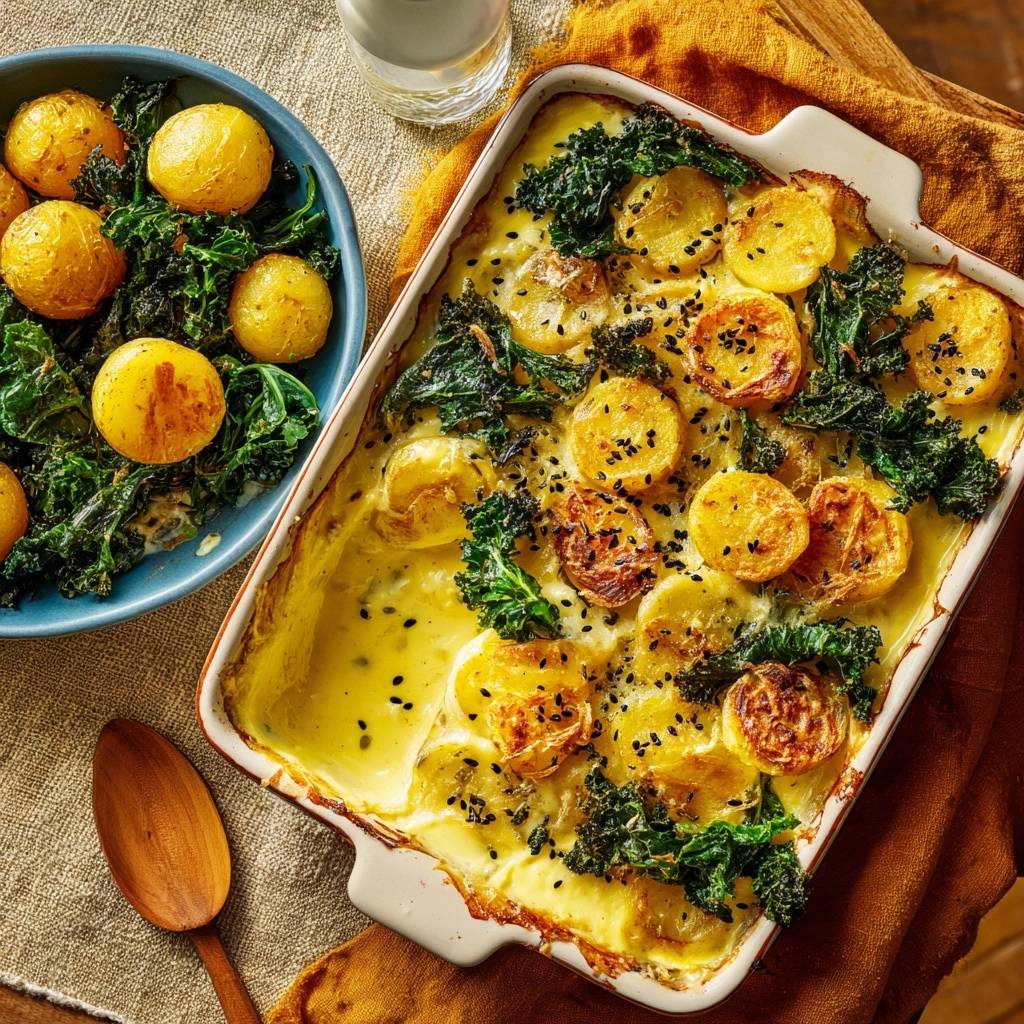
Essential Components for the Golden Cream Sauce
Choosing the right potato is the first step toward success. Baby Gold potatoes are the gold standard here because their waxy texture holds its shape during the double-cook process. Unlike Russets, which tend to fall apart and become mealy, Gold potatoes maintain a creamy, buttery bite that feels substantial against the fibrous kale.
For another great potato side, explore these creamy scalloped potatoes.
Turmeric isn’t just for health benefits in this recipe; it’s a natural colorant that gives the sauce a high-end, sun-drenched look. When turmeric dissolves into the fats of the heavy cream, it blooms, releasing a mild earthy flavor that complements the pungent garlic. Always use fresh garlic cloves rather than the jarred variety, as the oils in fresh garlic provide a much sharper aromatic backbone for the dairy.
The cheese choice also matters for the final consistency. Shredded Parmesan provides a salty, nutty punch and helps stabilize the sauce. Because Parmesan is a hard cheese, it doesn’t get stringy or oily like mozzarella might. It melts into the cream to create a smooth, cohesive sauce that coats the back of a spoon perfectly.
Selecting and Prepping Curly Kale
Curly kale is the best choice for this bake because its ruffled edges are designed to trap sauce. While Lacinato or “Dino” kale is delicious, it’s quite flat and doesn’t offer the same “nooks and crannies” for the cheese and cream to settle into. Make sure you strip the leaves away from the woody stems entirely, as those stems will remain tough even after 45 minutes of cooking.
When tearing the kale, aim for large, bite-sized pieces. They will shrink significantly during the sautéing and baking process. If you chop them too finely, they’ll disappear into the sauce; larger pieces provide a necessary chew that balances the softness of the potatoes.
Dairy Ratios and Fat Content
We use a 3:1 ratio of heavy cream to whole milk to ensure the sauce is rich enough to withstand high heat. If you try to use skim milk or even 2% milk, the sauce is likely to curdle or “break” at 400°F, leaving you with a grainy texture. The high fat content in heavy cream protects the proteins in the dairy, keeping the sauce silky smooth throughout the entire baking cycle.
Phase One: Par-Boiling and Steam Drying
Start by boiling your halved potatoes in heavily salted water. You aren’t looking to cook them all the way through yet. The goal is “fork-tender but firm,” which usually takes about 8 minutes. If you overcook them now, they will crumble when you try to sear them in the skillet later.
Once you drain the potatoes, leave them in the colander or spread them out on a tray for at least 3 minutes. You’ll actually see the steam rising off them. This resting period is vital because it dries out the exterior starch. A dry potato surface is the only way to achieve that deep, golden-brown crust during the searing phase.
Phase Two: Searing for Texture and Flavor
Heat your oil until it’s shimmering but not smoking. Place the potatoes cut-side down and leave them alone! Resist the urge to move them around. You want the Maillard reaction to occur, which creates that savory, caramelized crust on the face of each potato. This step adds a layer of flavor that boiling alone simply cannot provide.
Once the potatoes have a deep mahogany color, remove them from the pan. You’ll use the same skillet for the kale to pick up any leftover potato bits and infused oil. Sauté the kale just until it collapses, then move it to a towel for the big squeeze. Removing that moisture now prevents a “swampy” casserole later.
Phase Three: Reducing the Turmeric Infusion
In a small saucepan, combine your cream, milk, garlic, and spices. As this simmers, the water in the milk evaporates, concentrating the fats and flavors. You’ll know it’s ready when the sauce has reduced by about a third and looks thick enough to coat a strawberry. It should be a brilliant, opaque yellow.
Whisk in the first half-cup of Parmesan slowly. If you dump it all in at once, it might clump. By adding it gradually to the warm cream, you create a cheese-infused sauce that is perfectly homogenous. This thickened liquid is what will transform your vegetables into a cohesive, decadent meal.
Assembling the Layers for Maximum Crunch
Layering is a strategic move in this dish. Place the squeezed kale at the bottom of the greased dish first. The kale acts as a bed that will catch any stray juices from the potatoes while soaking up the golden cream. Next, nestle the potatoes on top of the kale, making sure the seared cut-sides are facing up.
When you pour the sauce, do it carefully around the potatoes. You want the bottom half of the potatoes submerged in the cream, but the crispy, seared tops should remain exposed. This “moat” technique ensures the bottoms get tender and infused with garlic, while the tops stay crunchy and ready for the final cheese crust.
Oven Management and the Resting Period
Bake at 400°F to encourage the Parmesan on top to form a “lacy” crust. This high temperature is necessary to bubble the sauce and brown the cheese quickly without overcooking the kale underneath. Keep an eye on it; you’re looking for a deep golden color and a sauce that is thick and bubbling vigorously around the edges.
The most difficult part is waiting 10 minutes after you pull it out of the oven. During this time, the starches in the potatoes undergo a process called retrogradation. This essentially means the sauce sets and thickens as it cools slightly. If you serve it immediately, it will seem loose; if you wait, it will be perfectly set and easy to scoop.
Troubleshooting Common Texture Issues
If your sauce looks broken or oily, the oven might have been too hot, or the cream wasn’t reduced enough on the stove. You can usually fix the appearance by giving the sauce a gentle stir in the corners of the dish before serving. If the potatoes are still a bit hard, cover the dish with foil and bake for another 10 minutes to trap steam and finish the softening process.
For a bake that looks too dry, you can splash a little extra warm cream around the edges before the final 5 minutes of baking. If you find the kale is too salty, it’s likely because the Parmesan and the boiling water both had high salt content. Next time, reduce the salt in the cream sauce to compensate for the saltiness of the cheese.
Smart Substitutions and Flavor Variations
If you need a dairy-free version, cashew cream is an excellent substitute for heavy cream because of its high fat content. Use nutritional yeast instead of Parmesan to maintain that savory, cheesy profile. The turmeric will still provide that beautiful golden color even in a plant-based version.
You can easily swap the flavor profile by changing the herbs. While garlic is classic, adding fresh thyme or rosemary to the cream while it simmers adds a lovely woodsy aroma. For a “Golden-Red” look, add a teaspoon of smoked paprika to the sauce; it provides a subtle smokiness that pairs beautifully with the earthy kale.
Optimal Pairings for a Golden Potato Bake
This dish is incredibly rich, so it pairs best with proteins that have a bit of acidity or a clean, roasted flavor. A simple roasted chicken or grilled lamb chops work beautifully. The slight bitterness of the kale is a natural foil for the fattiness of the meat, creating a balanced palate.
Complementary Dishes
Round out your meal with these chicken and potato dishes.
- For a different take on a hearty potato bake, consider the herb grilled chicken and garlic mash, pairing herbs with tender chicken.
- If you enjoyed the creamy texture of the potato bake, you might like this creamy garlic pan-seared chicken and mash for its rich garlic notes.
If you’re serving this as a vegetarian main, pair it with a bright, citrusy salad or roasted root vegetables like carrots and parsnips. The acidity in a lemon vinaigrette will cut through the heavy cream sauce, making the whole meal feel lighter and more refreshed.
Make-Ahead Strategies and Storage
You can par-boil and sear the potatoes up to 24 hours in advance. Store them in an airtight container in the fridge. You can also prep the kale and the cream sauce ahead of time. However, don’t assemble the dish until you’re ready to bake, or the potatoes will lose their crispness as they sit in the liquid.
Leftovers will stay fresh in the refrigerator for about 3 days. I don’t recommend freezing this dish, as the cream can separate and the potatoes often become grainy when thawed. To reheat, use the oven or a toaster oven at 350°F. This helps revive the crispy cheese top much better than a microwave would.
Frequently Asked Questions
How do I store leftovers and can I freeze this?
Store any leftovers in an airtight container in the refrigerator for up to 3 days. When you’re ready to eat, reheat it in the oven at 350°F for about 15 minutes to help the cheese get crispy again. Freezing is not recommended for this dish. The heavy cream and milk emulsion tends to break and separate when frozen and thawed, resulting in a grainy, oily texture that loses its velvety appeal.
Why is my sauce still watery even after following the steps?
The most common reason for a watery sauce is skipping the “squeeze” step for the kale. Kale holds a surprising amount of liquid in its leaves. If you don’t use a kitchen towel to firmly wring out the moisture after sautéing, that water will release into the cream during the bake. Additionally, ensure you simmer the cream sauce long enough to reduce it by a full third before pouring it into the dish.
Can I use a different type of potato?
While Baby Gold or Yukon Gold potatoes are best for their waxy, creamy texture, you can use red potatoes in a pinch. Avoid using large Russet potatoes if possible. Russets are very starchy and tend to fall apart or turn mushy when boiled and then baked in liquid. If you must use them, cut them into larger chunks to help them maintain some integrity.
What can I use instead of heavy cream?
If you want a lighter version, you can use half-and-half, but you must be careful not to let the oven get too hot, as it curdles more easily than heavy cream. For a dairy-free option, full-fat canned coconut milk or a homemade cashew cream (soaked cashews blended with water) works very well. These substitutes provide the necessary fat to keep the sauce thick and rich.
Is there a substitute for the turmeric?
The turmeric is primarily used for that stunning golden color. If you don’t have it or don’t like the flavor, you can omit it entirely; the sauce will just be a standard creamy white. Alternatively, a few threads of saffron can provide a similar golden hue and a sophisticated floral aroma, though it is a more expensive substitution.
Why do I need to let the dish rest for 10 minutes?
Resting is the final “cooking” step. As the temperature drops slightly, the starches in the potatoes and the proteins in the cheese and cream begin to firm up. This process, known as setting, ensures that the sauce coats the vegetables rather than running off them. If you scoop into it immediately, the sauce will appear much thinner than it actually is.

Potato and Kale Bake
Course: Side DishCuisine: AmericanDifficulty: medium6
servings15
minutes45
minutes340
kcal60
MinutesThis recipe solves the common problem of watery potato casseroles by using par-boiled and seared potatoes, moisture-squeezed kale, and a reduced cream sauce infused with turmeric for a rich, velvety texture and golden color.
Ingredients
2 lbs baby gold potatoes, halved
1 large bunch curly kale, stems removed and torn into large pieces
1.5 cups heavy cream
1/2 cup whole milk
3 cloves garlic, minced
1/2 teaspoon ground turmeric (for the golden color)
1.5 cups shredded parmesan cheese (divided)
1 teaspoon sea salt
1/2 teaspoon black pepper
1 tablespoon black sesame seeds
3 tablespoons olive oil or butter
Directions
- Preheat your oven to 400°F (200°C). Grease a medium rectangular baking dish.
- Place halved potatoes in a pot of salted water. Bring to a boil and cook for 8 minutes until par-boiled but still firm. Drain and let them steam dry for 3 minutes.
- Heat 2 tablespoons of olive oil in a large skillet over medium-high heat. Place potatoes cut-side down and sear for 3-4 minutes until the faces are golden brown and crisp. Remove potatoes and set aside.
- In the same skillet, add the remaining oil and the kale. Sauté for 2 minutes until wilted. Use a clean kitchen towel or paper towels to squeeze every drop of excess moisture out of the kale. This is the critical step to avoid a watery bake.
- In a small saucepan, whisk together heavy cream, milk, minced garlic, turmeric, salt, and pepper. Simmer over medium-low heat for 5-7 minutes, whisking occasionally, until reduced by about a third and thickened. Stir in 1/2 cup of the parmesan cheese until melted.
- Arrange the wilted kale in the bottom of the baking dish. Place the seared potatoes on top, cut-side up.
- Pour the thickened golden cream sauce around the potatoes, leaving the crispy tops exposed.
- Sprinkle the remaining 1 cup of parmesan cheese specifically onto the potato tops to create the crust shown in the image. Finish with a generous sprinkle of black sesame seeds.
- Bake for 20-25 minutes until the sauce is bubbling and the cheese on the potatoes has formed a deep golden, lacy crust.
- Let the dish rest for 10 minutes before serving. This allows the starch to bind with the reduced cream for a perfectly set, never-watery finish.
Notes
- Squeezing the moisture out of the sautéed kale is the critical step to avoid a watery bake. Let the dish rest for 10 minutes after baking to allow the sauce to set perfectly.