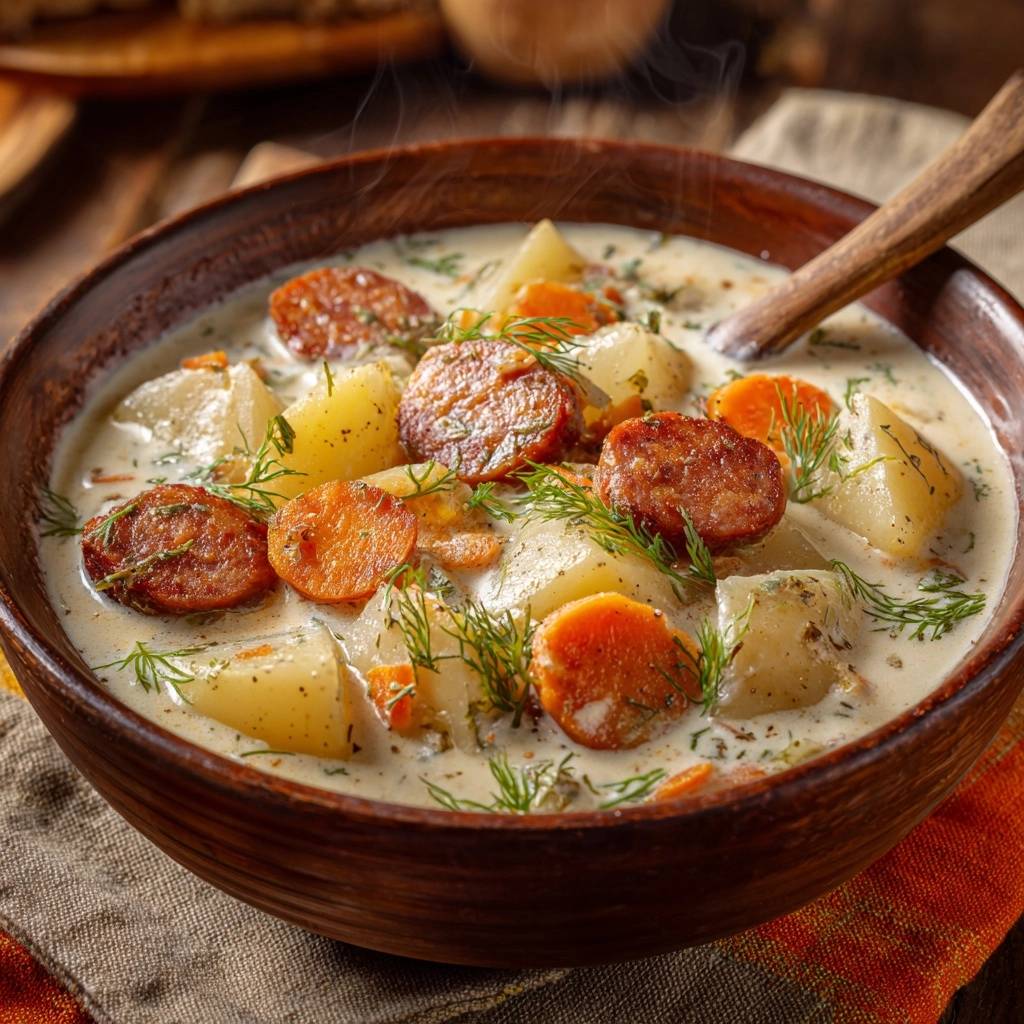
Imagine diving into a bowl of soup so thick and velvety that it coats the back of your spoon like a warm hug. Most of us have been disappointed by a “chowder” that turns out to be nothing more than flavored water with a few lonely potato chunks floating in it. That thin, lackluster texture usually happens when a recipe relies solely on a bit of flour that never quite gets the job done.
The secret to a professional-grade chowder isn’t just adding more cream; it’s about mastering the dual-thickening technique. By combining a stable roux with a strategic starch release, you create a base that is naturally hearty and rich. This method ensures your soup has a luxurious body that perfectly suspends every slice of smoky sausage and tender carrot, rather than letting them sink to the bottom of a watery broth.
I’ve found that the real magic happens when you stop treating the potatoes as just a garnish and start using them as a structural tool. Smashing a portion of the cooked potatoes directly into the pot releases natural starches that emulsify the liquid instantly. This creates a thick, cohesive texture that won’t separate or feel grainy on your tongue, giving you that “restaurant-style” finish right in your own kitchen.
For a similar hearty potato sausage chowder with a satisfying texture, check out this creamy potato sausage chowder.
The Anatomy of a Non-Watery Chowder Base
Viscosity is the name of the game when you’re aiming for a world-class chowder. Many home cooks reach for a massive amount of flour to thicken their soups, but this often leads to a pasty, dull flavor that masks the ingredients. Flour is great for stability, but if you use too much, the chowder loses its vibrant taste and takes on a heavy, glue-like consistency that sits heavy in the stomach.
Instead, we lean on the science of the Russet potato. Russets are high-starch tubers with a cellular structure that breaks down easily when heated. When you simmer these potatoes, the starch granules swell and eventually burst. By manually mashing about a third of them into the broth, you are essentially creating a natural, flavor-neutral thickener that binds the chicken broth and fats together into a silky emulsion.
This starch-release method provides a velvety mouthfeel that heavy cream alone can’t achieve. While the cream adds richness and fat, the potato starch provides the “grip” that keeps the soup from feeling greasy. Therefore, you get a chowder that feels incredibly indulgent but still tastes like fresh vegetables and savory meat. It’s a balanced approach that ensures every spoonful is consistently thick from the first bite to the last.
Essential Components for Maximum Flavor Extraction
Quality ingredients are the foundation of any great dish, and for this chowder, the type of potato and meat you choose will dictate the final result. You want components that can stand up to a long simmer without losing their identity. Using fresh aromatics and high-quality fats will elevate the dish from a simple weekday meal to something truly special.
Fresh dill is a non-negotiable here. While dried herbs have their place, fresh dill provides a bright, grassy punch that cuts right through the richness of the heavy cream and sausage. It adds a layer of sophistication and a pop of color that makes the dish look as good as it tastes. Always look for vibrant green fronds that aren’t wilting or yellowed.
Selecting the Right Smoked Sausage
For the best flavor, I recommend a high-quality smoked beef sausage or a traditional kielbasa. These sausages are already cured and smoked, meaning they bring a deep, woodsy aroma to the pot before you even start seasoning. The casing is important too; a good snap on the sausage allows it to sear beautifully, creating a caramelized exterior that holds up inside the hot broth.
As the sausage sears, it renders out flavorful fat infused with garlic, paprika, and smoke. This fat becomes the cooking medium for your vegetables, ensuring that the smoky essence of the meat is woven into every layer of the chowder. Using a pre-cooked smoked sausage also means you don’t have to worry about the meat becoming tough or rubbery during the simmering process.
The Role of High-Starch Russet Potatoes
You might be tempted to use waxy potatoes like Red Bliss or Yukon Gold because they hold their shape well, but for this specific recipe, Russets are king. Their high starch content is exactly what we need for that natural thickening process. Waxy potatoes stay too firm and won’t “melt” into the broth when mashed, leaving your soup thin and separated.
For another take on this hearty comfort, consider trying the hearty potato corn chowder.
When you peel and cube your Russets, try to keep them in uniform one-inch pieces. This ensures they all reach that perfect “fork-tender” stage at the same time. If some pieces are too small, they’ll disappear completely, and if they’re too large, they’ll stay crunchy in the middle, ruining the creamy experience you’re working so hard to create.
Phase One: Searing and Building the Fond
The first step is all about building a flavor base, and that starts with the sear. Get your heavy-bottomed pot nice and hot before adding the sausage rounds. You want to hear a loud sizzle the moment they hit the metal. Don’t crowd the pan; if you need to sear in batches, do it. You’re looking for a deep, dark brown crust on both sides of the meat.
As the sausage browns, you’ll notice a brown film forming on the bottom of the pot. This is called the “fond,” and it is pure culinary gold. It’s a concentrated layer of caramelized proteins and fats that will eventually dissolve into your broth, giving the chowder a rich, golden color and a complex savory depth. Whatever you do, don’t wash the pot after browning the meat!
Phase Two: Developing the Aromatic Roux
Once the sausage is out, drop in your butter and let it foam up. Add your onions and carrots, using a wooden spoon to scrape up those delicious brown bits from the bottom. As the vegetables release their moisture, the fond will lift and coat them. Sauté until the onions are soft and translucent, which usually takes about five or six minutes over medium heat.
Now comes the flour. Sprinkle it evenly over the buttery vegetables and stir constantly. You need to cook this roux for at least two minutes. This step is crucial because it toasts the flour, removing that “raw” cereal taste and ensuring the starch molecules are ready to thicken the liquid. It should look like a thick, golden paste clinging to the carrots and onions.
Phase Three: The Simmer and Starch Release
Slowly pour in your chicken broth. I like to add a splash first and whisk it into the flour paste to prevent lumps, then pour in the rest. Add your cubed potatoes and bring everything to a gentle boil. Once it’s bubbling, turn the heat down to a simmer and cover the pot. This trapped steam helps the potatoes cook evenly through to their centers.
After about 15 to 20 minutes, check the potatoes with a fork. They should offer no resistance and almost crumble when pressed. At this stage, the liquid will still look relatively thin, like a standard soup. Don’t panic! This is the transition phase where the vegetables are fully cooked, but the “chowder” transformation hasn’t happened quite yet.
You’ll notice the aroma changing from sharp onion and garlic to a mellow, comforting scent of cooked starch and thyme. The carrots should be tender but not mushy, providing a nice bite against the soft potatoes. This is the moment where the foundation is set, and we are ready to bring the texture to the finish line.
The Secret Step: Mashing for Perfect Consistency
This is the “Skyscraper” technique that separates amateur soup from professional chowder. Take a standard potato masher and dip it right into the pot. Press down firmly in three or four different spots, aiming to crush about one-third of the potato cubes. You aren’t trying to make mashed potatoes; you just want to break some of them down into a thick pulp.
As you stir the pot after mashing, you’ll see the broth transform instantly. It will turn from a translucent liquid into a thick, opaque, and hearty base. The crushed potatoes act as a natural binder, thickening the broth while leaving plenty of whole, tender potato chunks for texture. It’s the perfect balance of smooth and chunky that defines a true chowder.
Be careful not to over-process the soup. If you use an immersion blender, you risk turning the whole thing into a puree, which loses the rustic charm of the dish. The goal is textural contrast—silky broth, soft potato chunks, and snappy sausage. Using a hand masher gives you the most control over this delicate balance.
Finishing with Heavy Cream and Fresh Herbs
With the heat on low, stir in your heavy cream. You don’t want a rolling boil here, as high heat can sometimes cause the dairy to “break” or separate, leaving oily droplets on the surface. A gentle simmer is all you need to incorporate the cream and let it meld with the potato starch. The color will shift to a beautiful, pale creamy gold.
Add the browned sausage back into the pot along with half of your fresh dill. The sausage will release a bit more of its smoky oils into the cream, deepening the flavor even further. Let it sit for about five minutes. This “marrying” time allows the herbs to infuse the liquid and the sausage to warm through completely.
Just before serving, taste for salt and pepper. Because the sausage and broth both contain salt, you might not need much, but a final pinch can make the flavors pop. Stir in the remaining fresh dill at the very last second to keep that bright, herbaceous aroma front and center as you bring the bowls to the table.
Troubleshooting Common Chowder Textures
If your soup is still too thin after mashing, don’t worry. You can simmer it uncovered for another 10 minutes to reduce the liquid, or mash a few more potatoes. If you’ve already mashed most of them and it’s still thin, whisk a teaspoon of cornstarch with a tablespoon of cold water and stir that “slurry” into the boiling soup for an instant fix.
On the flip side, if the chowder becomes too thick (which often happens if it sits for a while), simply splash in a little extra chicken broth or milk. Stir it over low heat until it reaches your desired consistency. The starch in the potatoes continues to absorb liquid even after the heat is off, so it’s common for the soup to thicken as it cools.
If you notice the cream has separated or looks curdled, it usually means the heat was too high or the soup was too acidic. To prevent this, always add the cream at the very end over low heat. If it does happen, a quick whisk can sometimes bring it back together, though it won’t affect the taste, just the appearance.
Mushy potatoes are usually the result of overcooking or using the wrong variety. If you find your potatoes are falling apart before you even start mashing, reduce your simmer time by 5 minutes next time. Remember, Russets are delicate, so once they are fork-tender, move immediately to the mashing and finishing steps.
What to Pair with Your Chowder
Round out your meal with these complementary dishes.
- For a fresh, tangy contrast to the rich chowder, consider this Cranberry Potato Salad with Crispy Bits, featuring potatoes and a delightful crunch.
- To build on the savory flavors, try a moist and flavorful Sausage Stuffing that uses similar hearty ingredients.
Optimal Pairings for Hearty Potato Soups
A chowder this rich needs a partner that can provide some crunch. A thick slice of toasted sourdough bread is the classic choice. The slight tang of the bread cuts through the creamy base, and the crusty edges are perfect for mopping up every last drop from the bottom of the bowl.
If you want something lighter, a sharp arugula salad is a fantastic contrast. Toss the greens with a simple lemon vinaigrette and some shaved parmesan. The peppery bite of the arugula and the acidity of the lemon act as a palate cleanser, making every bite of the heavy chowder feel fresh and exciting again.
For a full “comfort food” spread, consider serving this alongside roasted root vegetables like Brussels sprouts or parsnips. The charred, earthy flavors of roasted veggies complement the smokiness of the sausage beautifully. It turns a simple bowl of soup into a well-rounded, multi-textured feast.
Storage, Reheating, and Meal Prep Strategies
This chowder is actually one of those rare dishes that tastes even better the next day. As it sits in the fridge, the flavors of the garlic, thyme, and smoked sausage continue to permeate the potatoes. However, be aware that the starch will continue to set, so the soup will likely look like a thick block of jelly when you pull it out the next morning.
When reheating, the stovetop is your best friend. Place the chowder in a small pot over medium-low heat and add a splash of broth or water to loosen it up. Stir frequently to ensure the cream doesn’t scorch on the bottom. If you must use a microwave, heat it in 30-second intervals, stirring in between to maintain a smooth emulsion.
I don’t recommend freezing this specific chowder. Cream-based soups tend to separate when thawed, resulting in a grainy texture that loses its velvety charm. Additionally, cooked potatoes can become mealy and “spongy” after being frozen and reheated. It’s best enjoyed fresh or within three to four days of cooking from the refrigerator.
Expert Tips for Customizing Your Chowder
If you want to add a little kick to your bowl, try adding a half-teaspoon of red pepper flakes when you sauté the garlic. The heat builds slowly and balances the sweetness of the carrots. Alternatively, a dash of hot sauce stirred into individual bowls allows everyone to control their own spice level without changing the base for the whole family.
For a slightly sweeter, more sophisticated flavor profile, try replacing the yellow onion with two large leeks. Make sure to wash the leeks thoroughly to remove any grit, and use only the white and light green parts. Leeks have a buttery, mild onion flavor that pairs exceptionally well with heavy cream and potatoes.
Always use a heavy-bottomed pot, like a cast-iron Dutch oven, for this recipe. These pots distribute heat more evenly, which prevents the flour and cream from scorching. A thin-bottomed pot often develops “hot spots” that can burn the bottom of your chowder before the potatoes are even cooked through.
One final pro tip: when adding your broth to the roux, make sure the broth is at room temperature or slightly cool. Adding boiling hot broth to a hot roux can cause the flour to clump instantly. A cooler liquid allows the flour to dissolve smoothly, ensuring your sauce stays perfectly sleek and lump-free.
How do I store leftovers and does this freeze well?
Store your leftover chowder in an airtight container in the refrigerator for up to 4 days. As it cools, the potato starches will cause the soup to thicken significantly. When you’re ready to eat, reheat it slowly on the stovetop, adding a splash of milk or broth to bring back the creamy consistency. I do not recommend freezing this dish; the heavy cream and potatoes often separate and become grainy or “mealy” once thawed and reheated.
Why is my chowder grainy instead of smooth?
A grainy texture usually happens for two reasons: either the flour in the roux wasn’t cooked long enough, or the soup reached a rolling boil after the heavy cream was added. To avoid this, make sure to sauté the flour with the butter for at least 2 minutes to fully hydrate the starch. Also, once you stir in the cream, keep the heat on a low simmer. If the dairy boils too vigorously, the proteins can clump, creating a tiny curdled effect that feels grainy on the tongue.
Can I use a different type of potato?
While you can use Yukon Gold potatoes, the texture will be different. Yukon Golds are “all-purpose” potatoes, meaning they have less starch than Russets. If you use them, the “starch-release” mashing step won’t thicken the soup as effectively, and you might end up with a thinner broth. Avoid red-skinned or “waxy” potatoes entirely for this recipe, as they are designed to hold their shape and won’t break down enough to create that signature chowder thickness.
What can I use if I don’t have heavy cream?
If you don’t have heavy cream, you can substitute it with half-and-half or whole milk, but the soup will be less rich. If using milk, you may want to mash a few extra potatoes to compensate for the loss of thickness. Avoid using fat-free milk, as it lacks the fat content needed to balance the acidity of the broth and the smokiness of the sausage, often resulting in a flat-tasting soup.
How can I make the sausage extra crispy?
The key to crispy sausage is starting with a dry pan and not overcrowding it. Pat the sliced sausage dry with a paper towel before adding it to the pot. Let the rounds sit undisturbed for 2-3 minutes until a dark brown crust forms before flipping them. This caramelization (the Maillard reaction) provides a huge boost of flavor to the entire pot of chowder.
My soup is too thick after reheating, how do I fix it?
This is very common with potato-based soups because the starch continues to absorb liquid as it sits. Simply stir in a tablespoon or two of chicken broth, milk, or even water at a time while reheating over low heat. Continue adding liquid and stirring until you reach your original desired consistency. Don’t forget to taste it afterward, as you might need a tiny pinch of salt to make up for the extra liquid.

Potato Sausage Chowder
Course: Main CourseCuisine: AmericanDifficulty: medium4
servings15
minutes30
minutes510
kcal45
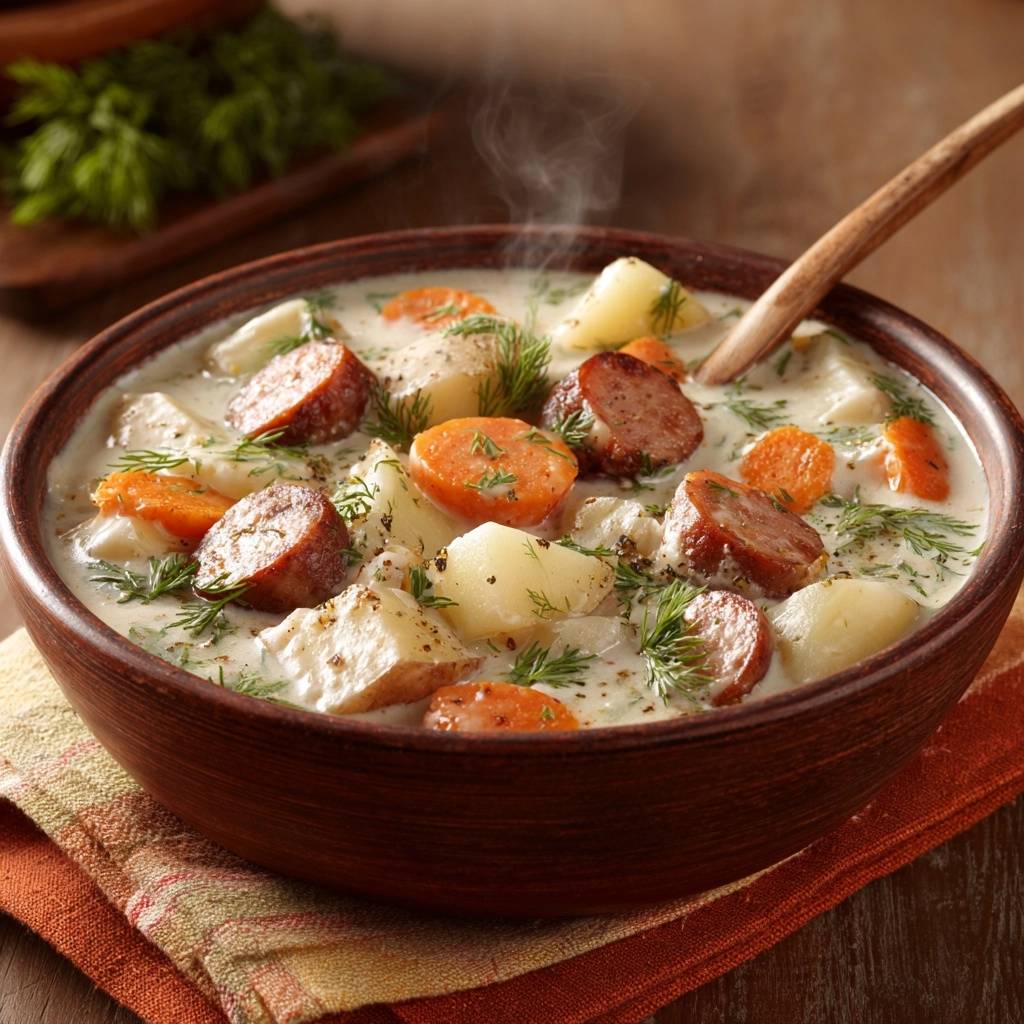
MinutesThis hearty chowder features smoky kielbasa, tender carrots, and Russet potatoes in a creamy base. By mashing a portion of the potatoes directly into the broth, the soup achieves a naturally thick texture that perfectly complements the fresh dill and savory spices.
Ingredients
1 pound smoked kielbasa or beef sausage, sliced into 1/2-inch rounds
3 large Russet potatoes, peeled and cubed into 1-inch pieces
2 large carrots, sliced into 1/2-inch rounds
1 yellow onion, finely diced
3 cloves garlic, minced
2 tablespoons all-purpose flour
4 cups chicken broth
1 cup heavy cream
2 tablespoons butter
1 teaspoon dried thyme
1/2 teaspoon black pepper
1/2 cup fresh dill, roughly chopped (for cooking and garnish)
Salt to taste
Directions
- Heat a large heavy-bottomed pot over medium-high heat. Add the sliced sausage and sear until deeply browned and crispy on both sides. Remove the sausage with a slotted spoon and set aside, leaving the rendered fat in the pot.
- Add the butter to the pot. Once melted, add the onions and carrots. Sauté for 5-6 minutes until the onions are translucent and the carrots begin to soften. Stir in the garlic and thyme, cooking for 1 minute until fragrant.
- Sprinkle the 2 tablespoons of flour over the vegetables and stir constantly for 2 minutes. This creates a light roux with the butter and sausage fat to ensure the sauce never separates.
- Slowly pour in the chicken broth while whisking or stirring to incorporate the flour. Add the cubed potatoes. Bring the mixture to a boil, then reduce heat to medium-low. Cover and simmer for 15 to 20 minutes, or until the potatoes are fork-tender.
- To solve the watery sauce problem, use a potato masher to crush about one-third of the potatoes directly in the pot. Stir these mashed potatoes into the broth; the released starches will instantly create a creamy, hearty body.
- Stir in the heavy cream and half of the fresh dill. Return the browned sausage to the pot. Simmer uncovered for an additional 5 minutes to allow the flavors to meld and the sauce to reach a thick, chowder-like consistency.
- Season with salt and black pepper to taste. Serve in warm bowls, garnishing generously with the remaining fresh dill to match the vibrant, herb-forward look of the dish.
Notes
- To ensure the sauce never separates, the recipe uses a light roux combined with a starch-release method. Smashing one-third of the cooked potatoes directly in the pot creates a rich body without relying solely on flour.