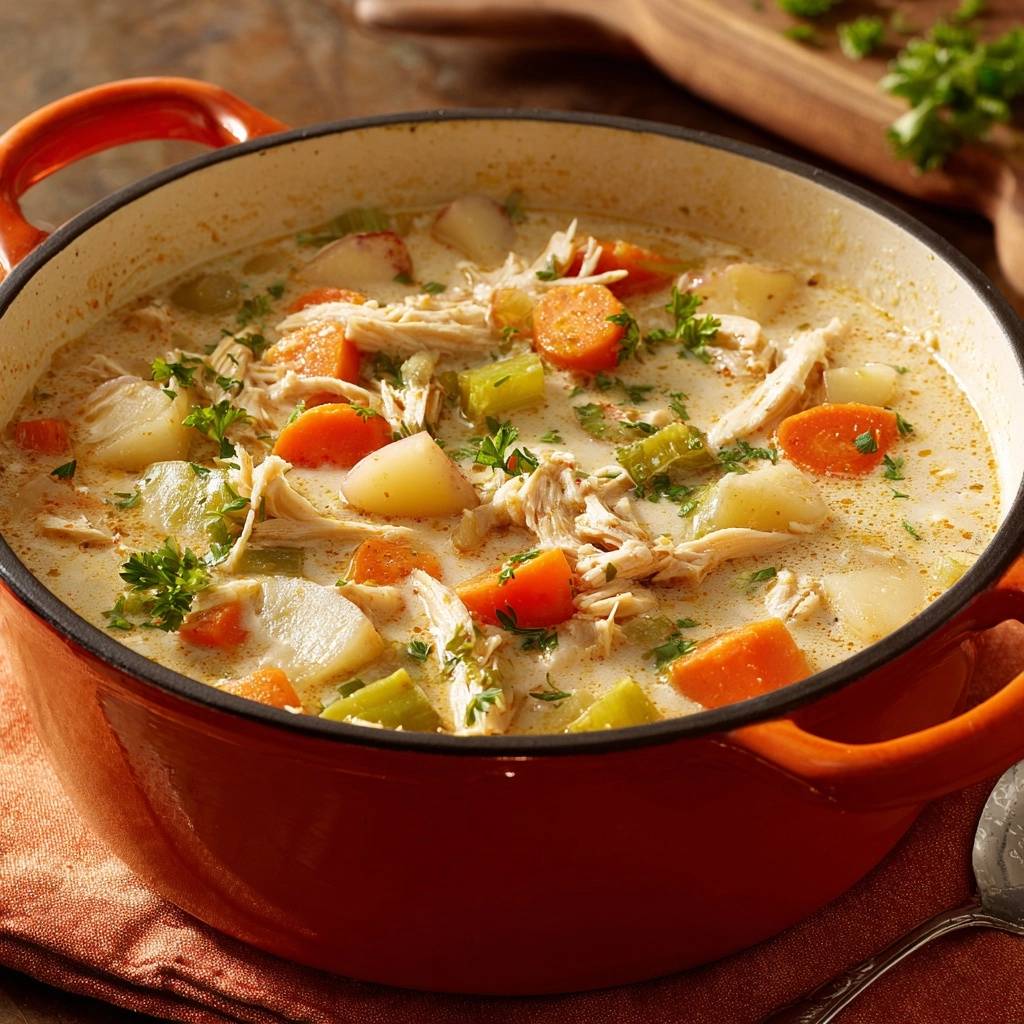
Imagine coming home to a kitchen filled with the scent of simmering thyme and savory garlic. You ladle a thick, velvety soup into your favorite bowl, and it looks exactly like a professional kitchen’s masterpiece. It’s rich, golden, and perfectly smooth. There’s a specific kind of comfort that only a bowl of Creamy Shredded Chicken and Potato Soup can provide, especially when the texture is just right.
However, many home cooks struggle with the dreaded “broken” soup. You’ve likely seen it before: the moment the cream hits the hot broth, it curdles into tiny, grainy white specks. It tastes fine, but the mouthfeel is ruined. This recipe solves that problem entirely. We focus on the structural integrity of every ingredient, ensuring the potatoes stay firm and the broth remains a flawless emulsion from the first spoonful to the last.
The secret to this success isn’t a fancy gadget; it’s all about thermal bridging. By gradually introducing the hot liquid to your dairy before it ever touches the main pot, you prevent the protein shock that causes separation. I’ve found that using red potatoes is the second “must-do” step because their waxy texture holds up against the heat, providing a necessary bite against the tender, hand-shredded chicken.
The Science of Emulsion in Creamy Soups
When you add dairy to a hot liquid, you’re performing a delicate chemical dance. Dairy products like heavy cream contain proteins that are highly sensitive to temperature changes. If you drop cold cream into a boiling pot, those proteins denature instantly, clumping together and creating a grainy texture. This is known as curdling, and once it happens, there’s no going back.
High heat is the enemy of a smooth soup. When a broth reaches a rolling boil, the rapid movement forces the fats to separate from the water-based liquid. By maintaining a gentle simmer, you keep the fat molecules suspended. This recipe uses a low-heat finish to protect the cream, ensuring the soup stays silky and rich rather than oily or separated.
Why Red Potatoes Maintain Structural Integrity
Not all potatoes are created equal when it comes to soup. Starchy potatoes, like Russets, are designed to fall apart, which is great for mashed potatoes but terrible for a chunky soup. They release too much starch, which can make the broth feel gummy or “muddy” over time.
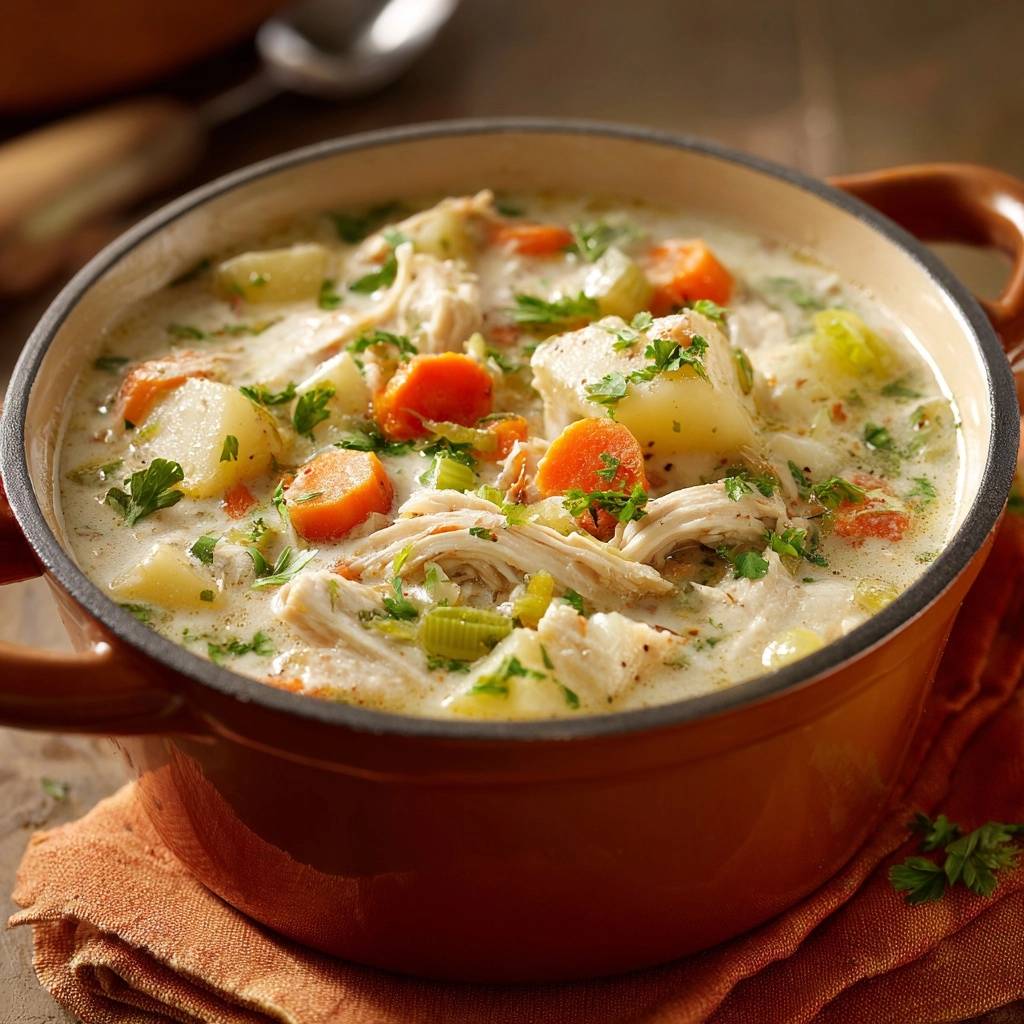
Red potatoes are waxy, meaning they have less starch and more moisture. They hold their shape beautifully even after 20 minutes of simmering. Leaving the skins on adds a rustic look and a boost of fiber, providing a wonderful textural contrast to the soft, shredded chicken strands.
Essential Components for a Rich Broth Base
A great soup starts with a heavy-bottomed Dutch oven. These pots are essential because they distribute heat evenly across the base, preventing “hot spots” that might scorch your vegetables or cause the cream to break later on. The thick walls also retain heat, allowing you to keep a steady, low simmer without constantly adjusting the dial.
While some prefer chicken thighs for their fat content, we use boneless, skinless chicken breasts here for a cleaner, more refined broth. Since we’re adding heavy cream and butter, the lean chicken provides a balanced protein that doesn’t make the soup feel overly greasy. The chicken poaches directly in the broth, absorbing the flavors of the thyme and garlic while staying incredibly moist.
Quality broth is your foundation. If you’re using store-bought, look for a low-sodium version so you can control the seasoning yourself. As the chicken cooks, it releases its own juices into the pot, creating a “double broth” effect that tastes much deeper than a standard 35-minute recipe usually allows.
Aromatic Foundations: The Mirepoix and Garlic
The classic trio of onions, carrots, and celery—known as a mirepoix—is the soul of this dish. You want to “sweat” these vegetables in a mix of butter and olive oil. This means cooking them over medium heat until the onions are translucent and the carrots look slightly brightened.
Avoid browning the vegetables. If they start to turn dark brown or caramelized, they will change the color of your soup from a beautiful golden cream to a muddy tan. Once the vegetables are soft and fragrant, add the minced garlic for just sixty seconds. Garlic burns quickly, and bitter, burnt garlic will ruin the entire flavor profile.
The Role of Paprika and Thyme
Dried thyme provides that “Sunday roast” aroma that makes the kitchen feel so cozy. However, the real secret ingredient here is the half-teaspoon of paprika. It doesn’t add heat; instead, it provides a subtle earthy depth and a gorgeous golden hue that mimics a slow-simmered bone broth.
To get the most out of these spices, stir them into the hot butter and oil before adding the broth. This is called “blooming.” Many flavor compounds in dried herbs are fat-soluble, so letting them sizzle for a few seconds in the oil unlocks a level of flavor you simply won’t get if you just toss them into the liquid later.
Step-by-Step: Building the Perfect Emulsion
Building this soup is a three-phase process that ensures every ingredient is cooked to its peak texture. You’ll start by creating the flavor base, then move to poaching the proteins, and finally, finishing with the dairy. The smell of the thyme hitting the hot butter is your first sign that this is going to be a fantastic meal.
For a similar comforting experience with root vegetables, check out this creamy potato carrot soup.
As you pour in the broth, use your wooden spoon to scrape the bottom of the pot. Any little brown bits stuck to the bottom are packed with flavor. Once the liquid is in, you’ll notice the paprika turning the broth a warm, inviting orange-gold. This is exactly what you want to see before the chicken and potatoes go in.
Phase 1: Poaching the Chicken and Potatoes
Place the whole chicken breasts and the cubed potatoes into the liquid. It’s vital to keep the heat at a gentle simmer—look for small, lazy bubbles breaking the surface. A rolling boil will agitate the chicken fibers, making the meat tough and stringy. Gentle poaching keeps the chicken succulent and easy to shred.
After about 20 minutes, check the potatoes with a fork. They should be tender enough to pierce easily but shouldn’t crumble apart. At the same time, the chicken should be opaque all the way through. This simultaneous cooking ensures the potatoes don’t turn to mush while you’re waiting for the meat to finish.
Phase 2: The Shredding Technique
Remove the chicken to a cutting board and let it rest for two minutes. If you shred it the second it leaves the pot, all the moisture will evaporate. Use two forks to pull the meat into thick chunks and long strands. I prefer larger pieces because they give the soup a “hearty” feel that mimics a chunky stew.
Once shredded, slide the chicken back into the pot. This allows the meat to soak up a bit more of the seasoned broth while you prepare the cream. You’ll notice the soup thickening slightly just from the natural starches released by the red potatoes during the simmer.
Phase 3: Tempering the Heavy Cream
This is the most critical step for a professional finish. Pour your heavy cream into a separate bowl. Take a ladle of the hot broth from the pot and slowly whisk it into the cream. Repeat this with a second ladle. You’ll see the cream become warm and slightly thinner.
By doing this, you’re creating a “thermal bridge.” You’ve raised the temperature of the cream so it isn’t “shocked” when it hits the pot. Turn your stove to the lowest possible setting, then pour the tempered cream into the soup. Stir gently. The soup will transform into a rich, opaque masterpiece that is perfectly emulsified.
Troubleshooting Common Texture Issues
If your soup feels a bit too thin for your liking, don’t reach for flour or cornstarch, which can make the broth taste “pasty.” Instead, take a few of the cooked potato cubes and mash them against the side of the pot with a spoon. Stir them back in, and the natural starch will thicken the liquid instantly.
If you accidentally let the soup boil after adding the cream and it starts to look slightly grainy, don’t panic. Immediately remove it from the heat and stir in a splash of cold cream or milk. This can sometimes “reset” the emulsion if the separation hasn’t gone too far. Always serve immediately after adding the dairy for the best texture.
Flavor Variations and Dietary Swaps
This recipe is a fantastic canvas for other flavors. If you want a more sophisticated, French-inspired profile, replace the yellow onion with two large leeks (white and light green parts only). Leeks offer a sweeter, more delicate onion flavor that pairs beautifully with heavy cream and potatoes.
For those who want a bit of greenery, stir in a handful of chopped kale or baby spinach during the last two minutes of cooking. The heat of the soup will wilt the greens perfectly without overcooking them. The bitterness of the kale cuts through the richness of the cream, creating a very balanced bite.
Dairy-Free Alternatives that Won’t Separate
If you need to avoid dairy, full-fat coconut milk is the best substitute for heavy cream. It has the necessary fat content to provide that “velvety” mouthfeel. However, it will add a slight coconut flavor to the background of the soup.
Cashew cream is another excellent option. Soak raw cashews in water, blend them until completely smooth, and use that as your thickener. Interestingly, cashew cream is much more stable than dairy and is very unlikely to curdle, even if the soup reaches a higher temperature.
Optimal Pairings for Chicken and Potato Soup
Because this soup is so rich and creamy, you want to pair it with something that offers acidity or crunch. A thick slice of toasted sourdough bread is the classic choice. The tanginess of the sourdough cuts through the heavy cream, and the crusty edges are perfect for mopping up the last bits of broth.
A bright arugula salad with a simple lemon vinaigrette is another fantastic side. The peppery bite of the arugula and the sharp acid of the lemon juice cleanse your palate between spoonfuls of the savory soup. If you want more vegetables, roasted broccoli with a sprinkle of red pepper flakes provides a nice charred flavor that complements the creamy base.
Storage and Reheating Without Breaking the Sauce
Creamy soups require a little extra care when it comes to leftovers. As the soup sits in the fridge, the potatoes will continue to absorb liquid, and the fats in the cream will solidify. When you go to reheat it, the soup might look much thicker than it did when it was fresh.
Always reheat this soup on the stove over low heat. Avoid the microwave if possible, as it creates “hot spots” that can cause the cream to separate and turn oily. Add a splash of broth or water to the pot as you reheat it to bring back that original silky consistency. Stir frequently and remove it from the heat the moment it’s warm enough to eat.
Freezing Guide for Long-Term Meal Prep
If you plan on freezing this soup, I recommend a “deconstructed” approach. Dairy and potatoes both change texture in the freezer; potatoes can become grainy, and cream often separates upon thawing. For the best results, cook the soup through step 5 (before adding the cream).
Freeze the broth, chicken, and vegetable base in airtight containers. When you’re ready to eat, thaw the base in the fridge overnight. Heat it on the stove, and then perform the tempering step with fresh heavy cream right before serving. This ensures the soup tastes exactly like it was made from scratch that day.
Expert Soup Making FAQ
Can I use chicken thighs instead of breasts?
Yes, you can certainly use boneless, skinless chicken thighs. Thighs are more forgiving and stay very tender even if they simmer a bit longer. However, they do contain more fat, so you may notice a few more “oil droplets” on the surface of your soup. If that doesn’t bother you, the flavor will be even deeper.
Why is my soup still thin after adding the cream?
The thickness of the soup depends on how much the liquid reduced during the simmering phase and the starch content of your potatoes. If it’s too thin, use the “potato mash” trick: crush a few of the cooked red potatoes against the side of the pot and stir them in. The released starch acts as a natural thickener without changing the flavor.
Do I have to peel the potatoes?
You don’t have to peel red potatoes! Their skin is very thin and adds a nice pop of color and texture to the dish. Just make sure to scrub them well under cold water before cubing them. If you prefer a perfectly uniform, white-and-gold look, you can peel them, but it isn’t necessary for the recipe to work.
Can I make this in a slow cooker?
You can, but you must wait until the very end to add the cream. Cook the vegetables, broth, chicken, and potatoes on low for 6-7 hours. Once the chicken is shredded and added back in, perform the tempering step with the cream in a separate bowl, then stir it into the slow cooker. Do not let the slow cooker stay on “high” once the cream is added.
How long does this stay fresh in the refrigerator?
This soup will stay fresh in an airtight container for up to 3 to 4 days. Because it contains dairy, it’s important to get it into the fridge within two hours of cooking. When you reheat it, remember to use low heat and add a splash of liquid to restore the creamy texture, as the potatoes will soak up the broth over time.
Shredded Chicken and Potato Soup
Course: Main CourseCuisine: AmericanDifficulty: easy6
servings15
minutes35
minutes365
kcal50
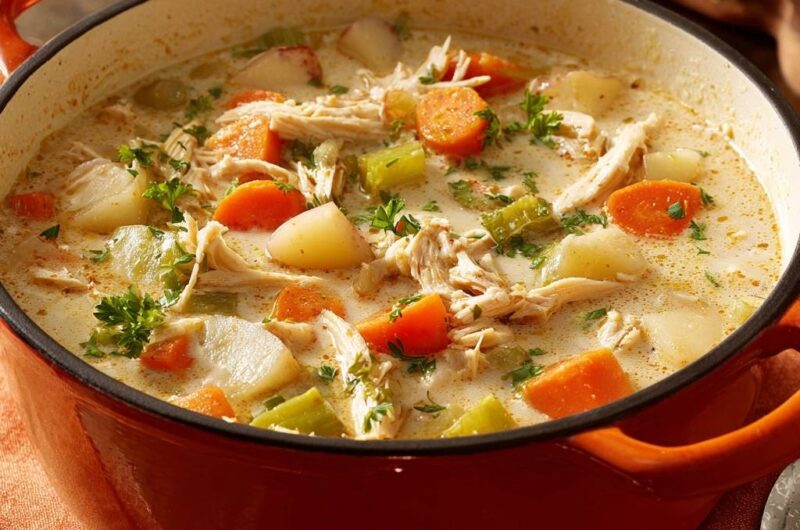
MinutesThis hearty soup features tender shredded chicken, red potatoes, and fresh vegetables in a rich, emulsified broth. The secret to its perfect texture is a low-heat finish and a specific dairy tempering method.
Ingredients
2 lbs boneless skinless chicken breasts
4 cups chicken broth
3 large red potatoes, cubed (skin on for texture)
3 large carrots, sliced into thick rounds
2 stalks celery, chopped
1 yellow onion, diced
2 cloves garlic, minced
1 cup heavy cream
2 tablespoons butter
1 tablespoon olive oil
1 teaspoon dried thyme
1/2 teaspoon paprika (for the golden hue seen in the image)
Salt and black pepper to taste
Fresh curly parsley, chopped for garnish
Directions
- In a large heavy-bottomed Dutch oven, heat the butter and olive oil over medium heat. Add the onion, carrots, and celery. Saute for 6 to 8 minutes until the vegetables begin to soften. Add the garlic and cook for 1 minute until fragrant.
- Stir in the dried thyme and paprika, coating the vegetables to release the spices’ oils.
- Pour in the chicken broth. Add the whole chicken breasts and the cubed red potatoes. Ensure the liquid covers the ingredients. Bring the liquid to a gentle simmer. Do not let it reach a rolling boil, as this toughens the chicken and can break the potatoes apart.
- Cover and simmer for 18 to 22 minutes, or until the chicken reaches an internal temperature of 165°F and the potatoes are fork-tender but still holding their shape.
- Remove the chicken breasts to a cutting board. Use two forks to shred the chicken into thick chunks and strands. Return the shredded chicken to the pot.
- To solve the curdling problem, perform the tempering step: Pour the heavy cream into a small heat-proof bowl. Slowly whisk in two ladles of the hot soup broth into the cream. This raises the temperature of the dairy gradually so it does not shock and “break” when added to the pot.
- Turn the stove heat to the lowest setting. Stir the tempered cream mixture into the pot. Stir gently for 2 to 3 minutes to incorporate. Never let the soup boil once the cream is added.
- Season generously with salt and black pepper. Garnish with a heavy sprinkle of fresh chopped parsley and serve immediately to maintain the perfectly emulsified, creamy texture.
Notes
- To prevent the soup from separating, never let the liquid reach a rolling boil once the chicken is added, and ensure the heat is on the lowest setting before stirring in the tempered cream.