Nothing ruins a slow morning faster than a breakfast bake that turns into a mushy, watery mess the moment you slice into it. Most traditional casseroles suffer from the “soggy bottom” epidemic because raw vegetables release their juices directly into the eggs. This creates a weeping texture that feels more like a wet sponge than a hearty meal.
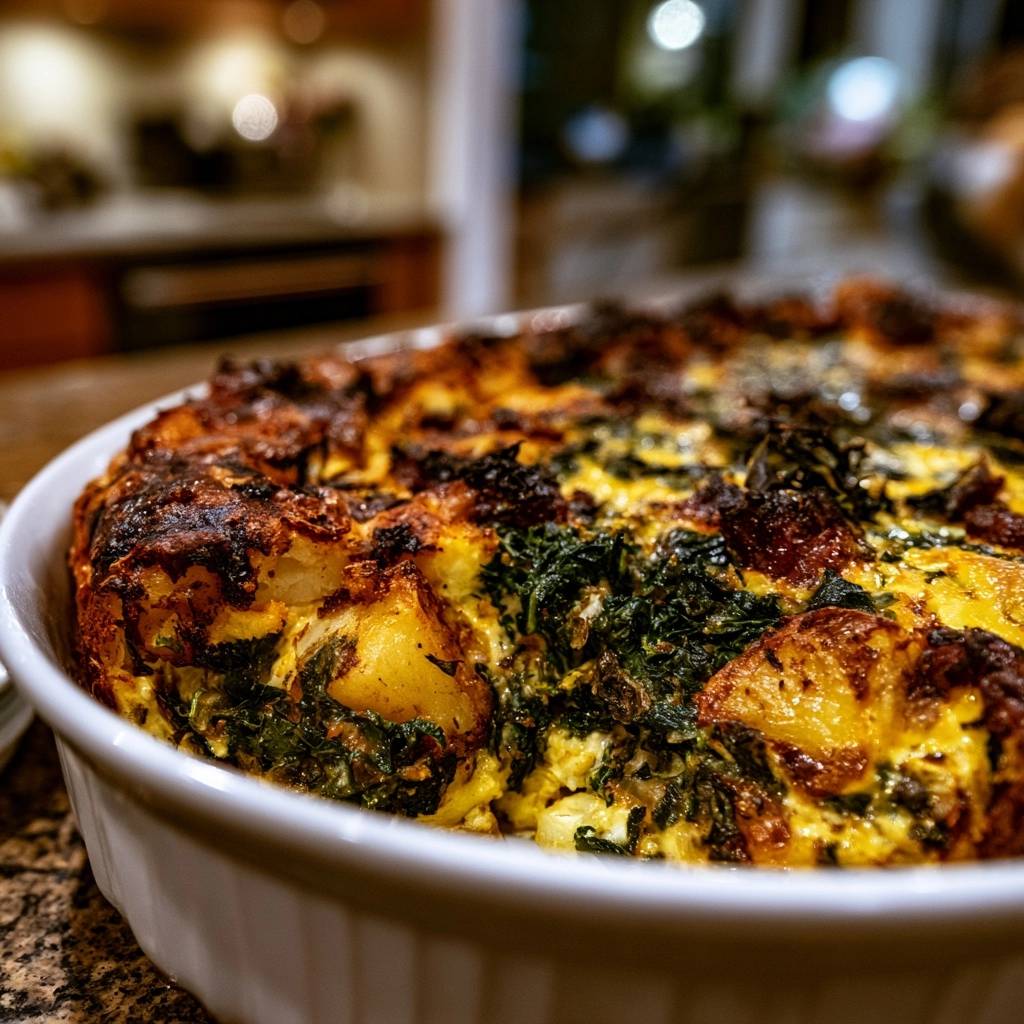
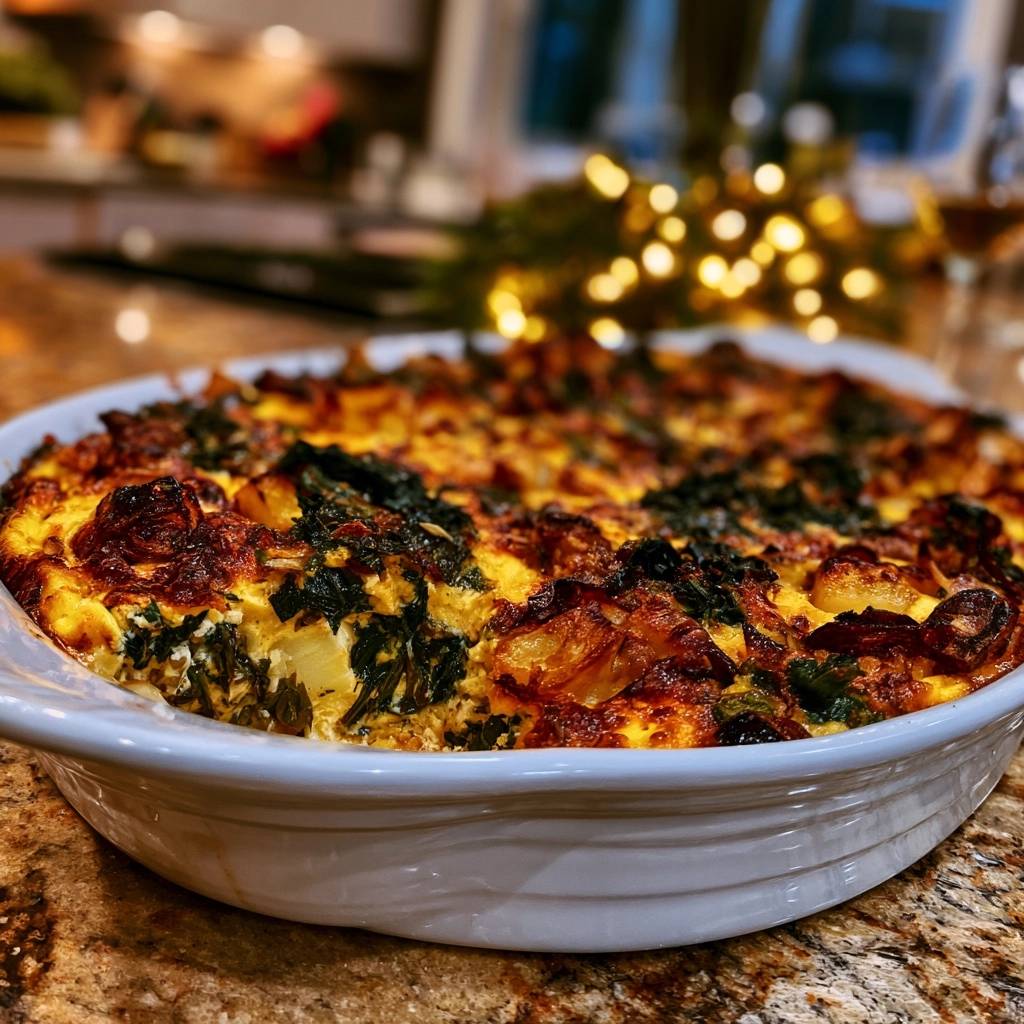
The secret to a truly elite Crispy Potato and Spinach Breakfast Casserole lies in a two-stage cooking process that prioritizes texture above all else. By treating the potatoes and greens as independent components before they ever touch the egg custard, you create a structural masterpiece. You’re looking for that specific sensory contrast: a silky, rich egg center paired with potato edges so crisp they crackle when your fork hits them.
I’ve found that the real trick is the high-heat roast. Most home cooks are afraid to let their potatoes get dark, but those charred, caramelized corners are exactly what prevent the spuds from dissolving into the eggs. If you don’t see deep golden brown edges on that sheet pan, they aren’t ready for the baking dish yet.
The Science of Preventing a Soggy Casserole
Physics plays a massive role in why breakfast bakes often fail. When you put raw potatoes or damp spinach into a dish and pour liquid eggs over them, you’re essentially steaming the vegetables inside a custard jacket. As the heat rises, the cell walls of the vegetables break down, releasing “vegetable water” that thins out the eggs and prevents them from setting firmly.
Pre-roasting the potatoes at a high temperature does more than just add flavor; it creates a starch barrier. This dehydrated exterior acts as a shield, repelling the moisture from the egg mixture so the potato stays fluffy inside and firm on the outside. Without this step, the starch would simply absorb the egg liquid, resulting in a gummy, dense texture that lacks any definition.
Furthermore, the “weeping” effect of greens can turn a beautiful yellow custard into a grey, watery soup. By wilting the spinach and physically squeezing the liquid out, you ensure the greens stay in vibrant, concentrated clusters. This keeps the structural integrity of the custard intact, allowing it to bake into a clean, sliceable square rather than a loose scramble.
Why Yukon Gold Potatoes Outperform Russets
While Russet potatoes are great for mashing, they are far too floury for a high-end casserole. Yukon Golds possess a naturally waxy-yet-creamy texture that holds its shape beautifully even after being roasted and then baked again. They have just enough starch to crisp up on the edges while maintaining a buttery, solid heart that won’t crumble into the egg mixture.
The Critical Role of Moisture-Squeezing Spinach
Fresh spinach is nearly 90% water. If you toss a handful of fresh leaves into your eggs, that water has nowhere to go but into your breakfast. You must sauté the leaves until they collapse, then use a clean kitchen towel to squeeze them until they feel like a dry ball of yarn. This is the only way to prevent those unappealing green streaks and watery pockets from forming in the final dish.
Essential Components for the Perfect Texture
Every ingredient in this Crispy Potato and Spinach Breakfast Casserole serves a specific functional purpose. We aren’t just throwing things in a bowl; we’re building a balanced custard that can support heavy, roasted vegetables without collapsing. Quality matters here, especially when it comes to the fat content of your dairy and the sharpness of your cheese.
Using fresh, large eggs provides the protein structure needed to lift the potatoes. However, the eggs alone can become rubbery if they aren’t tempered with the right amount of fat. This is why we use a specific blend of heavy cream and whole milk to create a velvety mouthfeel that stands up to the heat of the oven.
Selecting High-Fat Dairy for Custard Stability
I always recommend a 50/50 split of heavy cream and whole milk. Skim or low-fat milks contain too much water, which contributes to that dreaded weeping effect as the casserole cools. The fat in the cream coats the egg proteins, preventing them from bonding too tightly and becoming tough or “rubbery” during the 35-minute bake time.
Sharp Cheddar vs. Mild Melting Cheeses
Aged sharp cheddar is the gold standard for this recipe because it packs a massive flavor punch without needing a huge volume of cheese. Mild cheeses often have a higher moisture and oil content, which can lead to a greasy film on top of the dish. Sharp cheddar provides a salty, tangy contrast that cuts through the richness of the eggs and potatoes perfectly.
Step-by-Step: Achieving the High-Heat Roast
The first phase of this recipe is where the magic happens. You cannot rush the potato roast. If you pull them out when they are merely “soft,” the final casserole will be mediocre. You are looking for a transformation that turns a humble tuber into a golden, crunchy nugget that can survive being submerged in egg.
Preheating and Surface Area Optimization
Your oven must be at a true 425°F before the potatoes go in. Use a large rimmed baking sheet so the potatoes have plenty of “breathing room.” If you crowd the pan, the potatoes will release steam and soften each other. You want dry heat circulating around every single cube to dehydrate the surface and build that essential crust.
The Maillard Reaction on Potato Edges
Keep an eye out for the Maillard reaction—that deep browning that signals complex flavor development. The potato corners should look almost charred. Don’t worry about them being too hard; they will soften slightly once they absorb a tiny bit of the egg custard, reaching a perfect “al dente” state that provides a satisfying chew in every bite.
Assembling the Layers for Maximum Crunch
Architecture is everything when it comes to the Crispy Potato and Spinach Breakfast Casserole. If you just dump everything in and stir, you’ll lose all those crispy edges you worked so hard for. The goal is to nestle the ingredients together while keeping the very tops of the potatoes exposed to the dry air of the oven.
Strategic Placement of Spinach and Bacon
Once your potatoes are in the dish, distribute the squeezed spinach in small, torn bits. Don’t leave it in one big clump, or you’ll get a mouthful of greens in one bite and none in the next. Tuck the bacon bits down near the potatoes; as the casserole bakes, the smoky fat from the meat will season the potatoes from the bottom up.
The Pour-Over: Submerging Without Soaking
When you pour the egg mixture, do it slowly. Use a fork to gently lift the potato cubes so the egg can flow underneath them. You want the bottom two-thirds of the potatoes submerged in the custard for stability, but the top third should remain above the “tide line.” This ensures the tops stay crunchy while the bottoms become part of the savory custard.
Troubleshooting Your Breakfast Bake
Even with the best intentions, ovens can be fickle. If you notice the edges of your casserole are puffing up like a souffle while the center is still liquid, your oven might be running too hot. This causes the outside to overcook before the middle can set, leading to a dry exterior and a raw interior.
Managing Oven Hot Spots
Most ovens have specific hot spots, usually in the back corners. About halfway through the second bake, rotate your ceramic dish 180 degrees. This ensures the cheese browns evenly and the eggs set at a consistent rate. Always use the middle rack to allow for even heat distribution above and below the dish.
Identifying the Perfect Custard Set
Use the “jiggle test” to check for doneness. Give the pan a gentle shake; the center should have a very slight, firm wobble, similar to set gelatin. If it ripples like water, it needs five more minutes. A knife inserted into the center should come out clean, but the casserole shouldn’t look dry or “puffed,” which is a sign of overcooking.
Make-Ahead Strategies and Storage
Because this recipe relies on crispiness, it isn’t the best candidate for an “overnight soak” in the fridge. If the roasted potatoes sit in raw egg for eight hours, they will lose their crunch. However, you can still do the heavy lifting in advance to make your morning easier.
Par-Roasting Potatoes in Advance
You can roast the potatoes and prep the spinach up to 24 hours ahead of time. Store the roasted potatoes in an airtight container at room temperature (to keep them from getting soggy in the fridge). In the morning, simply assemble the layers, whisk the eggs, and bake. This cuts your active morning work down to about five minutes.
Reheating Without Losing the Texture
Please, I beg you, stay away from the microwave for leftovers! A microwave will turn those crispy potatoes into mush in seconds. Instead, use a toaster oven or an air fryer at 350°F for about 5-8 minutes. This revives the crunch of the potatoes and the snap of the bacon while gently warming the egg center.
Expert Tips for Flavor Customization
This casserole is a fantastic canvas for other flavors. If you want to brighten up the heavy fats, try folding in some chopped fresh chives or flat-leaf parsley right before baking. For a bit of heat, a teaspoon of red pepper flakes in the egg mixture goes a long way.
If you want to swap the greens, kale works beautifully as long as you remove the tough ribs and sauté it thoroughly. You can also add caramelized onions for a deep, jammy sweetness that pairs perfectly with the sharp cheddar. Just remember the golden rule: whatever you add must be as dry as possible before it hits the egg.
Frequently Asked Questions
Can I use frozen hash browns instead of fresh potatoes?
You can, but the texture will be significantly different. Frozen hash browns are often pre-steamed and contain a lot of moisture. They won’t achieve the same structural “skyscraper” crunch as fresh, cubed Yukon Golds. If you must use them, choose the cubed variety and roast them from frozen at 425°F until they are very dark and crispy before proceeding.
Why did my spinach turn the eggs green?
This usually happens if the spinach wasn’t squeezed dry enough or if it was over-blended into the egg mixture. The “green liquid” that comes out of spinach is a powerful dye. To keep your eggs yellow and bright, ensure the spinach is squeezed until no more liquid escapes, then gently fold the dry clumps into the dish rather than whisking them into the eggs.
Can I make this dairy-free?
Yes, you can substitute the heavy cream and milk with full-fat coconut milk or a thick cashew cream. Avoid thin almond or rice milks, as they lack the fat content necessary to stabilize the eggs. The result will be slightly less “custardy,” but the high-heat roasted potatoes will still provide excellent flavor and texture.
What is the best way to tell if the center is fully cooked without a thermometer?
The best visual cue is the “lift.” The edges of the casserole will slightly pull away from the sides of the ceramic dish when the eggs are fully set. Additionally, the center should feel firm to a light touch. If you press the center with the back of a spoon and see any liquid egg seep to the surface, it needs more time in the oven.
How should I store leftovers and how long do they last?
Store any leftovers in an airtight container in the refrigerator for up to 3 days. I do not recommend freezing this casserole; the potatoes tend to become grainy and the egg custard can release water upon thawing, which ruins the texture. For the best experience, reheat in an oven or air fryer to maintain the crispiness of the potato edges.
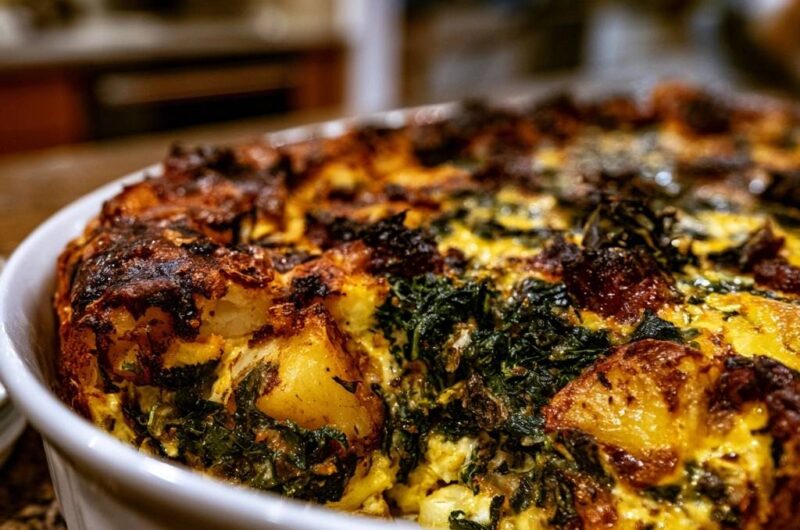
Crispy Potato and Spinach Breakfast Casserole
Course: BreakfastCuisine: AmericanDifficulty: easy8
servings15
minutes55
minutes70
Minutes340
kcalAmerican
Ingredients
2 pounds Yukon Gold potatoes, peeled and cubed into 1-inch pieces
12 ounces fresh baby spinach (or 10oz frozen, thawed and squeezed bone-dry)
10 large eggs
1/2 cup heavy cream
1/2 cup whole milk
2 cups shredded sharp cheddar cheese
1/2 cup cooked bacon bits
1 teaspoon garlic powder
1 teaspoon onion powder
1 teaspoon smoked paprika
1 teaspoon salt (divided)
1/2 teaspoon black pepper
3 tablespoons olive oil
Directions
- Preheat your oven to 425°F (220°C). Toss the cubed potatoes with olive oil, 1/2 teaspoon salt, pepper, and smoked paprika on a large rimmed baking sheet. Spread them in a single layer. Roast for 25-30 minutes, tossing halfway through, until the edges are dark golden brown and crispy. This high-heat roast is essential to prevent the potatoes from turning into mush once the eggs are added.
- While potatoes roast, prepare the spinach. If using fresh, sauté in a dry pan until wilted, then squeeze out all excess liquid using a kitchen towel. If using frozen, squeeze until no green liquid remains. Roughly chop the squeezed spinach.
- In a large mixing bowl, whisk together the eggs, heavy cream, milk, garlic powder, onion powder, and the remaining 1/2 teaspoon of salt until frothy and well-combined.
- Grease a deep 9×13 inch (or 3-quart) ceramic baking dish. Layer the crispy roasted potatoes, squeezed spinach, and bacon bits into the dish. Toss them slightly so the spinach is distributed among the potato gaps.
- Sprinkle the shredded cheese over the dry ingredients, then pour the egg mixture over everything. Use a fork to gently lift the potatoes, allowing the egg to submerge the bottom layers while leaving the tops of the potatoes exposed.
- Reduce oven heat to 375°F (190°C). Bake for 30-35 minutes. For the visual result shown in the image, the top should be deeply browned and the potato corners should look slightly charred.
- Let the casserole rest for 10 minutes before slicing. This allows the custard to fully set and ensures the bottom remains crisp rather than steaming into a soggy texture.
Notes
- The secret to the anti-soggy texture is roasting the potatoes at 425 degrees Fahrenheit and ensuring the spinach is squeezed bone-dry before adding to the egg mixture. Let the dish rest for 10 minutes after baking to allow the custard to set completely.