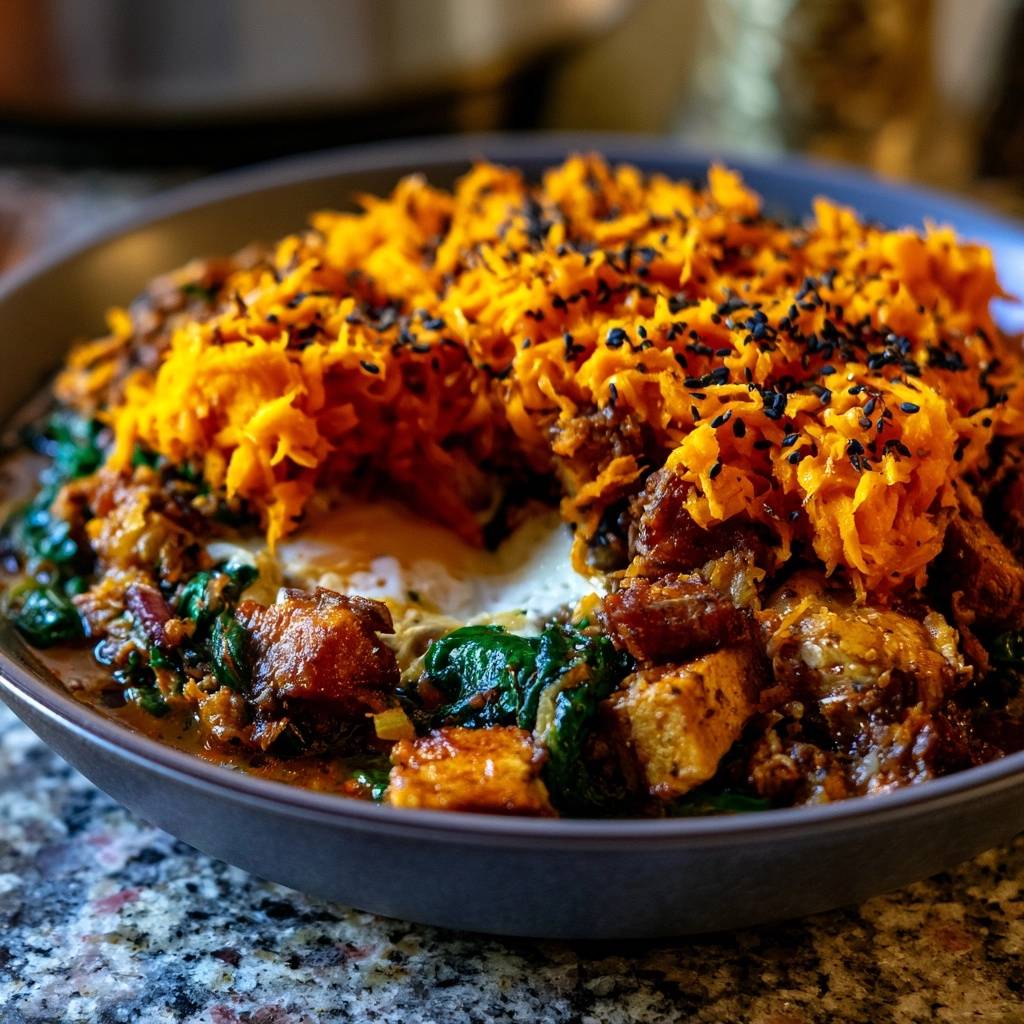
Most breakfast hashes suffer from a disappointing, mushy texture where the vegetables steam together into a soft pile. You’ve likely experienced the frustration of a sweet potato hash that looks great in the pan but turns into a soggy mess the moment it hits your plate. This recipe solves that problem by utilizing a dual-texture philosophy that separates the crispy crown from the savory, tender base.
The secret to this superior culinary approach lies in cooking the components in distinct stages rather than tossing everything into the pan at once. By isolating the sweet potato shreds, we can achieve a deep, golden crunch that mimics the best diner-style hash browns. This creates a sophisticated contrast against the jammy egg yolks and the earthy, wilted spinach hiding underneath.
I’ve found that the real magic happens when you treat the sweet potatoes as a garnish rather than a filler. The flavor profile is intentionally smoky and rich, relying on high-heat caramelization rather than heavy oils. To ensure success, you must use a heavy-bottomed skillet; it provides the consistent heat retention needed to sear the starch without burning the natural sugars.
The Science of Starch and Moisture Control
Sweet potatoes are notoriously difficult to crisp because they contain significantly more sugar and water than standard Russet potatoes. When you heat them, the internal moisture turns to steam, which softens the cell walls before the exterior has a chance to brown. If that moisture stays in the pan, you’re essentially boiling your breakfast instead of frying it.
The “Salt and Squeeze” method is your most powerful tool for a Crispy Sweet Potato Breakfast Hash. Salt draws out the moisture through osmosis, collapsing the watery cells and leaving behind concentrated starch. This process is non-negotiable if you want a crunch that lasts until the final bite.
Removing this liquid also facilitates the Maillard reaction, which is the chemical bridge between raw starch and savory, toasted flavor. Without excess water to boil off, the surface temperature of the potato shreds rises quickly. This allows the natural sugars to caramelize into a complex, nutty crust that provides the structural integrity for the entire dish.
Why Wringing Out Liquid Changes Everything
When you apply salt to grated tubers, you’re initiating a rapid cellular breakdown. Within minutes, you’ll see the shreds begin to weep, releasing a cloudy orange liquid that would otherwise ruin your sear. This liquid is the enemy of the “crisp,” as it creates a barrier between the potato and the hot oil.
By forcefully wringing the potatoes in a kitchen towel, you create a dry, high-surface-area ingredient. This allows the olive oil to immediately fry the surface of each individual shred rather than steaming the interior. You’ll notice the difference the moment they hit the pan; instead of a quiet hiss, you’ll hear a vigorous sizzle as the starch dehydrates and hardens.
Essential Components for the Layered Hash
Success starts with choosing the right fats and seasonings. I recommend using a high-quality olive oil or avocado oil because they handle the medium-high heat required for searing without reaching their smoke point. Avoid butter for the initial sear, as the milk solids will burn long before the potatoes reach their peak crispiness.
For the seasoning, smoked paprika and garlic powder are the heroes here. Unlike fresh garlic or onions, which can burn and turn bitter during a ten-minute sear, dried spices integrate into the oil. This creates a flavorful “lacquer” that coats the protein and potatoes evenly without the risk of charred, acrid bits.
Selecting the Right Sweet Potato Variety
Not all sweet potatoes are created equal when it comes to frying. I prefer using Jewel or Garnet varieties for this hash. These “moist” varieties actually have a higher sugar content that caramelizes beautifully, and their vibrant orange flesh provides a stunning visual contrast against the greens.
Beauregard potatoes are another excellent choice as they hold their shape well when grated. While you can leave the skins on for extra fiber and a rustic look, peeling them ensures a more uniform texture for the “shredded crown” effect. The flesh of these varieties is nutritionally dense, packed with Vitamin A, which holds up well even under high heat.
Protein Options: Tofu vs. Chicken Breast
Choosing your protein base dictates the prep work needed for the savory foundation. If you’re using firm tofu, you must press it for at least 15 minutes to remove excess water. Once pressed, crumble it or cut it into tiny cubes so it can develop a “meaty” crust in the skillet alongside the spices.
For those using chicken breast, the key is precision. Cut the chicken into small, uniform half-inch cubes. This ensures they cook through and caramelize at the same rate the spinach wilts. Because chicken is lean, it benefits greatly from the smoked paprika and garlic powder, which mimic the savory depth usually found in cured meats.
Step-by-Step: Achieving the Perfect Golden Crunch
The first phase of cooking is all about patience. Once you’ve spread the dried sweet potato shreds into the hot oil, you must leave them alone. This “undisturbed sear” is what builds the crust; if you move them too early, you’ll break the starch bonds and end up with a pile of broken, oily mush.
Watch for the edges to turn a deep, toasted brown. This is your visual cue that the bottom has set into a cohesive layer. When you flip the potatoes, do it in large sections using a wide spatula. The second side will cook faster, so stay close to the stove to ensure you reach a perfect golden-brown without crossing into burnt territory.
Building the Savory Foundation and Wilted Greens
After removing the crispy potatoes, the pan will be coated with flavorful browned bits. Adding your protein and the remaining oil allows you to scrape up that flavor. As the spinach hits the pan, it releases a small amount of moisture that naturally deglazes the skillet, incorporating all those smoky spices into a cohesive sauce.
This bed of greens serves a dual purpose. It adds a fresh, mineral bite to the dish, but it also acts as a thermal buffer. The spinach protects the protein from overcooking while providing a soft, moist environment for the eggs to steam-poach to perfection.
The Well Technique for Steam-Poached Eggs
To get those perfect “hidden” eggs, you need to create structural wells. Use a large spoon to push the protein and spinach mixture toward the edges of the pan, exposing the hot surface of the skillet. This ensures the egg whites make direct contact with the heat so they set quickly and firmly.
Once the eggs are cracked into the wells, covering the pan with a lid is essential. The trapped steam cooks the tops of the whites while the yolks remain insulated by the surrounding ingredients. This technique gives you that coveted “runny yolk” without the stress of flipping an egg in a crowded pan.
Assembling the Final Multi-Textural Layers
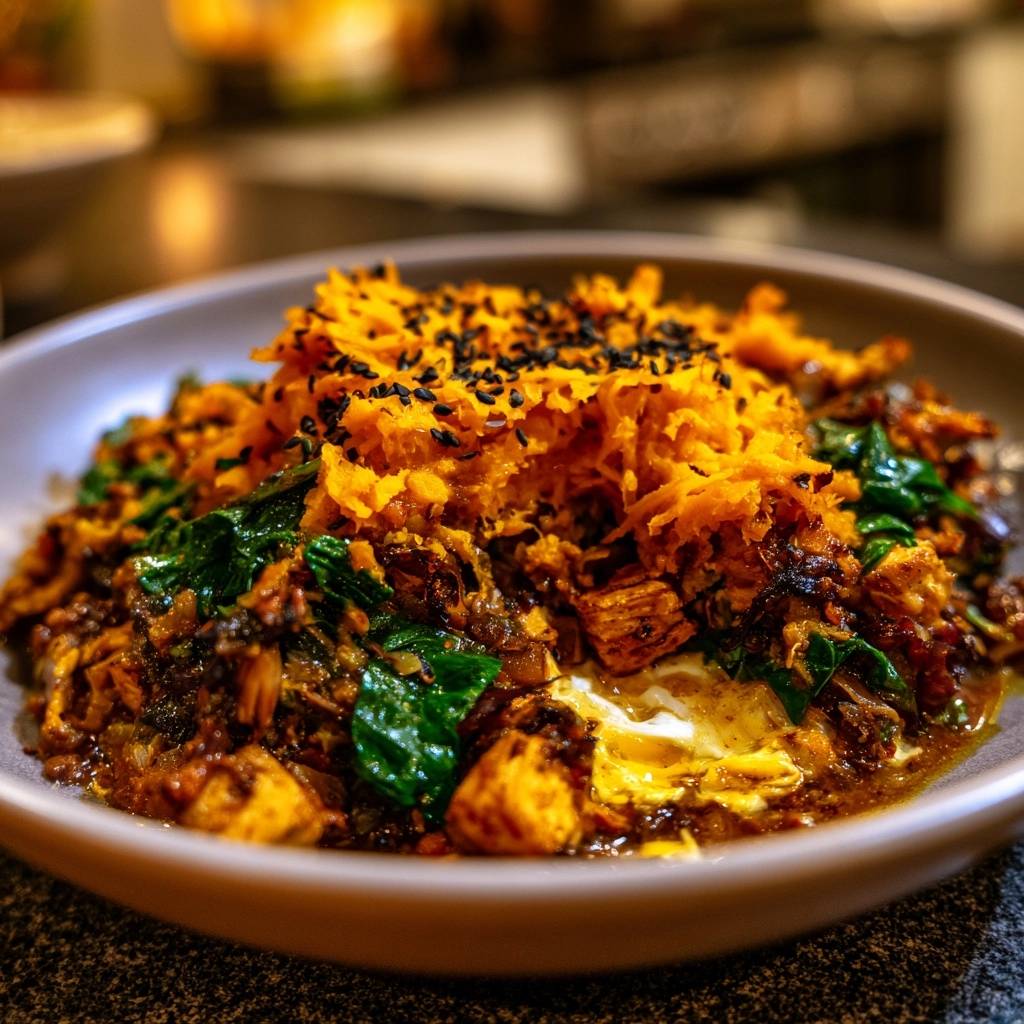
The assembly is where the “Dual-Texture” philosophy comes to life. You must wait until the eggs are fully cooked before adding the crispy potatoes back to the pan. Placing them on top at the very last second prevents them from absorbing the moisture from the spinach and eggs, preserving their structural integrity.
The aesthetic appeal of this dish is undeniable. The bright orange of the sweet potatoes, the deep green of the spinach, and the stark white of the eggs create a vibrant palette. A generous garnish of black sesame seeds adds a final layer of crunch and a sophisticated, earthy finish that ties the smoky paprika and sweet tubers together.
Troubleshooting Common Hash Failures
If your potatoes are sticking to the pan, it’s usually a sign that the heat was too low or you tried to flip them too soon. A hot pan creates a steam barrier that naturally releases the food once the crust has formed. If sticking occurs, add a tiny drizzle of oil around the edges and wait another minute before nudging them again.
Rubbery egg whites are often the result of leaving the lid on too long. Start checking the eggs after two minutes; you want the whites to be just opaque. If the base feels bland, remember to season in layers. Salt the potatoes during the wringing process, but don’t forget to add a pinch to the protein and greens as they sauté.
Soggy texture is almost always traced back to the moisture extraction step. If you find your hash is wet, you likely didn’t squeeze the towel hard enough. It takes a surprising amount of physical force to get the sweet potatoes dry enough for a true fry. Next time, try twisting the towel until no more drops of water emerge.
Flavor Variations and Regional Swaps
You can easily adapt this technique to different flavor profiles. For a Mediterranean twist, swap the smoked paprika for ground cumin and use chopped kale instead of spinach. The sturdier kale provides a more robust “bed” for the eggs and pairs beautifully with the sweetness of the potatoes.
If you prefer a Southwest profile, add a pinch of chipotle powder to the base and finish the dish with fresh lime zest and cilantro. These bright, acidic notes cut through the richness of the egg yolk. Regardless of the variation, always keep the “Salt and Squeeze” method as your foundation to ensure the texture remains consistent.
Optimal Equipment for High-Heat Searing
While a non-stick pan is tempting for eggs, it’s actually the wrong tool for a truly crispy hash. Non-stick surfaces don’t allow for the same level of browning and can’t always handle the high heat needed for the initial potato sear. A seasoned cast-iron skillet is the gold standard here because of its incredible heat retention.
A heavy-bottomed stainless steel pan is another excellent option. It provides even heat distribution, preventing “hot spots” that might burn the sugar in the sweet potatoes while leaving other areas raw. These pans allow for the development of “fond”—those delicious browned bits—which adds a layer of professional-grade flavor to the base.
Pairing and Serving Suggestions
To complement the smokiness of the hash, I recommend serving it with a bright, acidic beverage. A tart pomegranate spritzer or a cold-brew coffee with a splash of oat milk works perfectly. The acidity helps cleanse the palate between bites of the rich, savory potato and egg mixture.
On the side, a few slices of fresh avocado can add a creamy element that contrasts with the crunch of the sweet potato crown. If you like heat, a sharp, vinegar-based hot sauce is the perfect condiment. It cuts through the starch and fat, highlighting the subtle sweetness of the caramelized tubers.
Make-Ahead Strategies for Busy Mornings
You can save significant time by grating and wringing the potatoes the night before. Once they are dry, store the shreds in an airtight container with a dry paper towel. This prevents oxidation, which can turn the potatoes a dull brown, and keeps them ready for the skillet the moment you wake up.
The protein and spinach base can also be prepared in advance and kept in the fridge for up to two days. When you’re ready to eat, simply crisp the potatoes, add the pre-cooked base to the pan to warm through, and then proceed with the egg-well technique. This turns a 40-minute process into a 15-minute breeze.
Expert Tips for Scaling the Recipe
If you’re cooking for a family, resist the urge to double the ingredients in a single skillet. Overcrowding the pan is the absolute death of crispiness. When the shreds are piled too high, the steam from the bottom layer has nowhere to go but up through the rest of the potatoes, making the whole batch soggy.
Instead, use two separate skillets or a large flat-top griddle. This ensures every shred of sweet potato has direct contact with the hot surface. If you must use one pan, cook the potatoes in two batches and keep the first batch warm in a low oven on a wire rack to maintain that hard-earned crunch.
How should I store leftovers?
Store any leftover hash in an airtight container in the refrigerator for up to 3 days. However, keep in mind that the crispy sweet potato topping will lose its crunch once refrigerated. To revive the texture, reheat the hash in a dry skillet over medium heat rather than using a microwave, which will only make it softer.
Why did my sweet potatoes turn out mushy?
Mushy potatoes are usually caused by two things: skipping the “wringing” step or overcrowding the pan. If the potatoes aren’t bone-dry before they hit the oil, they will steam. Similarly, if the layer of potatoes in the pan is more than half an inch thick, the moisture can’t escape, leading to a soft, boiled texture instead of a crisp fry.
Can I use a different type of potato?
Yes, you can use Russet or Yukon Gold potatoes with this same technique. Russets are particularly high in starch and will get even crispier than sweet potatoes. However, you will lose the specific earthy sweetness and the Vitamin A benefits that the sweet potato variety provides to this specific breakfast profile.
What can I use instead of eggs?
If you want to skip the eggs, you can replace them with extra protein or a scoop of seasoned black beans. To maintain the “layered” effect, still create the wells in the spinach and protein mixture, fill them with your substitute, and then top with the crispy potatoes as directed. A dollop of Greek yogurt or a dairy-free crema can provide the creaminess you’d otherwise get from the yolk.
Is it possible to freeze this hash?
I do not recommend freezing this dish. Sweet potatoes have a high water content that expands when frozen, which destroys the cellular structure. When thawed, the potatoes will be grainy and watery, and you will never be able to regain the crispy texture that makes this recipe special. This is definitely a dish best enjoyed fresh.
Can I use frozen shredded sweet potatoes?
You can use store-bought frozen shreds, but you must thaw them completely and perform the “Salt and Squeeze” method even more thoroughly. Frozen vegetables often have added moisture from the blanching and freezing process. If you don’t get them extremely dry, they will turn into a mash rather than a crispy hash.
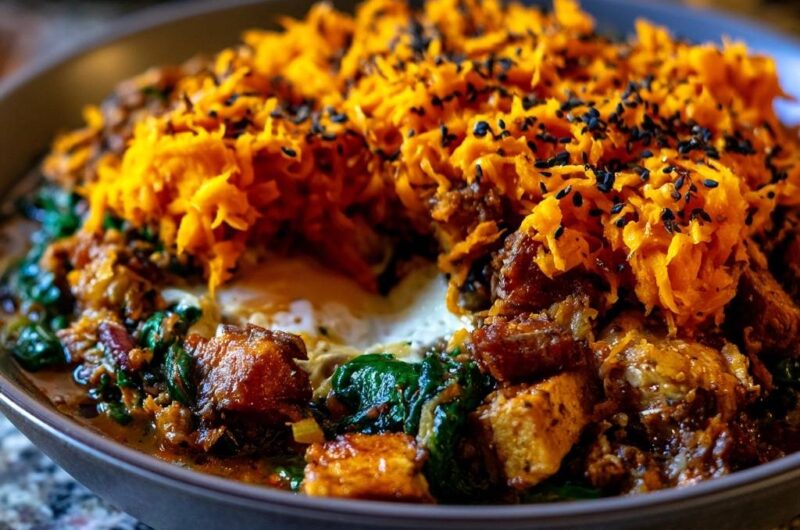
Crispy Sweet Potato Breakfast Hash
Course: BreakfastCuisine: AmericanDifficulty: easy2
servings15
minutes25
minutes40
Minutes440
kcalAmerican
Ingredients
2 large sweet potatoes, peeled and coarsely grated
2 cups fresh baby spinach
1 cup firm tofu or cooked chicken breast, cubed
2 large eggs
3 tablespoons olive oil, divided
1 teaspoon smoked paprika
1/2 teaspoon garlic powder
1/2 teaspoon salt
1 tablespoon black sesame seeds
Fresh cracked black pepper to taste
Directions
- Extract Moisture: Place the grated sweet potatoes in a clean kitchen towel. Sprinkle with a pinch of salt and let sit for 5 minutes. Squeeze the towel forcefully over the sink to wring out as much liquid as possible. This is the critical step to ensure the top layer crisps rather than steams.
- Crisp the Topping: Heat 1.5 tablespoons of olive oil in a large heavy-bottomed skillet over medium-high heat. Add the dried sweet potato shreds in a thin, even layer. Press down with a spatula. Cook undisturbed for 5-6 minutes until the bottom is golden and crisp. Flip in sections and cook for another 3 minutes. Remove the crispy potatoes from the pan and set aside on a plate.
- Sauté the Base: In the same skillet, add the remaining 1.5 tablespoons of oil. Add the cubed protein (tofu or chicken), smoked paprika, and garlic powder. Sauté for 4-5 minutes until the protein is deeply browned and caramelized.
- Wilt the Greens: Add the baby spinach to the protein. Stir for 1 minute until the spinach is wilted and has released its moisture, creating a savory “bed” for the eggs.
- The Hidden Egg: Use a spoon to create two deep wells in the protein and spinach mixture, pushing the ingredients to the edges of the pan. Crack an egg into each well. Cover the pan with a lid for 2-3 minutes until the whites are opaque but the yolks are still soft.
- Assemble the Layers: Once the eggs are set, carefully pile the reserved crispy sweet potato shreds directly over the top of the entire dish, covering the eggs and the center of the hash.
- Finish and Serve: Garnish generously with black sesame seeds and fresh cracked pepper. Serve immediately, breaking through the crispy sweet potato layer to reach the runny egg and savory base beneath.
Notes
- The secret to the texture is the moisture extraction step; do not skip wringing the potatoes or they will steam instead of crisping.