We’ve all been there. You head to the kitchen with a beautiful pile of fresh zucchini, dreaming of a crispy, golden side dish, only to end up with a soggy, watery mess at the bottom of your pan. It’s frustrating because zucchini is naturally delicious, but its high water content—over 90 percent—is a literal recipe for disaster if you don’t treat it with respect.
The secret to a truly great Garlic Parmesan Zucchini Bake isn’t just the seasoning; it’s the physics of moisture management. By using a specific salt-and-drain technique, we can pull that excess liquid out before the vegetables ever see the heat. This ensures your topping stays shatter-crisp while the zucchini remains tender and flavorful rather than mushy.
I’ve found that the real “pro move” here is the rinse-and-dry step after salting. If you skip the thorough pat-down with paper towels, that surface moisture will steam your breadcrumbs from the bottom up. You want those crumbs to fry in the olive oil, not boil in zucchini juice, to achieve that perfect golden crust.
The Science of Moisture in Zucchini
Zucchini is essentially a sponge made of plant cells. When you apply heat, those cell walls break down and release their internal water, which is why your baking dish often turns into a soup. To prevent this, we use osmosis. By sprinkling salt on the raw slices, we draw the water out through the cell membranes before cooking begins.
In addition to moisture control, temperature plays a massive role in the success of this dish. We roast at 425°F because high heat is necessary to trigger the Maillard reaction. This chemical reaction between amino acids and reducing sugars is what gives the Parmesan and Panko that deep, savory flavor and brown color. Lower temperatures would just steam the vegetables without ever crisping the top.
Essential Components for a Crispy Bake
Quality ingredients make a massive difference when you’re working with a simple vegetable side. For the cheese, I always recommend grating your own Parmesan from a wedge. Pre-shredded cheeses are coated in potato starch or cellulose to prevent clumping, which can interfere with how the cheese melts and browns in the oven.
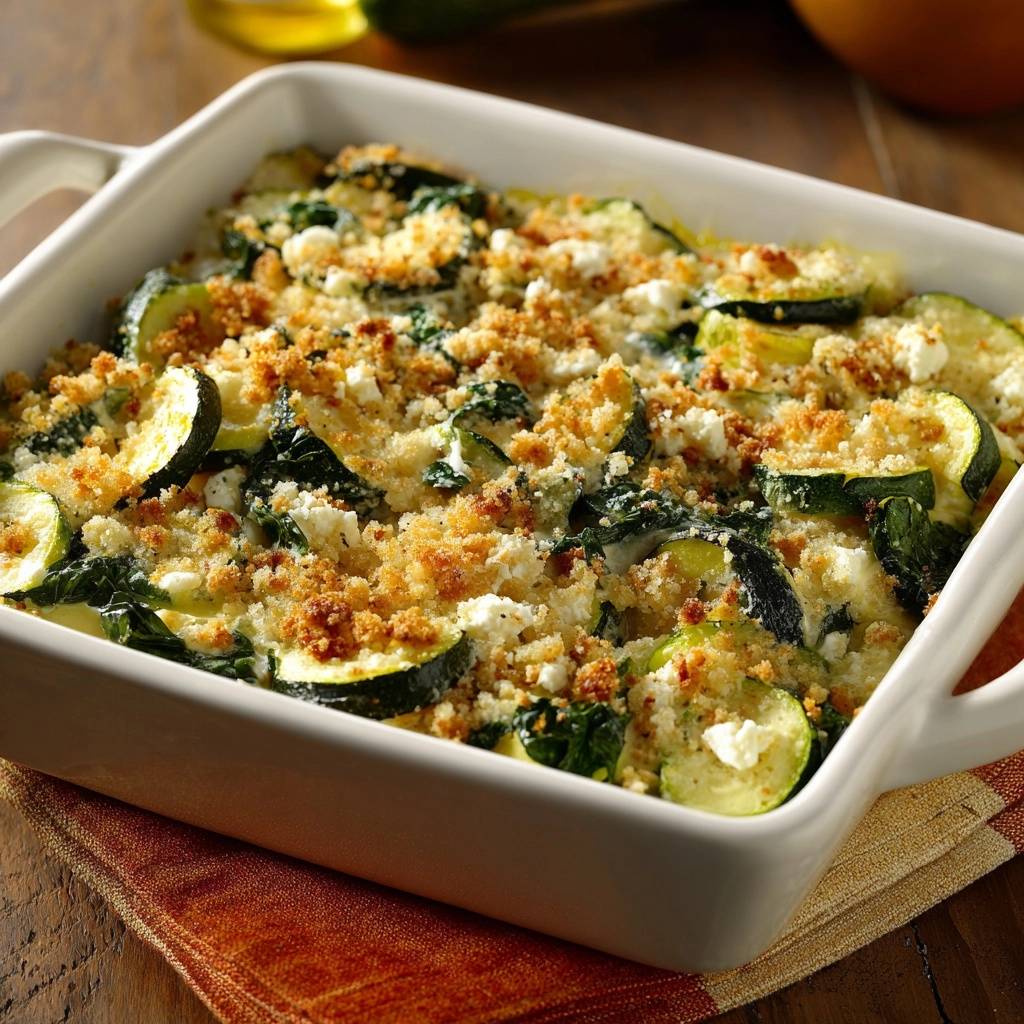
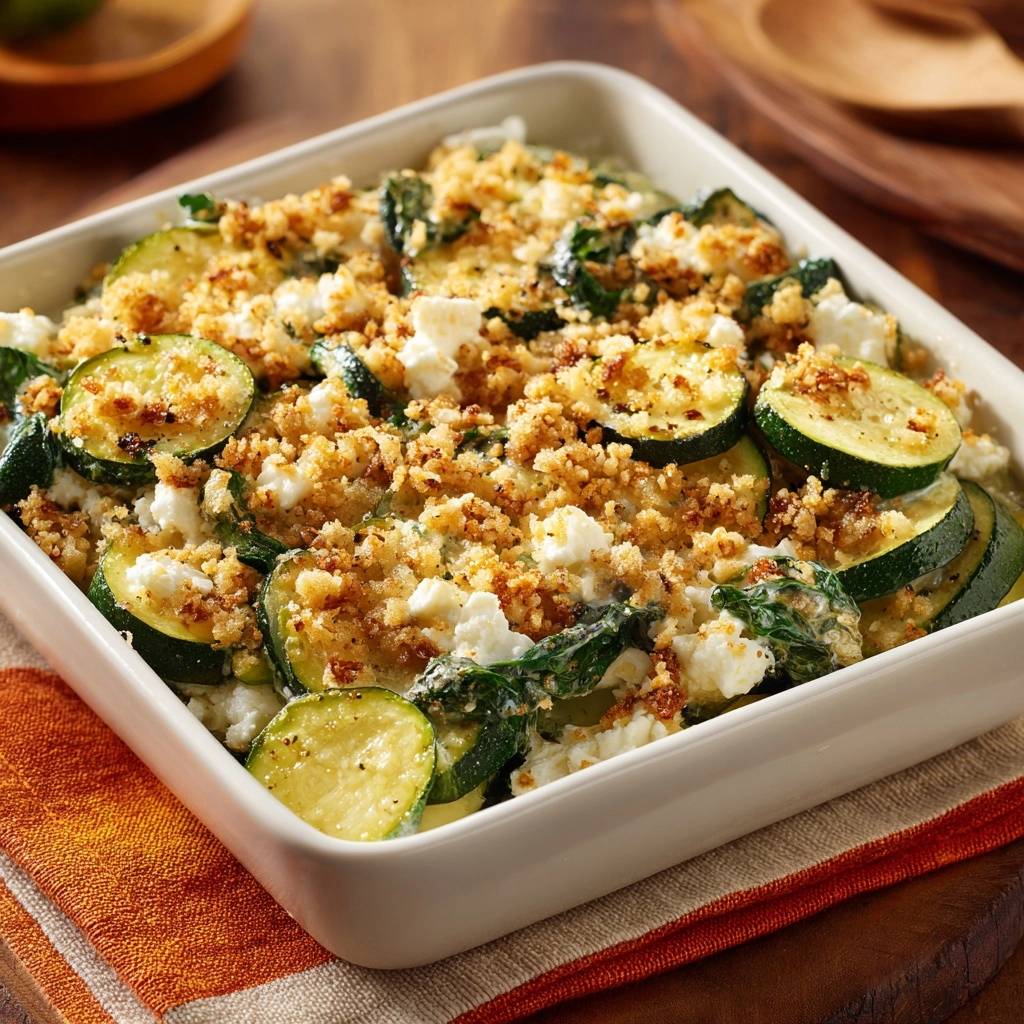
Panko breadcrumbs are the MVP of this recipe. Unlike traditional fine breadcrumbs, Panko has a larger, airy surface area that catches the olive oil and creates a much more pronounced crunch. When you mix these with the salty feta and the heat of the red pepper flakes, you get a complex flavor profile that elevates the humble zucchini.
Selecting the Right Zucchini
When you’re at the grocery store or farmer’s market, size definitely matters. Look for medium-sized zucchini, about 6 to 8 inches long. These have smaller seeds and a tighter cell structure, meaning they hold less water than those giant, “overgrown” garden varieties that can be quite pithy.
The skin should be dark green, shiny, and free of soft spots or deep bruises. If the zucchini feels heavy for its size, that’s a good sign of freshness. Avoid any that feel “rubbery” or bend easily, as they’ve already lost their internal structure and won’t hold up well to roasting.
The Role of Panko and Parmesan
The ratio of fat to dry ingredients is the key to a topping that tastes fried rather than toasted. We use two tablespoons of olive oil specifically for the crumb mixture. This oil encapsulates each breadcrumb, allowing the heat of the oven to “fry” the Panko in place, creating a golden, crispy shell.
The Parmesan acts as the glue and the flavor booster. As it melts, it binds the Panko together into little clusters. Because Parmesan is a hard, aged cheese, it has a low moisture content, which contributes to the overall goal of keeping the dish as dry and crispy as possible.
The Salt-and-Drain Pre-Treatment Phase
This is the most important technical section of the entire process. Once you’ve sliced your zucchini into half-inch rounds, toss them with kosher salt in a colander. Let them sit for at least 15 minutes. You’ll actually see the water start to bead up on the surface and drip into the bowl below.
After the time is up, give them a very quick rinse under cold water. This might seem counterintuitive, but it removes the excess surface salt so the dish isn’t over-seasoned. Immediately move the slices to a layer of paper towels and press down firmly. You want them as bone-dry as possible before they hit the baking dish.
Step-by-Step: Assembling the Zucchini Layers
When you’re ready to assemble, toss your dried zucchini and fresh spinach with the remaining oil and spices. The oil on the spinach is crucial; it prevents the delicate leaves from burning or shriveling into nothing in the high heat. The spinach will wilt down during baking, creating little pockets of savory greens between the zucchini rounds.
When you add the breadcrumb topping, use a light hand. Sprinkle it evenly over the vegetables but do not press it down with a spoon. You want the mixture to stay loose so that any remaining steam can escape through the gaps. If you pack it down, you’ll trap moisture underneath, which leads to a mushy middle layer.
Preparing the Garlic-Infused Topping
When mincing your garlic, aim for small, uniform pieces rather than a paste. If the garlic is too fine, it can burn at 425°F and turn bitter. If it’s too large, you’ll get a harsh bite of raw garlic. Aim for the size of a grain of couscous.
For more garlic-forward goodness, explore these cheesy garlic pizza bombs.
Stir the garlic into the Panko and Parmesan until the mixture looks like wet sand. This ensures the garlic flavor is distributed throughout every single bite. The smell of the garlic toasting in the olive oil while the dish is in the oven is absolutely incredible.
Layering for Maximum Flavor Distribution
Don’t just dump the feta on top. Instead, intersperse the crumbled feta throughout the zucchini and spinach layers. This way, the cheese softens and creates a creamy contrast to the crunch of the topping in every forkful.
I like to do a layer of zucchini, a handful of spinach, a sprinkle of feta, and then repeat. This vertical layering ensures that the flavors are balanced. You won’t end up with all the cheese in one corner and just plain vegetables in the other.
Avoiding Common Zucchini Baking Mistakes
The biggest mistake people make is not preheating the oven fully. If you put the dish in a cold oven, the zucchini will sit and sweat as the temperature rises, leading to that dreaded pool of water. Wait for that beep before the pan goes in.
Another common error is overcrowding the pan. If the zucchini slices are piled four layers deep, the ones at the bottom will steam rather than roast. Use a dish large enough that the vegetables have some breathing room. And whatever you do, never cover this dish with foil; that traps steam and kills the crunch instantly.
Flavor Variations and Ingredient Swaps
If you need a gluten-free version, almond flour or crushed pork-free rinds can work as a substitute for Panko, though the texture will be slightly denser. For a different flavor profile, try adding a teaspoon of lemon zest to the breadcrumb mixture. The acidity cuts through the richness of the cheese beautifully.
You can also swap the red pepper flakes for smoked paprika if you prefer a warm, smoky depth over direct heat. If you don’t have spinach on hand, kale works well too, though it will have a bit more “chew” to it. Just make sure to remove the tough stems first.
What to Serve with Garlic Parmesan Zucchini
This bake is incredibly versatile. It’s the perfect partner for a simple roasted chicken or seared lamb chops. The saltiness of the feta and the crunch of the topping provide a great textural contrast to tender, juicy meats.
For a similar texture, explore the crispy garlic potato stacks technique.
For a vegetarian meal, try serving this alongside a hearty lentil stew or a bowl of quinoa. The bright, garlicky notes of the zucchini help lighten up heavier grains and legumes. It’s also fantastic as a standalone light lunch with a side of crusty bread to soak up any of the flavorful oils.
Complementary Recipes
To round out your meal, consider these other vegetable-forward dishes.
- For a light and vibrant pasta option, try these Pesto Zucchini Noodles with Burrata, which share zucchini as a star ingredient.
- If you’re looking for a hearty meat pairing, serve your bake alongside this Herb Grilled Chicken and Garlic Mash for a satisfying combination.
Make-Ahead Strategies and Storage
Zucchini is best enjoyed immediately after baking because the topping is at its peak “shatter-crisp” state. However, if you have leftovers, store them in an airtight container in the fridge for up to two days. Be aware that the topping will soften as it sits.
To revive the crunch the next day, avoid the microwave. Instead, pop the leftovers into an air fryer at 350°F for about 3 to 5 minutes, or under the broiler for 2 minutes. This will re-crisp the Panko without overcooking the zucchini. I don’t recommend freezing this dish, as the zucchini cell walls will collapse, resulting in a very mushy texture upon thawing.
Expert Troubleshooting and FAQ
Can I use yellow squash instead of zucchini?
Yes, you absolutely can. Yellow summer squash has a very similar water content and skin texture to zucchini. They can be used interchangeably or even mixed together for a beautiful color contrast in your baking dish. Just follow the same salt-and-drain steps.
Why is my topping still pale after 20 minutes?
Oven temperatures can vary, and rack position matters. If your topping isn’t golden brown, move the dish to the top third of your oven for the last 3 minutes of cooking. You can also turn on the broiler for 60 seconds, but watch it like a hawk so it doesn’t burn.
Is the rinse step really necessary after salting?
It is highly recommended. The salt’s job is to pull out water, but if you don’t rinse it off, the final dish might be unpleasantly salty. A quick 5-second rinse removes the surface salt while leaving the zucchini “seasoned” from the inside out. Just remember to pat it dry immediately after.
Can I use dried herbs instead of fresh garlic?
You can use a teaspoon of garlic powder if you’re in a pinch, but fresh minced garlic provides a much better aroma and flavor. If you want to add herbs like dried oregano or basil, add about half a teaspoon to the breadcrumb mixture. Dried herbs are more concentrated than fresh, so a little goes a long way.
How do I scale this for a large dinner party?
If you are doubling the recipe, use two separate baking dishes rather than one deep one. Overcrowding the pan is the fastest way to get soggy zucchini. Giving the vegetables more surface area allows the moisture to evaporate quickly, ensuring every guest gets a crispy serving.
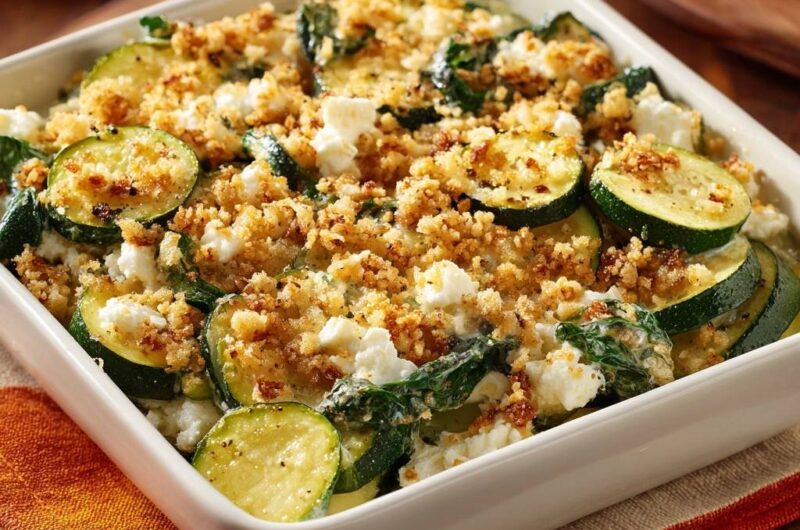
Garlic Parmesan Zucchini Bake
Course: Side DishCuisine: AmericanDifficulty: easy4
servings20
minutes20
minutes210
kcal40
MinutesThis recipe solves the common problem of watery zucchini by using a pre-salting method to extract moisture. The result is a perfectly tender vegetable base layered with spinach and feta, finished with a shatter-crisp garlic and parmesan breadcrumb topping.
Ingredients
3 medium zucchini, sliced into 1/2 inch rounds
1 teaspoon kosher salt
1/2 cup Panko breadcrumbs
1/4 cup grated Parmesan cheese
3 tablespoons olive oil, divided
2 cloves garlic, minced
1/2 cup crumbled feta cheese
2 cups fresh baby spinach
1/2 teaspoon black pepper
1/4 teaspoon red pepper flakes
Directions
- The Secret Step: Place your sliced zucchini in a colander over a bowl. Sprinkle with the kosher salt and toss to coat. Let it sit for 15 minutes. You will see significant water collect in the bowl.
- After 15 minutes, rinse the zucchini quickly under cold water to remove excess salt, then pat the slices thoroughly dry with paper towels. This removal of excess moisture is the only way to prevent a watery bake.
- Preheat your oven to 425 degrees F. Lightly grease a square baking dish.
- In a small bowl, combine the Panko breadcrumbs, Parmesan cheese, minced garlic, and 2 tablespoons of the olive oil. Stir until the crumbs are evenly moistened and resemble wet sand.
- In a large bowl, toss the dried zucchini and fresh spinach with the remaining 1 tablespoon of olive oil, black pepper, and red pepper flakes.
- Layer the zucchini and spinach into the prepared baking dish, interspersing the vegetables with the crumbled feta cheese.
- Sprinkle the breadcrumb mixture evenly over the top. Do not pack it down; keep it loose to allow steam to escape and the crumbs to crisp.
- Bake for 18 to 20 minutes until the zucchini is tender-crisp, the spinach has wilted into the layers, and the breadcrumbs are a deep, toasted golden brown. Serve immediately while the topping is at peak crunch.
Notes
- The salt and drain technique is essential to prevent a watery bake. Ensure you pat the zucchini slices thoroughly dry after rinsing to achieve the best texture.