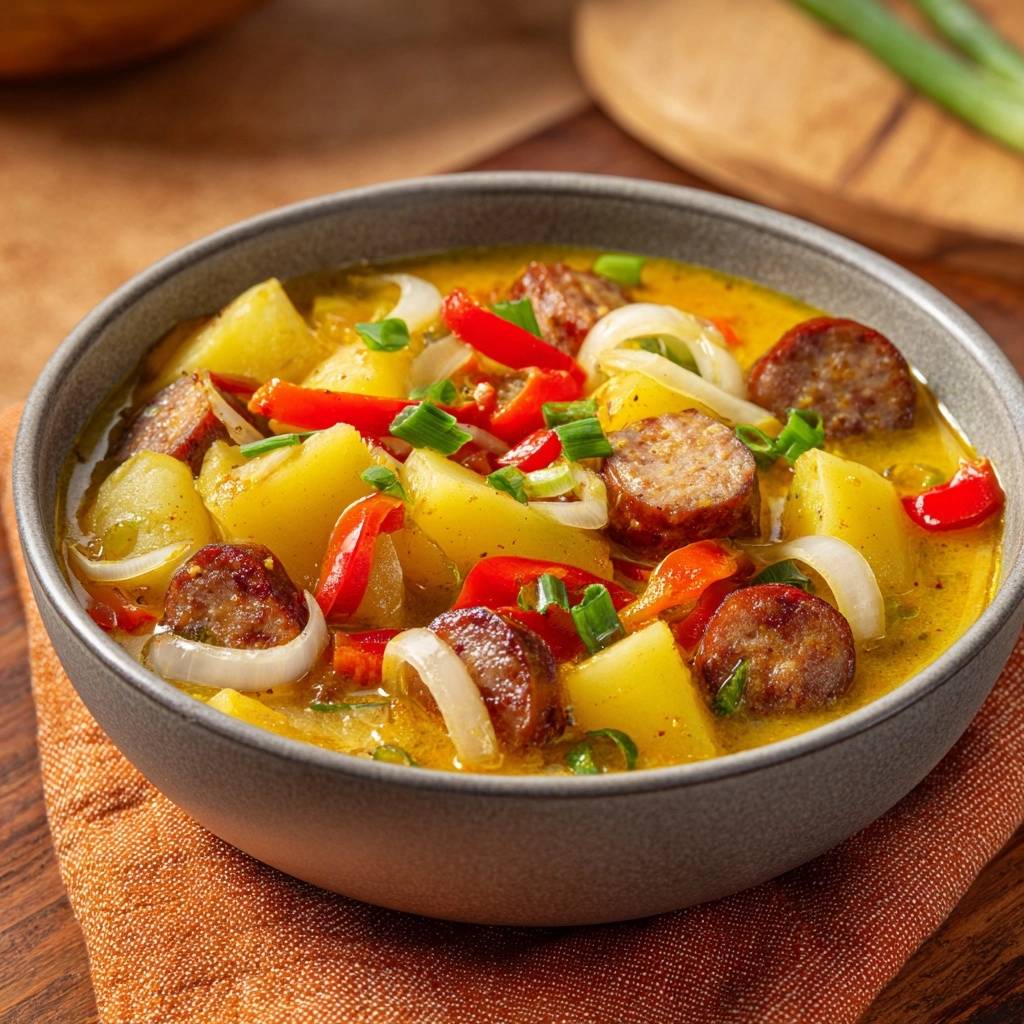
There is nothing quite like the comfort of a thick, steaming bowl of stew when the evening chill sets in. However, most home cooks struggle with the dreaded “mushy potato syndrome,” where the vegetables disintegrate into a grainy, unappealing mess. This Hearty Sausage and Potato Stew is designed to solve that exact problem, offering a masterclass in texture and a vibrant, golden broth that looks as good as it tastes.
You can have this entire meal on the table in just 45 minutes, making it a perfect weeknight savior that doesn’t sacrifice quality for speed. With a balanced 480-calorie profile per serving, it feels indulgent and rich without being overly heavy. The secret lies in how we treat the starches and fats before the liquid ever touches the pot.
The real trick to this recipe is the searing phase, which creates a structural barrier on the outside of each potato cube. By focusing on the Maillard reaction early on, you ensure that the potatoes remain tender on the inside while holding their shape in the creamy broth. It’s a simple technique that separates a mediocre soup from a chef-quality stew.
For a similar flavor development, try our Southern black eyed peas and sausage.
The Science of the Anti-Soggy Potato Secret
To understand why potatoes often turn to mush, we have to look at starch retrogradation and the way heat affects plant cells. When you drop raw potatoes directly into boiling water or broth, the starch granules on the surface swell and burst almost immediately. This releases amylose into the liquid, creating a grainy texture and causing the potato to lose its structural integrity.
By searing the Yukon Gold potatoes in rendered sausage fat first, you trigger the Maillard reaction. This chemical reaction between amino acids and reducing sugars creates a “hydrophobic crust” on the exterior of the potato. This golden-brown layer acts as a protective shield, preventing the interior starches from dissolving into the broth during the simmering phase.
Furthermore, using the rendered fat from the sausage adds a layer of flavor that boiling simply cannot replicate. The fat coats the potato, helping to lock in moisture while the high heat of the Dutch oven firms up the edges. This ensures that even after 15 minutes of simmering, your potatoes have a distinct “bite” rather than a mealy consistency.
Essential Components for a Richer Broth
Quality ingredients are the backbone of this dish, and choosing the right potato is the first step toward success. Yukon Golds are the gold standard here because they are a medium-starch, waxy variety. Unlike Russets, which are mealy and designed to fall apart, Yukons hold their shape beautifully while providing a naturally buttery flavor and creamy yellow interior.
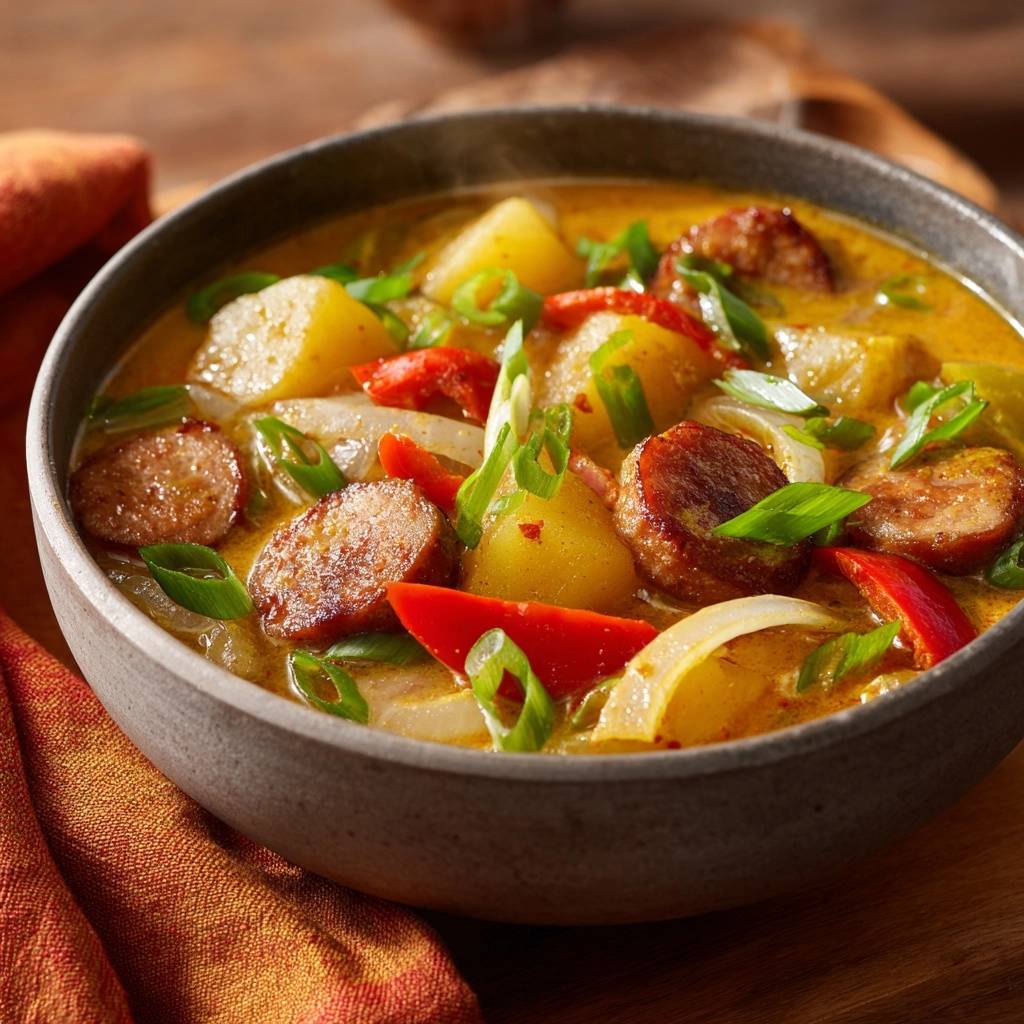
The visual appeal of this stew comes from a strategic combination of smoked paprika and ground turmeric. While the paprika adds a subtle earthiness and a hint of red, the turmeric provides that “golden hour” glow to the broth. These spices don’t just add color; they provide a warm, aromatic base that complements the savory chicken broth and the richness of the heavy cream.
When it comes to the protein, the fat content is your friend. Whether you choose a smoked bratwurst or a kielbasa, the fat that renders out during the initial browning phase is what seasons the entire pot. This fat carries the flavor of the spices and the smoke from the meat into every other ingredient in the stew.
Selecting the Right Sausage Profile
Since we are avoiding pork, look for high-quality beef or turkey smoked sausages. A beef kielbasa offers a robust, savory flavor, while a smoked turkey bratwurst provides a leaner but still flavorful alternative. The key is to ensure the sausage is a “smoked” or pre-cooked variety, as these have a firmer casing that provides a satisfying “snap” when you bite into them.
Slicing the sausage into thick rounds is essential for the mouthfeel of the dish. If the slices are too thin, they can become tough and chewy during the searing process. Thick rounds allow the exterior to get crispy and caramelized while the inside remains juicy and tender, providing a great textural contrast to the soft peppers and onions.
For a taste of a similar savory base, check out this Cajun shrimp and sausage gumbo.
The Role of Aromatics and Peppers
Onions and peppers provide the aromatic foundation for the stew, but the way you cut them matters. Slicing the white onions into half-moons rather than a fine dice allows them to retain some texture after simmering. They become soft and silky, wrapping around the potatoes and sausage rather than disappearing into the liquid.
Red bell peppers add a necessary hit of sweetness that cuts through the saltiness of the broth and sausage. As they sauté, their natural sugars caramelize, adding depth to the flavor profile. Using red peppers specifically provides a beautiful color contrast against the golden broth and green onion garnish.
Step-by-Step: Searing and Simmering for Maximum Flavor
Building a great stew is all about layering flavors, and that starts with the “fond.” Fond is the French term for those little browned bits stuck to the bottom of the pot after searing meat. These bits are concentrated flavor bombs, and deglazing the pan with chicken broth later on incorporates all that richness back into the stew.
You’ll want to use a heavy-bottomed pot, like a cast-iron Dutch oven, for this process. These pots distribute heat evenly and hold onto it, which is crucial for getting a consistent sear on the potatoes. If your pot is too thin, you risk burning the spices or the bottom of the stew before the potatoes are fully cooked.
Phase 1: Rendering Fat and Searing Protein
Start by heating your olive oil until it shimmers, then toss in the sausage rounds. You are looking for a deep, dark brown color on both sides of the sausage, which should take about 5 minutes. This isn’t just about heating the meat through; it’s about rendering out the flavorful oils that will cook your vegetables.
Once the sausage is browned, use a slotted spoon to remove it from the pot. It is vital to leave as much of that rendered fat in the pan as possible. Set the sausage aside on a plate; we will add it back at the very end to ensure it stays juicy and doesn’t become overcooked or rubbery.
Phase 2: The High-Heat Potato Sear
Now comes the most important part: the potato sear. Toss your cubed Yukon Golds into the hot fat and spread them out into a single layer. Resist the urge to stir them constantly! Let them sit undisturbed for 2 or 3 minutes at a time so they can develop that crucial golden crust.
You’ll spend about 8 to 10 minutes on this step. You are looking for the edges of the potatoes to turn a vibrant golden-brown. This process smells incredible as the potato starches toast in the sausage fat. Once they have a good crust, you can add your onions and peppers to soften them up before the liquid goes in.
Phase 3: Building the Golden Liquid Base
When you pour in the chicken broth, use your wooden spoon to aggressively scrape the bottom of the pot. This is the deglazing step where the fond dissolves into the liquid, instantly turning the broth a deep, rich color. Add your garlic powder, smoked paprika, and turmeric at this stage so they can bloom in the warm liquid.
Bring the pot to a gentle simmer, not a violent, rolling boil. A hard boil can agitate the potatoes too much, causing them to knock against each other and break. Cover the pot and let the flavors marry for about 12 minutes, which is just enough time for the potato centers to become fork-tender.
Refining the Texture with Heavy Cream
The final transformation happens in the last 5 minutes of cooking. After you remove the lid, stir in the heavy cream and return the browned sausage to the pot. The cream reacts with the turmeric to create a stunning, opaque golden color that looks incredibly appetizing in a deep bowl.
Simmering uncovered for these final few minutes allows the broth to reduce slightly. As the water evaporates, the fats from the cream and the sausage emulsify with the broth, thickening it naturally. You won’t need any flour or cornstarch because the small amount of starch that did escape the potatoes will help bind the liquid into a velvety sauce.
Taste the broth before serving. Depending on the saltiness of your chicken broth and sausage, you might need a pinch more salt or a generous crack of black pepper. The heavy cream mellows out the spices, so don’t be afraid to season boldly at this final stage.
Troubleshooting Common Stew Obstacles
If you find that your broth is thinner than you’d like, don’t panic. You can use the “potato-mash trick” by taking a few of the cooked potato cubes out, mashing them into a paste with a fork, and stirring them back into the stew. This adds instant body without changing the flavor profile.
If the potatoes are still a bit firm after the 12-minute simmer, simply put the lid back on and give them another 3 to 5 minutes. Factors like the age of the potato or the exact size of the cubes can affect cook time. Always test the largest cube with a fork; it should slide in with zero resistance.
In the event the broth tastes too salty, you can add a splash more cream or a tiny bit of water to dilute it. Alternatively, adding a squeeze of lemon juice or a teaspoon of white vinegar can help balance out the saltiness with acidity, making the flavors pop without needing more liquid.
Optimal Pairings for a Hearty Meal
This stew is a complete meal on its own, but a few well-chosen sides can take it to the next level. A thick slice of crusty sourdough bread is almost mandatory for mopping up the leftover golden cream at the bottom of the bowl. The tanginess of the sourdough provides a great contrast to the rich, savory broth.
Round Out Your Meal
To complement your hearty sausage and potato stew, consider these dishes that share comforting flavors or familiar ingredients.
- For a bright, tangy counterpoint, try this cranberry potato salad, featuring a similar potato base with a zesty fruit addition.
- If you enjoyed the savory notes in the stew, you might also like this savory sausage stuffing, bringing together similar spiced elements for a satisfying side.
To balance the heaviness of the cream and sausage, consider a simple side salad. Arugula or kale tossed in a light lemon vinaigrette works perfectly. The bitterness of the greens cuts through the fat, refreshing your palate between bites of the hearty stew.
If you want to lean into the vegetable side, roasted root vegetables like carrots or parsnips make a great accompaniment. Their natural sweetness mirrors the red bell peppers in the stew, creating a cohesive and filling dinner spread.
Storage, Reheating, and Make-Ahead Strategies
Like many stews, this dish actually tastes better the next day. As it sits in the fridge, the potatoes continue to absorb the flavors of the smoked paprika and sausage. You can store leftovers in an airtight container for up to three days, but be aware that the potatoes will continue to soften slightly over time.
When reheating, the stovetop is your best friend. Place the stew in a small pot over medium-low heat and stir gently. If the broth has thickened too much in the fridge, add a tablespoon of water or broth to loosen it up. Avoid a hard boil during reheating, as this can cause the cream to separate or “break,” leaving you with an oily residue.
If you must use a microwave, heat the stew in 30-second intervals, stirring in between. This ensures even heating and prevents the sausage from popping or the cream from curdling in hot spots. This stew does not freeze particularly well because the texture of the potatoes becomes grainy and the cream can separate when thawed.
Expert Tips for Flavor Variations
Once you master the base technique, you can easily pivot the flavor profile. For a “Spicy Kick” version, add a teaspoon of red pepper flakes when you sauté the onions. The heat pairs beautifully with the creamy base and the smokiness of the sausage, giving the dish a more aggressive, warming character.
If you prefer a “Herby Garden” profile, skip the turmeric and add fresh thyme and rosemary during the simmering phase. This shifts the stew from a golden, smoky dish to a more traditional, earthy French-style preparation. Finish with a handful of fresh parsley instead of green onions for a bright, clean finish.
For those looking for a dairy-free alternative, you can substitute the heavy cream with full-fat coconut cream. While this will add a very slight coconut undertone, it works surprisingly well with the turmeric and smoked paprika. The texture remains just as luxurious, and the golden color stays just as vibrant.
Frequently Asked Questions
Can I use Russet potatoes instead of Yukon Gold?
It is not recommended. Russet potatoes have a very high starch content and a mealy texture. Even with the searing technique, they are much more likely to break down and turn the stew into a thick, grainy porridge. Yukon Golds are waxy enough to hold their shape while still being tender.
How do I prevent the heavy cream from curdling?
Curdling usually happens when cold cream is added to a boiling liquid or if the acid content is too high. To prevent this, ensure the stew is at a very low simmer when you stir in the cream. You can also “temper” the cream by mixing a spoonful of the hot broth into the cream container before pouring the whole mixture into the pot.
Is there a substitute for the turmeric?
If you don’t have turmeric, you can use a pinch of saffron for an even more luxurious golden color and a floral aroma. If you just want the color without the specific turmeric flavor, a half-teaspoon of yellow mustard can work, though it will add a slight tang to the broth.
Can this recipe be made in a slow cooker?
No, this specific recipe relies on the high, dry heat of a Dutch oven to sear the potatoes and create the “Anti-Soggy” crust. A slow cooker uses moist heat, which would steam the potatoes and result in the exact mushy texture we are trying to avoid. The stovetop method is also much faster.
What is the best way to freeze cream-based stews?
If you plan to freeze this, it is best to do so before adding the heavy cream. Freeze the potato, sausage, and broth mixture in a freezer-safe bag. When you are ready to eat, thaw it, bring it to a simmer on the stove, and then stir in fresh heavy cream right before serving to maintain the best texture.

Sausage and Potato Stew
Course: Main CourseCuisine: AmericanDifficulty: easy4
servings15
minutes30
minutes480
kcal45
MinutesA savory and comforting stew featuring smoked sausage, Yukon Gold potatoes, and a rich golden broth. The recipe utilizes a specific searing method for the potatoes to ensure a firm yet tender texture, finished with heavy cream and turmeric for a vibrant color.
Ingredients
1 pound smoked bratwurst or kielbasa, sliced into thick rounds
1.5 pounds Yukon Gold potatoes, peeled and cubed into 1-inch pieces
1 large white onion, sliced into half moons
2 red bell peppers, sliced into strips
2.5 cups chicken broth
1/2 cup heavy cream
2 tablespoons olive oil
1 teaspoon garlic powder
1/2 teaspoon smoked paprika
1/2 teaspoon ground turmeric (for the golden color)
Salt and black pepper to taste
1/4 cup sliced green onions for garnish
Directions
- Heat the olive oil in a large heavy-bottomed pot or Dutch oven over medium-high heat.
- Add the sliced sausage and cook for 4 to 5 minutes until deeply browned and the fats have rendered. Remove the sausage with a slotted spoon and set aside.
- The Anti-Soggy Secret: Add the cubed potatoes directly into the hot sausage fat. Do not add liquid yet. Sear the potatoes for 8 to 10 minutes, tossing occasionally, until a golden-brown crust forms on the edges. This crust acts as a barrier, preventing the starch from dissolving into mush.
- Add the white onions and red bell peppers to the pot. Sauté for 3 minutes until the onions begin to soften and turn translucent.
- Pour in the chicken broth, garlic powder, smoked paprika, and turmeric. Scrape the bottom of the pan with a wooden spoon to release all the flavorful browned bits (fond).
- Bring the liquid to a gentle simmer. Reduce heat to low, cover, and cook for 12 minutes.
- Remove the lid and stir in the heavy cream and the reserved browned sausage. Simmer uncovered for another 3 to 5 minutes. This allows the broth to thicken slightly into the creamy, golden consistency seen in the image while the potatoes finish softening in the center.
- Season with salt and pepper to taste. Serve hot in deep bowls, garnished generously with fresh green onions.
Notes
- The key to this recipe is searing the potatoes in the sausage fat before adding any liquid; this creates a crust that maintains the potato’s structural integrity during the simmering process.