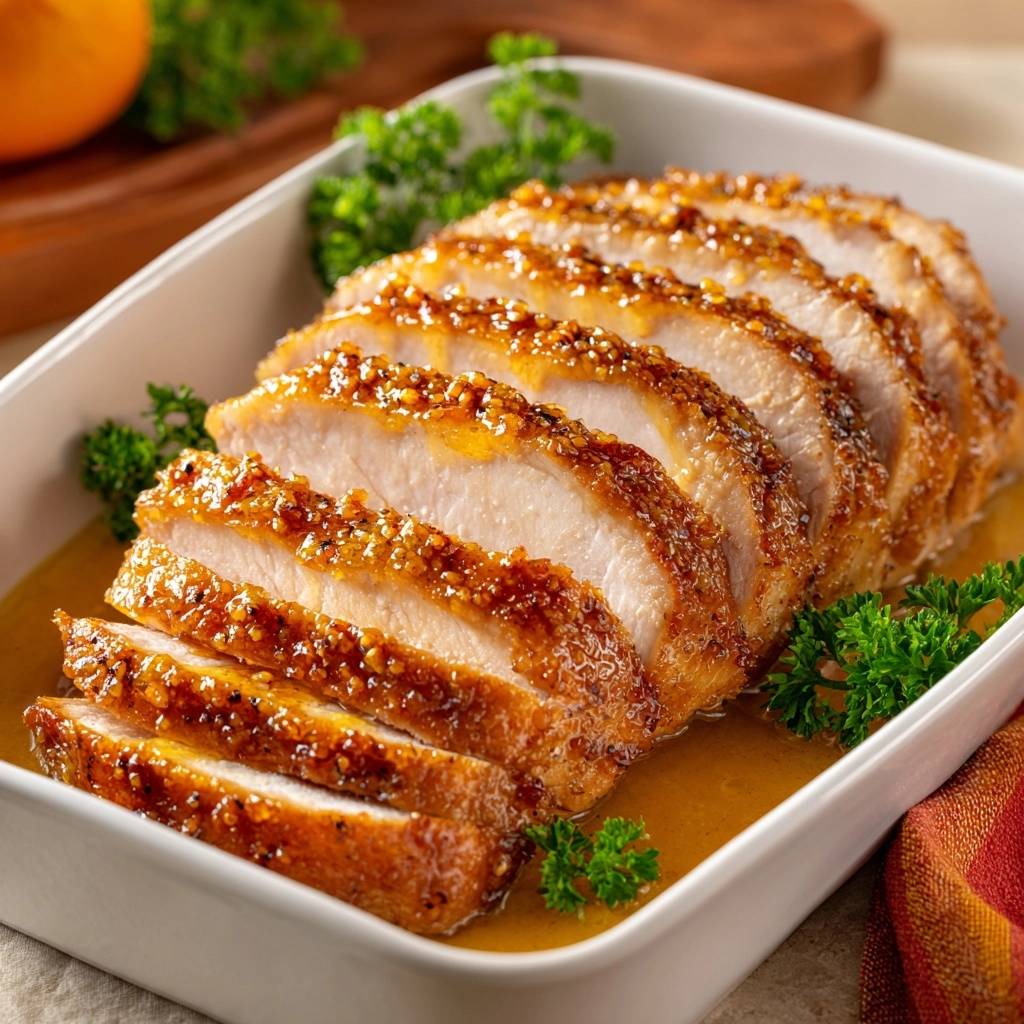
Most of us have suffered through a holiday dinner or a Sunday roast where the turkey was so dry it felt like chewing on a sponge. It’s a common frustration because turkey breast is notoriously lean and unforgiving. However, you don’t have to settle for tough, flavorless meat that requires a gallon of gravy just to swallow.
The secret to this succulent Honey Mustard Glazed Turkey Roast lies in a two-stage temperature method combined with a moisture-locking glaze. By searing the exterior first to build a crust and then roasting at a lower heat, we prevent the muscle fibers from tightening and squeezing out the juices. This ensures every slice is buttery soft and dripping with flavor.
For a tender result in a similar vein, explore how to make a wonderful lemon herb roasted chicken.
I’ve found that the real trick to a professional-grade roast is the layering of the glaze. Instead of just brushing it on once, we apply it in stages to build a thick, bubbly barrier. This doesn’t just add flavor; it acts as a physical shield against the dry heat of the oven, keeping the interior incredibly moist.
The Science of Succulent Turkey Breast
Turkey breast is made of long, lean muscle fibers that are very sensitive to heat. When you blast turkey with high temperatures, those fibers contract violently, pushing out all the natural moisture. Therefore, we use a “Low and Slow” philosophy at 325°F to preserve the protein’s integrity and keep the meat tender.
In addition to the temperature, the honey-mustard barrier plays a vital role in the cooking process. The sugars in the honey and the solids in the mustard create a protective coating that slows down evaporation. This means the moisture stays inside the meat where it belongs, rather than disappearing into the oven air.
Essential Components for the Honey Mustard Glaze
The choice of mustard is critical for both texture and flavor. I always recommend whole grain Dijon because the intact mustard seeds provide a beautiful visual pop and a sophisticated pop of acidity. It offers a much deeper flavor profile than smooth yellow mustard, which can be too sharp and one-dimensional.
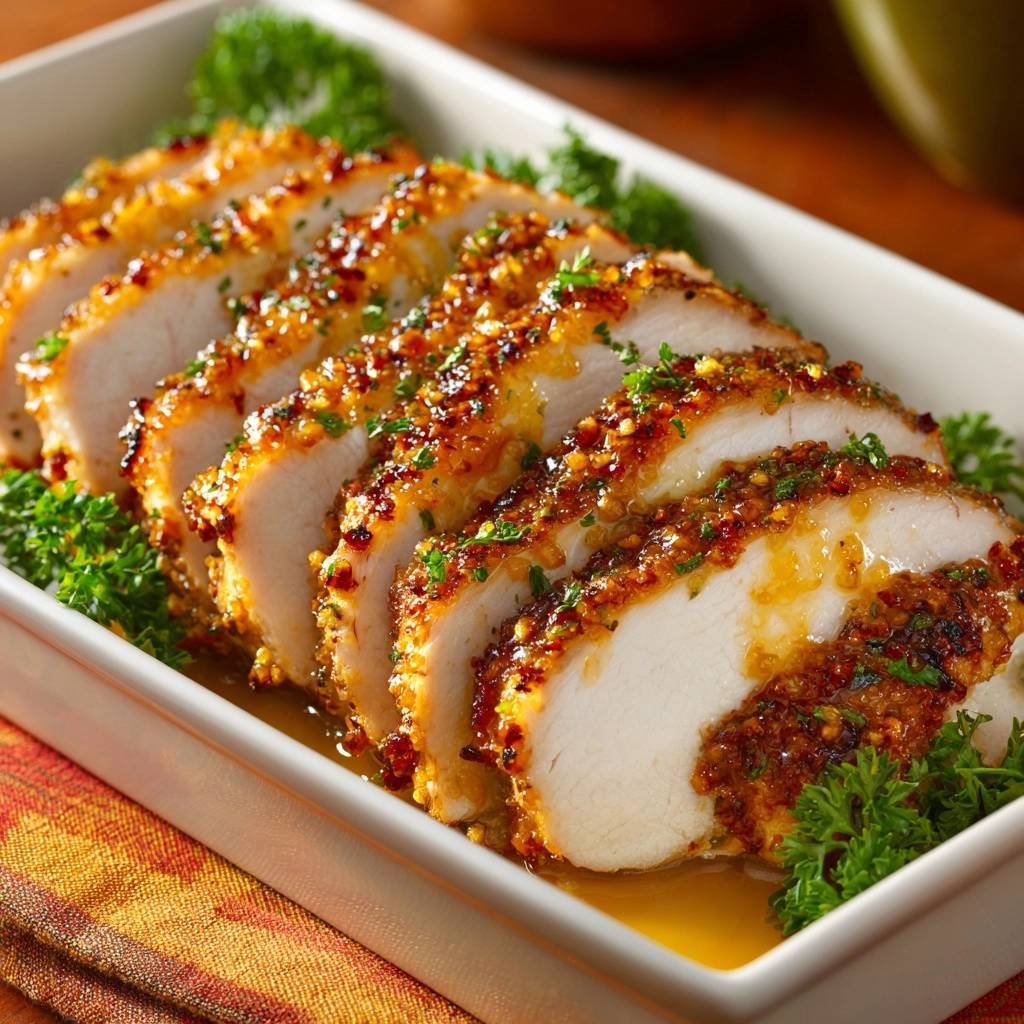
Honey is the ideal partner here because its high viscosity helps it cling to the meat. It also has a perfect caramelization point, allowing it to turn golden and sticky without burning too quickly. In addition, using fresh minced garlic instead of powder provides a pungent, aromatic punch that cuts through the sweetness of the honey.
Don’t overlook the chicken broth in the bottom of the pan. As the roast cooks, the broth creates a small amount of steam in the oven. This humid environment further protects the turkey from drying out and provides the base for a spectacular pan sauce later on.
Selecting the Right Turkey Cut
While you can use a bone-in roast, a 3-pound boneless turkey breast roast is much easier to slice and cooks more evenly. I strongly prefer a skin-on roast if you can find it. The skin renders its fat into the meat and provides a gorgeous, crispy foundation for the honey mustard glaze to latch onto.
When shopping, try to find a roast that hasn’t been pre-brined or “enhanced” with a salt solution. These pre-treated birds often have a rubbery texture. By starting with a natural roast, you have total control over the sodium levels and the final quality of the dish.
Preparation: The Foundation of a Perfect Crust
Before you even touch the glaze, you must pat the turkey roast completely dry with paper towels. If the surface is wet, the meat will steam instead of sear, and the glaze will simply slide off into the pan. A dry surface is the only way to achieve the Maillard reaction, which is the chemical process that creates those savory, browned flavors.
Once the meat is dry, season it generously with salt and pepper. You want to season the meat itself, not just the coating. This ensures that every bite is seasoned from the outside in, rather than relying solely on the glaze for flavor.
Step-by-Step: Searing and Glazing Techniques
Start by heating a tablespoon of oil in a large oven-safe skillet over medium-high heat. When the oil shimmers, add the turkey. You’re looking for a deep golden-brown crust, which usually takes about 3 to 4 minutes per side. Don’t rush this; that sear is where the “wow” factor comes from.
After searing, remove the skillet from the heat. Carefully pour the chicken broth into the bottom of the pan, making sure you don’t pour it directly over the turkey. You want to keep that seared crust dry so the glaze can stick. Now, generously brush about half of your honey mustard mixture over the top and sides.
The mustard seeds should be visible and evenly distributed. This first layer of glaze will begin to set and bake into the meat as soon as it hits the oven. It creates the initial flavor foundation that we will build upon in the next step.
The Layering Method for Maximum Flavor
About halfway through the roasting time, you’ll apply the remaining glaze. This layering technique is the secret to that thick, bubbly, flavorful barrier you see in high-end bistros. The first layer has already started to dehydrate and concentrate, so the second layer adds fresh moisture and a glossy finish.
This second application also ensures that any spots that might have thinned out during the first half of cooking are fully recovered. It results in a much more robust crust that stands up beautifully to slicing. You’ll notice the aroma in your kitchen change from savory garlic to sweet, toasted honey at this point.
Monitoring Internal Temperature for Precision
Precision is the difference between a juicy roast and a dry one. You should pull the turkey out of the oven when it hits 160°F on an instant-read thermometer. Even though the safe temperature for poultry is 165°F, the internal temperature will continue to rise during the resting period.
This is called carry-over cooking. If you wait until the thermometer reads 165°F in the oven, the roast will likely hit 170°F or higher by the time you eat it. Those extra five degrees are the danger zone where the meat starts to lose its tenderness and becomes stringy.
The 15-Minute Rest: Why Patience is Mandatory
I cannot stress this enough: do not slice that turkey the moment it comes out of the oven. When meat cooks, the juices are pushed toward the center. If you cut it immediately, those juices will pour out onto the cutting board, leaving the meat dry and disappointing.
During a 15-minute rest, the muscle fibers relax and reabsorb those juices. This redistribution ensures that every slice is equally moist. It also gives the glaze time to firm up slightly, so it stays attached to the meat when you start slicing.
Creating the Emulsified Honey Mustard Pan Sauce
While the meat rests, you have the perfect opportunity to make a silky pan sauce. Whisk a tablespoon of cold butter into the warm pan juices remaining in the skillet. This technique, known as “monter au beurre,” creates a smooth, opaque sauce that won’t separate.
The cold butter emulsifies with the chicken broth, rendered turkey fat, and drippings from the honey mustard glaze. The result is a rich, velvety sauce that perfectly balances the tang of the mustard and the sweetness of the honey. It’s far superior to any bottled gravy.
Troubleshooting Common Turkey Roast Issues
If you notice the honey in the glaze is browning too quickly or looks like it might burn, simply tent the roast loosely with a piece of aluminum foil. This allows the meat to continue cooking while protecting the delicate sugars in the glaze from the direct heat.
If your pan sauce feels too thin, you can simmer it on the stovetop for a minute or two to reduce it before adding the butter. Conversely, if you accidentally overcook the meat, slice it as thinly as possible and be extra generous with the pan sauce to add moisture back into each serving.
Optimal Side Dishes for Honey Mustard Flavors
The bold flavors of honey and mustard pair beautifully with earthy, roasted root vegetables like carrots or parsnips. A savory mash, such as garlic mashed potatoes or a cauliflower puree, provides a creamy contrast to the textured glaze of the turkey.
For a similar bright flavor profile, try this lemon herb chicken with roasted vegetables.
For something lighter, a crisp green salad with a simple lemon vinaigrette works wonders. The acidity in the salad dressing mirrors the mustard in the roast, creating a cohesive meal. Avoid heavy cream sauces or competing sweet glazes on your side dishes to let the turkey shine.
Storage and Repurposing Leftover Turkey
Leftovers should be stored in an airtight container in the refrigerator for up to three or four days. Because of the honey mustard glaze, this turkey stays remarkably moist even when cold. It makes for incredible sandwiches the next day, especially when paired with a little extra mayo and some crisp lettuce.
You can also chop the leftover roast into grain bowls or toss it into a fresh spinach salad. I don’t recommend freezing the cooked roast, as the texture of the glaze can become grainy and the meat may lose its signature tenderness upon thawing.
Expert Tips for the Perfect Presentation
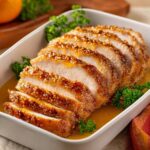
When it’s time to serve, slice the turkey into thick rounds rather than thin strips. This showcases the beautiful contrast between the white meat and the dark, seeded glaze. Arrange the slices on a warm platter and pour the emulsified pan sauce around the base rather than over the top.
Finally, garnish heavily with fresh curly parsley. The bright green color makes the golden-brown crust of the Honey Mustard Glazed Turkey Roast pop. It’s a simple touch that makes a home-cooked meal look like it came straight from a professional kitchen.
Complementary Dishes
Round out your turkey roast with these dishes.
- For a flavorful addition that uses similar roasting techniques, try these honey roasted root vegetables.
- To add a comforting element to your meal, consider this golden skillet cornbread, known for its tender texture.
Frequently Asked Questions
How do I store leftovers and can I freeze this roast?
Store any leftover turkey in an airtight container in the refrigerator for up to 4 days. To keep it moist, drizzle a little of the leftover pan sauce over the meat before sealing. I do not recommend freezing this specific roast; the honey mustard glaze can lose its texture and become watery once thawed, and the lean breast meat often becomes crumbly after freezing.
Why did my honey mustard glaze slide off the turkey?
The most common reason for a sliding glaze is excess moisture on the surface of the meat. If you don’t pat the turkey completely dry with paper towels before searing, the glaze won’t be able to grip the surface. Additionally, make sure you sear the meat thoroughly first; the glaze needs that textured, browned surface to hang onto during the roasting process.
Can I use smooth Dijon mustard instead of whole grain?
Yes, you can substitute smooth Dijon mustard if that’s what you have on hand. However, the flavor will be slightly more pungent and sharp, and you will lose the rustic texture and visual appeal of the mustard seeds. If using smooth mustard, you might want to add an extra teaspoon of honey to balance the increased sharpness.
What if I don’t have an oven-safe skillet?
If you don’t have a cast iron or oven-safe stainless steel skillet, you can sear the turkey in a regular frying pan. After searing, simply transfer the roast and the pan juices to a preheated baking dish or a small roasting pan. Proceed with the glazing and roasting steps as directed. Just be sure to scrape all those browned bits from the frying pan into the baking dish for maximum flavor.
My turkey reached 160°F but the glaze isn’t dark enough. What should I do?
If the meat is done but you want a darker crust, turn on the broiler for 1 to 2 minutes at the very end. Watch it extremely closely, as the honey in the glaze can go from golden to burnt in a matter of seconds. This quick blast of high heat will bubble the glaze and give you that deep, caramelized finish without overcooking the interior of the roast.
Honey Mustard Turkey Roast
Course: Main CourseCuisine: AmericanDifficulty: medium6
servings15
minutes1
hour340
kcal75
MinutesA foolproof turkey roast recipe that uses a whole grain Dijon and honey glaze combined with a searing technique to prevent dryness and create a flavorful, buttery soft texture.
Ingredients
3 pound boneless turkey breast roast (skin-on preferred for the visual crust)
1/3 cup whole grain Dijon mustard
1/3 cup honey
2 tablespoons olive oil
3 cloves garlic, minced
1 teaspoon salt
1/2 teaspoon black pepper
1/2 cup chicken broth
1 tablespoon cold butter (for the pan sauce)
Fresh curly parsley for garnish
Directions
- Preheat your oven to 325 degrees F. Low and slow is the first rule to prevent the meat from becoming rubbery.
- Pat the turkey roast completely dry with paper towels. This is the essential step for the glaze to actually stick rather than sliding off into the pan. Season the meat generously with salt and pepper.
- In a small bowl, whisk together the honey, whole grain mustard, minced garlic, and 1 tablespoon of olive oil.
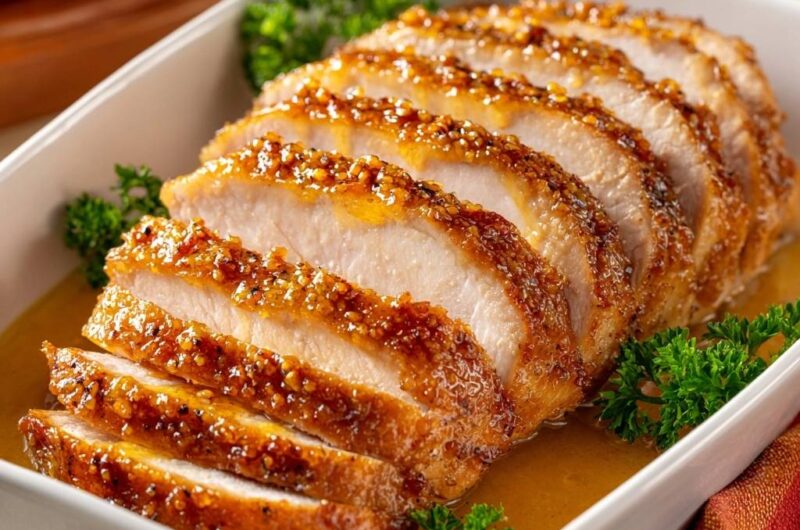
- Heat the remaining tablespoon of oil in a large oven-safe skillet over medium-high heat. Sear the turkey for 3 to 4 minutes per side until a deep golden-brown crust forms. This provides the color and texture seen in the image.
- Remove from heat. Pour the chicken broth into the bottom of the pan (avoiding the top of the meat). Generously brush half of the honey mustard mixture over the top and sides of the roast, ensuring the mustard seeds are visible.
- Transfer the skillet to the oven. Roast until the internal temperature reaches 160 degrees F, usually about 50 to 60 minutes.
- Halfway through the roasting time, brush the remaining glaze over the turkey. This layering technique creates the thick, bubbly, flavorful barrier seen in the photo that keeps the meat from drying out.
- Crucial Step: Remove the roast from the oven and let it rest on a cutting board for at least 15 minutes. While the meat rests, whisk the cold butter into the warm pan juices to create the silky, opaque sauce shown in the dish.
- Slice the turkey into thick rounds. Arrange in a serving dish, pour the emulsified pan sauce around the base, and garnish heavily with fresh curly parsley.
Notes
- Resting the meat for at least 15 minutes is crucial to allow juices to redistribute. Patting the meat dry before searing ensures the glaze adheres properly.