
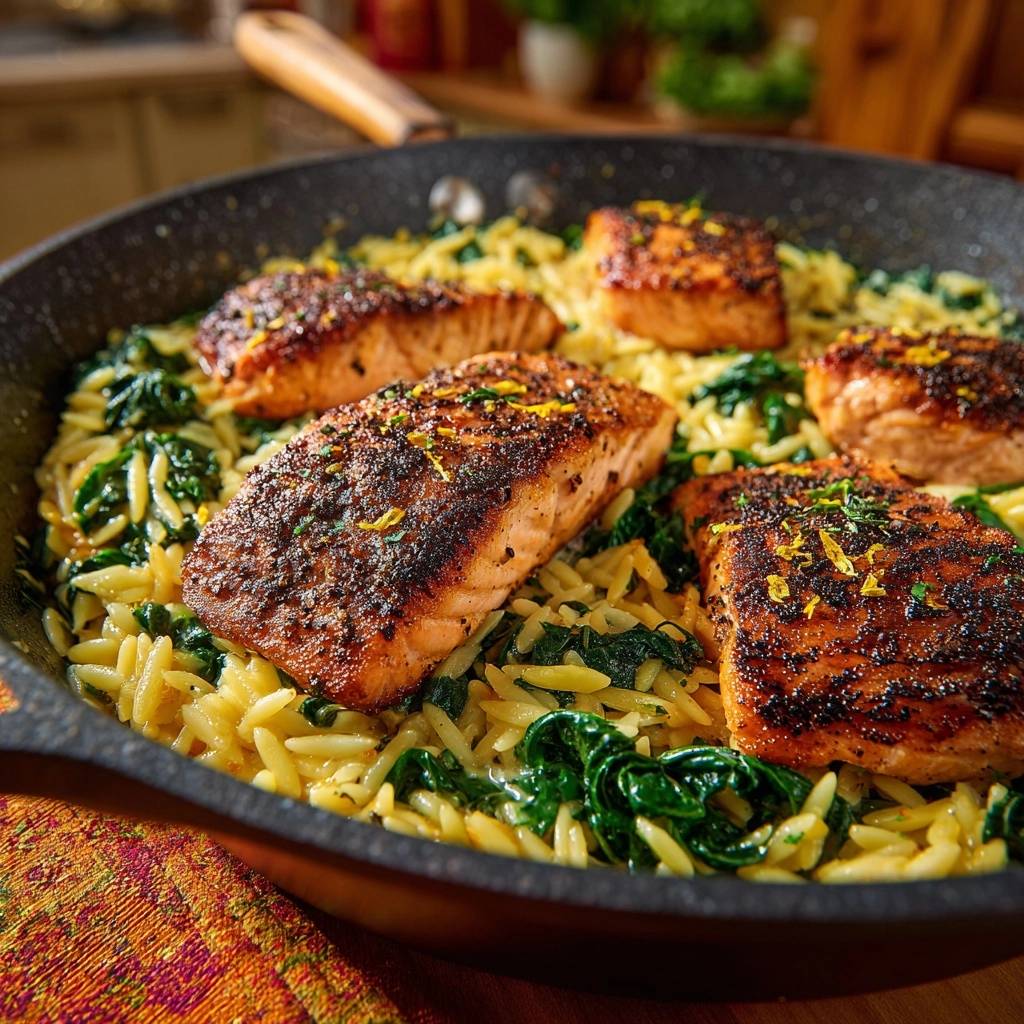
One-pan meals often promise convenience but deliver a soggy, gummy mess where the pasta and protein lose their individual identities. You’ve likely experienced that disappointing texture where the orzo turns into a heavy porridge instead of staying light and distinct. This Lemon Garlic Salmon and Orzo Skillet solves that structural failure by using a professional toasting technique that preserves the integrity of every single grain.
The flavor profile relies on a high-contrast approach, pairing the deep, savory crust of seared salmon with the bright, sharp acidity of fresh lemon and pungent garlic. Instead of a muted, one-note dish, you get a vibrant meal where the fats from the fish enrich the pasta without making it greasy. It’s a balanced, restaurant-quality dinner that actually works in a home kitchen.
The secret to this success lies in the “toasting method.” By browning the dry orzo in butter before adding any liquid, you create a protective barrier around the starch. This prevents the grains from releasing too much amylose into the broth, ensuring your pasta stays al dente and firm. I’ve found that skipping this three-minute step is the number one reason home cooks end up with mushy orzo.
The Science of Non-Mushy Orzo
Orzo is a small, rice-shaped pasta made from durum wheat semolina, which is naturally high in starch. When you boil it traditionally, that starch leaches into the water. However, in a one-pan skillet, that starch has nowhere to go, often resulting in a sticky, glue-like consistency. Toasting the dry grains in a hot fat like butter or oil triggers the Maillard reaction, changing the physical structure of the pasta’s surface.
This browning process does more than just add a nutty, toasted aroma. It essentially “seals” the exterior of the grain. As the chicken broth simmers, the toasted orzo absorbs the liquid slowly and evenly. This mimics the professional “pilaf method,” where grains remain separate and defined rather than clumping together. You’ll notice the difference the moment you bite into it; the orzo will have a pleasant resistance rather than a soft, mushy center.
Furthermore, the toasted surface creates tiny ridges that help the lemon-garlic sauce cling to the pasta. Without this step, the sauce often slides off or gets absorbed too quickly, leaving the dish dry. By controlling the starch release, you maintain a silky, emulsified sauce that coats the orzo perfectly while keeping the grains distinct and elegant on the plate.
Essential Components for Lemon Garlic Salmon and Orzo
Quality ingredients are the backbone of this dish, especially since the ingredient list is relatively short. I always recommend using low-sodium chicken broth. This gives you total control over the seasoning. Since the salmon is seasoned with kosher salt and the broth reduces as the orzo cooks, using a full-sodium version often results in a dish that is aggressively salty by the time it hits the table.
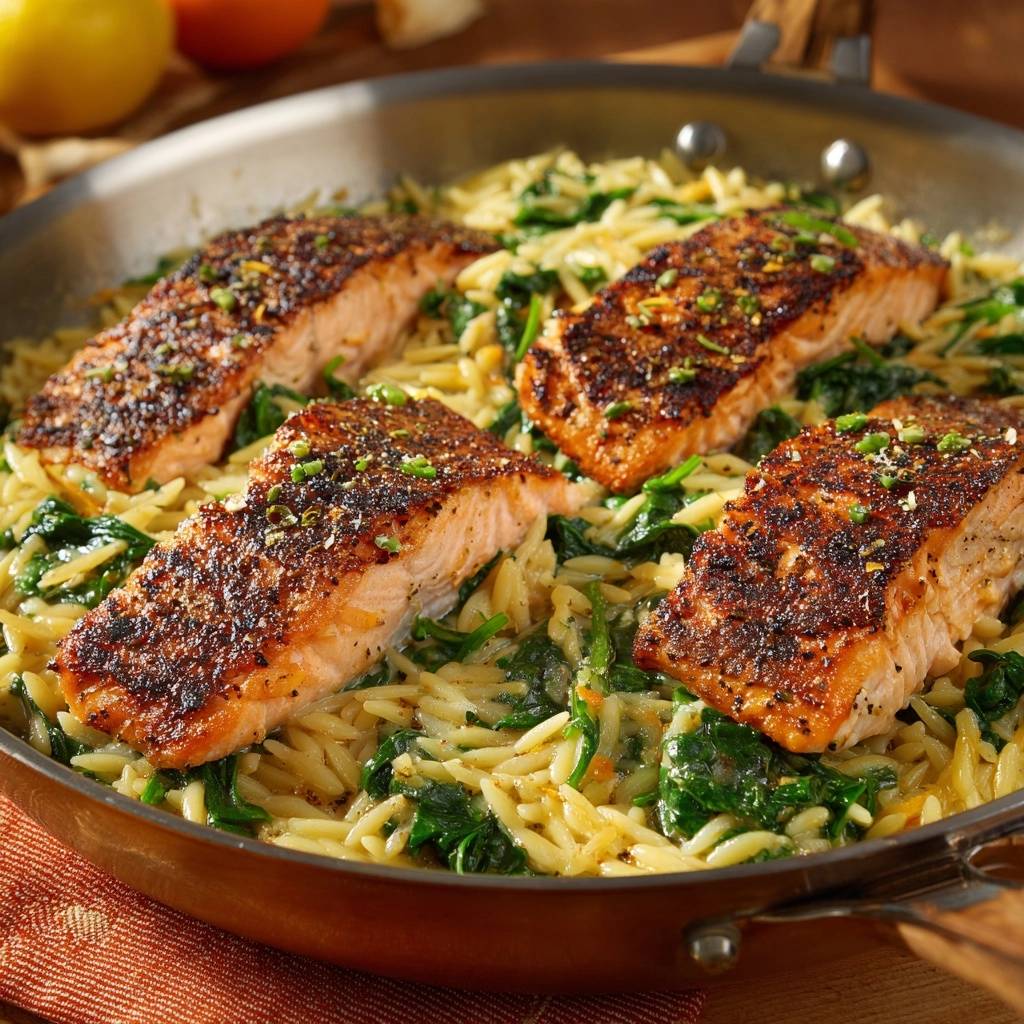
The choice of black pepper is equally vital. Forget the fine, dusty powder found in pre-filled shakers. You want coarse cracked black pepper. These larger fragments provide a spicy, textured “bark” on the salmon that stands up to the high heat of the sear. It adds a sophisticated heat that balances the richness of the fish and the brightness of the lemon juice.
Fresh lemon zest is your secret weapon for aromatic depth. While the juice provides the necessary acid to cut through the fat, the zest contains the essential oils that carry the actual “lemon” scent. Adding half the zest during the simmer infuses the orzo, while the remaining half added at the end provides a fresh, floral top note that wakes up the entire skillet.
Selecting the Right Salmon Cut
For this skillet, Atlantic salmon is a fantastic choice because its higher fat content keeps it moist during the two-stage cooking process. If you prefer a leaner, more intense flavor, Sockeye works well, but you must be careful not to overcook it. King salmon is the luxury option, offering a buttery texture that melts into the orzo, though it is often more expensive.
I highly recommend center-cut fillets. These are uniform in thickness, which means they will all reach the perfect internal temperature at the same time. Tail pieces are thin and will dry out long before the orzo is finished. Always keep the skin on during the initial sear; it provides structural integrity and prevents the delicate flesh from falling apart when you flip it.
Step-by-Step: Achieving the Perfect Salmon Sear
The most common mistake people make when cooking salmon is failing to dry the fish. Moisture is the absolute enemy of a good sear. If there is water on the surface of the salmon, it will steam rather than fry, leaving you with gray, rubbery fish. Use paper towels to pat the fillets until they are completely bone-dry before you even think about adding your spices.
Once dry, press your salt, paprika, and coarse pepper firmly into the flesh. You want to create a literal crust. Heat your olive oil until it is shimmering and just starting to wisps of smoke. When you place the salmon flesh-side down, you should hear a loud, aggressive sizzle. If it’s quiet, your pan isn’t hot enough, and the fish will likely stick.
Now comes the hardest part: don’t touch it. Leave the fillets alone for a full 4 to 5 minutes. This allows the proteins to undergo the Maillard reaction and naturally release from the pan. If you try to flip it too early and it resists, it’s not ready. Once a deep, dark, peppery crust has formed, flip it onto the skin side for just sixty seconds to set the shape, then pull it out of the pan immediately.
Building the Lemon Garlic Aromatics
After removing the salmon, you’ll see dark bits stuck to the bottom of your skillet. Don’t wash the pan! This is called “fond,” and it is concentrated flavor gold. It contains the rendered fats from the salmon and the toasted spices. When you add the butter and the dry orzo, you are starting to pick up those flavors and incorporate them into the base of your meal.
Adding the minced garlic is a quick step that requires your full attention. Garlic burns in seconds, especially in a hot skillet. You only need about 30 seconds of stirring until you smell that unmistakable pungent aroma. As soon as the garlic is fragrant, pour in the lemon juice and chicken broth. This is the deglazing phase, where the liquid lifts the fond off the bottom of the pan.
Use a wooden spoon to scrape the skillet as the liquid bubbles. You’ll see the broth turn a rich, golden color as it absorbs the seared salmon juices and spices. This ensures that every bite of orzo tastes like the salmon itself, creating a cohesive flavor profile rather than just pasta with a piece of fish on top.
The Absorption Method: Simmering Orzo to Al Dente
The ratio of 2.5 cups of broth to 1.5 cups of orzo is calculated to ensure the pasta is perfectly cooked just as the liquid disappears. Once you bring the mixture to a boil, drop the heat to medium-low and cover the pan. This trapped steam is what cooks the orzo evenly. If you leave the lid off, the liquid will evaporate too quickly, leaving you with crunchy, undercooked pasta.
For a different take on citrus-marinated fish, try this lemon pepper crusted salmon.
After about 8 or 9 minutes, the orzo should be tender but still have a slight “bite.” This is when you stir in the spinach. You don’t need to cook the spinach over active heat; the residual warmth of the orzo is enough to wilt the leaves in about thirty seconds. This keeps the greens bright and prevents them from turning into a soggy, dark mess.
The final step is “nesting” the salmon back into the orzo. By placing the seared fillets on top and covering the pan for two minutes, you are using gentle steam to finish the interior of the fish. This method is much more forgiving than frying the fish all the way through. It ensures the center is a perfect, translucent medium while the top crust stays crisp and peppery.
Troubleshooting Your Salmon and Orzo Skillet
If you find that your liquid has evaporated but the orzo is still too firm, don’t panic. Simply add another quarter-cup of broth or water, cover the pan, and let it sit for two more minutes. The steam is your friend here. Conversely, if there is too much liquid left, remove the lid and turn the heat up to medium for sixty seconds to cook off the excess before adding the spinach.
If your sauce looks “broken” or oily, it usually means the heat was too high when you added the butter or the broth. You can usually fix this by adding a tablespoon of hot water and stirring vigorously. This helps re-emulsify the fats into the liquid. If the garlic accidentally browns too much and smells bitter, it’s best to wipe the pan and start the orzo step over; burnt garlic will ruin the entire flavor of the pasta.
Preventing Overcooked Spinach
Spinach is incredibly delicate and turns metallic and slimy if overcooked. This is why we never add it during the simmering phase. By waiting until the very end and folding it into the hot orzo, you preserve the vegetable’s sweetness and vibrant green color. The goal is for the spinach to be soft but still hold its shape, providing a fresh contrast to the rich salmon and pasta.
Flavor Variations and Ingredient Swaps
While chicken broth provides the best savory base, you can easily swap it for vegetable stock if you prefer a lighter, cleaner taste. If you want to add more Mediterranean flair, try stirring in a tablespoon of drained capers or some chopped sun-dried tomatoes when you add the garlic. The capers add a salty pop that complements the lemon perfectly.
For those who need a dairy-free option, you can replace the tablespoon of butter with a high-quality extra virgin olive oil. While you’ll lose a bit of that creamy mouthfeel, the olive oil will emphasize the fruity notes of the lemon. You can also add a pinch of red pepper flakes with the garlic if you want a subtle back-end heat to contrast the citrus.
Optimal Side Dishes for One-Pan Salmon
Since this skillet is quite rich and filling, I recommend sides that offer a crisp, acidic contrast. Charred asparagus is a classic pairing; the slight bitterness of the stalks cuts through the fatty salmon beautifully. A simple shaved fennel and arugula salad with a light vinaigrette also works wonders to cleanse the palate between bites of the savory orzo.
If you want more vegetables, roasted broccolini with a squeeze of lemon and red pepper flakes is an excellent choice. The key is to avoid heavy, starchy sides like potatoes or bread, as the orzo already provides plenty of carbohydrates. Focus on high-acid, high-crunch accompaniments to keep the meal feeling balanced and fresh.
Storage and Reheating Protocols
Salmon is always best the moment it’s cooked, but you can store leftovers in an airtight container in the refrigerator for up to 24 hours. I don’t recommend freezing this dish, as the orzo will lose its texture and the salmon can become unpleasantly fishy and dry upon thawing. This is a meal designed for immediate enjoyment.
To reheat, avoid the microwave if possible, as it will turn the salmon into rubber. Instead, place the orzo and salmon in a skillet with a splash of chicken broth or water. Cover the pan and heat over medium-low. The extra liquid will “revive” the starch in the orzo, making it creamy again, while the steam gently warms the salmon without overcooking the center.
Expert Tips for Skillet Success
Can I use frozen salmon for this recipe?
Yes, you can use frozen fillets, but they must be completely thawed in the refrigerator overnight first. Once thawed, you must be extra diligent about patting them dry. Frozen fish often releases more moisture than fresh, so if you don’t dry it thoroughly, you won’t get that signature dark crust during the searing process.
Why does my garlic taste bitter?
Garlic contains natural sugars that burn very quickly at high temperatures. If your pan is still screaming hot from searing the salmon, the garlic can burn in ten seconds. Always make sure you’ve added the butter and orzo first to help regulate the pan temperature before the garlic hits the surface. If it turns dark brown, it will be bitter.
Can I substitute rice for the orzo?
You can, but it changes the cooking time and liquid ratios significantly. Long-grain white rice usually requires a 2:1 liquid ratio and about 18 to 20 minutes of simmering. If you use rice, you’ll need to adjust the broth and wait much longer before nesting the salmon back in, or the fish will be severely overcooked by the time the rice is tender.
How do I know the salmon is done without a thermometer?
The easiest way is the “flake test.” Use a fork to gently press down on the top of the fillet. If the flakes of the fish begin to separate easily along the white lines of fat (the lamellae), it’s done. For this recipe, you want the center to be just barely opaque. The two-minute resting period under the lid usually brings it to a perfect medium.
What if I don’t have a heavy-bottomed skillet?
A heavy-bottomed pan, like cast iron or stainless steel, distributes heat more evenly. If you are using a thin, cheap pan, you’ll likely have “hot spots” where the orzo burns while other areas stay raw. To fix this, keep the orzo moving constantly during the toasting phase and turn your heat down slightly lower than the recipe suggests during the simmer.
Lemon Garlic Salmon Orzo
Course: Main CourseCuisine: AmericanDifficulty: easy4
servings10
minutes20
minutes540
kcal30
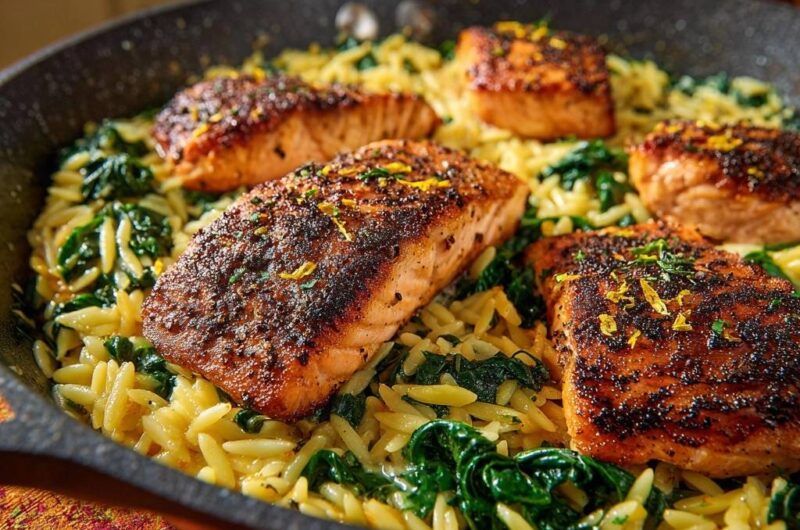
MinutesThis one pan meal combines seared salmon fillets with savory orzo and spinach. By toasting the orzo before simmering, the pasta maintains a perfect texture while absorbing the flavors of garlic, lemon, and chicken broth.
Ingredients
4 salmon fillets (6 oz each)
1.5 cups dry orzo pasta
3 cups baby spinach, roughly chopped
2.5 cups chicken broth (low sodium)
2 tablespoons olive oil
1 tablespoon butter
4 cloves garlic, minced
2 teaspoons lemon zest (divided)
2 tablespoons fresh lemon juice
1 tablespoon coarse cracked black pepper
1 teaspoon kosher salt
1/2 teaspoon paprika
Fresh parsley, finely chopped for garnish
Directions
- Pat the salmon fillets completely dry with paper towels. Season the flesh side generously with salt, paprika, and the coarse cracked black pepper, pressing the spices into the fish to ensure a thick crust.
- Heat olive oil in a large heavy-bottomed skillet over medium-high heat. Once the oil is shimmering, place salmon flesh-side down. Sear for 4-5 minutes without moving them to develop the deep, dark crust shown in the image. Flip and cook for 1 minute on the skin side. Remove salmon from the pan and set aside on a plate (it will finish cooking later).
- To solve the mushy pasta problem, wipe out any burnt spice bits but keep the oil. Melt the butter in the same skillet. Add the dry orzo directly to the hot fat. Stir constantly for 3 minutes until the orzo turns golden brown and smells nutty. This toasting step prevents the starch from releasing too quickly.
- Add the minced garlic to the orzo and cook for 30 seconds until fragrant.
- Pour in the chicken broth and lemon juice. Scrape the bottom of the pan to release any browned bits (fond). Bring to a boil, then reduce heat to medium-low. Cover and simmer for 8-9 minutes.
- Remove the lid. The orzo should be al dente and most liquid absorbed. Stir in the chopped spinach and half of the lemon zest. The residual heat will wilt the spinach in seconds.
- Nestled the seared salmon fillets back on top of the orzo. Cover the pan for 2 minutes; the rising steam will finish cooking the salmon to a perfect medium while keeping the crust crisp.
- Garnish with the remaining lemon zest and fresh parsley. Serve immediately directly from the skillet.
Notes
- Toasting the orzo is the essential step to prevent the pasta from becoming mushy or gummy.