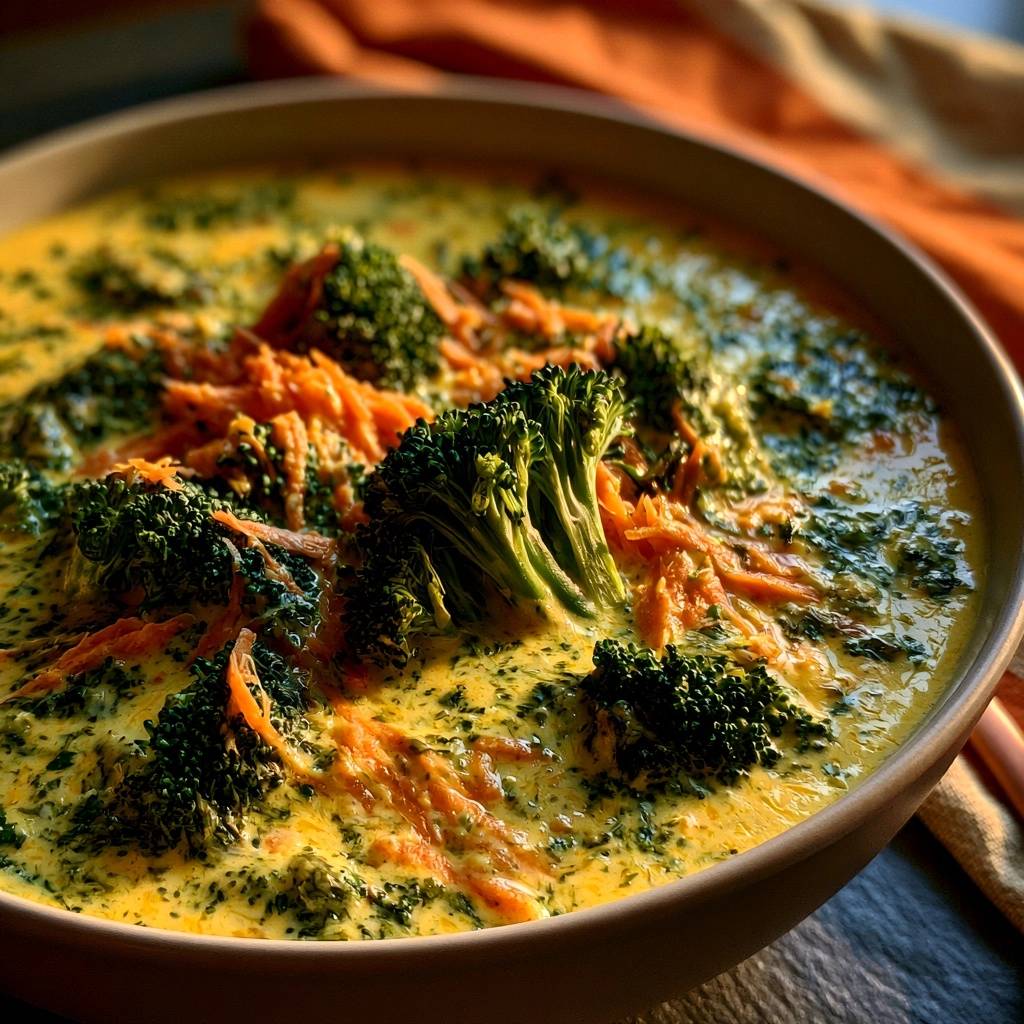
Imagine dipping your spoon into a bowl of broccoli cheddar soup, expecting a velvety embrace, only to find a gritty, oily mess that separates on your tongue. It’s a common kitchen heartbreak. Most versions of this classic comfort food fail because the cheese is treated like an afterthought rather than a delicate emulsion. This recipe changes that narrative by focusing on a professional-grade silkiness that rivals any high-end bistro.
The secret to that stunning golden hue and the vibrant green of the florets isn’t food coloring or luck. It’s a combination of specific aromatic prep and a temperature-control technique that keeps the dairy stable. You’ll get a rich, thick base that perfectly suspends tender vegetables without ever breaking or turning grainy. It’s the kind of meal that feels like a warm hug on a chilly afternoon.
The real trick to success lies in the cooling phase. If you add your cheese while the soup is at a rolling boil, the proteins in the cheddar will seize and clump together. By pulling the pot off the heat and letting it settle for just a few minutes, you create the perfect environment for the cheese to melt into a smooth, luxurious sauce. This one small change makes the difference between a mediocre soup and a masterpiece.
The Science of a Smooth Cheese Emulsion
To understand why cheese soups often turn gritty, we have to look at the molecular level. Cheddar cheese is essentially a tight web of casein proteins holding onto fat and moisture. When you subject those proteins to extreme heat, they tighten up like a wrung-out sponge, squeezing out the fat and creating those tiny, rubbery grains you feel on your palate.
Therefore, we use a two-part defense system to keep things smooth. Firstly, the all-purpose flour in our roux acts as a physical barrier, coating the fat droplets and preventing them from recombining. Secondly, the heavy cream provides a high level of milk fat that buffers the cheese proteins. This creates a stable environment where the cheddar can relax and melt into the liquid rather than fighting against it.
Essential Components for Creamy Broccoli Cheddar Soup
Quality ingredients are the backbone of this dish, and none is more important than the cheese. You must buy a block of sharp cheddar and shred it yourself. Pre-shredded bags are coated in cellulose or potato starch to prevent clumping in the package, but those same coatings will prevent the cheese from melting smoothly into your soup. Freshly grated cheese has the moisture and purity needed for a perfect melt.
In addition to the cheese, the choice of dairy matters. While you might be tempted to use lower-fat options, the combination of whole milk and heavy cream provides the necessary viscosity. Sharp cheddar is preferred over mild because its flavor is bold enough to stand up to the earthy broccoli and the sweetness of the carrots. It provides that quintessential “tang” that makes the soup addictive.
Selecting and Prepping Your Broccoli
Texture is everything in a great soup, which is why we use a “two-cut” method for the broccoli. I recommend chopping half of the pound into tiny, almost minced bits. These small pieces break down during the simmer, infusing the entire broth with a deep broccoli flavor. However, you should keep the other half as medium-sized florets. These larger pieces provide a satisfying “bite” and look beautiful when you serve the final dish.
The Role of Aromatics and Spices
Aromatics provide the hidden layers of flavor that make people ask for your secret. Coarsely grating the carrots instead of dicing them is a pro move. The grated carrots release their natural sugars and orange carotene into the butter much faster, contributing to the soup’s signature golden glow. Additionally, a pinch of ground nutmeg might seem unusual, but it’s a classic French technique that enhances the nuttiness of the cheese and the creaminess of the dairy.
Phase One: Building the Flavor Base
Start by melting your unsalted butter in a heavy-bottomed Dutch oven over medium heat. Once it’s bubbling, toss in your finely diced onions. You aren’t looking to brown them; you just want them soft and translucent. After about three minutes, add the grated carrots and minced garlic. As they sauté, you’ll notice the butter beginning to take on a beautiful orange tint from the carrots.
This stage is crucial because it builds the foundation of the soup’s color. The garlic should become fragrant but never brown, as burnt garlic will turn the entire pot bitter. Keep the vegetables moving with a wooden spoon. By the end of this phase, the carrots should be softened and the kitchen should smell incredible.
Phase Two: Creating the Stabilizing Roux
Now, sprinkle the flour evenly over your sautéed vegetables. It’s important to stir constantly for about two minutes. This process cooks out the “raw” flour taste, which can ruin the flavor of the soup if skipped. However, be careful not to let the flour turn dark brown. We want a blond roux that thickens the soup without adding a heavy, toasted flavor that would overshadow the delicate broccoli.
The flour will coat the vegetables and the bottom of the pot, creating a thick paste. This is exactly what you want. This roux is the “glue” that will hold your emulsion together later. If the mixture looks a bit dry, don’t worry; the liquids will smooth everything out in the next step.
Phase Three: Incorporating Liquids for Maximum Creaminess
When it’s time to add the broth, milk, and heavy cream, patience is your best friend. Start by pouring in just a splash of the chicken or vegetable broth. Whisk it vigorously into the flour-vegetable mixture until a smooth paste forms. Repeat this process, adding the liquid in small increments at first. This “slow-pour” technique ensures that you don’t end up with flour lumps in your finished soup.
Once the base is smooth, you can pour in the remaining milk and heavy cream more freely. The ratio of milk to cream in this recipe is designed to give you a rich mouthfeel without being overly heavy. As the liquid heats up, it will begin to thicken into a silky, opaque base that’s ready for the vegetables.
Phase Four: Simmering for Color and Texture
Add the tiny broccoli bits along with the salt, pepper, smoked paprika, and nutmeg. Bring the pot to a gentle simmer, but avoid a rolling boil. Once you see small bubbles breaking the surface, place the larger florets on top. Cover the pot and let it steam for about 8 to 10 minutes. This method ensures the florets are tender-crisp rather than mushy.
You’ll know it’s ready when the broccoli is a vibrant, bright green. If you overcook the broccoli, it will turn a dull olive drab color and lose its fresh flavor. Keep an eye on the pot; the goal is to have the florets soft enough to pierce with a fork but firm enough to hold their shape in the bowl.
The Critical Cooling Step: Preventing Graininess
This is the most important part of the entire process. Once the broccoli is cooked, turn the heat off completely and move the pot to a cool burner. You must wait about 2 to 3 minutes for the liquid to stop bubbling. Ideally, the temperature should drop to between 150°F and 160°F. If the soup is too hot, the cheese will break; if it’s too cool, the cheese won’t melt.
Now, grab a handful of your freshly shredded cheddar. Sprinkle it into the soup and stir gently in a circular motion. Wait until that handful is completely melted and the soup looks smooth before adding the next one. This gradual process allows the cheese to integrate perfectly into the cream base. By the time you’ve added all 2.5 cups, you’ll have a thick, glossy, and perfectly smooth soup.
Troubleshooting Your Broccoli Cheese Texture
If you find that your soup has become too thick after adding the cheese, don’t panic. Simply whisk in a tablespoon or two of warm broth until you reach your desired consistency. On the other hand, if the soup feels too thin, you can let it sit for a few minutes; it naturally thickens as it cools slightly. Avoid putting it back on high heat, as that will risk breaking the cheese emulsion you worked so hard to create.
If the soup does start to look a little oily or “broken,” you can sometimes save it by whisking in a splash of warm heavy cream. The extra fat and proteins in the cream can help re-emulsify the sauce. However, the best way to fix a broken soup is to prevent it by following the off-heat cheese method strictly.
Optimal Pairings for a Hearty Soup Meal
Because this soup is so rich and creamy, it pairs best with sides that offer a bit of crunch or acidity. A thick slice of toasted sourdough bread is the perfect vessel for soaking up every last drop. The tanginess of the sourdough cuts through the richness of the cheddar beautifully. Alternatively, a crisp green salad with sliced apples, walnuts, and a lemon vinaigrette provides a refreshing contrast.
If you want something even heartier, consider serving the soup alongside roasted potatoes seasoned with rosemary. The earthy potatoes complement the broccoli, while the roasting adds a texture that contrasts with the smooth soup. Avoid heavy, cheesy sides, as you want the flavors of the soup to remain the star of the show.
Storage and Reheating Without Breaking the Sauce
You can store leftovers in an airtight container in the refrigerator for up to 3 days. However, reheating requires a gentle touch. Never put this soup in the microwave on high power, as the intense, uneven heat will almost certainly cause the cheese to separate and turn oily. Instead, use the stovetop.
Place the soup in a small saucepan over low heat. Stir it frequently and patiently until it’s warmed through. If it has thickened too much in the fridge, add a splash of milk to loosen it up. I don’t recommend freezing this soup; the high dairy content and the broccoli texture often become grainy and watery once thawed and reheated.
Expert Tips for Professional Presentation
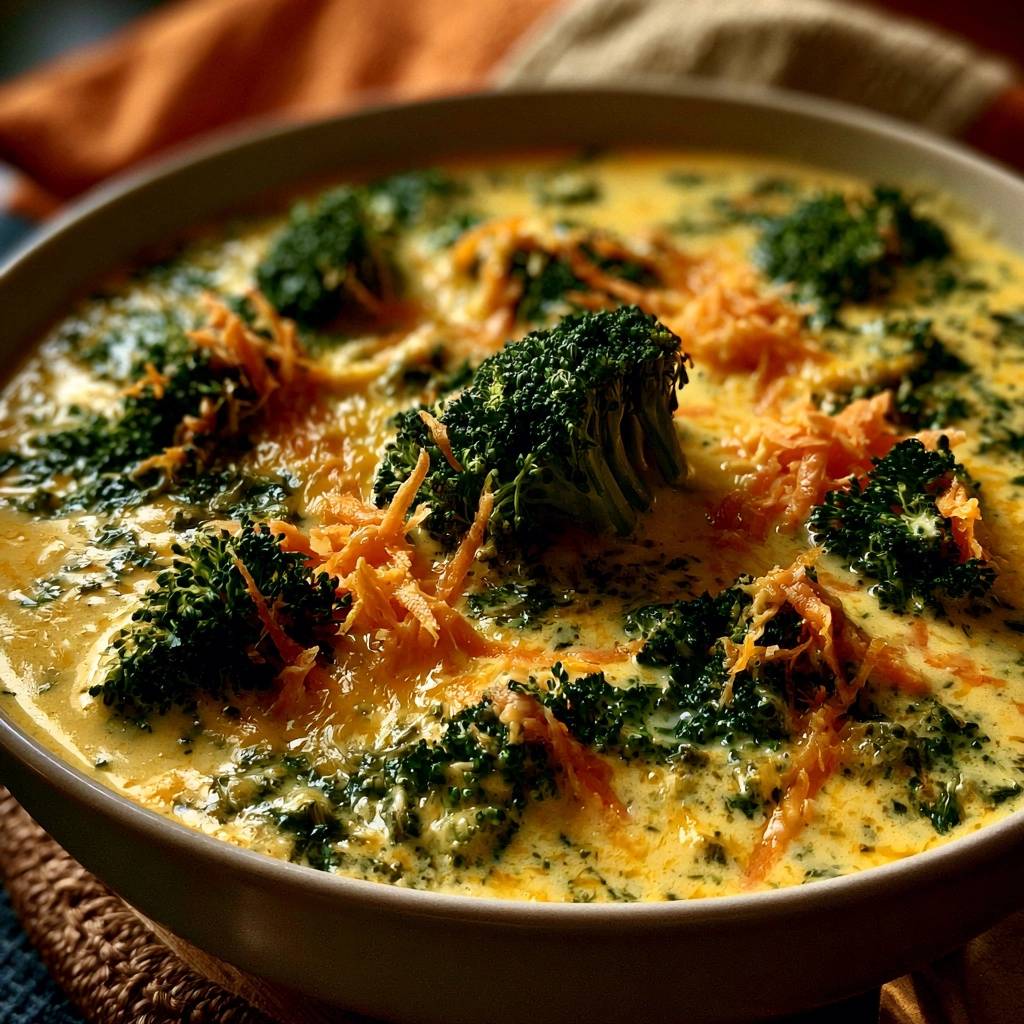
To make your bowls look like they came from a professional kitchen, save a few of the brightest green broccoli florets and a pinch of shredded cheese to use as a garnish. Place the florets right in the center so they sit on the surface. A final crack of fresh black pepper adds a nice visual pop and a bit of heat.
You can also drizzle a tiny bit of heavy cream in a swirl over the top for a gourmet touch. Serve the soup in wide, shallow bowls to show off the vibrant colors and the chunks of vegetables. When people see those distinct pieces of carrot and broccoli against the golden broth, they’ll know they’re in for a treat.
Common Questions About Creamy Broccoli Cheddar Soup
Can I use frozen broccoli for this recipe?
You can use frozen broccoli, but be aware that it holds more moisture than fresh. Thaw it completely and pat it dry with paper towels before adding it to the pot. Also, frozen broccoli is often blanched before freezing, so it may cook faster than fresh. Add it during the last 5 minutes of simmering to prevent it from becoming mushy.
Why did my soup turn out orange instead of yellow?
The orange color comes from two places: the carotene in the grated carrots and the smoked paprika. When you sauté the carrots in butter, the fat-soluble pigments bleed into the base. This is actually a sign of a well-developed flavor profile! If you prefer a paler yellow soup, you can reduce the amount of carrots or swap the smoked paprika for white pepper.
Can I make this soup vegetarian?
Absolutely. Simply swap the chicken broth for a high-quality vegetable broth. The flavor will remain excellent because the primary notes come from the sharp cheddar, the aromatics, and the broccoli itself. Just ensure your vegetable broth isn’t too dark in color, or it may muddy the vibrant look of the soup.
Is it possible to use low-fat milk or half-and-half?
While you can use half-and-half as a substitute for the heavy cream, I don’t recommend using skim or 1% milk. Lower-fat milks have a much higher risk of curdling when they hit the acidic and salty environment of the soup. The fat in whole milk and heavy cream acts as a stabilizer, ensuring that silky-smooth texture that defines a great broccoli cheddar soup.
How do I fix the soup if it’s too salty?
If you accidentally over-salted, you can add a bit more heavy cream or a splash of milk to dilute the saltiness. Another trick is to add a peeled, diced potato and simmer it until tender; the potato will absorb some of the excess salt. Always taste your broth before adding the cheese, as the cheddar itself will add a significant amount of salt to the final dish.
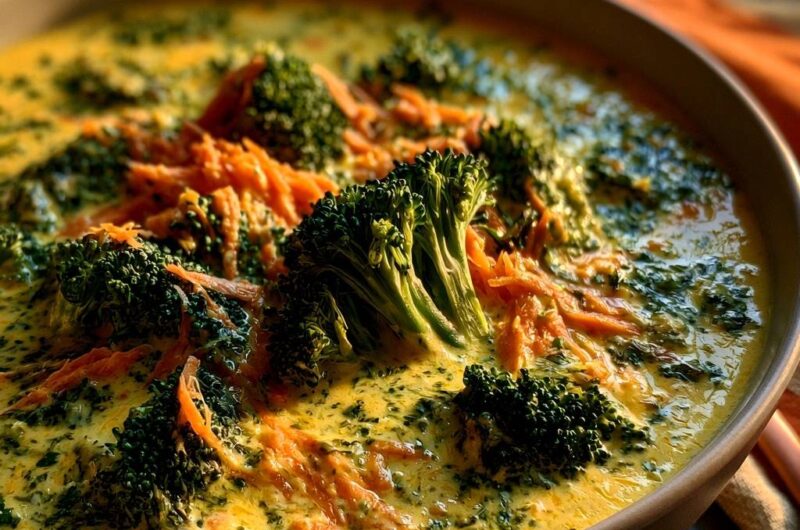
Creamy Broccoli Cheddar Soup
Course: Main CourseCuisine: AmericanDifficulty: easy4
servings15
minutes25
minutes40
Minutes420
kcalAmerican
Ingredients
1 pound fresh broccoli (half chopped into tiny bits, half kept as medium florets)
2 large carrots, coarsely grated
1 small yellow onion, finely diced
3 cloves garlic, minced
4 tablespoons unsalted butter
1/4 cup all-purpose flour
1 1/2 cups chicken or vegetable broth
1 1/2 cups whole milk
1 cup heavy cream
2 1/2 cups sharp cheddar cheese, freshly shredded from a block (do not use pre-shredded)
1/2 teaspoon salt
1/2 teaspoon smoked paprika (for the golden hue shown in the image)
1/4 teaspoon black pepper
1/4 teaspoon ground nutmeg
Directions
- In a large pot or Dutch oven, melt the butter over medium heat. Add the onion and sauté for 3 minutes. Add the grated carrots and garlic, sautéing for another 3 minutes until the carrots are softened and the butter is beginning to take on an orange tint.
- Sprinkle the flour over the vegetables and stir constantly for 2 minutes. This creates a roux that stabilizes the emulsion and prevents the soup from breaking.
- Slowly whisk in the broth, milk, and heavy cream. Add the liquid in small increments at first, whisking vigorously to ensure a smooth, thick base.
- Add the tiny broccoli bits, salt, pepper, paprika, and nutmeg. Bring to a gentle simmer. Once simmering, add the larger broccoli florets on top. Cover and cook for 8 to 10 minutes until the florets are tender but still vibrant green.
- To solve the grainy texture problem, turn the heat off completely and move the pot to a cool burner. Wait 2 to 3 minutes for the liquid to stop bubbling and cool slightly (ideally to about 150°F-160°F).
- Add the shredded cheese one handful at a time, stirring gently in a circular motion until fully melted before adding the next. By adding the cheese to hot (but not boiling) liquid, you prevent the proteins from seizing.
- Serve immediately, ensuring the large florets and grated carrots are visible on the surface for a professional presentation.
Notes
- To prevent a grainy texture, never add cheese to boiling liquid. Ensure you shred the cheese from a block rather than using pre-shredded varieties which contain anti-caking agents.