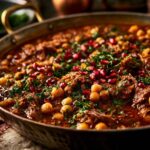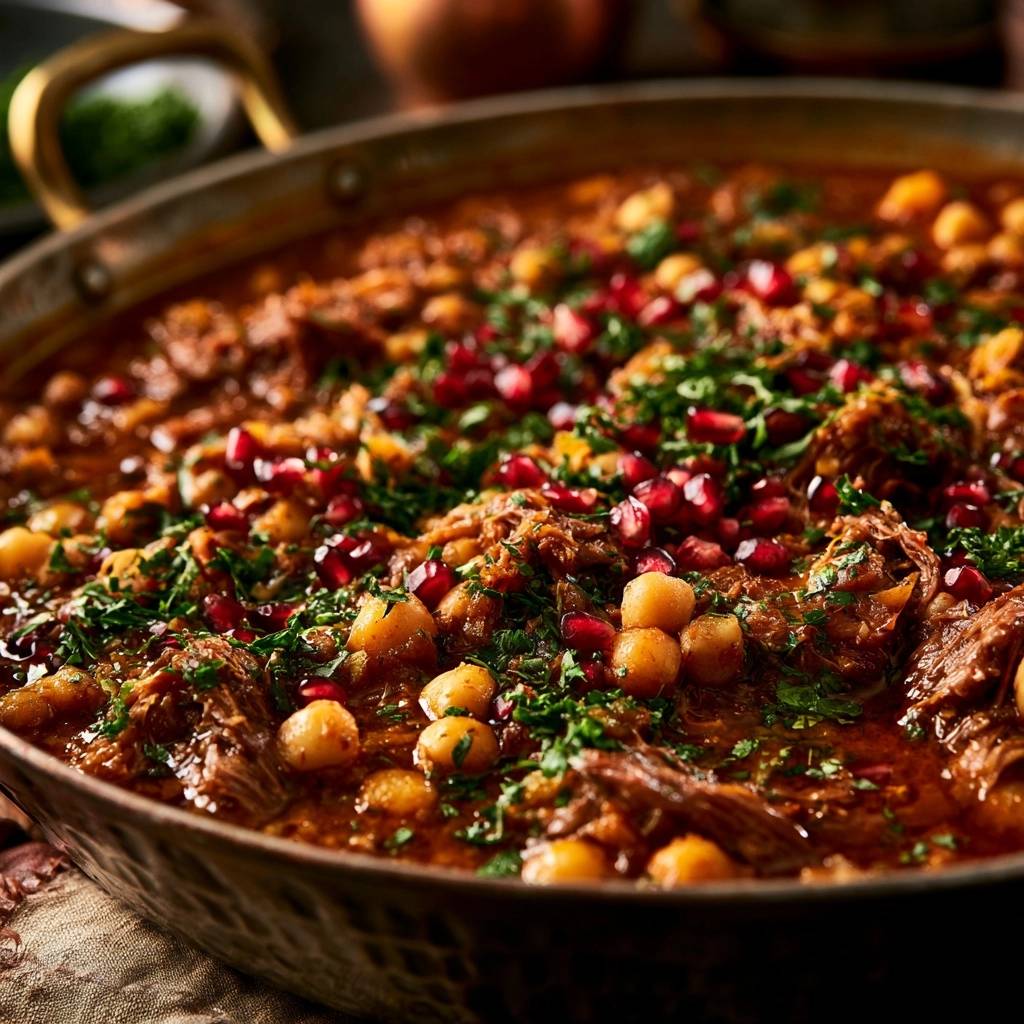
Imagine a sauce so thick and velvety it clings to the back of a spoon, glowing with a deep mahogany hue. Most home cooks struggle with stews that turn out thin or gray, but this Slow-Simmered Lamb and Chickpea Tagine solves that problem through a specific reduction technique. You aren’t just making a soup; you’re creating a concentrated glaze that carries the warmth of toasted spices and the richness of slow-cooked fat.
The lamb shoulder transforms over three hours, moving past the chewy stage until it becomes tender enough to shred with nothing but a dull spoon. The chickpeas provide a sturdy, nutty contrast, while the bright pop of pomegranate seeds cuts through the heavy, savory profile. This dish relies on patience rather than complex equipment, ensuring a professional result in any heavy-bottomed pot.
The secret to the incredible texture lies in the chickpeas themselves. By mashing a small portion of them against the side of the pot halfway through cooking, you release natural starches that act as a built-in thickener. This creates a cohesive sauce without the need for flour or heavy starches that can dull the vibrant spice flavors.
The Anatomy of a Thick Tagine Sauce
Achieving a “Never Watery” sauce requires an understanding of evaporation and starch release. When you mash roughly half a cup of the chickpeas, you release amylopectin into the broth. This natural starch binds the liquid, creating a silky mouthfeel that flour-based thickeners simply cannot replicate. It keeps the flavors clean and the texture rustic yet refined.
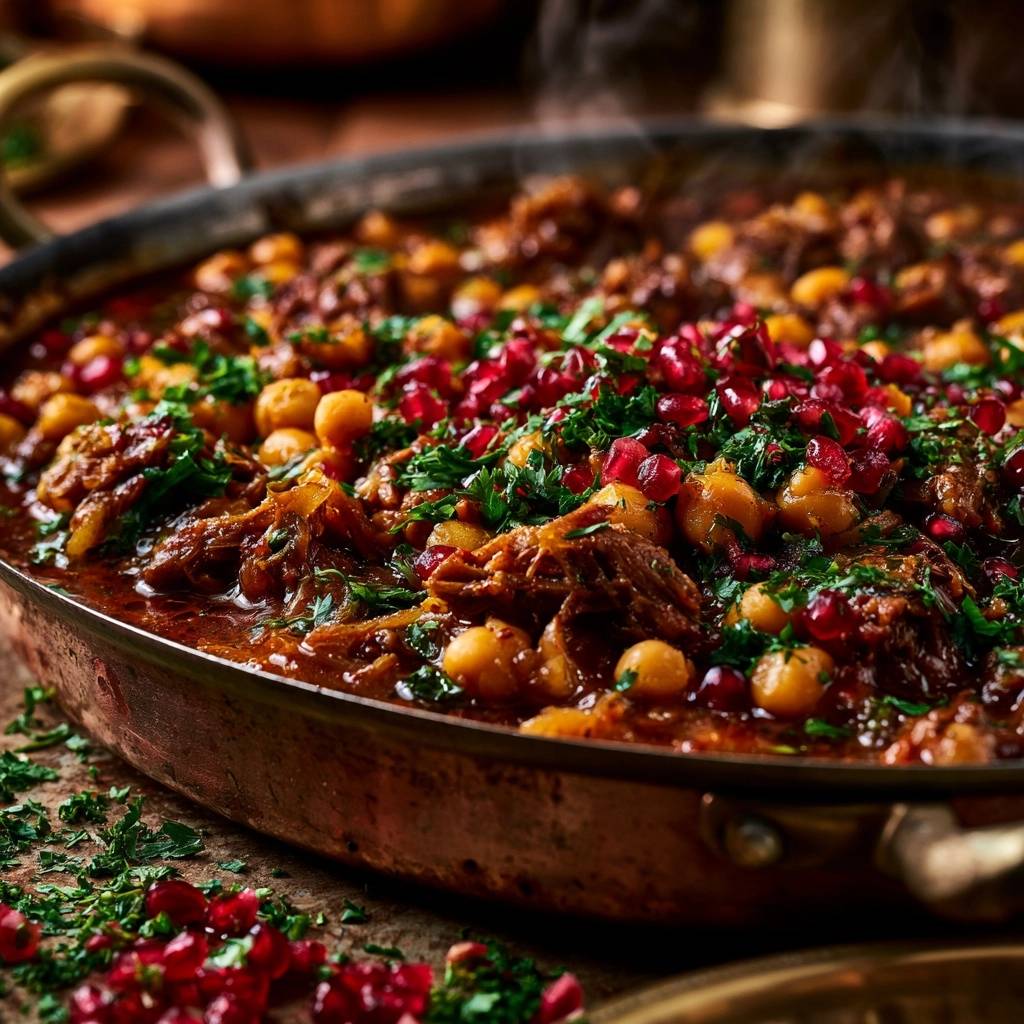
However, starch alone isn’t enough for that concentrated finish. The final 45 to 60 minutes of cooking must happen without a lid. This allows steam to escape, reducing the beef bone broth and lamb juices into a potent nectar. As the water evaporates, the sugars and proteins concentrate, resulting in that signature dark mahogany color and a sauce that coats every ingredient perfectly.
During this reduction phase, the fats from the lamb shoulder emulsify with the thickened broth. If you keep the lid on for the entire duration, the steam stays trapped, and you end up with a thin, diluted liquid. By letting the pot breathe, you force the flavors to intensify, turning a simple braise into a luxurious, restaurant-quality tagine.
Essential Components for the Lamb and Chickpea Base
Choosing the right cut of meat is the most important decision you’ll make for this recipe. Lamb shoulder is the undisputed king of slow cooking because it’s packed with collagen and connective tissue. Unlike the leaner leg of lamb, which can turn dry and stringy during a long simmer, the shoulder breaks down into succulent, melt-in-your-mouth morsels.
The liquid base also requires high-quality beef bone broth rather than standard stock. Bone broth contains significantly more gelatin, which contributes to the body and “lip-smacking” quality of the final sauce. When this gelatin combines with the mashed chickpea starch, the result is a sauce with incredible structural integrity and depth.
Flavor complexity comes from what I call the spice quintet: cumin, coriander, cinnamon, paprika, and ginger. Cumin and coriander provide earthy, citrusy foundations, while cinnamon adds a mysterious warmth that defines North African cuisine. Smoked paprika brings a hint of fire, and ginger provides a sharp, clean finish that prevents the lamb from feeling too heavy on the palate.
Finally, don’t rush the tomato paste. You must cook it until it shifts from a bright, raw red to a dark brick color. This caramelizes the natural sugars in the tomatoes and removes the metallic tang often found in canned products. This step is vital for building the base of that dark, rich color you’re looking for.
Selecting and Preparing the Lamb Shoulder
When you get your lamb shoulder home, take a moment to trim away any large, hard chunks of white fat on the exterior. You want to keep the intramuscular fat—the marbling—as that provides the flavor and moisture. Cut the meat into uniform 1.5-inch chunks; if they’re too small, they’ll disintegrate, and if they’re too large, the center won’t get that shreddable texture.
The Maillard Reaction: Searing for Deep Color
Before the lamb ever touches the oil, you must pat it bone-dry with paper towels. Any moisture left on the surface of the meat will turn to steam the moment it hits the heat, preventing the Maillard reaction from occurring. You want a hard, dark golden sear on all sides of the lamb chunks to lock in flavor and create a beautiful crust.
As you sear the meat in batches, you’ll notice brown bits sticking to the bottom of your Dutch oven. This is called the “fond,” and it’s pure culinary gold. These caramelized proteins are the primary flavor driver for the entire Slow-Simmered Lamb and Chickpea Tagine. Don’t worry if the bottom of the pot looks dark; those bits will dissolve into the sauce later, providing immense depth.
Step-by-Step: Building the Aromatic Foundation
Once the meat is seared and set aside, lower the heat to soften your onions. You need a full 7 to 9 minutes here. You aren’t just looking for translucency; you want the onions to begin breaking down their cellular structure, which adds sweetness and further thickens the sauce. Use your spoon to scrape up the lamb fond as the onions release their moisture.
Next comes blooming the spices. Many of the flavor compounds in cumin, coriander, and paprika are fat-soluble, meaning they only reach their full potential when toasted in oil. Stir them into the onion and tomato paste mixture for about three minutes. You’ll know it’s ready when the aroma fills your kitchen and the paste looks like dark velvet.
Deglazing is the final step of the foundation. When you pour in the bone broth, use a wooden spoon to vigorously scrape the bottom of the pot. This incorporates every last bit of toasted spice and caramelized meat juice into the liquid. This ensures that no flavor is left behind and your sauce starts with a complex, multi-layered profile.
The Two-Phase Simmering Technique
The first phase of simmering is all about the meat. With the lid tightly fitted, the lamb bathes in a low-heat environment that gently melts the collagen into gelatin. This takes about two hours. During this time, the chickpeas begin to soften, and the spices permeate every fiber of the lamb. Resist the urge to turn up the heat; a gentle bubble is all you need.
The second phase is the transformation. By removing the lid for the final 45 to 60 minutes, you invite evaporation to do the heavy lifting. Watch as the liquid level drops and the bubbles become larger and more viscous. You’re looking for a “glaze” consistency where the sauce clings to the chickpeas rather than pooling at the bottom of the bowl.
Troubleshooting Common Tagine Textures
If your sauce still feels a bit thin after the reduction period, don’t panic. Simply mash a few more chickpeas against the side of the pot and simmer for another ten minutes. The extra starch will usually bridge the gap. Conversely, if the sauce is thick but the lamb still feels tough, it simply needs more time. Tough lamb means the collagen hasn’t fully converted to gelatin yet, so put the lid back on and give it another 20 minutes.
Optimal Side Dishes for Rich Lamb Stews
Because this tagine is so rich and concentrated, you need sides that offer contrast. Fluffy couscous tossed with fresh lemon zest and a little olive oil is the traditional choice. The grains soak up the mahogany sauce, while the lemon zest provides a necessary hit of acidity to wake up your taste buds. A crusty piece of sourdough is also excellent for wiping the plate clean.
I also highly recommend a side of bitter greens, like sautéed chard, or a crisp cucumber and mint salad. The coolness of the cucumber and the bite of the greens cut through the intensity of the lamb fat. These fresh elements balance the meal, making it feel complete rather than overly heavy.
Storage, Reheating, and Make-Ahead Benefits
This is one of those rare dishes that actually tastes better the next day. As the tagine cools, a “flavor marriage” occurs where the spices mellow and the lamb absorbs even more of the sauce’s essence. The gelatin in the sauce will cause it to set into a thick jelly in the fridge, which is a sign of a perfectly made stew.
When you’re ready to reheat, place the tagine in a saucepan over medium-low heat. Add a small splash of water or extra broth to loosen the gelatinized sauce. Stir gently so you don’t break up the tender lamb chunks. Avoid the microwave if possible, as it can toughen the meat and heat the sauce unevenly.
Expert Troubleshooting and Preparation Tips
Can I use a Slow Cooker or Crockpot?
You can certainly use a slow cooker, but you must make adjustments to avoid a watery result. Since slow cookers trap all moisture, reduce the initial broth by about 30%. After the lamb is tender, I recommend transferring the sauce to a wide pan on the stove for a 15-minute high-heat reduction to achieve that signature thick glaze.
Substituting Dried Chickpeas for Canned
Dried chickpeas offer a superior, firm texture that holds up well during long simmers. If using dried, soak them overnight in water with a pinch of salt. You’ll need to add about an extra cup of broth to the pot, as the dried beans will absorb more liquid than the canned version during the three-hour cook time.
Managing Salt Levels in Reduced Sauces
This is a critical tip: under-salt your tagine at the beginning. Because you are reducing the liquid significantly, the salt concentration will increase as the water evaporates. Season the lamb lightly when searing, but wait until the very end of the reduction phase to do your final salt and pepper adjustments.
Achieving the Signature Mahogany Color
The deep color comes from two specific moments: the hard sear on the lamb and the darkening of the tomato paste. If your sauce looks pale, you likely didn’t cook the tomato paste long enough or skipped the batch-searing process. The long, uncovered simmer at the end provides the final darkening effect through concentration.
Slow-Simmered Lamb and Chickpea Tagine
Course: Main CourseCuisine: Middle Eastern InspiredDifficulty: easy6
servings20
minutes3
hours180
Minutes485
kcalMiddle Eastern Inspired
Ingredients
2 pounds lamb shoulder, cut into 1.5 inch chunks
2 cans (15 ounces each) chickpeas, drained and rinsed
3 tablespoons olive oil
1 large yellow onion, finely diced
4 cloves garlic, minced
2 tablespoons tomato paste
1 tablespoon ground cumin
1 tablespoon ground coriander
1 teaspoon ground cinnamon
1 teaspoon smoked paprika
1/2 teaspoon ground ginger
3 cups beef bone broth
1/2 cup pomegranate seeds
1/2 cup fresh parsley, finely chopped
Salt and black pepper to taste
Directions
- Heat the olive oil in a large, heavy-bottomed Dutch oven or deep copper pan over medium-high heat. Pat the lamb chunks very dry with paper towels. Season generously with salt and pepper.
- Brown the lamb in batches to avoid crowding the pan. Sear until a deep, dark golden crust forms on all sides (about 8-10 minutes per batch). Remove the lamb and set aside on a plate.
- Lower the heat to medium. Add the diced onion to the rendered fat. Cook for 7-9 minutes, stirring frequently and scraping the bottom of the pan to incorporate the browned bits (fond).
- Add the garlic, tomato paste, and all ground spices (cumin, coriander, cinnamon, paprika, and ginger). Cook for 3 minutes, stirring constantly, until the tomato paste darkens to a deep brick red and the spices are highly fragrant.
- Return the lamb and any accumulated juices to the pot. Add the drained chickpeas. Pour in the beef bone broth-the liquid should just barely cover the ingredients.
- Bring to a boil, then immediately reduce to a very low simmer. To ensure the “Never Watery” promise, use a wooden spoon to crush approximately 1/2 cup of the chickpeas against the side of the pot. Stir the mash into the liquid to release their starch.
- Cover with a tight-fitting lid and simmer on low for 2 hours.
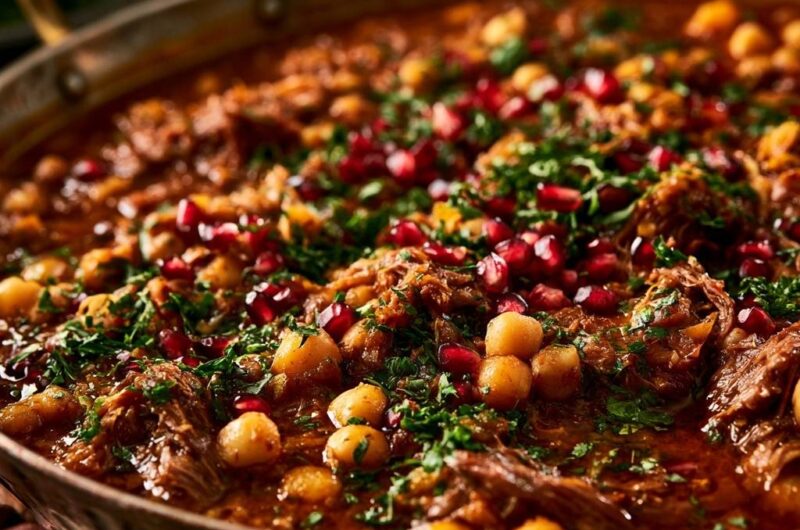
- Remove the lid. Continue to simmer uncovered for the final 45 to 60 minutes. This is crucial for the reduction shown in the image; it allows the sauce to thicken into a rich glaze and the lamb to reach a “shredding” consistency.
- Once the sauce is thick and the lamb pulls apart easily with a fork, taste and adjust seasoning with salt and pepper.
- Garnish heavily with fresh chopped parsley and pomegranate seeds. The acidity of the pomegranate is essential to cut through the richness of the reduced sauce. Serve directly from the pan.
Notes
- To achieve the signature thick sauce, ensure you crush some chickpeas against the side of the pot and do not skip the final hour of uncovered simmering. The pomegranate seeds are essential for balancing the rich flavors with acidity.