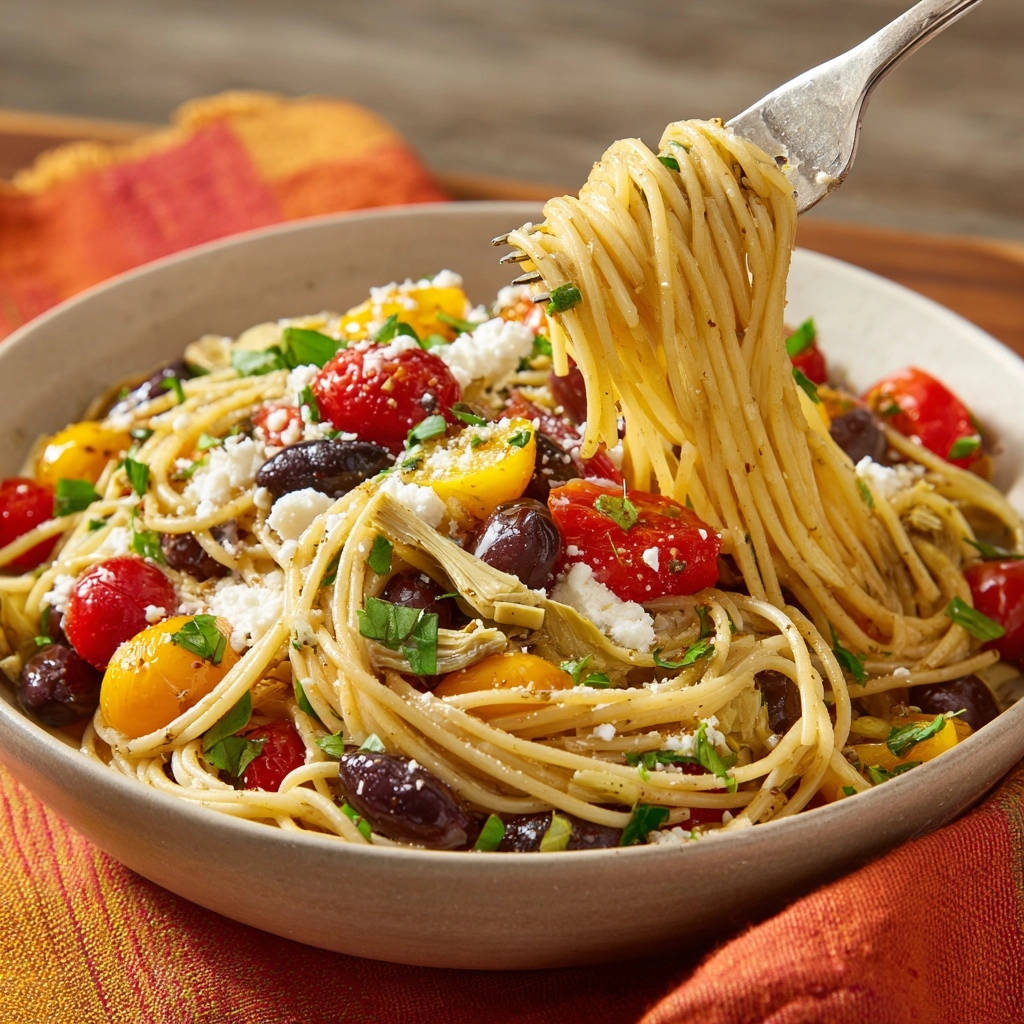
There’s nothing more disheartening than a beautiful pasta dish where the sauce just won’t cling, leaving your spaghetti strands feeling naked and uninspired. I’ve been there, but through years of testing, I finally cracked the code to ensure every single strand of your Mediterranean Veggie Spaghetti is perfectly coated and bursting with flavor. This recipe is a true game-changer, promising a vibrant, satisfying meal that truly delivers on its promise of a silky, luscious sauce.
The Secret to Sauce That Clings: Unpacking Our Mediterranean Veggie Spaghetti
This Mediterranean Veggie Spaghetti isn’t just another pasta dish; it’s a celebration of fresh, bold flavors made incredibly easy. My secret lies in a simple technique that transforms a light sauce into a velvety coating, ensuring maximum enjoyment in every bite.
Beyond its fantastic texture, this recipe shines with the bright, wholesome goodness of the Mediterranean diet. It’s naturally vegetarian, packed with colorful vegetables, and incredibly versatile, making it a reliable family favorite or a quick weeknight meal.
You’ll love how quickly this dish comes together without compromising on depth or satisfaction. It’s the perfect blend of ease, fresh ingredients, and a truly unforgettable sauce that sets it apart.
Building Blocks of Mediterranean Delight: Your Ingredient Checklist
The Heart of the Dish: Perfectly Cooked Spaghetti
Spaghetti forms the foundational canvas for our vibrant sauce. Choosing a good quality pasta is key, and cooking it to a perfect al dente is non-negotiable for the best texture and sauce adhesion.
Vibrant Fresh Produce: Tomatoes and Parsley
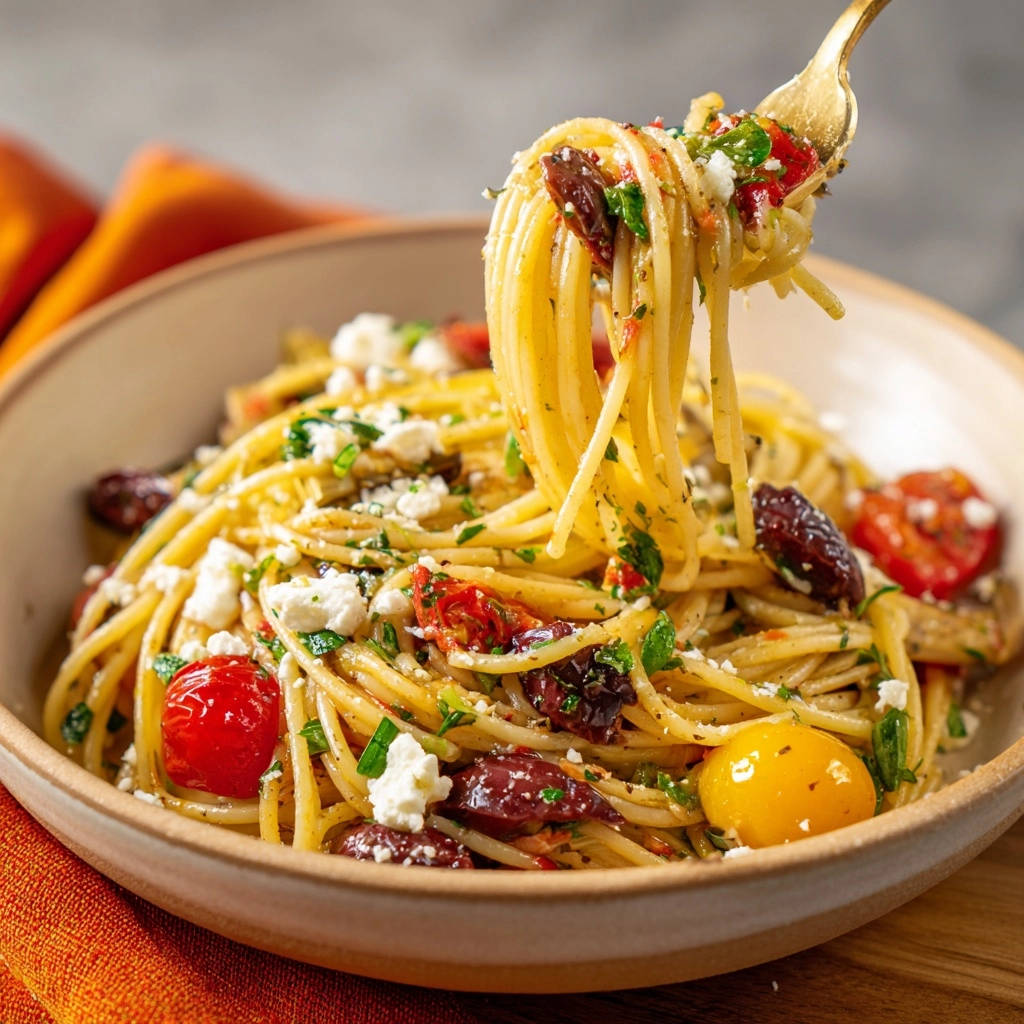
Sweet cherry tomatoes, especially a mix of red and yellow, burst with flavor and juiciness when cooked, creating natural sweetness in the sauce. Fresh parsley brightens the entire dish with its herbaceous notes and adds a pop of color, vital for that authentic Mediterranean feel.
Mediterranean Staples: Olives and Artichoke Hearts
Kalamata olives bring a briny, salty depth that is quintessentially Mediterranean, perfectly balancing the sweetness of the tomatoes. Marinated artichoke hearts add a tender, tangy element and textural contrast, making each forkful more interesting.
Dairy & Aromatics: Feta, Garlic, and Olive Oil
Crumbled feta cheese introduces a creamy, salty tang that melts slightly into the warm pasta, enhancing the sauce’s richness without making it heavy. Minced garlic provides an aromatic foundation, while quality olive oil is the essential fat that carries and binds all these beautiful flavors together.
The Flavor Amplifiers: Red Pepper Flakes, Salt, and Pepper
Red pepper flakes offer a gentle warmth and subtle kick, entirely optional but highly recommended for a touch of zing. Salt and freshly ground black pepper are crucial for seasoning, allowing you to perfectly balance and enhance all the natural flavors of the Mediterranean Veggie Spaghetti.
The Game-Changer: Reserved Pasta Water
This is truly the secret ingredient for that silky, clinging sauce. The starchy pasta water acts as a natural emulsifier, binding the olive oil and vegetable juices to create a rich, cohesive sauce that adheres beautifully to every single strand of spaghetti.
Essential Tools for Your Mediterranean Veggie Spaghetti Journey
Large Pot: Essential for cooking your spaghetti evenly and ensuring enough space for the pasta to move freely in salted boiling water.
Large Skillet or Pot: Ideal for sautéing your aromatics and vegetables, and ultimately tossing all the ingredients together with the sauce.
Tongs: Absolutely crucial for vigorously tossing the pasta with the sauce and reserved pasta water, ensuring that silky, clinging texture.
Cutting Board & Knife: For efficient and safe preparation of your fresh vegetables and herbs.
Measuring Cups & Spoons: To accurately measure your olive oil, herbs, and seasonings, ensuring a balanced flavor profile.
Crafting Culinary Magic: Your Step-by-Step Mediterranean Veggie Spaghetti Guide
-
Prepare the Spaghetti:
In a large pot, bring generously salted water to a rolling boil. Add your spaghetti and cook according to package directions until it’s perfectly al dente – tender but still firm to the bite. Salting the water generously infuses flavor into the pasta itself, which is vital.
Before draining, carefully scoop out about 1 cup of the starchy pasta water and set it aside. This reserved liquid is your golden ticket to a luscious sauce.
-
Sauté Aromatics and Tomatoes:
While the pasta cooks, heat 1/4 cup of olive oil in a large skillet or pot over medium heat. Add the minced garlic and, if using, the red pepper flakes, cooking for just 1 minute until they become wonderfully fragrant. Watch carefully to avoid burning the garlic, as burnt garlic can taste bitter.
Now, add the halved cherry tomatoes to the skillet. Cook them for 3 to 5 minutes, stirring occasionally, until they begin to soften and release their sweet, juicy liquids into the pan, forming the base of your sauce.
-
Incorporate Mediterranean Flavors:
Stir in the halved Kalamata olives and the roughly chopped, drained artichoke hearts. Cook for another 2 minutes, allowing these robust Mediterranean flavors to warm through and meld beautifully with the softening tomatoes.
-
The Sauce Secret: Tossing with Pasta Water:
Add the drained spaghetti directly into the skillet with your vibrant vegetable sauce. Pour in about 1/4 cup of the reserved starchy pasta water.
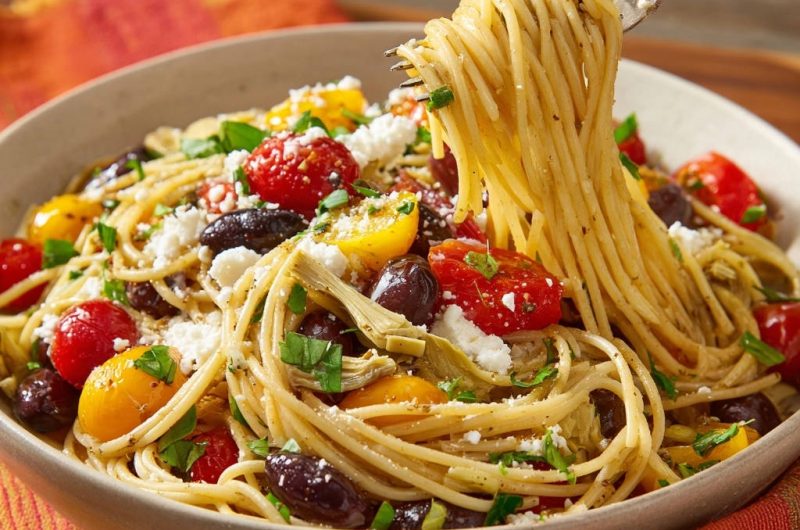
This is where the magic happens: using tongs, vigorously toss the pasta with the sauce ingredients for 1 to 2 minutes. The starch from the pasta water will emulsify with the olive oil and vegetable juices, creating a rich, glossy sauce that truly clings to every strand of your Mediterranean Veggie Spaghetti.
If your sauce appears too thick or dry, add more reserved pasta water, a tablespoon at a time, until you achieve your desired, perfectly silky consistency.
-
Finish with Freshness:
Remove the skillet from the heat to preserve the fresh flavors. Gently stir in the crumbled feta cheese and the vibrant chopped fresh parsley. The residual heat will slightly soften the feta without fully melting it, maintaining its creamy texture.
-
Season and Serve:
Season the pasta with salt and freshly ground black pepper to taste, adjusting to your preference. Toss gently one last time to fully combine everything.
Serve your Mediterranean Veggie Spaghetti immediately, garnished with a little extra fresh parsley and a delicate drizzle of good quality olive oil, if desired, for an extra touch of richness.
Chef’s Secrets: Elevating Your Mediterranean Veggie Spaghetti Experience
Optimize Your Tomatoes: For an even deeper flavor, consider quickly roasting the cherry tomatoes with a drizzle of olive oil before adding them to the skillet. This intensifies their sweetness and adds a beautiful charred note. Alternatively, try a mix of grape and cherry tomatoes for varied sweetness.
Master the Pasta Water: The starch in the pasta water is key. If you forget to reserve it, a small amount of vegetable broth with a pinch of cornstarch can work in a pinch, but fresh pasta water is always superior for that perfect emulsion.
Feta Finish for Freshness: Adding feta off the heat prevents it from completely dissolving into the sauce, maintaining its pleasant texture and creamy saltiness. This ensures you get distinct pockets of flavor.
Herb Harmony: While parsley is classic, experiment with other fresh herbs. Fresh basil, torn just before serving, or a pinch of dried oregano stirred in with the vegetables, can add beautiful complementary notes to your Mediterranean Veggie Spaghetti.
A Zest of Flavor: A final squeeze of fresh lemon juice or a sprinkle of lemon zest just before serving brightens the entire dish, cutting through the richness and enhancing all the fresh flavors.
Beyond the Plate: Serving, Storing, and Enjoying Your Leftovers
Serving Suggestions to Impress
This vibrant Mediterranean Veggie Spaghetti is a complete meal on its own, but it pairs beautifully with a few simple additions. A basket of crusty bread is perfect for soaking up any extra sauce, or serve alongside a crisp, simple green salad for a refreshing contrast, perhaps a light and refreshing summer salad.
For a heartier meal, offer it with a side of creamy hummus or a bowl of silky smooth homemade hummus.
Storing for Freshness
Leftovers of your Mediterranean Veggie Spaghetti can be stored in an airtight container in the refrigerator for up to 3-4 days. While best enjoyed fresh, it makes for a fantastic quick lunch the next day.
Make-Ahead Magic: A Time-Saving Approach
To speed up meal prep, chop all your vegetables (tomatoes, olives, artichoke hearts, garlic, parsley) in advance and store them separately in the refrigerator. This allows you to quickly assemble the dish on busy weeknights, cutting down your active cooking time significantly.
Common Questions & Troubleshooting for Your Mediterranean Veggie Spaghetti
Sauce Not Clinging?
This is often due to insufficient pasta water or not enough vigorous tossing. Ensure you reserve at least 1/2 cup of starchy pasta water. When combining, toss with tongs for a full 1-2 minutes, allowing the starch to properly emulsify with the oil and juices.
Spaghetti Too Soggy or Dry?
Overcooked pasta becomes mushy and won’t hold sauce well. Always cook to al dente. If the sauce seems too dry, slowly add more reserved pasta water, one tablespoon at a time, until you reach a luscious consistency. Don’t add too much too quickly!
Flavor Falling Flat?
Ensure you’ve seasoned generously with salt and freshly ground black pepper throughout the cooking process. A squeeze of fresh lemon juice at the end can brighten flavors, and don’t shy away from a little extra red pepper flakes if you prefer more warmth.
Your Top Questions Answered: Mastering Mediterranean Veggie Spaghetti
Can I Use Different Vegetables?
Absolutely! This recipe is incredibly adaptable. Bell peppers, zucchini, spinach, or even roasted eggplant would all be delicious additions or substitutions, embracing the spirit of Mediterranean cooking.
Is This Recipe Gluten-Free?
Yes, it can easily be made gluten-free by simply using your favorite gluten-free spaghetti. Always double-check ingredient labels to ensure all components are certified gluten-free if strict adherence is required.
Can I Add Protein?
For a heartier meal, grilled chicken, pan-seared shrimp, or even some chickpeas tossed in with the vegetables would make excellent additions. Add cooked protein at the very end when tossing the pasta with the sauce.
How Do I Make it Spicier?
To increase the heat, simply add more red pepper flakes with the garlic. You could also introduce a finely diced fresh chili, such as a jalapeño, at the same time, or finish with a dash of your favorite hot sauce.
What About Leftovers? Do They Reheat Well?
Yes, Mediterranean Veggie Spaghetti leftovers reheat quite well. For best results, gently warm in a skillet over medium-low heat, adding a splash of water or vegetable broth to help loosen the sauce and rehydrate the pasta.
Ready to Create Your Own Mediterranean Masterpiece?
I hope you’re as excited as I am about this incredible Mediterranean Veggie Spaghetti recipe! It’s truly a testament to how simple ingredients, combined with a little kitchen know-how, can create something truly spectacular. The silky sauce and vibrant flavors are sure to make this a new staple in your home.
Don’t hesitate to experiment with your favorite seasonal vegetables and make it your own. And for more vibrant, easy-to-make pasta dishes inspired by the Mediterranean, be sure to check out our Mediterranean Bow Tie Pasta Salad, perfect for any gathering!
Mediterranean Veggie Spaghetti
Course: Main CourseCuisine: MediterraneanDifficulty: easy4
servings15
minutes20
minutes650
kcal35
minutesDiscover the secret to perfectly coated pasta with this Mediterranean delight! Every strand of spaghetti is bursting with flavor from sweet cherry tomatoes, briny olives, tangy artichoke hearts, and salty feta, all brought together by a silky, clinging sauce.
Ingredients
12 ounces spaghetti
1 pint cherry tomatoes, halved (mix of red and yellow)
1/2 cup Kalamata olives, pitted and halved
1 (12 ounce) jar marinated artichoke hearts, drained and roughly chopped
4 ounces feta cheese, crumbled
1/4 cup fresh parsley, chopped, plus more for garnish
1/4 cup olive oil, plus more for drizzling
3 cloves garlic, minced
1/2 teaspoon red pepper flakes (optional)
Salt to taste
Freshly ground black pepper to taste
1/2 cup reserved pasta water
Directions
- Cook the spaghetti according to package directions in a large pot of salted boiling water until al dente. Before draining, reserve about 1 cup of the starchy pasta water. Drain the spaghetti and set aside.
- While the pasta cooks, heat 1/4 cup olive oil in a large skillet or pot over medium heat. Add the minced garlic and optional red pepper flakes, cooking for 1 minute until fragrant. Be careful not to burn the garlic.
- Add the halved cherry tomatoes to the skillet and cook for 3 to 5 minutes, until they begin to soften and release their juices. Stir in the halved olives and chopped artichoke hearts, cooking for another 2 minutes.
- Add the drained spaghetti directly into the skillet with the sauce. Pour in about 1/4 cup of the reserved pasta water. Using tongs, toss the pasta vigorously with the sauce ingredients for 1 to 2 minutes. The starchy pasta water will help emulsify the oil and juices, creating a silky sauce that truly clings to every strand of spaghetti. If the sauce seems too thick, add more pasta water a tablespoon at a time until you reach your desired consistency.
- Remove the skillet from the heat. Stir in the crumbled feta cheese and chopped fresh parsley.
- Season with salt and freshly ground black pepper to taste. Toss gently to combine.
- Serve immediately, garnished with a little extra fresh parsley and a drizzle of olive oil, if desired.
Notes
- Don’t be shy with the reserved pasta water; it’s key to creating a silky sauce that coats the spaghetti beautifully. For an extra burst of flavor, consider toasting the garlic in the olive oil for a minute longer until it’s fragrant, but be careful not to burn it.