I spent years trying to perfect the classic potato soup, only to end up with disappointingly pasty, gluey results-until I cracked the essential technique.
This method guarantees a genuinely silky, luxurious consistency, ensuring your Restaurant-Style Potato Soup has the rich flavor and smooth texture that professional kitchens achieve, all while maintaining absolute comfort.
Why This Restaurant-Style Potato Soup Recipe Gets Rave Reviews
Solving the Soup Dilemma: The “Never Gluey” Guarantee
The single greatest obstacle in making potato soup is the dreaded gluey texture, caused by over-processing hot potato starches.
Our recipe introduces two critical buffers-cream added before blending and precise low-speed processing-that fundamentally alter how the starches behave.
This technique ensures your soup is thick and velvety smooth, but never dense or pasty, delivering a superior eating experience.
Richness Without the Roux: Deep Umami Base
Many recipes rely on a flour-based roux for thickness, but we achieve superior depth purely through quality ingredients.
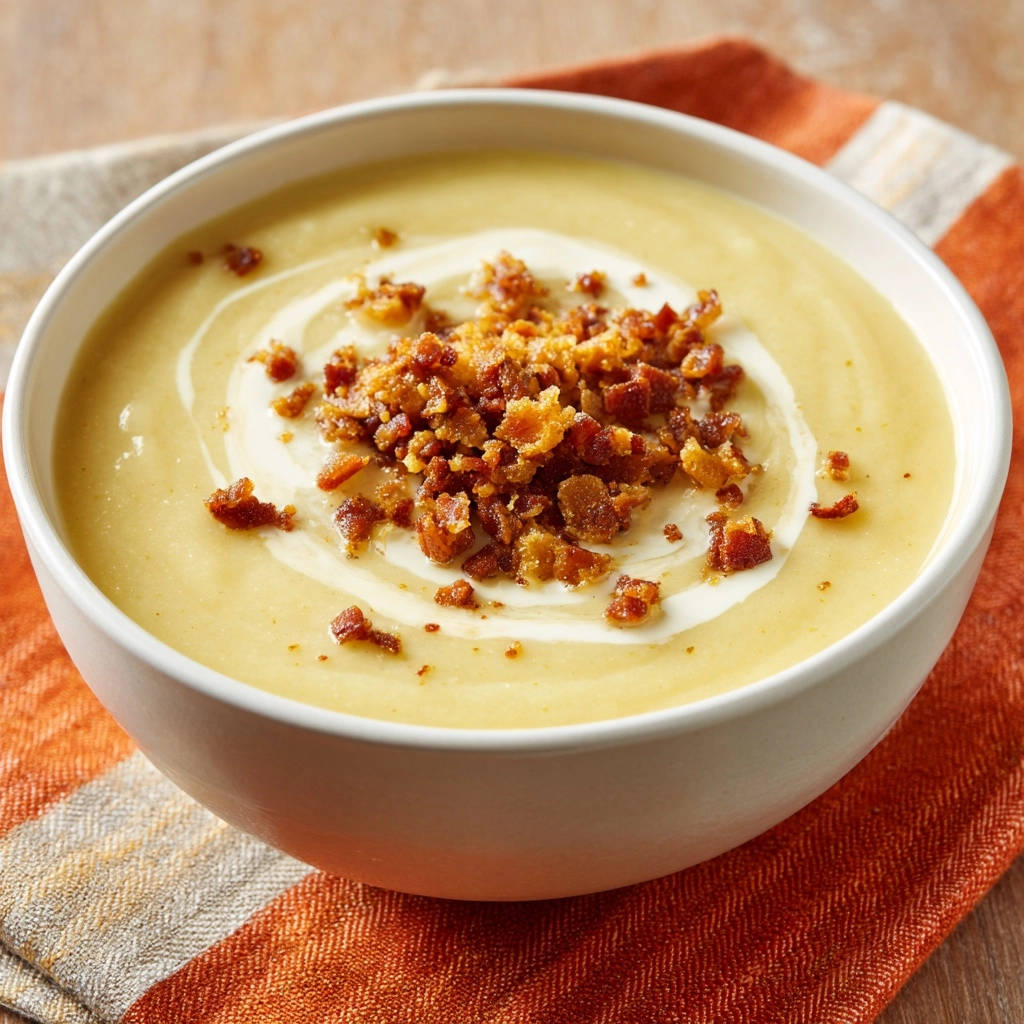
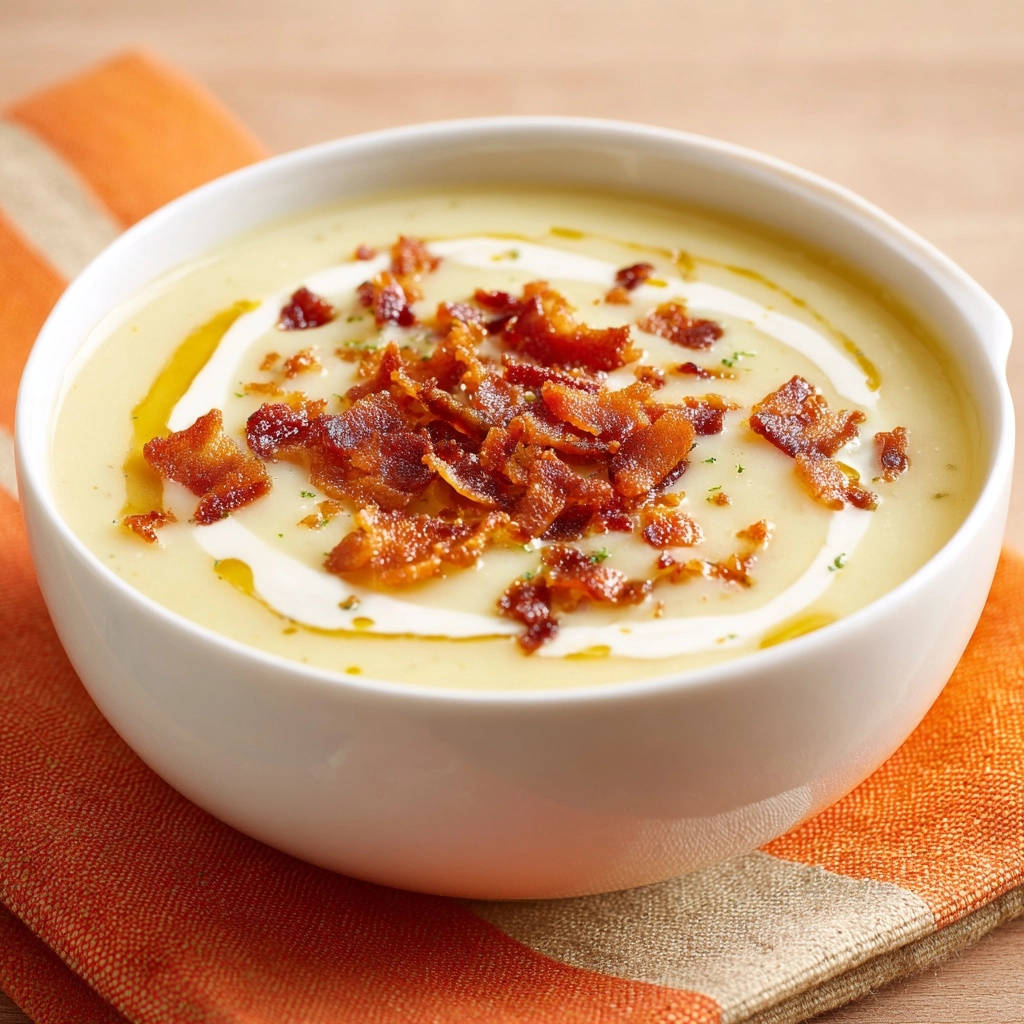
The foundation of this Restaurant-Style Potato Soup is built on rendering smoky bacon fat and butter, which provides a profound, savory flavor profile far richer than simple cream alone.
Quick Comfort: Total Time Under an Hour
While the flavor is complex and slow-cooked, this recipe requires minimal active time and is ready to serve in approximately 50 minutes.
It is the perfect choice for a cozy weeknight meal that still feels like a special occasion comfort food.
Gathering Your Resources: Essential Tools for Potato Soup Success
The Best Pot for the Job: Dutch Oven vs. Stock Pot
A heavy-bottomed Dutch oven is the preferred vessel for soup making due to its superior heat retention and even heat distribution.
This consistency is crucial for both rendering the bacon perfectly and ensuring the potatoes simmer evenly without scorching the bottom.
A standard heavy stock pot works well, but you must monitor the heat closely during the simmering phase.
Choosing Your Blending Method
For achieving that authentic, velvety smooth restaurant texture, an immersion blender is ideal, but it must be used with caution on the lowest speed.
For guaranteed success and a slightly heartier, rustic texture, a simple traditional potato masher is the safest tool, as it cannot over-process the starches.
Building Blocks of Flavor: A Deep Dive into the Ingredients
The Ideal Starch: Why We Use Yukon Gold Potatoes
The choice of potato is non-negotiable for smooth soup. We use Yukon Gold potatoes because they are a medium-starch potato.
They break down beautifully during simmering, creating a naturally creamy base without releasing the excessive sticky starch found in high-starch Russets.
Using Yukon Golds is the first step toward avoiding a gluey consistency in your finished soup.
For a similarly smooth finish, consider this creamy corn zucchini and potato chowder.
The Umami Trio: Bacon Fat, Butter, and Aromatics
The combined fat profile-rendered bacon fat and unsalted butter-creates a deeply savory mouthfeel that is essential to restaurant quality.
Onion, garlic, and thyme are slowly cooked in this rich fat blend, blooming their flavors fully before the liquid is introduced, locking in a foundational umami base.
The Crucial Finishing Touch: Heavy Cream and Broth Selection
Heavy cream, not milk or half-and-half, provides the necessary fat content to enrich and temper the soup’s texture and flavor.
Using a high-quality chicken or vegetable broth is equally important, as it determines the savory depth of the final dish; choose a low-sodium option to better control the seasoning.
Mastering the Method: Step-by-Step Directions
- Rendering the Bacon Base:
Cook the chopped bacon over medium heat until it is deeply crispy, then use a slotted spoon to remove the crumbles.
Ensure you reserve only about 1 tablespoon of the flavorful rendered fat in the pot, discarding the rest to prevent the soup from becoming greasy.
- Sweating the Aromatics and Blooming the Thyme:
Add the butter to the pot; once melted, add the chopped onion and cook until softened and translucent, about five to seven minutes.
Stir in the minced garlic and dried thyme for just one minute until fragrant; cooking the dried herbs in fat (blooming) maximizes their aroma.
- Achieving Fork-Tender Potatoes:
Add the diced Yukon Golds and broth. Bring the mixture just to a boil, then immediately reduce the heat to a low simmer, cover, and cook for 15 to 20 minutes.
The potatoes must be completely fork-tender-if they offer any resistance, they will leave grainy lumps in the final soup.
- Critical Pre-Blending Seasoning Check:
Remove the pot from the heat and generously season the potatoes and broth with salt and freshly ground black pepper.
Potatoes are notorious flavor absorbers, and seasoning heavily now ensures the final product is balanced, as the cream added later will slightly dilute the saltiness.
- The Anti-Gummy Blending Technique (See Next Section for Details):
Stir in half (1/2 cup) of the heavy cream immediately before blending the mixture.
Use an immersion blender on the absolute lowest setting, working in short, pulsing bursts until the soup reaches your preferred texture, or simply use a manual masher.
- Finishing and Serving:
Stir in the remaining 1/2 cup of heavy cream to enrich the soup and perfect the final temperature.
Taste and adjust seasoning again, then ladle the hot soup into bowls and garnish generously with the reserved crispy bacon crumbles and a swirl of extra cream.
The Anti-Gummy Step: Achieving Silky Texture in Your Restaurant-Style Potato Soup
The Science Behind the Starch: Why Potatoes Turn Gluey
When hot potato starches (specifically amylopectin) are agitated and broken down quickly-for example, by a high-speed blender-they release an excessive amount of binder.
Instead of a creamy suspension, this binding agent transforms the soup into a dense, sticky, and unappetizing gluey paste.
The Double Defense: Pre-Cream Addition and Low-Speed Blending
Adding cold heavy cream before blending is a powerful defense because the fat molecules coat the exposed starch granules, preventing them from binding excessively.
Coupling this with extremely short, low-speed blending bursts minimizes the friction and heat that cause starch release, ensuring a silky, smooth result.
Immersion Blender vs. Potato Masher: Which Tool Guarantees Success?
For beginners or those desiring a classic, satisfyingly thick soup, the potato masher is the safest choice because it mechanically restricts how much starch can be released.
If using the immersion blender, remember the rule:
Maximizing Flavor and Presentation: Chef’s Secrets for Next-Level Potato Soup
Use Aged Parmesan Rinds: For a secret layer of savory depth, drop one hard parmesan rind into the pot while the potatoes simmer in the broth.
The rind should be discarded before blending, leaving behind a subtle, complex umami note that elevates the whole bowl.
Don’t Under-Salt: Due to the bland nature of starches, aggressive seasoning is necessary at Step 4.
Seasoning early helps the flavor penetrate the potatoes fully, which is impossible to correct once the soup is fully blended and finished.
The Garnish Hierarchy: The presentation is crucial for a true restaurant-style finish.
Garnish provides contrast: the crispy bacon adds texture, fresh parsley or thyme provides brightness, and an optional light drizzle of quality olive oil adds professional visual sheen and richness.
The Bay Leaf Boost: Add one dried bay leaf to the pot during the simmering phase (Step 3) for an herbaceous lift.
Ensure the bay leaf is completely removed from the pot before any blending occurs.
Troubleshooting the Perfect Bowl: Fixing Common Potato Soup Issues
Problem: My Soup is Too Thin
If your soup is too thin after blending and finishing, simply return the pot to the stove and simmer gently (do not boil) with the lid off for 10-15 minutes.
Alternatively, mix 1 tablespoon of cornstarch with 2 tablespoons of cold water to create a slurry and stir it slowly into the hot soup, allowing it to thicken over low heat for 5 minutes.
Problem: The Flavor Tastes Flat or Bland
Blandness is usually due to insufficient salt, but if salt levels are correct, balance can be improved with acid.
Stir in a small splash (about 1 teaspoon) of fresh lemon juice or white wine vinegar to brighten all the savory notes immediately.
Problem: I Accidentally Over-Blended It and It’s Slightly Gluey
This is hard to reverse completely, but you can mask the texture by adding more liquid.
Gently stir in extra warm broth or cream and heat through slowly; the increased liquid volume will thin out the gluey binder, making the texture more palatable.
Make-Ahead Magic and Storing Your Restaurant-Style Potato Soup
Can I Make Potato Soup Ahead of Time?
Yes, you can prepare the soup up through Step 4 (cooking and seasoning the potatoes in broth) and store this base refrigerated for up to 3 days.
For the absolute best texture, always perform the critical blending step and stir in the heavy cream immediately before serving.
Proper Storage for Leftovers
Leftovers should be stored in an airtight container in the refrigerator for 3 to 4 days.
It is normal for potato soup to thicken considerably upon cooling due to the starches.
The Best Way to Reheat Potato Soup
Reheat soup slowly on the stovetop over low heat, stirring frequently to prevent scorching on the bottom.
Add a small splash of broth or water while reheating to restore the original consistency, as it will likely be much thicker than when first prepared.
Quick Answers: Your Restaurant-Style Potato Soup FAQs
Can I Substitute the Potatoes?
While Yukon Golds are highly recommended for optimal texture, new or red potatoes can be used; they offer less starch and produce a slightly waxier, chunkier soup.
Avoid high-starch Russets entirely, as they significantly increase the risk of a gluey final product.
How Can I Make This Gluten-Free?
This recipe for Restaurant-Style Potato Soup is naturally gluten-free, as we rely solely on the starches and cream for thickness and do not use any flour or roux.
What Dairy Alternatives Work Best?
If dairy is a concern, you can successfully substitute the heavy cream with full-fat canned coconut milk or a neutral cashew cream.
Be aware that full-fat coconut milk will introduce a very slight sweetness and coconut flavor, which may require additional balancing seasoning.
Is This Soup Freezer Friendly?
It is strongly advised not to freeze potato soups that contain dairy or have been thickened using starches.
Freezing causes both the potatoes to become grainy and the heavy cream to separate, leading to an unpleasant, curdled texture upon thawing.
Ready to Impress? Share Your Silky Potato Soup Masterpiece!
This recipe eliminates the guesswork, transforming a kitchen frustration into a triumphant, highly repeatable success.
Master the simple anti-gummy technique, and you will consistently deliver the richest, silkiest Restaurant-Style Potato Soup your family and friends have ever tasted.

Potato Soup
Course: Soups-StewsCuisine: AmericanDifficulty: easy6
servings15
minutes35
minutes450
kcal50
minutesThis recipe delivers the creamy, luxurious texture you want without any frustrating gluey density. The secret is the ‘anti-gummy step’ that prevents the starches from over-processing, resulting in a perfectly silky smooth bowl of comfort.
Ingredients
4 slices bacon, chopped
2 tablespoons unsalted butter
1 small yellow onion, chopped
1 clove garlic, minced
4 cups Yukon Gold potatoes, peeled and diced (about 3 large potatoes)
4 cups chicken or vegetable broth
1 cup heavy cream, divided
1/2 teaspoon dried thyme (or parsley for garnish)
Salt and freshly ground black pepper to taste
Extra virgin olive oil for garnish (optional)
Directions
- Prepare the Bacon: In a large Dutch oven or soup pot, cook the chopped bacon over medium heat until crispy. Use a slotted spoon to remove the bacon and set it aside on a paper towel-lined plate. Leave about 1 tablespoon of bacon fat in the pot, discarding the rest.
- Build the Base: Add the butter to the pot with the bacon fat and melt over medium heat. Add the chopped onion and cook until softened and translucent, about 5 to 7 minutes. Add the minced garlic and thyme, cooking for 1 minute until fragrant.
- Simmer the Potatoes: Add the diced potatoes and the broth to the pot. Bring the mixture to a boil, then reduce the heat to low, cover, and simmer for 15 to 20 minutes, or until the potatoes are completely fork-tender.
- Seasoning Check: Remove the pot from the heat. Season heavily with salt and pepper now, as seasoning potatoes properly is essential for flavor depth.
- Achieve Silky Smoothness (The Anti-Gummy Step): This is the key to preventing the gluey texture. Stir in 1/2 cup of the heavy cream before blending. Use an immersion blender on the lowest possible setting, working in short, pulsing bursts, only until the soup is mostly smooth. Alternatively, use a traditional potato masher to mash the soup until it reaches your desired chunky or smooth consistency. Avoid running a high-speed blender or immersion blender for longer than 30 seconds total, as over-processing the hot starches is what creates the dreaded gluey texture.
- Finish and Serve: Stir in the remaining 1/2 cup of heavy cream to enrich the soup. Taste and adjust seasonings if necessary. Ladle the hot soup into bowls. Garnish generously with the reserved crispy bacon crumbles, a swirl of extra cream, and a light drizzle of olive oil, if desired. Serve immediately.
Notes
- To ensure a silky smooth consistency, use an immersion blender on the lowest setting in short bursts (under 30 seconds total), or use a traditional potato masher to avoid over-processing the hot starches.