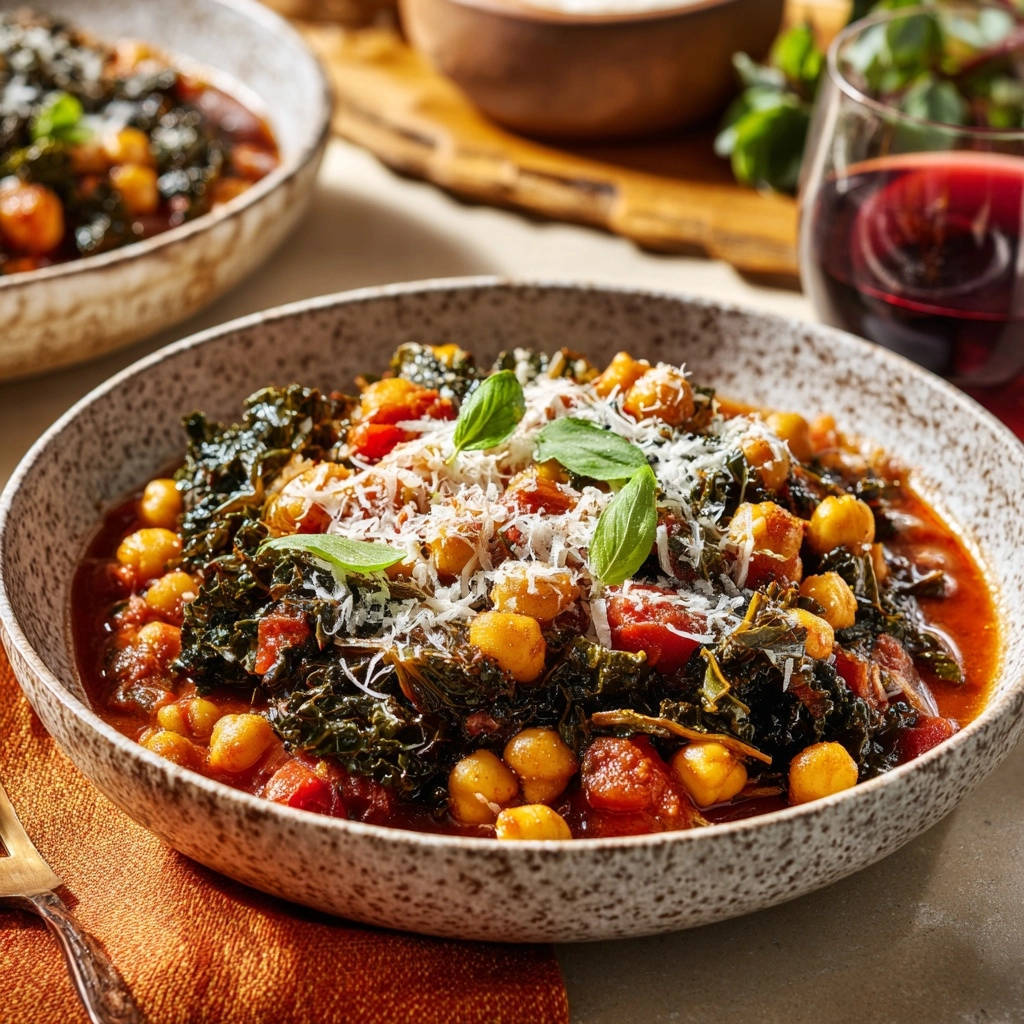
If you have ever struggled with tough, bitter greens ruining a potentially hearty meal, you know the frustration. My perfected technique for this Rich Chickpea and Kale Stew eliminates that issue entirely, guaranteeing velvety, deeply flavorful results every time. The secret lies in one simple prep step and a slow, gentle braise that tenderizes the kale until it practically melts into the rich tomato sauce.
The Secret to Velvety Greens: Why This Stew Recipe Always Works
Conquering the Chewy Kale Problem
Many common recipes drastically underestimate the time required to cook dense greens like kale properly. Quick simmers of 10 or 15 minutes often result in leaves that are stiff and difficult to chew, resisting any attempt to soften.
Unlike tender greens such as spinach, kale requires sustained, gentle heat to fully break down its tough, fibrous cellular structure.
The Power of the 25-Minute Covered Braise
The 25-minute covered simmer is the crucial step that ensures success in this dish and guarantees zero toughness.
This extended, low-heat braise forces the cellulose fibers to soften while simultaneously allowing any lingering bitterness to gently leach into the liquid base.
The Non-Negotiable Prep Step: Stems Out
The thick, fibrous central stems are the primary culprits behind both bitter flavor and a relentlessly tough, chewy texture.
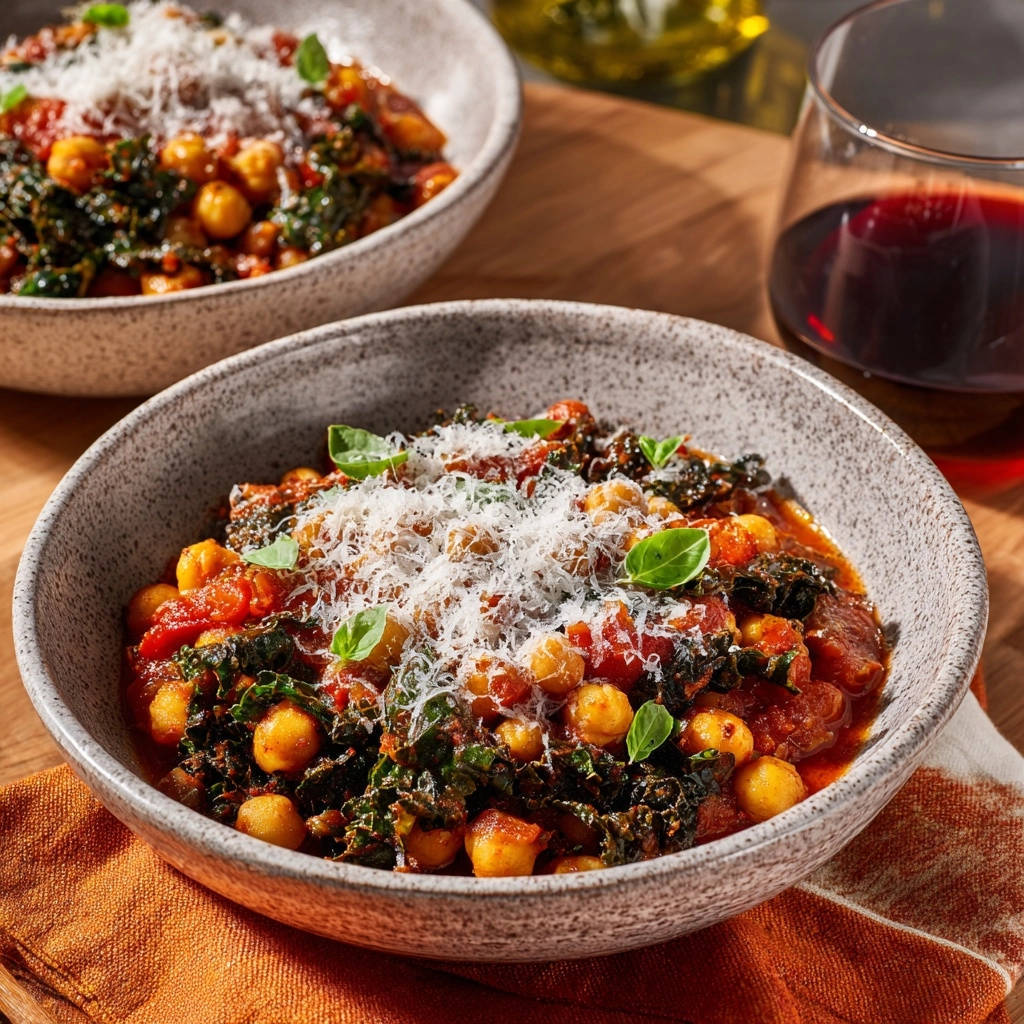
Complete removal of these stems is mandatory before cooking, setting the stage for perfectly soft, silky greens that blend seamlessly into the stew.
Building the Foundation: Key Ingredients for Deep, Hearty Flavor
The Aromatic Start: Onion, Garlic, and Heat
We start by cooking the yellow onion slowly until it becomes fully translucent, a process that releases its natural sugars and creates a deep, sweet foundation.
Garlic and red pepper flakes should cook for only about 60 seconds to release their fragrance; it is crucial not to let the garlic brown, as scorched garlic will introduce a harsh bitterness to the entire stew.
Choosing the Right Tomato Base
I strongly recommend using high-quality crushed tomatoes over diced varieties for this specific recipe.
Crushed tomatoes break down more effectively during the long simmering period, resulting in a richer, velvety sauce consistency that perfectly coats the other components.
The Chickpea Factor: Texture and Protein
Always rinse canned chickpeas thoroughly before use to wash away the salty canning liquid, known as aquafaba.
Adding the chickpeas near the end of the cooking process ensures they heat through quickly while remaining intact and nicely absorbing the savory tomato flavors.
How to Make Rich Chickpea and Kale Stew: Step-by-Step Perfection
-
Step 1: Laying the Flavor Base
Heat the olive oil in your large pot or Dutch oven over medium heat, then add the diced yellow onion.
Cook the onion until it is completely softened and translucent, which should take about five to seven minutes, ensuring a sweet, soft base for the stew. Next, stir in the minced garlic and red pepper flakes, cooking only until they are fragrant-roughly 60 seconds-to prevent the garlic from scorching.
-
Step 2: Building and Seasoning the Liquid
Pour in the crushed tomatoes and vegetable broth, stirring well to incorporate all the aromatics from the bottom of the pot.
Season the liquid generously now with dried oregano, salt, and freshly cracked black pepper. Bring the mixture up to a gentle, steady simmer.
-
Step 3: Crucial Kale Preparation (Stems Removed)
This preparation step is essential for tender results: fully remove the thick, tough central stems from every kale leaf.
Discard the stems and roughly chop the remaining leafy parts, aiming for bite-sized pieces that will integrate easily during the braise.
-
Step 4: Submerging the Greens
Add the chopped kale directly to the simmering sauce; it will seem like an impossible amount initially, but the volume quickly reduces dramatically.
Stir continuously for a minute or two until the kale is completely wilted and fully submerged under the rich liquid.
-
Step 5: The Tenderizing Braise Timer
Reduce the heat to the absolute lowest setting, cover the pot tightly, and allow the stew to simmer gently for a critical 20 to 25 minutes.
This slow braising period breaks down the kale’s cell walls and guarantees the silky greens that define this Rich Chickpea and Kale Stew.
-
Step 6: Finishing Touches and Final Adjustments
After the braise, the sauce should be slightly reduced and the kale extremely tender. Stir in the rinsed chickpeas and cook for five more minutes just to heat them through.
Taste the stew and adjust the final seasoning with salt or pepper as needed, ensuring the flavors are balanced and bright before serving.
-
Step 7: Serving and Garnish
Ladle the finished, steaming stew into bowls immediately.
Finish each serving with a sprinkle of grated Parmesan cheese-or nutritional yeast for vegan diners-and a scattering of fresh basil leaves for a necessary bright, aromatic lift.
Zero Bitterness: Mastering the Essential Kale Preparation Techniques
Choosing Your Kale: Curly vs. Lacinato
For a long, slow-simmered dish like this, standard curly kale is generally preferred because its robust texture holds up well over 25 minutes without becoming mushy.
While Lacinato (Dinosaur) kale works beautifully, its slightly softer leaves may require a few minutes less simmering time, so check for tenderness around the 20-minute mark.
The Science Behind the Stem Removal
Kale stems are characterized by their high fiber content and concentrated amounts of sulfur-containing compounds called glucosinolates.
These compounds are responsible for the unpleasant bitter flavor, and they resist breakdown significantly more than the leaves do, necessitating their complete removal.
Troubleshooting: Why Is My Sauce Too Watery?
If the liquid level seems too high or the sauce too thin after the 25-minute braise, the stew simply needs more reduction time.
To fix this, remove the lid entirely and continue simmering for an additional five to ten minutes; allowing the stew to simmer uncovered helps evaporate excess water, naturally thickening the sauce.
Ingredient Swaps and Adaptations for Every Diet
Making This Rich Chickpea and Kale Stew Dairy-Free or Vegan
This incredibly hearty dish is naturally vegan except for the final garnish of Parmesan cheese.
To retain the savory, umami note usually provided by Parmesan, stir in two tablespoons of nutritional yeast or use a high-quality vegan Parmesan alternative just before serving.
Protein Power: Adding Meat or Different Beans
For those seeking meat, you can brown one pound of Italian sausage alongside the onions in Step 1, draining any rendered fat before continuing the recipe.
Alternatively, replace the chickpeas entirely with an equal amount of creamy white beans like cannellini, which offer a softer texture and pair beautifully with the tomato base.
Swapping Out the Greens: Spinach vs. Chard
If substituting the kale, remember that other greens require drastically shorter cooking times.
Swiss chard needs only about 10 minutes of covered simmering, while delicate spinach should only be stirred in for the final 3 to 5 minutes until it is fully wilted.
Perfect Pairings and Storage Solutions
What to Serve with Your Hearty Stew
This comforting stew is robust enough to be a complete meal on its own, but it greatly benefits from the addition of starch.
For maximum enjoyment, serve it alongside thick slices of crusty sourdough bread, perfect for dipping, or spooned over a bed of fluffy brown rice.
Refrigeration and Freezing Best Practices
This Rich Chickpea and Kale Stew makes excellent leftovers, often tasting even better the next day as the oregano and tomato flavors deepen.
Store leftovers in an airtight container in the refrigerator for up to four days, or freeze the cooled stew safely for up to three months.
Best Way to Reheat Stew Without Losing Texture
For the best texture retention, always reheat the stew slowly on the stovetop over medium-low heat.
If the sauce has become too thick or dense overnight, add a splash or two of vegetable broth or water to restore the desired consistency as it warms through.
Your Rich Chickpea and Kale Stew Questions Answered
Can I Use Dried Chickpeas Instead of Canned?
Yes, you can substitute dried chickpeas, but they must be fully soaked and cooked until tender prior to starting this recipe.
Adding dry or partially cooked beans will severely compromise the stew’s liquid ratio, causing the beans to absorb too much moisture and making the final dish too dry.
What Does Red Pepper Flake Add Besides Heat?
Red pepper flakes contribute more than just subtle warmth; they also introduce a necessary layer of subtle, fruity depth to the overall flavor profile.
The minimal amount used in this recipe ensures the stew has complexity without being overtly spicy, appealing to a wide range of palates.
Is This Stew Suitable for Meal Prepping?
Absolutely. This recipe is an ideal candidate for meal prepping because the sturdy structure of the kale holds up exceptionally well over time without breaking down or becoming mushy.
The seasoning settles beautifully, and the flavors often marry and deepen overnight, enhancing the overall profile significantly the day after cooking.
Ready to Impress? Share Your Stew Masterpiece!
Say goodbye to tough greens forever and embrace this reliable method for achieving true comfort food perfection.
For another healthy bowl concept, consider this turmeric chickpea soup with greens.
This Rich Chickpea and Kale Stew is proof that humble ingredients can yield truly exceptional flavor when cooked using the right, time-tested technique. Try this guaranteed recipe tonight and discover how effortlessly tender greens can transform your weeknight table.
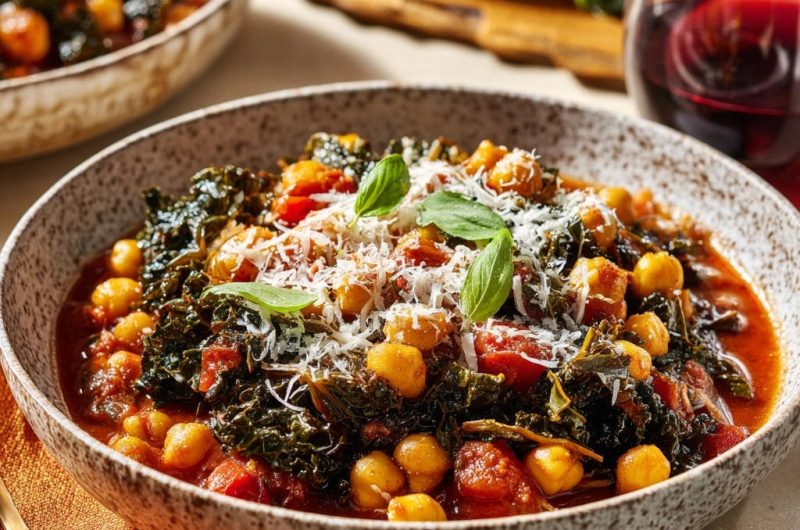
Chickpea and Kale Stew
Course: Soups-StewsCuisine: MediterraneanDifficulty: easy4
servings15
minutes35
minutes240
kcal50
minutesThis recipe transforms humble chickpeas and kale into a satisfying, flavor-packed meal. A simple slow simmering technique guarantees tender, silky greens that melt into a rich, tomato-oregano sauce. Guaranteed to be a hearty favorite.
Ingredients
1 tablespoon olive oil
1 medium yellow onion, diced
3 cloves garlic, minced
1/2 teaspoon red pepper flakes
1 (28 ounce) can crushed or diced tomatoes
2 cups vegetable broth
1 (15 ounce) can chickpeas, rinsed and drained
1 pound fresh kale, thick stems removed and roughly chopped
1 teaspoon dried oregano
Salt and black pepper to taste
1/4 cup grated Parmesan cheese (or nutritional yeast for dairy free)
Fresh basil leaves, for garnish
Directions
- Start the Base: Heat the olive oil in a large pot or Dutch oven over medium heat. Add the diced onion and cook until softened and translucent, about 5 to 7 minutes. Add the minced garlic and red pepper flakes, cooking for just 1 minute until fragrant. Do not let the garlic brown.
- Build the Sauce: Pour in the crushed tomatoes, vegetable broth, and oregano. Stir well to combine. Season generously with salt and pepper. Bring the mixture to a gentle simmer.
- Prep the Kale (The Solution Step): Ensure all thick, fibrous stems are removed from the kale leaves, as these are the primary source of bitterness and toughness. Roughly chop the remaining leaves.
- Introduce and Integrate: Add the prepared kale directly into the simmering tomato mixture. It will look like too much initially, but it will quickly wilt down. Stir the kale until it is fully submerged in the liquid.
- The Tenderizing Braise: Reduce the heat to low, cover the pot tightly, and allow the stew to simmer slowly for 20 to 25 minutes. This slow, gentle simmer time is crucial; it breaks down the tough cell structure of the kale and allows the bitterness to leach out, resulting in soft, silky greens that melt into the sauce.
- Finish the Stew: After 25 minutes, the kale should be tender, and the sauce slightly reduced. Stir in the rinsed and drained chickpeas and cook for another 5 minutes to heat them through. Taste and adjust seasonings as needed.
- Serve: Ladle the hearty stew into bowls. Top each serving with a sprinkle of grated Parmesan cheese and fresh basil leaves immediately before serving.
Notes
- The crucial 25-minute slow simmer (Tenderizing Braise) is key to ensuring the kale is silky, not chewy or bitter.