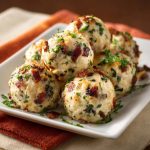
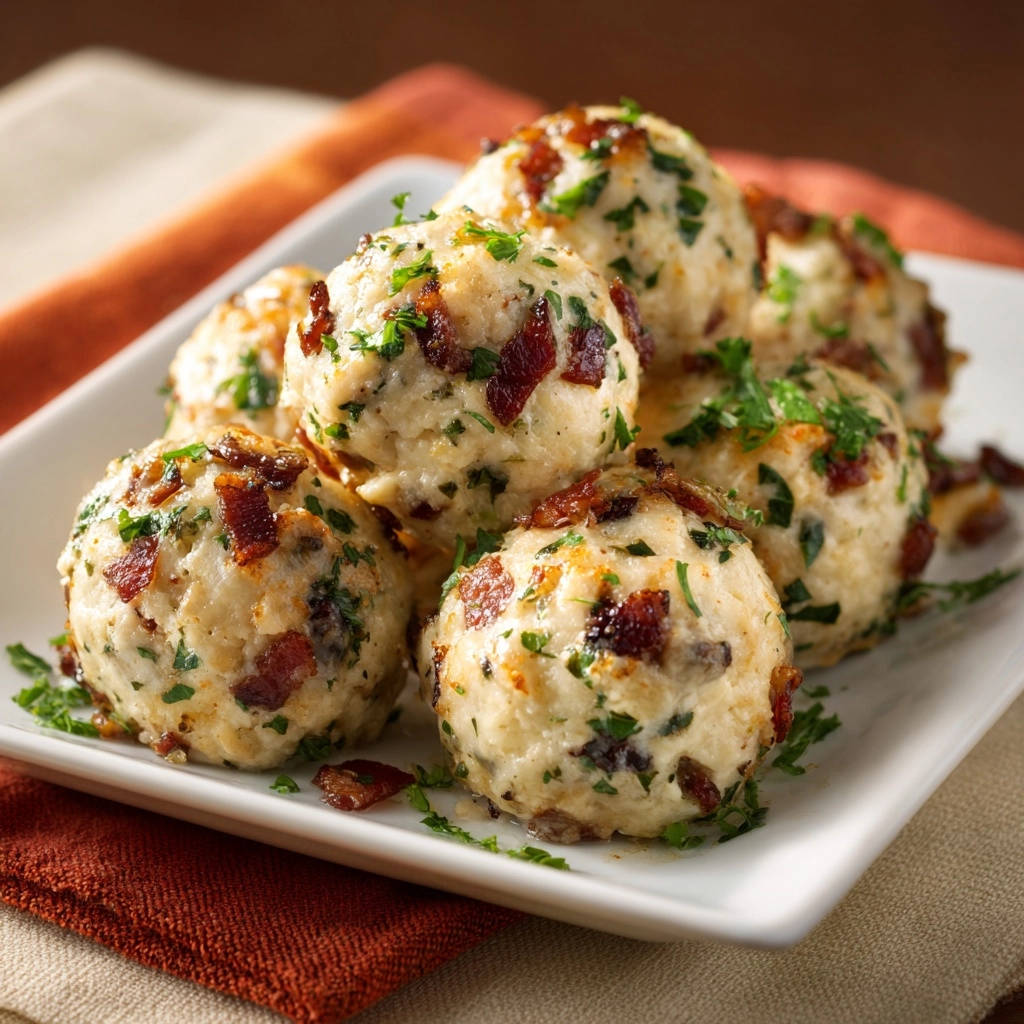
I spent years battling dense, rubbery dumplings, convinced that I needed to add more flour-a mistake that only compounded the problem. This reliable recipe for Savory Bacon and Herb Dumplings guarantees a light, melt-in-your-mouth texture by focusing on gentle handling and critical moisture control.
You can confidently skip the heavy, gluey results of the past and achieve airy perfection that will impress every time. These savory treats are the perfect complement to rich, saucy mains.
The “Never Dense” Secret: Why This Recipe Guarantee’s Fluffy Dumplings
The Crucial Role of Stale Bread
Stale or dried-out bread cubes are non-negotiable for achieving a light texture.
Fresh bread breaks down into a sticky paste when introduced to warm liquid, causing a gluey, dense interior.
By using day-old or lightly toasted bread, the cubes absorb the binder perfectly while retaining their essential structure, preventing breakdown.
Gentle Folding vs. Vicious Kneading
Overmixing develops the gluten in the small amount of flour and the bread itself.
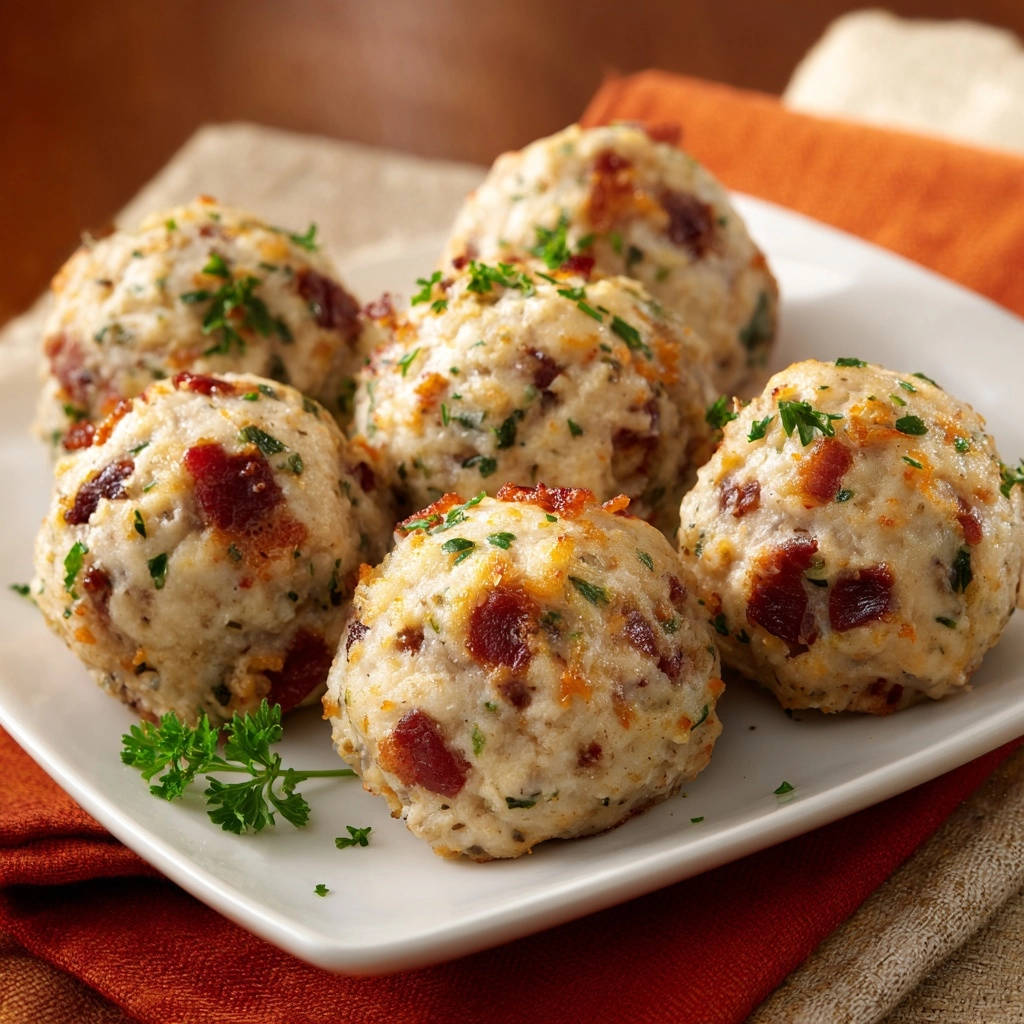
When gluten is developed, the result is an elastic, heavy, and rubbery dumpling.
We must use a delicate folding motion, stopping immediately when the mixture is shaggy and just barely held together.
The Low-Temperature Simmer Technique
A roaring or rolling boil is the enemy of light dumplings.
Vigorous boiling forces liquid deep into the delicate bread structure, causing them to become waterlogged and fall apart.
Cooking the dumplings at a bare, gentle simmer allows the interior to steam and cook evenly without the structural trauma caused by rapid boiling.
Crafting the Base: Ingredients for Maximum Flavor and Texture
The Heart of the Savory Flavor: Bacon and Fresh Herbs
We use thick-cut bacon, cooked until truly crispy, because it provides necessary textural contrast and a rich, smoky saltiness.
Fresh parsley is the primary herb, offering a bright, clean flavor that cuts through the richness of the bacon.
For a deeper, earthier note, consider substituting or adding fresh chives or finely minced thyme.
The Texture Foundation: Bread and Dairy
Six cups of stale, 1/2-inch white bread cubes form the airy bulk of the dumpling.
Warming the whole milk slightly ensures that the dried bread cubes absorb the liquid quickly and uniformly.
The gentle heat also helps the butter-onion mixture distribute flavor more thoroughly.
The Critical Binders and Seasoning
Two large, lightly beaten eggs provide the essential binder necessary to hold the dough structure together during shaping and simmering.
Only 1/4 cup of all-purpose flour is needed, acting strictly as a final stabilizer rather than a main component.
Minced sautéed onion adds aromatic depth, enhanced by salt, pepper, and an optional pinch of nutmeg for warmth.
Preparing for Success: Essential Kitchen Tools Checklist
Large Mixing Bowl: Essential for the gentle folding step, ensuring you have enough space to avoid aggressive mixing.
Small Skillet: Used for cooking the aromatic onion and melting the butter before integrating it into the wet binder.
Large Pot with Lid: Needed for the simmering process; choose a pot large enough so the dumplings are not crowded.
Slotted Spoon or Spider: Crucial for gently removing the cooked dumplings from the simmer water without damaging their delicate structure.
From Prep to Plate: Mastering the Fluffiness Technique
Step 1: The Bread Base Preparation
Cut the stale bread into small, uniform cubes, approximately 1/2 inch in size, and place them in your large mixing bowl.
If your bread is fresh, spread the cubes on a sheet tray and toast them at 300°F (150°C) for 10 minutes; they must be dried out, not browned, to prevent a dense final texture.
Step 2: Preparing the Warm Binder
Melt the unsalted butter in a small skillet and sauté the finely minced yellow onion until it is completely softened and translucent (about 5 minutes).
Gently warm the whole milk until it is barely lukewarm; do not let it boil, as excessive heat can prematurely cook the eggs later.
Step 3: Combining the Flavor Elements
Pour the warm milk over the bread cubes and immediately add the warm butter and onion mixture.
Add the lightly beaten eggs, the crumbled crispy bacon, the chopped parsley, and all seasonings (salt, pepper, nutmeg).
Finally, sprinkle the 1/4 cup of flour evenly over all the wet ingredients.
Step 4: The Crucial Non-Dense Mixing (The Rest Period)
Use your hands to GENTLY fold the ingredients together until they are just combined and homogeneous.
You must actively avoid kneading or compressing the mixture; the goal is a sticky, shaggy dough that still shows some bread definition.
Let the mixture rest uncovered at room temperature for 10 minutes; this allows the flour and bread to fully hydrate, stabilizing the dough for shaping.
This step dictates the final texture of your Savory Bacon and Herb Dumplings.
Step 5: Gentle Shaping and Minimal Handling
Lightly flour your hands-this prevents sticking without adding excess flour to the dough.
Gently form the mixture into 1 1/2 to 2-inch balls, taking care not to compress the dough tightly during the shaping process.
If the mixture feels slightly too wet or loose after resting, add a minuscule amount of flour and mix minimally before shaping.
Step 6: Executing the Simmer Technique
Bring a large pot of salted water to a barely visible simmer; the water surface should be steaming with only the occasional small, gentle bubble rising.
The water should be far below a rolling boil, which would destroy the texture of the dough.
Step 7: Cooking to Perfection
Carefully drop the formed dumplings into the gently simmering water one at a time.
Simmer, uncovered, for 20 to 25 minutes; this low temperature ensures they cook thoroughly without becoming heavy or waterlogged.
If the water begins to bubble vigorously at any point, immediately reduce the heat to maintain that bare simmer.
Step 8: Serving and Garnishing
Remove the finished dumplings immediately using a slotted spoon or spider.
Serve them hot, finished with a garnish of reserved crispy bacon crumbs and extra fresh parsley.
Troubleshooting & Expert Tips for Perfect Dumplings Every Time
Why Are My Dumplings Falling Apart in the Water?
The primary reasons for structural failure are usually insufficient binder or an excessively aggressive cooking temperature.
Ensure your water is only at a bare simmer; if they dissolve, the water is too hot and is breaking down the bread structure.
If the mixture was too loose initially, add 1-2 teaspoons of flour before shaping, but mix it in very gently.
My Dumplings Are Dense and Heavy – Where Did I Go Wrong?
Density almost always points back to one thing: developing the gluten through overmixing or kneading.
Remember that the mixture should look shaggy and sticky, not smooth like traditional dough.
Verify that your bread was properly stale or dried out, as fresh, moist bread will naturally produce a heavier result.
Chef’s Secrets: Ingredient Swaps and Preparation Hacks
Mastering the Bread: If using store-bought dried bread crumbs instead of stale cubes, reduce the milk quantity by about 1/4 cup initially.
Boosting the Savory Depth: Swap the whole milk entirely for a quality unsalted chicken or vegetable broth.
This substitution adds an intense, slow-simmered flavor profile that complements the bacon beautifully.
Make-Ahead Dough: The dumpling mixture can be prepared up to the point of shaping, covered tightly, and refrigerated overnight.
Be sure to let the dough warm up for 30 minutes at room temperature before forming the balls, as cold dough is harder to shape loosely.
What to Serve with Savory Bacon and Herb Dumplings
Ideal Main Course Pairings
These fluffy dumplings are designed to soak up flavorful liquids, making them the perfect accompaniment to deeply sauced main courses.
Pair them traditionally with hearty winter dishes such as rich Beef Pot Roast, slow-braised Short Ribs, or rustic German Goulash.
They also serve as an excellent base for saucy poultry dishes like Chicken Paprikash or Coq au Vin.
Sauces and Garnishes that Shine
For a simple, elegant finish, remove the dumplings and toss them directly in a small amount of browned butter mixed with fresh sage leaves.
If serving alongside meat, a light, earthy mushroom gravy or a pan jus thickened minimally with cornstarch works exceptionally well.
Always ensure the finished plate includes a generous sprinkle of the reserved crispy bacon and parsley for color and crunch.
Quick Answers: Frequently Asked Questions
Can I Freeze Savory Bacon and Herb Dumplings?
Yes, you can easily freeze them once cooked and completely cooled.
Flash freeze the individual dumplings on a sheet pan, then transfer them to an airtight freezer bag or container.
To reheat, steam them gently in a vegetable steamer for 10-15 minutes, or simmer them briefly in warm broth until heated through.
What is the Difference Between Kneading and Folding?
Kneading is a forceful, repetitive motion intended to stretch and develop gluten strands, giving baked goods like bread structural elasticity.
Folding is the act of gently incorporating ingredients with minimal disturbance, ensuring the mixture remains airy and the gluten stays dormant.
Can I Make This Recipe Gluten-Free?
Absolutely; replace the white bread with quality gluten-free bread cubes and follow the same staleness preparation method.
Gluten-free flour may require slightly less milk because GF bread sometimes absorbs liquid differently than wheat-based bread.
If you notice the mixture is too soft after the rest period, a tiny pinch of xanthan gum can be added for stability.
Ready to Impress? Share Your Savory Bacon and Herb Dumplings Masterpiece!
Mastering the technique for these Savory Bacon and Herb Dumplings transforms them from a heavy side dish into a fluffy culinary triumph.
For another simple way to achieve tender dough, explore these savory cabbage noodles.
The secret lies in the gentle folding and the precise bare simmer technique; apply these expert tips and achieve the lightest texture imaginable.
Now that you know the secrets to flawless dumplings, try this recipe tonight and share your deliciously airy results with us!
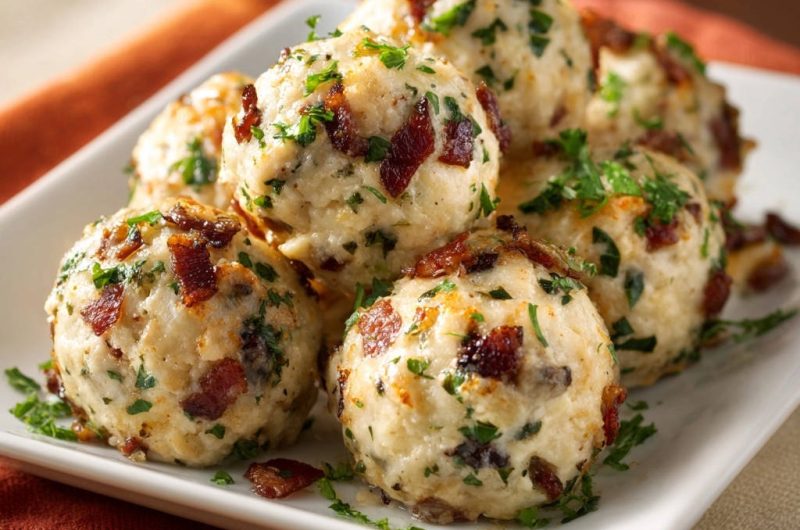
Bacon and Herb Dumplings
Course: Side DishCuisine: InternationalDifficulty: easy6
servings15
minutes25
minutes240
kcal40
minutesTired of dense, rubbery dumplings? This recipe reveals the simple secret to achieving that perfect, airy texture every time: gentle mixing and a low simmer. These savory bread dumplings, packed with crisp bacon and fresh herbs, make an unforgettable side dish.
Ingredients
4 slices thick-cut bacon, cooked crisp and crumbled
1 cup fresh parsley, chopped
6 cups stale white bread cubes (day-old bread is best)
1 cup whole milk
2 tablespoons unsalted butter
1 small yellow onion, finely minced
2 large eggs, lightly beaten
1 teaspoon salt
1/2 teaspoon black pepper
Pinch of nutmeg (optional, for depth)
1/4 cup all-purpose flour (plus extra for shaping)
Directions
- Prepare the Base: Cut the stale bread into small cubes (about 1/2 inch) and place them in a large bowl. If your bread is not stale, gently toast the cubes in the oven at 300 degrees F for about 10 minutes until dried out, but not browned. This is key to preventing a dense texture.
- Create the Binder (The Fluffiness Secret): Melt the butter in a small skillet over medium heat. Add the minced onion and cook until softened and translucent, about 5 minutes. Remove from heat. Gently warm the milk (do not boil) and pour the warm milk over the bread cubes. Immediately add the cooked onion and melted butter mixture.
- Combine Gently: Add the beaten eggs, crumbled bacon, chopped parsley, salt, pepper, and optional nutmeg to the bowl. Sprinkle the 1/4 cup flour evenly over the mixture.
- The Non-Dense Mix: The absolute secret to light dumplings is this step. Using your hands, gently fold the ingredients together until just combined. You are aiming for a sticky, shaggy dough that still shows some bread definition. Do not knead or mix vigorously as this develops the gluten and results in a heavy, dense dumpling. Let the mixture rest at room temperature for 10 minutes to allow the bread to fully absorb the liquid.
- Shape the Dumplings: Lightly flour your hands and gently form the mixture into 1 1/2 to 2-inch balls. Be careful not to compress them too tightly while shaping. If the mixture seems too loose, add a tiny bit more flour, mixing minimally.
- The Simmer Technique: Bring a large pot of salted water to a bare simmer. The water should be steaming with only the very occasional small bubble rising, never a rolling boil.
- Cook for Lightness: Carefully drop the dumplings into the gently simmering water. Simmer, uncovered, for 20 to 25 minutes. A rolling boil will ruin the texture and cause them to become waterlogged and heavy. The gentle simmer allows them to cook through evenly while staying light.
- Serve: Remove the dumplings with a slotted spoon and serve immediately, garnished with extra fresh parsley and bacon crumbs.
Notes
- The most critical step is ensuring the water is only at a bare simmer, never a rolling boil, to maintain the light, airy structure.