The greatest tragedy in soup making is the moment a beautiful crunchy topping hits the hot liquid and immediately dissolves into a soggy, depressing mess.
I spent years perfecting a technique that allows for the perfect textural contrast between a velvety base and a crisp crown, establishing true harmony in the bowl. This definitive recipe for Silky Butternut Soup with Frizzled Onion Topping finally solves the soggy onion dilemma using a simple, scientifically sound cornstarch coating trick.
For a similarly smooth experience, explore this vibrant green chicken soup.
The Dream Contrast: Why Texture is King in This Silky Butternut Soup
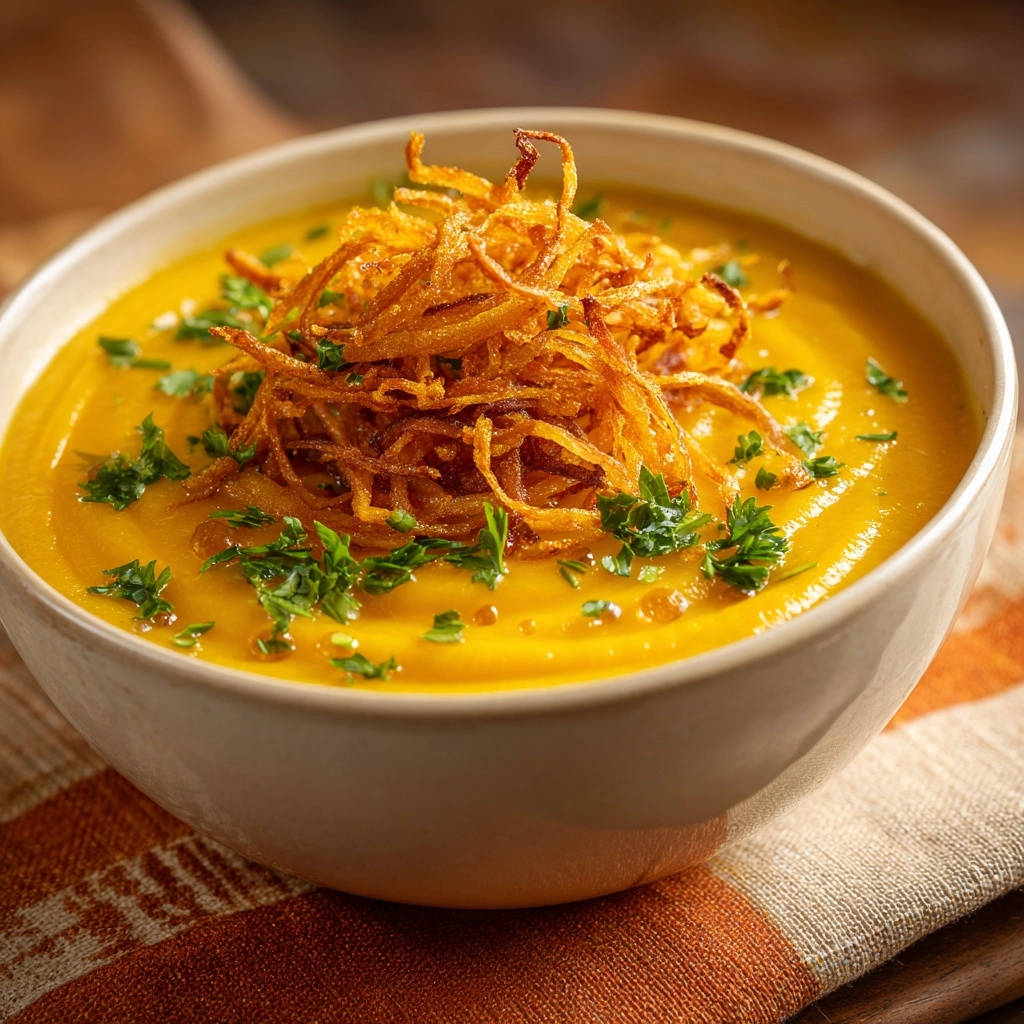
A homogenous dish, no matter how flavorful, often leaves the palate wanting more excitement and complexity. The undeniable appeal of this butternut soup lies in its extreme duality: the luxurious, enveloping smoothness of the base against the sharp, shattering crunch of the topping.
This pairing elevates the simple, sweet profile of the roasted squash, transforming a humble autumn classic into a genuinely sophisticated and satisfying dining experience.
The Anti-Soggy Secret: Unlocking Eternal Crispness
The anti-soggy secret ingredient for our eternal crispness is cornstarch. When cornstarch is combined with flour, it forms a rigid, moisture-impermeable shell around the delicate onion slices before they are fried.
This coating absorbs residual surface moisture from the onion and then resists the steam rising from the hot soup later, acting as a true barrier.
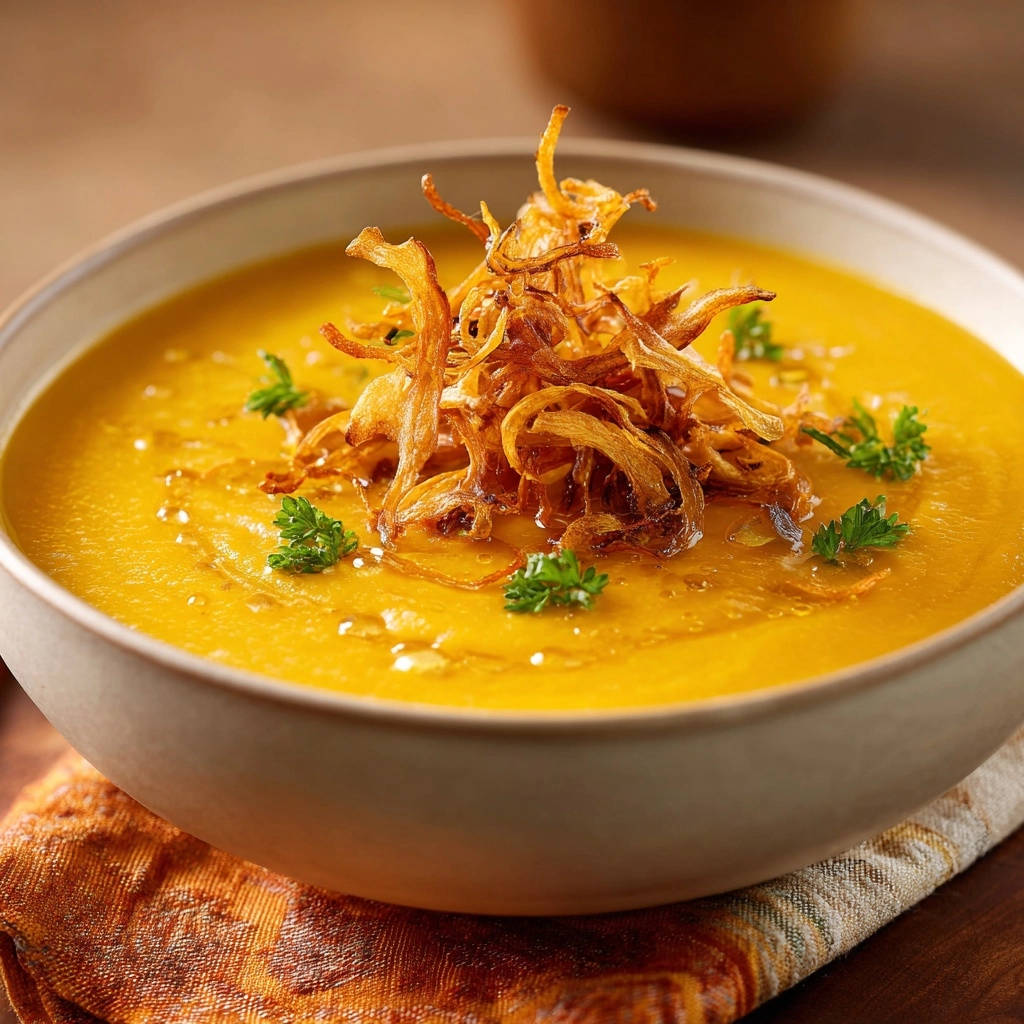
It ensures the frizzled onions retain their structural integrity and stay crunchy for far longer than traditional plain fried methods, even when submerged in the hot liquid.
Decoding the ‘Silky’ Soup Base
Achieving the “silky” texture mentioned in the title requires two non-negotiables: deep roasting the squash and utilizing high-powered blending.
Roasting the butternut squash caramelizes its natural sugars, deepening its flavor while ensuring the fibers are completely soft for smooth processing.
This fully softened, caramelized flesh, when blended for an extended time, breaks down into a truly uniform, velvety emulsion, with the optional heavy cream or coconut milk enhancing that luxurious, mouth-coating finish.
Essential Building Blocks: Ingredients for Maximum Flavor and Crunch
For the Velvety Soup Foundation
- Butternut Squash: We choose butternut for its rich sweetness and dense flesh, which gives the soup substantial body and natural richness that other squashes lack.
- Vegetable Broth: Provides the necessary liquid volume for blending while adding a crucial savory, umami depth to balance the concentrated sweetness of the roasted squash.
- Heavy Cream or Coconut Milk: This optional addition ensures next-level luxuriousness by adding fat, which aids in creating a smoother emulsion during the final blending stage.
The Crispy Crown: Mastering the Frizzled Onion Coating
- Onion Selection: Uniformity is essential for even frying; large yellow onions must be thinly sliced, ensuring every piece crisps at exactly the same rate.
- The Cornstarch Advantage: This functional ingredient is key; it creates a structural, desiccant barrier that resists moisture, making the fried topping resilient against the soup’s heat.
- Frying Oil: Always select a high smoke point, neutral oil, such as canola or vegetable, to achieve the required crisping temperature without imparting any flavor to the delicate onions.
Roasting the Perfect Butternut Squash: The Key to Deep Sweetness
Selecting and Prepping the Best Squash
Select a squash that feels heavy for its size, indicating dense, well-developed flesh, and look for a uniform, dull rind, which suggests optimal ripeness and sugar concentration.
Cutting the squash in half lengthwise, scooping the seeds, and brushing with olive oil ensures the cut surfaces roast evenly and the flesh scoops out effortlessly once finished.
The Roasting Method: Time and Temperature Explained
Roasting at 400°F is far superior to boiling because the high, dry heat encourages crucial caramelization and Maillard reactions, vastly deepening the flavor profile beyond simple sweetness.
Placing the squash cut-side down on a baking sheet traps steam, helping the flesh cook thoroughly while simultaneously minimizing water content for a richer, more concentrated soup base.
The flesh must be truly fork-tender after 30 to 40 minutes-soft enough that a spoon can easily scoop it out-to guarantee a perfect, non-grainy blend later on.
Part I: From Roasted Squash to Silky Butternut Perfection
-
Building the Aromatic Flavor Base:
Start by heating two tablespoons of olive oil in a medium pot over medium heat, then add the chopped yellow onion.
Cook them patiently until they become translucent and fully softened, about five to seven minutes, as this slow process releases the crucial aromatic compounds that underpin the finished soup’s flavor.
-
Simmer and Infuse:
Add the reserved roasted squash flesh and the four cups of vegetable broth to the pot, then bring the mixture to a gentle simmer.
This brief 10-minute simmering period is essential; it ensures the concentrated flavor of the roasted squash fully infuses into the broth and helps the salt and pepper seasoning meld together.
-
Blending for Velvety Smoothness:
Exercise extreme caution when transferring the hot liquid mixture to a powerful blender; never fill the blender more than halfway, and always vent the lid slightly with a folded kitchen towel.
If you are incorporating the heavy cream or coconut milk, add it at this stage before blending.
Blend for a minimum of 60 seconds until the mixture is absolutely silky and homogenous, then immediately return the hot soup to the pot to keep warm.
Part II: The Definitive Anti-Soggy Frizzled Onion Technique
-
Uniform Slicing is Essential:
Use a mandoline set to its thinnest setting, or carefully use a very sharp chef’s knife, to slice the second large onion into uniform, thin strips or rings.
Inconsistent thickness means some onions will burn while others remain pale and chewy; uniformity is required to achieve a consistently crisp batch.
-
The Dry Coating Activation:
In a medium bowl, whisk together the 1/4 cup all-purpose flour, 1 tablespoon cornstarch, and salt; remember, the cornstarch is the “secret” active agent.
This dry blend provides the necessary structural rigidity that allows the onions to crisp fully and successfully resists softening once they encounter the humidity of the hot soup.
-
Shake and Separate:
Add the sliced onions to the mixture and toss vigorously until every single strand is completely coated and fully separated, eliminating any natural stickiness or clumping.
Using a fine-mesh sieve or strainer, shake off all excess flour mixture before frying; any residual dry coating that isn’t attached to an onion will quickly burn and cloud your oil.
-
Temperature Control: Achieving the Ideal Frying Crispness:
Heat your neutral frying oil to precisely 325°F in a small, deep pot, monitoring the temperature with a thermometer to ensure accuracy.
Crucially, work in small batches; overcrowding the pan immediately drops the oil temperature, leading to saturated, oil-logged onions that absorb too much liquid and will not crisp properly.
-
The Final Drain and Seasoning:
Fry the batches for three to five minutes, stirring frequently, until they reach a deep, consistent golden-brown color and sound brittle when stirred.
Immediately remove the frizzled onions with a slotted spoon and transfer them directly to a plate lined with paper towels, sprinkling them lightly with salt while they are still piping hot to ensure seasoning adhesion.
Chef’s Corner: Advanced Tips and Troubleshooting for Silky Soup Success
Preventing a Grainy Finish (Blending Secrets)
Graininess usually results from either undersoftened squash pieces or insufficient blending time, especially if you are using a standard or older blender.
Ensure the squash is roasted until yielding, and then blend the soup for at least 90 seconds in a high-speed blender; the friction of extended blending helps achieve the perfect emulsion.
Flavor Upgrades: Spicing Up Your Butternut Base
For a warmer, more complex flavor profile, incorporate a pinch of freshly grated nutmeg, dried sage, or a tiny dash of cayenne pepper into the base.
Add these spices when you introduce the squash and broth to the pot, allowing the heat to gently bloom and amplify their aromatic flavors during the 10-minute simmer.
Rescuing Onions That Went Too Dark
Because they are sliced so thinly, the frizzled onions move from perfect golden brown to burnt very rapidly during the final minute of frying; watch them without looking away.
To prevent burning, remove them from the oil just slightly before they look completely finished, as carryover cooking on the paper towels will deepen the color perfectly after removal.
Essential Tools for Butternut Soup Making
While an immersion blender is convenient, a powerful countertop blender is necessary to truly achieve the signature silky smoothness that elevates this recipe.
A mandoline for slicing the onions is the single best investment for this recipe, ensuring the professional, uniform thickness required for perfect and consistent crispness.
Beyond the Bowl: Perfect Pairings and Flavor Variations
What to Serve Alongside Your Silky Butternut Soup
The rich, inherent sweetness of the soup pairs beautifully with savory, tangy side elements that cut through the richness and provide textural contrast.
Offer a contrasting texture with a sharp, aged cheddar grilled cheese sandwich cut into dipping soldiers, or a simple side salad featuring bitter greens dressed with a bright lemon vinaigrette.
Storing and Reheating Butternut Soup (Make-Ahead Strategy)
The soup base keeps excellently: refrigerate the cooled soup for up to four days or freeze it for up to three months in an airtight, freezer-safe container.
To reheat, warm the soup gently on the stovetop, whisking occasionally. If the texture seems too heavy or thick after freezing, whisk in a splash of fresh broth or water to restore the velvety consistency.
Dietary Variations and Swaps (Vegan/Gluten-Free)
This comforting Silky Butternut Soup is easily made completely vegan by strictly utilizing vegetable broth and substituting the heavy cream with full-fat canned coconut milk for richness.
To ensure the frizzled onion topping is gluten-free, simply substitute the all-purpose flour with a high-quality 1:1 gluten-free flour blend, keeping the crucial cornstarch ratio the same.
Frequently Asked Questions About Silky Butternut Soup
Can I make the frizzled onions ahead of time?
Absolutely. For maximum crunch, make the frizzled onions up to 2 days ahead, allowing them to cool completely before storage.
Store them in a completely airtight container at room temperature; crucially, do not refrigerate them, as the cold temperature and humidity will immediately soften the crisp coating.
What if my soup is too thick or too thin?
If the soup is too thick, simply whisk in small amounts of extra warm vegetable broth or water until the desired pourable, yet velvety, consistency is achieved.
If it is too thin, return the soup to the pot and simmer it uncovered over medium-low heat for 10 to 15 minutes to allow excess moisture to evaporate and naturally concentrate the volume.
Do I have to roast the butternut squash?
While you can steam or boil squash, roasting is strongly recommended for superior flavor depth, sweetness, and the rich texture required for the “silky” designation.
If you are truly pressed for time, peeling and boiling cubed squash until very soft is an alternative, but note that it will yield a slightly flatter, less complex flavor profile.
How do I best store leftovers of the Silky Butternut Soup with Frizzled Onion Topping?
Always store the soup base and the frizzled onions completely separately to maintain the topping’s integrity.
Once the onions touch the hot liquid, their lifespan for crispness ends, so keep your reserved topping in an airtight container for future garnishing.
Ready to Impress? Share Your Silky Butternut Soup Masterpiece!
The true satisfaction of this Silky Butternut Soup with Frizzled Onion Topping is hearing the delightful, sharp crunch when you take your first spoonful.
This recipe proves that flawless texture is just as important as profound flavor. Master the cornstarch coating technique-a powerful trick that can be applied to almost any fried topping-and enjoy the immediate elevation it brings to this comforting classic.
We encourage you to try this ultimate autumn comfort dish and share your success with us!

Butternut Soup
Course: Soups-StewsCuisine: InternationalDifficulty: medium4
servings20
minutes45
minutes550
kcal65
minutesThis rich and velvety butternut squash soup is elevated by an amazing secret technique for preparing the crispy topping. Using cornstarch ensures your frizzled onions resist sogginess and retain their crunch, even when sitting on the hot liquid. It’s the perfect blend of smooth and crispy.
Ingredients
For the Soup:
1 medium butternut squash (about 3 cups cubed)
1 small yellow onion, chopped
2 tablespoons olive oil
4 cups vegetable broth
1 teaspoon kosher salt
1/2 teaspoon black pepper
1/4 cup heavy cream or full-fat coconut milk (optional, for extra silkiness)
For the Frizzled Onions (The Secret to Crispness):
1 large yellow onion, thinly sliced into rings or strips
1/4 cup all-purpose flour
1 tablespoon cornstarch
1/2 teaspoon salt
2 cups neutral oil (canola, vegetable) for frying
For Garnish:
Fresh chopped parsley
Directions
- Part One: Preparing the Butternut Soup
- Prep the Squash: Preheat the oven to 400 degrees F. Cut the butternut squash in half lengthwise, scoop out the seeds, and brush the cut sides lightly with olive oil. Place cut side down on a baking sheet and roast for 30 to 40 minutes, or until fork tender. Let cool slightly. Scoop the flesh out of the skin and set aside.
- Build the Base: In a medium pot, heat the remaining 2 tablespoons of olive oil over medium heat. Add the chopped onion and cook until softened and translucent, about 5 to 7 minutes.
- Simmer: Add the roasted squash flesh and the vegetable broth to the pot. Bring to a simmer, then reduce the heat and cook gently for 10 minutes, allowing the flavors to meld. Season with salt and pepper.
- Blend: Carefully transfer the mixture to a powerful blender (or use an immersion blender). If using the heavy cream or coconut milk, add it now. Blend until absolutely smooth and velvety. Return the soup to the pot to keep warm.
- Part Two: The Anti-Soggy Frizzled Onions Technique
- Prep the Onions: Thinly slice the second large onion into very fine strips or use a mandoline for uniform thickness.
- The Dry Coating Secret: In a medium bowl, whisk together the flour, cornstarch, and salt. Cornstarch is the key ingredient here because it absorbs moisture and creates a rigid, dry coating that resists softening.
- Coat and Separate: Add the sliced onions to the flour and cornstarch mixture. Toss vigorously until every strand is completely coated and separated. Shake off excess flour mixture using a sieve or mesh strainer.
- Fry for Crispness: Heat the 2 cups of neutral oil in a small, deep pot to 325 degrees F. Working in small batches, gently add the coated onion strips to the hot oil. Do not crowd the pan, which lowers the temperature and leads to soggy results.
- Watch Carefully: Fry for 3 to 5 minutes, stirring occasionally, until they are deep golden brown and completely crisp. They will brown quickly toward the end.
- Drain Immediately: Use a slotted spoon to transfer the crisp onions immediately to a plate lined with paper towels. Sprinkle lightly with extra salt while they are still hot. Allow them to cool completely.
- To Serve: Ladle the hot butternut soup into bowls. Top immediately with a generous handful of the perfectly crisp, dry frizzled onions and a sprinkle of fresh parsley.
Notes
- The cornstarch coating is the key to preventing the frizzled onions from becoming soggy.