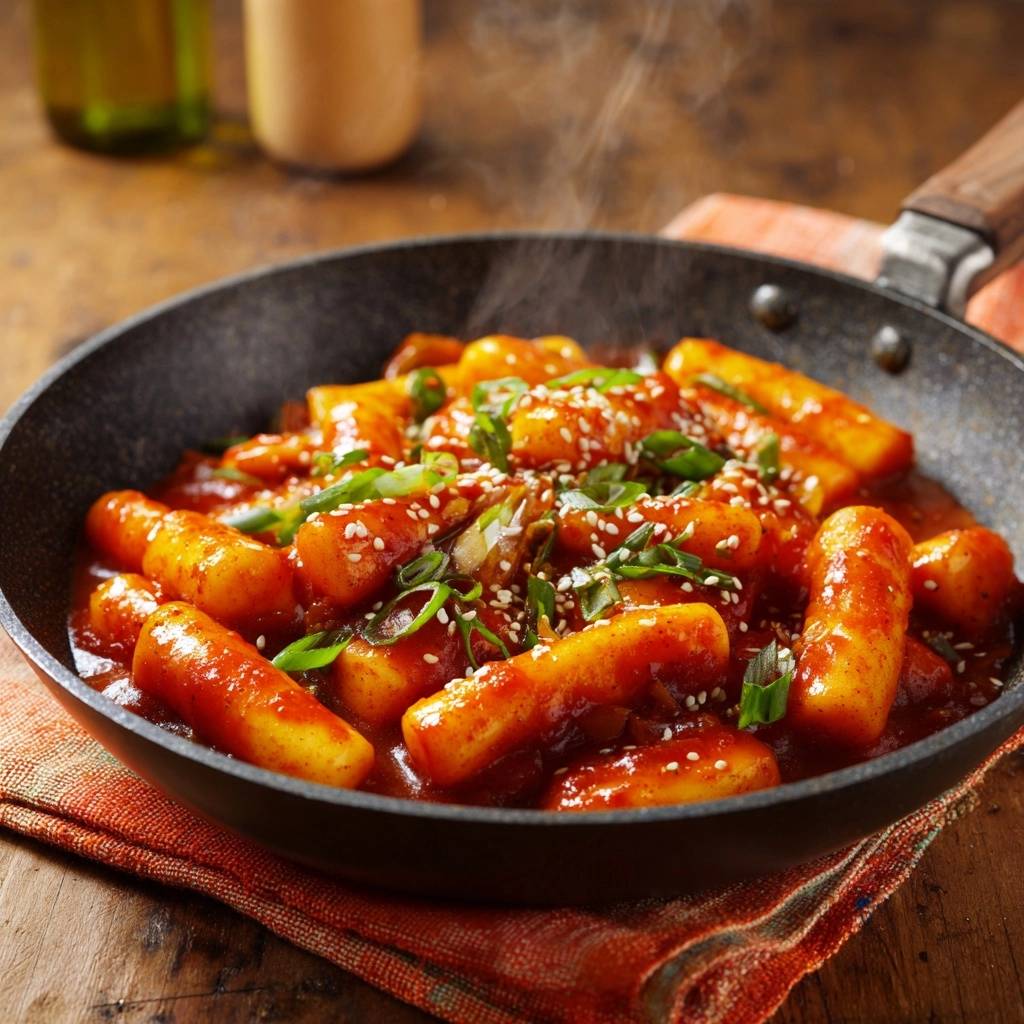
Why This Spicy Korean Tteokbokki Stands Out
Ever bitten into rock-hard rice cakes that turn your Spicy Korean Tteokbokki into a chewy nightmare? Most home cooks skip the right prep and end up frustrated. This recipe fixes that with a simple 10-minute warm water soak that delivers tender, sauce-soaking tteok every time.
Therefore, you get that glossy, street-food shine without the hassle. The bold gochujang heat clings perfectly to each piece. Plus, it comes together in just 25 minutes for 2-3 servings at about 450 calories each.
Here’s the expertise: that warm soak kickstarts starch gelatinization gently. It hydrates the dried tteok evenly so it absorbs the spicy sauce without toughening up later. Oh man, the chew is addictive!
Key Ingredients for Authentic Spicy Korean Tteokbokki
You’ll need 8 oz cylinder rice cakes (tteok), fresh or dried, as the star. They provide that signature bounce. Grab them at Asian markets; dried ones store longer but need soaking.
Gochujang, 2 tablespoons, brings fermented depth and heat. Gochugaru, 1 tablespoon, adds flake crunch and bright spice. Together, they create the vivid red sauce that defines Spicy Korean Tteokbokki.
Soy sauce, 1 tablespoon, balances saltiness, while sugar, another tablespoon, tempers the fire. Sesame oil, 1 tablespoon, finishes with nutty gloss. Minced garlic, 2 cloves, water or anchovy stock (1 cup), neutral oil (2 tablespoons), green onions, and sesame seeds round it out.
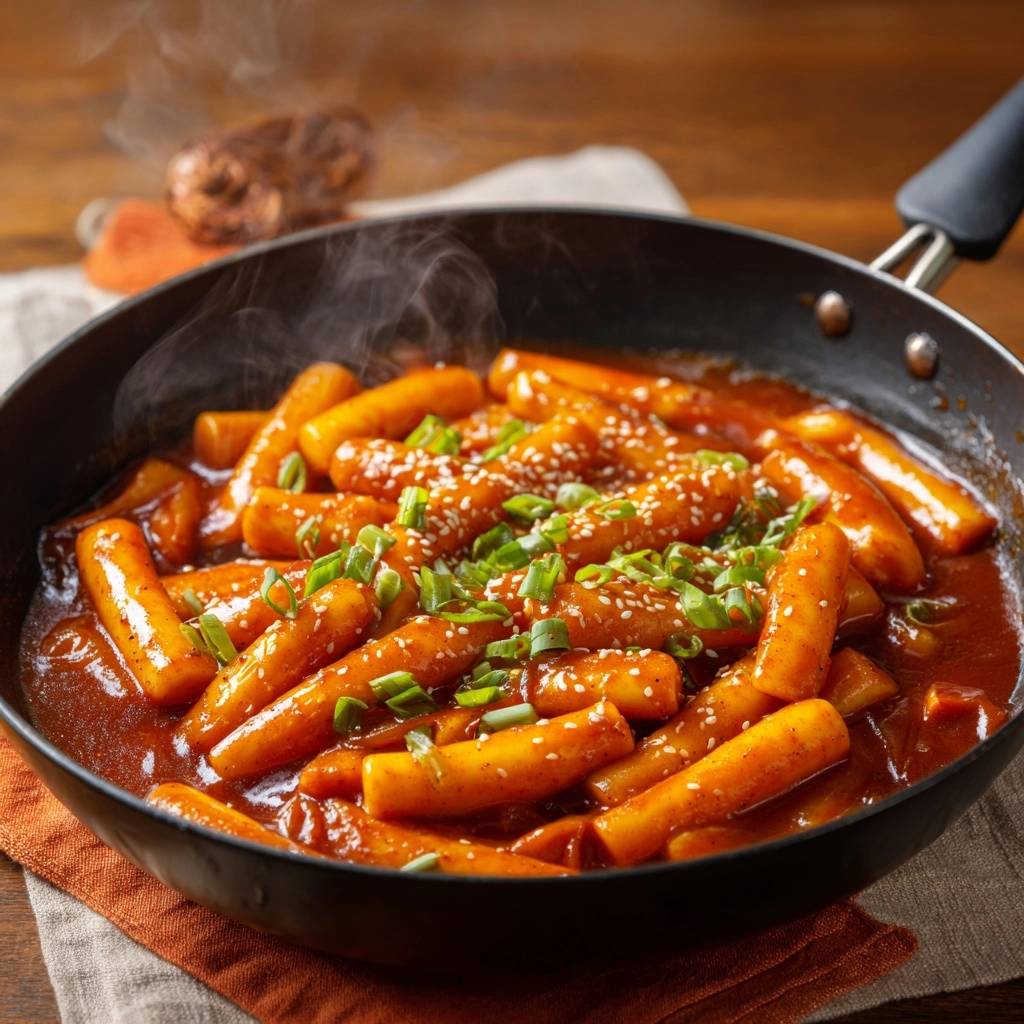
Fresh tteok skips soaking and stays plush. For stock, simmer anchovies briefly for umami punch over plain water. No gochujang? Miso paste works in a pinch, but hunt for the real deal online or in stores.
Choosing Perfect Tteok for Chewy Texture
Fresh cylinder tteok shines with immediate softness and even sauce coating. Dried versions cost less and last months in the pantry. However, they demand that 10-minute soak for ideal chew.
8 oz hits the sweet spot for 2-3 servings. It ensures plenty of sauce without drowning the rice cakes. Look for vacuum-sealed packs at Korean grocers.
Gochujang and Gochugaru: Heat Essentials
Brands like Chung Jung One offer consistent medium heat. Gochujang rates 3-4 on a 10-point spice scale; gochugaru amps vibrancy. 2 tablespoons paste plus 1 tablespoon flakes build bold red without scorching.
In addition, flakes give texture that powder can’t match. Adjust down for milder palates, but this ratio nails classic Spicy Korean Tteokbokki fire.
History and Origins of Spicy Korean Tteokbokki
Tteokbokki traces to 8th-century palace kitchens as a mild rice cake stew. Street vendors in 1950s Seoul transformed it into the spicy sensation we crave today. Sindang-dong became its epicenter.
Post-war, gochujang boomed affordably, fueling the red sauce evolution. It turned elegant tteok into a snacking staple for students and workers. Nowadays, Spicy Korean Tteokbokki fuels late-night hangs worldwide.
Therefore, home cooks everywhere recreate that sizzle. The dish embodies Korea’s blend of comfort and kick. Simple tweaks keep it fresh for modern tables.
For another taste of Korean flavors, try this sticky Korean beef rice bowl.
Essential Tools for Homemade Spicy Korean Tteokbokki
A large non-stick pan or wok handles the toss without sticking. It lets sauce coat evenly over high heat. You don’t need fancy gear beyond that.
Grab a bowl for warm water soaking and a slotted spoon for draining. High-heat tolerant pans like carbon steel shine here. Standard stove works fine.
In addition, tongs help gentle stirring. These basics guarantee restaurant results at home.
Pan Selection for Sauce Coating
Choose a wide, shallow pan over deep pots for easy tossing. Non-stick prevents rice cakes from gluing down. Stainless works if oiled well, building fond for extra flavor.
Mastering the 10-Minute Tteok Soak Technique
Start with dried tteok in a bowl of warm tap water, around 110°F, not boiling. Soak exactly 10 minutes. The gentle heat swells starches for tenderness without mush.
They’ll plump and flex easily when bent. Drain thoroughly on a slotted spoon; pat dry if needed. Fresh tteok skips this, ready straight from the pack.
This science of hydration ensures your Spicy Korean Tteokbokki rice cakes absorb sauce like sponges. Skip it, and they stay bullet-hard. Pro tip: test one piece for perfect bounce.
Blooming Sauce Flavors in Spicy Korean Tteokbokki
Heat 2 tablespoons neutral oil until shimmering over medium-high. Add garlic; stir 20 seconds till fragrant. Then mix in gochujang, gochugaru, soy, sugar, and sesame oil.
Cook 1 minute to bloom. You’ll smell sweet heat rising, colors deepening ruby. This step unlocks fermented layers for complex depth.
However, watch closely to avoid burning. The paste fries into a thick base that clings beautifully later.
Garlic Timing to Prevent Bitterness
Stir garlic just 20 seconds. Longer releases harsh compounds. Short burst gives sweet perfume that elevates the whole Spicy Korean Tteokbokki.
Simmering and Coating Rice Cakes Perfectly
Pour in 1 cup water or stock; stir as it bubbles and thickens, about 2 minutes. Sauce turns glossy and coats the back of a spoon. Add soaked tteok now.
Toss gently 5-7 minutes. Rice cakes drink up spice, turning slick and vibrant. They firm slightly but stay chewy.
Rest off heat for gloss to set. Serve sizzling for that vendor vibe. Gentle motion prevents breakage.
Stock vs. Water for Umami Depth
Anchovy stock simmers from dried fish in water for 10 minutes, strained. It layers savory without fishiness. Dashi works too; 1 cup matches the 8 oz tteok perfectly.
Avoiding Common Mistakes in Spicy Korean Tteokbokki
Tough tteok? Wrong soak temp hardens them. Use warm water only. Sticky pan means skimpy oil; 2 tablespoons coat fully.
Bland sauce skips blooming; always fry pastes first. Overcook to mush by rushing simmer. Troubleshooting: pull early, taste often.
Therefore, follow timing for glossy success. Insufficient liquid drowns chew; measure precisely.
Fixing Overly Thick or Thin Sauce
Too thick? Add stock 1 tablespoon at a time. Thin? Simmer longer or use cornstarch slurry. Balance hits at 2-minute mark usually.
Flavor Variations for Your Spicy Korean Tteokbokki
Top with mozzarella for rabokki stretch. Stir in shrimp or fish cakes midway for seafood pop. Veggies like sliced carrots or onions boost crunch.
Tone down heat by halving gochujang. Vegan? Swap soy for tamari. These keep Spicy Korean Tteokbokki’s core while personalizing.
In addition, add boiled eggs last for richness. Experiment, but bloom flavors always.
Complementary Dishes
To round out your meal featuring Spicy Korean Tteokbokki, consider these dishes that offer delightful contrasts and complements.
- For a comforting, slightly sweet bread to balance the spice, try this golden skillet cornbread, known for its tender texture.
- Add a refreshing element with this spicy cucumber edamame salad, offering a crisp contrast to the chewy rice cakes.
Perfect Pairings for Spicy Korean Tteokbokki
Chilled cucumber salad cools the blaze with sesame tang. Kkaennip kimchi adds fermented bite. Steamed eggs bring silky contrast.
Barley tea refreshes; cold plum juice quenches fire. Follow with bibimbap for a full meal spread.
For a different Korean meal, try this sticky Korean beef rice bowl.
Make-Ahead and Storage for Spicy Korean Tteokbokki
Store leftovers airtight in the fridge up to 3 days. Reheat gently in a pan with a splash of water to revive chew. Microwave toughens them.
Freeze sauce base alone up to a month; cook fresh tteok when thawing. Batch the sauce for quick weeknight wins. Pro tip: portion before garnishing.
Troubleshooting Spicy Korean Tteokbokki Issues
Why are my rice cakes still hard?
They likely soaked in cold or boiling water. Warm tap water for exactly 10 minutes softens starches right. Drain well; over-soaking sogs them too.
Can I use regular chili powder instead of gochugaru?
No, powder clumps and lacks flake brightness. Gochugaru gives airy heat and texture crucial for authentic Spicy Korean Tteokbokki. Order online if stores lack it.
Is Spicy Korean Tteokbokki gluten-free?
Mostly; rice cakes are naturally GF. Swap soy sauce for tamari to confirm. Check gochujang labels for barley traces.
How do I scale for 4 servings?
Double everything: 16 oz tteok, 4 tbsp gochujang, etc. Use a bigger pan to avoid crowding. Sauce ratio stays perfect.
How can I make a less spicy version?
Halve gochujang and gochugaru; add more sugar. Bloom longer for depth without fire. Still gets that bold Korean rice cake vibe.
Why did my sauce stick and burn?
Insufficient oil or low heat. Start shimmering hot with full 2 tbsp neutral oil. Non-stick pan helps too.
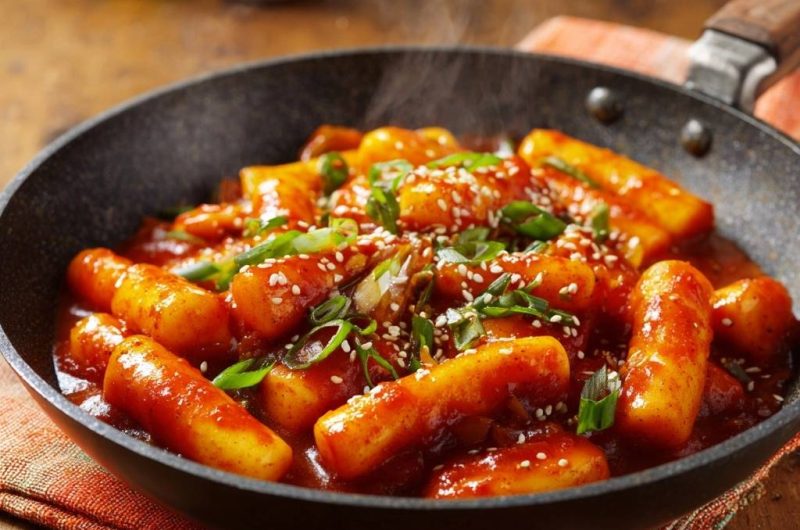
Tteokbokki
Course: Main CourseCuisine: KoreanDifficulty: easy2
servings15
minutes15
minutes450
kcal30
MinutesTired of rock-hard rice cakes that ruin your tteokbokki? This recipe uses a simple 10-minute warm soak to guarantee tender, chewy tteok that absorbs every bit of spicy sauce without the frustration. Perfect stir-fry results at home!
Ingredients
8 oz cylinder rice cakes (tteok), fresh or dried
2 tablespoons gochujang (Korean chili paste)
1 tablespoon gochugaru (Korean chili flakes)
2 tablespoons soy sauce
1 tablespoon sugar
1 tablespoon sesame oil
2 cloves garlic, minced
1 cup water or anchovy stock
2 green onions, sliced
1 teaspoon sesame seeds
2 tablespoons neutral oil (like vegetable oil)
Directions
- Solve tough rice cakes forever: Place dried rice cakes in a bowl of warm water (not boiling) for exactly 10 minutes. Theyll soften to perfect chewiness without boiling or sogginess. Drain well and set aside. (Skip if using fresh tteok.)
- Heat 2 tablespoons neutral oil in a large pan over medium-high heat until shimmering.
- Add minced garlic and stir for 20 seconds until fragrant, then stir in gochujang, gochugaru, soy sauce, sugar, and sesame oil. Cook 1 minute to bloom flavors.
- Pour in water or stock, stirring until sauce thickens slightly, about 2 minutes.
- Add softened rice cakes to the pan. Toss gently to coat evenly, cooking 5-7 minutes. The pre-soaked tteok will absorb sauce perfectly, staying tender and glossy without sticking or toughening.
- Remove from heat. Garnish with sliced green onions and sesame seeds. Serve hot straight from the pan for that sizzling restaurant vibe. Enjoy your fail-proof tteokbokki!
Notes
- Use fresh rice cakes if available; skip soaking step. Anchovy stock enhances authentic flavor.