Often, the promise of an elegant stuffed salmon dish is met with a dry, disappointing reality. It’s a common kitchen heartbreak, but I’ve perfected a Stuffed Salmon Roulade recipe that guarantees a tender, juicy fillet every single time, cradling a rich, creamy shrimp and spinach filling.
This isn’t just another recipe; it’s your foolproof guide to a show-stopping meal that’s surprisingly simple to master. Prepare for rave reviews and a truly unforgettable dining experience that highlights your culinary expertise.
Beyond Basic: Why Our Stuffed Salmon Roulade is a Game-Changer
The Secret to Perfectly Moist Salmon, Every Single Time
The biggest challenge with salmon is often preventing it from drying out, especially when stuffed. Our recipe tackles this head-on with a clever butterflying technique, which ensures even cooking from edge to edge.
For a similar dish that’s also perfectly juicy, try Salmon & Asparagus with Creamy Spinach.
Paired with a protective, crispy panko crust, these methods seal in the salmon’s natural juices. The essential resting period post-baking further guarantees a moist, flaky result, making dry salmon a distant memory.
Elegant Presentation, Effortless Execution
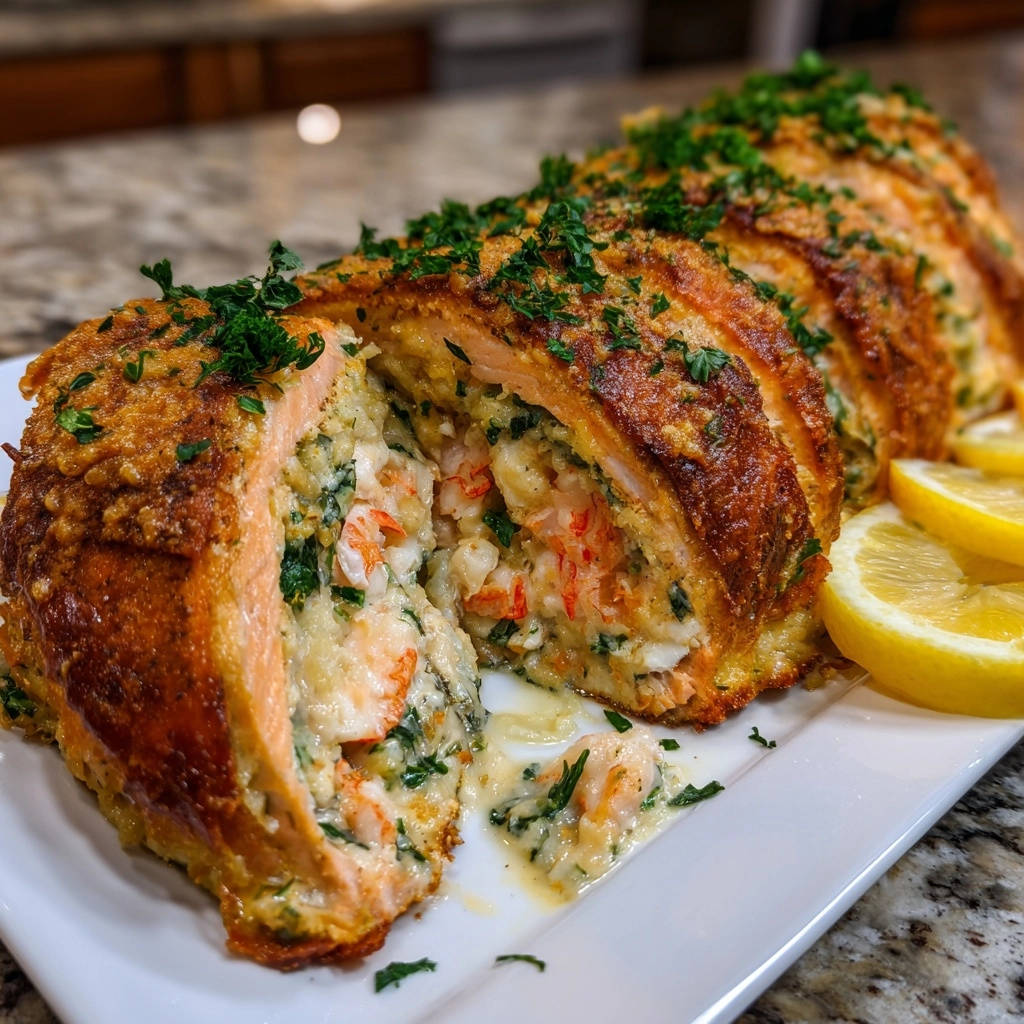
This Stuffed Salmon Roulade looks incredibly impressive, making it ideal for dinner parties or special occasions. Its beautiful spiral of salmon and filling suggests hours of intricate work.
However, the rolling and baking process is remarkably straightforward, requiring minimal fuss for maximum impact. You’ll achieve a gourmet dish with surprisingly little effort.
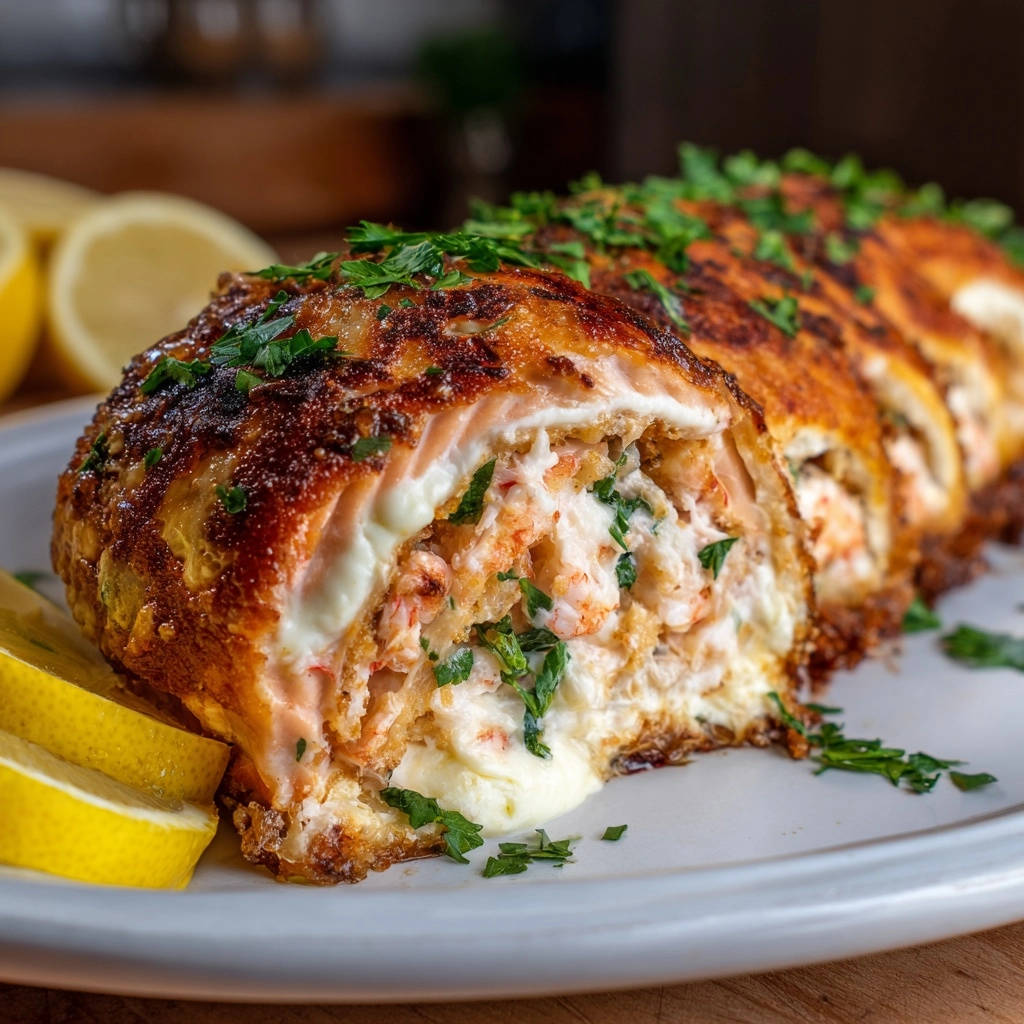
A Symphony of Flavors in Every Bite
Each slice of this salmon roulade delivers a harmonious blend of textures and tastes. The delicate, buttery salmon is perfectly complemented by a creamy, savory stuffing of succulent shrimp, fresh spinach, and tangy Parmesan.
Aromatic garlic and shallots provide depth, while the crisp panko crust adds a satisfying crunch. It’s a truly balanced and delightful culinary experience.
Crafting the Heart of Your Roulade: Essential Ingredients
The Star of the Show: Selecting Your Salmon Fillet
Choose a large, high-quality skinless salmon fillet, ideally around 2 pounds, for the best results. The absence of skin allows for easier rolling and a clean presentation.
Its thickness is important, as a thicker fillet will be butterflied to create a larger, more uniform surface for stuffing and even cooking.
The Rich & Creamy Stuffing Core
Cooked shrimp, finely chopped, adds a sweet, delicate seafood flavor and satisfying texture to the filling. Ensure it’s peeled and deveined for convenience.
Fresh, finely chopped spinach introduces a touch of earthiness and vibrant color. It also adds a healthy component to the rich stuffing.
Softened cream cheese is crucial for creating a smooth, luxurious, and binding texture in the filling. Its tanginess balances the other flavors beautifully.
Grated Parmesan cheese delivers a sharp, salty, umami kick that elevates the entire stuffing. Use freshly grated for superior flavor.
Minced garlic and finely diced onion or shallot form the aromatic backbone of the filling. These provide essential depth and warmth.
Fresh parsley, finely chopped, brightens the stuffing with its herbaceous notes. It also serves as a beautiful garnish.
The Crispy, Flavorful Panko Crust
Panko breadcrumbs are preferred over regular breadcrumbs for their larger, flakier texture, which yields an exceptionally crispy crust. This adds a crucial textural contrast.
Melted butter is mixed with the panko to bind the crumbs together and impart a rich, golden color when baked. It also adds a luscious flavor.
A hint of paprika not only enhances the visual appeal with a warm hue but also adds a subtle, smoky sweetness to the crust.
Pantry Staples & Flavor Boosters
A touch of olive oil brushed on the salmon before the crust helps the panko adhere and promotes a beautiful golden-brown finish. It also contributes to moisture.
Salt and black pepper are essential for seasoning the salmon and the stuffing, bringing all the flavors into balance. Always season to taste.
Fresh lemon slices, reserved for garnish, provide a bright, zesty counterpoint to the richness of the Stuffed Salmon Roulade. They add a fresh aroma and visual appeal.
Essential Kitchen Allies for a Flawless Roulade
Basic Prep Tools for Precision
Cutting Board & Sharp Knife: A sturdy cutting board and a sharp knife are indispensable for safely and efficiently butterflying the salmon and finely chopping all your stuffing ingredients.
Measuring Cups & Spoons: Accurate measurements ensure the perfect balance of flavors and consistency in your stuffing and crust mixture.
Mixing Bowls: You’ll need at least two medium bowls: one for preparing the creamy stuffing and another for combining the panko crust ingredients.
Baking & Presentation Essentials
Parchment Paper & Baking Sheet: Parchment paper prevents sticking and makes cleanup a breeze, ensuring your roulade lifts off easily from the baking sheet after cooking.
Kitchen Twine (Optional): While not strictly necessary, kitchen twine can be a helpful ally for tying the rolled salmon at intervals, ensuring it maintains its elegant shape during baking.
Oven: A reliable oven with accurate temperature control is key for consistent baking, leading to perfectly cooked salmon and a crisp crust.
Your Step-by-Step Guide to Stuffed Salmon Roulade Perfection
- Prepare Your Workspace and Preheat:
Set your oven to 400°F (200°C) and line a baking sheet with parchment paper. This simple step ensures even cooking and prevents sticking.
- Mastering the Salmon Fillet: Butterfly and Pat Dry:
Lay your salmon flat. If thick, carefully butterfly it open (slice horizontally almost all the way through, then open like a book) to create an even surface for rolling.
Pat the salmon completely dry with paper towels. This crucial step promotes a beautiful crust and prevents the fish from steaming instead of baking.
An even thickness is key to ensuring the salmon cooks uniformly without drying out in some spots, delivering a consistently tender result.
- Crafting the Irresistible Stuffing:
In a medium bowl, combine the chopped shrimp, spinach, softened cream cheese, Parmesan, minced garlic, diced onion or shallot, chopped parsley, salt, and pepper.
Mix thoroughly until all ingredients are well combined and evenly distributed. This ensures a homogenous flavor throughout every bite of the roulade.
- Stuff, Roll, and Secure Your Roulade:
Spread the stuffing mixture evenly over the entire surface of the salmon fillet, leaving a small border around the edges. This border helps contain the filling.
Carefully roll the salmon tightly from one end to the other, encasing the filling securely. A tight roll helps the roulade hold its shape.
Use kitchen twine at intervals, if desired, to help the roulade maintain its shape during cooking, especially for larger or thicker fillets.
- Applying the Golden Panko Crust:
In a small bowl, mix the panko breadcrumbs with the melted butter and paprika until well combined. This creates a flavorful, crunchy topping.
Lightly brush the outside of the salmon roulade with olive oil, then gently press the breadcrumb mixture all over the surface, ensuring a good, even coating.
This golden crust not only adds a delightful crunch and visual appeal but also helps seal in the salmon’s natural moisture during baking, preventing dryness.
- Baking to Juicy Perfection:
Place the crusted salmon roulade seam-side down on the prepared baking sheet. Bake for 20 to 25 minutes, or until the salmon is cooked through and flakes easily with a fork, and the crust is golden brown.
For that perfect crust, check out this lemon herb crusted salmon recipe.
To guarantee juiciness, avoid overcooking; the internal temperature should reach 145°F (63°C) at its thickest point. An instant-read thermometer is your best friend here.
- The Critical Resting Period and Serving:
Once baked, remove the salmon from the oven and let it rest for 5-10 minutes before slicing. This crucial resting period allows the juices to redistribute throughout the fish, ensuring every slice is perfectly moist.
Remove any kitchen twine, slice into thick rounds, garnish with extra fresh parsley and vibrant lemon slices, and serve warm for an unforgettable meal.
Chef’s Secrets for an Unforgettable Stuffed Salmon Roulade
The Art of Butterfly Filleting
To butterfly your salmon, lay the fillet flat on a cutting board. Start slicing horizontally along the thickest part, almost all the way through, but leave about a half-inch hinge on one side.
Then, open the fillet like a book. This technique doubles the surface area, creating a much larger, more uniform canvas for spreading your delicious stuffing and ensures the entire roulade cooks evenly.
Don’t Skip the Pat Dry Step (It’s Crucial!)
Thoroughly patting your salmon fillet dry with paper towels before butterflying and stuffing is non-negotiable. Excess moisture on the surface of the fish will cause it to steam in the oven, rather than sear and brown.
This simple step is the key to achieving a beautifully crisp panko crust and preventing a soggy exterior, enhancing both texture and flavor.
The Power of the Resting Period
Just like with a good steak, letting your salmon roulade rest after baking is critical for a truly moist result. During cooking, the muscle fibers contract, pushing juices to the center of the fish.
Resting allows these fibers to relax and the juices to redistribute throughout the entire fillet. Slicing too soon will cause all those precious juices to run out, leading to a drier dish.
Creative Stuffing Twists & Variations
Cheesy Alternatives: Swap Parmesan for tangy goat cheese, creamy ricotta, or a sharp cheddar for a different flavor profile in your seafood roulade.
Vegetable Boost: Enhance the filling with sautéed mushrooms, finely diced bell peppers, or even a handful of sun-dried tomatoes for added texture and depth.
Herbaceous Accents: Experiment with fresh dill, chives, or tarragon instead of or in addition to parsley, as these herbs pair beautifully with salmon.
Spicy Kick: Introduce a pinch of red pepper flakes or a dash of hot sauce to the stuffing for those who enjoy a little heat.
Testing for Doneness Without Overcooking
The visual cue for perfectly cooked salmon is when it flakes easily with a fork and appears opaque throughout. However, relying solely on this can lead to overcooked fish.
For guaranteed juiciness, use an instant-read thermometer inserted into the thickest part of the roulade (avoiding the stuffing). The ideal internal temperature for salmon is 145°F (63°C).
Pull it from the oven just before it reaches this temperature, as it will continue to cook slightly while resting.
Solving Common Stuffed Salmon Roulade Challenges
My Roulade is Falling Apart!
If your roulade struggles to hold its shape, ensure you are rolling it very tightly from one end to the other. Avoid overfilling, as too much stuffing can make it difficult to secure.
Using kitchen twine at even intervals along the length of the rolled salmon is highly recommended for stability. For an extra firm roulade, you can also chill it in the refrigerator for 15-20 minutes before baking.
Help, My Salmon is Dry!
Dry salmon is typically a sign of overcooking. Always use an instant-read thermometer to ensure you pull the Stuffed Salmon Roulade from the oven at precisely 145°F (63°C).
Additionally, properly butterflying the fillet ensures even thickness, preventing thinner sections from drying out before thicker parts are cooked. Don’t skip the crucial resting period, as it allows juices to redistribute.
Soggy Crust Woes
A soggy crust usually results from excess moisture on the salmon’s surface or an oven that isn’t hot enough. Always pat your salmon fillet completely dry before adding any crust.
Ensure your oven is fully preheated to 400°F (200°C) before placing the roulade inside, which helps the crust crisp quickly. Distribute the panko-butter mixture evenly for maximum crunch.
Elevating Your Stuffed Salmon Roulade Experience
Perfect Pairings: What to Serve Alongside
For a complete and balanced meal, pair your Stuffed Salmon Roulade with sides that complement its richness. Roasted asparagus or tender broccolini are excellent choices, offering a touch of green freshness.
Round Out Your Meal
To complement your stuffed salmon roulade, consider these delightful accompaniments that offer a satisfying contrast in texture and taste.
- For a delightful crunch that pairs well with the tender salmon, try these golden zucchini fritters, offering a fresh summer vegetable flavor.
- If you’re looking for another way to enjoy fried vegetables, these crispy vegetable fritters provide a dependable, non-crumbly texture.
A simple yet elegant side of fluffy mashed potatoes provides comforting creaminess. For a lighter option, consider a crisp green salad, like an arugula pomegranate salad with a bright vinaigrette.
Smart Storage & Reheating Tips
Store any leftover Stuffed Salmon Roulade in an airtight container in the refrigerator for up to 2-3 days. This ensures it remains fresh and delicious for future enjoyment.
To reheat, gently warm slices in a preheated oven at 275-300°F (135-150°C) until heated through, loosely covered with foil to prevent drying. Avoid the microwave if possible, as it can make salmon rubbery.
Make-Ahead Magic: Prep for Success
This recipe is surprisingly accommodating for make-ahead prep, ideal for busy hosts. The creamy shrimp and spinach stuffing can be prepared a full day in advance and stored in the refrigerator.
You can also assemble the entire salmon roulade-stuffed, rolled, and crusted-and refrigerate it for a few hours before baking. This leaves you with minimal work just before serving, allowing you more time with your guests.
Your Stuffed Salmon Roulade Questions Answered
Can I use frozen salmon for this recipe?
Yes, you can absolutely use frozen salmon for this recipe, but ensure it is completely thawed in the refrigerator before beginning. It’s crucial to then pat the salmon very dry, as frozen fish can release more moisture. While delicious, thawed salmon might have a slightly softer texture compared to fresh.
What other fillings can I use for Stuffed Salmon Roulade?
The beauty of this dish is its versatility! Get creative with your fillings by trying combinations like sun-dried tomatoes, basil, and goat cheese; a pesto and pine nut mixture; or finely diced colorful bell peppers sautéed with herbs. Just ensure your alternative fillings aren’t overly wet to maintain the roulade’s integrity.
Is this Stuffed Salmon Roulade recipe gluten-free?
As written, this recipe is not gluten-free due to the panko breadcrumbs used for the crispy crust. However, it’s very easy to modify! Simply substitute gluten-free panko breadcrumbs, which are widely available, or use finely ground almond flour mixed with a little seasoning for a delicious, gluten-free crust alternative.
Can I grill or pan-sear the roulade instead of baking?
Baking is highly recommended for the Stuffed Salmon Roulade to ensure even cooking throughout the thick roll and to maintain its elegant shape. Grilling or pan-searing would be challenging; it’s difficult to cook the interior through without burning the exterior crust or risking the salmon drying out in places.
Ready to Impress? Share Your Stuffed Salmon Roulade Creation!
You now have all the tools and expertise to create a truly spectacular Stuffed Salmon Roulade. This dish is not just a meal; it’s a statement, a testament to thoughtful cooking and exquisite flavor.
Go forth and create culinary magic! We would absolutely love to hear about your experience and see your stunning creations. Share your results and let us know how this recipe became a new favorite in your kitchen!
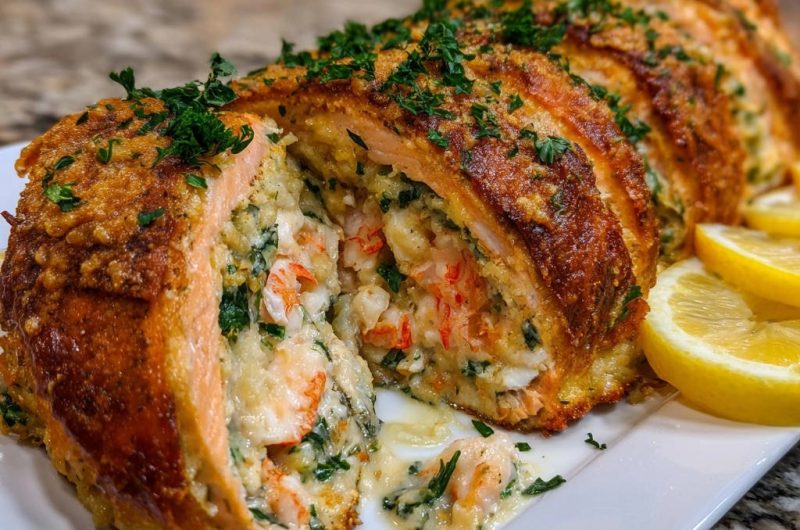
Stuffed Salmon
Course: Main CourseCuisine: InternationalDifficulty: medium4
servings20
minutes25
minutes550
kcal45
minutesNever experience dry salmon again! This elegant Stuffed Salmon Roulade features a delicate salmon fillet wrapped around a rich, creamy filling of shrimp, spinach, and Parmesan. Baked to golden perfection with a crispy panko crust, it’s a moist and flavorful showstopper.
Ingredients
1 large skinless salmon fillet (about 2 pounds)
1 cup cooked shrimp, peeled, deveined, and finely chopped
1/2 cup fresh spinach, finely chopped
4 ounces cream cheese, softened
1/4 cup grated Parmesan cheese
2 cloves garlic, minced
1 small onion or shallot, finely diced
1/4 cup fresh parsley, chopped (plus extra for garnish)
1/2 cup panko breadcrumbs
2 tablespoons butter, melted
1/2 teaspoon paprika
1 tablespoon olive oil
Salt to taste
Black pepper to taste
1 lemon, sliced, for garnish
Directions
- Preheat your oven to 400 degrees Fahrenheit (200 degrees Celsius). Line a baking sheet with parchment paper.
- Prepare the salmon: Lay the salmon fillet flat on a cutting board. If it’s very thick, carefully butterfly it open (slice horizontally almost all the way through, then open like a book) to create a larger, more even surface for rolling. Pat it completely dry with paper towels. This even thickness is key to ensuring it cooks uniformly without drying out in some spots.
- Make the stuffing: In a medium bowl, combine the chopped shrimp, spinach, softened cream cheese, Parmesan cheese, minced garlic, diced onion or shallot, 1/4 cup chopped parsley, salt, and black pepper. Mix thoroughly until all ingredients are well combined.
- Stuff and roll: Spread the stuffing mixture evenly over the entire surface of the salmon fillet, leaving a small border around the edges. Carefully roll the salmon tightly from one end to the other, encasing the stuffing. Use kitchen twine to tie the roulade at intervals to help it maintain its shape during cooking, if desired.
- Prepare the crust: In a small bowl, mix the panko breadcrumbs with the melted butter and paprika until well combined. Brush the outside of the salmon roulade lightly with olive oil, then gently press the breadcrumb mixture all over the surface, ensuring a good, even coating. This crust not only adds texture but helps seal in the salmon’s natural moisture.
- Bake the salmon: Place the crusted salmon roulade seam-side down on the prepared baking sheet. Bake for 20 to 25 minutes, or until the salmon is cooked through and flakes easily with a fork, and the crust is golden brown. To guarantee juiciness, avoid overcooking; the internal temperature should reach 145 degrees Fahrenheit (63 degrees Celsius).
- Rest and serve: Once baked, remove the salmon from the oven and let it rest for 5-10 minutes before slicing. This crucial resting period allows the juices to redistribute throughout the fish, ensuring every slice is perfectly moist. Remove any kitchen twine, slice into thick rounds, garnish with extra fresh parsley and lemon slices, and serve warm.
Notes
- Ensure perfectly moist salmon by resting it after baking and avoiding overcooking.