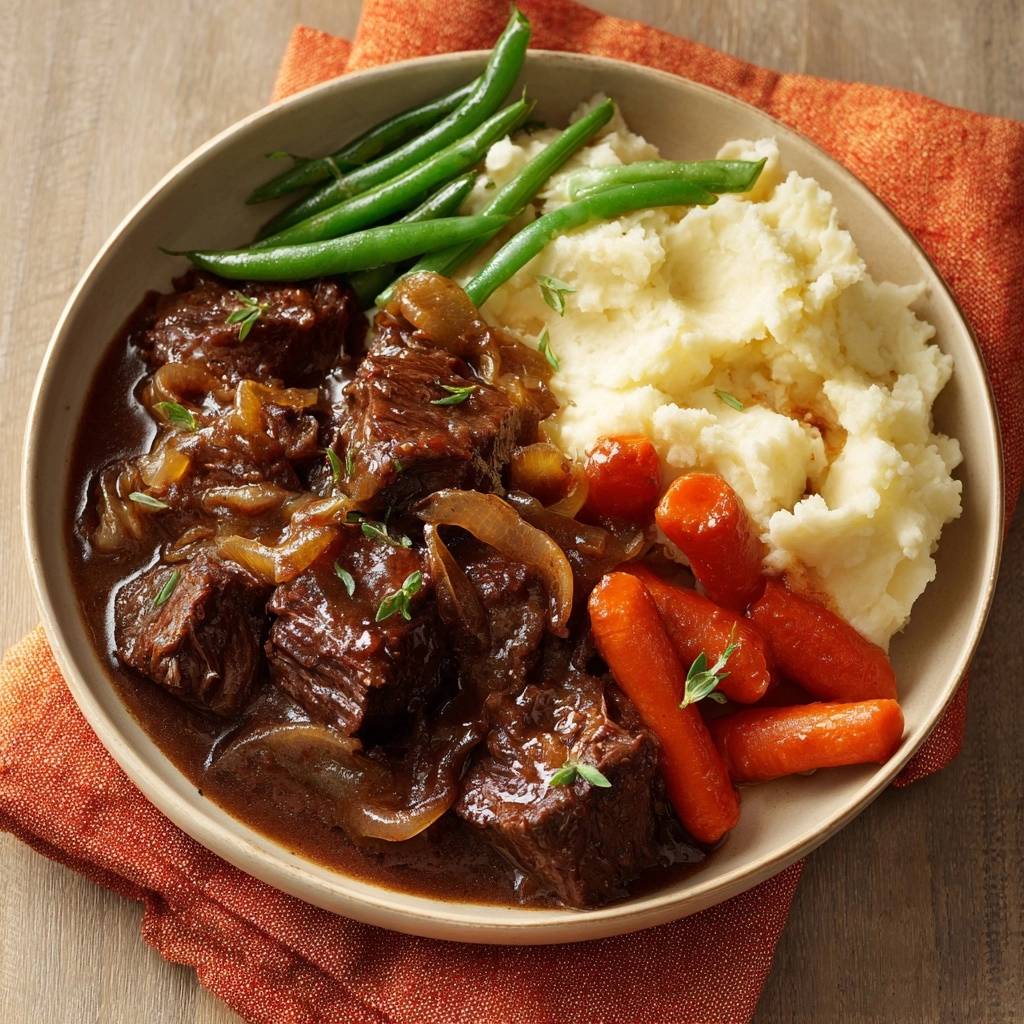
Why This Stew Delivers Fork-Tender Beef
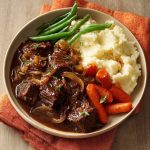
Tired of beef stews where the meat fights back like old tires? Most home cooks sear once and simmer on the stovetop, ending up with chewy chunks that ruin the meal. This tender beef stew with veggies & creamy mash fixes that with a double-sear trick and low-slow oven braise.
Therefore, you get beef that shreds with a fork, surrounded by crisp veggies. In addition, the creamy mash soaks up every bit of rich broth. I’ve seen so many folks complain about tough stew in online polls, yet this method turns tough cuts into melt-in-your-mouth magic.
The secret lies in that second quick sear after deglazing. It crisps the edges just right, boosting flavor before the collagen breaks down in the oven. You’ll taste the difference immediately.
Essential Ingredients for Tender Beef Stew
Start with 2 pounds of beef stew meat, cut into 1.5-inch cubes. Chuck or shoulder excels here because its marbling and connective tissue melt during braising. Therefore, avoid lean sirloin; it dries out fast.
Next, 1/4 cup all-purpose flour for dredging locks in juices via the Maillard reaction. Onions, baby carrots, and green beans add sweetness and crunch. In addition, 4 sprigs fresh thyme infuse earthy notes without overpowering.
For the mash, grab 4 large russet potatoes, 2 tablespoons butter, and 1/2 cup milk. Russets’ starch creates that ultra-creamy texture. Fresh beef broth, olive oil, salt, and pepper round it out. No buttermilk? Regular milk works fine. Gluten-free flour swaps in easily for dredging.
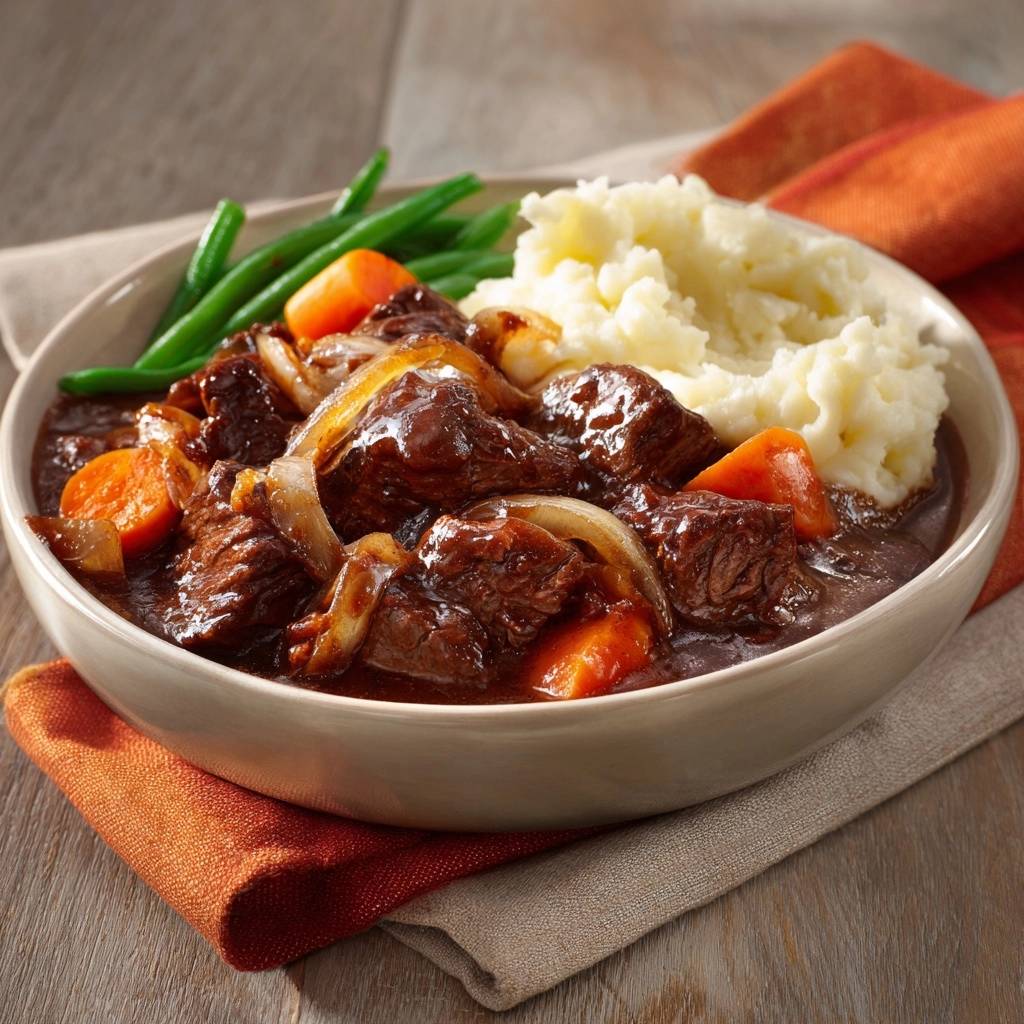
Choosing Stew Meat for Maximum Tenderness
Pick beef from the shoulder or chuck for your tender beef stew with veggies. These cuts have plenty of fat and collagen that turn silky at low heat. Therefore, 1.5-inch cubes ensure even cooking without drying.
Sirloin fails because it’s too lean; it toughens up. However, chuck stays juicy thanks to its marbling.
Vegetables That Hold Up in Braise
Baby carrots and green beans join late in the braise for tender-crisp bite in this beef stew with veggies. Add them after 2 hours to avoid mushiness. Therefore, they retain color and snap.
Potatoes go in the mash separately; boiling them early would make them grainy. In addition, fresh beats frozen for better texture hold.
Building Creamy Mash Foundation
Russet potatoes mash creamier than waxy varieties due to high starch. Use a 4:1 potato-to-milk ratio with butter for richness. Therefore, it pairs perfectly with the stew’s gravy.
Avoid overmixing to prevent gumminess. Hot milk blends smoother.
Science of Double-Sear for Juicy Beef Stew
The first sear at medium-high hits 160F+, sparking the Maillard reaction for deep flavor and a crust that seals juices. Then, the second sear after onions crisps edges further. In addition, this sets up the oven braise perfectly.
At 325F, collagen converts to gelatin over 2 hours, creating that fork-tender beef stew texture. Stovetop often boils too hot, steaming instead of braising. Therefore, the oven ensures even, gentle heat.
Pro tip: undisturbed braising prevents drying. Test with a fork; it should pull apart easily.
Collagen Breakdown in Low-Slow Braise
Two hours at 325F transforms tough collagen without pressure cooker pitfalls like mushy results. Therefore, beef shreds effortlessly in your tender beef stew with veggies. Stirring midway toughens it.
Compare to quick methods; they leave chewy bits. Low heat wins every time.
Key Equipment for Perfect Stew Results
A Dutch oven shines with its thick cast iron for steady heat retention. The enameled version stops sticking and reacts with acidity. In addition, its oven-safe lid traps steam for perfect braising.
Stockpots lose heat too fast, leading to uneven cooking. For mash, use a heavy pot and hand masher. Slow cooker works as an alternative; set low for 6-8 hours.
Dutch Oven Advantages Over Stockpot
Dutch ovens distribute heat evenly for consistent tender beef stew results. Stockpots fluctuate, steaming the meat. Therefore, choose cast iron for braises.
Step-by-Step: First Sear Locks Beef Juices
Pat the beef dry, season with salt and pepper, then dredge in flour. Heat 2 tablespoons olive oil until shimmering. Sear in batches for 4-5 minutes, turning for deep brown crust. Don’t crowd; it’ll steam instead.
The meat pulls away cleanly when ready, smelling nutty and rich. Remove to a plate. This step builds flavor foundation.
Batch Searing Without Steaming
Overcrowding traps moisture, ruining the crust in your beef stew. Sear 4-5 minutes per batch, 1-2 minutes per side. Therefore, you get even Maillard browning.
Step-by-Step: Second Sear and Oven Braise
Add last tablespoon oil, cook onions 5 minutes until golden and soft, scraping bits. Return beef, sear 1-2 minutes on high. Pour in broth and thyme, simmer, then oven at 325F for 2 hours.
Don’t disturb; it tenderizes evenly. After, add carrots and beans for 25-30 minutes until crisp-tender. Fork-test the beef; it falls apart.
Precise Oven Timing for Shreddable Beef
Check at 2 hours; extend 15 minutes if needed, but don’t overbraise or veggies turn mushy. Therefore, precise timing keeps your tender beef stew with veggies perfect.
Step-by-Step: Crafting Ultra-Creamy Mash
Boil quartered russets in salted water 15-20 minutes until fork-tender. Drain, return to pot over low heat to evaporate moisture. Add butter and warm milk, mash until smooth.
Season boldly to stand up to the stew. Pro tip: rice potatoes first for lump-free results.
Mashing Technique for Smooth Texture
Use a hand masher; food processors make gluey mash. Add hot milk gradually. Therefore, you get ideal fluffy consistency for stew.
Avoiding Common Mistakes in Beef Stew
Tough beef? You underbraised; low heat fixes collagen. Mushy veggies mean early addition; stir them in last. Watery mash comes from cold dairy; warm it first.
Flour clumps if not shaken off well. Bland broth? Season early and taste before serving. Follow these, and your tender beef stew with veggies & creamy mash succeeds.
Fixing Tough Beef After Cooking
Extend braise 30 minutes with extra broth. However, if very tough, simmer covered on stovetop low. Starting over beats chewing tires.
Make-Ahead and Freezing Tender Beef Stew
Cool stew fully, then fridge in airtight container for 3-4 days. Freeze portions up to 3 months; mash freezes separately to avoid sogginess. Thaw overnight for best texture.
Batch-cook for easy weeknights. Reheat gently to preserve tenderness.
Reheating Without Texture Loss
Stovetop simmer with splash of broth beats microwave, which toughens beef. Stir mash in last to stay creamy. Therefore, it tastes fresh-made.
Flavor Variations for Beef Stew with Veggies
Swap green beans for peas or mushrooms for earthiness. Try rosemary over thyme for piney notes. Add paprika for subtle heat.
Lighter broth? Use half vegetable stock. These keep the core tender beef stew with veggies & creamy mash intact.
Ideal Pairings for Hearty Beef Stew
Serve hot over mash with crusty bread to sop up gravy. A simple green salad adds freshness. Herbal tea warms it up nicely.
Mash shines solo, but roasted roots boost heartiness. Aim for 165F serving temp.
If you enjoy tender vegetables, you might also like this roasted root medley.
Troubleshooting Tender Beef Stew Issues
Why is my beef chewy? It needs longer braise time at 325F. Collagen breaks down slowly, so add 30 minutes if fork doesn’t shred it easily in your tender beef stew with veggies.
Why are my veggies soggy? You added them too early. Stir in carrots and beans only after 2 hours for crisp-tender texture.
Why is my mash lumpy? Rice potatoes before mashing or use warm milk. Cold dairy causes clumps.
Why is the gravy thin? Make a slurry with 1 tablespoon cornstarch and water, stir in last 5 minutes.
Does it separate after freezing? Stir vigorously post-thaw; broth gels naturally but recombines with heat.
FAQ
How do I store leftovers of Tender Beef Stew with Veggies & Creamy Mash?
Cool the stew completely before storing in an airtight container in the fridge for up to 4 days. Freeze the stew (without mash) in portions for 3 months; mash freezes separately for 1 month to prevent sogginess. Thaw overnight in fridge and reheat gently on stovetop with a splash of broth to restore creaminess.
Why is my beef still tough after cooking?
Tough beef means insufficient braising time or high heat. The double-sear sets it up, but 2+ hours at 325F converts collagen to gelatin. If chewy post-cook, simmer covered with extra broth 20-30 minutes more; don’t boil vigorously or it’ll dry out.
Can I substitute ingredients in this beef stew recipe?
Yes, use gluten-free flour for dredging if needed. Swap green beans for peas or zucchini, but add late. No russets? Yukon Golds work for mash, though less starchy. Beef broth can mix with veggie broth for lighter flavor; avoid water alone as it dilutes taste.
Can I make this in a slow cooker?
Absolutely. After double-sear on stovetop, transfer to slow cooker with broth and thyme on low 6-8 hours. Add veggies last hour. It mimics oven braise well, yielding tender results, though stovetop sear boosts flavor more.
How do I prevent lumpy gravy from the flour dredge?
Shake off excess flour before searing, and deglaze onions thoroughly. The fond thickens naturally during braise. If too thin, whisk in cornstarch slurry at end; it sets without lumps unlike over-floured meat.
Is this recipe dairy-free friendly?
Easily adapt by using plant-based butter and milk like coconut or oat for mash. They mimic creaminess well with russets. Stew itself is dairy-free; just garnish with thyme for full effect.
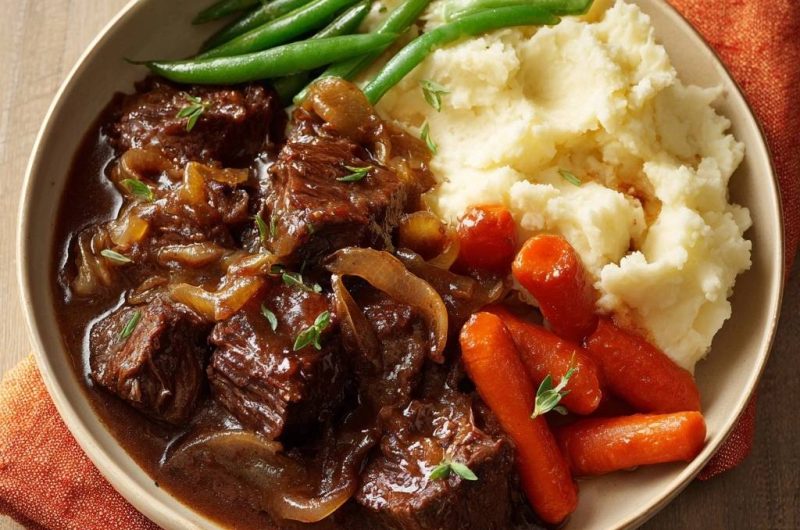
Beef Stew
Course: Main CourseCuisine: AmericanDifficulty: medium6
servings30
minutes2
hours550
kcal180
MinutesTired of rubbery beef? This recipe’s double-sear and low-slow braise breaks down tough cuts into melt-in-your-mouth perfection with baby carrots, green beans, and creamy mashed potatoes.
Ingredients
2 pounds beef stew meat, cut into 1.5-inch cubes
1/4 cup all-purpose flour
2 large onions, sliced
1 pound baby carrots
1 pound fresh green beans, trimmed
4 large russet potatoes, peeled and quartered
4 sprigs fresh thyme, plus extra for garnish
4 cups beef broth
3 tablespoons olive oil
2 tablespoons butter
1/2 cup milk
Salt and black pepper, to taste
Directions
- Pat beef dry with paper towels. Season generously with salt and pepper, then dredge in flour, shaking off excess. Heat 2 tablespoons olive oil in a large Dutch oven over medium-high heat until shimmering hot. Sear beef in batches (do not crowd the pan) for 4-5 minutes per batch, turning to brown all sides deeply. This first sear locks in juices. Remove to a plate.
- Add remaining 1 tablespoon oil to pot. Reduce heat to medium, add onions, and cook 5 minutes until softened and golden. Scrape up browned bits for flavor.
- Return beef and juices to pot. Increase heat to high for a quick second sear, stirring 1-2 minutes to crisp edges further. Add beef broth and thyme sprigs. Bring to a simmer, cover, and transfer to a 325F oven. Braise for 2 hours undisturbed, the low-slow magic that converts tough collagen to silky tenderness without drying out.
- After 2 hours, stir in baby carrots and green beans. Cover and braise 25-30 minutes more until veggies are tender-crisp and beef shreds with a fork. Remove thyme sprigs.
- Meanwhile, boil potatoes in salted water 15-20 minutes until fork-tender. Drain, return to pot, add butter and milk. Mash until creamy smooth, season with salt and pepper.
- Serve stew spooned over mash, garnished with fresh thyme. Enjoy beef so tender it falls apart!
Notes
- Use tough cuts like chuck or round for best results. Double-sear locks in juices and ensures exceptional tenderness. Braise undisturbed for 2 hours to convert collagen to gelatin.