American culinary history is filled with the whimsical charm of “ambrosia” and “fluff” salads. These dishes have graced picnic tables and holiday sideboards for generations, offering a sweet, airy contrast to savory mains. However, many traditional versions suffer from a frustrating flaw. After just an hour in the fridge, the once-crispy elements turn into a soggy, weeping mess that loses its appeal.
This recipe introduces a game-changing “Anti-Soggy” technique that preserves the integrity of your dessert. By focusing on moisture management and a specialized coating for the crunch, we transform a simple retro classic into a sophisticated textural masterpiece. You’ll get that nostalgic flavor you love without the watery bottom or mushy cereal that usually plagues these salads.
The secret lies in creating a physical barrier between the moisture of the fruit and the delicate crunch of the topping. Most people simply toss everything together and hope for the best, but we’re going to use a quick stovetop caramelization. This step ensures your Creamy Pineapple Fluff Salad stays as vibrant and crisp at the end of the party as it was when you first set it out.
For a consistently no-watery tropical delight, consider trying this creamy coconut fruit fluff.
Essential Components for a Stable Pineapple Fluff
Building a fluff salad that doesn’t collapse requires a sturdy foundation. While many recipes rely solely on instant pudding mix, we use eight ounces of full-fat cream cheese. This provides a structural backbone that holds its shape even as the salad sits at room temperature. The cream cheese adds a subtle tang that balances the sugar, creating a much more complex flavor profile than a standard sugar-heavy fluff.
In addition to the cheese, the whipped topping must be handled with care. You should always use “thawed” rather than “frozen” topping to ensure a smooth fold. If you try to incorporate frozen bits, they will eventually melt and cause the salad to “weep” or release water. This separation is the enemy of a good fluff, so patience during the thawing process is your best friend here.
Selecting and Preparing the Pineapple Chunks
Canned pineapple is the gold standard for this dish, but it carries a massive amount of liquid. Simply pouring the can into a colander isn’t enough to prevent a watery salad. You need to be aggressive with your drainage. After the initial drain, spread the chunks out on a layer of heavy-duty paper towels. Pat them firmly from the top to remove every drop of excess juice. This prevents the fruit enzymes and residual liquid from breaking down the dairy fats, which is the primary cause of a “soupy” texture.
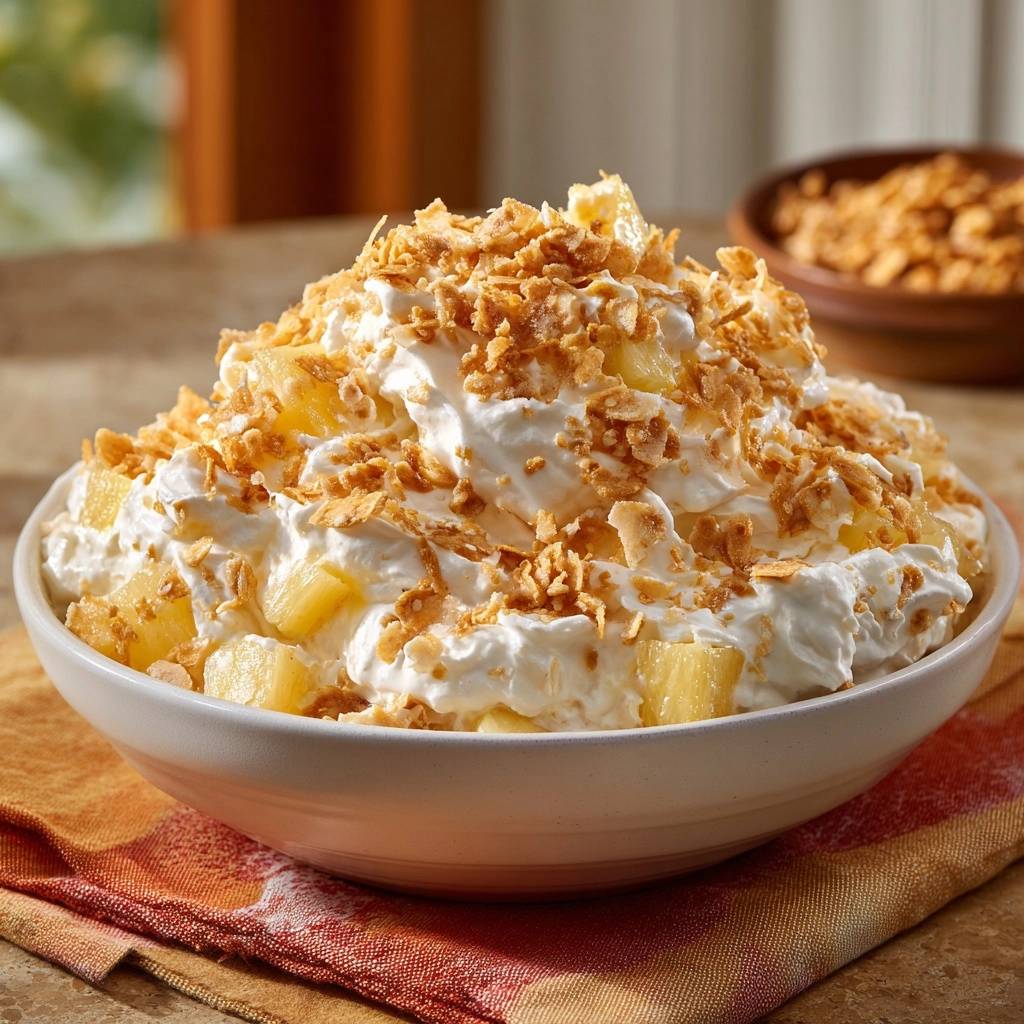
The Role of High-Fat Dairy in Texture
Full-fat cream cheese is non-negotiable if you want a salad that stands tall. The higher fat content acts as a suspension medium for the pineapple and the air bubbles in the whipped topping. Furthermore, the powdered sugar in this recipe does more than just sweeten. It contains a small amount of cornstarch, which acts as a stabilizer. This starch helps “lock” the whipped topping in place, preventing the deflating effect that often happens when you add heavy fruit to a light cream base.
The Caramelization Technique for Moisture-Resistant Crunch
This is the “Skyscraper” value-add that sets this recipe apart from every other fluff on the internet. We are essentially using chemistry to fight sogginess. By melting butter and sugar together, we create a hydrophobic (water-repelling) coating. When you toss the corn cereal flakes in this mixture, you are sealing each flake in a thin, hard sugar shell. This shell prevents the cream from penetrating the cereal, keeping it brittle and loud when you bite into it.
Without this step, corn flakes act like tiny sponges, absorbing moisture from the pineapple and cream within minutes. The caramelization process creates a delicious toffee-like flavor while serving a vital functional purpose. It’s the difference between a dish people politely sample and the one they beg you for the recipe for. You’re not just making a salad; you’re engineering a better eating experience.
Mastering the Stovetop Sugar Shell
When you hit the stove, keep a close eye on your skillet. You have a narrow 3 to 5-minute window where the magic happens. As the butter and sugar bubble, they will begin to coat the flakes. You are looking for a “deeply golden” hue. Be careful not to walk away, as the milk solids in the butter can burn quickly, turning your sweet topping bitter. Constant, gentle tossing ensures every nook and cranny of the cereal is protected by that sugar barrier.
Cooling and Hardening for Maximum Brittle
Once the flakes are coated, immediately move them to a sheet of parchment paper. Avoid using aluminum foil, as the hot sugar can sometimes stick to it, making a mess later. Spread them into a single layer so they don’t clump into one giant brick. Before you even think about adding them to the cream, perform the “snap test.” Pick up a flake and break it; it should be brittle and completely non-sticky. If it feels tacky, it needs more time to air-dry and harden.
Step-by-Step: Constructing the Creamy Pineapple Fluff Salad
Assembly is where your hard work comes together. Start by beating your cream cheese until it is completely aerated and light. This is the only time you should use high speed. Once you begin adding the whipped topping, put the hand mixer away. You must use a spatula and a “folding” motion. This involves cutting through the center and lifting from the bottom. If you stir too vigorously, you’ll pop the air bubbles, and your fluff will turn into a dense, heavy cream.
The goal is a cloud-like consistency that still has enough body to hold the pineapple chunks in place. Think of it as a mousse rather than a dip. By folding gently, you maintain that signature “fluff” texture that gives the dish its name. Take your time here; the extra sixty seconds of careful folding makes a world of difference in the final presentation.
Achieving a Lump-Free Cream Base
The biggest mistake you can make is using cold cream cheese. If it’s straight from the fridge, you will end up with tiny white lumps that no amount of folding can fix. Your cream cheese should be so soft that a finger easily leaves an indentation. If you forgot to take it out, you can wrap the sealed foil block in a warm, damp towel for 15 minutes. This ensures a silky-smooth base that blends perfectly with the powdered sugar and vanilla.
The Final Fold: Timing the Cereal Addition
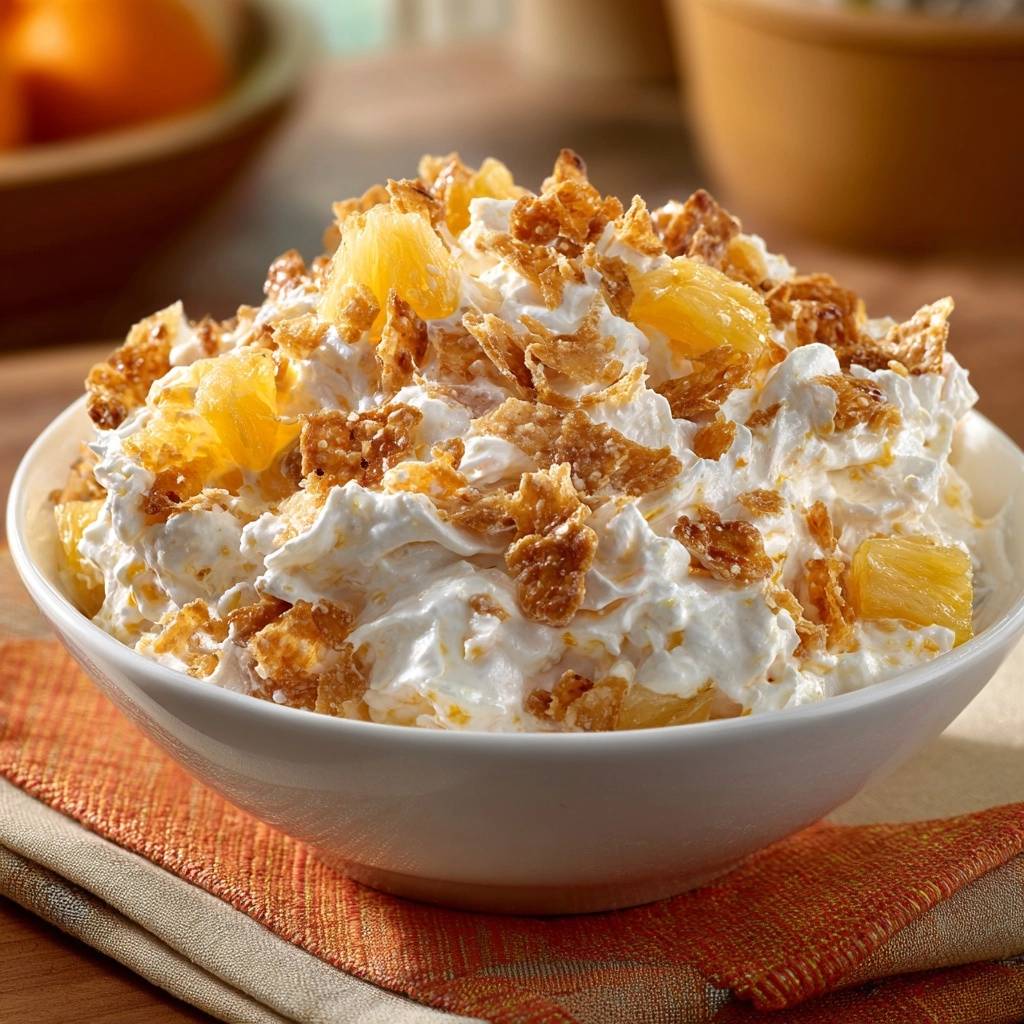
Even with our high-tech sugar barrier, timing is still a factor. Use the “half-in, half-on” strategy for the best results. Fold half of the caramelized flakes into the mixture just before you plan to serve it. This distributes the crunch throughout the salad. Then, pile the remaining half generously on top. This creates a beautiful visual contrast and ensures that the first thing your guests experience is that satisfying, brittle snap of the sugar-coated cereal.
Flavor Variations and Ingredient Swaps
While the pineapple and corn flake combo is a classic, you can easily adapt this recipe for different occasions. For a tropical profile, try adding a cup of toasted shredded coconut to the cream base. The coconut adds another layer of texture without compromising the stability of the fluff. If you want a deeper, nuttier crunch, you can swap the corn flakes for toasted pecan halves that have gone through the same caramelization process in the skillet.
Complementary Dishes
To round out your meal, consider these dishes that pair well with fruit-forward salads.
- For a hearty option that balances the sweetness, try these harvest loaded sweet potatoes, featuring earthy root vegetables.
- If you’re looking for something with a bit of a kick, the buffalo chicken stuffed shells offer a savory contrast.
If you find yourself without corn flakes, puffed rice cereal works surprisingly well with the sugar-coating technique. Just remember to keep all your additions dry. If you decide to add other fruits, like mandarin oranges, they must undergo the same rigorous “pat-dry” treatment as the pineapple. Avoid using fresh kiwi or fresh pineapple, as their active enzymes will liquefy the dairy almost instantly, ruining your hard work.
Troubleshooting Common Fluff Salad Failures
If you end up with a “Watery Bottom” syndrome, it almost always points back to the fruit drainage. Next time, let the pineapple sit in the colander for at least 20 minutes before patting it dry. If your salad has a “Grainy Texture,” your cream cheese was likely too cold when you started. The sugar can’t dissolve properly into cold fat, leading to a gritty mouthfeel. Always ensure your dairy is at true room temperature.
If you’re looking for other ways to prepare shrimp, try this grilled cilantro lime shrimp salad recipe.
A “Sticky Topping” is another common hurdle. This happens if the sugar and butter mixture didn’t cook long enough to reach the hard-crack stage. If the flakes are tacky to the touch after cooling, they will soften much faster once they hit the cream. Ensure the mixture is bubbling vigorously in the pan before you add the cereal, and don’t be afraid of that deep golden color—that’s where the protection and flavor live.
Make-Ahead Strategies and Storage Limits
You can absolutely prepare the cream and pineapple base up to 24 hours in advance. In fact, letting the flavors meld in the fridge can actually improve the taste. However, do not add the caramelized flakes until you are ready to eat. Store the cooled, sugar-coated flakes in a separate airtight container at room temperature. This keeps them away from the humidity of the refrigerator, which is the natural enemy of caramelized sugar.
When you are ready to serve, simply give the cream base a quick, gentle fold to loosen it up, then add your crunch. Leftovers will stay safe to eat for about two days in the fridge, but the “Anti-Soggy” barrier does have its limits. After about 6 to 8 hours in direct contact with the cream, the flakes will eventually start to soften, so this dish is best enjoyed on the day it is assembled.
Expert Tips for High-Volume Serving
If you are doubling this recipe for a large potluck, work in batches for the caramelization step. Overcrowding the skillet can lead to uneven coating and soggy patches. For the best presentation at an outdoor event, serve the fluff in a chilled glass bowl. You can even place the serving bowl inside a slightly larger bowl filled with ice. Keeping the dairy cold ensures the fluff stays “set” and prevents it from becoming runny in the heat.
Another pro tip for high-volume serving is to keep a small backup container of the caramelized flakes behind the scenes. As guests scoop from the bowl, the topping can get pushed aside. Refreshing the top with a handful of fresh, crunchy flakes halfway through the party keeps the dish looking appetizing and ensures every guest gets that perfect mix of creamy and crunchy, no matter when they arrive at the buffet line.
Frequently Asked Questions
Can I use fresh pineapple instead of canned?
It is actually better to stick with canned pineapple for this specific recipe. Fresh pineapple contains an enzyme called bromelain, which breaks down proteins in dairy. If you use fresh fruit, your creamy fluff will likely turn into a liquid mess within an hour. The canning process heats the pineapple, which deactivates this enzyme, making it safe to mix with cream cheese and whipped topping.
Can I use a sugar substitute for the cereal coating?
For the cream base, a powdered sugar substitute usually works fine. However, for the cereal coating, you need real granulated sugar. Substitutes like erythritol or stevia do not caramelize or harden into a “shell” the same way sugar does. Without that hard sugar barrier, the cereal will lose its crunch almost immediately. If you must reduce sugar, do it in the cream base rather than the topping.
How long does the crunch actually last once mixed?
Thanks to the stovetop caramelization, the crunch in this recipe is much more durable than standard fluff salads. You can expect a solid 4-hour window where the flakes remain distinctly crispy. After that, the moisture will slowly begin to penetrate the sugar shell. For the absolute best experience, fold the flakes in no more than 15 minutes before serving.
Can I freeze the finished Creamy Pineapple Fluff Salad?
Freezing is not recommended for this dish. The emulsion of cream cheese and whipped topping is delicate. When it thaws, the water molecules will separate from the fats, resulting in a grainy, watery texture. Additionally, the caramelized sugar on the cereal will melt during the thawing process, turning the topping into a sticky syrup. This is definitely a dish meant to be enjoyed fresh or refrigerated.
What if my cream cheese is still lumpy after beating?
If you see lumps, stop adding other ingredients immediately. You can try to fix it by placing your mixing bowl over a pot of simmering water (a DIY double boiler) for just 30 seconds to slightly warm the bottom. Then, beat it again. The slight heat usually softens the stubborn bits of fat enough to smooth them out. Once it is smooth, let it cool back to room temperature before folding in the whipped topping.
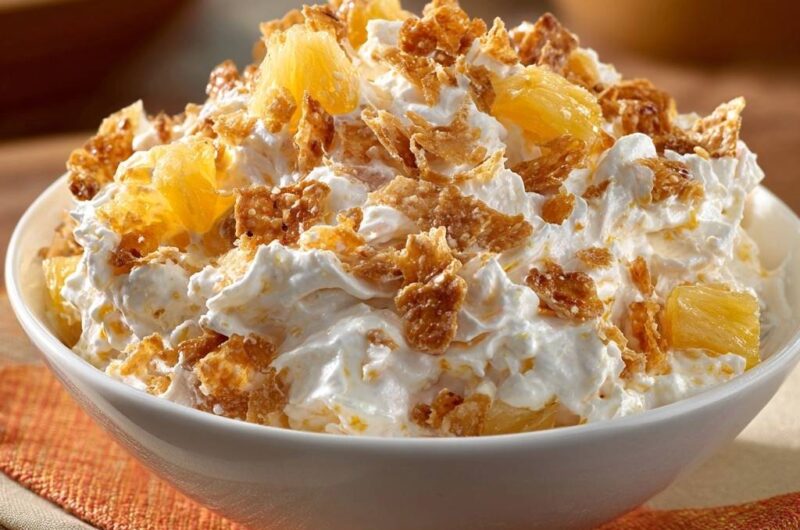
Pineapple Fluff Salad
Course: DessertCuisine: AmericanDifficulty: easy8
servings15
minutes5
minutes245
kcal20
MinutesThis innovative fluff salad solves the common problem of soggy toppings. By coating corn cereal flakes in a buttery sugar shell, this recipe ensures a lasting crunch that perfectly complements the smooth cream cheese and pineapple base.
Ingredients
2 cups corn cereal flakes (kept mostly whole for texture)
1/4 cup unsalted butter
1/4 cup granulated sugar
1 can (20 ounces) pineapple chunks, drained very well and patted dry
1 package (8 ounces) cream cheese, softened
1 container (8 ounces) whipped topping, thawed
1/2 cup powdered sugar
1 teaspoon vanilla extract
Directions
- To solve the soggy topping issue, melt the butter in a large skillet over medium heat. Add the granulated sugar and stir until the sugar is dissolved and the mixture begins to bubble.
- Add the cereal flakes to the skillet. Toss gently but constantly for 3 to 5 minutes until the flakes are deeply golden and coated in a thin, hard sugar shell.
- Immediately spread the caramelized flakes onto a sheet of parchment paper in a single layer. Allow them to cool completely and harden; they should be brittle and non-sticky to the touch.
- In a large mixing bowl, beat the softened cream cheese with the powdered sugar and vanilla extract until completely smooth and free of lumps.
- Gently fold in the whipped topping using a spatula until the mixture is light and airy.
- Ensure the drained pineapple chunks are patted dry with paper towels to remove excess juice. Fold the pineapple into the cream mixture.
- Just before serving, fold half of the cooled, caramelized cereal flakes into the fluff and pile the remaining half generously on top. Because of the sugar barrier created in step two, the flakes will maintain their distinct “crunch” even when in contact with the cream.
Notes
- The secret to the anti-soggy texture is ensuring the caramelized flakes are completely cooled and brittle before adding them to the cream mixture. Always pat the pineapple chunks dry to prevent excess moisture.