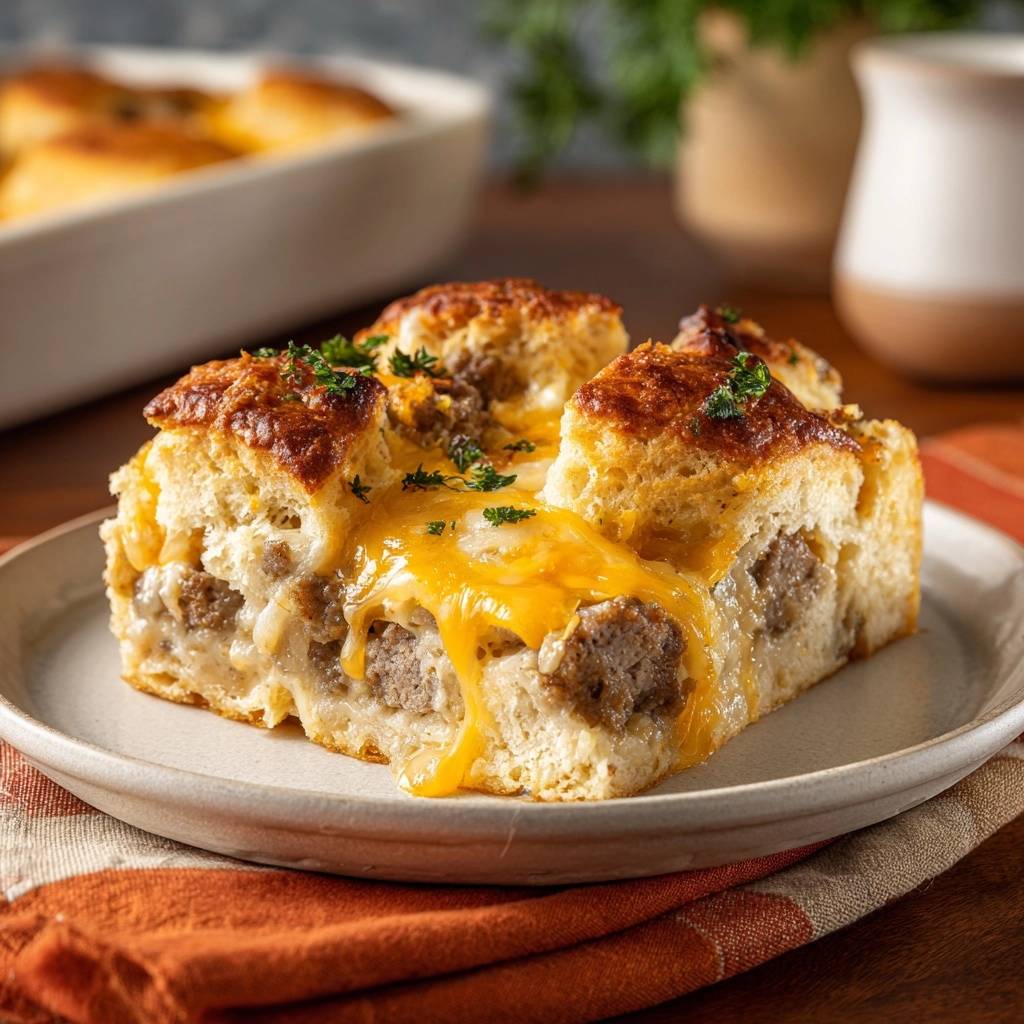
Most breakfast casseroles suffer from a fatal flaw that ruins an otherwise perfect morning. You know the one: that dreaded, gummy layer of undercooked dough sitting at the bottom of the pan. While the top looks golden and inviting, the base often turns into a mushy mess because it’s been drowning in egg mixture for forty minutes.
This Cheesy Sausage Biscuit Bake changes the game by introducing a structural “Anti-Soggy Bottom Hack.” We aren’t just tossing ingredients into a dish and hoping for the best. Instead, we use a specific layering technique that ensures every bite offers a contrast of sharp cheddar, savory sausage, and crisp, buttery biscuit edges.
The secret to this success is par-baking the biscuit pieces before the liquid ever touches them. By pre-toasting the dough, you create a firm foundation that stands up to the custard. It’s the difference between a soggy bread pudding and a structured, professional-grade breakfast bake that actually holds its shape on the plate.
The Science of the Par-Bake Technique
When you pour raw egg and milk over raw biscuit dough, the liquid immediately soaks into the flour’s cell structure. This prevents the dough from ever reaching the temperature needed to rise and crisp properly. By the time the eggs are cooked, the biscuits are often still raw in the center, trapped in a humid environment that mimics steaming rather than baking.
Par-baking the biscuit pieces for about ten minutes creates what I call a “starch barrier.” This initial blast of heat triggers the Maillard reaction, which is the chemical process that browns the exterior and develops that deep, toasted flavor. This toasted “skin” on the biscuit pieces acts as a shield, preventing the egg mixture from penetrating too deeply into the dough fibers.
Furthermore, tossing the raw biscuit chunks in melted butter before they hit the oven is essential. The fat coats the surface area, helping the heat distribute evenly across every nook and cranny. This ensures that even the parts of the biscuit that eventually sit at the bottom of the 9×13 dish remain structural and golden rather than dissolving into the egg base.
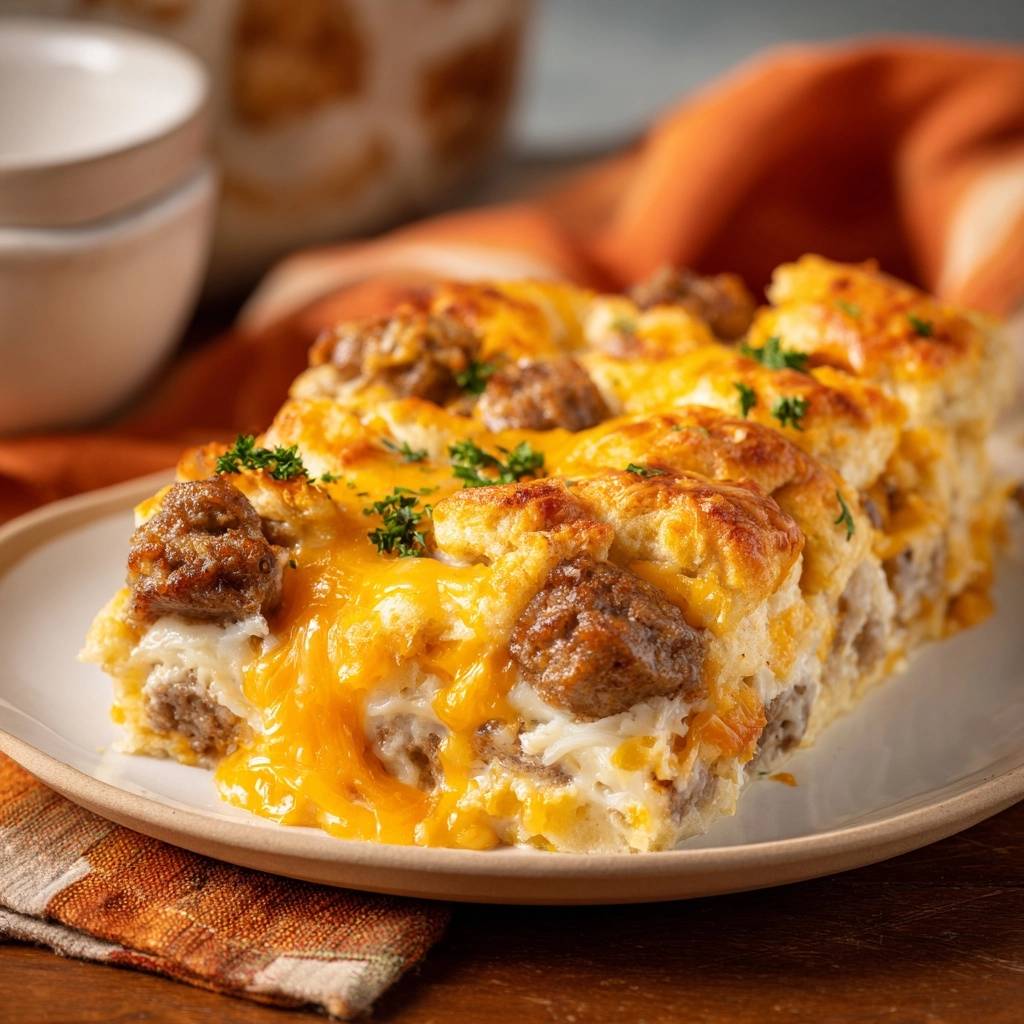
Essential Components for the Cheesy Sausage Biscuit Bake
Quality ingredients make a massive difference when the recipe is this simple. For the base, I always recommend “Flaky Layers” refrigerated biscuits over the “Southern Style” or “Buttermilk” varieties. The flaky layers are engineered to separate, which creates more surface area for the cheese to grip and more air pockets for a lighter, fluffier texture.
The liquid base requires whole milk to achieve the right mouthfeel. Skim or 1% milk lacks the fat content necessary to create a rich, velvety custard around the sausage. When combined with large eggs, whole milk provides enough structure to suspend the heavy meat and cheese without becoming watery or weeping during the baking process.
Finally, don’t underestimate the power of sharp cheddar. While mild cheddar melts well, its flavor often gets lost among the savory sausage and buttery biscuits. A sharp or extra-sharp cheddar provides a necessary acidic punch that cuts through the richness of the dish, ensuring every bite is balanced and flavorful.
Selecting the Right Breakfast Sausage
When you’re at the grocery store, look for a high-quality ground breakfast sausage with a coarse grind. A coarser crumble provides a much better “meaty” mouthfeel in a bake compared to finely ground meats that can disappear into the eggs. I prefer a classic savory or “hot” profile for this recipe.
Avoid using maple-flavored sausages unless you specifically want a very sweet-and-savory contrast. The sugar in maple sausage can also cause the bottom of your pan to scorch more easily. Most importantly, you must drain the cooked sausage thoroughly on paper towels. Excess grease is the enemy of a clean-slicing casserole and can lead to an oily finish.
The Cheese Blend: Sharp Cheddar and Mozzarella
I use a specific “Stretch vs. Sharpness” ratio for this bake. Sharp cheddar is the workhorse for flavor, but it doesn’t always provide that iconic, stretchy cheese pull we all love. That is where the mozzarella comes in. It has a high moisture content and excellent elasticity, which keeps the casserole moist and visually appealing.
If you have an extra two minutes, grate your cheese from a block. Pre-shredded bags are coated in potato starch or cellulose to keep the shreds from clumping. That coating prevents the cheese from melting into a smooth, cohesive layer. Freshly grated cheese melts much more fluidly, creating a better bond between the biscuits and the sausage.
Step-by-Step: Preparing the Crispy Biscuit Base
Start by cutting each of your eight biscuits into six even pieces. This size is the “sweet spot” for the bake. If the pieces are too large, the centers won’t cook through during the par-bake. If they are too small, they lose their fluffy identity and become more like croutons. Aim for uniform chunks so they all brown at the same rate.
After tossing them in butter and spreading them in your greased 9×13 dish, watch them closely in the oven. You aren’t looking for a deep brown at this stage. You want a “pale gold” color and a visible puff. The biscuits should feel dry to the touch on the surface. This indicates the exterior has set enough to resist the upcoming egg bath.
Greasing the dish with butter rather than just a quick spray of oil adds another layer of flavor to the bottom crust. It also ensures that the egg proteins, which are notoriously sticky, release easily from the pan. This makes serving much cleaner and cleanup significantly faster once the breakfast rush is over.
Assembling the Savory Egg and Sausage Layers
Once your biscuits are par-baked, it’s time for the “crevice filling” technique. Instead of just dumping the sausage on top, try to nestle the crumbles into the gaps between the biscuit pieces. This ensures that every single forkful has a perfect ratio of meat to bread. It also keeps the sausage from drying out in the oven’s heat.
When you pour the egg and milk mixture, do it slowly. You want the liquid to hydrate the sausage and fill the bottom of the pan without completely submerging the tops of the biscuits. Leaving those toasted peaks exposed is the secret to maintaining that crunch. If you drown the biscuits, you lose the texture you worked so hard to create during the par-bake.
Apply the cheese with the same intentionality. Concentrate the cheddar and mozzarella in the gaps where the egg mixture is visible. By leaving the very tops of the biscuits “naked” or only lightly dusted with cheese, you allow the dry heat of the oven to continue crisping the dough while the cheese melts into the center of the bake.
Oven Management and the Carryover Cooking Phase
Baking at 375°F is high enough to keep the biscuits crisping but low enough that the eggs won’t rubberize. Always place your rack in the middle position. If it’s too low, the bottom will burn before the eggs set. If it’s too high, the cheese will brown too quickly while the center remains liquid.
You can tell the bake is done using the “jiggle test.” Give the pan a gentle shake with an oven mitt. The center should have a very slight, firm wobble, but it shouldn’t look like liquid waves. The eggs will continue to cook for several minutes after you pull the dish out of the oven, a process known as carryover cooking.
Letting the casserole rest for at least ten minutes is the hardest but most important step. During this time, the internal steam redistributes and the proteins firm up. If you cut into it immediately, the liquid might run and the slices will fall apart. A short rest guarantees a clean, beautiful square that looks as good as it tastes.
Troubleshooting Common Casserole Issues
If you notice the cheese is browning too fast but the eggs still look liquid, don’t panic. Simply “tent” the dish by loosely placing a piece of aluminum foil over the top. This reflects the direct heat away from the surface while allowing the ambient heat to finish cooking the center of the bake.
Another common issue is an oily surface. This usually happens if the sausage wasn’t drained well or if you used a very high-fat cheese. You can easily fix this by gently blotting the top with a clean paper towel before serving. It won’t affect the flavor, but it makes the dish much more appetizing to look at.
Be careful with egg sizes. This recipe is calibrated for “Large” eggs. If you use “Jumbo” eggs, you are adding significantly more liquid to the pan. This can throw off the ratio and lead to a longer bake time or a softer texture. Stick to the standard sizes to ensure the biscuit-to-egg balance remains perfect.
Make-Ahead Strategies and Storage Logistics
You can definitely prep parts of this ahead of time to save your sanity on a busy morning. Brown the sausage and shred the cheese up to 24 hours in advance. Store them in airtight containers in the fridge. However, I strongly recommend waiting to cut and par-bake the biscuits until you are ready to assemble the whole dish.
If you have leftovers, they store beautifully in the refrigerator for up to three days. To maintain the texture, avoid the microwave if possible. Reheating a slice in a toaster oven or a standard oven at 350°F for about ten minutes will revive the crispness of the biscuits and the melt of the cheese much better than a microwave will.
For long-term storage, you can freeze individual slices. Wrap them tightly in plastic wrap and then foil. When you’re ready to eat, let them thaw in the fridge overnight before reheating. While the biscuits won’t be quite as crunchy as they were on day one, the flavor remains excellent and the structure holds up well.
Optimal Side Dishes for a Balanced Breakfast
Since this bake is rich, savory, and hearty, you want side dishes that offer a bright, acidic contrast. A simple arugula salad tossed with a lemon vinaigrette is a fantastic “brunch” style pairing. The peppery greens and citrus juice cut right through the heavy cheese and sausage.
For a similarly moist treat, consider this rich chocolate orange cake.
Fresh fruit is another winner. Sliced heirloom tomatoes with a pinch of salt or a bowl of tart berries can cleanse the palate between bites. Avoid serving this with more bread-based sides like toast or muffins. The biscuits in the bake are the star of the show, and they don’t need any competition on the plate.
Can I use turkey sausage instead of pork?
Yes, you can certainly use turkey sausage. However, keep in mind that turkey sausage is much leaner than beef. It can dry out quickly in the oven, so you might want to under-brown it slightly in the skillet. You may also need to add a teaspoon of olive oil to the pan when browning it to prevent sticking.
Can I add vegetables like peppers or onions to the bake?
Adding vegetables is a great way to customize the flavor, but you must sauté them first. Raw vegetables like bell peppers, onions, or mushrooms release a lot of water as they cook. If you put them in raw, that moisture will seep into the biscuits and cause the very sogginess we are trying to avoid. Sauté them until they are soft and their moisture has evaporated before adding them to the layers.
What if I only have a glass baking dish?
Glass dishes take longer to heat up but retain heat much longer than metal pans. If you are using glass, you might need to add 5 minutes to the par-bake and the final bake time. Also, be careful not to place a hot glass dish directly on a cold countertop, as the thermal shock can cause the glass to shatter. Always use a wooden board or a trivet.
Can this be frozen before baking?
I don’t recommend freezing this dish before it is baked. The raw biscuit dough will lose its leavening power, and the egg mixture can separate and become grainy when thawed. For the best results, bake the casserole completely, let it cool, and then freeze individual portions. This preserves the texture and makes for a much better “heat and eat” meal later on.
Why were my biscuits still doughy in the middle?
This usually happens for one of two reasons: the biscuit pieces were cut too large, or the par-baking step was skipped or shortened. Ensure you cut each biscuit into at least six pieces. If your oven runs cool, you may need to leave the biscuits in for the full 10 minutes during the par-bake until they feel firm and dry on the outside.
Can I substitute the whole milk with a dairy alternative?
You can use unsweetened almond or oat milk, but the result will be less creamy. Avoid using coconut milk as the flavor is too distinct for a savory sausage dish. If you use a dairy alternative, make sure it is the “original” unsweetened version. Any hint of vanilla or sugar in the milk will clash unpleasantly with the garlic and sausage.
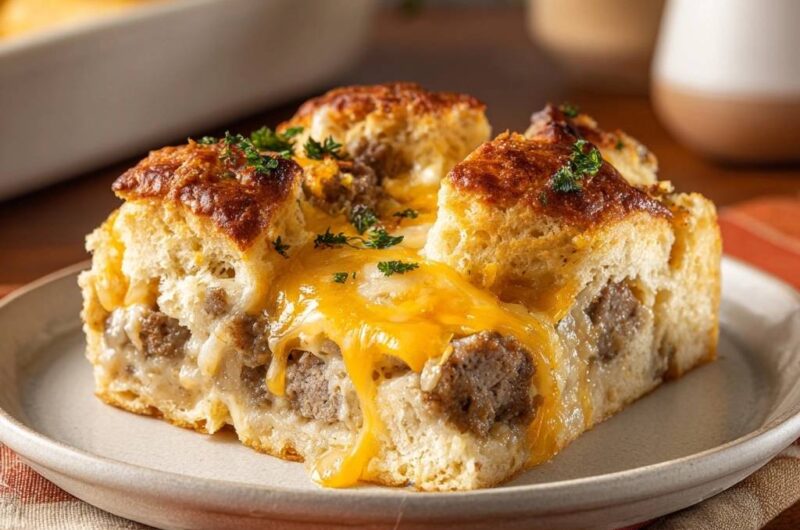
Sausage Biscuit Bake
Course: BreakfastCuisine: AmericanDifficulty: easy8
servings15
minutes30
minutes440
kcal45
MinutesThis Cheesy Sausage Biscuit Bake uses a unique layering and pre-toasting method to create a structural barrier, ensuring fluffy biscuits and a crisp bottom. Combined with savory sausage, eggs, and a blend of cheddar and mozzarella, it is the ultimate crowd-pleasing breakfast.
Ingredients
16 ounces ground breakfast sausage
1 can (16.3 ounces) refrigerated flaky layers biscuits
2 cups shredded sharp cheddar cheese
1/2 cup shredded mozzarella cheese
5 large eggs
3/4 cup whole milk
1/2 teaspoon garlic powder
1/4 teaspoon black pepper
1/4 teaspoon salt
2 tablespoons melted butter
Fresh parsley, finely chopped for garnish
Directions
- Preheat your oven to 375°F (190°C). Grease a 9×13 inch baking dish thoroughly with butter or non-stick spray.
- Brown the breakfast sausage in a large skillet over medium-high heat, breaking it into large, meaty crumbles. Drain the excess grease completely.
- Cut each raw biscuit into 6 small pieces. Toss the pieces in a bowl with 2 tablespoons of melted butter to ensure even browning.
- Scatter the biscuit pieces evenly into the bottom of the prepared baking dish. Place the dish in the oven for 8-10 minutes. This par-baking step is crucial; the biscuits should be slightly puffed and starting to turn pale gold.
- Remove the dish from the oven. Evenly distribute the cooked sausage crumbles into the gaps between the par-baked biscuit pieces.
- In a medium bowl, whisk together the eggs, milk, garlic powder, pepper, and salt. Pour this mixture carefully over the sausage and biscuits, ensuring the liquid settles into the crevices but doesn’t fully submerge the tops of the biscuits.
- Top with the shredded cheddar and mozzarella cheese, concentrating the cheese in the center gaps to allow the biscuit tops to remain exposed and crispy.
- Bake for 20 to 25 minutes. The casserole is done when the egg mixture is set, the cheese is bubbling and melted, and the exposed biscuit tops are a deep, crusty golden brown.
- Let the casserole rest for 5-10 minutes. This allows the internal structure to firm up for a clean slice. Garnish with fresh parsley and serve warm.
Notes
- The par-baking step is crucial to prevent a mushy base. Ensure the sausage is drained completely of grease before adding it to the dish.