Nothing ruins a lunch faster than breaded chicken that loses its crunch the second it touches a leaf of lettuce. Most home cooks struggle with breading that turns into a soggy, sliding mess before they even take their first bite. It’s a frustrating waste of effort when you’re craving that specific, high-contrast texture of a perfect Caesar.
The secret to a truly elite salad isn’t just the dressing; it’s the structural integrity of the crust. By using a specific “Anti-Soggy Hack,” we can ensure the chicken stays shatteringly crisp from the first forkful to the last. This version elevates the classic salad from a side dish to a restaurant-quality main event.
For a different take on crispiness, check out this grilled chicken Caesar salad.
I’ve found that the real trick lies in the resting period before the chicken ever touches the oil. Letting your breaded cutlets sit on a wire rack for ten minutes allows the flour and egg to hydrate and form a structural “glue.” This prevents the crust from steaming off the meat or sliding away during the flip.
The Science of the Shatter-Crisp Coating
Frying is essentially a race between moisture and heat. When chicken hits hot oil, the water inside the meat turns to steam and tries to escape. If your breading isn’t properly bonded, that steam gets trapped between the meat and the crust, creating a soggy, gummy layer that causes the breading to fall off.
More Chicken Salad Ideas
If you enjoyed the chicken salad in this dish, here are a couple more ways to prepare it.
- For a lighter option, consider this easy juicy grilled chicken salad, featuring a similar focus on fresh chicken.
- If you prefer a quickly cooked chicken salad, this pan-seared chicken salad recipe offers a juicy finish.
By resting the breaded chicken on a wire rack for ten minutes before frying, you allow the proteins in the egg and flour to cross-link. This creates a durable bond that can withstand the pressure of the steam. The wire rack is essential because it allows air to circulate around the entire piece, preventing any moisture from pooling on the bottom.
Once the chicken is fried, the cooling process is just as critical. Most people instinctively reach for paper towels, but this is a mistake. Paper towels trap steam against the bottom of the chicken, which quickly softens the very crust you worked so hard to crisp. Using a clean wire rack for the post-fry rest ensures the bottom stays as crunchy as the top.
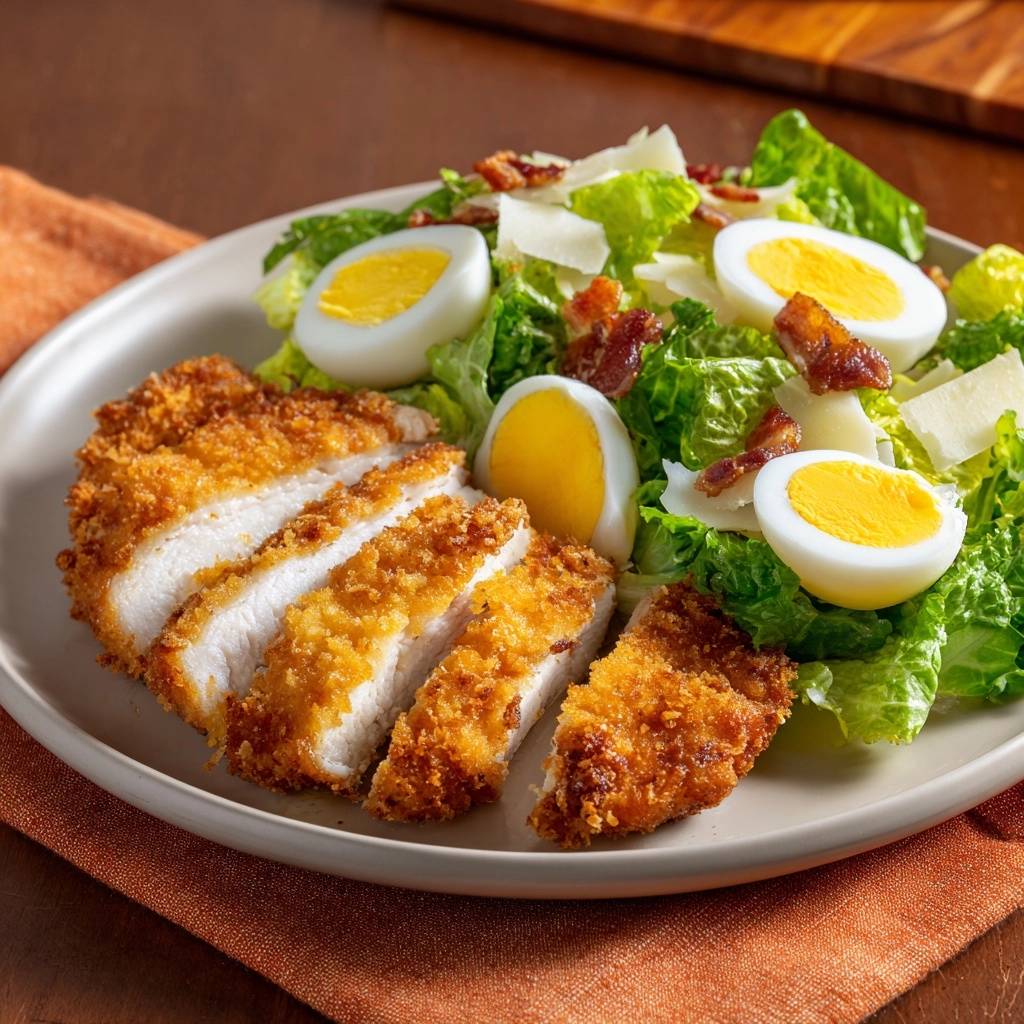
Finally, when it comes time to serve, put away your standard chef’s knife. A sharp serrated knife is the best tool for slicing breaded chicken. The tiny teeth saw through the Panko crust without putting downward pressure on it, which prevents the breading from shattering or being crushed into the meat.
Essential Components for the Perfect Crunch
Quality ingredients are the foundation of this dish, starting with the breadcrumbs. You must use Panko rather than traditional Italian breadcrumbs. Panko is flaky and jagged, which creates more surface area for the oil to hit, resulting in a much lighter and airier crunch that doesn’t feel heavy or greasy.
The dredge itself needs plenty of seasoning because the chicken won’t have another chance to get flavor once it’s sealed inside the crust. Garlic powder and onion powder provide a savory base, while smoked paprika adds a subtle depth and helps the crust achieve a beautiful, deep golden hue in the pan.
For the salad base, only the heartiest Romaine will do. You want the cold, crisp ribs of the lettuce to stand up to the warm chicken and the weight of a creamy dressing. Finish the dish with high-quality, shaved Parmesan rather than the powdered stuff; those salty, nutty ribbons of cheese provide a necessary flavor punch against the rich dressing.
Choosing and Preparing the Chicken Breasts
Boneless, skinless chicken breasts are the gold standard here because they provide a clean, uniform canvas for the breading. However, breasts are naturally uneven in thickness, which is why you must pound them out. If one end is an inch thick and the other is a half-inch, the thin part will dry out before the thick part is safe to eat.
Place your chicken between sheets of plastic wrap and use a meat mallet or a heavy skillet to pound them to a consistent 3/4-inch thickness. This mechanical tenderizing breaks down tough muscle fibers and ensures the chicken cooks through at the exact same rate the breading reaches its peak golden-brown color.
The Role of the Double-Dredge Station
Efficiency in breading comes from a proper three-bowl setup. The first bowl contains seasoned flour, which dries the surface of the meat so the egg can stick. The second bowl holds the egg wash, and here is a pro tip: add a tablespoon of water to the eggs. This thins the proteins just enough to create a light, even coating rather than a thick, gloopy one.
The third bowl is for your Panko mixture. When you move the chicken from the egg to the Panko, use your dry hand to firmly press the crumbs into the meat. You want to be aggressive here; the more Panko you can physically embed into the egg layer, the more “shatter” you’ll get in every bite.
Step-by-Step: Mastering the Anti-Soggy Technique
Start by heating your vegetable oil in a large skillet over medium heat. You aren’t deep-frying, but you need enough oil to come halfway up the side of the chicken. Wait until the oil shimmers and reaches roughly 350°F. If you don’t have a thermometer, drop a single breadcrumb in; if it sizzles immediately, you’re ready.
Carefully lay the chicken into the pan, laying it away from you to avoid splashes. Fry for about 5 to 6 minutes per side. You are looking for a uniform, deep golden brown. Resist the urge to poke or move the chicken constantly; let it sit undisturbed so the crust can fully set and develop that beautiful color.
Once the internal temperature hits 165°F, remove the chicken and place it immediately onto a clean wire rack. This is the most important step for maintaining texture. While the chicken rests for four minutes to allow the juices to redistribute, toss your Romaine with the creamy Caesar dressing until every leaf is lightly coated.
Avoiding Common Breading and Frying Mistakes
The most common mistake is frying in oil that isn’t hot enough. If the oil is too cold, the breading will act like a sponge and soak up the grease, leaving you with a heavy, oily mess. Conversely, if the oil is too hot, the Panko will burn to a dark brown before the chicken is cooked through in the center.
For even more reliable results, check out this guide to unfailing breading for your chicken tenders.
Another pitfall is overcrowding the pan. If you try to cook too many pieces at once, the temperature of the oil will plummet. This leads to steaming rather than frying. If you’re cooking for a larger group, work in batches and keep the finished pieces on a wire rack in a low oven to stay warm.
If you find your breading is falling off during the flip, it usually means the chicken was too wet before the flour stage or you didn’t let it rest long enough after breading. Ensure the meat is patted dry with paper towels before you start the dredging process to give the flour the best possible grip.
Flavor Variations and Ingredient Swaps
While the classic recipe is hard to beat, you can easily adapt this to your pantry. If you need a gluten-free version, use almond flour for the first dredge and gluten-free Panko for the final coating. The texture remains remarkably similar, though the almond flour will brown slightly faster, so keep a close eye on the heat.
For those who like a bit of heat, add a teaspoon of red pepper flakes to the Panko or a dash of hot sauce to the egg wash. If you want more fiber in your greens, try a mix of Romaine and shredded Brussels sprouts. However, keep the crispy bacon and hard-boiled eggs; they provide the classic fatty richness that makes a Caesar feel like a complete meal.
Optimal Assembly and Serving Suggestions
Timing is everything when assembling this salad. You should only toss the greens with the dressing at the very last second. If the lettuce sits in the dressing for more than a few minutes, it will wilt and lose its refreshing snap. Use a large bowl to ensure every leaf gets a thin, even coating of Caesar dressing.
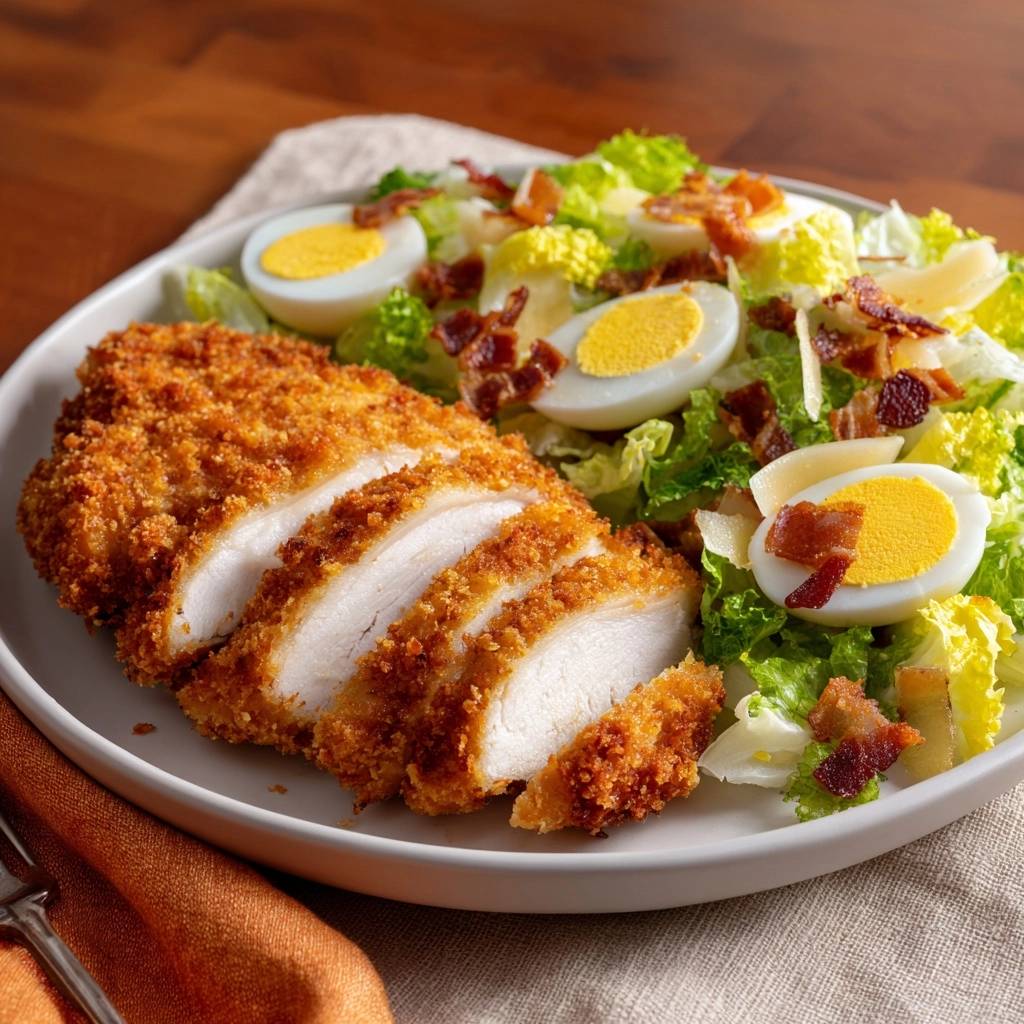
When plating, use the “Side-Loading” technique. Instead of piling the hot chicken directly on top of the dressed greens, place the sliced strips along the side or slightly overlapping the edge. This prevents the heat and moisture from the chicken from wilting the lettuce and keeps the bottom of the crust from getting soggy from the dressing.
Serve this immediately while the temperature contrast between the hot, crunchy chicken and the cold, crisp greens is at its peak. A glass of sparkling mineral water with a heavy squeeze of lemon is the perfect palate cleanser for this rich, savory dish. If you’re extra hungry, a side of garlic-rubbed sourdough toast is never a bad idea.
Expert Troubleshooting and Preparation Tips
Can I air fry the chicken instead of shallow frying?
You can air fry the chicken at 400°F for about 12-15 minutes, flipping halfway through. However, there is a texture trade-off. Air frying relies on circulating air, so you won’t get the same deep, rich “shatter” that oil provides. To get the best results in an air fryer, spray the breaded chicken generously with oil spray to help it brown.
How do I keep the chicken warm if I’m doubling the recipe?
The best way to keep chicken warm is to place the wire rack (with the fried chicken on it) onto a baking sheet and put it in a 200°F oven. The wire rack is key here because it prevents the bottom of the chicken from getting soggy while it stays warm. Do not cover it with foil, as the trapped steam will ruin the crust.
What is the best way to store leftovers without losing the crunch?
Store the chicken and the salad components separately in airtight containers. To reheat the chicken, avoid the microwave at all costs. Instead, place the chicken in a toaster oven or air fryer at 350°F for 3-5 minutes until the crust crisps back up. The salad greens should be eaten fresh, as they don’t store well once dressed.
Can I use chicken thighs instead of breasts?
Yes, chicken thighs work beautifully and are often more forgiving because they have a higher fat content. Just be sure to trim any excess fat and pound them to an even thickness. Thighs may take an extra minute or two to cook through compared to breasts, so always use a meat thermometer to check for 165°F.
Why did my breading get gummy in the pan?
Gummy breading is usually caused by moisture. This happens if the chicken wasn’t patted dry before dredging, or if the oil wasn’t hot enough when the chicken was added. It can also happen if you skip the 10-minute rest on the wire rack, which is essential for “setting” the breading before it hits the heat.
Crispy Breaded Chicken
Course: Main CourseCuisine: AmericanDifficulty: easy2
servings15
minutes12
minutes620
kcal27
MinutesA premium Caesar salad featuring chicken breasts breaded with a specialized Panko technique. The recipe focuses on a structural glue method and wire rack cooling to prevent the breading from becoming soggy, paired with classic Romaine, bacon, and hard-boiled eggs.
Ingredients
2 large boneless skinless chicken breasts
1 1/2 cups Panko breadcrumbs (finely crushed for maximum coverage)
1/2 cup all-purpose flour
2 large eggs, beaten with 1 tablespoon of water
1 teaspoon garlic powder
1 teaspoon onion powder
1/2 teaspoon smoked paprika
Salt and black pepper to taste
1/2 cup vegetable oil for shallow frying
4 cups chopped Romaine lettuce
3 hard-boiled eggs, halved
1/3 cup thick-cut crispy bacon pieces
1/4 cup shaved Parmesan cheese
1/2 cup creamy Caesar dressing
Directions
- Place chicken breasts between two sheets of plastic wrap and pound to an even 3/4-inch thickness. This ensures the chicken cooks evenly while the breading reaches a deep golden brown.
- Set up three shallow bowls. The first with flour, salt, pepper, and paprika. The second with the egg wash. The third with Panko, garlic powder, and onion powder.
- To solve the soggy coating problem, dredge the chicken in flour, dip in egg, and then press firmly into the Panko. For the “Anti-Soggy Hack,” let the breaded chicken rest on a wire rack for 10 minutes before frying. This allows the flour and egg to hydrate and form a structural “glue” that prevents the crust from sliding off or steaming from the inside.
- Heat oil in a large skillet over medium heat. The oil should be deep enough to come halfway up the side of the chicken. Once the oil shimmers (350°F), add the chicken. Fry for 5 to 6 minutes per side until the crust is a deep, uniform golden brown and the internal temperature reaches 165°F.
- Crucial Step: Transfer the cooked chicken back to a clean wire rack rather than a paper towel. Air circulation around the entire piece prevents the bottom from steaming and becoming mushy in its own grease.
- While the chicken rests for 4 minutes, toss the Romaine lettuce with Caesar dressing in a large bowl.
- Arrange the dressed greens on plates. Top with the halved hard-boiled eggs, shaved Parmesan, and bacon pieces.
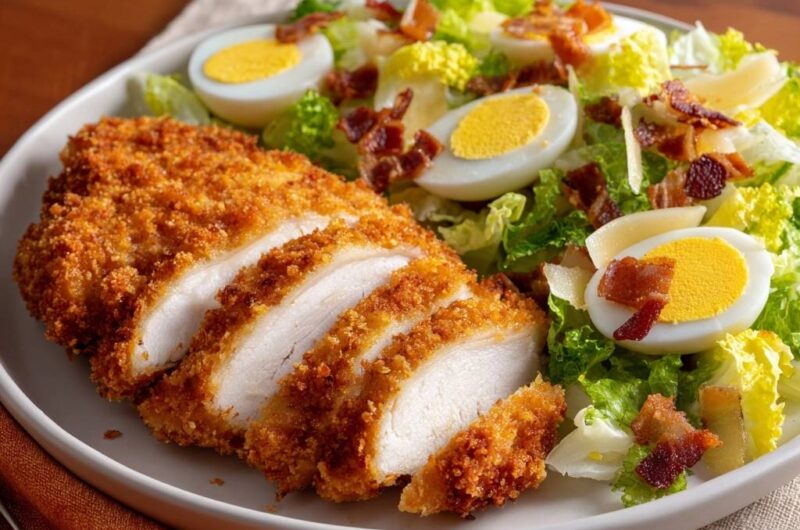
- Slice the chicken into thick, clean strips using a serrated knife to preserve the crust. Place the chicken prominently on the side of the salad as shown in the image. Serve immediately.
Notes
- Resting the breaded chicken on a wire rack for 10 minutes before frying is essential for the coating to adhere properly. Always use a wire rack instead of paper towels after frying to maintain maximum crunch through air circulation.