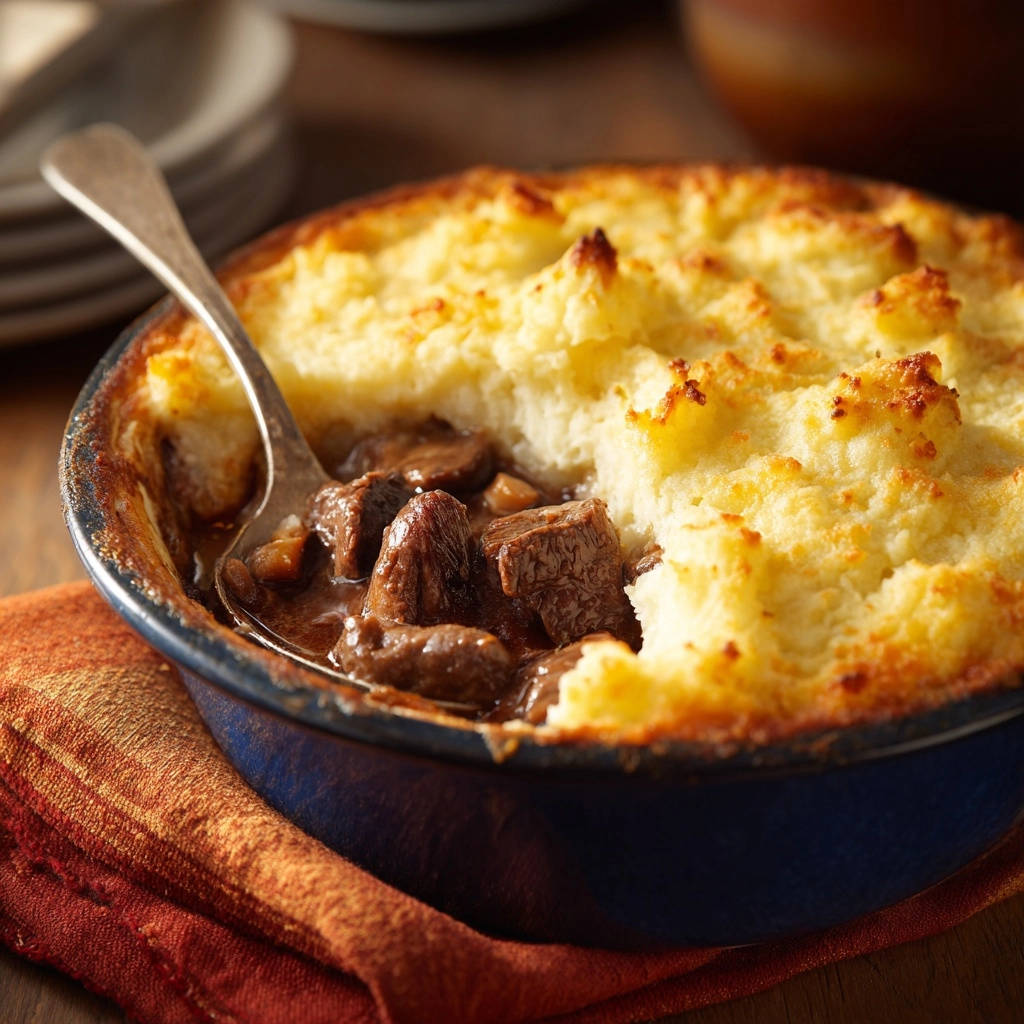
I used to despise watching watery gravy flood my plate after cutting into a pie-it ruined the comfort food classic experience.
After years of testing, I discovered one simple technique that guarantees a perfectly thick, rich sauce every time we make this Ultimate Beef Cottage Pie.
This recipe delivers reliable, fork-tender beef nestled under a cloud of velvety mash, transforming the classic into a truly ultimate version.
Why This Ultimate Beef Cottage Pie Recipe Solves the “Watery Gravy” Problem
Creating a truly satisfying Cottage Pie relies on texture management, ensuring the filling is robust and the potato topping is light.
This specific method targets the common pitfalls-runny gravy and gummy mash-through precise, expert-level cooking techniques.
The Game-Changing Technique: Pre-Flouring the Beef
The secret weapon of this recipe is tossing the stewing beef cubes thoroughly with flour before the searing step.
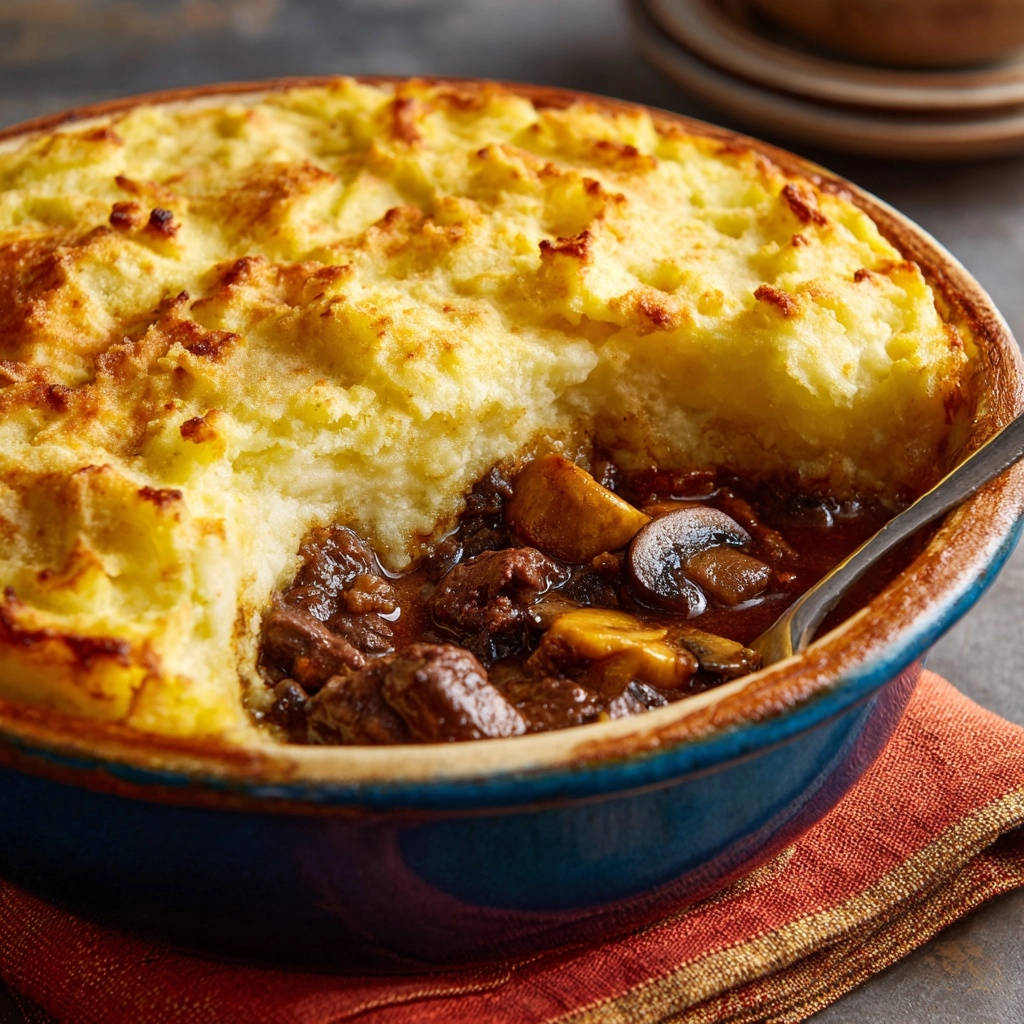
This dry dredge acts as a powerful binder and latent thickener that dissolves slowly during the long simmer.
Unlike adding a roux later, this method ensures the flour integrates smoothly into the liquid, guaranteeing a rich, cohesive gravy that never separates or runs.
Achieving Fall-Apart, Fork-Tender Beef Every Time
Stewing beef needs moisture and time to break down its tough connective tissues, converting them into succulent gelatin.
The necessary 1.5 to 2 hours of low, covered simmering is essential to ensure the meat is truly fork-tender and full of deep flavor, not just cooked.
The Secret to Non-Gummy, Velvety Mashed Potatoes
To avoid a gluey mash, you must drain the cooked potatoes completely and let them steam for a few minutes in the empty pot to remove surface moisture.
Always heat your milk and butter before incorporating them; cold dairy cools the starch rapidly, which can lead to a dense, gummy texture.
Mix only until the ingredients are just combined-overworking the starch is the number one cause of potato mash failure.
The Building Blocks: Ingredients for Maximum Flavor and Comfort
Selecting the right ingredients and prepping them correctly sets the stage for a spectacular result.
For a truly satisfying casserole experience, explore this ultimate tater tot casserole.
Paying attention to these details ensures every spoonful of the filling and mash delivers maximum comfort and depth.
Foundation of the Rich Filling
-
Stewing Beef & Broth:
Using stewing beef cut into chunks provides superior texture and requires the low, slow cook time necessary for intense flavor development.
-
Aromatic Vegetables (Onion & Mushrooms):
Slicing the mushrooms and cooking until their moisture evaporates concentrates their earthy flavor, preventing the filling from becoming dilute.
-
Tomato Paste & Thyme:
The acidic tomato paste adds complexity and depth (umami), balancing the richness of the beef and forming the traditional savory base.
Mastering the Silky Potato Topping
-
Russet Potatoes:
Russets are high in starch, making them the perfect choice for a fluffy, light mash that holds its shape under baking.
-
Warm Milk and Butter:
Adding these dairy components warmed ensures a smooth consistency and prevents the potatoes from cooling down too rapidly.
-
Cheddar Option:
Sharp cheddar stirred into the mash adds a welcome salty tang and creates an extra crispy crust when baked.
Essential Equipment Checklist
Ensure you have the following tools ready before beginning the recipe.
A heavy-bottomed pot or Dutch oven (crucial for even searing and long simmering).
Deep 9-inch pie dish or individual oven-safe ramekins.
A durable potato masher or ricer.
Mastering the Method: A Step-by-Step Guide to Cottage Pie Perfection
Phase 1: Preparing and Searing the Beef (The Thickening Foundation)
Step 1: Pat Dry and Flour Toss. Patting the beef dry is non-negotiable; it guarantees a successful sear and allows the flour to adhere properly. The flour toss is where the magic starts-it is your built-in thickener.
Step 2: Deep Searing for Deep Flavor. Only sear in small batches, resisting the urge to crowd the pan. This browning develops intense, savory flavor compounds that define the ultimate gravy base.
Phase 2: Building the Velvety Filling
Step 3: Creating the Aromatic Base. Take your time sweating the onions until fully translucent. Ensure the mushrooms release and evaporate their liquid completely before moving on; this prevents future dilution of the gravy.
Step 4: Simmering for Texture and Tenderness. Return the seared beef and stir in the broth. Once simmering, reduce the heat significantly. The long simmer allows the flour coating to dissolve and fully integrate into the broth, resulting in that promised velvety, rich consistency.
Phase 3: Crafting the Airy Potato Topping
Step 5: Perfecting the Mash. Boil the potatoes until they practically fall apart. Crucially, drain them completely and let them steam briefly in the empty pot to remove excess moisture before mashing.
Add warm dairy slowly and stop mixing immediately once combined to avoid gluey mash.
Phase 4: Assembly and Finishing Touches
Step 6: Layering the Comfort. Pour the thick beef filling into the dish. Allow it to rest for a few minutes before applying the mash. This prevents the mash from sinking into the hot filling.
Step 7: Creating Crispy Peaks. Use a fork to create intentional ridges and texture across the mash surface. These peaks are the areas that will crisp and brown most beautifully in the oven.
Step 8: Baking to Bubbly Perfection. Bake until the gravy is actively bubbling around the edges-this confirms the filling is heated through-and the mash is golden brown. A mandatory 10-minute rest allows the filling to settle before serving.
Troubleshooting & Chef’s Secrets for an Elevated Experience
My Filling is Still Thin! What Went Wrong?
If your gravy is too watery after the long simmer, return the filling to the stovetop (before assembly) and let it simmer uncovered for 10-15 minutes.
Alternatively, mix 1 tablespoon of cornstarch with 2 tablespoons of cold water to create a slurry and stir it in slowly until desired thickness is reached.
Preventing a Gummy Potato Topping
Gummy mash is usually caused by overmixing or cold dairy. Ensure your milk and butter are warm, and when combining them, use gentle folds rather than beating.
Once the ingredients are combined, stop immediately.
Flavor Booster: Deepening the Umami
For an intensely rich flavor profile, swap a half-cup of the beef broth for a hearty red grape juice (like sparkling grape juice) when adding the liquid in Step 4.
Allow the grape juice to reduce by half before adding the remaining broth.
Serving Suggestions and Expert Make-Ahead Strategies
Perfect Pairings: What to Serve Alongside
-
Classic Green Companions:
A simple side of buttered green beans, steamed broccoli, or garden peas adds a necessary freshness and color contrast to the rich pie.
-
Tangy Balance:
Serve with a side salad dressed with a bright vinaigrette to cut through the richness of the Ultimate Beef Cottage Pie.
Freezing and Making Ahead Tips
This Ultimate Beef Cottage Pie is an ideal make-ahead meal. Assemble the entire pie (filling and mash) in an aluminum baking dish, cover tightly with foil, and freeze for up to three months.
Bake from frozen at 375°F (190°C) for 60-90 minutes, removing the foil for the last 20 minutes.
Reheating Individual Portions
For the best texture, reheat individual slices in a preheated oven (350°F / 175°C) until the topping is crispy and the filling is bubbling, usually about 15-20 minutes.
Microwaving may soften the mash excessively.
Quick Q&A: Your Ultimate Beef Cottage Pie Questions Answered
What is the Difference Between Cottage Pie and Shepherd’s Pie?
Traditionally, Cottage Pie is made with beef (as this recipe is), while Shepherd’s Pie is made exclusively with lamb.
The core technique of a meat-and-gravy base topped with mash remains the same for both, but the choice of protein dictates the name.
Can I Substitute Ground Beef for Stewing Beef?
While you can certainly use ground beef (making it quicker), it changes the character of this ‘Ultimate’ recipe.
Ground beef requires a much shorter simmer time and will result in a more crumbly texture rather than the rich, tender chunks achieved here.
How Do I Make a Gluten-Free Potato Topping?
The potato topping is naturally gluten-free. For the filling, substitute the all-purpose flour used for dredging with an equal amount of cornstarch, gluten-free flour blend, or potato starch.
Cornstarch should be added as a slurry during the simmering stage, not as a dry dredge.
Ready to Impress? Share Your Ultimate Beef Cottage Pie Masterpiece!
This recipe transforms a classic comfort food into a reliable weeknight staple, guaranteeing a thick, deeply satisfying gravy every time. Follow the specific instructions for prepping the beef and mash, and you’ll understand why this Ultimate Beef Cottage Pie earns rave reviews.
We encourage you to try this recipe, share your results, and let us know what side dishes you chose to serve alongside!
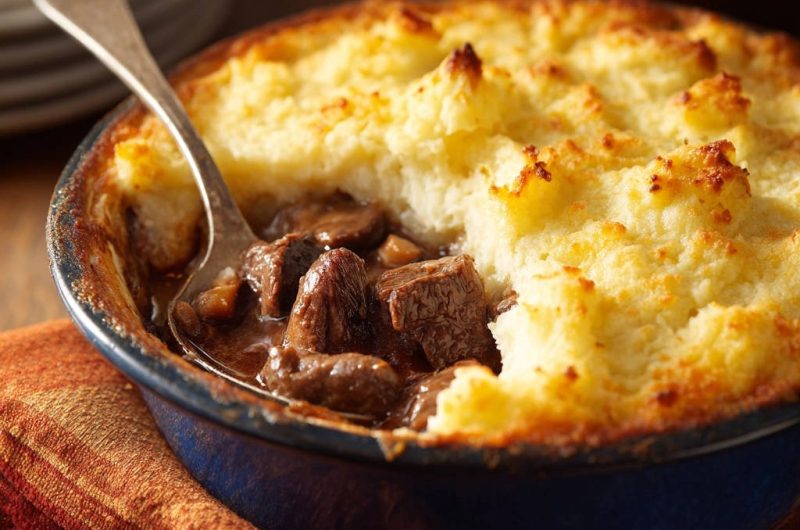
Beef Cottage Pie
Course: Main CourseCuisine: BritishDifficulty: medium6
servings35
minutes2
hours650
kcal155
minutesSay goodbye to watery cottage pie! This recipe uses a crucial flour-coating technique to guarantee a rich, velvety beef filling every time. Combined with a fluffy, buttery mash topping, this is the comforting, hearty meal you deserve.
Ingredients
2.5 pounds russet potatoes, peeled and cut into chunks
1 cup whole milk, warm
4 tablespoons unsalted butter, divided (2 Tbsp for filling, 2 Tbsp for mash)
1 large yellow onion, diced
1 pound stewing beef, cut into 1-inch cubes
1/4 cup all-purpose flour
8 ounces cremini mushrooms, sliced
2 cloves garlic, minced
1 tablespoon tomato paste
3 cups beef broth
1 teaspoon dried thyme
Salt and freshly ground black pepper to taste
1/2 cup shredded sharp cheddar cheese (optional, for mash topping)
Directions
- Prepare the Beef (The Thickening Secret): Pat the stewing beef cubes thoroughly dry with paper towels. In a medium bowl, toss the beef cubes with the 1/4 cup all-purpose flour, making sure every piece is lightly coated. Season liberally with salt and pepper.
- Sear the Beef: Heat 1 tablespoon of butter in a large Dutch oven or heavy pot over medium-high heat. Working in batches to avoid crowding the pan, sear the floured beef pieces until deeply browned on all sides. This browning step is crucial for both flavor and locking in the thickening power of the flour. Remove the seared beef and set aside.
- Build the Base: Reduce the heat to medium. Add the remaining 1 tablespoon of butter to the pot. Add the diced onion and cook until softened, about 5 minutes. Add the sliced mushrooms and cook until their moisture is released and evaporated, about 7 minutes. Stir in the minced garlic and tomato paste and cook for 1 minute.
- Simmer the Filling: Return the seared beef and any accumulated juices to the pot. Stir in the dried thyme and pour in the beef broth. Bring the mixture to a simmer, then reduce the heat to low, cover the pot, and cook for 1.5 to 2 hours, or until the beef is fork-tender. The flour coating will dissolve and naturally thicken the broth as it simmers, guaranteeing a rich, non-watery gravy consistency.
- Prepare the Potatoes: About 30 minutes before the filling is done, boil the potatoes until very tender. Drain them thoroughly and return them to the empty pot. Mash them well. Add the warm milk and 2 tablespoons of butter. Mix until just combined and smooth, seasoning generously with salt and pepper. Avoid overmixing, which can make them gummy. If using, stir in the sharp cheddar cheese.
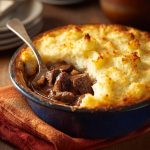
- Assemble and Bake: Preheat your oven to 400 degrees F. Pour the thick beef filling into a deep 9-inch pie dish or individual oven-safe ramekins (as pictured). Let the filling rest for 5 minutes. Carefully spoon the mashed potatoes over the top, starting around the edge and working toward the center. Use a fork to create peaks and texture on the surface—these peaks will crisp up beautifully.
- Finish: Bake for 20 to 25 minutes, or until the filling is bubbling hot and the mashed potato crust is golden brown and crispy on the peaks. Let rest for 10 minutes before serving.
Notes
- The secret to thick gravy lies in patting the beef dry and coating it fully in flour before searing.