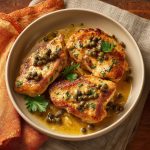
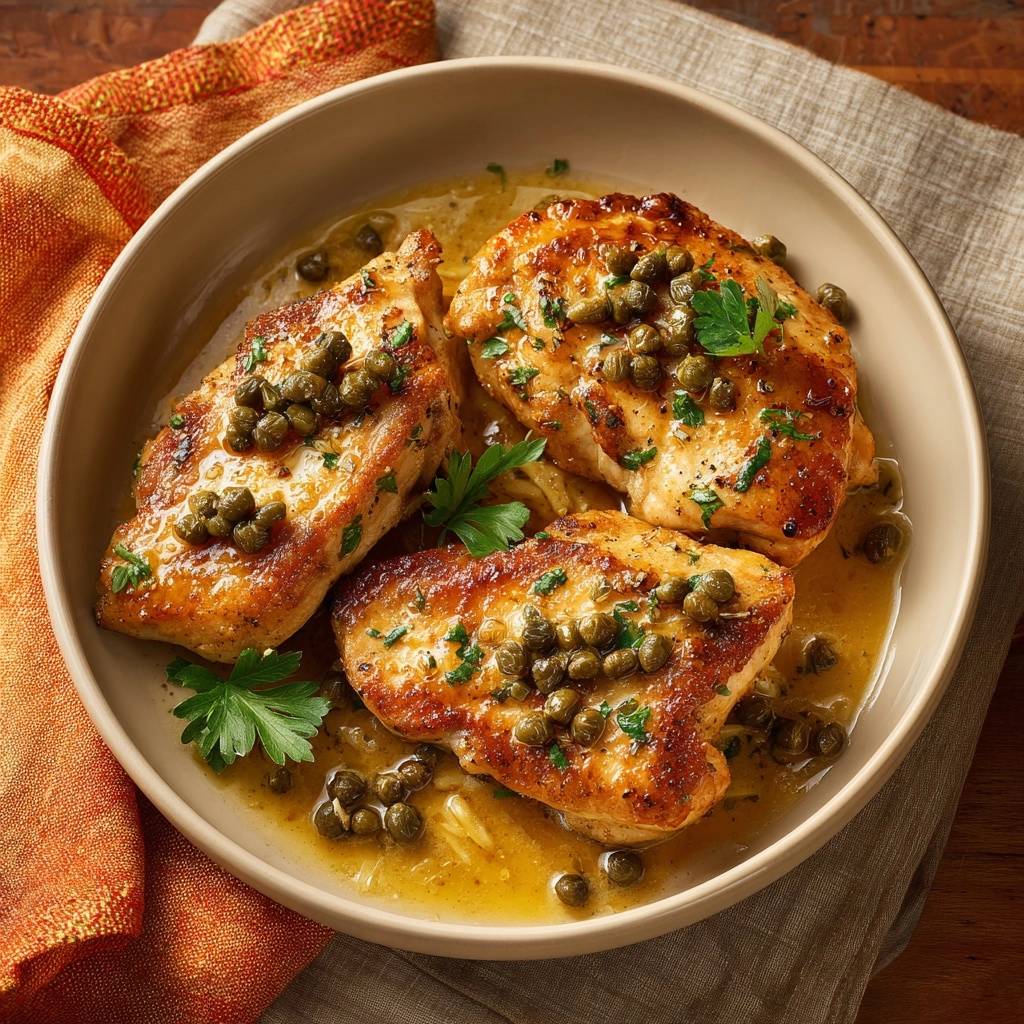
Ever bitten into chicken piccata at a restaurant and got that dry, chewy disappointment? This version fixes it fast. You’ll have juicy, golden cutlets with a glossy lemon-caper sauce on the table in under 30 minutes. No more takeout temptation.
Here’s why it works every time. Pounding the chicken to an even 1/4-inch thickness ensures quick, uniform cooking. That high-heat sear locks in all the moisture while building a crisp crust. Plus, the sauce comes together in the same pan for maximum flavor.
The real secret? That precise two-minute sear per side on shimmering oil and butter. It triggers the perfect Maillard reaction without overcooking. You’ll taste restaurant quality right at home.
Why Chicken Piccata Demands Even Thickness
Pounding chicken breasts to 1/4-inch changes everything. Thick spots dry out while thin ones overcook. Even thickness cooks fast and stays juicy. Therefore, you avoid that tough texture everyone hates.
Start with 1.5 pounds of boneless, skinless breasts. Place one between plastic wrap sheets. Gently pound with controlled pressure. You’ll see it transform from bulky to uniform cutlet perfection.
Pounding Tools for Uniform Chicken Cutlets
A meat mallet gives precise control for pros. However, a rolling pin works great for beginners. It spreads force evenly without tearing. Plastic wrap keeps things hygienic and prevents sticking.
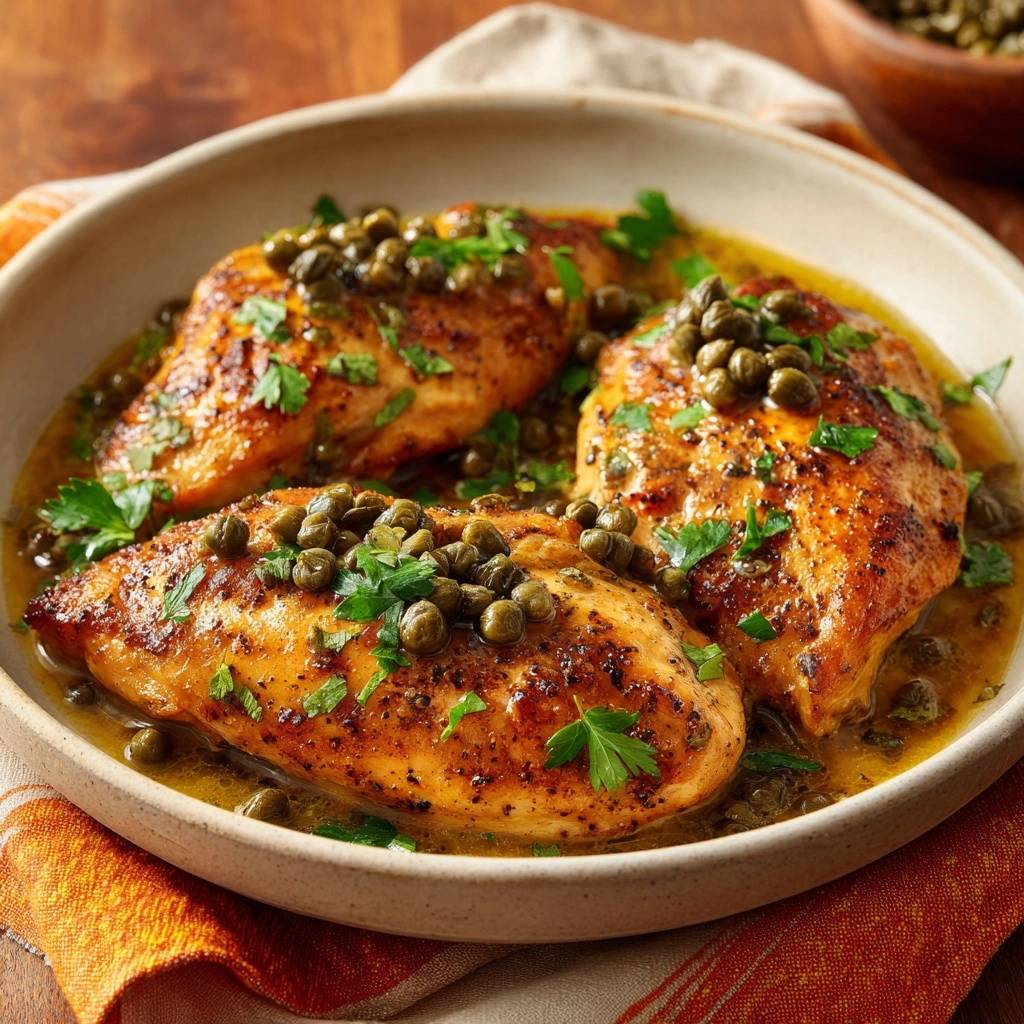
Aim for 1/4-inch by checking edges. If it tears, you’re pounding too hard. In addition, this step tenderizes the meat naturally. Your piccata cutlets will shine.
Seasoning Balance Before Dredging
Use 1/2 teaspoon salt and pepper on both sides. It seasons evenly for balanced flavor. Then dredge lightly in 1/2 cup flour. Shake off excess to avoid a gummy crust.
Flour helps that golden sear without heaviness. Season first so flavors penetrate. You’ll get crisp outside, juicy inside every time.
Ingredients That Build Chicken Piccata Layers
Fresh lemon juice, about 1/4 cup from one lemon, delivers bright tang. Bottled lacks that zing. Capers, 1/4 cup drained, add briny pop that cuts richness perfectly.
Low-sodium chicken broth, 1/2 cup, builds sauce base without salt overload. Unsalted butter, 3 tablespoons divided, lets you control richness. Chopped parsley, 2 tablespoons, finishes with fresh green notes.
Olive oil, 3 tablespoons split, handles high heat. All for 4 servings. These create layers of bright, savory bliss.
Flour Dredge vs. Batter Myths
Light flour dredge gives golden crust without batter weight. Batter steams instead of sears. For gluten-free, swap rice flour. It crisps similarly without clumping.
Shake excess well. Therefore, your chicken piccata stays light and crisp.
Butter and Oil Heat Dynamics
Divide 3 tablespoons oil and butter for stages. Oil’s high smoke point sears chicken. Butter adds nutty depth later. Together, they prevent sticking and infuse flavor.
Start with 2 tablespoons oil plus 1 butter for sear. This combo shimmers hot fast. Perfect non-stick base for piccata magic.
High-Heat Sear Science in Chicken Piccata
Medium-high heat creates Maillard reaction for crust. It locks juices inside. Preheat skillet 2 minutes until oil shimmers. Add chicken in single layer, batches if needed.
Cook 2 minutes per side to 165F internal. No steaming, just crisp gold. Moisture stays trapped for tenderness. Pro tip: tent plate with foil to rest.
Skillet Temperature Cues
Oil ripples and faintly smokes when ready. Drop of water dances in it. Cast iron holds heat best for even sear. You’ll hear a lively sizzle on chicken.
Avoid non-stick if possible. It cools too fast. Therefore, stick to stainless or cast iron for piccata success.
Two-Minute Per Side Timing
Exactly 2 minutes per side for 1/4-inch cutlets. Edges firm, center springs back. Thermometer hits 165F. Don’t peek early or juices escape.
Transfer to plate immediately. This prevents carryover cooking. Juicy results guaranteed.
Building Glossy Lemon Caper Sauce Base
Drop to medium heat. Add last oil and butter. Pour in broth, lemon juice, capers. Scrape browned bits for deep flavor.
Simmer 3-4 minutes. Sauce thickens as liquid reduces. Bubbles slow, coating spoon lightly. That’s your glossy base.
Capers and Lemon Juice Synergy
Drain capers well to control brine. 1/4 cup juice balances acidity. They cut butter richness with tang and salt. Taste and adjust lemon if needed.
Fresh lemon avoids bitter notes. This duo makes piccata pop.
For a bright citrus finish, check out this zesty orange bundt cake.
Final Emulsion and Plating Chicken Piccata
Return chicken to skillet. Spoon sauce over, simmer 1 minute. Off heat, swirl in last butter for shine. Sprinkle parsley.
Plate hot with sauce pooled around. The emulsion clings beautifully. Serve immediately for best texture.
Butter Finish for Velvety Texture
Cold last tablespoon butter off-heat emulsifies sauce. Whisk vigorously for gloss. It’s like Monte Carlo method at home. No separation, just silky perfection.
Heat breaks emulsion. Therefore, always finish cool.
Chicken Piccata Origins and Evolution
Chicken piccata traces to Italian-American kitchens post-WWII. Veal piccata shifted to chicken for affordability. Sicilian roots bring lemon and capers.
Home cooks improved it with pounding for tenderness. Now it’s weeknight staple. That bright sauce evolved from simple agrodolce.
Avoiding Dry Chicken Piccata Pitfalls
Don’t over-pound; it tears meat. Low heat steams, no crust. Excess flour clumps sauce. Overcook post-sauce dries it out.
Fix with even pounding, high heat, light dredge. Time precisely. Checklist: check thickness, preheat well, 165F only.
Overcooking Recovery Tactics
Dry chicken? Slice thin, submerge in sauce. It rehydrates fast. Thermometers beat guessing. Avoid past 165F.
Prevention beats cure. Rest on plate always.
Flavor Twists on Classic Chicken Piccata
Add minced garlic to sauce for aroma. Splash white grape juice for depth. Use thighs for extra juiciness. Swap parsley for thyme.
For vegan, tofu slabs work pounded thin. Keep lemon-caper core. These tweaks stay authentic.
Gluten-Free Chicken Piccata Adjustments
Rice or almond flour dredges crisply. Use gluten-free broth. Texture holds with light shake-off. No soggy results.
Test sear same way. Deliciously adapted.
Pairing Sides with Chicken Piccata
Angel hair pasta soaks up sauce. Crisp green beans add snap. Arugula salad cuts richness with acid. Roasted potatoes balance tang.
Sides match lemon punch. Sparkling water with lemon pairs fresh. Serves 4 generously.
Chicken Piccata Make-Ahead Strategies
Pound and dredge chicken day before. Store sauce separate in fridge up to 2 days. Freeze cooked chicken 1 month.
Reheat low oven at 300F with splash broth. Avoid microwave drying. Great for meal prep.
Chicken Piccata Troubleshooting Guide
Sauce too thin? Whisk in cornstarch slurry. Chicken tough? Pound evenly thinner. Bitter lemon? Use fresh only.
Crust soggy? Heat hotter, don’t crowd. Dull flavor? More capers or lemon.
Sauce Separation Fixes
Broken emulsion? Whisk in cold butter slowly. Reheat gently. Avoid boiling. Smooths right out.
Scaling for Crowd Chicken Piccata
Double ingredients, use two skillets. Sear batches, combine sauces. Larger pan for final simmer. Feeds 8 easy.
FAQ
How do I store leftover chicken piccata?
Store in an airtight container in the fridge for up to 3 days. Sauce keeps chicken moist. Reheat gently in skillet over low heat with a splash of broth to revive gloss. It doesn’t freeze well because lemon curdles and chicken gets mushy upon thawing, so eat fresh.
Why is my chicken piccata dry and tough?
Usually from uneven thickness or overcooking. Always pound to exact 1/4-inch and sear just 2 minutes per side to 165F. Low heat steams instead of searing, releasing juices. Pro fix: rest on a warm plate tented with foil post-sear to redistribute moisture.
Can I make chicken piccata gluten-free?
Yes, swap all-purpose flour for rice flour or a 1:1 gluten-free blend. It dredges lightly and crisps without gumminess. Use low-sodium gluten-free broth too. Shake off excess same as regular for perfect texture in the sauce.
What if I don’t have capers for chicken piccata?
Green olives, chopped and rinsed, mimic the brine. Or add extra lemon zest for tang. Don’t skip; they balance richness. Start with 1/4 cup olives to match intensity without overpowering the lemon.
How do I know when the sauce is thickened enough?
Simmer until it coats the back of a spoon and reduces by about a third, 3-4 minutes. Bubbles slow down. If too thin, simmer longer or add a teaspoon cornstarch slurry whisked in cold broth. Taste for bright lemon balance.
Can I use chicken thighs instead of breasts?
Absolutely, boneless skinless thighs pound beautifully and stay extra juicy. Trim fat, pound to 1/4-inch. They take 30 seconds longer per side due to fat content. Richer flavor pairs perfectly with the sauce.
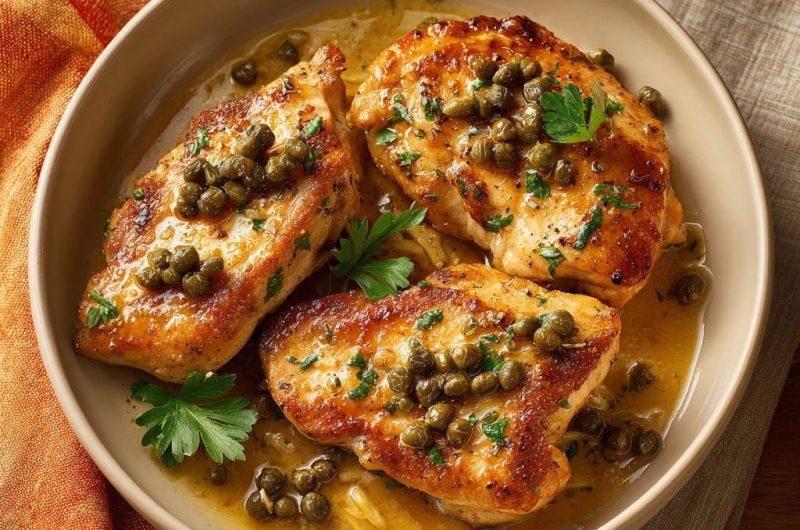
Chicken Piccata
Course: Main CourseCuisine: Italian-AmericanDifficulty: easy4
servings15
minutes15
minutes480
kcal30
MinutesCraving restaurant-style chicken piccata but tired of dry, tough cutlets? This recipe nails juicy, tender chicken every time with a simple pounding and high-heat sear technique that locks in moisture while creating a golden crust. Paired with a glossy lemon-caper sauce, it’s weeknight perfection.
Ingredients
4 boneless skinless chicken breasts (about 1.5 lbs)
1/2 teaspoon salt
1/2 teaspoon black pepper
1/2 cup all-purpose flour
3 tablespoons olive oil, divided
3 tablespoons unsalted butter, divided
1/2 cup low-sodium chicken broth
1/4 cup fresh lemon juice (about 1 lemon)
1/4 cup capers, drained
2 tablespoons chopped fresh parsley
Directions
- Place each chicken breast between two sheets of plastic wrap or parchment paper. Gently pound with a meat mallet or rolling pin to an even 1/4-inch thickness. This crucial step ensures quick, even cooking so the chicken stays juicy instead of drying out. Season both sides with salt and pepper, then dredge lightly in flour, shaking off excess.
- Heat 2 tablespoons olive oil and 1 tablespoon butter in a large skillet over medium-high heat until shimmering hot (about 2 minutes). The high-heat sear is key: add chicken in a single layer (work in batches if needed to avoid steaming). Cook 2 minutes per side until golden and just cooked through (internal temp 165F). Transfer to a plate; do not overcook.
- Reduce heat to medium. In the same skillet, add remaining 1 tablespoon oil and 1 tablespoon butter. Stir in chicken broth, lemon juice, and capers, scraping up browned bits. Simmer 3-4 minutes until slightly thickened.
- Return chicken to skillet, spoon sauce over top, and simmer 1 minute to rewarm without drying. Remove from heat, stir in remaining 1 tablespoon butter for gloss, and sprinkle with parsley. Serve immediately.
- The pounding and precise 2-minute sear per side guarantee no more dry chicken, delivering tender results home cooks love.
Notes
- The pounding and precise 2-minute sear per side guarantee no more dry chicken, delivering tender results home cooks love.