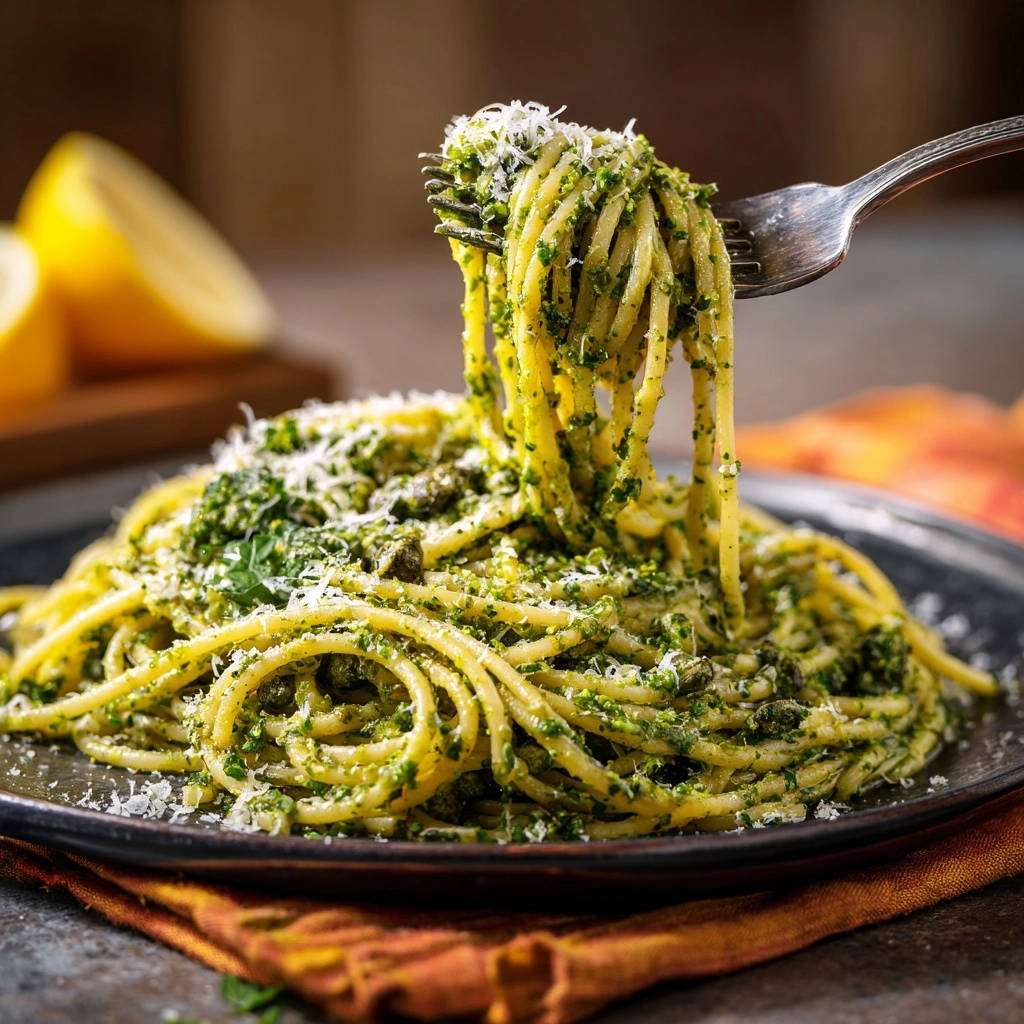
Have you ever struggled with oily pesto that refuses to coat your noodles? Achieving that velvety, restaurant-quality finish on Classic Pesto Spaghetti often seems impossible, but I promise the secret is surprisingly simple.
This recipe harnesses a single, overlooked technique-the magic of starchy pasta water-to deliver a rich, creamy sauce that truly hugs every single strand, building trust and proving that exceptional pasta is achievable in minutes.
For another great way to use starchy pasta water, check out this creamy penne with seared chicken.
Why This Classic Pesto Spaghetti Recipe Belongs in Your Weeknight Rotation
The End of Oily Puddles: Guaranteeing a Velvety Finish
The frustration of a separated, oily pesto sauce is officially over. Our game-changing emulsification technique prevents the oil from leaching out, locking the flavor directly onto the spaghetti.
This method transforms the sauce into a smooth, homogeneous velvet, guaranteeing the luxurious coating characteristic of exceptional Italian cooking.
A True 17-Minute Meal: Speed Without Sacrificing Flavor
With just 5 minutes of prep and 12 minutes of cooking time, this dish is the ideal solution for busy weeknights.
For another quick pasta idea that also uses a clingy sauce, check out Speedy Spaghetti with Asparagus.
It proves that achieving incredible depth of flavor does not require hours in the kitchen.
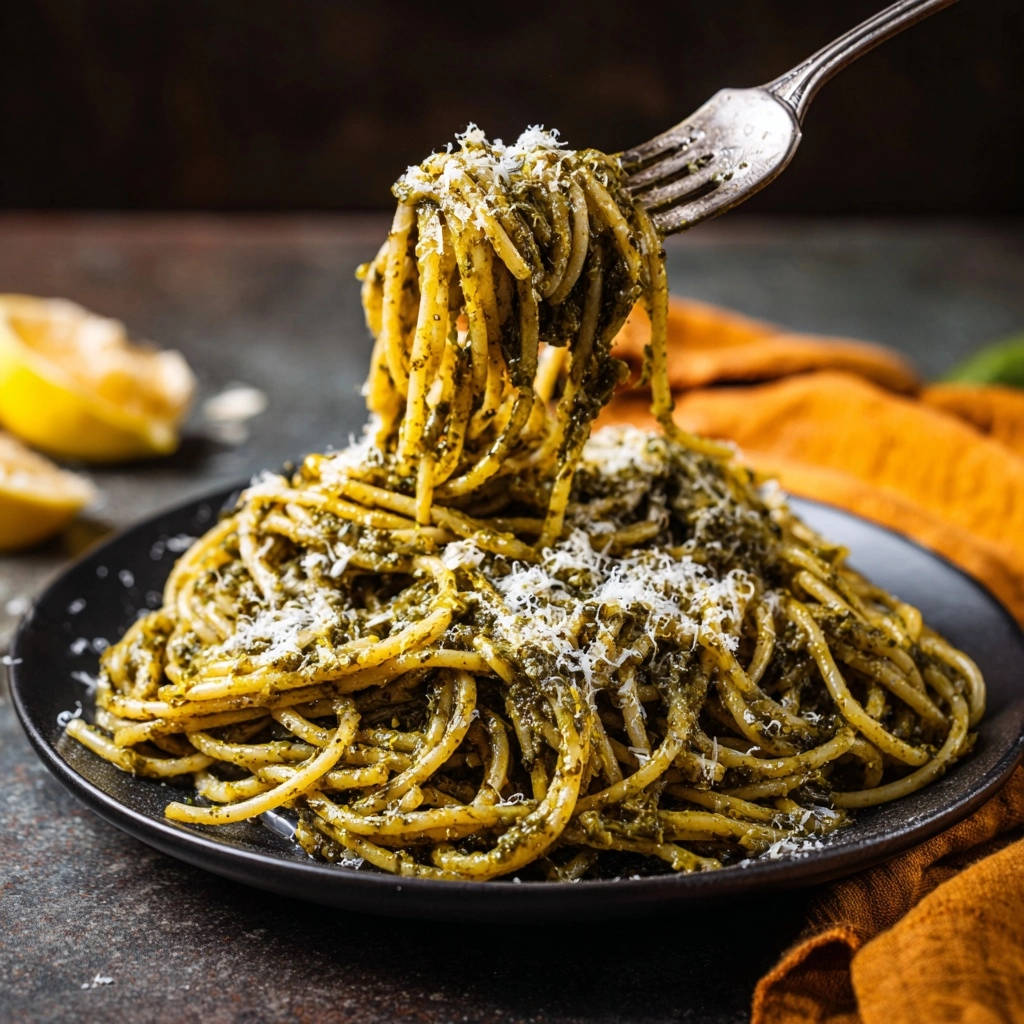
What Makes This Version Stand Out?
The inclusion of fresh lemon juice is essential; it cuts through the richness of the pesto and cheese, delivering a vibrant lift.
Capers or finely chopped olives provide a crucial briny contrast, while toasted pine nuts introduce a delightful, nutty crunch that elevates the entire profile.
Securing the Perfect Ingredients: The Building Blocks of Flavor
The Best Basil Pesto: Quality Matters
Since pesto is the star, invest in the highest quality prepared sauce you can find. Look for brands that list fresh basil and quality olive oil first, avoiding excessive filler ingredients.
The richness of the oil base is essential, as this fat interacts directly with the starch for a perfect emulsion.
Spaghetti Selection and Preparation
Traditional dried spaghetti is preferred here because its rough texture helps the creamy, heavy sauce adhere better than thinner strands like angel hair.
Always heavily salt your pasta water until it tastes like the sea. This is the only chance you have to season the pasta itself, and this seasoning will transfer into the reserved starchy liquid.
Flavor Boosters and Textural Elements
These elements are added right at the end to provide textural complexity and essential salinity.
- Parmesan/Pecorino: Use finely grated, high-quality aged cheese; it contributes essential fat and stabilizers to the final sauce structure.
- Toasted Pine Nuts: Provides a buttery, aromatic crunch. Toasting is non-negotiable for maximizing their flavor potential.
- Capers/Olives: Offer a bright, salty, and slightly acidic burst, preventing the rich pesto from becoming monotonous.
Essential Tools for a Seamless 17-Minute Meal
Gathering the right equipment beforehand makes the assembly process incredibly fast, which is critical when dealing with hot pasta and sauce.
- Large Stock Pot
- Sturdy Serving Bowl
- Wire Whisk
- Tongs
The Game-Changing Technique: Mastering Pesto Emulsification Step-by-Step
-
Cook the Pasta to Perfection
Cook the spaghetti until it is slightly underdone-about one minute shy of al dente. This allows the final minute of cooking to happen directly in the sauce, maximizing absorption.
-
The Critical Step: Reserve the Magic Liquid
Before draining, carefully scoop out exactly 1 cup of the starchy pasta cooking water. This murky, starchy liquid is non-negotiable for achieving a creamy coating; it contains the starch molecules necessary for emulsification.
-
Drain and Prepare the Sauce Base
Drain the pasta immediately. While the pesto is in the serving bowl, add exactly 1/2 cup of the reserved hot pasta water.
-
Emulsify for a Velvety Finish (The Secret Revealed)
Vigorously whisk the hot water into the pesto for 30 seconds. The heat and starch interact with the pesto’s oil, creating a uniform, creamy emulsion, similar in appearance to light cream. This prevents oil separation later.
-
Combine and Toss Vigorously
Add the hot drained spaghetti, grated cheese, pine nuts, capers, and lemon juice directly into the bowl with the emulsified sauce.
Using tongs, toss the mixture constantly for 1-2 minutes until every strand is slick and evenly coated. The residual heat finishes cooking the pasta and perfectly warms the sauce.
-
Adjust Consistency and Serve
If the sauce appears too thick or dry, add the remaining reserved pasta water, one tablespoon at a time, until the spaghetti has a beautiful glossy finish.
Chef’s Secrets: Elevate Your Classic Pesto Spaghetti Game
Maximize Starch Content: The Key to Creaminess
Use less water than usual to boil the pasta (if your pot allows) to concentrate the starch. A higher starch concentration in the reserved water yields a more stable and luxurious emulsion.
Toast Your Pine Nuts Properly
Toasting the pine nuts in a dry pan until lightly golden dramatically enhances their flavor and aroma, moving them beyond mere texture addition. Watch them closely, as they burn quickly.
Never Heat Pesto Directly
Pesto should never be cooked over direct heat, as this dulls the basil’s vibrant green color and fresh flavor. The residual heat from the pasta and the hot pasta water is sufficient to warm it perfectly.
The Power of Fresh Lemon Juice
Do not skip the fresh lemon juice. The acid cuts through the richness of the oil and cheese, brightens the overall flavor, and adds depth that generic pantry staples cannot replicate.
Troubleshooting Your Classic Pesto Spaghetti
Problem: My Sauce Looks Oily and Separated
This means your emulsion broke or never formed properly. Add a teaspoon of ice-cold water (or the reserved hot pasta water) and whisk vigorously again. The temperature shock often helps re-bind the fats and starches.
Problem: The Pesto Tastes Bland or Flat
The dish likely needs more salt, pepper, or acid. Taste, then add a small squeeze of additional lemon juice or a pinch of salt to ‘wake up’ the basil flavor.
Problem: The Pasta is Too Sticky/Dry After Tossing
You did not use enough of the reserved pasta water. Gradually add the remaining starchy liquid (1 tablespoon at a time) while tossing until the noodles are glossy and slick, not clumped.
Serving Suggestions and Storage Logistics
Perfect Pairings: What to Serve Alongside
This dish pairs excellently with simple grilled chicken or shrimp, or a light caprese salad. The richness of the pesto calls for a crisp, acidic white grape juice, such as sparkling grape juice.
Complementary Dishes
Round out your Italian meal with vibrant vegetables that echo the freshness of your spaghetti.
- Alongside your Classic Pesto Spaghetti, consider some crispy Parmesan Brussels sprouts for a delightful texture contrast.
- For another green vegetable option that pairs well, try these crispy Panko Parmesan broccoli florets.
Storing Leftovers Safely
Pesto pasta is best enjoyed immediately. If storing, place leftovers in an airtight container in the refrigerator for up to 3 days. Note that the texture will be thicker upon chilling.
Reheating Without Ruining the Creaminess
To reheat, add a splash of plain water or vegetable broth to the serving bowl before microwaving or warming on the stovetop over low heat. This reintroduces moisture and helps prevent the sauce from drying out completely.
Common Questions About Pasta Water, Pesto, and Technique
Why does the recipe specify using Pecorino or Parmesan cheese?
These hard, aged cheeses are essential because they contain starches and fats that further stabilize the pesto emulsion, contributing to the overall creamy texture better than soft cheeses.
Can I make homemade pesto instead of prepared?
Absolutely! If using homemade pesto, ensure it is generously oily, as the higher fat content works perfectly with the hot, starchy water to create the desired sauce consistency.
Is the lemon juice purely for flavor, or does it serve a technical purpose?
While the lemon juice provides a vital bright flavor, the acid also helps stabilize the emulsion by breaking down some of the proteins, ensuring the sauce stays homogenous and glossy.
What is the difference between al dente and “just shy of al dente?”
‘Al dente’ means ‘to the tooth,’ where the pasta has a slight bite. ‘Just shy of al dente’ means cooking for 1 minute less than specified, ensuring the final minute of cooking happens in the heat of the sauce, allowing maximum flavor absorption.
Ready to Impress? Share Your Classic Pesto Spaghetti Masterpiece!
Now that you hold the secret to perfect pesto emulsification, ditch the sad, oily bowls of pasta forever. This technique is guaranteed to transform your results from standard weeknight fare into a restaurant-quality meal.
Go ahead and create your Classic Pesto Spaghetti masterpiece tonight, and prepare to impress everyone at the dinner table with that impossibly creamy, velvety coating!
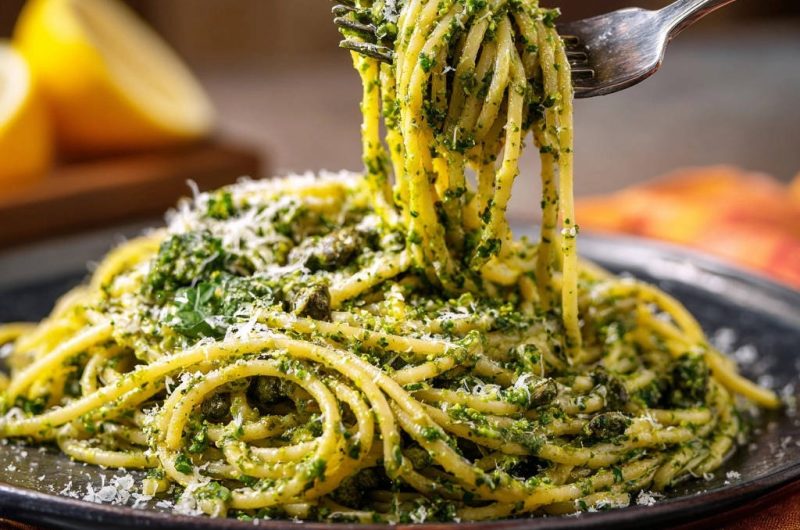
Pesto Spaghetti
Course: Main CourseCuisine: ItalianDifficulty: easy4
servings5
minutes12
minutes650
kcal17
minutesStop watching your pesto slide off the noodles! This simple technique uses reserved pasta water to create a velvety emulsion, guaranteeing a creamy coating where every strand of classic pesto spaghetti is hugged by the sauce.
Ingredients
1 pound dried spaghetti
1 cup high-quality prepared basil pesto
1/4 cup pine nuts, toasted (optional, for texture)
1/4 cup capers, drained (or small chopped olives)
1/2 cup finely grated Parmesan or Pecorino cheese, plus more for garnish
1/4 cup fresh lemon juice
Kosher salt and freshly ground black pepper
Olive oil (optional, for the pasta water)
Directions
- Cook the Pasta: Bring a large pot of salted water to a rolling boil. Add the spaghetti and cook according to package directions until just shy of al dente (about 1 minute less than specified).
- Reserve the Magic Liquid: This is the most important step for perfect coating. Before draining the pasta, carefully scoop out 1 cup of the starchy, murky pasta cooking water. Set this aside.
- Drain and Prepare the Sauce Base: Drain the pasta immediately. While the pasta is still hot, but working quickly, transfer the pesto into a large, sturdy serving bowl (or the empty pasta pot if it is cool enough to handle). Add 1/2 cup of the reserved hot pasta water to the pesto.
- Emulsify the Sauce (The Solution): Vigorously whisk the pasta water into the pesto for about 30 seconds. The hot starch molecules from the water will interact with the olive oil in the pesto, creating a smooth, creamy, emulsified sauce base that looks almost like light cream. This emulsion is what locks the sauce onto the pasta and prevents separation.
- Combine and Toss: Add the drained hot spaghetti directly to the emulsified pesto sauce. Add the 1/2 cup grated cheese, toasted pine nuts, capers, and the lemon juice. Using tongs, toss the pasta constantly for 1 to 2 minutes until every strand is completely and evenly coated. The residual heat from the spaghetti will warm the pesto without cooking it, keeping the color bright.
- Adjust Consistency: If the sauce seems too thick or looks dry, add more of the reserved pasta water, one tablespoon at a time, until the spaghetti is perfectly slick and glossy.
- Serve: Plate immediately, garnish generously with extra grated cheese, and serve with a wedge of lemon.
Notes
- To ensure your pesto coats the spaghetti beautifully, vigorously whisk the reserved pasta water into the pesto until it emulsifies into a creamy sauce. Don’t be afraid to add a little extra pasta water if the sauce seems too thick when you toss it with the hot pasta.