If there is one thing that ruins a comforting bowl of Hearty Chicken and Corn Noodle Soup, it’s finding the noodles have turned into swollen, gummy sponges that drank all the delicious broth. I spent years perfecting this recipe, which utilizes the simple yet revolutionary “Broth Saver Technique” to guarantee perfectly textured noodles and a plentiful broth, even days later.
Why This Recipe Guarantees Perfect Noodle Texture (Even for Leftovers)
Decoding the “Broth Saver”: Why Separate Cooking Works
When pasta cooks directly in the soup pot, it continuously releases starch and absorbs liquid, thickening the entire batch of broth. By cooking the noodles in their own pot, we control the texture precisely, ensuring they are al dente and ready to be bathed, not saturated, by the flavorful soup base.
For those who appreciate the art of a starchy broth, consider trying this creamy chicken and noodles for a similar comforting result.
This technique is fundamentally about maintaining the rich integrity of your broth. It prevents the liquid from becoming cloudy and keeps the soup tasting fresh and vibrant upon serving.
For another comforting bowl, explore this hearty chicken and sweet potato soup.
The Critical Rinse: Stopping Starch and Swelling
Rinsing the cooked noodles immediately with cool water achieves two goals vital for successful soup longevity. First, it instantly halts the residual cooking process, preventing the noodles from overcooking and becoming too soft.
Second, the rinse washes away the excess surface starch that causes both gumminess and the dreaded clumping in the final dish. This single, easy step guarantees ideal noodle texture every time.
The Ultimate Comfort Food, Reimagined
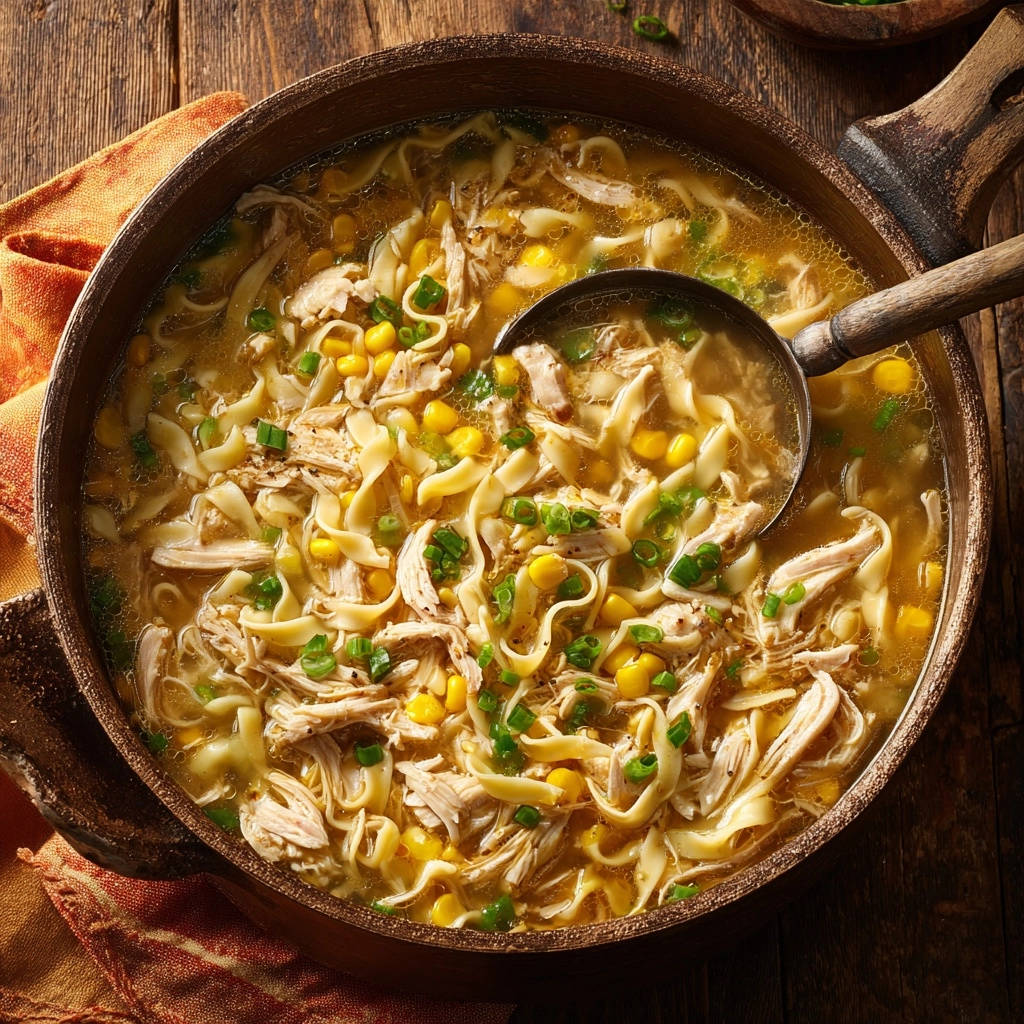
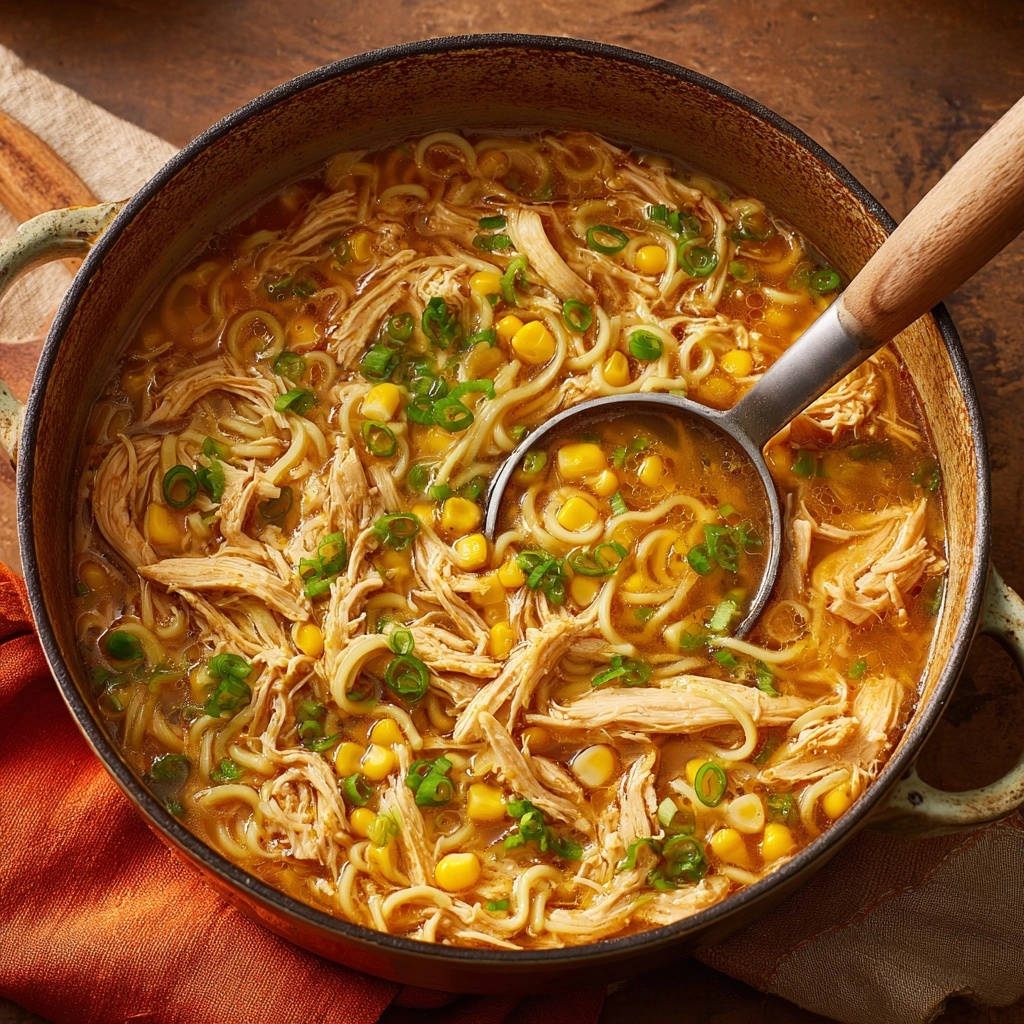
This method ensures that every component-the rich, aromatic broth, the savory shredded chicken, and the pop of sweet corn-maintains its individual integrity. The result is a vibrant, nourishing, and truly superior bowl of Hearty Chicken and Corn Noodle Soup.
The Flavor Foundation: Selecting and Preparing Your Ingredients
Which Chicken is Best: Shredded, Roasted, or Rotisserie?
Using four cups of already-cooked, shredded chicken is the ultimate time-saver, and a store-bought rotisserie chicken often provides the most robust, savory flavor. Look for pre-cooked chicken that is minimally seasoned to allow the soup aromatics to shine.
If you prefer to cook raw chicken, poach about 1.5 lbs of boneless, skinless meat in salted water until done, then shred it finely for the best mouthfeel within the soup.
Building Depth with Aromatics: Onion, Garlic, and Thyme
The aromatics are the soul of the soup base. Diced yellow onion must be softened slowly in the olive oil to provide a necessary subtle sweetness.
Freshly minced garlic and earthy dried thyme are added briefly at the end of the sautéing phase. They must only cook for about a minute to release their fragrance without burning, which is key to avoiding bitterness.
Noodle Geometry: Why Wide Egg Noodles Excel Here
We specifically call for wide egg noodles, often labeled Kluski style, because they have a high ratio of egg yolk, giving them a durable, chewy texture. Their robust structure holds up beautifully to the separate cooking and rinsing required by the Broth Saver Technique.
Essential Tools for Soup Mastery
Dutch Oven or Large Soup Pot: Necessary for building the 8-cup broth base and allowing the ingredients space to simmer.
Separate Pot: Crucial for cooking the noodles until they reach the perfect al dente texture.
Fine Mesh Sieve/Colander: Essential for quickly draining and rinsing the noodles to remove excess starch.
From Pot to Plate: Master the 6 Steps to Soup Success
- Building the Aromatic Base:
In your soup pot, heat the 2 tablespoons of olive oil over medium heat. Add the diced yellow onion and sauté, stirring frequently, until it turns translucent and fully soft-this takes between five to seven minutes. Next, introduce the minced garlic and dried thyme, cooking for exactly 60 seconds until a deep fragrance emerges. Crucially, do not allow the garlic to scorch, as this will introduce a harsh, acrid taste to your finished soup.
- Developing Deep Flavor:
Pour in the 8 cups of quality chicken broth and 1 cup of water, bringing the mixture up to a rapid, rolling boil. Immediately reduce the heat and maintain a very gentle simmer for 15 minutes. This slow, low-heat reduction allows the intense, savory flavors of the thyme and softened aromatics to fully meld into the foundational broth.
- Integrating the Solids (Chicken and Corn):
Add the four cups of shredded, pre-cooked chicken and the cup of corn kernels to the simmering broth base. Stir everything together well and allow it to warm through for about five minutes. This is the perfect moment to taste the broth, adjusting the salt and pepper (start with 1 teaspoon of salt and 1/2 teaspoon of black pepper) to ensure the final product is perfectly balanced.
- The Crucial Al Dente Noodle Method:
While the broth simmers, cook the 12 ounces of wide egg noodles in a separate pot of heavily salted boiling water until they are just al dente-slightly undercooked. Drain them immediately and rinse thoroughly with cool tap water to remove starch and halt residual cooking. This critical rinsing step is the entire “Broth Saver” technique that prevents later swelling.
- Final Assembly for Immediate Serving:
It is absolutely essential that the rinsed, drained noodles are not added directly to the main soup pot. To serve, portion a generous ladle of the prepared noodles into the bottom of each individual serving bowl first. Then, pour the steaming, hot chicken and corn soup broth directly over the noodles to warm them through perfectly right before consuming.
Ideas to Complement Your Soup
To round out your meal, consider these dishes that share similar comforting qualities or offer a pleasing contrast.
- For a perfect partner to your hearty noodle soup, try this golden skillet cornbread, known for its tender crumb.
- If you’re in the mood for something fresh and vibrant, this loaded taco salad bowl offers satisfying crunch and bright flavors.
- Garnish and Presentation:
Finish each bowl with a substantial sprinkle of fresh chopped green onions. This simple garnish adds a critical layer of color, freshness, and a gentle onion bite, significantly elevating the visual appeal and flavor of your savory broth.
Troubleshooting Your Soup: Avoiding Common Noodle Nightmares
“My Broth Base Tastes Flat”
Flat broth usually indicates insufficient seasoning or a lack of concentration during the simmer phase. Ensure you are using a high-quality, low-sodium chicken broth as your base; adjust the salt and pepper until the flavor ‘pops’ on your tongue.
If the flavor still seems thin, let the broth simmer uncovered for an additional 10 to 15 minutes before adding the chicken to allow for greater evaporation and flavor concentration.
“The Noodles Are Still Slightly Gummy”
Gumminess is a direct result of leftover starch clinging to the pasta surface, regardless of the separate cooking method. You must ensure you rinse the noodles immediately and thoroughly with cool water after draining them from the cooking pot.
For even better results next time, aim to cook the noodles for one minute less than the package directions specifies. This guarantees a very strong al dente texture that stands up beautifully to the hot broth.
Preventing Scorched Garlic
Garlic has a high sugar content and burns quickly when exposed to high heat, resulting in an extremely bitter, pungent flavor that can permeate the entire soup. Always wait until the onions are completely soft and translucent before adding the minced garlic.
Keep the heat at medium-low during the aromatic step and cook the garlic only for 60 seconds maximum before immediately introducing the broth and water to stabilize the temperature.
Make It Ahead, Store It Right: Longevity and Leftovers
Storing Leftovers the Right Way (The Separate Containers Method)
The success of your leftovers hinges entirely on storing the soup base and the cooked, rinsed noodles in separate, airtight containers. If they mingle overnight, the noodles will inevitably begin to absorb the broth, negating all your efforts.
Always combine the noodles and soup only at the moment of serving or reheating to preserve the perfect texture and abundant broth supply.
Reheating Instructions: Combining Broth and Noodles
To reheat, warm the soup base gently in a saucepan until it is simmering hot. Place the cold or room-temperature noodles directly into your serving bowl first.
Pour the steaming, hot broth over the noodles, which quickly warms them through without further cooking or degradation. This maintains the superior texture achieved in the original recipe.
Can I Freeze the Soup?
The aromatic broth, shredded chicken, and vegetable base (without corn) freeze beautifully for up to three months. However, the wide egg noodles and the corn kernels do not freeze well, often becoming mushy and mealy upon thawing.
For best results, freeze the broth base alone, leaving space in the container for expansion. Cook the noodles fresh when you are ready to thaw and serve the soup.
Serving Suggestions and Pairing Ideas
What to Serve Alongside Your Hearty Soup
Crusty Sourdough Bread or Baguette slices are perfect for soaking up every drop of the flavorful broth.
A Simple Caesar or Mixed Green Salad, dressed lightly with a bright vinaigrette, offers a refreshing textural contrast.
For true comfort food nostalgia, serve this soup alongside a Classic Grilled Cheese Sandwich.
Elevating the Experience with Garnishes
Beyond the standard fresh green onions, consider finishing your bowl with fresh chopped Italian parsley for a cleaner, herbaceous flavor. If you enjoy a touch of heat, a tiny drizzle of high-quality chili oil adds depth and warmth.
For brightness, a quick grating of lemon zest over the top immediately before serving can cut through the richness of the chicken and broth.
Frequently Asked Questions for Soup Enthusiasts
Can I Substitute Different Kinds of Noodles?
While you can substitute, wide, strong pasta shapes like rotini or small shells are generally preferred over thinner noodles like vermicelli or angel hair. Thinner noodles absorb liquid much faster and are more prone to breaking down even when cooked separately.
Making it Gluten-Free
This recipe is easily made gluten-free by substituting the standard wide egg noodles with a robust gluten-free pasta or rice noodle of your choice. Always double-check your chicken broth label to ensure it is certified gluten-free, as hidden wheat is common in pre-made stocks.
Can I Add More Vegetables?
Absolutely. If adding heartier root vegetables like diced carrots, celery, or potatoes, they must be included early in the process. Add them immediately after the onion and sauté them for an extra five minutes to ensure they soften adequately before the broth is added for simmering.
Ready to Impress? Share Your Hearty Chicken and Corn Noodle Soup Masterpiece!
Say goodbye to sunken, soggy noodles forever and hello to the perfect bowl of comfort. The “Broth Saver Technique” elevates this classic Hearty Chicken and Corn Noodle Soup from simple weeknight fare to an elegant, crowd-pleasing dish that tastes fantastic every single time. Try this proven method tonight and see the transformative difference for yourself!
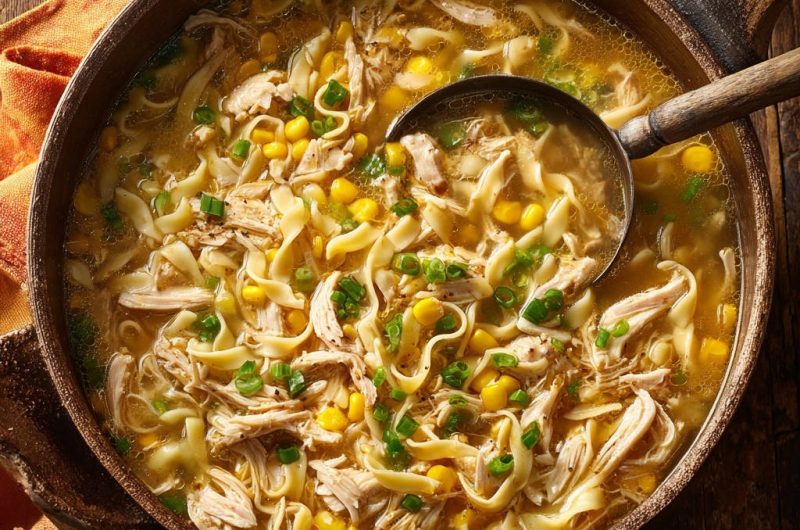
Chicken Corn Noodle Soup
Course: Soups-StewsCuisine: AmericanDifficulty: easy6
servings15
minutes40
minutes450
kcal55
minutesEnjoy a classic comfort soup without the frustration of soggy noodles! This recipe uses a critical technique to ensure the broth stays plentiful and the wide egg noodles remain perfectly textured, making leftovers taste just as great as the first bowl. Quick and satisfying.
Ingredients
4 cups cooked shredded chicken (rotisserie is fine!)
8 cups quality chicken broth
1 cup water
1 cup frozen or canned corn kernels, drained
2 tablespoons olive oil
1 small yellow onion, diced
3 cloves garlic, minced
1 teaspoon dried thyme
1 teaspoon salt
1/2 teaspoon black pepper
12 ounces wide egg noodles (kluski style)
1/4 cup chopped green onions, for garnish
Directions
- Build the Broth Base: In a large soup pot or Dutch oven, heat the olive oil over medium heat. Add the diced onion and cook until softened and translucent, about 5 to 7 minutes. Add the minced garlic and thyme, cooking for 1 minute until fragrant. Do not let the garlic scorch.
- Simmer for Flavor: Pour in the 8 cups of chicken broth and 1 cup of water. Bring the liquid to a rolling boil, then immediately reduce the heat and simmer gently for 15 minutes, allowing the flavors to meld. Stir in the salt and pepper.
- Add Solids: Add the shredded chicken and the corn kernels to the broth base. Stir well and let simmer for another 5 minutes, just until everything is heated through. Taste the broth and adjust seasonings if needed.
- The Critical Noodle Fix (The Broth Saver Technique): While the soup base is simmering, cook the egg noodles separately according to package directions in a different pot of salted boiling water until al dente (slightly undercooked). Drain the noodles immediately and rinse them lightly with cool water to stop the cooking process and remove excess starch. This is the crucial step that prevents them from swelling and absorbing all your delicious broth.
- Assemble and Serve: Do not add the rinsed noodles directly into the main soup pot. To serve, ladle a generous portion of the noodles into the bottom of each bowl. Pour the hot chicken and corn soup broth over the top of the noodles.
- Garnish: Sprinkle generously with fresh chopped green onions. Serve immediately.
- Storage Note: Store the soup base and the cooked, rinsed noodles in separate containers in the refrigerator. This guarantees perfect texture and plentiful broth even for leftovers! Combine them only when reheating.
Notes
- Store the soup base and cooked noodles separately. Combine only when serving/reheating to maintain optimal texture.